Page 46 of 51
1 44 45 46 47 48 51

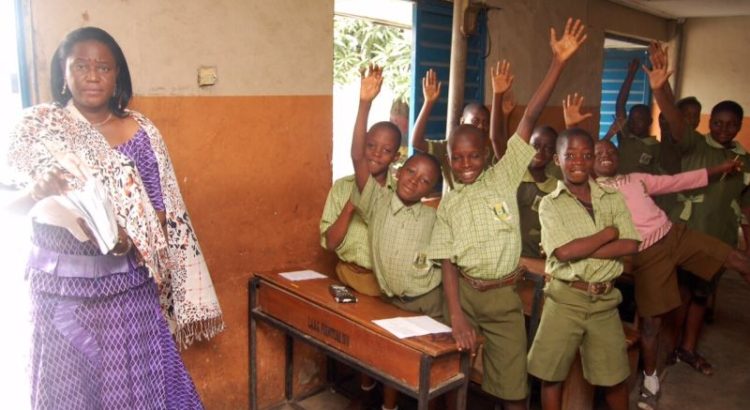
Nigeria: Osun Female Muslim Students Can Wear Veil to School


Noticia / 05 de junio de 2016 / Por:Abdul-Hameed Oyegbade


Estudiantes Musulmanas Femeninas podrán llevar el Hiyab en el uniforme escolar


Osogbo — Osun State High Court in Osogbo has given a judgment in favour of female Muslim students in public schools in the state reaffirming their right to wear hijab on their school uniforms during school hours. The case was instituted by Osun State Muslim Community against the State Government on February 14, 2013, seeking to defend the right of female Muslim students in public schools in the state to use hijab on their school uniforms.

Counsel to the plaintiff, Mr Kazeem Odedeji told the court that female Muslim students were being harassed because they wore hijab and urged the court to protect their right to the garment.

But Osun State Chapter of Christian Association of Nigeria (CAN) had voluntarily joined the suit as part of respondents, urging the court not to allow hijabs in schools, insisting that only berets should be allowed.

Delivering his 51-page judgment yesterday, Justice Jide Falola held that female Muslim students have the right to wear hijab. According to the judgement, Falola held that any act of molestation, harassment, torture or humiliation against female Muslim students using hijab on their school uniform, constitutes a clear infringement on their fundamental human right as contained in Section 38 of the 1999 constitution of Nigeria.

Fuente: http://allafrica.com/stories/201606040369.html

Foto: http://static.un.org/News/dh/photos/large/2014/January/01-24-2014Nigeria_Diffa.jpg

Comparte este contenido:

Nigeria: Institute scholarships to reposition higher education

África/Nigeria/05 Junio 2016/Fuente: Dailytrust/Autor: Chidimma C Okeke

Resumen: El Ministro de Educación, Malam Adamu Adamu, ha dicho que para mejorar el estándar de la caída de la educación en el país, existe la necesidad de la nación para dar becas generosas y dirigidos a estudiantes, en todos los niveles, y mejorar el emolumento de los maestros.

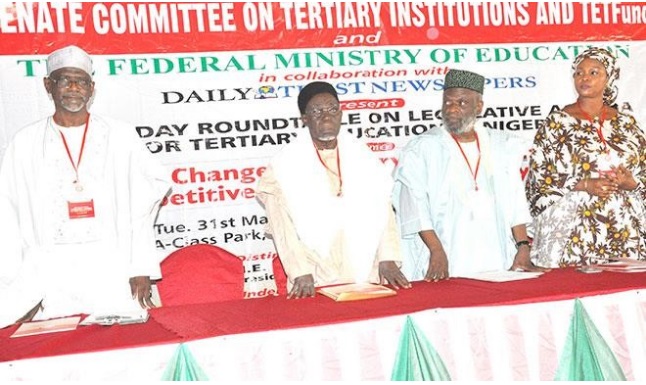
The Minister of Education, Malam Adamu Adamu, has said that to improve the falling standard of education in the country, there is need for the nation to give generous and targeted scholarships to students, at all levels, and enhance teachers’ emolument.

The minister stated this, yesterday, in Abuja, while delivering a keynote address during a two-day round-table on legislative agenda for tertiary education in Nigeria.

Adamu said that the best and most resilient among the education systems in the world were those that put the greatest emphasis on recruitment and development of quality teachers.

The federal government, he said, placed premium on teacher education and training because of its belief that no nation can rise above the quality of its teachers.

«This can be achieved by instituting and giving generous and targeted scholarships to students of education at all levels,» he added. He said that if the step was taken, the education sector would attract the best, instead of having to take the worst leftovers.

Fuente de la noticia:http://www.dailytrust.com.ng/news/general/institute-scholarships-to-reposition-higher-education/149289.html

Fuente de la imagen:http://t2.gstatic.com/images?q=tbn:ANd9GcR8IzCNlSV_mfmfF2hT-GK3evkA-dhgRpQSTysLJ0dlgXfdUjtT0moVRQ

Comparte este contenido:

La recogida de agua diaria en África amenaza la salud de 17 millones de mujeres y niños

África/2 de junio de 2016/ Fuente: iagua

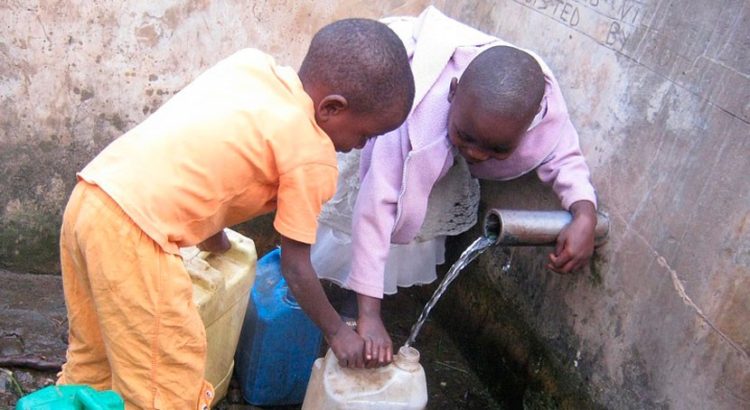
Casi 17 millones de mujeres y niños (en su mayoría niñas) en 24 países del África subsahariana son responsables de transportar agua a grandes distancias de sus hogares, una tarea que les lleva más de 30 minutos por viaje, según un estudio publicado este miércoles en la revista «Plos One«.

«El viaje para recoger el agua todos los días daña la salud, emplea energía humana limitada y resta tiempo a otras posibilidades», dice Jay Graham, profesor asistente de Medio Ambiente y Salud Laboral en la Escuela de Salud Pública del Instituto Milken en la Universidad George Washington, Estados Unidos.

«Al reducir la distancia al agua –preferiblemente al tener agua corriente en cada propiedad– muchas mujeres y niñas se liberarían del trabajo, teniendo tiempo para la escuela u otras actividades», añade este investigador. Aunque muchos han documentado la falta de acceso a agua limpia en los países en desarrollo, este estudio observa el número absoluto afectado y el desequilibrio de género en el trabajo de recogida de agua.

Graham y sus colegas analizaron los datos de los programas de encuestas internacionales para calcular el número de personas en 24 países del África subsahariana afectados por la rutina diaria de recoger suficiente agua para los hogares individuales. Estos expertos encontraron que entre las familias que gastan más de 30 minutos al día en recoger agua, las mujeres adultas a menudo se encargan de ir a la bomba local de agua o sitios de recogida.

Problemas en los huesos y exposición a agua contaminada

Los jarrones de agua pesan fácilmente 40 libras (unos 18 kilogramos) o más y pueden causar problemas de salud, como presión en el sistema esquelético que puede dar lugar a artritis precoz, alerta Graham. Este experto señala que las personas que llevan el agua pueden sufrir dolor de columna y ser más propensas a las lesiones por múltiples viajes de recogida de agua.

Las mujeres adultas son las principales colectoras de agua en los 24 países estudiados, que van desde el 46 por ciento en Liberia al 90 por ciento en Costa de Marfil. Graham y sus colegas también vieron que cuando los niños tenían la tarea de recolección de agua a menudo recayó en las niñas, con un 62 por ciento frente al 38 por ciento de los varones.

Entre los problemas de salud que afectan a los niños que tienen asignada esta tarea está la exposición a agua contaminada que puede llevar a enfermedades graves. Seis países en el estudio tenían más de 100.000 hogares con los niños como principales responsables de los viajes de recolección de agua que duraban más de 30 minutos al día. Dos países, Etiopía y Nigeria, tenían más de 1 millón de hogares afectados por este trabajo. Además de los problemas de salud, los niños que se encargan de esta labor pierden tiempo escolar.

«No nos fijamos en la razón subyacente del desequilibrio de género en la recolección de agua –explica Graham–. En algunos países africanos, recoger agua se considera un trabajo de bajo estatus y, a menudo, recae sobre las mujeres y las niñas«. Además de la fatiga, las enfermedades y las lesiones, las mujeres y las niñas se ponen en riesgo de violencia sexual en los viajes para recoger el agua, sobre todo si están yendo lejos de casa o a por caminos aislados, advierte Graham.

Fuente: http://www.iagua.es/noticias/ep/16/06/01/recogida-agua-diaria-africa-amenaza-salud-17-millones-mujeres-y-ninos

Imagen: http://www.iagua.es/sites/default/files/styles/thumbnail-830×455/public/africa-recogida-de-agua-pixabay.jpg?itok=BYQ6UfOF

Comparte este contenido:

Nigeria: El conflicto en Nigeria deja a más de un millón de niños fuera de la escuela

Comunicado de prensa originalmente publicado en Unicef Centro de Prensa el 22 de diciembre del 2015

Aunque algunos centros educativos están volviendo a abrir sus puertas, la inseguridad sigue siendo un obstáculo para la educación

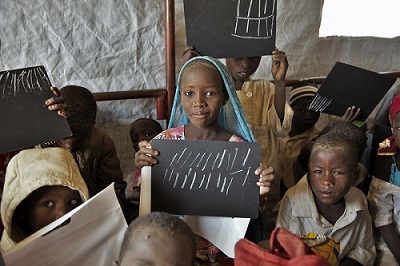
DAKAR/NUEVA YORK, 22 diciembre 2015 – La violencia y los ataques contra la población civil en el noreste de Nigeria y en los países vecinos han forzado a más de un millón de niños a abandonar la escuela, según UNICEF.

Estos niños que están perdiendo su educación debido al conflicto se unen a los 11 millones que ya estaban fuera de la escuela primaria en Nigeria, Camerún, Chad y Níger antes del comienzo de la crisis.

“Es una cifra abrumadora”, dice Manuel Fontaine, director regional de UNICEF en África Occidental y Central. “El conflicto ha supuesto un duro golpe para la educación en la región, y la violencia ha dejado a muchos niños fuera de las aulas durante más de un año, poniéndoles en riesgo de abandonar completamente la escuela”.

Más de 2.000 escuelas siguen cerradas –algunas llevan así más de un año- en Nigeria, Camerún, Chad y Níger debido al conflicto, y cientos de ellas han sufrido ataques, saqueos o incendios. En el extremo norte de Camerún, solo una de las 135 escuelas cerradas en 2014 ha reabierto este año.

En el noreste de Nigeria UNICEF ha dado apoyo a 170.000 niños que han podido reanudar su educación en las zonas más seguras de los tres estados más afectados por el conflicto, donde la mayoría de escuelas han podido reabrir. Sin embargo muchas aulas están masificadas, ya que algunos centros educativos siguen siendo el hogar de muchas personas desplazadas en busca de refugio. En estas áreas algunos profesores desplazados, que también han huido de la violencia, están comprometidos con la escolarización y a menudo doblan turnos para que más niños puedan volver a clase.

En otras zonas la inseguridad, el miedo a la violencia y los ataques impiden a muchos profesores la reanudación de las clases, y disuaden a los padres de enviar a sus hijos a la escuela. Solo en Nigeria unos 600 profesores han sido asesinados desde el levantamiento de Boko Haram.

“El reto que afrontamos es mantener a los niños seguros sin interrumpir su escolarización”, declara Fontaine. “Las escuelas han sido objetivo de los ataques, y los niños tienen miedo de volver a las aulas. Cuanto más tiempo pasan fuera de la escuela, mayor es el riesgo de que sufran abusos, secuestros o reclutamiento por parte de grupos armados”.

Junto con los gobiernos, ONG y otros aliados, UNICEF ha establecido espacios temporales de aprendizaje y ha renovado y ampliado las escuelas. Esto ha beneficiado a 67.000 niños. Además UNICEF ha formado a profesores en apoyo psicosocial y ha proporcionado material escolar a más de 132.000 niños desarraigados a causa del conflicto, también en escuelas locales que acogen a estudiantes desplazados.

Sin embargo, las restricciones de seguridad y la falta de fondos obstaculizan los servicios de acceso a la educación y la distribución de materiales de aprendizaje de emergencia. Hasta ahora, UNICEF ha recibido el 44% de los fondos necesarios para responder en 2015 a las necesidades humanitarias de los niños en Níger, Nigeria, Camerún y Chad.

En 2016 UNICEF necesitará cerca de 23 millones de dólares para proporcionar acceso a la educación a los niños afectados por los conflictos en los cuatro países, la mayoría de los cuales vive alrededor de la región de Lago Chad.

# # #

Acerca de UNICEF:
En UNICEF promovemos los derechos y el bienestar de todos los niños, niñas y adolescentes en todo lo que hacemos. Junto a nuestros aliados, trabajamos en 190 países y territorios para transformar este compromiso en acciones prácticas que beneficien a todos los niños, centrando especialmente nuestros esfuerzos en llegar a los más vulnerables y excluidos, en todo el mundo.

Para obtener más información sobre UNICEF y su labor visite: www.unicef.org/spanish

Imagen tomada de: http://www.unicef.org/spanish/infobycountry/images/Niger_photo.jpg

Para más información, sírvase dirigirse a:

Georgina Thompson, UNICEF Nueva York, + 1 917 238 1559, gthompson@unicef.org
Laurent Duvillier, Oficina Regional UNICEF en Dakar, +221 77 740 35 77, lduvillier@unicef.org
Doune Porter, UNICEF Nigeria, +234 803 525 0273, dporter@unicef.org
Anne Boher, UNICEF Níger, +227 9696 2159, aboher@unicef.org
Manuel Moreno González, UNICEF Chad, +235 639 00 947, mmgonzalez@unicef.org
Laure Bassek, UNICEF Camerún, +237 222 50 54 39, lbassek@unicef.org

Comparte este contenido:

Colonial Legacies and Social Welfare Regimes in Africa: An Empirical Exercise


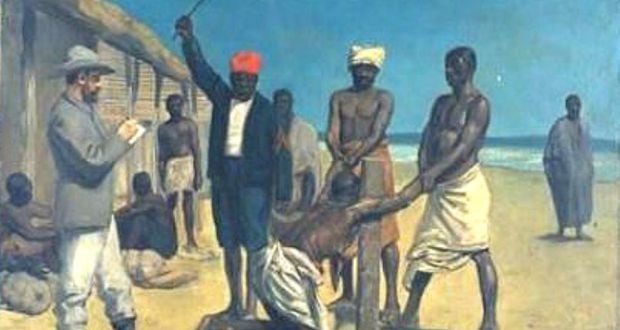
Colonial Legacies and Social Welfare Regimes in Africa: An Empirical ExerciseThis paper identifies three types of welfare regimes in Africa, based on the insight that tax and expenditure regimes are closely associated. Using cluster analysis, the author highlights historical legacies in current welfare policies, demonstrating that welfare regimes in Africa have been strongly determined by the ways in which different countries were incorporated into the colonial economy. The author finds that many of the new social welfare reforms are taking place in what he refers to as labour reserve economies, and are generally internally rather than aid-driven. He stresses the importance of thinking of social expenditure in relationship to domestic resource mobilization, and finds that the focus on aid and social expenditure has tended to obscure this important aspect of welfare regimes in Africa.

Thandika Mkandawire is Chair and Professor in African Development at the London School of Economics, a Senior Fellow of The Graduate School of Development and Practice and Visiting Professor at the University of Cape Town.

  • Publication and ordering details
  • Pub. Date: 27 May 2016
    Pub. Place: Geneva
    From: UNRISD

Informe disponible desde Mkandawire-PDRM

Imagen tomada de: http://www.irishtimes.com/polopoly_fs/1.1736427.1395680271!/image/image.jpg_gen/derivatives/box_620_330/image.jpg

Comparte este contenido:

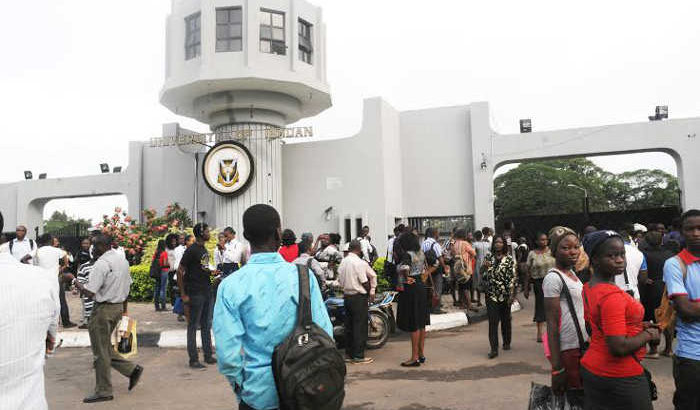
Nigeria: University of Ibadan to Run On Solar Power Soon – Envoy

Vanguard/ 27Mayo2016/ Nigeria

Resumen: El embajador de Alemania en Nigeria, Amb. Michael Zenner, ha dicho en entrevista en Abuja, que el proyecto de energía solar de Alemania-Nigeria a desarrollarse en la Universidad de Ibadan y con el cual se proveerá 10 megavatios de suministro de energía a la universidad, comenzará este año. Dijo que se espera que el proyecto, que costó 17.670 dólares (aprox. N3.52 millones), podría inaugurarse entre junio y julio. El mismo, Es parte de la asociación energética entre Nigeria y Alemania, que ha existido desde 2008. Este proyecto tiene varias ventajas, en primer lugar se trata de un proyecto de energía solar en el marco de la cooperación entre Alemania y Nigeria en el sector de la energía y el poder, en segundo lugar, ayuda a la Universidad de Ibadan ahorrar una gran cantidad de gasóleo; y en tercer lugar, se trata de una herramienta de formación para los estudiantes que estudian ingeniería»

Abuja — The German Ambassador to Nigeria, Amb. Michael Zenner, has said Germany-Nigeria Solar Power project at the University of Ibadan will commence this year.

Zenner said this in an interview in Abuja on Thursday.

He said the project, which cost 17,670 dollars (approx. N3.52 million), is expected to provide 10 megawatts of power supply to the university.

The envoy said that the ground breaking ceremony would hold between June and July.

» The solar project for the University of Ibadan is a solar project we have been planning together with Nigeria partners for some time.

«It is part of the Nigeria-Germany energy partnership which has existed since 2008.

«Within this whole field of energy partnership, and the German-Nigeria Binational Commission, the project of the University of Ibadan is a project which is very promising and I hope it will start this year.

«We plan, after all the conditions are fulfilled, the ground breaking ceremony next month or hopefully in July.

«The idea is that the University of Ibadan will, by the end of the day, use only energy produced by solar power.»

Zenner also explained that the university would gain several advantages from the solar project, adding that the project would be replicated in the Ahmadu Bello University, Zaria, Kaduna State.

» This has several advantages, first it is a lighthouse project for solar energy in the framework of the cooperation between Germany and Nigeria in the energy and power sector.

«Secondly, it helps the University of Ibadan save a lot of diesel; and thirdly, it is a training tool for students who study engineering.

» This (project) will cover the need of the University of Ibadan; we also plan this as well with the Ahmadu Bello University.

«The partner of this on the Nigerian side is the Ministry of Education; the financial means exists that it can be done in Ibadan as well as in Ahmadu Bello University.»

He also said that several other energy projects between Germany and Nigeria were ongoing, adding that field studies were being conducted in some states to provide alternative sources of power.

«We have within the framework of our power cooperation different other projects; there is one energy project which was agreed in the last meeting of the energy partnership in February.

«It is solar power project in Katsina, the Kankia solar project which is 125 megawatts.

«In the northern part of Niger State, we have already set up a small demonstration of solar power plant.

«The idea is that in rural areas which are not connected to the national power grid, solar power or hydropower or winds, if feasible, can generate the power these areas need.

«By the end of the day, if one state produces surplus and they are connected to the national power grid, they can even contribute to and sell their surplus to the grid.»

He also said that the ongoing Azura Gas Power Project in Edo was also part of the German-Nigeria energy cooperation.

He said that the energy projects both countries shared were important for the implementation of the COP21 decisions of Paris in order to reduce CO2 emissions.

«I think, they generate about 459 megawatts in Azura in Edo State and that is a classical power plant fuelled by gas.

«But the CO2 emissions from the gas power plants are neutral as well to the climate and they are done by a German company and a Nigeria construction company and financed by Nigerian and international institutions.»

Zenner also said that both countries cooperated in several areas under the German-Nigeria Binational Commission which was set up in 2012.

Fuente: http://allafrica.com/stories/201605270902.html

Imagen tomada de: http://14223-presscdn-0-43.pagely.netdna-cdn.com/wp-content/uploads/2016/04/UI-students.jpg

Comparte este contenido:

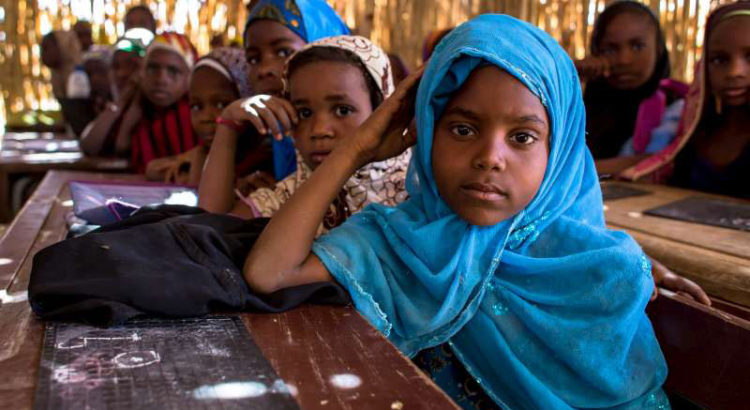
Nigeria: Teach the children the truth

África/Nigeria/28 Mayo 2016/Fuente:Vanguard /Autor:Owei Lakenfa

Resumen: La enseñanza de estudios religiosos y los valores nacionales en escuelas primarias y secundarias, en discusión dentro  la reglamentación del Consejo de Investigación y Desarrollo para la Educación de Nigeria (NERDC) .

The hair-splitting over the teaching of Religious Studies and National Values in Primary and Secondary Schools, continue with the regulatory Nigerian Educational Research and Development Council (NERDC) entering the fray. In a rather combative statement by its Executive Secretary, Prof. Ismail Junaidu, NERDC described most of the reports on the issue as «speculative, false and unfounded.» It said rather than being taught as a single subject, each religion and National values will be taught separately. Then it declared «No child should be coerced or compelled to learn or be taught in school any religious studies curriculum but only one (out of the two) that restrictively relates to the belief system professed by the child and his/her parents.»

Strong words indeed; a six-year old who goes to a school should not be «coerced or compelled to learn or be taught» a particular subject! That is the problem when religion is imported into schools. In any case, who says there are only two religions in Nigeria? Who says traditional religion, is not a religion, and therefore, in a country that claims to be a secular state, it cannot be taught along with other non-African religions?

A body like NERDC which claims to be «the Think Tank of Nigerian Education» proceeds on a basic education issue, from a false premise that only two religions exist in the country when it should be aware that the constitution forbids discrimination in whatever form including religious. It is dangerous to prescribe that the Nigerian child up to middle Secondary School, should not learn about other religions whether Christian or Islamic. So how is knowledge of other religions to be imparted which can make him respect other people’s beliefs? With the NERDC prescription, why won’t each child grow up believing his religion is superior to all others?

When we started out as a country, we did not begin with such bigotry; there was tolerance, understanding that all religions preach the same values, and that the upbringing of a child is the responsibility of all in the community irrespective of their religious persuasion. One of the leading Muslims in the Nigeria of the 1950s was Alhaji Sule Oyesola Gbadamosi (SOG) who was also one of the richest, and Treasurer of Action Group. Yet when one of his sons, now, Chief Rasheed Abiodun Gbadamosi was to go to secondary school, he not only took him to the Methodist Boys High School, Lagos but also approached the then Principal, The Very Reverend Samuel Adeoye Osinulu to allow his son live with his family as an unofficial boarder. For Alhaji Gbadamosi, he wanted not just the best education for his beloved son but also sound moral instructions which he knew the Principal could inculcate. Today, the junior Gbadamosi, a former Minister, remains a leading Muslim in the country and is the richer for his exposure to other religions.

Chief Moshood Kashimawo Abiola, a leading Muslim of his day who was robbed in 1993 of his Presidential mandate to lead our country, used to let it known that his broad world view and tolerance of other beliefs owes partly to his education at the Baptist Boys High School, Abeokuta. I also went to a mission school and all the boys studied the same subjects including religious studies; there was no discrimination and we all held to our religious beliefs. Today, we have transformed from boys, and taken our place as men in our country, and are the better for the broad education we acquired.

It is ironic that a country that deprives its children the knowledge or teaching of their common history in school, makes the teaching of religion a priority. However, I am confident that no matter how they strive, schools by their nature, cannot be better than religious institutions in teaching children religion.

Monotheism is the basis of most religions with the Almighty called Yahweh in Hebrew, God in English, Allah in Arabic, Oyin in Ijaw, Chukwu in Igbo, Olodumare in Yoruba and Ubangiji in Hausa. So there is a common strand in the religions in Nigeria, just as there is a common thread about morality, protection for children and the weak, respect for parents and the elderly, fairness, truthfulness and honesty. Why can’t the children be taught such truth?

I believe that when people learn about their religion and that of other people, they will be tolerant and respectful towards other faith. Learning about other religions, is not proselytizing, it is acquiring knowledge and that is what schools are for. To me, it is welcome for schools to teach the commonality in religions, moral instructions, etiquette and civics including patriotism, equality, non-discrimination, social justice and the Fundamental Principles of State Policy as enshrined in the Constitution. But if religion is to be taught, it should not be as a reinforcement or rejection of certain beliefs, but as imparting knowledge.

Let’s face it, in almost all cases, people’s religious persuasion is conditioned by accident of birth, environment and circumstances. In virtually all cases, people adopt the religion of their parents. I am sad today because religious divide is being introduced into schools. While the Holy Books teach that children should always be protected, schools are beginning to introduce religious discrimination such as demanding the parents of a child to obtain a declaration or clearance from their religious leaders confirming the faith they belong to before the child can be admitted. Yet, the constitution forbids discrimination; it prescribes secularism as state policy.

We need a general reorientation; why should a secular state demand you declare your religion in official documents, establish unwieldy and expensive Pilgrim Boards, fund or subsidise pilgrimages and generally, promote particular religions? Why should a man who practices traditional religion be arrested in court for being in possession of the symbols of his belief while those of other religions are permitted to bring theirs?

Religion is not the problem; it is human beings who claim to be adherents of different faith but who would not live by the dictates of their faith. It is such people, who then, like the NERDC, present their jaundice views as ‘State Policy’

Fuente de la noticia:http://www.vanguardngr.com/2016/05/teach-the-children-the-truth/

Fuente de la imagen:https://naij-ask.gencdn.com/questions/23608-0962fd-1-6.jpg
Comparte este contenido:
Page 46 of 51
1 44 45 46 47 48 51