Saltar al contenido principal
Page 108 of 621
1 106 107 108 109 110 621

África oriental: las escuelas preescolares en Kenia y Tanzania impulsan los resultados del aprendizaje a largo plazo

Africa Oriental/ Kenia / 

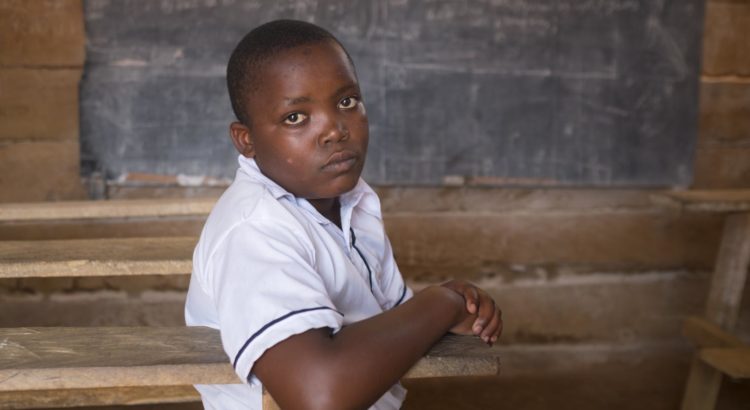
Los países de África subsahariana han logrado un progreso impresionante hacia el logro de la matrícula escolar universal en las últimas décadas. Pero estudiar no es lo mismo que aprender.

Estudios recientes revelan que los niños en esta región aprenden notablemente poco en la escuela. Por ejemplo, solo uno de cada cinco estudiantes de tercer grado en Kenia, Tanzania y Uganda tiene habilidades de alfabetización y aritmética de segundo grado, y menos de un tercio de los estudiantes de sexto grado en África meridional y oriental pueden resolver un problema de resta simple.

Esta » crisis de aprendizaje » significa que África subsahariana está muy lejos de lograr una educación de calidad para todos, que es uno de los Objetivos de Desarrollo Sostenible de las Naciones Unidas para 2030. Los bajos niveles de habilidades también reducen las perspectivas del mercado laboral de los estudiantes, y frenar el crecimiento económico de los países .

Entre las muchas causas potenciales de esta crisis, una que a menudo se menciona es la falta de preparación de los niños que ingresan a la escuela. El plan de estudios primario es exigente y puede ser difícil de seguir para los niños sin experiencia previa de aprendizaje en un salón de clases. Por lo tanto, el aumento de la matrícula en los centros preescolares, que preparan a los niños para la escuela primaria, a menudo se considera una política prometedora para aumentar los niveles de aprendizaje. En consecuencia, la educación preescolar está en aumento en el África subsahariana, y la matrícula se duplicó del 15% al ​​32% entre 2000 y 2017.

Pero hasta hace poco, había poca evidencia empírica de la efectividad de los preescolares para impulsar los resultados del aprendizaje. Algunos observadores incluso especulan que las escuelas preescolares podrían estar haciendo más daño que bien debido a su enfoque limitado en la enseñanza de habilidades académicas básicas, que ignora la necesidad de los niños para el desarrollo social y emocional.

En nuestra investigación, mis coautores, Sanna Ericsson y Fredrick M. Wamalwa, y yo buscamos cerrar esta brecha. Investigamos los impactos a largo plazo de los preescolares en los resultados de aprendizaje de los niños en Kenia y Tanzania. Nuestro estudio empleó datos nuevos a gran escala de la iniciativa Uwezo , que utiliza encuestas de hogares para medir las habilidades de alfabetización y aritmética de los niños en edad escolar en ambos países.

Es importante para nuestros propósitos, los datos incluyeron información a nivel individual sobre si un niño asistió a preescolar antes de comenzar la escuela primaria. Esto nos permitió rastrear el efecto de la asistencia preescolar de los niños en sus habilidades hasta la edad de 16 años. Reflejando el alcance de las encuestas de Uwezo, nuestro análisis cubrió a más de medio millón de niños de entre 7 y 16 años en Kenia y Tanzania.

Descubrimos que hay beneficios importantes a largo plazo al asistir a preescolar. En particular, los niños que iban a preescolar tenían menos probabilidades de abandonar la escuela y tenían mayores niveles de alfabetización y aritmética al llegar a la adolescencia.

La investigación

Una característica importante de nuestro estudio es el enfoque en los efectos causales, en lugar de las meras correlaciones. Para ilustrar la diferencia entre estos conceptos, imagine dos niños de primaria de diferentes familias, uno de los cuales fue al preescolar y el otro no. Ahora imagine que el ex niño tiene mejores habilidades de alfabetización y aritmética. La asistencia y el aprendizaje preescolar parecen ir de la mano, están correlacionados.

Fuente: https://allafrica.com/stories/201910310107.html

Comparte este contenido:

‘Sexo por calificaciones’: encubierto en universidades de África occidental (Video-documental)

Africa/ Africa Occidental / BBC

Las instituciones académicas en África occidental se enfrentan cada vez más a acusaciones de acoso sexual por parte de profesores. Se dice que este tipo de abuso es endémico, pero casi nunca se ha probado.

Después de reunir docenas de testimonios, BBC Africa Eye envió periodistas encubiertos haciéndose pasar por estudiantes dentro de la Universidad de Lagos y la Universidad de Ghana.

Las mujeres periodistas fueron acosadas sexualmente, propuestas y presionadas por profesores de alto nivel en las instituciones, todo el tiempo usando cámaras secretas.

El periodista Kiki Mordi, que sabe de primera mano lo devastador que puede ser el acoso sexual, revela lo que sucede a puerta cerrada en algunas de las universidades más prestigiosas de la región.

Fuente; https://www.bbc.com/news/av/world-africa-49907376/sex-for-grades-undercover-in-west-african-universities

Comparte este contenido:

Incendios forestales amenazan raras especies en Etiopía

Los incendios forestales y una población invasora amenazan los pastizales que albergan algunas de las especies más raras del mundo.

El conservacionista Getachew Assefa señala a través del valle. “Comenzó cerca de la niebla allí, desde el punto de vista más espectacular”, dice. “Casi toda la pradera fue quemada. Toda esa meseta y el escarpado acantilado de allí.

Seis meses después de que los incendios forestales quemaran esta parte de las montañas Simien de Etiopía, las cicatrices se están curando: el brezo y la hierba han vuelto a alfombrar la cima de la colina, iluminados por las margaritas amarillas que florecen después de las largas lluvias. En el lado cercano del valle se encuentran los campos de cebada, ondulados por el viento.

La escena es bucólica. Pero, como explica Assefa, estas praderas montañosas y la rara vida silvestre que albergan están amenazadas.

A principios de este año se produjeron dos incendios que asolaron uno de los sitios naturales más antiguos del patrimonio mundial de la Unesco y destruyeron, al menos temporalmente, el hábitat de algunas de las especies más raras del mundo: el lobo etíope recubierto de cobre y la cabra montés, una cabra encontrada en ningún otro lugar de la tierra.

Pocos dudan de la causa de los incendios. Los monitores de lobos del parque, que incluyen a Assefa, vieron, a través de binoculares, a dos hombres prendiendo fuego a los mattorrales, aunque no pudieron confirmar sus identidades.

“Lo hicieron en cinco áreas, a propósito”, dice. El incendio se prolongó durante varios días, y se necesitaron miles de lugareños, incluido un club de fútbol cercano, eventualmente asistido por un equipo de bomberos israelíes, para controlar las llamas. Casi al mismo tiempo, las Montañas Bale, en el sur del país, también fueron afectadas por incendios forestales que duraron más de 20 días y que los expertos atribuyeron a la invasión humana en el parque.

Incidentes como estos arrojan luz sobre las presiones que amenazan la frágil vida silvestre y los delicados ecosistemas de Etiopía: acelerando la competencia por los recursos a medida que aumenta la población humana, la inestabilidad política, el calentamiento global y el turismo de masas.

“Estamos en una situación de crisis”, dice Greta Iori, asesora técnica de Etiopía de la Sociedad para la Conservación de la Vida Silvestre, que teme que las especies endémicas del país estén cerca de la extinción. “Estamos inundados de problemas cuando se trata de vida silvestre”.

Para un país con pocos minerales o recursos naturales como el petróleo, activos como estos son una fuente importante de ingresos nacionales. Según el Banco Mundial, el “capital natural”, incluidos los bosques y las tierras agrícolas, representa el 40% de la riqueza total de Etiopía.

Pero los parques están en un estado terrible. En el parque nacional de Omo, en el extremo sur de Etiopía, cerca de la frontera con Kenia, el gobierno está construyendo fábricas de azúcar y vastas plantaciones de riego. El parque nacional Awash, el más antiguo del país, está dividido en dos por el ferrocarril y la autopista del este hacia Djibouti. Abijatta-Shalla, al sur de Addis Abeba, es el hogar de una fábrica de cenizas de soda.

Mientras tanto, los disturbios étnicos en el este de Etiopía han tenido un enorme impacto en el Santuario de Elefantes de Babile, una de las áreas de distribución de elefantes más importantes del país. Según Iori, una gran cantidad de nuevos asentamientos humanos han aparecido dentro de sus fronteras desde 2017.

La población de elefantes está bajo una presión extrema debido a un “conflicto humano-elefante elevado e inevitable”, sostiene la asesora. Una población de alrededor de 500 podría ser diezmada “en un abrir y cerrar de ojos” a través de la caza furtiva, con el personal del parque luchando por asegurar el santuario.

“2019 ha sido brutal con un aumento increíble en los asesinatos de elefantes”, afirma y agrega: “Es como si ya hubiéramos perdido en Babile, y es desgarrador”.

A nivel nacional, los esfuerzos de conservación se han visto obstaculizados en los últimos años por los disturbios civiles y la transición política tras el nombramiento del primer ministro Abiy Ahmed en 2018.

“En general, Etiopía nunca ha sido un gran punto de acceso para la caza furtiva por tráfico, pero desde que la ley y el orden se han derrumbado, hemos visto un aumento en la caza furtiva oportunista y el tráfico posterior”, dice Iori. “La policía y el ejército están ocupados con otras cosas, y el riesgo de ser atrapado es bajo”.

En las montañas de Simien, los problemas son menos avanzados y el parque está mejor administrado. Pero dinámicas similares están presentes. Cuando estallaron las protestas políticas en 2016, el parque fue blanco de la ira popular, con los locales rompiendo las prohibiciones contra la tala de árboles y el pastoreo de ganado. “Todos se apresuraban a obtener su parte”, recuerda Assefa. “Perdimos dos de los mejores hábitats de lobos”.

Hoy en día, las autoridades del parque aún luchan por hacer cumplir las leyes locales diseñadas para proteger el medio ambiente natural.

“Existe un gran conflicto entre los jóvenes desempleados y la administración del parque”, explica Assefa. Considera que los incendios de este año fueron iniciados por lugareños disgustados por la fuerte represión de las autoridades contra el pastoreo de ganado dentro de los perímetros del parque.

Setegn, un granjero local cuya casa se encuentra más allá del parque, admite que pasta a sus animales dentro del límite marcado por la carretera principal. “La administración del parque dijo que no podemos cruzar la calle, dicen que no obtendremos ningún beneficio del turismo a menos que pastan en el lado derecho”, dice. “Pero es muy difícil. No hay supervivencia para nosotros sin ganado”.

Otros entrevistados por The Guardian expresaron las mismas preocupaciones, diciendo que sus ingresos habían sido gravemente afectados por las restricciones.

Los campos de cebada a la izquierda del camino son otro signo de intrusión humana y de la autoridad menguante de la administración del parque, señala Nick Crane, el propietario británico de Simien Mountain Lodge. “Invaden lentamente, imperceptiblemente, por lo que apenas se nota”, dice.

Según Abebaw Azanaw, el guardián del parque, hay alrededor de 130 hogares alrededor de los bordes del parque.

Reubicarlos sería costoso y podría generar un conflicto renovado. En 2016, todo el pueblo de Gichi, cerca de 500 hogares ubicados en la escarpa donde comenzó el incendio, optó por mudarse a un nuevo asentamiento cerca de la ciudad de Debark, que le costó al gobierno un promedio de $ 17,000 (£ 14,000) por familia. La compensación fue considerable, pero muchos se quejaron de la falta de electricidad en sus nuevos hogares a la llegada y de la falta de trabajo. Algunos amenazaron con volver al parque.

“Aprendimos de Gichi que es muy difícil reasentar a la gente del parque”, dice Assefa.

La raíz del problema es común en muchos países en desarrollo cuando se trata de la conservación: cómo lograr el equilibrio adecuado entre las demandas de recursos de los residentes locales y la necesidad de proteger el medio ambiente natural para las generaciones futuras.

Promover el turismo es parte de la respuesta, en caso de que signifique empleos e ingresos más altos para los locales, pero solo si se gestiona bien.

En 2015, el Ministerio de Cultura y Turismo de Etiopía anunció que tenía la intención de triplicar los visitantes extranjeros a más de 2.5 millones para 2020.

Pero para John Watkin, que trabajó en las montañas de Simien como asesor técnico principal de Africa Wildlife Foundation entre 2018 y 2019, el “turismo descontrolado” es la amenaza más grave para la vida silvestre del parque.

“La infraestructura del parque simplemente no está configurada para un gran número de turistas. El turismo siempre está buscando un nuevo destino caliente, y Etiopía lo es. Pero a menos que se haga bien, causará serios problemas”, dice.

Para Crane, una respuesta es aumentar el precio del parque para los visitantes extranjeros, para tratar de limitar el número que llega a las Montañas Simien cada año.

Mientras tanto, Watkin sugiere que Etiopía considere enfoques de conservación alternativos que permitan a las comunidades tomar posesión del proceso, alejándose del modelo de “conservación de fortalezas” liderado por el estado que prevalece. Señala ejemplos en Kenia y Tanzania, donde las comunidades locales administran albergues ecológicos y empresas de turismo al tiempo que garantizan la protección del paisaje. “Están 20 a 30 años por delante de Etiopía en esto”, dice.

Tales enfoques podrían permitir que Etiopía cuadre el círculo entre conservación y desarrollo.

Fuente de la infonmación: https://www.ecoportal.net/paises/incendios-forestales-etiopia/

Comparte este contenido:

República Democrática del Congo :El regreso a la escuela para un superviviente del ébola

“Fue el día más feliz de mi vida”, dice Nixon, de 12 años, al recordar el día que salió de un centro de tratamiento para el ébola de Beni, una ciudad del noreste de la República Democrática del Congo.

Nixon pasó 30 días en el centro de tratamiento cuando contrajo el ébola, contagiado por su madre. Ellos fueron dos de las más de 3.200 personas que se calcula que han contraído la enfermedad desde que el brote actual comenzara a hacer estragos en algunas partes del país en agosto de 2018.

La rápida intervención que recibió Nixon le salvó la vida. Trágicamente, su madre no sobrevivió: cuando la familia consiguió llevarla a un centro de tratamiento de Mangina, una ciudad cercana, ya era demasiado tarde.

Sobrevivir en el foco de la enfermedad

Kahambu, de 14 años, regresó a la escuela el mes pasado. Va al Institut Mese, en Butembo.

Igual que muchos otros niños del país que regresan a la escuela, ella también ha tenido que confrontar con el trauma psicológico de haber perdido a sus seres queridos. Kahambu ha perdido a nueve miembros de su familia a causa de la enfermedad: entre ellos, su madre y dos de sus hermanos mayores.

“Murió por la noche”, dice Kahambu, refiriéndose a su madre. “No tuvimos oportunidad de hablar”.

Poco después de la muerte de su madre, Kahambu comenzó a presentar síntomas de ébola y, rápidamente, la llevaron a un centro de tratamiento. Sobrevivió gracias a la detección temprana y a los cuidados de los médicos y las enfermeras.

DRC. Una niña frente a su aula.

Los psicólogos facilitados por UNICEF han atendido a los niños que van a la escuela y que han quedado huérfanos a causa del ébola. Los profesores que viven en las zonas afectadas por el virus también han recibido formación para identificar y ayudar a los niños víctimas de estigmas y discriminación o a los que sufren la pérdida de personas queridas, ya sea por el ébola, otras enfermedades o el violento conflicto que asola la región.

Ahora Kahambu vive con su abuela y le va bien en la escuela. Dice que su asignatura favorita es historia y que, algún día, le gustaría tener su propia tienda.

10 amigos, y contando

“Cuando me sentí mejor, quería saber dónde estaba mi familia”, dice Tulisa, de 12 años, que también va a la escuela de Butembo. Sin embargo, las noticias que los médicos del centro de tratamiento donde lo estaban atendiendo tenían para él no eran buenas: no solo había perdido a su madre a causa del ébola, sino que, además, su padre había abandonado a la familia después de morir ella.

“Me dijeron que se habían ido los dos y que nunca regresarían”.

La experiencia de Tulisa nos recuerda que los efectos del ébola no son solo físicos. La estigmatización de la que son víctimas algunos niños puede aislarlos en un momento en el que ya están sufriendo las consecuencias de tener que enfrentarse a pérdidas y dificultades terribles. Las heridas emocionales que les quedan pueden tardar años en curarse.

Me dijeron que [mis padres] se habían ido y que nunca regresarían.

Afortunadamente, Tulisa no está solo a la hora de enfrentarse a esos obstáculos. Ahora vive con sus dos hermanos mayores y dice que sus compañeros de clase lo han recibido muy bien en su regreso a la escuela.

“Tengo 10 amigos en clase”, dice con una gran sonrisa “Jugamos al escondite”.

DRC. Un niño se sienta en un escritorio en un salón de clases.

Tulisa está sentado en un pupitre de una clase de la escuela primaria Tarse, en Butembo, al este de la República Democrática del Congo.

UNICEF cubre los gastos de matrícula de la escuela de Tulisa y también los de la formación profesional de sus dos hermanos mayores, para que puedan llegar a trabajar como mecánicos. Además, Tulisa está recibiendo tratamiento psicológico.

La asignatura favorita de Tulisa son las matemáticas, y sueña con llegar a ser médico. Los profesores de la escuela están impresionados con su progreso. “Estamos muy orgullosos de Tulisa”, dice Mumbere, director de la escuela. “Ha aprobado todos sus exámenes y tiene muchos amigos”.

La respuesta de UNICEF al ébola se centra en un enfoque transversal comunitario que consiste en hacer partícipes a las comunidades; proporcionar agua salubre y mejorar el saneamiento y la higiene para prevenir y controlar infecciones; impulsar los servicios de ayuda psicosocial, educación y protección infantil; así como ofrecer asistencia en materia de nutrición. Aquí puedes encontrar más información sobre el ébola y la respuesta de UNICEF.

Fuente de la Información: https://www.unicef.org/es/historias/regreso-escuela-superviviente-ebola

Comparte este contenido:

South Africa: Failing asylum system is exacerbating xenophobia

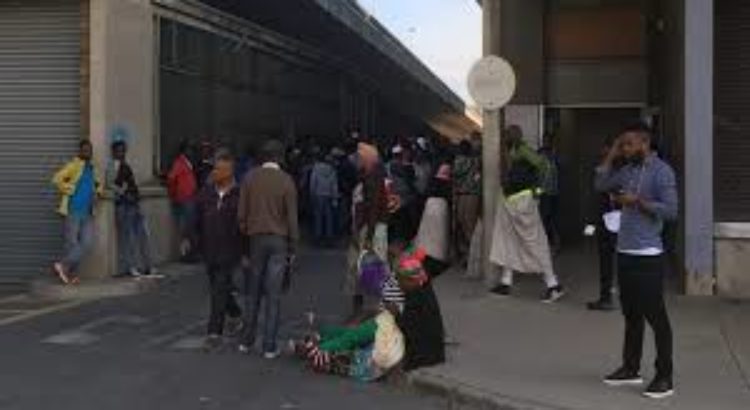
Despite its strong legal and human rights framework on refugees and asylum seekers’ rights, South Africa’s asylum management system is failing, leaving hundreds of thousands of applicants without proper documentation and exacerbating xenophobia in the country, according to a report – Living in Limbo: Rights of Asylum Seekers Denied – released by Amnesty International South Africa today.

The current asylum management process system is failing everyone. In persistin with a broken system that leaves those trying to claim asylum undocumented and in limbo, the government is causing a divide and inflaming tensions between South African citizens and fellow Africans living in the country,” said Shenilla Mohamed, Executive Director of Amnesty International South Africa.“Instead of acknowledging its failures, the government is perpetuating the view that the ongoing high demand by people trying to seek asylum at refugee reception offices stems from the abuse of the system by economic migrants. This has given rise to a toxic anti-asylum seeker narrative that is pushed by those in authority.»

The report found that poor decision-making, including mistakes of fact and lack of sound reasoning, has resulted in a 96% rejection rate of asylum applications and a massive backlog of appeals and reviews – around an estimated 190,000. This has kept some asylum seekers in the asylum system without a final decision of their case for as long as 19 years.

While their claim is being processed, asylum seekers are supposed to be issued with official documents saying that their application is being considered and confirming that they are officially in the system. These documents are essential for getting treatment in public hospitals, registering in schools and accessing formal employment. However, Amnesty International found that asylum seekers were frequently not issued with the required papers

With a broken system that leaves those trying to claim asylum undocumented and in limbo, the  government is causing a divide and inflaming tensions between South African citizens and fellow Africans living in the country .

Without formal status or proper documentation they are unable to work legally, or access healthcare and education. This can leave them destitute and vulnerable to harassment, arrest and detention.

“Rights protection should be the bedrock of any asylum system, yet asylum seekers’ rights are being violated as they are left in limbo, often for years on end. This flagrantly undermines the intentions of the Refugees Act as well as the South African Constitution, which protects the rights of every individual in the country,» said Shenilla Mohamed.

“It’s shocking that a country such as South Africa trivialises the vulnerability of those fleeing desperate circumstances.The asylum process is not explained properly to asylum seekers when they arrive at the refugee reception offices (RROs), and translation is either lacking or of poor quality. Asylum seekers have recently fled their countries of origin and many are unable to speak and understand English, which puts them at a major disadvantage in being able to claim refugee status without prejudice.

  • This is compounded by the fact that most asylum seekers do not have legal representation to assist them with their claims if they are rejected – only around 10% have access to lawyers.


  • A major and worrying proposed change in legislation is the establishment of asylum processing centres at the northern border posts where asylum seekers will be ‘accommodated’ while their asylum claims are considered. Contrary to South Africa’s current refugee law, asylum seekers held in these centres will not have the automatic right to work, conduct business and study while their status is being determined. However, there is silence around how these processing centres will be resourced. That is, how asylum seekers and their dependants will access education, housing, food and medical care. The current system is cheaper compared to the cost of the proposed camps.
  • Further to the immense backlog of appeals and reviews, closure of three of the urban RROs, in Johannesburg, Port Elizabeth (PE) and Cape Town (CT), has put additional strain on the asylum management process, and has had dire consequences for many asylum seekers who have to travel great distances to their nearest RRO to remain documented. The closure of the RROs in PE and CT have been challenged in court since they were closed in 2011 and 2012.  Long court processes resulted in the PE RRO being reopened in October 2018, but the CT RRO remains closed despite a Supreme Court of Appeal order that it be reopened by 31 March 2018.

Amnesty International is calling on the South Africa government, in particular the Department of Home Affairs (DHA), to ensure a safe, fair and efficient asylum management process and to create a united South Africa that welcomes those in search of safety. It should also comply with court orders to reopen the Cape Town RRO, and effectively resource all of the RROs and ensure that the refugee status determination process is administratively and procedurally just and fair.

«South African authorities must stop promoting divisive political narratives and start uniting people around shared values that build a more inclusive society»

Amnesty International Shout Africa embarked on research in 2018 to gather its own data on the experiences of asylum seekers attempting to exercise their rights to seek asylum and remain regularized in South Africa during the determination of their asylum applications.  Amnesty spoke to 88 people through focus group discussions and one-on-one interviews in four locations: Cape Town, Port Elizabeth, Johannesburg and Durban

Fuente de la Información: https://www.amnesty.org/en/latest/news/2019/10/south-africa-failing-asylum-system-is-exacerbating-xenophobia/


Comparte este contenido:

La gran mayoría de los migrantes de África en Europa volvería a intentar el viaje pese a los riesgos

Por: Noticias ONU.

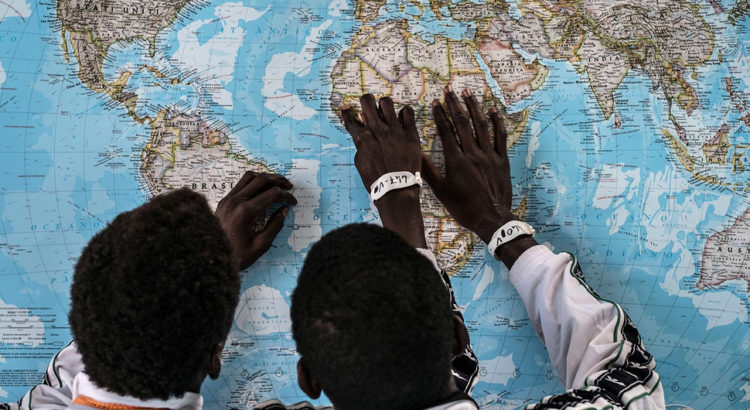
Unos 1800 migrantes de 39 países africanos asentados en Europa afirmaron que volverían a arriesgar sus vidas para llegar a ese continente pese a saber que hacerlo conlleva poner en peligro sus vidas.

Un nuevo estudio publicado este lunes por el Programa de las Naciones Unidas para el Desarrollo (PNUD) indica que el 93% de los africanos que pudieron llegar a vivir a Europa mediante travesías por rutas irregulares se arriesgaría nuevamente pese a conocer el alto riesgo de esos periplos.

El informe se basa en 1970 entrevistas a migrantes de 39 países africanos que arribaron a territorio europeo por vías irregulares y no por haber solicitado asilo o protección internacional. Esos migrantes ahora viven en 13 naciones de Europa.

Los hallazgos señalan que a menudo la razón por la cual estas personas decidieron abandonar sus países no fue conseguir un trabajo ya que no todos eran pobres en sus países y muchos tienen un nivel de educación elevado. Los datos dicen que el 58% tenía un empleo con salario competitivo o era estudiante cuando decidió migrar.

Sin embargo, cerca de la mitad de los encuestados dijo que no ganaba lo suficiente. Además, para dos tercios de ellos la posibilidad de ganar mejor en su país no fue bastante motivo para quedarse. Sus respuestas también revelaron que tienen al menos tres años más de escolaridad que el promedio.

Acelerar el desarrollo y regular la migración

El administrador del PNUD, Achim Steiner, consideró que el informe subraya la urgencia de acelerar el desarrollo en África. “Pese a los avances, el desarrollo es desigual y no lo suficientemente rápido como para satisfacer las aspiraciones de la gente”, dijo.

“Al ayudarnos a aclarar por qué la gente decide irse por vías irregulares y lo que tienen que enfrentar cuando lo hacen, el estudio aporta elementos al debate crítico sobre el papel de la movilidad humana en el alcance de los Objetivos de Desarrollo Sostenible y sobre los mejores enfoques para regular esa migración.”

© UNICEF/Ashley Gilbertson
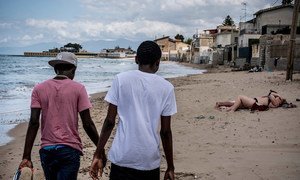
Dos menores de Gambia que cruzaron el Mediterráneo sin sus padres caminan en una playa de Italia.

Repuestas

Estas son las respuestas que dieron algunos de los entrevistados a los encuestadores del PNUD. Se omiten sus apellidos y países de origen para proteger su identidad.

“Si tienes una familia, tienes que asegurarte de que tendrá alimentos, casa, medicina y educación. Yo tengo una hija. La gente podrá preguntarse qué clase de padre soy para haber dejado a mi esposa y a mi niña, pero ¿qué clase de padre sería si me hubiera quedado y no pudiera darles una vida decente?”: Yerima

¿Qué clase de padre sería si me hubiera quedado y no pudiera darles una vida decente?

“La idea de intentar reducir el peso de la migración es ver sus causas. Son las políticas de gobierno las que atrapan a la gente en la pobreza, no desarrollan nada. Las escuelas que no existen, la falta de servicios de salud, la corrupción, lar presión. Eso empuja a la gente a emigrar.”: Serge

“Me veo en mi país dentro de cinco años. Mi familia y yo no nos hemos visto en cinco años, pero llegará el día en que nos reencontremos. Y cuando regrese a mi país, no creo que regrese acá.”: Mahamadou

“Todo lo que quería era ganar dinero. Pensé en mi mamá y papá. En mi hermana mayor y mi hermana menor. Quería ayudarlas. Esa era mi preocupación. Por eso vine a Europa.”: Drissa

Hombres y mujeres migrantes

Según el informe, el sentido de culpa por no enviar dinero suficiente a sus familias es uno de los grandes factores quemantienen a los migrantes en Europa para seguir trabajando.

Cerca del 53% de los entrevistados fueron apoyados por sus familias y amigos para poder viajar y una vez en Europa, el 78% de ellos manda remesas a sus países.

El estudio también encontró diferencias fundamentales en la experiencia de los migrantes según su género: al contrario de lo que ocurre en África, las mujeres ganan 11% más que los hombres en Europa. En sus países los hombres las aventajan por un 26%, en promedio.

Además, más mujeres que hombres mandan dinero a sus familias aunque no estén trabajando.

Pero cuando se trata de delincuencia, las mujeres sufren más que los hombres. Mucho más que ellos, las mujeres fueron víctimas de algún delito en los seis meses anteriores a las entrevistas, en muchos casos de agresiones sexuales.

El PNUD aseveró que el informe es un llamado a seguir expandiendo las oportunidades y opciones en África y a pasar de una migración desordenada a una regulada, en concordancia con el Pacto Mundial para la Migración Segura, Ordenada y Regular.

La publicación es la segunda de una serie de documentos del PNUD para registrar la travesía de africanos jóvenes. Elprimero exploró lo que orilla a algunos a optar por el extremismo violento.

Fuente de la reseña: https://news.un.org/es/story/2019/10/1464201

Comparte este contenido:

Educating Girls May Be Nigeria’s Best Hope Against Climate Change

Africa/ Nigeria/ 29.10.2019/ Fuente: www.sierraclub.org.

I will hammer with one hammer!
All day long!
All day long!

THE CALL-AND-RESPONSE IS ENTHUSIASTIC, rising above the sound of a fan whirring furiously in the corner of the room. About 50 women stand in a circle around the song leader, who pounds the air with an invisible hammer. When she gets to the second verse—»I will hammer with two hammers!»—she pumps both arms up and down, and the rest of the women follow. By the fourth verse, their feet have joined in, stomping the ground, and by the fifth, everyone is bobbing their head up and down too. As the song ends, the room erupts in laughter.

It’s a typical day at the Center for Girls’ Education. On this hot, breezeless afternoon in May, in the third week of Ramadan, most of the women are fasting, but their infectious energy gives no hint of this.

The Center for Girls’ Education (CGE) is located in a plain, single-story building on the campus of Ahmadu Bello University, in the northern Nigerian city of Zaria. Its offices are sparse: a big table, a few desks, a couple of computers. For large meetings, everyone sits on mats on the floor. The concrete walls are bare, save for sheets of paper scrawled with motivational messages like «Work Hard, Have Fun, Make a Difference.»

The purpose of today’s meeting is to give some visitors an overview of the organization, and it began with the center’s director, Habiba Mohammed, leading the staff in a «love clap» to make the visitors feel welcome: «[clap clap] Mmm, [clap clap] mmm, [clap clap] mmm, [clap clap] we love you.» Then staff members take turns introducing themselves. When it’s her turn, Mohammed says, «One thing I want you to remember about me is that I am still a girl.»

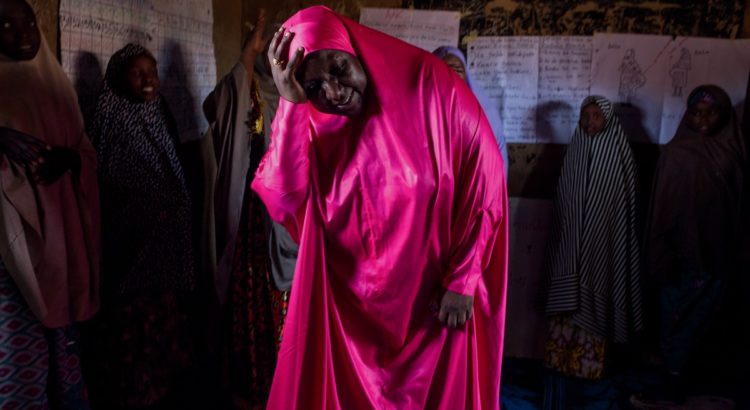
Habiba Mohammed, wearing a red hijab, acts out birthing pains while girls in the dark background are smiling.CENTER FOR GIRLS’ EDUCATION DIRECTOR HABIBA MOHAMMED ACTS OUT LABOR PAINS DURING A REVIEW OF REPRODUCTIVE HEALTH.

At 50, Mohammed isn’t exactly a girl, but with her friendly, open smile and generous laugh, she exudes youthful energy. Her statement seems meant to convey how closely she identifies with the girls CGE serves.

Over the past decade, CGE has helped thousands of impoverished adolescents in northern Nigeria stay in school or gain the skills they need to enroll. A joint program of the School of Public Health at UC Berkeley and the Population and Reproductive Health Initiative at Ahmadu Bello University, the center operates seven projects made possible by funding from institutions including the Bill and Melinda Gates Foundation, the MacArthur Foundation, and the Malala Fund. Thanks to such philanthropy, the center is growing fast. In 2016, its Pathways to Choice project expanded beyond Kaduna State into two other northern states. Another project, the Adolescent Girls Initiative, aims to reach 30,000 girls in at least three more states by the end of the year through a partnership with the United Nations Population Fund.

«In Nigeria, we have 10.5 million out-of-school children,» Mohammed says. «We are always hoping to help whoever wants to support girls, wherever that person is, even if we have to climb mountains or swim oceans.»

Since its inception, the Center for Girls’ Education has grown to a staff of about 70—nearly all of them Nigerian women, the majority of them Muslim, enabling the organization to fluently navigate northern Nigeria’s culturally conservative, mostly Muslim, rural villages to promote girls’ education. The organization’s local connections have allowed it to shift cultural norms without violating them as it advances the health and well-being of women and girls, and by extension entire communities.

«When a girl has an education, she will make a better person in her home, in the community, and everywhere she finds herself.»

The center’s success has broader implications too, as climate change starts to bear down on one of the world’s most populous nations. A large body of research confirms that when girls are educated, their families and communities are more resilient in the face of weather-related disasters and better able to adapt to the effects of climate change. Educated women have more economic resources, their agricultural plots reap higher yields, and their families are better nourished.

Staff members don’t tend to think about their efforts through the lens of climate change; nevertheless, they are helping to prepare the region to cope with, and try to avoid, the worst impacts of global warming.

THE CENTER FOR GIRL’S EDUCATION was founded in 2007 by US medical anthropologist Daniel Perlman. Northern Nigeria has some of the highest rates of maternal mortality in the world, and Perlman had been conducting research in and around Zaria on ways to prevent women from dying during childbirth. Maternal mortality is a multifaceted problem, but early marriage has been shown to be a significant factor—globally, complications from pregnancy and childbirth are the leading cause of death for 15-to-19-year-old women. In the communities where Perlman was doing his research, the average age of marriage for females was about 15, and sometimes girls would marry as young as 12.

Perlman found that while most families considered keeping girls in school a viable alternative to marriage, few were willing or able to enroll their daughters past primary school. Nigeria’s government-run schools are free except for registration fees and the cost of uniforms and supplies; for the poorest families, however, these expenses are prohibitive. The quality of education is also notoriously poor. One mother told Perlman that even though her daughter had graduated from secondary school, she didn’t know how to read or write, and the mother had decided not to send her younger daughters. According to Perlman’s research at the time, a quarter of the girls in the communities surrounding Zaria dropped out during the final years of primary school, compared with just 5 percent of boys. Of the girls who graduated from primary school, only a quarter went on to secondary school.

A teen girl in a purple hijab is bending over and writing on a chalkboard during a numeracy class in an out of school safe space.
A TEEN PRACTICES HER NUMBERS.

CGE set up its first program in the village of Dakace, a dusty collection of buildings inhabited by subsistence farmers and day laborers near Zaria. There, the center organized a handful of what it calls «safe spaces»—girls-only after-school clubs where 12-to-14-year-olds work with a mentor on reading, writing, math, and practical life skills. The hope was that with the extra support, girls would improve their academic performance at school, and families would be motivated to keep them enrolled, thus delaying marriage.

At first, the safe spaces were a hard sell. Mardhiyyah Abbas Mashi, an Islamic scholar and the chair of CGE’s board, led the center’s community-engagement efforts in Dakace. She met with thesarki—the village chief—and the local imam to enlist their support. A tall, elegant woman, Abbas speaks with calm authority. «As a teacher in Arabic and Islamic studies, and as a Hausa [the dominant ethnic group in northern Nigeria], I know the culture. I know the religion. So that is why we go to the community and we talk about the importance of girls’ education in Islam,» she says. «The very first commandment that came to the Prophet was to read. In Islam, knowledge is compulsory for you whether you are a man or a woman.»

The sarki and the imam agreed to the plan, but others in the community remained suspicious. Rumors flew: The real purpose of the safe spaces was probably to teach family planning, the point of which, everyone knew, was to get Muslim women to have fewer babies in order to reduce the Muslim population.

The sarki, Saidu Muazu, called a community meeting to address people’s fears. «I made them understand that there are a lot of boys continuing with their education, but girls are not continuing,» Muazu says, «and that when a girl has an education, she will make a better person in her home, in the community, and everywhere she finds herself.» Eventually, a small group of parents agreed to enroll their daughters in the safe spaces.
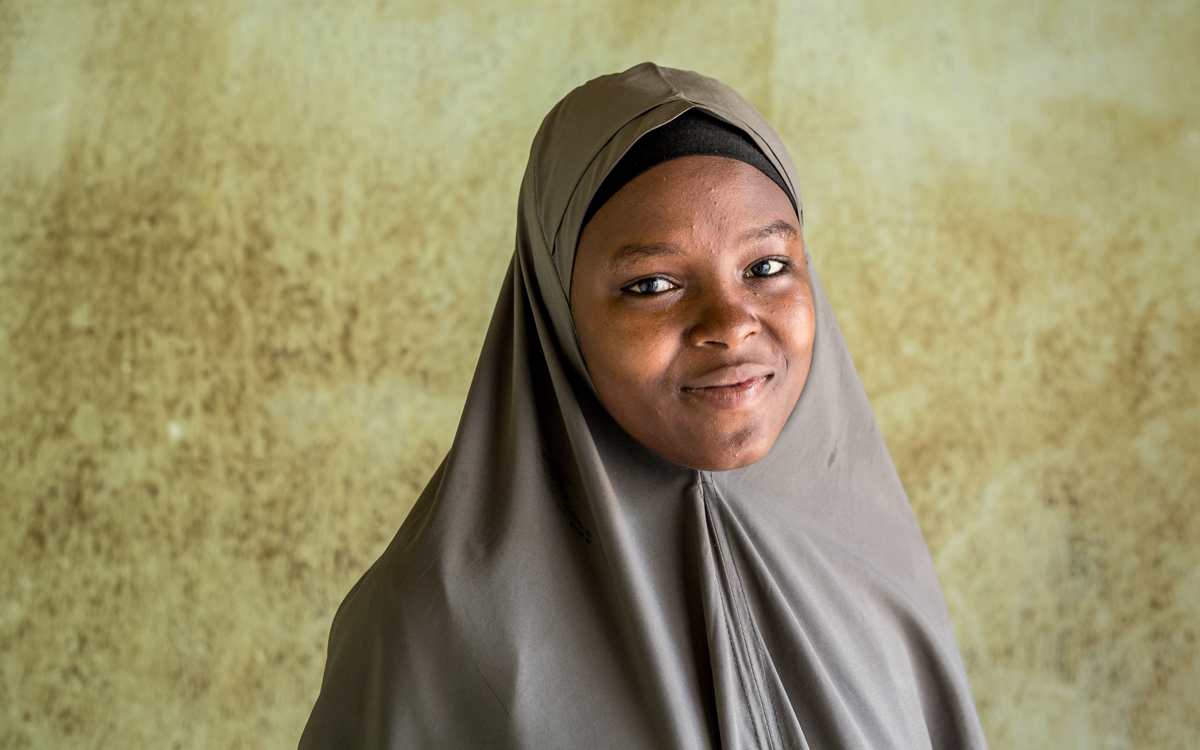
Amina Yusuf, 22, wears a brown hijab and smiles shyly at the camera.
AMINA YUSUF

Amina Yusuf was one of those girls. Despite having just finished primary school, she could barely recite the alphabet, let alone read a book. At the government-run primary school she had attended, she had been in classes with as many as 300 students. It was chaos. To maintain order, instructors would beat the students with sticks.

By the time Yusuf began attending a safe space at age 12, many of her friends were married. «I thought it was just a normal way of life,» she says. But her mother had received some education as a girl, and her father thought she should as well.

The safe space was held three afternoons a week. Unlike Yusuf’s teacher at school, the mentor knew her by name; if Yusuf didn’t understand a lesson, the mentor followed up with her individually. Plus, the snacks were good.

Yusuf would come home from the safe space and teach her seven siblings what she had learned and also share tips with her mother, like how to keep a clean kitchen so no one got sick. Her parents were impressed. In the past, her father had not paid much attention to her, but now he pointed her out to others, saying, «That’s my daughter.»

Mohammed was a mentor at one of the first safe spaces in Dakace. At the time, she was a teacher at a secondary school. Sometimes she had up to 90 students in a class, and she was also raising eight children. But in her first weeks as a mentor, she was taken aback by how difficult it was to work with the 15 12-year-olds in her safe space. They were unruly, and fights broke out, often for trivial reasons such as someone’s hand accidentally brushing someone else’s. «Whenever I came back home after my safe space, I had terrible headaches,» Mohammed recalls. «I’d think, ‘Should I continue this work? Am I really meant for it?'»

Mohammed had grown up in a family of three girls and one boy. Her mother had always encouraged her and her sisters to do their best. «In Nigeria, if you have a girl child, people tend to look down on you, thinking that you have not gotten a boy child that will carry the name of the family, but my mother always made us understand that a girl can do what a boy can do,» Mohammed says. «Even when I was married and I was going to school, my mother was always there to support me, helping me in whatever way she could.»

Thinking about this made Mohammed feel a deep responsibility to the girls in her care, despite the challenges of the work. She and the other mentors began meeting regularly to swap stories and advice, in essence forming a safe space for one another. Gradually, the girls’ behavior began to improve.

Over time, the center’s mentors, who are all volunteers, have gotten better at helping adolescent girls with little to no real education. They’ve incorporated movement, storytelling, and singing into their lessons to teach basic literacy and numeracy skills. It has been a quietly radical experiment, this refusal to give up on girls from the poorest families.

Maryam Albashir joined the program as a mentor in 2010 and is now a team leader for CGE’s Transitions Out of School project. «One good thing about working with this center is you learn to accommodate everybody, whether or not you are of the same status, wherever you are from,» she says. «We don’t really have that in our schools in this country. You get spanked; you get punished. However the teachers want to treat you, they treat you. We were supposed to enroll about 30 girls in a school, but the principal rejected them, and her reason was that she didn’t see people of their caliber coming into school. She didn’t give them a chance; she just defined them.»

In Dakace, Muazu says, there has been a big shift in attitudes toward girls’ education. «People within the community started seeing the impact in the girls, so they got impressed. Right now, the number of girls who are in school is more than the number of boys because of the help from the center.»

Girls who have graduated from the safe spaces frequently stay on and become what the center calls «cascading mentors.» Now 22, Yusuf works on a CGE project called the Girls Campaign for Quality Education, which teaches girls how to advocate politically for better access to education. She is enrolled in college and is studying science education. She is not married. «I want to make sure that I marry a man who will allow me to continue my education,» she says.

Perlman believes that the Center for Girls’ Education is succeeding in its original goal of decreasing maternal mortality: According to his research, the age of marriage for girls who participate has been delayed by an average of 2.5 years. But even if this were not the case, he would deem the program a success because of the way it has transformed the lives of girls like Yusuf. His data shows that 80 percent of the girls who went through the program in its first few years went on to graduate from secondary school. Now 70, Perlman still travels to Zaria frequently to collaborate with Mohammed and other staff members on program design and implementation. «Even old white men can be allies,» he likes to say, «as long as they understand that the people who have the problem have the solution.»

NIGERIA IS THE SEVENTH-MOST-POPULOUS nation in the world, with just over 200 million people living in an area roughly twice the size of California. And it’s growing fast—Nigerian women have, on average, five children. By 2050, the country is projected to have the third-largest population, with more than 400 million people, the vast majority of whom will be under the age of 24. Tens of millions of young people will need education and employment opportunities along with basic services like sanitation and clean water. Without these, they will be mired in poverty and vulnerable to extremism in a country that already contends with Boko Haram and other terrorist groups.

Add to this list of challenges the impacts of climate change. Nigeria’s northern border is perched on the edge of the Sahel, the semiarid belt that stretches across the southern rim of the Sahara Desert. By 2050, average temperatures in the Sahel could rise by as much as 2°C. Hotter temperatures will mean drier soil that retains less moisture, and this will make it harder to grow food, especially for subsistence farmers.

Yusuf Sani Ahmed, an agricultural expert at Ahmadu Bello University, says he already sees the signs of climate change in Zaria. «The temperature can be 44 Celsius, which is high, and the streams are becoming drier and drier.» Because the water table is low, he says, there’s less vegetation, and livestock have become thin and malnourished.

Ahmed is on good terms with the herders whose cattle graze near his fields, but he says that shrinking arable land coupled with too much development is exacerbating conflicts between farmers and herders throughout the north; violent clashes are on the rise. «There’s less available land, and also not much is growing because things are drier,» he says. «It is so competitive.»

Girls’ education plays an indirect but crucial role in helping to alleviate these complex problems. The book Drawdown—a compendium of strategies to reduce greenhouse gas emissions—places girls’ education at number six on its list of the 100 most effective solutions to climate change. Aside from helping communities become more resilient, girls’ education has a significant effect on population growth. «Women with more years of education have fewer, healthier children and actively manage their reproductive health,» the Drawdown researchers say, noting that, on average, a woman with 12 years of schooling has four to five fewer children than a woman with no education.

In a report for the Brookings Institution, Christina Kwauk and Amanda Braga call girls’ education «one of the most overlooked yet formidable mechanisms for mitigating against weather-related catastrophes and adapting to the long-term effects of climate change.» But they also warn that fixating too much on population growth in low-income countries can be fraught with ethical problems. «For one,» they write, «it places the cost for reproductive decisions on girls and women in the Global South while ignoring other anthropogenic factors that contribute to climate.» For example, the average American produces 16 tons of greenhouse gas emissions annually, while the average Nigerian emits only .55 tons.

Ultimately, improving girls’ access to education around the world helps address the strain that an increasing number of people places on fragile resources—for example, arable land and fresh water—in a way that advances basic human rights for women and girls. «If universal education for girls were achieved tomorrow,» Kwauk and Braga write, «the population in 2050 could be smaller by 1.5 billion people.»

When I feel labor pains begin, I go to the hospital!

HABIBA MOHAMMED STANDS before a group of about 20 girls in a dim room with mud-brick walls in the village of Marwa, not far from Dakace. She is a guest at today’s gathering, and she leads the girls in a call-and-response about going into labor and giving birth. While she sings, she trembles, grabs her back as if in pain, and doubles over. The girls imitate her gestures, their pink, red, blue, and green hijabs billowing.

This safe space began less than a year ago. The mentor, Khadijah Mohammed (no relation to Habiba), says that when they started, none of the girls could write their names. «Now they can write their names, the name of their community, their parents’ names, and so many other things,» she says. Most of these girls have never been enrolled in school; now they are preparing to take a placement exam to enter primary school. «They have ambitions now,» Khadijah says. «Some of them want to become doctors, some teachers. They have hope for their future.»

Today’s lesson is mostly a review of reproductive health—hence, Habiba’s call-and-response. «How do you know when you are pregnant?» Khadijah asks. «Once you are pregnant, when should you go to the clinic?» The girls talk over one another to answer.

CGE’s safe space curriculum includes a field trip to a medical clinic. For many students, it’s the first time they’ve been to one. Sometimes this is because the nearest clinic is far from where they live. Their families’ low social status can also interfere. «When they go to the hospital, they don’t feel very confident with the workers, so they don’t get what they want,» Khadijah says. On the field trip, the girls talk to nurses, doctors, and women who have just given birth. «Some of [the students] are very shy to the doctor during that visit,» Khadijah says, «but some of them are confident. They ask questions.»

Operating in a religiously conservative area, CGE does not explicitly teach family planning. Nonetheless, the girls who take part in the safe spaces are more likely to use birth control than those who don’t, partly because of the greater exposure to information they receive in school.

In their study, Kwauk and Braga also argue that higher levels of education are associated with strong measures of agency—or, «the ability to make decisions about one’s life and act on them to achieve a desired outcome, free of violence, retribution, or fear.» For this reason, girls’ education complements family-planning services, which on their own aren’t always effective.

Despite the efforts of CGE and other organizations working to advance girls’ education, fewer than one in three girls in sub-Saharan Africa attends secondary school. Advocates say that if some climate-adaptation funds—which are often focused on expensive, highly technical solutions—were delivered to organizations that educate girls, this low-tech, equity-focused response to climate change could rapidly scale up.

But for Perlman, Mohammed, and others at CGE, that isn’t really the point. Their work is, above all, about fostering female agency. The center has flipped the script that usually accompanies Western-led aid and development programs in poorer nations. Female education isn’t an instrument to some other goal—it is the goal, with the broader environment representing a kind of co-benefit. And this is exactly why it works.

«Something has really taken place to make people better,» Mohammed says, «and it is helping more girls to be able to have the support of their parents to allow them to continue schooling and to really achieve something with their life.

Source of the notice: https://www.sierraclub.org/sierra/2019-6-november-december/feature/educating-girls-may-be-nigerias-best-hope-against-climate

Comparte este contenido:
Page 108 of 621
1 106 107 108 109 110 621
OtrasVocesenEducacion.org