Page 406 of 622
1 404 405 406 407 408 622

Africa: Palm Oil Producers in Africa Sign Deal to Save Forests

Ten African countries have committed to better ways of producing palm oil in a bid to save forests.

This follows the signing of a joint declaration at the ongoing COP22 climate talks in Marrakech, Morocco.

Palm oil is the most widely used vegetable oil globally, with half of all packaged products containing the ingredient.

It is estimated to be worth $50 billion and projected to rise to $88 billion by the year 2022.

The product is used in manufacturing of consumer goods such as bread, soap, shampoo, cereal and cosmetics.

But to produce the oil, a lot of forest land in the tropics is cleared. The World Wide Fund reports that an area equivalent to 300 football fields of tropical rainforest is cleared every hour around the world for palm oil crops.

In Africa, top palm oil producing countries include the Central African Republic, Cote d’Ivoire, Cameroon, Democratic Republic of Congo, Sierra Leone, Ghana, Liberia, Nigeria, Gabon and Congo-Brazzaville. Together, they are home to more than 70 per cent of Africa’s rainforests, which is 13 per cent of the global total.

Nigeria is currently Africa’s largest palm oil producer and the fifth in the world, with 2.5 million hectares under production.

Over the years, the palm oil industry has been accused of massive deforestation, pushing many indigenous species into extinction.

«These governments recognise the significant market signal that global businesses are providing through their desire to source sustainable palm oil at scale,» said Dominic Waughray, the Head of Public-Private Partnerships at the World Economic Forum.

Oil farmland

«Palm oil, if produced sustainably, can play a key role in poverty alleviation by helping farmers thrive economically,» said Paul Polman, the chief executive officer at Unilever, a major buyer of palm oil, welcoming the move.

The practise has been linked to climate change, because cutting down native forests often involves burning of invaluable timber and remaining forest undergrowth, thereby emitting immense quantities of smoke into the atmosphere.

In addition to environmental consequences, entire communities have been displaced all over the world, and many animal and human rights abuses reported.

Whereas the environmental impact is not as bad in Africa as it is in South East Asia, there are concerns that multinational palm oil producers have now fixed their eyes on Africa as their next spot for growth.

Over the years, campaigners have been pushing for a total ban on use of palm oil in order to save the forests.

In Uganda, Kenyan-based consumer goods manufacturer Bidco was recently cleared of charges of environmental breach, offering reprieve to the firm that has been fighting claims that it is involved in malpractices.

Uganda’s High Court dropped the case against the manufacturer for alleged deforestation for a vegetable oil farmland in Kalangala.

The case had been filed by three environmental groups which claimed that Bidco had influenced Uganda National Forestry Authority to de-gazette forest reserves on Bugala Island for the firm to grow palm oil.

Fuente :

http://allafrica.com/stories/201611180675.html

Fuente imagen:

https://lh3.googleusercontent.com/H6g1ARNGdFwpvcs7NGMJjckLXcer3nTmNk4ejMmZm-4KQZ6jK1CWPq_WJLPuHY_1K3KwbQ=s85

Comparte este contenido:

South Africa: UWC Blazes Possibly Arson

South Africa/21 de Noviembre de 2016/Allafrica

Resumen: Se cree que dos incendios en la Universidad del Cabo Occidental (UWC) el viernes se iniciaron deliberadamente. Los bomberos estaban luchando contra las dos llamas, una en un área de conservación de la naturaleza y la segunda en el veld detrás del estadio del campus, el vocero de los bomberos de Ciudad del Cabo Theo Lane confirmó el viernes por la tarde.

Two fires at the University of the Western Cape (UWC) on Friday are believed to have been started deliberately.

Firefighters were battling the two blazes, one in a nature conservation area and the second in the veld behind the campus stadium, Cape Town fire services spokesperson Theo Lane confirmed on Friday afternoon.

Groups of students, as well as outsourced workers, were making their way around campus in a bid to mobilise others to join them, university spokesperson Luthando Tyhalibongo said.

Protesting students had also gathered at the university entrance, the main campus and at the residences.

Public order police were on the scene.

UWC #FeesMustFall leader Lukhanyo May distanced the movement from any destruction on campus, saying it is not behind the fires.

Victimisation

«We don’t condone violence. We have nothing to do with his. There are figures using our legitimate cause as a cover for their personal things,» he said.

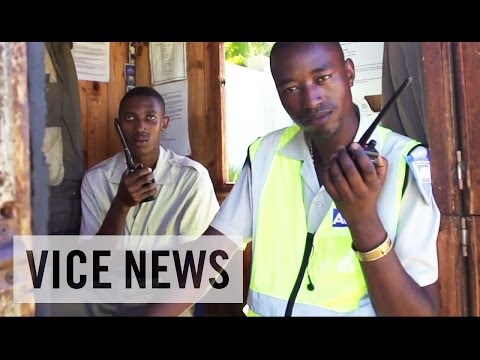
Students and workers gathered on campus on Friday morning to discuss their support of security guards affected by the shutting down of the campus.

Many of those working for the campus security service provider were being victimised by their employer as they joined the students in their call for insourcing, May said.

«They have been summoned to their head office. But we have decided the company should come here to speak to them. The workers are being blamed for the shutdown, while we as students were responsible for it,» he said.

On Friday morning, their gatherings were disrupted by police who fired stun grenades at them without provocation, May insisted.

He reiterated that the movement had not been involved in violence of any kind, except when supporters were defending themselves against police.

 Tyhalibongo confirmed that the security service provider was involved in a dispute with its workers, but that the university had no part in the matter.

Earlier this week, UWC’s Centre for Innovative Educational and Communication Technology was set alight and gutted.

As the building burned on Tuesday, about 20 computers were also stolen from the Castinga Lab.

Free quality education

When exams commenced last Monday protesting students tried to stop shuttles transporting other students to exam venues.

Clashes broke out between police, campus security and students. A campus vehicle was overturned and graffiti was sprayed on buildings.

Protesters threw rocks during confrontations with police at student residences.

Last week, the education and residential services office was set alight, after it had been refurbished following an arson attack during protests in 2015.

In September, when a fresh wave of protests started, UWC students submitted a memorandum detailing their demands.

Top of the list was free quality black-centred education. They wanted all student debt to be cleared and registration and application fees to be scrapped.

Other concerns related to safety and the affordability of accommodation, study materials and clinics.

Insourcing of workers is also included in their demands.

Fuente: http://allafrica.com/stories/201611180850.html

Comparte este contenido:

El nuevo orden mundial y el conspiracionismo

Por: Tere Quezada

La frase “Novus Ordo Seclorum” (El Nuevo Orden de los tiempos), fue inspirada en las bucólicas del poeta romano Virgilio)

Se habla tanto de los mentados Iluminati y el nuevo orden mundial que en raras ocasiones le echo un ojo a toda esa basura, pero no sé qué me asombra más, si la ignorancia de la gente o la incapacidad que tienen para pasar los datos por el filtro de la reflexión. Al menos que pasara por una pizca de cierto juicio. Con agrado y asombro vi hace unos días que la revista Letras Libres escribió un texto (intitulado: Información no comprobada) sobre las mentiras y la manipulación del sitio ruso RT y me agradó mucho porque el sitio RT tiene dentro de varios objetivos engañar con noticias falsas a la gente de América Latina, especialmente cuando se trata de judíos y norteamericanos; noticias que se engullen sin filtro los latinos y que no sólo los alejan de la verdad sino que los dejan aislados del mundo al tener ideas distorsionadas de la realidad provocando un desconocimiento ilusorio de la política internacional.

Por supuesto que hubo un nuevo orden mundial, claro que sí, pero sucedió (arrancó) en MDCCLXXVI, esto es, en 1776, el año de la Declaración de la Independencia de los EU, donde se menciona -por primera vez en la humanidad- las atrocidades de la cacería humana en África. En ese documento histórico del cual el libertador Simón Bolívar se inspiró para escribir el Manifiesto de Cartagena, se menciona por primera vez el trato inhumano de la raza africana para su venta y comercialización como esclavos. Práctica común en ese entonces. Francia, Holanda, Portugal e Inglaterra eran los países que cazaban y comercializaban a la raza negra. EU nunca lo hizo. Al día de hoy no se les ha reclamado dicha participación en la historia, pues son el origen principal de muchos males del África, mucho menos a los franceses, que no han sido  creadores de nada en la historia de la humanidad y se les imputa falsamente como los próceres de la libertad.

Simbología del billete norteamericano.

La frase ?Novus Ordo Seclorum? (El Nuevo Orden de los tiempos), fue inspirada en las bucólicas del poeta romano Virgilio, es una frase tomada del cuarto poema de las ?Églogas de Virgilio? que en latín dice así: Ultima Cumaei venit iam carminis ætas;Magnus ab integro sæclorum nascitur ordo. Iam redit et Virgo, redeunt Saturnia regna, iam nova progenies cælo demittitur alto. En inglés significa lo siguiente: Now comes the final era of the Sibyl‘s song; The great order of the ages is born afresh. And now justice returns, honored rules return; now a new lineage is sent down from high heaven.

Con la Declaración de la Independencia se acaba para siempre con la figura del Señor Feudal y la Monarquía pues los nuevos padres de la patria diseñaron por primera vez en la historia la figura del ?Presidente?, y es George Washington el primer Presidente en la historia de la humanidad.

La frase en latín ?ANNUIT COEPTIS? (Annuit C?ptis) significa «He [God] has favored our undertakings», Dios y la Providencia ha favorecido nuestras acciones». El nuevo diseño político para dirigir al nuevo pueblo libre de ese entonces se crea bajo la aprobación de la ley cristiana pues Dios es el único que puede otorgar los ?derechos inalienables?, esto es, ningún hombre puede autorizar o quitar vida, brindar libertad, o felicidad más que Dios.

Las dos frases van acompañadas del ?Ojo de Horus?, el ojo que todo lo ve, el ojo de la divina providencia basado en el Mito de Osiris, el cual significa ?renacimiento?, los griegos decían: ?En los himnos sagrados de Osiris es evocado aquél que está escondido en los brazos del Sol?, refiriéndose al ojo como una gran fuente de luz y de vida.

A la insignia con toda esta simbología le llaman ?The Great Seal? o El Gran Sello.

En 1782, Sam Adams desde el Congreso (el 3er congreso) llamó a un artista del diseño, William Barton, de Filadelfia, para traer una propuesta a la junta nacional (Third Great Seal Committee), Barton, pintor y experto en heráldica, sugirió una pirámide de trece capas por debajo del ?Ojo de la Providencia?. Los lemas que Barton eligió para acompañar el diseño eran Deo Favente («con el favor de Dios», o más literalmente, «con Dios a favor») y Perennis («eterno»). Los diseños de las monedas fueron diseñadas por Francis Hopkinson, delegado de New Jersey y uno de los firmantes de la declaración de la independencia. Básicamente Hopkinson diseñó la bandera norteamericana también. Años después fue juez federal en Pensilvania.  

En el diseño de la versión final del Gran Sello, Charles Thomson (un ex profesor de latín) mantuvo la pirámide y el ojo para el reverso pero sustituye los dos lemas, utilizando Annuit C?ptis en lugar de Deo Favente, y Novus Ordo Seclorum en lugar de Perennis. Cuando él proporcionó su explicación oficial sobre el significado de este lema, escribió: El ojo sobre ella [la pirámide] y el lema Annuit C?ptis refieren a los muchos significados de la providencia en favor de la causa norteamericana.

La frase de las monedas ?E Pluribus Unum? (?de todos uno?), está compuesta de trece letras al igual que Annuit Coeptis y van acompañadas de 13 flechas, 13 estrellas y 13 rayas. La pirámide tiene 13 niveles. Y todo esto no tiene ninguna otra alusión más que la representación absoluta de las 13 colonias que fundaron los EEUU.

Todo el diseño principal del billete (dólar)  así como sus monedas se creó con un comité elegido por el congreso y de manera pública, nada se hizo en lo oscurito ni en secreto y no tiene ningún otro significado más que el que es. Fue una forma de dejar plasmado para siempre un nuevo orden de vida que cambió el rumbo del mundo y el rumbo de la humanidad para siempre. Hoy nosotros los mexicanos al igual que otras naciones usamos una Constitución, el sistema de los tres poderes divididos y el sistema de partidos.

Yo decidí no discutir más con los masones porque son ellos los que dicen que los padres de la patria fueron masones, lo cual es una gran mentira, los padres de la patria no trabajaron nunca como logia y muchos menos de manera secreta, todo su trabajo fue público en las trece colonias y no hay ninguna documentación ni existe ningún biógrafo experto de la academia (que son los oficiales) que afirme o diga que fueron masones o logia masónica. Al estudiar la documentación completa de toda la teoría política (documentos federalistas) y la Constitución, jamás y de ningún modo, hay algún rasgo, señal o vestigio de ideas masónicas, es una documentación estrictamente de teoría política de gran nivel y excepcional, y como casi todos eran hombres cultos y conocían la filosofía griega, sabían leer latín y griego, pues era obvio que usaran símbolos con influencia de los clásicos griegos y romanos, al igual que la sabiduría egipcia.  

Los masones comenzaron con este chisme en 1827, cuando ya no existía vivo ningún padre de la patria. Desde entonces le han hecho creer a la gente que eran masones y desmentirlo sería agotador e infructuoso.

 fuente: http://www.sdpnoticias.com/columnas/2015/02/01/el-nuevo-orden-mundial-y-el-conspiracionismo

Comparte este contenido:

Zambia: Margrate Mwanakatwe Visits Evelyn Hone College

Zambia/21 de Noviembre de 2016/Allafrica

Resumen: La diputada central de Lusaka, Margrate Mwanakatwe, se tomó ayer para visitar la institución educativa más alta de su circunscripción – Evelyn Hone College.

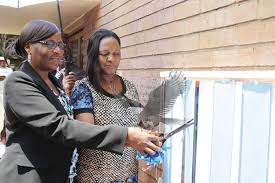
Lusaka Central MP Margrate Mwanakatwe yesterday took time to visit the highest learning institution in her constituency – Evelyn Hone College.

Mwanakatwe, who is also serving President Edgar Lungu’s government as commerce minister, has seeming not forgotten the people that employed him.

The lawmaker has not only resigned to the plush air-conditioned offices that come with ministerial positions. She has often found time to interact with members of her constituency.

 Yesterday, she chatted with students and also men college principle Daniel Fwambo on a tour that would help her understand the scope of challenges facing the institution.

Evelyn Hone College has not been spared from perennial sanitation problems, erratic water supply, lack of equipment, overcrowding leading to shortage in bed space.

These challenges have occasionally forced students to take to the streets and riot.

Fuente: http://allafrica.com/stories/201611190202.html

Comparte este contenido:

South Africa: UJ Journalism Students Victims of Alleged Intimidation

South África/21 de Noviembre/Allafrica

Resumen: La Policía  y seguridad privada supuestamente amenazaron a un estudiante de periodismo de la Universidad de Johannesburgo que estaba en el lugar de un asesinato, así lo dijo el viernes la Asociación de Comunicación de Sudáfrica.

Police and private security allegedly threatened a University of Johannesburg journalism student who was at the scene of a murder, the South African Communication Association said on Friday.

Two police officers visited Magnificent Ndebele, 20, in his residence between 01:00 and 02:00 last Thursday and confiscated his equipment, including his cellphone and laptop without providing a warrant, Sacomm said in a statement.

Ndebele was on the scene when a private security guard allegedly shot and killed Kelvin Baloyi at a student residence in central Johannesburg in the early hours of Saturday, November 5. Ndebele recorded images.

«As journalism and media educators, we deplore the actions of police in their unlawful confiscation of a student journalist’s equipment and what is clearly targeted harassment of the student journalist after he captured scenes of a crime.

«We are deeply concerned about the ongoing intimidation, harassment, and abuse of both professional and student journalists.»

The university could not immediately be reached for commen.

While Ndebele was reporting on student protests at UJ in recent months, police and private security had allegedly threatened him on various occasions.

In addition, private security guards had prevented several UJ student journalists from entering campuses, Sacomm said.

In September, a group of journalists were allegedly beaten with batons and pepper-sprayed at UJ’s Doornkloof and Kingsway campuses.

Guards assaulted and pepper-sprayed filmmaker Sipho Singiswa without provocation on a UJ campus on September 28. He filmed the attack.

Sacomm reminded police of SAPS Standing Order 156, which instructs officers to treat media representatives with respect, courtesy and dignity, even when provoked. They may not delete a journalist’s photographs or footage, and may not confiscate equipment without a warrant.

In August, UJ academics held a picket calling for campus security to stop attacks on students. Students had called for private security on campus to be dismissed.

Fuente: http://allafrica.com/stories/201611190203.html

Comparte este contenido:

Etiopía: Más de 75 millones de niños se quedan sin educación por el cambio climático

Etiopía/21 de Noviembre de 2016/http://www.corresponsables.com/

Más de 75 millones de niños y adolescentes en todo el mundo ven hoy interrumpido su proceso educativo por emergencias y crisis prolongadas debidas en gran parte a problemas climáticos, según datos de la UNESCO recogidos por Entreculturas.

 En Etiopía, la sequía ha afectado a la escolarización de cerca de 6 millones de niños y niñas, apuntó la ONG con motivo del Día Internacional de los Derechos de la Infancia que se conmemora el 20 de noviembre.

En un comunicado, llamó la atención sobre los efectos que el cambio climático puede tener sobre el derecho a la educación, pero también sobre el poder del conocimiento para combatir el deterioro medioambiental.

En el mundo hay 160 millones de niños y niñas que viven en áreas de sequías severas o muy severas y 530 millones en zonas de alto riesgo de inundaciones, según cifras recogidas en el informe La Tierra es Nuestra Mejor Escuela.

Muchos de estos niños se ven obligados a desplazarse, con lo que su formación queda interrumpida y, en ocasiones, totalmente destruida, advirtió la ONG. Además, señaló que a principios de siglo había 25 millones de refugiados medioambientales, y se calcula que en los próximos 50 años, entre 250 millones y 1.000 millones de personas se verán obligadas a abandonar sus hogares.

«La educación es fundamental de cara a un planeta sano, y un planeta sano es fundamental para que se cumpla el derecho a la educación», recalcó.

Fuente: http://www.corresponsables.com/actualidad/internacional/ninos-afectados-por-cambio-climatico

Comparte este contenido:

Sudáfrica: Talking decolonialisation. Transformation of higher education is long overdue

África/Sudáfrica/Noviembre de 2016/Autor: Charles Molele/Fuente: Mail & Guardian Africa

RESUMEN: Hace aproximadamente un año, estudiantes universitarios surafricanos enojados en el movimiento #FeesMustFall salieron a las calles y pidieron la inmediata introducción de una educación superior afrocéntrica en sus universidades. El llamamiento a una educación superior descolonizada sigue estando en el centro de las exigencias de una educación gratuita y de calidad. Mientras los debates filosóficos sobre la transformación de la educación superior se enfurecen, los académicos se reunieron en el Centro de Resolución de la Universidad de Johannesburgo el pasado fin de semana para discutir el contenido y el carácter de lo que una educación superior afrocéntrica y un currículo descolonizado serían en el futuro . El simposio, organizado por la División de Internacionalización de la Universidad de Johannesburgo, titulado Decolonising Knowledge Thought Leadership Series: The Curriculum and Future University, contó con la participación de decenas de estudiantes, profesores, miembros del público y partes interesadas.

About a year ago, angry South African university students in the #FeesMustFall movement took to the streets and called for the immediate introduction of an Afrocentric higher education in their universities. The call for a decolonised higher education remains at the centre of demands for a free, quality education.

While the philosophical debates on the transformation of higher education rage on, academics met at the University of Johannesburg’s (UJ) Resolution Centre this past weekend to discuss the content and character of what an Afrocentric higher education and decolonised curriculum would actually be like in the future.

The symposium, entitled Decolonising Knowledge Thought Leadership Series: The Curriculum and Future University, was organised by the University of Johannesburg’s Division for Internationalisation, and was attended by dozens of students, lecturers, members of the public and interested parties.

Professor Ahmed Bawa, chief executive of Universities SA, said the debate on the decolonisation of higher education in South Africa was long overdue. He pointed out that the transformation of higher education should have been resolved decades ago, soon after the ANC-led government came to power in April 1994.

“These issues [decolonisation and transformation] were raised and discussed in the National Commission on Higher Education process in 1995-1996,” Bawa told guests at the symposium. “And both were deferred. Why, one might ask?

“My understanding is that it was mainly from fear that such engagement would cause concern and instability in the established, historically white universities. It has taken over 20 years for us to return to both questions and however we wish to think about them, they are at the centre of the project of how we might re-imagine South African higher education, and understand its social location in the context of the next phase in our re-imagination of this society — a task in which we have been failed by our national leadership.”

Professor Nyasha Mboti, HOD of the department of communication studies at the UJ, agreed with Bawa that the ANC-led government had left the issue of transformation of higher education unresolved for far too long.

He told theMail & Guardian Africaafter the panel discussions: “As Prof Bawa pointed out, this debate was postponed over 20 years ago, and only #FeesMustFall has brought it back. We must thus duly give credit to South African university students for their bravery and foresight in turning our attention back to the core issue: the failure by universities to genuinely and sincerely transform. All the speakers at the debate showed that they are preoccupied not with complaining but with solutions: how genuine and sincere decolonisation can happen.

Uncomfortable process

“My own view is that decolonisation is not a “khumbaya” project, where at the end of the day we all hug and feel happy. On the contrary, it is an uncomfortable process dependent on telling uncomfortable truths. Unpopular, pro-justice decisions will have to be made. We have a window of opportunity to do this, which we cannot afford to let close because of vested corporate and state interests. If that window closes, the future of our children and their children’s children would have been betrayed at the altar of pessimism, racism, big business, neoliberal governmentality, and statutory complicity. The broad message, I think, is this: decolonisation will happen, with or without corporate and government approval. After all, it is not for them. It is for the oppressed.”

Dr Joseph Minga, a lecturer of Cultural Studies at the Monash University in Johannesburg, said achieving the goal of Afrocentricity meant, for him at least, a total rejection of Western education. Afrocentricity, according to Minga, was central to what should constitute education in Africa.

“The demand of our students for a decolonised education today is similar to that of Europe during the Renaissance. Consciousness obliges that some things are deleted while new ones are created,” said Minga.

“In a world where everything is yet to be done, what people need first is a line of thought, the way on which to embark that leads to one’s destiny. And I think students know the way: it is called Afrocentricity. As a theory it is vital for the African university, because by it students will become masters of their own history and the knowledge production needed by their communities.

“It is not difficult to imagine that one day the departments of Nubia and Egyptwill be established in all our universities, the Swahili language accepted in the West as are English and French and Mandarin to us, the amaPantsula dance given space in the School of Art at Sorbonne or Harvard University as we do with their ballet;that day will see the balance of forces tilt in our favour.”

Break from the West

Nigerian scholar Dr Alex Asakitikpi agreed with his fellow Monash University lecturer Minga, saying a future decolonised university must break away from the West and its knowledge production systems.

Asakitikpi also accused some academics in South African universities of “disguising” themselves as Pan-Africanist, while in their utterances and actions they are surreptitiously campaigning for the maintenance of the status quo of Western hegemonic authority over African peoples and their affairs.

“This is very important [to recognise], because it is such elements that tend to drag [out] the decolonisation debatead infinitum, thereby [short] circuiting any significant progress,” said Asakitikpi.

“Yes, I agree with my colleague, Dr Joseph Minga, for the rejection of any suggestions from the West to strike a balance as espoused by Prof [Thaddeus] Metz in his presentation. It is my candid opinion that for too long Africans have acquiesced to external forces in shaping their future, and after more than 60 years we have come to the unequivocal conclusion that that route will not take us out of the economic, political, social, and cultural quagmire that characterises African peoples today.

“What is important for me at this stage, is for Africans (peoples of African descent who have shared a common fate of slavery, colonialism, neo-colonialism, and humiliation over the last 500 years) to create a larger platform to articulate the lines of actions to be taken to achieve the common goals of our emancipation from mental slavery and neo-colonialism, [by] self-determination, endogenous sustainable development, and racial dignity.”

Bawa, in his concluding thoughts, told guests that the issue of languages was going to be critical in the decolonised curriculum of the future in SA universities, because South Africans coexist in multiple knowledge systems.

“The dominance of English and other European languages as academic languages persists in many developing nations, but for many university students these are second or even third languages,” said Bawa.

“This is clearly a matter of access, but it is also about the social justice imperatives related to the development of indigenous languages. The use of isiZulu, kiSwahili, Fulani or Gujarati as languages of academic discourse is the one way of ensuring the long-term sustainability of indigenous languages.”

Fuente: http://mgafrica.com/article/2016-11-14-talking-decolonialisation-transformation-of-higher-education-is-long-overdue

Comparte este contenido:
Page 406 of 622
1 404 405 406 407 408 622