Page 474 of 621
1 472 473 474 475 476 621

Tanzania: Schools that cheat on pupil rolls face music

África/Tanzania/14 Agosto 2016/Fuente y Autor: Dailynews

Resumen: El Gobierno anunció que tomará una nueva medida en las escuelas que engañan a los números de matrícula escolar para comprobar los costes adicionales derivados de la financiación de los alumnos fantasmas. El presidente John Magufuli dijo que existe un número de escuelas que registra de manera fraudulenta los alumnos para obtener la parte de los subsidios de educación del gobierno. Como resultado, el gobierno ha estado pagando enormes cantidades en la esperanza de que todo el dinero se canaliza para beneficiar a los alumnos y estudiantes, mientras que sucede lo contrario.

The government announced yesterday it will take a fresh look at schools that cheat on pupil enrolment numbers to check extra costs arising from financing phantom pupils.

President John Magufuli said here yesterday a number of schools were fraudulently registering pupils to get a lion’s share of the government’s freeeducation subsidies. As a result, the government has been paying out huge amounts in the hope that all the money is channeled to benefit pupils and students while the opposite is true.

«I am aware of the funds allocated to schools with regard to the number of pupils or students. But some teachers are doubling the number from 400,000 to 500,000 and pocket the 100,000 difference,» he noted.

Already, Tanzania has been a victim of ghost workers, with the government having paid over 7.5 billion/- wage bills to non-existing civil servants. Alarmed with the new trend, the president directed all leaders — from the national to grassroots levels — to followup expenditure trends for the amounts commissioned for free education.

He warned teachers attempting to deceitfully register huge number of students more than the actual figures in the hope of pocketing the excess amounts, saying their time is ticking.

«The government will take stern action against all teachers who would be proved to have had a hand in such malpractice,» Dr Magufuli, himself a career teacher cautioned.

The scam came to light during the president’s official tour of the region where among other things, he learnt about fake registers that included multiple entries for individual pupils and students who never attended lessons or did not even exist.

While in Katoro and Buseresere, President Magufuli said all leaders –from the regional to village level — should undertake unscheduled visits to scrutinise and find out the actual number of students and pupils in schools.

«Every leader should ensure he/she has the number of students in all the schools in his/her territory,» he said. The president seized the opportunity to explain the Fifth Phase Government’s plans and priorities seeking to build a new Tanzania.

Dr Magufuli, however, questioned the authenticity of hiring private agencies to collect council revenues on their behalf, saying the latter had been using such loopholes to generate more funds for themselves than they submit to authorities.

Fuente de la noticia: http://www.dailynews.co.tz/index.php/home-news/52275-schools-that-cheat-on-pupil-rolls-face-music

Fuente de la imagen: http://www.dailynews.co.tz/images/pupill.jpg

Comparte este contenido:

Nigeria: Obasanjo laments decay in education system, seeks reforms

África/Nigeria/14 Agosto 2016/Fuente: /Autor: Gboyega Akinsanmi

Resumen:  El ex presidente Olusegun Obasanjo el martes lamentó el grado de descomposición en el sistema educativo de Nigeria, pidiendo reformas integrales para rescatar efectivamente el sector. También condenó la alarmante tasa de malas prácticas de examen en el país, que según él, debe abordarse para evitar una recaída de orden socio-económico.

Former President Olusegun Obasanjo on Tuesday lamented the extent of decay in Nigeria’s education system, calling for comprehensive reforms to effectively rescue the sector.

The former president also condemned the alarming rate of examination malpractices in the country, which he said, should be tackled to avoid a relapse of socio-economic order.

He expressed concerns at the disturbing level of decay in the country’s education system in a statement issued by the management of Good Shepherd Schools after its 18th valedictory service.

As indicated in the statement, Obasanjo was represented at the valedictory service by his Chief of Staff, Deacon Victor Durodola at the service held at Atan, an Ogun State community.

The former president explained that unless the entire system «is totally overhauled and comprehensively reformed, the country’s education sector will continue to decline and dwindle.»

He added that there «is need for total change in the system. We need to overhaul the education system. Unless we overhaul our systems, we will continue to have problem. The sector is just one subset of the system. Once we overhaul our entire system, every other system will fall in place.»

He also canvassed for change in the value system, lamenting that the country’s value system «has changed for the worse. Unless we come back to arrest our value system and bring it to a path of rectitude, then we cannot change the educational system for good.

«But when we reorder society, our value system is reordered. When we reform all our weak institutions, everything will work well. The education system will also work well. It is because our system has crumbled that the education system is affected.

«It is a reflection of what the system has been all over the country. Once we are able to reform ourselves, make our institutions to be strong, then the education system will be strong,» he noted.

Obasanjo said examination malpractice was another form of corruption, which he said, «must be tackled without delay because it has eaten deep in the fabric of the education system.

«It is not only examination malpractices, look at corruption. Look at what is going on in the country now. Examination malpractice is a form of corruption. So, it deserves to be treated with some forms of iron hand and that is the only way we can take care of it; otherwise it will just continue like a wild fire. We need to arrest it fast,» Obasanjo said.

Director of Good Shepherd Schools, Dr. Adebayo Oyeyemi charged the graduating students to remain focused, work hard and strive to achieve their life’s dream of becoming great in the future as the school had instilled the gems to succeed in them. The school graduated 225 pupils and students from its primary, junior and senior secondary schools.

Fuente de la noticia: http://www.thisdaylive.com/index.php/2016/07/24/obasanjo-laments-decay-in-education-system-seeks-reforms-2/

Fuente de la imagen: http://i0.wp.com/leadersandco.s3-eu-west-1.amazonaws.com/wp-content/uploads/2016/07/24044714/Olusegun-Obasanjo-.jpg?resize=696%2C392

Comparte este contenido:

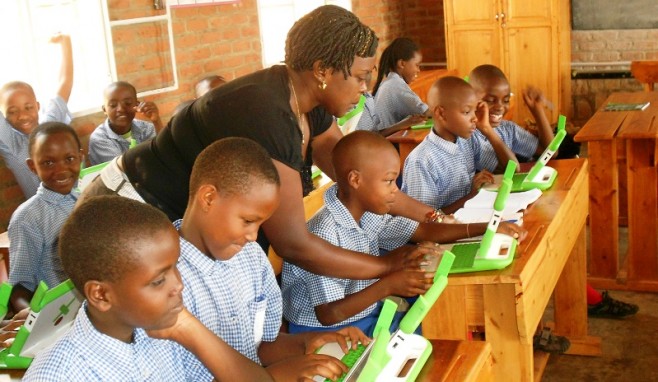
South Africa: Gauteng schools receive ICT equipment

África/SouthAfrica/14 Agosto 2016/Fuente y Autor:eslwatch

Resumen: Unas 50 escuelas en Gauteng son set esta semana para recibir información y tecnología informática equipos gracias a la donación de Old Mutual Sudáfrica Limited.

SOME 50 schools in Gauteng are this week set to receive information and computer technology equipment courtesy of a donation by Old Mutual South Africa Limited.

Member of the Executive Committee for Education, Panyaza Lesufi, will receive the equipment on behalf of the schools.

The project, now on its third year, forms part of Old Mutual’s effort to support the Department of Education’s vision of paperless classrooms.

«This will assist the department in its drive to ensure that more learners in Gauteng have access to a wealth of information relating to their curriculum needs through the use of ICT,» Gauteng Department of Education’s Head of Communication, Oupa Bodibe, says.

Over 165 schools in Gauteng have benefitted from this programme in the last three years.

Fuente de la noticia: http://eslwatch.info/articles/education-news/africa-news/south-africa-gauteng-schools-receive-ict-equipment.html

Fuente de la imagen: http://www.htxt.co.za/wp-content/uploads/2015/09/ICT_IN_CLASSROOMS-658×382.jpg

Comparte este contenido:

Kenya: Politics to blame for school unrest, teachers say

África/Kenya/14 Agosto 2016/Fuente:nation/Autor: Aggrey Omboki

Resumen: Los maestros han citado interferencia política como uno de los principales factores que alimentan el descontento en las escuelas de la región gusii. A través de sus sindicatos – Kenia Sindicato Nacional de Profesores y la Unión de Kenia Pon Maestros de Educación Primaria – los funcionarios de Kisii Condado, los maestros dicen que compiten intereses políticos están en el centro de la ola de ataques incendiarios.

Teachers have cited political interference as being among the main factors fuelling unrest in schools in Gusii region.

Through their unions — Kenya National Union of Teachers and Kenya Union of Post Primary Education Teachers — officials in Kisii County, the teachers say competing political interests are at the centre of the wave of arson attacks.

More than 20 have so far been extensively damaged by the infernos, most of them breaking out in the dead of the night.

In this week alone two more schools have been hit by the fire related incidents.

A dorm at Nyaguta Secondary School in Nyaribari Chache was razed in mysterious night fire while five students at Nyagokiani Secondary in Nyamira County were seized as they hatched a plan to set the school’s dormitories ablaze.

On Thursday, however, the unions said schools were now becoming centres where politicians were fighting supremacy wars.

«Politicians are interested in ensuring that their supporters are in charge of these major schools either as principals or as deputies,» Kisii South Knut boss Geoffrey Mogire told the Nation.

He said the politicians have gone as far as influencing who will be on the school boards.

Mr Mogire said that a local politician had recently dispatched goons to forcibly evict the Iruma Secondary School Principal in Bonchari Sub-County.

When that attempt failed, the school’s dormitory was razed the following night.

Early in the week a blogger was detained for linking the County MP Zebedeo Opore to the inferno that gutted seven dormitories at Itierio Boys Secondary School.

Mr Opore has since denied the allegation.

Mr Mogire had earlier raised a storm when he claimed that five masked men had been seen entering the ill-fated Itierio Boys shortly before the dorms went up in smoke.

«After these individuals entered the school, the television was switched off. The dormitories were torched shortly after that. We remain convinced that the students did not carry out the destruction of school property on their own,» Mr Mogire told a local radio station during a live interview in Kisii.

His remarks were supported by Kisii branch Kuppet chairman Osoro Okondo who asked the education ministry to take steps to ensure schools are cushioned from politics.

«We cannot afford to have a situation where schools are converted into battlefields for contests between political groupings,’ he said.

He rooted for the installation of closed circuit television (CCTV) systems in schools to curb the recent wave of arson attacks

Mr Mogire said reforms being initiated by Education CS Dr Fred Matiang’i should be supported to help restore sanity in the sector.

«Dr Matiang’i should stand his ground and do his work without bending to the whims of politicians keen to stamp their authority in Gusii region schools,» he said.

Fuente de la noticia: http://www.nation.co.ke/counties/Kisii/Politics-to-blame-for-school-unrest/1183286-3295118-6s0xdqz/index.html

Fuente de la imagen: http://www.nation.co.ke/image/view/-/3295124/highRes/1380698/-/maxw/600/-/vhlsl0z/-/unrestteachers.jpg

Comparte este contenido:

América del Sur y África, donde más se protegen los derechos de los indígenas sobre la tierra

13 agosto 2016/Fuente: El Diario Exterior

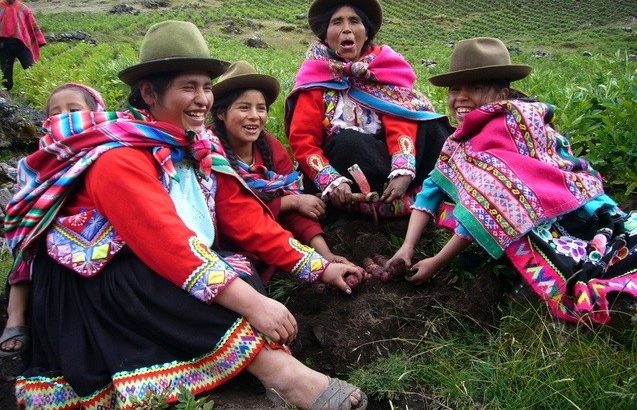
El World Resources Institute (WRI por sus siglas en inglés), afincado en Washington, ha analizado 113 países de todo el mundo y su conclusión es que países de América del Sur y África poseen una legislación más protectora con la tierra de los indígenas. Países ricos como Estados Unidos o Australia se encuentran detrás en la escala según un mapa online global de propiedad territorial.

Los resultados sitúan a Bolivia, Colombia, Nicaragua, Panamá, Perú y Venezuela –en América del Sur- y Burkina Faso, Tanzania, Sudán del Sur y Uganda -en África- en los puestos más altos de lista. En las últimas posiciones se encuentran países de Oriente Medio e incluyen a Irak, Israel, Jordania, Omán, Arabia Saudita, Siria y Yemen.

Este estudio muestra que los pueblos indígenas protegen más del 50 por ciento de la superficie terrestre del mundo, pero que sólo se les ha reconocido formalmente la propiedad de poco más del 10 por ciento.

La herramienta de análisis

La plataforma interactiva que ha servido para realizar este estudio se llama “LandMark” y su objetivo es mostrar con precisión los territorios indígenas basándose en datos de organizaciones gubernamentales, ONGs y de expertos de todo el mundo.

En declaraciones a la Fundación Thomson Reuters, la investigadora Katie Reytar asegura que “los 113 países evaluados en la base de datos de LandMark muestran que la seguridad legal de las tierras y los recursos naturales de los pueblos indígenas varían ampliamente«. Según ella, los países de zonas menos desarrolladas son más progresistas a la hora de respetar los derechos indígenas sobre sus tierras.

Reyter espera que el proyecto WRI sea atemporal y que sus datos se mantengan actualizados continuamente.

Fuente: http://www.eldiarioexterior.com/america-del-sur-y-africa-48003.htm

Comparte este contenido:

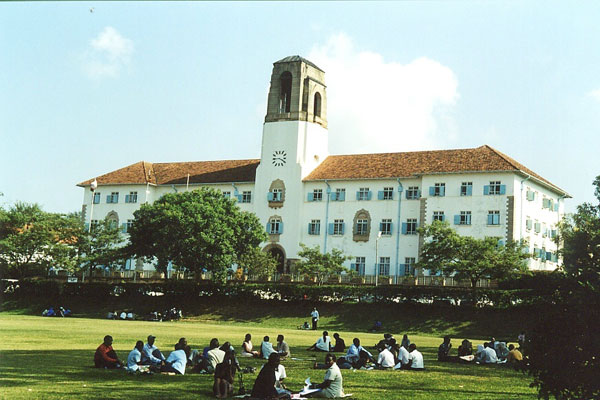
Uganda: Barnabas Kasigwa and the legacy of Ugandan teachers

Uganda / 13 de agosto de 2016 / Fuente: http://www.nation.co.ke/

Sadly, when we mention “burning” in connection with education today, we inevitably think of the burning of schools. How did we get to this pathetic state of pyromania, the psychopathic obsession with the lighting of fires or, simply, arson?

Anyway, there was a time, not so long ago, when many students and teachers were on fire for education. Of the teachers, two of my dear friends are vividly on my mind this week. These are the “Nakuru pair” of Afraha’s Lawrence Mukiibi and Kabarak’s Kasigwa Barnabas

Professor Mukiibi is the founding President of Uganda’s Saint Lawrence Schools and University network. He is currently undergoing treatment in Nairobi following an accident he had on that notorious Kampala-Masaka Road that one of our columnists has described as a highway to hell.

Long before he became a giant of East African education, however, Mukiibi was a teacher and later a headmaster at Nakuru’s Afraha High School. I think I narrated to you once how his students used to tease him, behind his back, about “Mukibi’s Educational Institute for the Sons of African Gentlemen”. That of course is the fictitious setting of Barbara Kimenye’s “Moses” stories. We will return to it later.

While Mukiibi was toiling at Afraha, Kasigwa, the drama magician, was labouring, mostly, at Kabarak High. But Kasigwa’s brilliant Kenyan teaching career did not begin at Kabarak. Indeed, we prefer to identify his scintillating production, The Trials, which won the 1979 Schools Drama Festival National Finals, as the turning point in his career.

Kasigwa was at that time English master at Kaaga Girls in Meru, and it is there that our former President’s talent scouts spotted him and recruited him for Kabarak. As is well-known, the Teacher-President was bent on building and developing educational centres of excellence in selected locations, like Kabarak.

In fact, Kasigwa was only one among many outstanding teachers to be so specially deployed. Several other Ugandan acquaintances of mine, some former classmates and others former students, were transferred from places as far-flung as Ngandu (currently Bishop Gatimu) in Karatina and Mulango Girls in Kitui to those centres of excellence.

ONE WITH STUDENTS

Moreover, Kasigwa did not shine only as a dramatist. He was, maybe even more importantly, an excellent teacher of English and Literature, with consistently impressive results to prove it. The same can be said of the others who were similarly hired.

Those who are old enough will recall that the Idi Amin terror brought a flood of Ugandan professionals to Kenya in the mid-1970s. They were, technically, not refugees until the collapse (or shall we say the dormancy) of the old East African Community in 1977.

Many of these were teachers and they were readily taken on by both public and private schools all over the country. But also many others who could not be absorbed into their former professions took to teaching, for economic survival. Several of these, too, turned out to be exemplary educators in their own right.

Indeed, most Kenyans at the top of their careers today will probably remember at least one Ugandan teacher who scribbled on the board before them at high school. Professor Martin Njoroge, the Academic Deputy Vice-Chancellor at the Panafrican Christian University, and my co-author, with Professor Angelina Kioko, of Spot On Writing Skills, remembers one such teacher.

On a scholarly assignment to Uganda some two years ago, Prof Njoroge asked me about his teacher, a Brother Nsubuga (I believe). I directed him to an institution where I thought they would know the whereabouts of the gentleman, and Prof Njoroge duly stopped by to enquire. Sadly, he was told, Mwalimu had since journeyed to the after-world.

Anyway, Ugandan teachers were so popular in Kenya at one time that it was common for school owners to ask us if we could find them a teacher — “from out there, you know”. The truth of the matter was that these teachers were not that good simply because they were Ugandan.  There were three main reasons why many of them performed so wholeheartedly.

First, they took their hiring very gratefully as a lifeline that had been thrown them after the traumatic experiences that had forced them to flee their motherland. Secondly, the Ugandans were relatively free from the many distractions that troubled, and still beset, their local colleagues. The Ugandans did not have to attend to distant shambas or run kiosks and matatus in order to support extended families.

But most importantly, especially, in the case of the professional teachers from Makerere’s School of Education, like Kasigwa and Mukiibi, they were brought up on a fundamental requirement of a good teacher. This is what their teachers, like Bernard de Bunsen, Chris Lucas and Charles Pratt, called a “passionate attachment to your learners”.

The most intimate secret of good teaching and educational administration, as Kasigwa and his colleagues knew and demonstrated, was that ability to be “completely at one” with one’s students or pupils. The students are not a bother. They are not a mob, they are not a job. They are your life.

It will be two years next week since Kasigwa departed from us. I had wanted to recount to you a few anecdotal stories that he shared with me, including the time he “broke loose” from Kabarak. There was also his having to slash grass to earn his school fees at Saint Bernard’s High School, the probable inspiration of Kimenye’s “ Mukibi’s Educational Institute for the Sons of African Gentlemen”.

Now, Saint Bernard’s was founded by Bernard Kakinda, another gentleman with a burning passion for education. He also happens to be the father of Mwalimu Mukiibi of the Saint Lawrence Schools and University fame. Maybe you can see the link between Afraha’s Mukiibi and Kabarak’s Kasigwa.

Meanwhile, maybe their former students, and all the Kenyan educationists who remember other such teachers with a passion, should try and revive this spirit.

It would be a contribution to countering the young people’s burning anger that leads to the torching of our schools.

Fuente noticia: http://www.nation.co.ke/lifestyle/weekend/AUSTIN-BUKENYA-legacy-of-Ugandan-teachers/1220-3342672-9pcntz/index.html

Comparte este contenido:

ACNUR advierte del hacinamiento y falta de fondos ante la agudización de la crisis de desplazamiento en Sudán del Sur

África/Sudan del Sur/ 13 de agosto de 2016/ Fuente: ACNUR

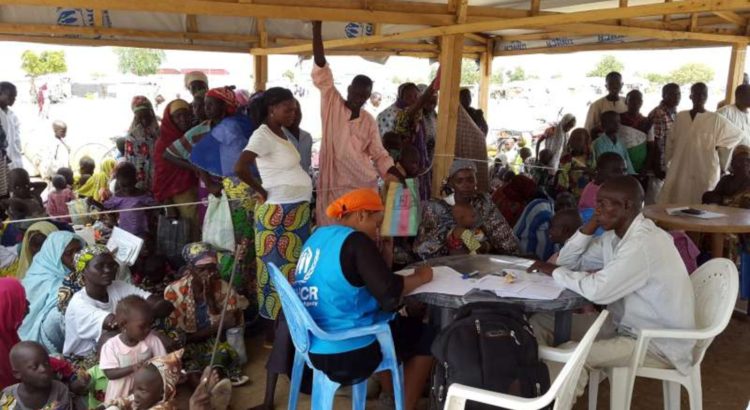
Con miles de refugiados huyendo de Sudán del Sur, los países vecinos están sufriendo la presión derivada del elevado número de personas desplazadas y de la grave falta de financiación necesaria para atenderlas. La región acoge ya a 930.000 refugiados y su número aumenta cada día. ACNUR, la Agencia de la ONU para los Refugiados, está muy preocupada porque a pesar de que la población refugiada crece, los fondos para cubrir sus necesidades básicas se están agotando.

El estallido de la violencia en Yuba en julio parece haber inclinado la balanza contra una inminente solución política del conflicto en Sudán del Sur. Hay numerosos informes de enfrentamientos armados esporádicos, violaciones de derechos humanos, incluyendo violencia sexual y de género por parte de grupos armados, y sobre el empeoramiento de la inseguridad alimentaria, lo que inflige un inmenso sufrimiento. Las condiciones de seguridad son impredecibles, debido a los informes de la reanudación de los combates en los estados de Ecuatoria Central y Occidental, Bahr el Ghazal Occidental, Alto Nilo y partes de Unity.

Lo que agrava aún más la situación es el deterioro de la economía, que ha sufrido un aumento de la inflación sin precedentes, del 600 por ciento en el último año. Esta es la situación cuando se acerca el aniversario del acuerdo de paz, firmado en agosto de 2015. En áreas consideradas previamente estables, como Gran Ecuatoria y Gran Bahr-el-Ghazal, unas 200.000 personas se han visto obligadas a huir de la violencia.

Uganda y Sudán han recibido 110.000 y 100.000 recién llegados respectivamente en 2016, sumando conjuntamente más del 90 por ciento de las llegadas contabilizadas en la región durante este año. La mayoría de los que huyeron a Sudán llegaron en los primeros seis meses del año debido a los combates en áreas previamente estables en el estado de Bahr el Ghazal Occidental, así como al deterioro de la seguridad alimentaria. Además de los números de refugiados, hay 1,61 millones de personas desplazadas dentro de Sudán del Sur.

En el caso de Uganda, tres cuartas partes de los refugiados llegaron tras el estallido del conflicto en julio, alcanzando picos de más de 8.000 personas en un día. Los testimonios de los recién llegados, de los cuales el 90 por ciento corresponden a mujeres y niños sobre todo de Yuba y otras partes de Ecuatoria Central, señalan un colapso del orden público en las zonas de las que son originarios. Los refugiados describen una violencia incontrolada, que incluye asesinatos, enfrentamientos entre fuerzas gubernamentales y grupos armados, robos y extorsiones por parte de estos últimos, que además impiden la salida de quienes no pueden pagar, así como agresiones sexuales a las mujeres. Los refugiados también cuentan que estos grupos armados están secuestrando niños mayores de 12 años en los colegios y amenazando a la población. También se apunta a un alza de las desapariciones de personas.

El Gobierno de Uganda ha abierto un nuevo asentamiento en el noroeste del país, en Yumbe, con capacidad para más de 100.000 personas. Se necesitan fondos de manera urgente para acelerar la reubicación de más de 45.000 refugiados que están en centros de recepción y de tránsito sobrecargados y severamente congestionados. Con tanta gente viviendo en un espacio tan limitado, la posibilidad de que se produzcan brotes de enfermedades es alta. Los equipos de ACNUR están supervisando de cerca la situación, pero se necesitan más recursos para responder eficazmente. Con algunos centros de recepción a más de cinco veces su capacidad, resultan críticas las intervenciones en materia de protección, particularmente las centradas en la prevención y la respuesta a la violencia sexual y de género, incluyendo servicios psicosociales. El elevado número de refugiados está sobrecargando los servicios locales de salud y educación.

El desarrollo del asentamiento Maaji III, que se abrió a principios de año, se ha visto paralizado, dejando a las instalaciones sin infraestructuras ni servicios básicos clave: por ejemplo la atención médica se está proporcionando en tiendas de campaña. En Adjumani, a unos 20 km de la frontera con Sudán del Sur, el abastecimiento de agua potable se hace a través de camiones cisterna -lo que ya de por sí resulta caro- hasta que se disponga de los recursos necesarios para perforar más pozos y ampliar los sistemas hídricos para que lleguen a las nuevas áreas de asentamiento. Adicionalmente, se precisará una inversión adicional importante para abrir nuevos asentamientos en los distritos de Adjumani y Yumbe.

Las lluvias torrenciales obstaculizan los esfuerzos de ayuda, retrasando las labores de reubicación y provocando daños en las carreteras. Se teme que, en caso de que se produzcan brotes de enfermedades, las capacidades y recursos existentes resulten insuficientes para responder de manera eficaz.

Ante la desesperada necesidad de la población de refugiados sursudaneses, cuyo número asciende ya a 930.000, ACNUR se enfrenta a una crítica escasez de fondos. Con un 20% de los fondos necesarios recibidos -122 millones de dólares sobre 608,8 millones- que ACNUR necesita para proporcionar asistencia a los refugiados en Sudán del Sur y en los seis países de asilo, muchas actividades se han visto suspendidas para poder proporcionar apoyo esencial a los recién llegados. Las regiones remotas de Uganda, Sudán, la República Democrática del Congo y la República Centroafricana son las más afectadas por esta escasez, ya que ACNUR no contaba previamente allí con personal. Etiopía y Sudán, que han experimentado una afluencia masiva de llegadas, se han visto asimismo fuertemente afectados.

ACNUR elogia la generosidad de los países que mantienen sus fronteras abiertas a los refugiados sursudaneses y les proporcionan terrenos para establecerse. En particular, la Agencia aplaude la generosa legislación y el régimen normativo ugandés sobre refugiados, que entre otros beneficios permite a los refugiados tener libertad de circulación, derecho a buscar empleo y pone a su disposición parcelas de tierra en los que construir sus hogares y poder cultivar.

ACNUR apela a la comunidad internacional a que apoye a los países de asilo para proteger y asistir a los refugiados sursudaneses. La continuada escasez de fondos supondrá mayores desventajas para mujeres, niños y hombres que necesitan urgentemente de ayuda para superar el trauma del desplazamiento forzado y emprender la senda de la recuperación, la dignidad y la autosuficiencia. La incapacidad para proporcionar alimentos, cobijo, servicios básicos, asistencia psicosocial, educación y medios de subsistencia aumenta y prolonga la vulnerabilidad de la población refugiada.

Fuente:http://www.acnur.org/noticias/noticia/acnur-advierte-del-hacinamiento-y-falta-de-fondos-ante-la-agudizacion-de-la-crisis-de-desplazamiento-en-sudan-del-sur/

Imagen:

Comparte este contenido:
Page 474 of 621
1 472 473 474 475 476 621