Page 488 of 622
1 486 487 488 489 490 622

South Africa: Condoms in schools – it’s a human right

África/Southáfrica/31 Julio 2016/Fuente:Groundup /Autor: Lisa Draga

Resumen: De acuerdo con Stats SA, 99.000 niñas de la escuela quedaron embarazadas en 2013. Las estadísticas también muestran que en 2013 casi el 20% de las mujeres embarazadas en el país entre las edades de 15 y 24 eran seropositivas. Estas estadísticas alarmantes muestran la apremiante necesidad de abordar la susceptibilidad de los jóvenes estudiantes son a contraer el VIH. La semana pasada, los jóvenes activistas interrumpieron la conferencia sobre el SIDA de Durban. Ministro Aaron Motsoaledi estaba a punto de introducir un orador cuando los alumnos se levantaron de sus asientos, el canto y exigiendo que el gobierno vele por la distribución gratuita de preservativos en las escuelas.

If we are to curb high rates of HIV infections and pregnancy in schools, condoms must be accessible

According to Stats SA, 99,000 school girls fell pregnant in 2013. Statistics also show that in 2013 almost 20% of pregnant women in the country between the ages of 15 and 24 were HIV-positive. These shocking statistics display the pressing need to address how susceptible young learners are to contracting HIV. Last week, young activists disrupted the Durban Aids Conference. Minister Aaron Motsoaledi was on the verge of introducing a speaker when learners rose from their seats, singing and demanding that government ensure the distribution of free condoms in schools. The Minister reportedly responded, «No, no, no – this session is not about this.»

The question around addressing the high rates of HIV and learner pregnancy in South Africa was recently put to government by the UN Committee on the Rights of the Child. In response, the government lauded its soon to be introduced Department of Basic Education Draft Policy on HIV, STIs and TB as a mechanism for positive change.

While the potential of the proposed policy is significant, it suffers from a fundamental flaw: government’s failure to frame the policy in a way that recognises that effective access to condoms in schools is a basic human right.

The Draft Policy does not make clear if all learners will have access to condoms in schools or how condoms are to be distributed. This is important, as attempts to restrict the age at which learners can access condoms may be detrimental to combatting the spread of HIV.

According to a 2012 National Survey on HIV, 37.5% of all learners reported having had sex, with 12.6% indicating that their first sexual encounter occurred before age 14.

Young females are vulnerable to sexual assault and the unequal power relations between genders. They are especially in need of access to protection.

The manner in which condoms will be distributed at schools will have a significant effect on learner uptake. The Draft Policy contemplates that certain learners could make use of mobile clinics where a nurse administers condoms. But research shows the reluctance of learners to obtain condoms when issued by an authority figure. The Draft Policy should be amended to allow learners easy and discreet access without having to interact with an intermediary to obtain condoms. Unmonitored condom dispensers placed in male and female bathrooms could make a significant impact.

Many object to condom distribution policies, claiming they cause learners to be more sexually active or enable learners, who would not otherwise consider becoming sexually active, to engage in sex earlier than they would have.

There are no studies to support these claims and plenty of studies to prove the opposite. Comparative research shows that condom availability programmes actually increased learners’ use of condoms when they were already engaging in sexual intercourse.

Adults often lecture children about being responsible. But parents, teachers and those elected to make vital decisions for our nation and our children also bear much responsibility. They are responsible for examining the research, engaging with the studies, digesting the statistics – however unpalatable they may be – and moving beyond morality rhetoric.

If we are to curb the high rates of HIV infections and pregnancy amongst learners in South Africa, condoms must be distributed in schools. And this must be done in an easy, discreet and accessible way. This should be coupled with comprehensive, age-appropriate sex education. Access to condoms in schools is learners’ right and ensuring this is our responsibility.

Lisa Eaves Draga is an attorney at the Equal Education Law Centre.

Fuente de la noticia: http://www.groundup.org.za/article/condoms-schools-its-human-right/

Fuente de la imagen: http://www.groundup.org.za/media/_versions/images/photographers/Nathan%20Geffen/Condoms_large.jpg

Comparte este contenido:

Nigeria: NUC suspends admission into NOUN’s law programme

África/Nigeria/31 Julio 2016/Fuente y Autor: Premiumtimesng

Resumen: La Comisión Nacional de Universidades (NUC) ha puesto sobre la admisión de retención en el programa de derecho de la Universidad Nacional Abierta de Nigeria , el Prof. Julio Okojie, Secretario Ejecutivo de NUC . El consejo ha argumentado que la enseñanza y el estudio de la ley fue clínica y no se pueden hacer por correo. El Sr. Okojie confirmó que los estudiantes nigerianos en la diáspora se transfieren a las universidades locales no sólo a causa de la crisis de divisas, sino también para mejorar el nivel de educación universitaria.

The National Universities Commission (NUC) has put on hold admissions into the law programme of the National Open University of Nigeria (NOUN), Prof. Julius Okojie, NUC’s Executive Secretary has, said.

Mr. Okojie said on Thursday that the moratorium would be in place pending the resolution of issues with the Council on Legal Education (CLE).

The CLE has persistently disallowed NOUN’s law graduates from being admitted into the Nigerian Law School.

The council has argued that the teaching and study of law was clinical and cannot be done by correspondence.

«This matter is being addressed because it is between us, CLE and the university.

«What we have done in the interim is stop new intake into that programme so that they do not have a backlog; we are addressing the issue.

«I must say that the law programme in National Open University (NOUN) was approved by the NUC; it is our responsibility.

«When CLE came up with the idea of no part time law, NOUN did not consider law a part time programme by their mode; so they did not stop the programme.»

According to him, NOUN’s law programme is not conceived as part time as there is no need studying if one will not attend law school.

He urged CLE to admit NOUN’s law graduates and give the institution its quota in terms of how many students they could admit.

Mr. Okojie confirmed that Nigerian students in the Diaspora were transferring to local universities not just because of forex crisis but also for improving standard of university education. (NAN)

Fuente de la noticia: http://www.premiumtimesng.com/news/more-news/206953-nuc-suspends-admission-nouns-law-programme.html

Fuente de la imagen: http://media.premiumtimesng.com/wp-content/files/2015/08/Okojie.jpg

Comparte este contenido:

Rwanda: Evening classes should be handled with extra care

África/Rwanda/31 Julio 2016/Fuente:Newtimes /Autora: Cristine Osae

Resumen: Alta matrícula, horarios de trabajo del alumno en conflicto, y la pura comodidad de clases una vez a la semana han empujado a muchas universidades para programar cursos nocturnos.  Las clases nocturnas traen desafíos especiales de enseñanza. Estos estudiantes tienden a interactuar socialmente más de estudiantes de día, lo que exige intervenciones instructor frecuentes para mantener la calma y el orden, y muchos vienen a clase abrumado, hambrientos y cansados.

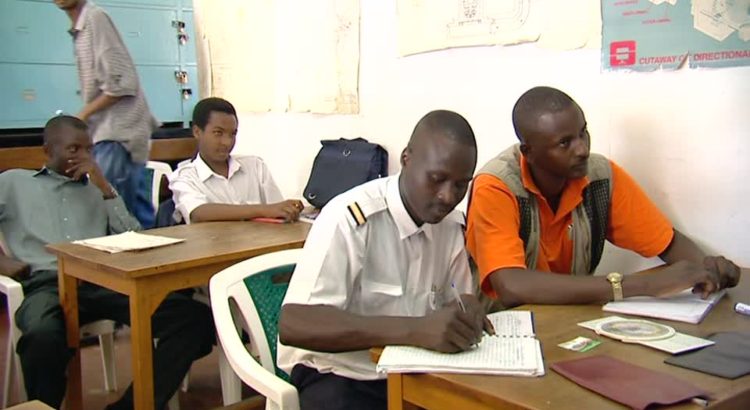
High enrollments, conflicting student work schedules, and the sheer convenience of once-a-week classes have pushed many universities to schedule evening courses.

Held from 6pm to 9pm or 7pm to 10pm, these classes at some institutions are typically packed, sometimes with more than 100 students in a large lecture theater. How can faculty effectively teach, control, or even simply keep awake the students in such classes, many of whom start their days very early in the morning with unimaginable responsibilities?

Those out in the working world would agree that it’s just not often practical to get time to up-skill and, as a result, full-time education isn’t an option. Part-time or evening courses represent a more practical alternative. Make no mistake; gaining work experience is absolutely vital in improving your employability status. An evening course provides a student with the time needed to gain valuable work experience that perhaps a full-time student may not have.

However, one can agree that it is tedious because classes are taken when one is too exhausted. In addition, balancing school work and employment is quite a crack-down. Plus, one may not get to consult with the lecturers or even get time for extensive reading because time is a luxury. Nevertheless, with the right attitude comes the determination to excel. If anything, what are the options?

Evening classes bring special teaching challenges. These students tend to interact socially more than day students, necessitating frequent instructor interventions to maintain calm and order, and many come to class overwhelmed, hungry and tired. In addition, there are the usual challenges: poor lighting conditions in many large lecture theaters; lack of, or poor-quality, audiovisual equipment; and distractions caused by student electronic devices such as cell phones, iPods, or laptops. Under such conditions, even the most ardent instructor can become frustrated.

How educators can help

In most large evening classes, there is always a mix of students, ranging from the highly motivated to the couldn’t-care-less types. To enhance student engagement and maintain interest, one ought to incorporate strategies such as combining audiovisuals (PowerPoint presentations, short video clips, and transparencies) with class discussions and activities. Doing so is challenging in large classes set in «lecture-only» theaters. However, passionate educators are quite creative and can improvise.

Although PowerPoint isn’t exactly a brand-new technology, most traditional lecturers would rather use chalk or markers. This is not to ridicule chalk or markers but rather call for more creativity. The argument is that use of illustrations and pictures interspersed with text slides as much as possible may engage the student’s interest. Many students are usually relatively fresh at the beginning of class and are likely to remain attentive through the whole lecture should you make it stimulating and relatable. A point noteworthy is that PowerPoint presentations can make learners passive unless the lecturer involves them.

Intergroup questions are equally an amazing approach with evening students. Before the first class meeting of a semester, organise students in groups of five to ten and post group numbers and the names of group members on a notice board, where students can access them. During the first meeting, call students’ names and ask them to move into their groups for a «get-to-know-each- other» session and information exchange. To maintain regularity, ask group members to stay with their groups at the same location in the lecture theater in future meeting sessions. Each group can prepare intergroup questions for other groups to answer, or the lecturer can assign topics for discussion. With these groups, a lot can be achieved within the lecture room.

This system works well in a number of ways. It encourages students to read course material ahead of time; helps the instructor cover course content and explain concepts and material that are not clear during the question-and answer session; keeps students motivated and energized by requiring individual responsibility, attention, and group commitment (no one wants to be blamed for letting the group down); encourages active participation among students, allowing them to develop and polish their oral communication skills; gives students a sense of owning the questions and the learning; and creates excitement and a sense of achievement, especially if group members answer their questions correctly.

Short quizzes also come in handy if the evening students are to be kept on toes. During the last ten to fifteen minutes of each evening session, an optional extra-credit quiz worth ten to fifteen points can be given. The quiz, which can be multiple-choice, is given on a projection screen (eliminating unnecessary copying). Of course during the quizzes, the instructor has to remain vigilant, moving around the room to discourage students who whisper to each other, exchange answer sheets, or check their notes. All the points students accumulate over the weeks can be put into a «point savings account» that students can see on the board. The «fatter» the account gets, the more motivated students become to keep it high.

The quiz is very popular and has obvious benefits. It allows students to monitor their understanding of the lecture session’s material right away; it gives the instructor feedback about the quality of instruction and student understanding; it motivates (or forces) students to stay for the entire class, as the quiz is administered at the very end; it encourages students to pay attention to the material presented (because of the pressure of immediate assessment); it allows the instructor to monitor daily attendance; and it saves the instructor’s time, because some of the quiz questions can be rephrased and used on midterms and the final.

Today, with an increasing number of nontraditional students returning to school, we are challenged to develop creative and innovative ways to make our classes work for them and to make our course material relevant to their daily lives. Evening classes, which afford these students flexibility and convenience, are one way to meet their needs.

Fuente de la noticia: http://www.newtimes.co.rw/section/article/2016-07-20/201861/

Fuente de la imagen: http://footage.framepool.com/shotimg/qf/799929145-banco-de-escuela-curso-para-adultos-nairobi-asistencia-a-la-escuela.jpg

Comparte este contenido:

Kenia: Elders suggest reintroduction of caning in schools

Kenia / 30 de julio de 2016 / Por: KALUME KAZUNGU / Fuente: http://www.nation.co.ke
So far, about 127 schools across the country have had unrests.

The Lamu Council of Elders has called on the national government to bring back caning in schools in order to restore discipline and contain hooliganism.

Addressing journalists in their Lamu office on Thursday, the chairman Hussein Sudi – who is a former Lamu Boys Secondary School principal – said that the ban on corporal punishment has exacerbated cases of indiscipline.

Mr Sudi lamented that lack of proper punishment measures and too much freedom accorded to students facilitate burning of schools.

He argued that with the reintroduction of the cane, students will be more afraid of engaging in criminal acts and that constant riots in schools will also be a thing of the past.

He, however, advised parents to be at the forefront in disciplining their children so that they may become good citizens.

At the same time, the former principal called on teachers to cultivate a good working relationship with students, which is one of the ways of curbing the recent spate of arson.

“The lifting of the corporal punishment has destroyed everything and I blame the government for the move. The now infamous arson in schools across the country were enough proof that discipline and responsibility among learners has been thrown out of the window and to the dogs,» he said.

«We need the cane to be re-introduced with immediate effect. Teachers should also be close and engage students in dialogue so that grievances among students can be aired and addressed.”

Additionally, Mr Sharif Kambaa, also an elder, said it was unfortunate that students have not only lacked respect for teachers and their places of learning, but also their parents and guardians.

He said without immediate and effective interventions, the society will be raising a hopeless generation that does not see the value of education and Rule of Law.

“As a member of the council here in Lamu, we feel that the government should bring back the cane as soon as possible. Even the holy books advice us to cane our children in order to save them from evil but if that isn’t happening then we are losing it,” he said.

Meanwhile, the Council of Imams and Preachers of Kenya (CIPK) Lamu branch chair Abubakar Shekuwe has asked the State to ensure a functional guidance and counselling programme is included in school curriculum to ensure sanity amongst students.

So far, about 127 schools across the country have had unrests.

Editing by Philip Momanyi

Fuente noticia: http://www.nation.co.ke/counties/Elders-suggest-reintroduction-of-caning-in-schools/1107872-3322102-ieegbl/index.html

Comparte este contenido:

Los conflictos en Sudán del Sur provocan una ola de refugiados hacia Uganda

Sudán del sur/30 de julio de 2016/Fuente: ACNUR

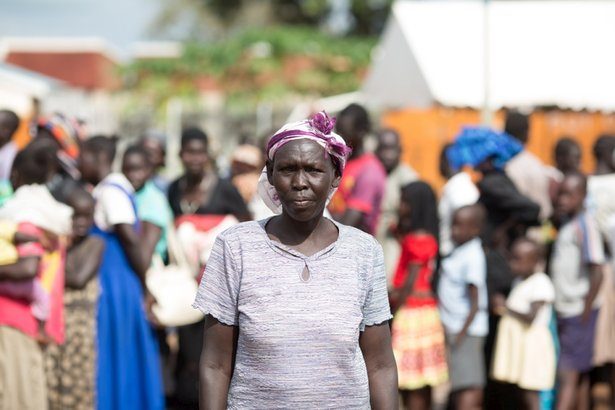
El ACNUR expresa su gran preocupación por la volátil situación de seguridad en Sudán del Sur, donde cerca de 4.000 personas huyen diariamente hacia Uganda.

– Hasta la fecha, los recientes combates en Sudán del Sur han obligado a 37.491 personas a huir a Uganda. Para poner esta situación en contexto: más refugiados han llegado a Uganda en las últimas tres semanas que durante los primeros seis meses de 2016, cuando 33.838 personas salieron buscando seguridad.

El 25 de julio un estimado de 2.442 refugiados de Sudán del Sur fueron recibidos en Uganda. Cerca de 1.213  cruzaron en el punto fronterizo Elugu en Amuru, 247 en Moyo, 57 en Lamwo y 370 en Oraba. Y otros 555 fueron recibidos en el asentamiento Kiryandongo. La mayoría de las llegadas, más de 90%, son mujeres y niños. Las personas vienen de la región de Ecuatoria Oriental de Sudán del Sur, así como Yuba y otras áreas del país.

El portavoz del ACNUR Adrian Edwards expresó en una nota de prensa en Ginebra que la intensidad de la violencia que   irrumpió en Sudán del Sur entre facciones rivales leales a Salva Kiir y Riek Machar ha subsistido desde inicios de julio. Sin embargo, la situación de seguridad continúa volátil.

“Los recién llegados en Uganda reportan una continua violencia así como saqueos por parte de los militares, quemas de casas y asesinatos de civiles. Algunas de las mujeres y niños nos dijeron que fueron separados de sus esposos y padres por los grupos armados, que según reportes están realizando reclutamientos forzosos de hombres y evitan que ellos crucen las fronteras”, dijo Edwards.

“Algunas de las mujeres y niños nos dijeron que fueron separados de sus esposos y padres por los grupos armados”.

Pascalina Juwa, de 60 años, estaba entre los refugiados recién llegados que hablaron con el ACNUR en el norte de Uganda. Esta fue la tercera vez en su vida que ella huyó a Uganda. Ella no confía en la paz actual, y huyó de su hogar en Opari Payam, tan pronto como pudo.

 “Ahora estamos peleando entre todos. ¿Por qué? En Pageri, había un joven menor de 18 años, él venía de la molienda. Venía en su motocicleta, y cuando iba de vuelta, le dispararon. Mira, esto es lo que los soldados están haciendo en la comunidad”.

El ACNUR continúa extremadamente preocupado por la situación. Las llegadas diarias en promedio eran de 1.500 hace 10 días, pero han crecido a más de 4.000 en las semanas pasadas. Más oleadas de llegadas son una posibilidad real.

La afluencia está poniendo tensión en la capacidad de los puntos de recolecta, y los centros de tránsito y recepción, que son muy pequeños para el creciente número de llegadas. Durante el curso de la semana, las organizaciones humanitarias trabajaron para descongestionar los puntos de recolecta e instalar albergues temporales para aumentar las capacidades. El ACNUR ha desplegado personal adicional, así como camiones y buses para la asistencia.

En su punto más alto, más de 11.000 refugiados se hospedaban en Elegu, al norte de Uganda, en un albergue equipado para 1.000 personas. Durante el curso de la semana, el centro se descongestionó significativamente, y solo 300 personas durmieron ahí la noche del lunes. Muchos refugiados han sido movidos al centro de tránsito Nyumanzi, donde reciben comidas calientes, agua, albergues y otras asistencias para salvar vidas; otros han sido llevados a centros de recepción expandidos en Pagirinya.

El manejo y expansión de los centros de recepción, así como la apertura de una nueva área de asentamiento continúan como prioridades claves. Una nueva área de asentamiento ha sido identificada en el distrito de Yumbe, con la capacidad de albergar potencialmente a más de 100.000 personas. Los albergues comunales temporales también se construyen para acomodar a más recién llegados.

La respuesta humanitaria a la afluencia de refugiados de Sudán del Sur tiene un serio déficit debido a un grave desfinanciamiento.

La respuesta humanitaria a la afluencia de refugiados de Sudán del Sur tiene un serio déficit debido a un grave desfinanciamiento, Edward dijo, “La solicitud interagencial está financiada únicamente en un 17%, lo que restringe al ACNUR y a sus socios a que únicamente brinden actividades de emergencia y para salvar vidas, causando limitaciones  en la amplitud de asistencia humanitaria que se puede ofrecer”.

El conflicto de Sudán del Sur, que irrumpió en 2013 ha producido una de las peores situaciones de desplazamiento, con un inmenso sufrimiento. Cerca de 1,69 millones de personas están desplazadas dentro del país, mientras que hay 831.582 refugiados de Sudán del Sur fuera del país, principalmente en Etiopía, Sudán y Uganda.

Fuente: http://www.acnur.org/noticias/noticia/los-conflictos-en-sudan-del-sur-provocan-una-ola-de-refugiados-hacia-uganda/

Imagen: http://www.acnur.org/fileadmin/_processed_/csm_07.2016.26_Noticia_Sud%C3%A1n_0b8c64e96a.jpg

Comparte este contenido:

¿Por qué arden los colegios en Kenia?

Kenia/30 de julio de 2016/laprensa.peru.com

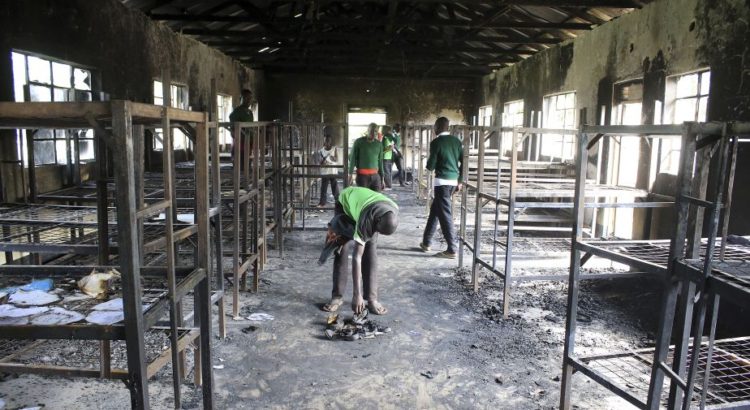
En tres meses, más de cien colegios públicos quedaron parcialmente destruidos en Kenia por incendios intencionados que causan desconcierto en el país con el sistema educativo más desarrollado de África del Este.

Un total de 113 centros de enseñanza secundaria, en los que estudian alumnos de entre 13 y 18 años, y hasta 20 años en el caso de los que repiten curso, fueron pasto de las llamas.

Los motivos son un misterio, aunque las autoridades barajan distintas pistas: represalias de un cártel relacionado con el tráfico de las preguntas de examen o el descontento con el cambio del calendario escolar o con los métodos autoritarios del ministro de Educación.

La sociedad busca una explicación al fenómeno, convertido en crisis nacional.

El miércoles por la noche se prendió fuego a cinco colegios, y al día siguiente le tocó el turno a la Garbatullah High School de Isiolo (centro).

Alrededor de 150 alumnos han sido detenidos e inculpados por incendio criminal en los últimos tres meses. También hay diez profesores arrestados.

“Los incendios afectan sobre todo a la zona de los dormitorios y parecen bien planificados en la medida en la que hasta ahora ningún alumno se vio atrapado por las llamas, lo que significa que salieron del lugar con tiempo, sabiendo lo que iba a pasar”, según un informe confidencial de la policía y del ministerio de Educación al que tuvo acceso la AFP.

Se trata de un problema que va más allá de las acostumbradas fracturas étnicas, geográficas o socioeconómicas.

En los últimos días el ministro de Educación, Fred Matiang’i, ha multiplicado las reuniones, con los representantes de la enseñanza, líderes religiosos…

Filtraciones
Los padres no se lo explican, pero algunos han sacado a sus hijos del colegio por miedo.

El gobierno lo atribuye a las medidas drásticas adoptadas para eliminar las trampas en los exámenes, que en los últimos años habían adquirido una dimensión desproporcionada.

En 2015 el ministerio de Educación desmanteló el consejo nacional encargado de la organización de los exámenes y se inculpó a varios de sus miembros bajo sospecha de filtración masiva de preguntas a cambio de dinero.

El gobierno está convencido de que el “cártel” implicado en las filtraciones está detrás de la oleada de incendios.

Según la prensa, algunos padres han pagado por adelantado por conocer preguntas de exámenes que no tendrán lugar debido a las redadas de las autoridades.

Por otro lado, desde 2015, el ministro de Educación ha multiplicado las reformas, modificando el calendario (redujo vacaciones) y la gestión de los fondos públicos asignados al material escolar, lo que ha herido susceptibilidades.

También ha visitado por sorpresa colegios y amonestado a los profesores, que lo han vivido como una humillación.

En varios establecimientos, los alumnos de último año se han negado a realizar los éxamenes preparatorios para los de fin de curso, en octubre. Algunos han explicado bajo anonimato a la AFP que piden un aplazamiento por los retrasos ocasionados por una huelga de profesores.

Tomado de: http://laprensa.peru.com/actualidad/noticia-que-arden-colegios-kenia-63173

Comparte este contenido:

100 escuelas afectadas por incendios provocados por alumnos en Kenia

Kenia/ Julio de 2016/EFE

Más de 100 escuelas de secundaria de toda Kenia se han visto afectadas por la ola de incendios causados de manera intencionada por sus propios alumnos durante los últimos dos meses, informaron el jueves 28 de julio del 2016 los medios locales.

Las investigaciones todavía no han conseguido determinar los motivos que están detrás de estos disturbios que se han producido en localidades de todo el país y, aparentemente, no tienen conexión.

Algunas fuentes del Ministerio de Educación aseguraron que los estudiantes podrían haber prendido fuego a sus dormitorios debido a su frustración por no haber podido copiar en los exámenes.

Sin embargo, el presidente de la Asociación de Escuelas de Secundaria en Kenia, John Awiti, explicó al diario Daily Nation que la comunidad educativa no ha encontrado ninguna evidencia que vincule los incendios causados en los colegios con un intento de hacer trampas en los exámenes.

Estos disturbios están causando una crisis en el país, donde la semana pasada el Gobierno decidió llevar a más de 100 estudiantes ante los tribunales y los acusó de conspiración para causar incendios y destrucción de la propiedad.

Pese a las acciones de las autoridades, los incendios, la mayoría de ellos provocados en los dormitorios de los alumnos, no han cesado y solo durante la noche del martes cinco escuelas se vieron afectadas por las llamas.

Uno de los casos más sonados tuvo lugar en Kisii, en el suroeste de Kenia, donde a finales de junio un grupo de alumnos prendió fuego a sus dormitorios en protesta por la decisión de la dirección de no dejarles ver un partido de fútbol de la Eurocopa de Francia.

Fuente:  http://www.elcomercio.com/actualidad/escuelas-afectadas-incendios-provocados-estudiantes.html


Comparte este contenido:
Page 488 of 622
1 486 487 488 489 490 622