Saltar al contenido principal
Page 487 of 622
1 485 486 487 488 489 622

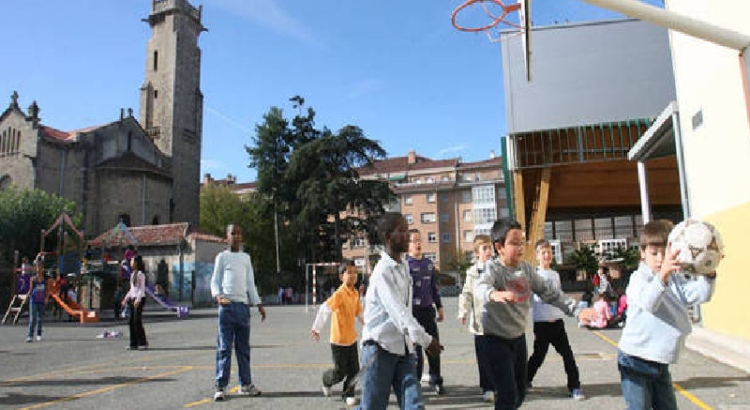
Marruecos y Ecuador, los principales países de origen del alumnado extranjero

Marruecos/ Agosto de 2016/oticias de Navarra

El Ministerio de Educación contabiliza 8.577 estudiantes foráneos navarros (el 7,3%) en el curso 15-16 en enseñanza no universitaria.

La cifra, que es provisional, vuelve a reducirse.

El alumnado procedente de Marruecos es, de forma destacada, el más predominante entre los estudiantes extranjeros contabilizados en Navarra en la etapa no universitaria. Representa, según los datos provisionales de este pasado curso académico (2015-2016) recabados por el Ministerio de Educación, el 25% de los alumnos y alumnas navarros que son extranjeros: unos 2.149 de los 8.577 contabilizados en estos registros. Les siguen los estudiantes procedentes de Ecuador (909) y los originarios de Rumanía (819) y, ya en menor medida, los de Bulgaria (666).

El peso del alumnado marroquí es tal que África también encabeza estas estadísticas por área geográfica, algo que contrasta con los datos de hace seis cursos, cuando los estudiantes con orígenes en América Latina representaban al 51,77% del total de extranjeros. Ahora, de esos 8.577 estudiantes extranjeros contabilizados entre Infantil y Bachillerato (o los distintos grados de la Formación Profesional), el 34,53% procede de África. En ese porcentaje destaca, además de Marruecos, un país como Argelia (con 382 estudiantes en Navarra). Y, por áreas, a África la siguen Sudamérica (el 27,5%), la Unión Europea (el 24,15%) y, ya en menor medida, Asia (el 4,2%) y otros países de Europa (3,9%). De América del Norte, con 61 representantes, el porcentaje es menor, y aún resulta más simbólico en el caso de estudiantes de Oceanía, con dos representantes.

Por países, a los ya mencionados de Marruecos, Ecuador, Rumanía, Bulgaria y Argelia les siguen, por este orden, Bolivia (374 estudiantes), Colombia (367), Portugal (350), China (272), Brasil (238), Perú (220), República Dominicana (196), Ucrania (127) y Argentina (101).

En España, durante este pasado curso hubo en la enseñanza no universitaria 715.409 estudiantes de origen extranjero, por ahora inferior a la cifra con la que se cerró el curso anterior: 724.635. Al igual que en Navarra, lo más habitual es que procedan de África (220.608, el 30,84%), después, de la UE (206.052, 28,80%) y, en tercer lugar, de Sudamérica (20,30%).

En Navarra, el 7,3% del alumnado en régimen general es extranjero. En los centros públicos, esa media es del 9,5% (en la línea de todo el Estado, donde llega al 10%), y en la red concertada y privada, del 3,4% (en España llega al 5,1%). En general, la cifra de 8.577 estudiantes es muy similar a la registrada hace un año, cuando se contabilizaron de forma provisional 8.780 alumnos (después, en el informe definitivo, fueron 8.785), que representaban el 7,6% del total. En el informe del Consejo Escolar de Navarra, en cambio, se recoge a 10.510 estudiantes foráneos en el curso 2014-2015.

En ambos casos se apunta a una tendencia a la baja en este alumnado (en 2009-2010, por ejemplo, el Ministerio contabilizó en Navarra a 11.127 estudiantes foráneos), algo que se ha atribuido a cuestiones como la crisis económica, la nacionalización de las familias o que se trata de alumnado de segunda generación y, por lo tanto, ya pasa a ser incluido en las estadísticas como alumnado nativo. En el Consejo Escolar de Navarra se han planteado, por ejemplo, si debería incluirse en su nuevo informe al alumnado de segunda generación, una reflexión aún pendiente y con la que quieren recoger las necesidades que pueden plantear estos estudiantes.

Por etapas educativas, según estas estimaciones del Ministerio, donde se registró un mayor porcentaje de estudiantes extranjeros durante el curso 2015-2016 es en la FP básica (20%). En Educación Infantil se quedó en un 4,8%, en Primaria en un 7,8%, en ESO un 9,6% y en Bachiller un 5%.

El Post-it

La otra cara de la moneda: un estudiante sueco, tres suizos… Los registros del Ministerio no solo reflejan los países de origen más habitual entre el alumnado extranjero navarro, sino también países con una representación pequeña. Por ejemplo, alumnado de Suecia (1), Suiza (3), Canadá (3), India (5) y Países Bajos (6). Además, Navarra también contó con alumnos procedentes de Lituania (18), Uruguay (18), Reino Unido (22) y, como apunte llamativo, Pakistán (55).

La tendencia

En el curso 1999-2000. Navarra, según los registros del Ministerio de Educación, tiene 1.011 estudiantes extranjeros en la enseñanza no universitaria. Y, aunque la procedencia está muy repartida, lo más habitual (350 estudiantes, el 34,62%) es que procedan de países europeos que no son de la UE. Le siguen de cerca los estudiantes de países de Sudamérica: 293.

En el curso 2004-2005. Según las mismas fuentes, Navarra tiene 7.930 estudiantes extranjeros. De ellos, más del 62% procede de países de América del Sur: 4.967. Entonces, casi multiplican por cinco a los y las procedentes de África que, por áreas geográficas, es la segunda más habitual: son 1.012.

En el curso 2009-2010. Hay 11.127 estudiantes extranjeros en la enseñanza no universitaria en Navarra, y la procedencia más habitual vuelve a ser América del Sur (5.761), seguida de la UE (2.126). Aunque cerca, los estudiantes con orígenes en África quedan en tercer lugar (2.115).

En el curso 2015-2016 (*). El Ministerio contabiliza 8.577 estudiantes extranjeros en Navarra, en la enseñanza no universitaria. África es la procedencia más habitual (3.048 estudiantes), seguida de América del Sur (2.337) y la UE (2.072).

*Datos de la Estadística de enseñanzas no universitarias recogidos por el Ministerio de Educación. Son provisionales.

Fuente: http://www.noticiasdenavarra.com/2016/07/24/sociedad/navarra/marruecos-y-ecuador-los-principales-paises-de-origen-del-alumnado-extranjero

Comparte este contenido:

South Africa: Basic Education On Inappropriate Content From Textbooks

South  África/Agosto de 2016/Allafrica

Resumen: El Departamento de Educación Básica ha tomado nota de las preocupaciones y quejas que emanan de una página en uno de los libros de texto del grado 10. El contenido se hace referencia a la historia sobre una chica que salió a una fiesta con amigos sin pedir permiso a sus padres,  y se narran acontecimientos de riesgo.

The Department of Basic Education has noted concerns and complaints emanating from a page in one of the Grade 10 textbooks. The content referred to is both unintended and unfortunate.

To summarise the matter, it is a story about a girl who went out to a party with friends without seeking permission from her parents, as they would have declined the request.

They drank and got drunk. While they were drunk, the friends pushed her into a room with an unknown male and locked the door where she was subsequently raped by the unknown male. Now she feels she can’t report the rape to her parents because they will know that she lied. She is so hurt and scared as there are possibilities of contracting HIV, pregnancy or both. She is also regretting going to the party.»

Three questions are posed to learners after this story. The problem is the first question, namely: List two ways in which Angie’s behaviour led to sexual intercourse.

This question raises very serious misconceptions and stereotypes about «rape» and the relationship between the perpetrator and the victim, in that the victim might have played a role that led her to be raped. The department is fully aware of implications such scenarios have on the psyche of our children and the general public about the scourge of rape that the country is battling with.

Furthermore, the question refers to the incident as «intercourse» which may further confuse learners. The importance of mediation by teachers in this instance becomes important as should be the case in a classroom environment.

We also acknowledge such content may further perpetuate impunity and victim blaming. The objective in a subject as important as Life Orientation is to equip learners with skills to deal with and face life’s challenges; it is unfortunate that this particular section in the textbook is certainly not part of that.

The process of compiling such content includes a panel of experts who make inputs in line with set guidelines. This is followed by a review of the content by a subject specialist. The textbook in question, published and distributed in 2011 forms part of content that Minister Angie Motshekga has asked to be tested for inappropriate or contradictory content.

The evaluation process is conducted by subject specialists from provinces and districts, where in the textbooks are subjected to a rigorous screening process. «We cannot at this stage blame the subject specialists that evaluated the material, we can however remedy the situation as we have done in the past with other material that was later found to have inappropriate content, i.e. picture, misleading text, etc» said departmental spokesperson Elijah Mhlanga.

The department has in this regard already written to the publisher in order to remedy this and ensure the material is no longer taught in our classrooms.

The department welcomes inputs made by parents, the public, civic organisations and other interested parties into what learners are taught and exposed to in their learning material, this is truly reflective of the societal importance and significance of education.

«We also encourage active, consistent critique of all teaching and learning material of all grades and subjects. It is through these engagements and contributions that we can achieve the best quality of content for the millions of children whose education we are entrusted with» Mhlanga added.

Lastly, the Minister has appointed a Task Team to further evaluate textbooks to ensure they are free of bias in terms of race, sex, gender and other forms of discrimination, the task team will at a later stage make recommendations to the Minister.

The Task Team comprises of experts from Higher Education Institutes (HEIs). This Committee will look at a broad sample of textbooks, specifically for the development of a textbook policy on promoting content that fosters diversity going forward.

Issued by: Department of Basic Education

Fuente: http://allafrica.com/stories/201607281037.html

Fuente de la Imagen: https://www.google.co.ve/search?q=fiestas+de+j%C3%B3venes&biw=1024&bih=489&tbm=isch&source=lnms&sa=X&ved=0ahUKEwih1eDPtZ7OAhVDzSYKHRNPAokQ_AUIBigB&dpr=1#imgrc=qbL5RTe6e-wdoM%3A

Comparte este contenido:

Nuevas luces para África: conectarse es un derecho

África/Agosto de 2016/El Diario

  • Ayuda en Acción y la OEI quieren proporcionar una educación de calidad a través del proyecto «Luces para aprender» con el objetivo de impulsar el desarrollo sostenible.
  • El proyecto ya se ha puesto en marcha en 13 países latinoamericanos llegando a 482 escuelas rurales, 22.815 estudiantes y 1.041 docentes beneficiados.
  • El objetivo es llevar energía solar y acceso a internet a escuelas, además de formar a los docentes en la incorporación de las tecnologías de la información y la comunicación (TIC) al aula.
  • Ayuda en Acción y la OEI han firmado un acuerdo para extender el proyecto a escuelas de Mozambique.

Las nuevas tecnologías de la información y la comunicación (TIC) forman parte de nuestra vida cotidiana; de hecho, resulta difícil imaginar nuestro día a día sin poder hacer una búsqueda en Google o consultar nuestra bandeja de emails.

En los últimos quince años, las TIC han experimentado un crecimiento sin precedentes. El mundo avanza a pasos agigantados y todo transcurre a una velocidad vertiginosa que a muchos asusta. El tiempo y el espacio no se perciben de la misma manera que hace unos años y es que, hoy en día, vivimos en el mundo de lo inmediato. Un mundo en el que gracias a las TICs muchos procesos se han visto facilitados. Sin embargo, no todo el mundo participa en esta revolución tecnológica por igual, son muchos los que viven desconectados.

 En el ámbito educativo, cada vez con mayor fuerza se tiene en cuenta la necesidad de incluir las TIC, pues son una herramienta fundamental que permite que miles de niñas y niños, estudiantes y docentes puedan acceder a un sinfín de información y conocimientos en la red. Las TIC potencian las estrategias de trabajo docente y enriquecen los aprendizajes de los alumnos; mejorando de esta forma la calidad del sistema educativo. Es fundamental que estas nuevas tecnologías y las oportunidades que crean se utilicen para acortar la brecha digital, sobre todo, entre el campo y la ciudad, y luchen por democratizar la educación.

De la mano de la OEI, «Luces para aprender»

Ante esta realidad nace « Luces para aprender» en septiembre de 2011. Aprobado en la XXII Conferencia Iberoamericana de Ministros de Educación, «Luces para aprender» es un proyecto liderado por la OEI (Organización de Estados Iberoamericanos para la Educación, la Ciencia y la Cultura) con el objetivo de llevar energía solar y acceso a internet a más de 66.000 escuelas en Iberoamérica. La mayor parte de ellas se encuentran ubicadas en zonas rurales y de difícil acceso donde conectarse a la red eléctrica es complejo, además de suponer enormes gastos.

Desde el inicio de la implementación de este programa, se ha puesto en marcha en 13 países latinoamericanos llegando a 482 escuelas rurales, 22.815 estudiantes y 1.041 docentes beneficiados. Los países que han desarrollado esta iniciativa hasta la fecha son: Argentina, Bolivia, Colombia, El Salvador, Guatemala, Honduras, Nicaragua, Paraguay, Perú, República Dominicana, Uruguay (gracias al proyecto, se ha llegado a electrificar el 100% de las escuelas rurales sin energía eléctrica) y Panamá. Costa Rica ha iniciado su ejecución en 2016 y en México, Brasil y Ecuador se está realizando negociaciones con los Ministerios de Educación Nacionales para desarrollar el programa.

Se trata de un proyecto sin precedentes que aporta un cambio completo de paradigma y lucha por la justicia social. Se presenta como una oportunidad de ampliar horizontes para niñas y niños de escuelas en las zonas rurales, pero también para los docentes y las comunidades. Las niñas y niños que, gracias a este proyecto acceden a internet, viven un cambio crucial en la escuela, se conectan al mundo. Desde los puntos más remotos logran con una sencilla búsqueda no solamente resolver todas las dudas y preguntas que les rondan la cabeza; sino transmitir y contar la realidad de su comunidad dándole voz y situándola en este mundo conectado. El cambio ocurre en la escuela, pero desconectarse al salir por la puerta no es una opción. Los más pequeños trasladan lo aprendido a sus familias y, en consecuencia, toda la comunidad se ve beneficiada.

En el ámbito educativo se tiene en cuenta cada vez con mayor fuerza la necesidad de incluir las TIC. Foto: OEI

En el ámbito educativo se tiene en cuenta cada vez con mayor fuerza la necesidad de incluir las TIC. Foto: OEI

Gracias a la iniciativa de Ayuda en Acción, «Luces para aprender» llega a África. La OEI y Ayuda en Acción han suscrito a finales del mes de junio un convenio de colaboración para implementar el proyecto en el continente africano, comenzando por Mozambique.

“Si quieres ir rápido camina solo, si quieres llegar lejos ve acompañado”

Ayuda en Acción y la OEI no tienen prisa, pero sí quieren llegar lejos; es por ello que, juntos, dan un salto de continente: permitir la extensión del proyecto en otras zonas es un paso muy importante.

El proyecto se ejecutará en primer lugar en Mozambique, donde Ayuda en Acción trabaja desde el año 1998. Gracias a su profundo conocimiento del país y, en concreto, de las comunidades donde se llevará a cabo el proyecto, y a la experiencia de la OEI en su implementación previa y consolidada de «Luces para aprender», se esperan resultados tan satisfactorios como los que presentan las regiones de Iberoamérica.

En un mundo como el actual, la tecnología vino para quedarse. Vivir desconectado no es una opción, pero estar conectado sí es un derecho. «Luces para aprender» abre una puerta al exterior en aquellas comunidades que han sido durante mucho tiempo relegadas al aislamiento. El proyecto se fundamenta en el derecho a la igualdad de oportunidades que tienen todas las niñas y niños, en el derecho de recibir una educación de calidad y en la necesidad de mejorar los procesos de aprendizajes y de la información.

La educación es la clave para el desarrollo sostenible; por ello Ayuda en Acción y la OEI quieren proporcionar una educación de calidad en aquellas comunidades rurales que tradicionalmente han sufrido bajos niveles educativos y altas tasas de deserción. Se busca generar un cambio en los modelos de enseñanza y en las vidas de las comunidades a través de la conectividad.

Fuente: http://www.eldiario.es/ayudaenaccion/Nuevas-luces-Africa-conectarse-derecho_6_539706031.html

Comparte este contenido:

Higher Education in Africa: Who is Going to Pay?

Africa/31 de Julio de 2016/Autor: /Fuente: All Africa

RESUMEN: Los últimos 18 meses han sido turbulentos para muchas universidades de todo el continente africano. De Ciudad del Cabo a Ibadan a Nairobi, los campus se han convertido en sitios de protesta y debate acerca de las tarifas, la igualdad de acceso a la educación, el carácter colonial de los planes de estudios, la desigualdad social, y muchos otros temas. El centro de atención ha sido la cuestión de cómo hacer la educación accesible a millones de jóvenes estudiantes, en un continente con el más rápido crecimiento de la población juvenil en el mundo. Al mismo tiempo, las universidades e institutos de investigación de África tienen el mandato de producir una investigación independiente, socialmente relevante dentro de un sector de la educación superior en forma global cada vez más por la privatización, la competencia, la comercialización de la investigación académica y la inseguridad laboral. La cuestión de cómo garantizar el acceso de estudiantes a la educación e invertir en investigación, en un contexto de estancamiento económico, el aumento de los costos de vida, y la amenaza de recesión mundial, es una controvertida.

The past 18 months have been turbulent for many universities across the African continent. From Cape Town to Ibadan to Nairobi, campuses have become sites of protest and debate about fees, equal access to education, the colonial character of curriculums, social inequality, and many other issues.

Under the spotlight has been the question of how to make education accessible to millions of young students, in a continent with the fastest growing youth population in the world. At the same time, Africa’s universities and research institutes are mandated to produce independent, socially relevant research within a global higher education sector increasingly shaped by privatisation, competition, the commercialisation of research and academic job insecurity. The question of how to ensure student access to education and invest in research, against a backdrop of economic stagnation, rising living costs, and the threat of global recession, is a vexed one.

Today, SciDev.Net is holding an online debate to discuss these issues with academics, students and education specialists from across Africa and its diaspora. In this feature, we set out some of the main issues and what to do about them.

What are the challenges?

Universities face myriad funding problems. In a continent of 54 countries, with different economic policies, political structures and histories, it’s obviously problematic to generalise. But there are some features more widely found.

Often, the histories of universities have loosely mirrored those of the state: the university as site of anticolonial struggle; the idealism and intellectual exuberance of the post-independence years; the growing poverty and damage of 1970s and 1980s structural adjustment policies; and the lingering effect of underinvestment and neglect.

Many universities are still reeling from the effects of the policies imposed by the World Bank and International Monetary Fund from the 1970s in return for loans. These institutions framed Africa’s universities not as the backbone of development, but as a misuse of resources. [1] Money for education was channelled away from universities and into primary and secondary schools. «To this day, many countries have not been able to recover from that onslaught on African higher education,» wrote Ann Therese Ndong-Jatta in 2002, when she was Gambia’s education minister. [1]

Underinvestment in infrastructure, staff salaries that have failed to keep pace with inflation and living costs, and inadequate research funding have poleaxed many universities. Universities that were once beacons of intellectual vigour and research excellence are struggling. Faced with economic stagnation and poor tax revenues, many governments claim their tax base is too small to prop up a free higher education system, while their critics argue that corruption and bulging public sector salaries must be rapidly reined in and the money raised directed towards education.

All this means that in many places, the dream of free higher education is fading fast. Rather than improving accessibility, education is instead growing increasingly elitist.

Students in the firing line

For students, the situation can be dire. In South Africa, the average annual cost of fees and board exceeds the average household income. While the poorest students are supposed to get government assistance, «there are a group of people caught in between» who neither qualify for assistance nor can afford to pay fees, explains Lesley Le Grange, higher education professor at Stellenbosch University. This means universities not only perpetuate, but also actively widen South Africa’s social inequalities, say both Le Grange and Kealeboga Mase Ramaru of campaigning organisation Equal Education.

For those students who do get in, university can involve a struggle to balance studying with paying the bills. Underinvestment in labs, teaching and basic infrastructure also undermines learning. Poor salaries among staff mean strikes are frequent in many African countries, which can extend the time it takes to complete a degree by years. And then many graduates who can afford to leave do so, worsening Africa’s infamous ‘brain drain’ problem.

Things can be particularly acute for female students. In many countries, female students find it harder than men to gain access to university, or can encounter serious issues once there, from teaching methods that favour men, to sexism, discrimination and rape.

Staff struggles

For staff, academic careers are increasingly becoming the preserve of those who can afford them. Salaries can fail to match rising living costs. Many in the state tertiary sector now top up low salaries with consultancy fees or jobs at the many private colleges proliferating in countries such as Uganda.

Academics often find themselves struggling to meet the demands of unreasonable teaching loads, including vast undergraduate classes, unwieldy responsibilities for PhD supervision and enormous amounts of administration. This can harm research, says Goolam Mohamedbhai, former secretary-general of the Association of African Universities.

Impact on research

Heavy work burdens and underinvestment in research also starves many African countries of the knowledge they need to meet certain twenty-first century challenges.

On paper, the continent’s 54 countries have noble research goals. Spurred on by the African Union, many governments have said they intend to spend one per cent of GDP (gross domestic product) on research, as laid out in the Lagos Plan of 1980 and reaffirmed in the Science, technology and innovation strategy for Africa. This ambitious strategy aims to put science «at the epicentre of Africa’s socio-economic development».

But few countries look close to meeting this target, and the strategy has been criticised for failing to match rhetoric with action or to commit governments to spending targets. Furthermore, funding and research policy experts decry the lack of efficiency in grant management systems – one they say hampers science across the continent.

Clearly something has to change if African countries are to fund the kind of research they need. The Ebola crisis in West Africa is just one example of a poor research landscape preventing local researchers from taking the lead on vaccine research or the public health response.

Education is also considered a buffer against extremism – both because it can bring jobs and because it opens students to the value of cultural diversity and bridges divides in an increasingly fractured world, and a continent plagued by militant groups from Boko Haram in Nigeria and Chad to Al-Shabaab in Kenya and Somalia.

Other challenges include the growing pressure neoliberalism places on universities. Universities are increasingly expected to compete with each other for students, monetise research and audit research outputs, within a highly competitive, global higher education sector. The growing power of league tables to compare and rate universities, not just on research but also on other assessments such as ‘student experience’, adds to the pressure.

What are the solutions?

Many of those in government and university management claim that introducing fees is now the best way to fund universities. But others argue that fees will always be inadequate and that a diversified funding structure is required.

Beyond fees, there are many examples of universities cutting costs while ensuring quality research. Collaboration is one option. In Ghana, the Kwame Nkrumah University of Science and Technology has opened a US$6.5 million ‘superlab’ that is available for use by students across West Africa. The idea is to reduce costs by sharing equipment.

Cross-disciplinarity is another route. This aims to bring together different disciplines and sectors to tackle the complex, intertwined challenges of modern life. But it can have economic benefits too. Rather than duplicating research in different labs and departments, academics can pool resources and streamline research.

Another route includes South-South partnerships, or North-South partnerships. The latter have underpinned scientific research in Africa for decades. But here again the charge of postcolonial legacies and unequal power balances are hard to shake off. African researchers complain of being treated as secondary partners, the poor cousins to the wealthy research institutes of the North. Others complain Africa is seen as a ‘petri dish’ where Northern scientists test out new ideas.

These criticisms also extend to the many aid programmes focused on higher education partnerships. Many are of value, from the British Council’s long history of investing in education, to the new SPHEIR programme launched by the UK Department for International Development and partners. But these also need interrogation. What model of higher education are rich nations exporting? Where does power reside and who designs courses and management structures? How are privatised models for education reshaping universities across the world?

Centres of excellence

Academics across Africa and its diaspora often advocate turning certain institutions into centres of excellence for particular science and innovation subjects, rather than spreading resources thinly across many universities. For example, Calestous Juma debates the merits of innovation universities, a new kind of institute that combines research, teaching, community service and commercialisation.

Digital futures

Digital technology also offers rich opportunities for delivering better education at a fraction of the cost of conventional teaching. The internet and mobile tech can link academics, students and staff as never before, building pan-African networks, while also bringing education to those in volatile or war-torn regions. One example is online training programmes for Somali medics. Digital tech enables MOOCs (massive open online courses), distance learning and blended courses that combine classroom and online learning. Tunisian digital education expert Houda Bouslama describes this as a powerful force for change in Tunisia: through information and communications technologies, universities can support far more students, far more cheaply.

Growing university-industry links

The call for closer links between industry and universities is getting louder. Higher education specialist Beatrice Muganda argues that universities need to position themselves far more clearly as part and parcel of the societies they supposedly serve, and to nurture research landscapes where innovations can thrive and reap dividends for universities. Ghanaian-British politician Paul Boateng says that intellectual property systems must drastically improve if African countries are ever to become knowledge economies – a view echoed by Nigerian intellectual property specialist Umar Bindir among others.

There is also a growing call for universities to team up with local innovation sectors, such as the tech hubs flourishing in towns and cities across the continent. Technology businesswoman Mariéme Jamme has long campaigned for better regulatory frameworks and government investment to help pioneering African technologists and coders turn creative projects into viable, sustainable businesses.

Many also call for closer links between African universities and big business. Mauritian President Ameenah Gurib-Fakim argues that African universities must work more closely with industry – whether local businesses or multinationals – and that this should include industry directly funding courses.

This obviously poses a risk. Industry-sponsored PhDs for specific research outcomes are one thing, but what happens when industry funds an institute: what might the compromises be then? UCT engineering student, activist and writer Brian Kamanzi says «one of the hugest battles that we have is to protect our public institutions from interference» from industry, particularly when so many businesses in South Africa, as in other African countries, are foreign owned or controlled.

Meanwhile many other avenues for funding higher education in Africa are opening up – not least the growth of Chinese investment in the continent’s universities.

Taxing the wealthy

The small tax base of many African countries is often held up as a reason why governments can’t invest enough in education and in other services. «Someone has to pay,» says Le Grange. «But we have a responsibility to students who are unable to afford higher education, but have the ability to study and perform.» One route to bridging the impasse is a wealth tax, he says. «I think a lot of people would agree to that as long as that money is ring-fenced and channelled to higher education, because people are concerned about corruption within the government.»

Others suggest a graduate tax could be the best way forward, while still others say the tax base is already overburdened, and that the focus instead should be on higher corporation tax, reining in corruption and reducing the salaries of senior ministers.

The future

Worldwide, the higher education sector is undergoing radical change. Globalisation and privatisation are reshaping universities, while mechanisation and the internet are altering industry and employment in ways that we are only just beginning to grasp. While access to university in Africa and across the world remains beset by challenges, having a degree no longer guarantees work.

In a continent where over 200 million people are under 24 years old, wider changes are needed to provide jobs. Shaking up how universities are funded, and laying the foundations for a more robust public and higher education funding landscape, are good steps to making universities accessible and sustainable. But there are enormous challenges ahead.

These need scrutiny and debate – something we hope today’s online discussion, from 1-3pm BST (GMT+1) will provide. Do join us.

References

[1] Joel Samoff and Bidemi Carrol Conditions, coalitions, and influence: the World Bank and higher education in Africa (Annual Conference of the Comparative and International Education Society Salt Lake City, 7 February 2004)

Fuente: http://allafrica.com/stories/201607300146.html

Fuente de la imagen: http://blogs.elpais.com/africa-no-es-un-pais/2013/08/volver.html

Comparte este contenido:

Libia: Una señal de esperanza en el Mediterráneo: nació un bebé en un barco de rescate de migrantes

África / Libia / 31 de julio de 2016 / Por: infoabe

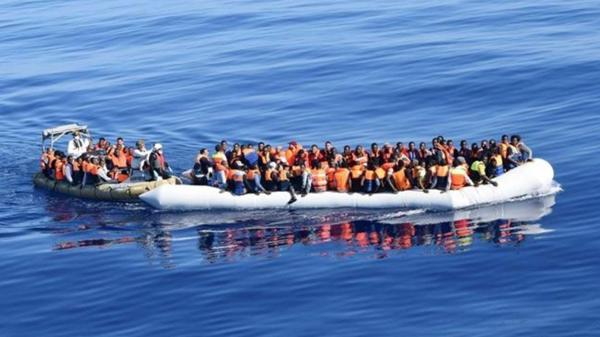
La niña, de padres congoleños, nació a bordo de un buque de la Marina italiana y fue trasladada a Sicilia. Unas 3.400 personas fueron rescatadas durante la operación.

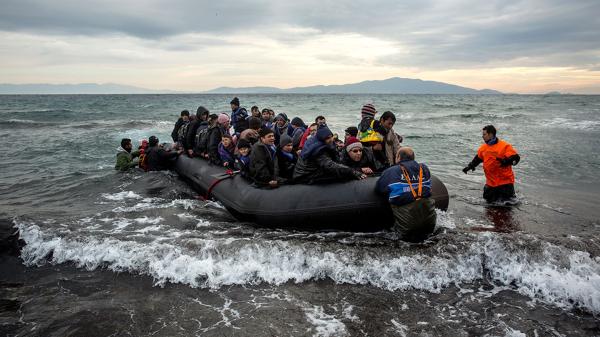
Los buques militares y humanitarios que rescataron el viernes a más de 3.400 migrantes en el mar Mediterráneo volvieron el sábado a Italia conun bebé nacido a bordo, informaron los guardacostas.

Los padres congoleños del bebé fueron rescatados por un navío de la marina irlandesa que patrullaba en la zona, pero fueron transferidos al«Bettica» de la marina italiana cuando la madre empezó a sentir las contracciones.

La pequeña Joy Aurora nació poco después de las 05:00 horas (03:00 GMT) en la unidad médica de la embarcación, que cuenta con un médico, una comadrona y dos enfermeras, y que ya ha visto nacer este verano a otros dos bebés, François Manuel el 27 de junio y Manuela el 5 de julio, precisaron medios de comunicación italianos.

Por otro lado, el «Entreprise» de la marina británica, que participa en la operación naval europea contra el tráfico de personas y rescató a cuatro barcos de migrantes el viernes, halló un cadáver en el mar.

Según los guardacostas, este cadáver es un misterio y no estaría relacionado con las operaciones de rescate.

El «Bettica» llevará a la niña y a sus padres a Augusta, en el este de Sicilia, y el «Entreprise» llegará a Pozzalo, en el sur de la isla.

La UE presentó un plan para frenar la llegada de migrantes desde África (AP)

Durante el sábado, se efectuaron otras operaciones de rescate frente a las costas de Libia, donde al menos 300 personas fueron rescatadas según la marina italiana.

Según el último balance del Alto Comisionado de la ONU para los Refugiados (ACNUR), establecido a partir de las últimas operaciones de rescate, más de 89.000 migrantes llegaron a las costas italianas en lo que va de este año, un total ya casi comparable a los 93.000 registrados entre enero y julio de 2015.

Fuente: http://www.infobae.com/america/mundo/2016/07/30/una-senal-de-esperanza-en-el-mediterraneo-nacio-un-bebe-en-un-barco-de-rescate-de-migrantes/

Comparte este contenido:

Egipto: 75.7 per cent success rate in Egypt’s Thanaweya Amma – Education Minister

África/Egipto/31 Julio 2016/Fuente y Autor: Aswat Masriya

Resumen: El ministro de Educación de Egipto anunció una tasa de éxito del 75,7 por ciento en los exámenes finales de año el certificado de secundaria general. Los exámenes Thanaweya Amma se llevan a cabo en el último año de la etapa de educación secundaria de Egipto antes que los estudiantes se ponen a inscribirse en la universidad.

Cairo — Egypt’s minister of education announced on Sunday a 75.7 per cent success rate in the final year exams of the general secondary certificate, called Thanaweya Amma.

The Thanaweya Amma exams are held in the final year of Egypt’s secondary education stage before students are set to enroll in university.

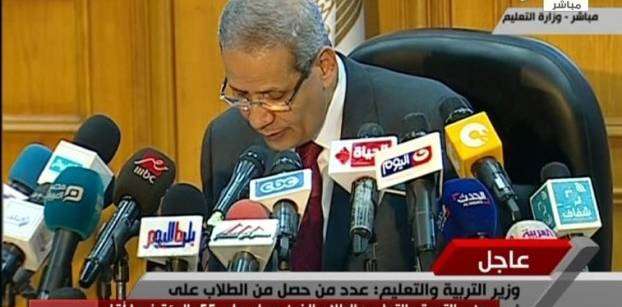
Education Minister El-Helaly El-Sherbiny announced during a press conference on Sunday that the success rate went down by almost 4 per cent when compared to the previous year, which saw a 79.4 per cent success rate.

According to the minister, girls had higher success rate than boys, standing at 76.7 percent and 74.3 per cent, respectively.

None of the 560,583 students who took the Thanaweya Amma exams this year managed to receive a 100 per cent score, compared to six students who achieved perfect score during last year’s exams.

The minister revealed that 58,150 students, accounting to 15.88 per cent of the total, received scores between 95 per cent to 100 per cent, while 18.07 per cent of the students who attended the nationwide exams received scores within the 90-95 per cent range.

Only 0.3 per cent of the students received scores between 50-55 per cent.

This year, several Thanaweya Amma exams were leaked, mainly over social media, with a number of Facebook pages leaking the exams questions and answers prior or during the exams.

Cases of exam leaks prompted the ministry of education to cancel and reschedule a number of exams. The ministry’s decision sparked a number of protests in several parts of the country, where hundreds of high school students called for the minister to resign.

Earlier in July, a Giza court sentenced a 19-year-old student to one year in prison and ordered him to pay an EGP 20,000 fine for running a Facebook page that leaked high school exam questions.

Fuente de la noticia: http://en.aswatmasriya.com/news/details/17390

Fuente de la imagen: http://admin.aswatmasriya.com/en/uploads/image_archive/622×307/15102883821469358747.jpg

Comparte este contenido:

Tanzania: Tanzania E-Schools project applauded

África/Tanzania/31 Julio 2016/Fuente:Busiweek /Autor: Timothy Kitundu

Resumen: El reciente lanzamiento de la nacional de correo de Escuelas por la compañía de estilo de vida digital de Tanzania Tigo Tanzania, en asociación con el gobierno de Tanzania ha recibido aplausos arriba de los estudiantes y profesores. Tigo Tanzania y el gobierno de Tanzania firmaron un Memorando de Entendimiento (MOU) que dará lugar a la ejecución del proyecto en un acto celebrado en la Escuela Secundaria Jangwani. La ocasión contó con la secretaria permanente en el Ministerio de Comunicaciones, Obras e Infraestructura, el Prof. Faustine Kamuzora.

Dar es Salaam — The recent launch of the e-Schools Project countrywide by Tanzania’s digital lifestyle company Tigo Tanzania in partnership with the government of Tanzania has received thumps up from both students and teachers.

Tigo Tanzania and the government Tanzania signed a Memorandum of Understanding (MOU) that will lead to implementation of the project at a ceremony held in Jangwani Secondary School in Dar es Salaam. The occasion was graced by the Permanent Secretary in the Ministry of Communications, Works and Infrastructure, Prof. Faustine Kamuzora.

The agreement gives Tigo the green-light to officially start rolling out the provision of Internet access points in the country’s secondary schools so as to complement the e-Schools Project for a period of 2 years.

As part of the agreement, the ministry will identify and provide a list of schools without computer labs to be connected and also guide the implementation of the project while Tigo will sponsor the infrastructural development in schools across the country that will include wiring classrooms and installation of wireless Local Area Network (LAN) with Internet access points.

Excited with the gesture, Anastasia Samwel, a form three student from Jangwani Secondary School said: «I am very happy that Tigo will provide us with computers that are connected to internet because now I will be able to easily access educational materials even when there is no teacher in our class. I thank Tigo for supporting us.»

Her counterpart, Happiness Erasto, a form one student from the same school was equally elated. She said: «Since we have inadequate reference books in our class, I will now be able to get more information on most of our topical subjects/notes from the internet. I will also be able to catch up with what our counterparts in other parts of the region and the world are studying.»

Jangwani Secondary School’s Headmistress, Geraldine Mwanisenga said the project had provided basic Information Communication Technology (ICT) training for teachers and will not only help the students to be ICT – literate but also improve education standards and provide self-employment later in life.

The Chief Commercial Officer Tigo, Shavkat Berdiev said: «Through our Corporate Responsibility department we are now implementing the government’s vision to transform the country into a knowledge-based economy by the year 2025 and our company is committed to ensure that most of the secondary schools have access to the internet in Tanzania.»

Berdiev said Tigo was proud to be partnering with the Ministry of Communications, Works and Infrastructure to enable the youth and the wider communities to tap into the global mainstream of information and knowledge, where they will learn, expand their creativity and collaborate with peers across the world.

«Tigo will continue to work with the government on other innovative and exciting projects to uplift the lives of many Tanzanians», Berdiev added.

The Permanent Secretary for Ministry of Communications, Works and Infrastructure, Prof. Faustine Kamuzora who also represented the government in signing the agreement said: «It is through such partnerships that we shall be able to impart modern ICT skills and knowledge to the youth, to enable them face the challenges of the ever-changing information trends in the society and global economy.»

Tigo’s e-Schools’ Project is one of the company’s strategic social investment projects and to date, Tigo has been able to connect 31 public secondary schools in Tanzania with internet with an envisaged plan to connect 50 more this year.

Noting that it was the first time that the government and the mobile network operator were cooperating on an ICT project of such a large scale and scope, the PS affirmed that the partnership will go a long way in imparting modern ICT skills and knowledge to the youth and enable them face the challenges of the ever-changing information society and global economy.

«This technology will enable the students and teachers of the beneficiary schools and the wider communities to tap into the global mainstream of information and knowledge where they will learn, expand their creativity, collaborate with peers across the African continent and across the world, and generally participate in defining the future of their world,» Prof. Kamuzora noted.

The government of Tanzania requires schools to teach basic computer lessons but with only 5% of schools having computers, ICT competence remains a mirage. With Tigo’s shot in the arm and other stakeholders’ support, the goal-posts are bound to change and might catapult the government’s resolve to hit the 700-target of schools with internet-connected computers.

The e-School’s project is among various projects that Tigo has undertaken to support community initiatives through the telecom’s corporate social responsibility portfolio. They include donation of over 2,700 desks to needy primary schools in a sustainable venture that is meant to alleviate the serious shortage of desks in the country’s schools.

Last year, Tigo partnered with Dar Teknohama Business Incubator (DTBi), a local NGO to offer scholarships worth over Tsh.300 million (about $136,363) to cover tuition fees, research fees, meals and accommodation for a period of four years to nine students undertaking ICT courses in local universities.

Fuente de la noticia: http://www.busiweek.com/index1.php?Ctp=2&pI=5417&pLv=3&srI=%2069&spI=&cI=11

Fuente de la imagen: http://www.busiweek.com/img2/jul4agreement.jpg

Comparte este contenido:
Page 487 of 622
1 485 486 487 488 489 622
OtrasVocesenEducacion.org