Page 543 of 622
1 541 542 543 544 545 622

Ghana’s Educational System Lacks Substance – Rawlings said

Africa/Ghana/May 2016/Autor:  Evans Osei Boakye/ Fuente: allafrica.com

Resumen:  El ex presidente Jerry John Rawlings ha descrito el sistema educativo en Ghana como carente de sustancia y esencia. Dijo que en un momento cuando el país se vio inundado con tantas universidades se ha reducido de la calidad de la educación, produciendo graduados superficiales cada año.

Former President Jerry John Rawlings has described the educational system in Ghana as lacking substance and essence.

He said at a time when the country was inundated with so many universities the quality of education has dwindled churning out superficial graduates every year.

Mr Rawlings said although the educational system in the country had transformed over the years the standard had fallen with graduates becoming a liability to the economy.

This he explained was due to the fact that students lack the political will to utilise and implement what they learn in school.

Speaking at a meeting with Cuba trained Ghanaian professionals who paid a courtesy call on him at his office in Accra on Tuesday, Mr Rawlings said Cuba was a shining example when it comes to education especially in their efforts at training medical doctors and other professionals throughout the world.

The wife of the former president, Nana Konadu Agyeman Rawlings contributing to the discussions said the personal relationship that existed between her husband and former Prime Minister of Cuba, Fidel Casto made it possible for the creation of Cuban scholarship scheme which enabled needy but brilliant Ghanaian students to be trained in Cuba.

She explained although the economy was in bad shape without an IMF and World Bank support former president Rawlings initiated and sustained the scholarship programme.

Mr Kofi Asafo Agyei , President of the Association of Cuban trained graduates in Ghana said the need to pay attention to the country’s human resource development cannot be overemphasized that is why he and his colleagues came back to Ghana to contribute their quota to national development.

He said it was only appropriate to pay a courtesy call on the former president for the bold and courageous decisions he took to send hundreds of brilliant needy Ghanaians students to Cuba on scholarship despite the criticisms and misconceptions about the programme by sections of the population.

He pointed out that former president Rawlings had exemplified visionary leadership by taking a bold decision to ensure that foreign scholarship projects could serve as a catalyst for rapid development especially for a developing country like Ghana.

He said «although it was an unpopular decision in 1983 to send some 609 young Ghanaian students to Cuba, he had envisioned the human resource needs of the country, many years down the line and made a strategic move, very few could comprehend back then.»

On behalf of his colleagues Mr Asafo Agyei expressed gratitude to former president Rawlings and the people of Ghana for the scholarship opportunity and encouraged subsequent governments to continue it.

Portions of the citations read «On behalf of all those whose lives you have touched, directly and indirectly, over the past several decades, through the Cuban Scholarship Project, we the members of the Cuban Trained Ghanaian Graduates Association (ESBECANS) would like to say a big thank you to you for making such a monumental difference in our lives.»

Fuente de la noticia: http://allafrica.com/stories/201605261169.html

Fuente de la imagen: https://www.google.co.ve/search?q=universidades+ghana&source=lnms&tbm=isch&sa=X&ved=0ahUKEwib1ZCk8__MAhVEqB4KHTEABT8Q_AUIBygB&biw=1280&bih=937
Comparte este contenido:

Africa: PS Bujong Recursos y Apoyo para la ejecución del Proyecto de Aula


EL 29 DE ABRIL DE 2016.

Resumen: El costo de un proyecto de tres aulas en el Presbyterian School Bujong, un pueblo Bamendakwe ha saturado el PTA, administración de la escuela, la parroquia y los cristianos de esa congregación monocilíndrico han tomado la iniciativa de para  abiertamente por el apoyo de los ex alumnos de las escuelas, el público en general y las personas de buena voluntad. Bajo la guía del párroco, el reverendo Titatang Kingsley, la Asociación de Maestros y Padres, algunas personas de buena voluntad y los cristianos de la congregación, el puerto ze pasar unos 3 millon FRS para la construcción de las tres aulas estándar, dos o welke son JSON convertible de una sala adecuada, asi como  el proceso de techado, sumando el bajo  recursos para ello .expresan que: «Nos hemos llevado nuestros cristianos, los padres y algunos benefactores locales a la medida para alcanzar este nivel, el proyecto aún sigue buscando en nosotros. Esta es una comunidad pobre y hay un límite de distancia y puede salir adelante  «el Rev. Titatang Kingsley dijo a este reportero.  «Por eso estamos ampliando nuestro llamado  a todos, las hijas de este pueblo y ex alumnos de la escuela». El trabajo todavía está presente y fuerte existen pendientes en el sitio de la cubierta incluye, blanqueado, y techos, suelos, puertas y ventanas  las estructuras y, posteriormente, los bancos, mesas y sillas escolares, se estima un 40% de avance y aceptará cualquier ayuda en forma de dinero en efectivo, materiales y mano de obra.


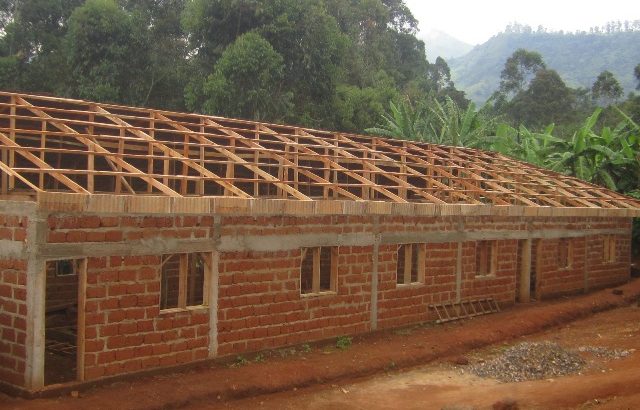
A partial view of the three classrooms under construction

The cost of a three classroom project at Presbyterian School Bujong, Bamendakwe village has overwhelmed the PTA, school administration, parish and Christians of that congregation causing them to openly appeal for support from former pupils of the schools, the general public and people of good will.

Under the guide of the parish pastor, the Rev. Titatang kingsley, the Parents Teacher Association, some people of goodwill and Christians of the congregation, they have spend over 3 millon frs to construct the three standard classrooms, two of which are convertible into a multipurpose hall, from the foundation to the roof level, and have even started the roofing process when they run short of resources.

“We’ve pushed our Christians, parents and some local benefactors to far to reach this level, yet the project is still looking at us. This is a poor community and there is a limit to how far you can push them” the Rev. Titatang Kingsley told this reporter.

“That is why we are extending our appeal to all and in particular, sons and daughters of this village and former pupils of the school” he added.

Work still pending at the site includes the roofing, plastering, fitting of knockings and ceilings, the floors, windows and doors and putting up of black back and subsequently the benches, tables and chairs. They school authorities believe the work is about 40% completed and will accept any assistance in the form of cash, material and labour.

internal view of the classroom

Old classrooms still in use[/caption]

PS Bujong currently has 427 pupils enrolled

According to Mrs Tanue Esther Abe, the head teacher of the school who also doubles as chairperson of PC Ntenefor and the Bujung Congregation, PS Bujong started in 1964 as an annex to PS Bamendakwe, today the school has an enrollment of 427 pupils, the biggest in the managerial area and second only to GS Army Camp Up Station in Bamenda I Council Area. The school has a total of 10 teachers and also operates a nursery section. PS Bujong has passed out thousands of pupils over the years including a majority of the elites of Bamendakwe village.

Beside this, the congregation has its hands full with another project, the construction of a church house at PC Ntenefor. Here, the dwindling mission station is in dire need of a Sheppard to guide them and lead the way forward.

The Rev. Titatang Kingsley said they have already raised the sum of 1.2 million Frs that would be used to construct a church house with a capacity of 1500 places to replace the old church that is already to small. They have already started with the laying of foundation blocks and intend to raise some 40 pillars that would hold the structure and the roof for gradual completion of the work. The church would be constructed on a piece of land recently acquired, close to the old church.

PC Ntenefor in need of a bigger structure


sand, stones and gravel to be used to construct the foundation of the new church at Ntenefor

But the Rev. Titatang says all has not been rosy for them. As soon as they excavated the land, an imposter appeared from abroad, claiming that the land belongs to him and causing the administration to place an injunction on any construction work on the piece of land. This however has been sorted out, with the imposter backing down.


Fuente http://bamendaonline.net/blog/p-s-bujong-appeals-for-support-to-complete-classroom-project/


Comparte este contenido:

South Africa: Youth encouraged to equip themselves with education

África/Sudáfrica/29 Mayo 2016/Fuente y Autor: Sanews

Resumen: El viceministro de la Presidencia, Buti Manamela, dice que la gente joven debe tener las calificaciones necesarias para aumentar sus posibilidades de conseguir un trabajo decente y contribuir de manera significativa al desarrollo del país.

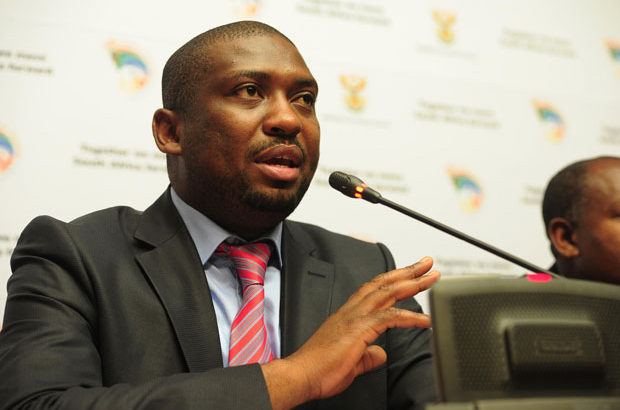
Pretoria — Deputy Minister in the Presidency, Buti Manamela, says young people must get the necessary qualifications to increase their chances of getting decent jobs and contributing meaningfully to the development of the country.

«Our country needs more qualified financial executives, auditors and other specialised professionals with an accounting background,» he said.

Addressing the KwaZulu-Natal Association for the Advancement of Black Accountants of Southern Africa’s Annual Gala Dinner in KwaZulu-Natal, Deputy Minister Manamela said South Africa is facing numerous challenges that require thinking out of the box and finding lasting solutions — particularly in relation to economic growth, inequality and unemployment.

«Your skills are needed to ensure that organisations are well managed and also contribute to better management of the country-level and global-level financial systems.

«We need financial strategists, problem solvers and activists who will turn around situations where they work and make a difference to our society at large. We also need you to unleash your entrepreneurial skills, to start innovating and contributing to job creation and the rebuilding of the economy,» he said.

Deputy Minister Manamela said there is a need to improve education within communities.

«We need to move beyond just basic literacy, which is the ability to read and write, to ensuring that our people get substantive training that will provide them with the right skills needed by the economy.»

He said government’s investment in technical and vocational training colleges is one of initiatives that seek to find alternative routes for people who might not have the requisite capabilities and resources to pursue university academic training.

«I hope and believe that you as professional accountants will share your skills with those people in areas like numeracy, basics of accounting and finance in order for them to manage their own lives and businesses better,» he said.

Fuente de la noticia: http://www.sanews.gov.za/south-africa/youth-encouraged-equip-themselves-education

Fuente de la imagen: http://citizen.co.za/wp-content/uploads/sites/18/2014/09/15286142092_f2235bbdc6_o.jpg?872c1b

Comparte este contenido:

Egipto: El puñal de Tutankamón vino del espacio

África/Egipto/29 Mayo 2016/Fuente: ABC /Autor:ÁNGEL GÓMEZ FUENTES

El hierro de la hoja fue confeccionado con un meteorito. Lo confirma un estudio científico ítalo-egipcio, que ha utilizado la técnica de la fluorescencia a rayos X

Tutankamón sigue sorprendiendo a los amantes de la egiptología. Ahora se desvela el misterio del origen de uno de los dos puñales encontrados junto a la momia del faraón: El hierro de la hoja llegó del espacio, es decir, pertenece a uno de los numerosos meteoritos caídos en el desierto egipcio, que aún hoy es fácil recoger. En cierta forma, ya lo sabían los antiguos egipcios y lo habían escrito: Un antiguo papiro cuenta de «un hierro llovido del cielo». A esta conclusión ha llegado un grupo de científicos de Italia y Egipto, mediante análisis químico no invasivo, utilizando la técnica de la fluorescencia a rayos X, confirmando la composición del hierro en porcentajes distintos de níquel y cobalto.

Desde el descubrimiento de su tumba, en noviembre 1922, por los ingleses Howard Carter y Lord Carnarvon, comenzó el debate sobre la naturaleza de los materiales de uno de los dos puñales situados sobre el cuerpo de Tutankamón, que reinó nueve años, desde el 1336 a 1327 a. C.

El hierro, más preciado que el oro

Había una clara justificación para abrir ese debate: «Los objetos egipcios de hierro eran poquísimos. No habían desarrollado la metalurgia del hierro y no tenían minas. Por ello estaba considerado más preciado que el oro», explica Francesco Porcelli, profesor de Física del Politécnico de Turín, cuyo Museo Egipcio está considerado, por valor y cantidad de restos arqueológicos, el más importante del mundo después del museo del Cairo.

Desde el primer momento sorprendió también la elevada calidad de la manufactura de la hoja del puñal, lo que reflejaba la capacidad en la elaboración del hierro que se había alcanzado en la época de Tutankamón.

Este puñal del faraón siempre despertó la curiosidad de los investigadores, porque incluso los detalles de su descubrimiento demostraban que era un objeto precioso: Mide 35 centímetros y no estaba oxidado cuando fue encontrado escondido entre los vendajes de la momia del faraón, para prepararse al encuentro con el más allá.

«Crater lunar» en el desierto egipcio

La teoría del meteorito, ahora confirmada, no es nueva. Había expertos que sostenían hace tiempo que el hierro procedía de un meteorito, mientras otros pensaban que había sido importado: En Anatolia, llamada también Asia Menor (Turquía) existía el hierro en la época de Tutankamón, en el siglo XIV a. C. Un hecho determinó el desarrollo de la historia que confirma la procedencia espacial del hierro del puñal: En el año 2010 se descubrió en medio del desierto egipcio el Kamil Crater, que consiste en un pequeño «cráter lunar», rarísimo en nuestro planeta, ya que normalmente la erosión cancela las señales de los impactos de meteoritos.

En aquella expedición participaron, entre otros científicos, expertos italianos de Pisa y del observatorio astronómico de Pino Torinese. «Cuando fue descubierto el cráter, hablamos del enigma nunca resuelto del puñal encontrado sobre la momia del joven faraón. Decidimos entonces hacer el análisis, superando las resistencias de las autoridades egipcias, que justamente custodiaban celosamente los hallazgos», explica Francesco Porcelli, en declaraciones recogidas por el periódico La Stampa.

Segura procedencia espacial

Este profesor de Física aclara cómo han llegado a establecer que se trata de un metal procedente del espacio teniendo en cuenta su composición, pues el hierro del puñal contiene níquel al 10 por 100 y cobalto al 0,6 %: «Son las concentraciones típicas de los meteoritos. Pensar que pueda ser fruto de una aleación, en estas concentraciones, es imposible», subraya el físico Porcelli, quien ha sido precisamente el estudioso que ha encabezado el proyecto iniciado en el 2014, en el que han participado, con financiación italiana y egipcia, expertos en meteoritos de la Universidad de Pisa, científicos del Politécnico de Milán y de Turín, el CNR (Consejo Nacional de las Investigaciones) y la empresa XGLab; por parte egipcia, el Museo del Cairo y la Universidad de Fayoum. Detalles del estudio aparecen en un artículo publicado en la revista «Meteoritics and Planetary Science».

En definitiva, ahora se puede poner fin a la controversia que mantenían los expertos sobre el preciado puñal, desde que se abrió el sarcófago de Tutankamón custodiado en el Valle de los Reyes. Pero seguirán abiertos otros misterios y supersticiones ligadas a Tutankamón, entre ellas la maldición que habría caído a quien profanara su tumba. Quizás algún día venga también del espacio la solución a algunos de esos misterios que rodean al faraón muerto a los 18 años.


Fuente de la noticia: http://www.abc.es/cultura/abci-punal-tutankamon-vino-espacio-201605271431_noticia.html

Fuente de la imagen:http://www.abc.es/media/cultura/2016/05/27/punal-tutankamon-2–620×349.jpg

Comparte este contenido:

Malawi: Sanitary facilities for improved education amongst girls

África/Malawi/29 Mayo 2016/Fuente:Nyasatimes/Autora: Diana Kalanda

Resumen: Como una manera de prevenir el número de niñas que abandonan la escuela debido a los ciclos mensuales, el programa de igualdad de género y potenciación de género (Gewe) ha logrado construir más de diez instalaciones sanitarias en Mangochi .

As one way of preventing the number of girls dropping out of school due to monthly circles, the Gender Equality and Women Empowerment programme (GEWE) has managed to build over ten sanitary facilities in Mangochi alone.

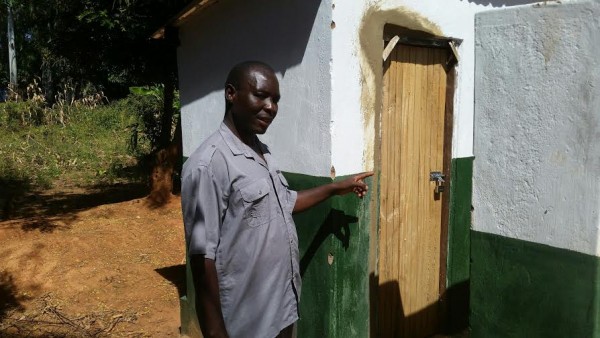
Kafumbata stands in front of one of the sanitary facilities built by Gewe project.

With funding from European Union, the sanitary facilities, have improved the enrolment of girls by over 10 percent.

During a field tour to the district, the headmaster for St Ignacio Primary School, Felix Kafumbata said girls enrolment has moved from 400 to 670, making an increase of 270 girls.

«Since the programme started in 2013, that’s how many girls have managed to stay in school in T/A Bwana Nyambi alone. In addition we have also had a significant number of girls who have retained after falling pregnant,» he said.

According to Kafumbata, during the time when a girls is menstruating, that the time most girls absent themselves from school.

He further said in a term, girls are absent from school for at least 28 days excluding normal absenteeism.

«So if one puts all the days together, you will see that its many days. This in the end becomes difficult for the girls to catch up and they end up quitting school. But with the sanitary facilities, these girls are able to help themselves without feeling shy because the way the toilets can carry three people privately,» he said.

GEWE project was being spearheaded by ministry of gender, children, disability and social welfare in conjunction with UNFPA.

The project came to an end on 18th May after three years of running.

Fuente de la noticia: http://www.nyasatimes.com/sanitary-facilities-for-improved-education-amongst-girls/

Fuente de la imagen:http://www.nyasatimes.com/wp-content/uploads/Kafumbata-stands-in-front-of-one-of-the-sanitary-facilities-built-by-Gewe-project.-600×338.jpe

Comparte este contenido:

Kenya: Minister in right direction but more needs to be done

África/Kenya/29 Mayo 2016/Fuente:DailyNation /Autor:David Aduda

Resumen: Las nuevas regulaciones anunciadas por el secretario del gabinete Educación Fred Matiang’i para frenar las trampas en los exámenes nacionales han estimulado el debate con opiniones divididas. En la nueva normativa, el ministro ha cambiado el calendario académico, que se extiende por el segundo término de una semana y reduciendo el tercer término de dos meses para los no candidatos con la intención de limpiar las escuelas y su conversión puramente a centros de examen durante ese período

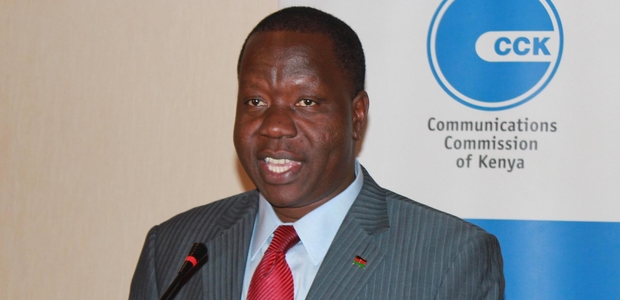
New regulations spelt out this week by Education Cabinet Secretary Fred Matiang’i to curb cheating in national examinations have spurred debate with opinions divided whether or not they can achieve the intended objectives.

In the new regulations, the minister has changed the academic calendar, extending the second term by one week and reducing the third term to two months for non-candidates with the intention of clearing schools and converting them purely to exam centres during that period.

Further, all non-academic activities, including parents’ visits and prayer days have been outlawed. And since the term has been shortened, students will not get their usual mid-term break.

The latter set of regulations is intended to limit contact between candidates and outsiders, ostensibly to guard against cases where exams are smuggled into the schools.

In particular, it has emerged that some parents or organised networks smuggle cell phones and other gadgets to candidates during the school visit and prayer days, which gadgets are used to transmit exam questions.

This was particularly rampant last year, when exams were widely leaked through WhatsApp.

But critics have questioned whether these directives will contain the runaway cheating in exams given its various permutations. Among others, it is questionable what happens to day schools or mixed boarding and day schools, where students walk in and out of school every day. Also, cheating was largely technology-based, what is being done to deal with that?

Curbing cheating has to start with overhauling the Kenya National Examinations Council (KNEC). Various investigations reports have shown there are criminal syndicates at the exams council, which have access to exams and using their networks, circulate them far and wide.

This is the reason why experts have called for radical reorganisation of the council. Dr Matiang’i made the first step in March when he dissolved the board and set up a new one, which in turn sacked the Chief Executive Joseph Kivilu and seven senior officials.

But more work must be done. According to a report by an ad hoc committee set up by the council, all KNEC employees should be vetted to determine their suitability, a clear indication that most of them have fallen short of glory. It is understood that the process is beginning soon.

A clear manifestation of the rot at KNEC is the «Chickengate» scandal which sucked in top officials, including former chief executive Paul Wasanga, who were reportedly bribed by a printer in London, ostensibly to give printing contracts. This has raised fundamental questions about the integrity of top council officials and the sanctity of exams.

Available evidence also indicates that some setters and moderators engaged by the council, most of them teachers, engage in exam stealing.

Unlike in the past when the experts swore to confidentiality, many no longer honour this and instead use the insider information to leak exams at a cost.

GET NEW SETTERS

Indeed, the council has to drop most of them and come up with a new system of identifying and recruiting new ones. In future, those recruited should be changed regularly to shake up the system.

More importantly, since exams are set even a year in advance, it would be necessary for KNEC to discard everything in its existing questions bank and get new setters and moderators to prepare different ones. We should not be surprised if the questions have already been leaked.

The second level is during transportation, distribution and storage of examinations. Traditionally, exams are stored in police armouries across the country for onward transmission to school.

This has become another weak link as some police officers have resorted to stealing papers from the stores and selling them to school principals and teachers. In fact, in some cases, schools pool resources and pay the police bosses to steal the papers and bring supervisors and invigilators in the loop. Perhaps, the government should outsource transportation, distribution and storage of the papers to credible security firms, just as banks do with money.

The third level is at the school where students, teachers and even parents organise to acquire the papers in advance.

Cases abound of schools where teachers wake up candidates at 3 am to do revisions and which questions turn out to be real exams. Not surprisingly, some of those arrested last year were school directors, principals and teachers.

What all these show is that exam cheating is deeply rooted in our system and routing it will require more strategic approaches.

But the starting point is to overhaul KNEC to give it the capacity to administer exams. It is understood that the new board under Prof George Magoha has literally been camping at the council, working round the clock to change structural and administrative processes.

Prof Magoha, however, prefers to work behind the scenes, which is a legitimate position, but it is important to give updates of the milestones to inspire confidence in the public that things are being done.

So far, Dr Matiang’i has demonstrated the desire to change things but he has a daunting task.

Fuente de la noticia:http://www.nation.co.ke/oped/Opinion/Minister-in-right-direction-but-more-needs-to-be-done/-/440808/3213642/-/15knb9kz/-/index.html

Fuente de la imagen:http://www.cio.co.ke/var/cio/storage/images/media/images/fred-matiang%27i/336704-1-eng-GB/fred-matiang%27i_article_full.jpg

Comparte este contenido:

Google Spaces nueva aplicación grupal para compartir

29 Mayo 2016/Fuente y Autor:Redchaco

Según Google, compartir información en un grupo de chat puede ser difícil, ya que normalmente nos salimos del cliente de mensajería para buscar la información y luego pegar el enlace en el chat grupal. La solución que propone es simple: una nueva aplicación llamada Spaces.

La gracia de Spaces es que cuenta con un buscador integrado, por lo que no necesitarás moverte entre aplicaciones en caso que quieras buscar un sitio web, un video de YouTube o cualquier cosa que se te ocurra.

Spaces estará disponible a partir de hoy en Android, iOS, equipos de escritorio y navegadores web. Solo necesitas una cuenta de Gmail y listo, tienes todo lo necesario para comenzar a crear grupos y compartir información.

Ahora, la pregunta del millón que todos se hacen en este momento: ¿Es en serio, Google? Si bien Spaces es un experimento del que planean sacar provecho en Google I/O, ¿por qué alguien querría instalar otro cliente de chat? o mejor aún, ¿por qué no integrar una funcionalidad similar en otro cliente como Hangouts?

Fuente de la noticia:http://redchaco.info/?p=10426

Fuente de la imagen: http://redchaco.info/wp-content/uploads/2016/05/share-spaces-300×158.png

Comparte este contenido:
Page 543 of 622
1 541 542 543 544 545 622