Page 6 of 10
1 4 5 6 7 8 10

Bicicletas y banquetas de bar para construir sillas de ruedas en Ruanda

Por: Ecoportal.07-09-2016

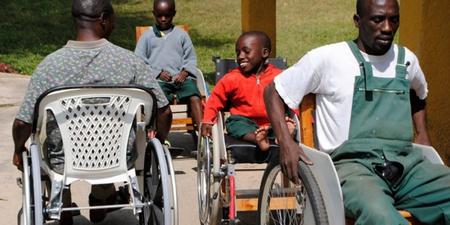
Estas sillas de ruedas se hicieron con un 85 % de residuos reciclados.
Un 3 % de los habitantes de la República de Ruanda sufre algún tipo de discapacidad física que les impide caminar.

Una bicicleta vieja o una silla de plástico de bar pueden ser recicladas de muchas maneras, pero tal vez una de las más originales y solidarias sea la de convertirla en una silla de ruedas para usuarios del Tercer Mundo, como sucede con la iniciativa «Kigali Chair Project» de Clara Romaní y Josep Mora.

Este proyecto surgió en 2012 en su taller de Barcelona, donde ambos trabajan como diseñadores industriales, cuando conocieron a una colega de Ruanda que les explicó la situación de esta república africana -y su necesidad de sillas de ruedas- y les puso en contacto con un centro de ortopedia de referencia local que trabaja en Kigali, su capital, y en el centro de rehabilitación de Gatagara.

En torno a un 3 % de la población de este país -más de 220.000 personas- sufren algún tipo de discapacidad física que le impide caminar por enfermedad, accidente o amputaciones del genocidio de 1994, según datos de su gobierno.

El Banco Mundial cifra en 618 euros el salario medio anual de un ruandés, mientras que el precio de una silla de ruedas “básica” no suele bajar de los 100 euros, por lo que estos instrumentos no son siempre accesibles para la población.

El objetivo del “Kigali Chair Project”, según han explicado Romaní y Mora a Efe era “construir sillas de ruedas a un coste asequible, empleando material autóctono y también reciclado, y, sobre todo, enseñar a los propios ruandeses a hacerlas” desarrollando su creatividad en un proceso fácil y manual.

Enseñar a construir y reparar sillas de ruedas

Romaní ha recordado que Ruanda recibe “muchas sillas donadas por diversas ONG” pero, si se averían, suelen quedar inutilizadas porque no hay personas con conocimiento suficiente para repararlas.

Por esta razón, ambos diseñadores decidieron afrontar el reto de enseñar a los ruandeses a construir y reparar sus propias sillas combinando materiales reutilizados con otros“localmente disponibles” y para ello se financiaron el viaje y la estancia sin ayuda de ninguna organización pública o privada.

Durante este tiempo, fabricaron ocho sillas diferentes con la ayuda de un grupo de ruandeses a los queofrecían clases teóricas y prácticas en un taller en el que “antes de irnos, repartimos un manual de instrucciones por cada silla que habíamos hecho a las personas que participaron” para que en un futuro pudieran seguir construyéndolas.

Educadores, profesionales de la ortopedia, enfermeros, pacientes necesitados de una silla de ruedas y familiares de los mismos “trabajaron juntos, con buena disposición y en comunidad, volcados por el bien de todos y sin importar la jerarquía social“, recuerda la diseñadora.

Residuos reciclados

Gracias a esta idea encontraron una segunda vida objetos como ruedas viejas de bicicleta, piezas de madera de todo tipo, fragmentos de sillas de ruedas ya inservibles y hasta asientos rotos de plástico, comunes en los bares y “que allí hay por todas partes”.

Romaní calcula que un 85 % de los elementos empleados eran residuos reciclados, mientras que el porcentaje restante provenía del sector de la madera, “una industria bastante fuerte en Ruanda, gracias a la cual conseguimos distintas piezas”.

Los impulsores de esta empresa se pusieron en contacto con la Universidad de Arquitectura de Ruanda para obtener su colaboración en la continuidad del proyecto pero, al no obtener ayuda económica, “fue imposible regresar para seguir impulsándolo”.

Posteriormente, la idea ganó el Premio Cataluña de Ecodiseño 2015 en la categoría C de Estrategia por “su sensibilización hacia el ecodiseño” reutilizando elementos comunes fácilmente disponibles, así como por “el gran valor social añadido” y su posible aplicación en otros países en desarrollo.

Por ello, los diseñadores no descartan la posibilidad de retomar la actividad en Ruanda o “en cualquier sitio donde se necesite”, siempre que se consiga la inversión necesaria para sostenerlo.

Mientras tanto, continúan volcados en otros trabajos de carácter medioambiental, el más reciente de los cuales es un proceso de reciclaje de plásticos para confeccionar lámparas ecológicas.

Foto: Un grupo de personas con las sillas reutilizadas en Ruanda. Foto cedida por Clara Romaní.

Ecoportal.net

EFE Verde

http://www.efeverde.com/

Comparte este contenido:

Africa: Teachers Use Spectacle of Solar Eclipse to Teach Students

Resumen:

Se presenta una  increíble sesión educativa para los estudiantes de varias escuelas en Kigali , donde se  reunieron maestros y estudiantes en la Universidad de la Facultad de Educación de Ruanda, con el objeto de observar el  eclipse solar parcial. Durante su aparición, el Dr. Phenias Nkundabakura, un especialista en astronomía enseña a los estudiantes sobre el eclipse solar, señalando que era un fenómeno científico.Expresó que : «Los eclipses solares ocurren cuando la luna se mueve entre el sol y la tierra, bloqueando el disco del sol y proyectando una sombra sobre la tierra».

Africa: Teachers Use Spectacle of Solar Eclipse to Teach Students

The display of solar eclipse presented an amazing educative session for students from various schools in Kigali who gathered at the University of Rwanda’s College of Education, yesterday.

The partial solar eclipse was visible in Rwanda, across central Africa, Middle East and some other parts of the world.

During its occurence, Dr Phenias Nkundabakura, a specialist in astronomy taught students about solar eclipse, noting that it was a scientific phenomenon.

«Solar eclipses happen when the moon moves between the sun and earth, blocking the sun’s disk and casting a shadow on earth,» he explained.

He told students that the moon is not a primary source of light and is opaque.

The angular diameter of the moon is almost equal to the angular diameter of the sun, and during the solar eclipse process, the event allows for the viewing of the atmosphere of the sun, according to Nkundabakura.

Speaking to the media, Nkundabakura said the incident offered the perfect opportunity to explain to students the phenomenon of eclipses.

«Explaining scientific facts about eclipses as students watch and follow the succession of changes helps them to know the truth about science and its experiments,» he said.

Diana Kabasinga, a Senior Three student at Saint Paul International School, said she had learned about the solar and moon eclipses, and types of eclipse; partial, annular and total eclipses.

«I’m excited because I have been studying them theoretically, and I had never seen them, so today I have seen it live and I can even explain to those who have not got a chance to witness this incredible incident,» she said.

«I have even got some lectures about the disadvantages of looking at the sun directly which can cause blindness,» she added.

Cedrick Migambi, another student, said the knowledge he acquired by witnessing the occurence of the eclipse will help him understand better what he had been studying in class about eclipses.

Migambi said it was a chance to learn more about the things that happen in the universe.

«I cannot say that it is the beginning of my journey to study astronomy but it was an opportunity that opened my mind to questions on the nature of everything that are not easily seen,» he said.

Jean Pierre Twagirayezu, a Physics teacher at Saint Paul International School, said it was an interesting opportunity for both students and science teachers to view the solar eclipse.

«It is complicated to teach sciences to students who haven’t got some experience about certain things, but when you are telling them what they have seen, it becomes easier, so we are glad this is happening,» he said.

According to Nkundabakura, the solar eclipse occurred at the time it was expected, from 8:45am to 12:22pm.

Nkundabakura said that 2000 eclipse glasses were distributed in different schools with about 10,000 students hoped to have got the opportunity to watch safely the solar eclipse.

People are warned not to look directly into the sun for long time with naked eyes, or use smoked glasses, colour film, sun glasses and polarising filters as they are not safe.

According to Nkundabakura, before yesterday, the previous solar eclipse to have been seen in Rwanda was in November 2013.

Fuente:

http://allafrica.com/stories/201609020038.html

Fuente imagen: https://lh3.googleusercontent.com/YSztXpqvSqmV7jOneLbT-I0jwWEao5-mN2QsZ91S2KmdooE8L5DwPda4QvRYyv3mJ0on=s138

Comparte este contenido:

África: ‘New Face, New Voices’ to Invest Rwf16bn in Women Fund

África/ Ruanda/Septiembre 2016/Noticiaas/http://allafrica.com/

Ruanda: ‘La nueva cara, Nuevas Voces de invertir en el Fondo de Mujeres Rwf16bn

‘Nuevas caras, nuevas voces’ está finalizando los planes para un fondo de inversión de las mujeres se espera invertir $ 20 millones (aproximadamente Rwf16bn) para apoyar a las mujeres que han estado enfrentando acurruca en su búsqueda para tener acceso a las finanzas.

Puso en marcha en Ruanda en junio del año pasado, nuevas caras, nuevas voces es un grupo de defensa Panafricano que se centra en la expansión del papel y la influencia de las mujeres en el sector financiero.

El Presidente de caras nuevas, nuevas voces en Ruanda, el Dr. Monique Nsanzabaganwa, ayer, dijeron funcionarios de varias instituciones financieras que el Fondo de Inversión de las mujeres sería apoyar a las mujeres que están interesadas en la inversión.

«Hay varios problemas que experimentan las mujeres en su intento de acceder a la financiación; vamos a ver cómo este fondo puede ayudar a resolver tales También estaremos buscando la forma en el fondo puede ser financieramente rentable, ya que estaremos invirtiendo dinero de la gente es.. debe haber una manera para las mujeres para invertir y obtener ganancias, sino también una solución a otros problemas que pueden tener, «Nsanzabaganwa, que es también el vice gobernador del Banco Nacional de Ruanda, dijo.

Dijo que el dinero se obtiene de las acciones compradas a la empresa y una cuarta parte de este dinero, que es aproximadamente Rwf4 millones de dólares, se extraerán de las mujeres.

«Las mujeres tienen dificultades para conseguir financiación ‘

Nsanzabaganwa dijo que el resto del fondo se obtiene de las instituciones que se utilizan para la inversión en dichos fondos, de los individuos que soportan las empresas de inversión, el gobierno y otras partes interesadas.

«Estamos actualmente 1000 miembros, pero empezamos cuando éramos solamente 18. Desde marzo, las mujeres comenzaron a comprar acciones y, hasta ahora, las acciones compradas valemos sobre Rwf80 millones y animamos a muchos más para registrarse. Una parte va para RWF1, 000, pero se pueden comprar en base a su capacidad financiera «, dijo Nsanzabaganwa.

Al final de la sesión de información, la cabeza del banco de la equidad de marketing y comunicación, Athanasie Niragira, reconoció que las mujeres se enfrentan a varios retos en la búsqueda de los servicios financieros.

«La mayoría de estas mujeres comienzan a las empresas, pero que carecen de la información y la formación que se requiere y esto hace que sea difícil para ellos para llegar a los planes de negocio. También hay un problema de la falta de garantías de que todos los bancos exigen antes de emitir un préstamo para el solicitante. Estos son los desafíos más grandes hasta ahora «, dijo Niragira.

Comparando el acceso a las lagunas de financiación y de información, Niragira dijo que todavía hay una gran diferencia porque los hombres eran más, y agregó que a pesar de que las mujeres reciben menos, los números están mejorando.

Un estudio realizado por FinScope en 2008 indicó que sólo el 21 por ciento de los ruandeses fueron incluidos económicamente de una manera formal. Otro estudio realizado por la misma empresa, realizado en 2012, mostró que el porcentaje se había duplicado al 42 por ciento.

Rwanda: ‘New Face, New Voices’ to Invest Rwf16bn in Women Fund

Nasra Bishumba

‘New Faces, New Voices’ is finalising plans for a women investment fund expected to invest $20 million (about Rwf16bn) to support women who have been facing huddles in their pursuit to access finances.

Launched in Rwanda in June, last year, New Faces, New Voices is a Pan-African advocacy group that focuses on expanding the role and influence of women in the financial sector.

The Chairperson of New Faces, New Voices in Rwanda, Dr Monique Nsanzabaganwa, yesterday, told officials from various financial institutions that the Women Investment Fund would support women who are interested in investment.

«There are various problems that women experience as they try to access finance; we will look at how this fund can help to resolve such. We will also be looking at how the fund can be financially profitable because we will be investing people’s money. It should be a way for women to invest and make profits but also a solution to other issues she may have,» Nsanzabaganwa, who is also the vice governor of the National Bank of Rwanda, said.

She said the money will be sourced from the shares bought from the company and a quarter of this money, which is about Rwf4 billion, will be sourced from women.

‘Women struggle to get funding’

Nsanzabaganwa said the rest of the fund will be sourced from institutions that are used to investing in such funds, from individuals that support investment ventures, government and other stakeholders.

«We are currently 1000 members but we started out when we were only 18. Since March, women started buying shares and, so far, the shares bought are worth about Rwf80 million and we encourage many more to register. A share goes for Rwf1,000, but you can buy based on your financial ability,» Nsanzabaganwa said.

At the end of the briefing session, Equity Bank’s head of marketing and communication, Athanasie Niragira, acknowledged that women face several challenges when seeking financial services.

«Most of these women start businesses but they lack the information and training that is required and this makes it difficult for them to come up with business plans. There is also an issue of lack of collateral that all banks require before they issue a loan to the applicant. These are the biggest challenges so far,» Niragira said.

Comparing access to finance and information gaps, Niragira said there is still a big difference because men were more, adding that though they receive fewer women, the numbers are improving.

A study done by FinScope in 2008 indicated that only 21 per cent of Rwandans were financially included in a formal way. Another study by the same company, done in 2012, showed that the percentage had doubled to 42 per cent.

Fuente:

http://allafrica.com/stories/201609020055.html

Fuente imagen:

https://lh3.googleusercontent.com/lVPJ86NJCdhNKKEC2I2N9pWZ5tHjra3QHQPJoVKv7Wy-6PvKdBBYBTyYDRaMlJvMFUMMTA=s138

Comparte este contenido:

África: Universidad de Ruanda en Nuevo Proyecto para promover la investigación

Ruanda/Agosto de 2016/AllÁfria

Resumen:  África: Universidad de Ruanda en Nuevo Proyecto para promover la investigación.

La Universidad de la Facultad de Ciencia y Tecnología de Ruanda ha anunciado un nuevo esfuerzo para promover la investigación y la innovación entre los estudiantes y el personal.

The University of Rwanda’s College of Science and Technology has announced a fresh drive to promote research and innovation among students and staff.

This was announced Tuesday at the opening of the second annual Research and Innovation Week in Science and Technology that is taking place at the College under the theme: «Science and Technology as the driver of economic transformation in Africa.»

At the meeting, researchers, students, professionals, government officials, representatives of NGOs and business leaders are discussing opportunities for community and development oriented research.

Activities that are lined up for the campaign include research presentations, innovation exhibitions, as well as networking opportunities for different stakeholders.

Fuente: http://allafrica.com/stories/201608250027.html

Comparte este contenido:

Rwanda: Innovation – New ICT Solution to Monitor Students’ Behaviour

Rwanda/Agosto de 2016/AllÁfrica

Resumen:

Ruanda: La innovación – Nueva solución TIC para monitorear el comportamiento de los estudiantes:Iniciativa inteligente, una firma local ha dado a conocer una iniciativa que ayudará a los maestros y los padres monitorear el comportamiento de los estudiantes. La nueva iniciativa denominada » Padres inteligente ‘ utilizará soluciones de Tecnología de Información y Comunicación ( TIC ) para que las escuelas , en particular los maestros, para seguir y controlar el comportamiento de los estudiantes en la escuela.

Smart Initiative, a local IT firm has unveiled an initiative that will help teachers and parents to monitor the behaviour of students.

The new initiative dubbed «Smart Parent’ will use Information and Communication Technology (ICT) solutions to enable schools, particularly teachers, to track and monitor students’ behaviour while at school.

It will also provide daily SMS reports to parents on the status of their children during school time.

Speaking to The Rwanda Focus on Thursday, Olivier Karasira, the Smart Initiative CEO, said the solution relies on the presence of a computer in each classroom, Smart Parent software and internet access.

«This tool will help parents and schools to provide the best study environment for children given the high ICT penetration level in Rwanda, both in the urban and rural areas. It helps schools to communicate with parents, and also provides real time information to be used by government institutions as a measurement to guide development initiatives,» Karasira, said.

Smart Initiative is purchasing laptops from ASID, the official distributors of Positivo BGH Made in Rwanda laptops for Rwanda education system.

The initiative is already operational at Lycée Notre Dame de Citeaux (LNDC) in Kigali.

Fuente: http://allafrica.com/stories/201608190391.html

Fuente de la Imagen: https://www.google.co.ve/search?q=traductor&biw=1024&bih=485&source=lnms&tbm=isch&sa=X&ved=0ahUKEwjpgcSN-NDOAhXFNiYKHQw8Cv4Q_AUIBigB#tbm=isch&q=tic+en+ruanda&imgrc=N3h1xXjoM9UIgM%3A

Comparte este contenido:

Rwanda and Switzerland to Construct a VTC School

Ruanda-Suiza/19 de agosto de 2016/allafrica.com

Resumen:

El Gobierno de Ruanda, representado por el Ministerio de Educación, y Suiza, representado por la Agencia Suiza para el Desarrollo y la Cooperación (COSUDE), firmaron un memorando de entendimiento sobre el proyecto de la FTP: Promoción orientada al mercado La formación y la creación de empleo en los Grandes Lagos Región. El memorando de entendimiento fue firmado por el Ministro de Educación Dr. Papías Musafiri Malimba en nombre del Gobierno de Rwanda y el embajador en Ruanda RALF Heckner en nombre de Suiza. El apoyo de Suiza en la FTP, es un programa de 12 años de Promoción del Mercado Orientada La formación y la creación de empleo en la región de los Grandes Lagos con el objetivo de apoyar los esfuerzos de la Ruanda de mejorar el acceso, la calidad y la pertinencia del sistema de formación profesional. La atención se centra en la mejora cualitativa de la prestación de la FTP, una mayor accesibilidad para los segmentos más socio-económicamente desfavorecidos y vulnerables de la población rural en la Provincia Occidental, y el acceso a oportunidades de formación más diversificados. El programa se inició en 2012 y está siendo implementado en la Provincia Occidental por Swisscontact; una ONG suiza especializada en la formación profesional. primera fase de tres años terminados en 2015. En el nuevo acuerdo fase del Programa, Suiza financiará la construcción de un VTC en Nyabihu Distrito lo que hace un total de 6 CFPs en la provincia occidental y también continuar el apoyo y fortalecer la calidad de los centros construidos en la fase uno.

Kigali — The Government of Rwanda, represented by the Ministry of Education, and Switzerland, represented by the Swiss Agency for Development and Cooperation ( SDC) signed a Memorandum of Understanding on TVET project : Promoting Market Oriented Skills Training and employment creation in the Great Lakes Region.

The Mou was signed by the Minister of Education Dr. Papias Musafiri Malimba on behalf of the Government of Rwanda and the Ambassador to Rwanda RALF Heckner on behalf of Switzerland.

The Switzerland support in TVET, is a 12-year program of Promoting Market Oriented Skills Training and Employment Creation in the Great Lakes Region aiming at supporting the Rwanda’s efforts to improve access, quality and relevance of the TVET system. The main focus is on qualitative improvement of TVET provision, enhanced accessibility for the most socio-economically disadvantaged and vulnerable segments of the rural population in Western Province, and access to more diversified training opportunities.

The program started in 2012 and is being implemented in the Western Province by Swisscontact; a Swiss NGO specialized in vocational training. The Program’s first phase of three years ended in 2015. In the new phase agreement, Switzerland will finance the construction of one VTC in Nyabihu District thus making a total of 6 VTCs in western province and also continue support and strengthen the quality of the centres constructed in phase one.

Tomado de: http://allafrica.com/stories/201608080571.html

Imagen: https://www.google.com/search?q=Ruanda+y+Suiza+para+la+construcci%C3%B3n+de+una+Escuela+VTC&source=lnms&tbm=isch&sa=X&ved=0ahUKEwi-y7HH1MvOAhWL1x4KHdYzAkYQ_AUICCgB&biw=1366&bih=667#tbm=isch&q=Ruanda+y+Suiza+construcci%C3%B3n+de+una+Escuela+&imgrc=c1EbluLA-o9xiM%3A

Comparte este contenido:

World Bank praises EA tourism platform for strong leadership

África/Kenia,Burundi,Ruanda,Uganda,Tazania/ Agosto del 2016/Noticias/www.geeskaafrika.com

Banco Mundial elogia plataforma de turismo de EA con  un liderazgo fuerte

Un informe del Banco Mundial ha alabado la Plataforma África Oriental Turismo (ÉÅpara) para mostrar un fuerte liderazgo en la defensa de un enfoque coordinado para mejorar la competitividad de viajes y turismo de la región.

El informe dice que el EATP ha permitido a profesionales, responsables políticos y reguladores para participar en «diálogo significativo» sobre los temas críticos que actualmente están transformando estos servicios en el África subsahariana.

«Las iniciativas de cooperación son necesarias para aumentar la capacidad de regulación que los gobiernos africanos tienen que construir con el tiempo para participar en los esfuerzos de liberalización significativos,» dice Alemayehu Geda, Profesor Asociado de Economía en la Universidad de Addis Abeba.

«A través del apoyo analítico y asistencia técnica, el Banco Mundial puede ayudar a los países africanos para mejorar la regulación, facilitar los flujos de servicios, y en última instancia hacer que los servicios en África más competitivo.»

potencial de exportación de África en los servicios tradicionales, como el turismo, se reconoce claramente, pero el éxito de emergencia de las exportaciones de servicios no tradicionales, tales como servicios de oficina, se suele pasar por alto, dice el informe.

Por ejemplo más de 16 por ciento de la contabilidad, arquitectura, ingeniería y despachos de abogados en el Mercado Común para África Oriental y Meridional (COMESA) países ya se dedican a la exportación, principalmente a los países vecinos.

«Esto contradice las estadísticas oficiales, que afirman que las exportaciones de servicios profesionales de varios países son insignificantes o inexistentes», dice el informe.

«Del mismo modo, muchos hospitales en los países del África subsahariana están tratando a los pacientes extranjeros y están utilizando la telemedicina;sin embargo, las estadísticas oficiales a menudo no registran corrientes de este tipo de servicios médicos «.

Sin embargo, el sector de servicios está floreciendo en formas que son poco conocida actualmente, según el Banco Mundial.

A World Bank report has praised the East Africa Tourism Platform (EATO) for showing strong leadership in championing a coordinated approach to enhance the region’s travel and tourism competitiveness.

The report says the EATP has enabled practitioners, policy makers, and regulators to engage in “meaningful dialogue” about the critical issues that are currently transforming these services in Sub-Saharan Africa.

“Cooperation initiatives are necessary to increase the regulatory capacity that African governments need to build over time to engage in meaningful liberalisation efforts,” says Alemayehu Geda, Associate Professor of Economics at Addis Ababa University.

“Through analytical support and technical assistance, the World Bank can assist African countries to improve regulation, facilitate services flows, and ultimately make services in Africa more competitive.”

Africa’s export potential in traditional services, such as tourism, is clearly recognised, but the emerging success of exports of nontraditional services, such as business services, is often overlooked, the report says.

For example more than 16 percent of the accounting, architectural, engineering and legal firms in the Common Market for Eastern and Southern Africa (Comesa) countries are already engaged in exports, mainly to neighbouring countries.

“This contradicts official statistics, which assert that professional services exports for several countries are negligible or non-existent,” the report says.

“Likewise, many hospitals in Sub-Saharan African countries are treating foreign patients and are using tele-medicine; yet official statistics often do not record such trade flows in medical services.”

But the service sector is blossoming in ways that are currently unheralded, the World Bank says.


Fuente: http://www.geeskaafrika.com/22676/world-bank-praises-ea-tourism-platform-for-strong-leadership/

Fuente imagen

http://www.geeskaafrika.com/wp-content/uploads/2016/08/east-africa.jpg

Comparte este contenido:
Page 6 of 10
1 4 5 6 7 8 10