Page 5 of 10
1 3 4 5 6 7 10

Ruanda: Representantes de 170 países acuerdan eliminar gases efecto invernadero

África/Ruanda/Octubre de 2016/Fuente: El Universal

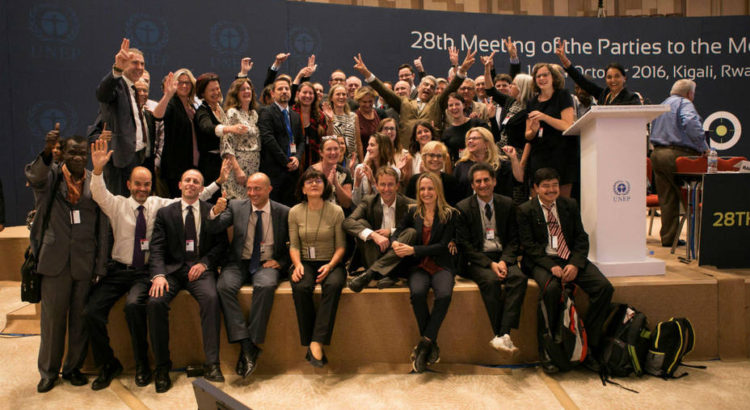
Representantes de más de 170 países llegaron hoy a un acuerdo clave en Ruanda para prohibir el uso de una serie de gases que empeoran el efecto invernadero, informó desde Kigali el  Programa de las Naciones Unidas para el Medio Ambiente (PNUMA).

El compromiso es el mayor desde la cumbre sobre el clima de París celebrada en diciembre de 2015, que estableció limitar el calentamiento global claramente por debajo de los dos grados centígrados respecto a los valores preindustriales, informó DPA.

En Ruanda se aprobó ahora la retirada paulatina de los gases conocidos como hidrofluorocarbonos (HFC), productos químicos utilizados en refrigeradores y aires acondicionados y que sustituyeron a los clorofluorocarbonos (CFC), prohibidos en 1987 en el Protocolo de Montreal.

En la conferencia estuvo presente el secretario de Estado norteamericano, John Kerry. «Es un inmenso paso adelante», dijo Kerry a la BBC. «Rara vez se consigue reducir el calentamiento global en medio grado centígrado con una sola medida», subrayó.

También la Unión Europea (UE) dio la bienvenida al acuerdo. «Esta es una gran victoria para el clima. Hemos dado el primer paso concreto para cumplir con las promesas que hicimos en París en diciembre pasado», afirmó el comisario de Medio Ambiente, el español Miguel Arias Cañete.

La conferencia aprobó una enmienda al Protocolo de Montreal que veta el uso también de los HFC debido a su enorme impacto sobre el efecto invernadero y por ser gases muy persistentes.

Para proteger la capa de ozono, unos 200 países firmaron en 1987 el Protocolo, en el que se prohibieron de forma masiva los CFC, utilizados hasta entonces en combustibles, sistemas refrigerantes o aerosoles, entre otros.

Hace algunos años, los científicos descubrieron, sin embargo, que si bien sus sustitutos, los HFC, no atacan la capa de ozono, contribuyen enormemente al calentamiento global, entre 100 y 1.000 veces más que las emisiones de dióxido de carbono. A diferencia de los otros gases de efecto invernadero, los HFC no están presentes de forma natural en el planeta.

En Kigali se estableció ahora un calendario para la retirada de los HFC tanto en países desarrollados como en desarrollo. Los primeros acordaron reducir su uso para 2019 en un 10 % y entregar dinero adicional a través del Fondo Multilateral del Protocolo de Montreal.

La mayoría de los países en desarrollo, entre ellos China, Brasil, Suráfrica y Argentina, se comprometieron a congelar su uso hasta 2024 y luego comenzar una gradual eliminación. Por su parte, la India, Irán, Irak y Pakistán prometen hacerlo en 2028.

La disposición sobre los HFC se podrá implementar de forma barata y sencilla, dijo el director ejecutivo del PNUMA, Erik Solheim. «Es uno de los frutos más al alcance en el arsenal contra el cambio climático».

Fuente: http://www.eluniversal.com/noticias/internacional/representantes-170-paises-acuerdan-eliminar-gases-efecto-invernadero_622777
Comparte este contenido:

ACNUR y países africanos de acogida acuerdan un paso final para solucionar la situación de los refugiados ruandeses

África/Ruanda/6 de octubre de 2016/Fuente: ACNUR

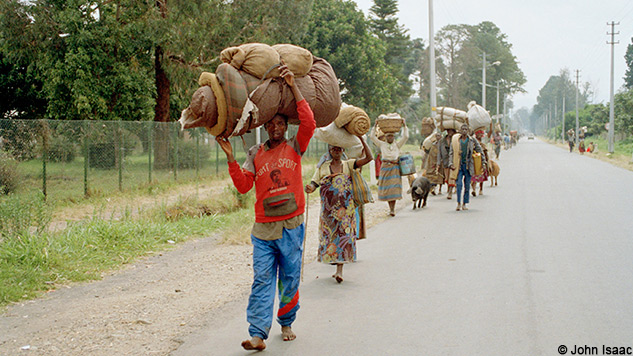
La reunión ministerial marca la fase final de una estrategia de soluciones integrales para los refugiados de Ruanda, que huyeron de su país entre 1959 y 1998.

El ACNUR (la Agencia de la ONU para los Refugiados), las delegaciones de los países de africanos y la Unión Africana acordaron hoy un paso final para terminar con la situación de larga duración de los refugiados de Ruanda, después de siete años de negociaciones.

La reunión ministerial, organizada por el ACNUR en Ginebra, marca la fase final de una estrategia de soluciones integrales para los refugiados de Ruanda que huyeron de su país entre 1959 y 1998 para escapar de la violencia interétnica y el conflicto armado.

“En un mundo donde hay más de 21 millones de refugiados, la atención no debería estar centrada solo en dar protección y asistencia humanitaria, sino en identificar soluciones de forma proactiva. La reunión de hoy constituye un paso crucial para brindar soluciones para los muchos refugiados ruandeses que buscaron asilo entre 1959 y 1998, así como para terminar una de las situaciones de refugiados de más larga duración  en África”, dijo el Alto Comisionado de la ONU para los Refugiados, Filippo Grandi.

Los participantes, que procedían de Ruanda, así como de los principales países de acogida: Angola, Burundi, Camerún, República Democrática del Congo, Kenia, Malawi, República del Congo, Sudáfrica, Uganda, Zambia y Zimbabue, reafirmaron su compromiso para concluir la estrategia, la cual fue presentada en octubre de 2009, a finales del próximo año.

Destacando el progreso realizado desde la última reunión ministerial sobre la situación de los refugiados de Ruanda, los gobiernos reiteraron su disposición de brindar una condición legal alternativa a aquellos refugiados que elijan integrarse localmente, y los alentaron a hacer uso de esta oportunidad.

Todos los Estados confirmaron que continuarían promoviendo la opción de la repatriación voluntaria, segura y digna a Ruanda, incluyendo brindarles a los refugiados información completa de las condiciones del retorno. Al mismo tiempo, el ACNUR acordó brindar un paquete de retorno mejorado, y hacer la transición progresiva del apoyo en especie a una forma de asistencia más basada en el dinero en efectivo para asegurar una reintegración sostenible.

Los países que han invocado la cláusula de cesación aseguraron que ningún refugiado cuya condición de refugiado se mantenga después de un proceso de exención, seguiría recibiendo protección internacional y apoyo.

El genocidio en 1994, seguido por los enfrentamientos armados en el noroeste del país en 1997 y 1998, causaron que más de 3,5 millones de ruandeses huyeran en busca de seguridad. Todos, menos 268.500 refugiados, han encontrado una solución que les permite cerrar este difícil capítulo.

En el cierre, Alto Comisionado Asistente para la Protección del ACNUR, Volker Türk, subrayó que la organización está dispuesta a seguir trabajando con los Estados que acogen a refugiados ruandeses para encontrar soluciones de acuerdo con la estrategia y dentro del tiempo establecido  de diciembre de 2017, y alentó a todos a hacer un esfuerzo adicional.

Fuente: http://www.acnur.org/noticias/noticia/acnur-y-paises-africanos-de-acogida-acuerdan-un-paso-final-para-solucionar-la-situacion-de-los-refugiados-ruandeses/

Imagen: www.cear.es/wp-content/uploads/2015/04/salvo_dialogos_refugiados_emile_th.jpg

Comparte este contenido:

África: Ruanda más de 20.000 estudiantes de la escuela técnica nacional en exámenes vocacionales

Africa/Ruanda/Septiembre 2016/Noticias/http://allafrica.com/

Resumen:

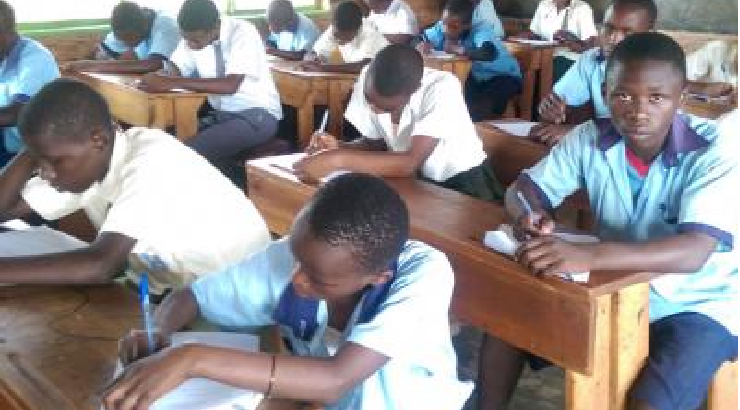
Un total de 20.000 estudiantes de la escuela secundaria técnica de todo el país, ayer, dio inicio a sus exámenes nacionales, a partir de documentos prácticos que finalizarán el 30 de septiembre. En ese mismo orden  expresan que El Ministro de Estado para la educación primaria y secundaria, Olivier Rwamukwaya, ofició en el lanzamiento del ejercicio de gira por salas de examen en el Centro Integrado Politécnico regional (IPRC) -Kigali en Kicukiro Distrito, donde 1.029 candidatos de nueve escuelas alrededor de Kigali en espera de sus asignacion . Finaliza Rwamukwaya  con agrado  ya  que había visto, y agregó que los estudiantes estaban siendo preparado para contribuir al desarrollo de sí mismos y su país.

Fuente:

http://allafrica.com/stories/201609220153.html

Fuente imagen:

https://lh3.googleusercontent.com/W_uUrhsw7CYt1VRVbgc6kpSNKT7rctbPtIe5pjRKToJk2bUFmMszwUICWQM1c1NvPFp9Lw=s138

Rwanda: Over 20,000 Sit National Technical, Vocational Exams

A total of 23,942 technical secondary school students from across the country, yesterday, kicked off their national examinations, beginning with practical papers that will end on September 30.

The exams, which are administered at the school level and supervised at the national, provincial, district and sector levels, are being conducted in 113 centres for 168 schools and examined by 1,032 assessors from schools and industry, grouped into 344 panels.

Of the candidates, 10,656 (46.7 per cent) are girls, while 13,286, representing 53.3 per cent, are boys. A total of 23,563 are school candidates, while 379 are private candidates.

The Minister of State for Primary and Secondary Education, Olivier Rwamukwaya, officiated at the launch of the exercise by touring examination rooms at Integrated Polytechnic Regional Centre (IPRC)-Kigali in Kicukiro District, where 1,029 candidates from nine schools around Kigali are sitting their papers.

Rwamukwaya said he was encouraged by what he had seen, adding that the students were being prepped to contribute to develop themselves and their country.

«I am happy because from what I have seen in their practical examinations it is encouraging because we can now see that when they are done here, they will contribute to the development of the nation when they get employed or even when they employ others,» the minister said.

Rwamukwaya also commended the use of English language in the exams, which he said strategically places the students in job markets locally and beyond borders.

«We are also happy that they can explain what they are doing in English, which is the standard language used in all schools in Rwanda and that, too, should be applauded because they can navigate more markets anywhere in the world,» he said.

The Principal of IPRC-Kigali, Eng. Diogene Mulindahabi, told The New Times that the number of females has been increasing over the years and more efforts were being put into encouraging more to join.

«We are always encouraging them. We invite them, talk to them and take advantage of females who are already pursuing technical education to share their stories with them. We started with 3 per cent females (of the total student population) but we are now at 20 per cent,» he said.

Comparte este contenido:

África: El Grupo de Alto Nivel (HLP) para el empoderamiento de la mujer para promover la igualdad de género.

África/Septiembre 2016/Noticias/http://allafrica.com/

Reseña:

Se expone que el Grupo de Alto Nivel (HLP) para el Empoderamiento de la Mujer económica actual presenta sus primeros resultados al Secretario General de la ONU en un evento en Nueva York, que se celebró en el marco de la Asamblea General de la ONU. El informe tiene como objetivo llamar la atención sobre los desafíos que enfrentan las mujeres más desfavorecidas, para llevar el trabajo informal de los márgenes de la corriente principal, para poner de relieve cómo las leyes discriminatorias limitan la elección y para arrojar luz sobre la centralidad del trabajo remunerado y el cuidado, que es uno de las barreras más penetrantes e importantes para el empoderamiento económico de las mujeres. de esta manera la investigación muestra que las mujeres invierten sus ingresos en sus familias y comunidades, en particular en la salud y la educación. McKinsey Global Institute estima que si las mujeres en todos los países debían jugar un papel idéntico al de los hombres en los mercados, tanto como $ 28 de trillón se añadiría a la economía mundial en el año 2025.

Fuente:

http://allafrica.com/stories/201609221490.html

Fuente imagen:

https://lh3.googleusercontent.com/rdsOCLJ-rBQKKOG6zDRSoO0Yjb9OIQh79gUfSQMM1KA4TbEs_oaK3KG-l5hGHt3Z1Mrde00=s128


Africa: First Report by High-Level Panel on Women’s Economic Empowerment Outlines Drivers to Advance Gender Equality

The High-Level Panel (HLP) for Women’s Economic Empowerment today presents its first findings to the UN Secretary-General at an event in New York, held in the context of the UN General Assembly.

The HLP, created by UN Secretary-General Ban Ki-moon in January 2016, aims at placing women’s economic empowerment at the top of the global agenda to accelerate progress under the 2030 Agenda for Sustainable Development.

The report aims to draw attention to the challenges faced by the most disadvantaged women, to bring informal work from the margins to the mainstream, to highlight how discriminatory laws limit choice and to shed light on the centrality of unpaid work and care, which is one of the most pervasive and significant barriers to women’s economic empowerment.

“The launch of this first report, which has been enriched by passionate and vigorous debates, represents a major milestone for the work of the HLP. It has drawn on the substantial and robust evidence about key issues, identified the fundamental drivers and principles and delivered a call to action,” said Luis Guillermo Solis Rivera, President of Costa Rica and Co-Chair of the HLP.

“Something all panel members agree upon is that economic empowerment is about rights, justice and creating a movement that will leave no woman behind. This report provides the added value of concreteness by showing good examples on how society can come together to accelerate women’s economic empowerment. After all, if we do not act, we are missing out on huge gains for global sustainable development and economic growth”, added Simona Scarpaleggia, CEO of IKEA Switzerland and Co-Chair of the HLP.

Today’s report highlights seven primary drivers to unlock the potential of women to fully participate in the economy and achieve financial independence: tackling adverse norms and promoting positive role models; ensuring legal protections and reforming discriminatory laws and regulations; recognizing, reducing and redistributing unpaid work and care; building digital, financial and property assets; changing corporate culture and practice, improving public sector practices in employment and procurement, and strengthening visibility, collective voice and representation.

The HLP brings together a diverse group of stakeholders including governments, private sector, trade unions, commercial banks, civil society organizations and multilateral organizations, such as UN Women, all of which are crucial to building greater economic empowerment and realizing rights for women.

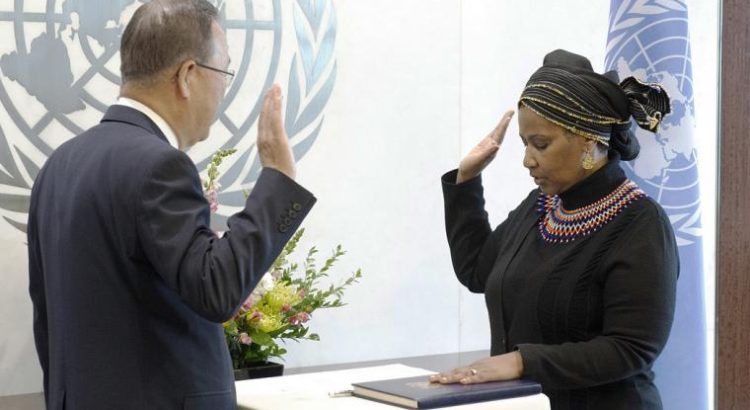
“Closing the pay gap between women and men and finding solutions to the unpaid work done by millions of women and girls will have a huge impact on women’s ability to shape change in their live— especially the poorest. With money in their pocket and increased control over their own time and resources, women can make decisions about how to make life safer and better for themselves and their children, whether that is completed education or further skills training, health care, including their sexual and reproductive health, or simply better food for the family. This is the time, for us, and for the world, to put gender equality and women’s empowerment at the centre of the changes to which we all aspire, and make a real impact on poverty,” said Phumzile Mlambo-Ngcuka, Executive Director of UN Women.

Research shows that women invest their income back into their families and communities, including in health and education. McKinsey Global Institute estimates that if women in every country were to play an identical role to men in markets, as much as $28 trillion would be added to the global economy by 2025.

Complete version of the Interim report will be available online at: www.womenseconomicempowerment.org and highlights of the interim report can be downloaded here.

UN Women is the UN organization dedicated to gender equality and the empowerment of women. A global champion for women and girls, UN Women was established to accelerate progress on meeting their needs worldwide.

For more information, visit www.unwomen.org.


Comparte este contenido:

Rwanda: Schools, Parents Should Embrace Smart Initiative

Rwanda/26 de Septiembre de 2016/Allafrica

Resumen: Una nueva aplicación para el seguimiento de la asistencia y el rendimiento de los estudiantes en las escuelas se fija para ser lanzado pronto en las escuelas rurales en Ruanda. La sencilla aplicación de escritorio dirigida al profesor, orientada al rendimiento de los estudiantes y la asistencia en las escuelas. La misma se está poniendo a prueba entre más de 750 estudiantes en Lycée Notre Dame de Citeaux.

A new app to track attendance and performance of learners in schools is set to be rolled out in rural schools in Rwanda soon. The simple rural oriented desktop application for the teacher, student performance and attendance in schools is being piloted among over 750 students at Lycée Notre Dame de Citeaux.

Absenteeism and school dropout remains one of the biggest challenges, especially in rural schools. This makes the project a timely smart solution to curb absenteeism and school dropouts.

Statistics from the Ministry of Education indicate that the overall, school dropout rate decreased by more than half from 10.5% the previous year countrywide, but the problem is still big.

If the new app dubbed «Smart Parent» is rolled out, it will go a long way in addressing this challenge, which is a huge bottle neck to achieving quality education through smart solutions.

But this will require combined efforts from all the key stakeholders. The stake holders including parents, schools and the Ministry of Education, among others should throw their weight behind the initiative, which has potential to transform education in the rural communities.

The «Smart Parent» app is a tracking and monitoring software that provides daily short text messages (SMS) alerts to parents on the status of their children at school. The tool will help parents and schools to provide the best study environment for children, with a wide ICT penetration capacity. It will also ease evaluation of learners on aspects like attendance, performance, behaviour, health, and hygiene.

The architects of the initiative want to start rolling out the project from January 2017 targeting 20 schools per month. This is a project that should be supported but before rolling it out, a sensitization campaign should be conducted among the stake holders to understand and appreciate the objectives of the project.

Fuente: http://allafrica.com/stories/201609120778.html

Comparte este contenido:

Africa: How Smart Initiative Will Improve Student Performance in Schools

África/Septiembre de 2016/ Allafrica

Resumen:  Hicimos un estudio de mercado a través de entrevistas a maestros, las administraciones escolares y los padres. Todos ellos estaban muy emocionados de tener este software, una herramienta eficaz, ya que está mejorando la vida de los estudiantes, dice .

«We did a market survey and interviewed teachers, school administrations and parents. All of them were very excited to have such a tool being effective, as it was improving the student’s lives,» he says.

Resultado de imagen para Africa: How Smart Initiative Will Improve Student Performance in Schools

The software compiles all course reports and sends an SMS to the parents every day after school hours to keep the parents updated and helps schools to communicate with parents, even for those who cannot access internet.

He says parents will be able to focus on the ability of their children to study well if they receive daily reports on their performance and discipline.

«A child can’t succeed if he is absent or late, he can’t succeed if he is sick, absent minded or sleepy in class, and doesn’t have access to basic hygiene needs. Our main target is to have a smart kid as early as possible as well as have a future generation with values.»

«The teacher will simply use it to update his report after each class, where all his students will be evaluated on 5 indicators; attendance, performance, behavior, health, and hygiene. We provide a laptop in every classroom for the teachers and we train them on the use of the software,» he says.

The project pilot phase will start at Lycée Notre Dame de Citeaux with over 750 students through the last quarter of the 2016 academic year.

The pilot phase is intended to help adjust the software for better use by the teachers and enable them have better interaction with parents.

«Once we are through, we will implement the project from January 2017 in 20 schools per month, providing a solution to over 600 classrooms per month which means 18, 000 students added every month,» Kasasira explains.

«For parents without mobile phones, we link them with different operators in Rwanda so as to use this opportunity. We also encourage them to develop strategies so that they can reach those clients.»

«We can contribute by pointing the names of parents in need of cell phones. To receive the message, there is no need for internet, it’s a rural oriented project,» he says.

Rwanda’s school dropout rate

Statistics from the Ministry of Education indicate that the overall, school dropout rate decreased by more than a half as it went down from 10.5 per cent the previous year countrywide.

«School dropout is still an issue although we constantly have intervention of local leadership. After some research, we didn’t find any ICT oriented solution in Rwanda or abroad. This is how we decided to create our own platform,» Karasira says.

He (Karasira) and his partner Victor Nkindi, came up with the idea to brainstorm about a solution to improve school attendance by simply using a rural oriented desktop application for the teacher.

A vision to make Rwanda a database hub for Africa

Part of Smart Africa’s agenda, is to use ICT oriented solutions in the education system to improve social development and access to ICT. This is why ‘Smart initiative’ was endorsed by African leaders when it was presented to them during the recent African Union Summit in Kigali, a month after it was initiated.

 «All institutions in charge of education can have our support and use generated data to take decisions. It is our wish to have a Rwandan product being successful in Rwanda, Africa and all over the world,» Karasira says.

With Rwanda being at the centre stage of its development-with many projects underway to turn the country into an ICT hub in the region, the system provides real time data to be used by government institutions as data measurement for development in the Smart Africa agenda.

«We are using this system in Rwanda and very soon in Africa. We want to cover Africa within 3 years, this is our own vision 2020, if only entrepreneurs in Rwanda would think big, and share our vision with the rest of the world,» Karasira says.

In Europe, the initiative is already present in Greece and the software is already being adapted in the countries. It has also already gained solicitations from across Africa where the solution is being implemented in six countries namely; Zimbabwe, DR Congo, Gabon, Gambia and Uganda where Karasira is currently doing the project pilot phase.

«Once we are able to generate metrics on a district or province’s school evolution through a quarter or a semester, we can identify the need on time but most importantly, the data we generate, will allow Rwanda to become a real database hub in education for the entire Africa,» he says.

 Fuente: http://allafrica.com/stories/201609120809.html
Fuente de la Imagen: https://www.google.co.ve/search?q=Africa:+How+Smart+Initiative+Will+Improve+Student+Performance+in+Schools&espv=2&biw=1024&bih=494&site=webhp&source=lnms&tbm=isch&sa=X&ved=0ahUKEwjL66OKpo3PAhVE7R4KHS1DD2UQ_AUIBygC#imgrc=5kMx7fh75rbIYM%3A
Comparte este contenido:

UN report commends Rwanda on education

África/Ruanda/09 de Septiembre de 2016/Fuente: Daily Nation

RESUMEN: El informe publicado el miércoles en Kigali, Londres, Medellín y Jakarta también muestra que Ruanda ha reducido su ratio alumno / ordenador en las escuelas primarias y secundarias como parte del proyecto One Laptop per Child. Ruanda ha alcanzado la tasa de acceso al 98 por ciento. «Sistema de gestión de la cadena de suministro en línea de Ruanda permite a las escuelas ordenar los libros que quieren de los editores, y el gobierno  controla si los libros se han entregado», dijo el informe. El informe señala que el objetivo 4 de los Objetivos de Desarrollo Sostenible es asegurar una educación de calidad, equitativa y oportunidades de aprendizaje para todos. Al comentar sobre el informe, dijo el ministro de Educación de Ruanda Papías Musafiri, sobre los objetivos de desarrollo del Milenio que su gobierno se esforzará por mantener la equidad, la calidad y la educación inclusiva.

The report released Wednesday in Kigali, London, Medellin and Jakarta also shows that Rwanda has reduced its pupil/computer ratio in primary and secondary schools as part of the One Laptop per Child project.

Rwanda has achieved access rate at 98 per cent. “Rwanda’s online supply chain management system enables schools to order books they want from publishers, and government to monitor whether the books have been delivered,” the report said.

The report points to goal 4 of the Sustainable Development Goals about ensuring inclusive and equitable quality education and learning opportunities for all.

Commenting on the report, Rwanda’s Education minister Papias Musafiri said for post Millennium Development Goals his government will strive to maintain equity, quality and inclusive education.

There is a need to impart the right skills and attitudes and a culture of innovation and creativity among young people, he said.

It is not a question of knowing something but how do you translate the acquired knowledge into what is needed at the market, he said.

Fuente: http://www.nation.co.ke/news/africa/UN-report-commends-Rwanda-on-education/1066-3374086-vk85ik/

Comparte este contenido:
Page 5 of 10
1 3 4 5 6 7 10