Page 8 of 56
1 6 7 8 9 10 56

Canada: What you should know about this week’s teacher strikes

North America/ Canada /18.02.2020/ Source: www.cbc.ca.

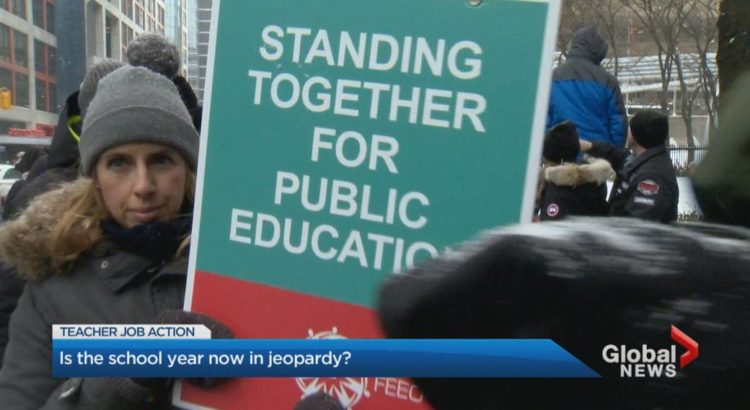
Over two million students will be out of class this Friday as Ontario’s four largest teacher unions plan to hold a joint one-day strike if there is no progress in contract talks with the provincial government.

The unions that will participate in Friday’s strike are the Elementary Teachers’ Federation of Ontario (ETFO), the Ontario Secondary School Teachers’ Federation (OSSTF), the Ontario English Catholic Teachers’ Association (OECTA) and the Association des enseignantes et des enseignants franco-ontariens (AEFO).

Classes are also cancelled on Monday for Family Day. At the moment, no strikes have been announced for Tuesday through Thursday.

Negotiations at a standstill

Contract negotiations between the Progressive Conservative government and the education unions have largely stalled with several major issues unresolved, including the role of seniority in hiring practices, class sizes, funding for students with special education needs and mandatory e-learning.

The unions are also asking for around two per cent in annual salary increases, while the government won’t budge beyond offering one per cent.

It passed legislation last year capping wage hikes for all public sector workers at one per cent for three years. The teachers’ unions and several others are fighting the law in court, arguing it infringes on collective bargaining rights.

See below for a list of eastern Ontario school closures for the upcoming week. Make sure to visit your school board’s website for the most up-to-date information.


Monday Feb. 17

Schools will be closed for Family Day.

Friday Feb. 21

Ottawa-Carleton District School Board

All OCDSB schools will be closed.

Extended Day programs and all Community Use of School permits will also be cancelled.

Ottawa Catholic School Board

All OCSB schools will be closed, unless an agreement is reached between the province and OECTA. All bus and van transportation will also be cancelled.

Before- and after-school programs will be cancelled for the day, although all Ottawa Catholic Child Care Corporation Toddler and Preschool programs and all EarlyOn Centres will be open and will operate according to their regular hours.

Community Use of Schools programming is not affected by the one-day provincial strike.

Catholic District School Board of Eastern Ontario 

All CDSBEO elementary and secondary schools will be closed to students.

Parents who have children that attend child care or before- and after-school care programs in CDSBEO facilities should contact their individual provider for details during the strike.

Upper Canada District School Board

All UCDSB students will have the day off as schools are closed.

Parents and guardians whose children attend a child-care facility at a UCDSB school should contact their child-care provider with any questions.

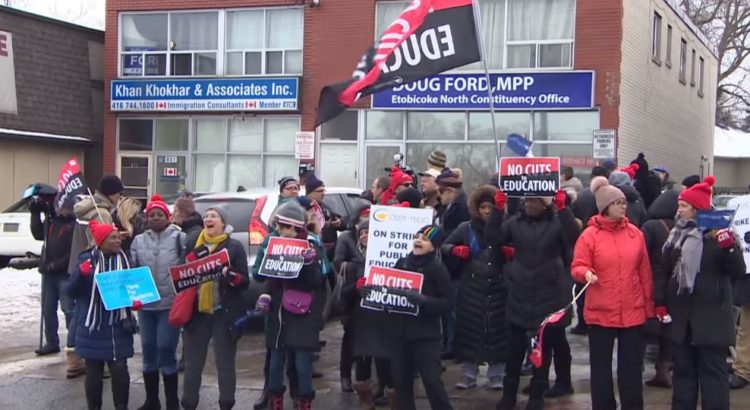
Boards across the province have cancelled classes on Friday, as teachers take part in an Ontario-wide one-day strike. (Raphael Tremblay/CBC)

Renfrew County District School Board

All elementary and secondary schools will be closed.

Child-care facilities may continue to operate. Parents and guardians should contact their operator to confirm whether they will remain open and if they’ll have additional child-care spaces during strike days.

Community-use bookings will continue as usual.

Limestone District School Board

All elementary and secondary schools will be closed, and students in Grades 9 to 12 should not attend school. This includes students in co-op and those attending dual credit and programs at St. Lawrence College.

Literacy and Basic Skills, Adult ESL and Teacher Assisted Self-Study programs will also not run.

Extra-curricular activities, field trips and all sports sanctioned by the Kingston Area Secondary Schools Athletic Association will be cancelled.

Hastings-Prince Edward District School Board 

Classes are cancelled for all students.

Algonquin and Lakeshore Catholic District School Board 

All ALCDSB schools will be closed to students.

Conseil des écoles publiques de l’Est de l’Ontario

Classes and school transportation will be cancelled.

Before- and after-school programs for toddlers, preschoolers and children ages four to 12 will not operate.

For daycare services operated by a third party, parents and guardians should contact the child-care service to check if they will remain open. Programs for infants, toddlers and preschoolers offered by third-party partners will be open.

Conseil des écoles catholiques du Centre-Est 

All classes will be cancelled.

Daycare centres for preschool children will remain open, except for l’Académie catholique Notre-Dame and l’École élémentaire catholique L’Envol, both of which will be closed.

Parents of school-aged children who require child care should contact their provider to learn if those centres will remain open.

All EarlyON Centres will be closed with the exception of:

  • l’École élémentaire catholique Jean-Robert-Gauthier.
  • l’École élémentaire catholique Des Voyageurs.
  • l’École secondaire catholique Béatrice-Desloges.
  • le Centre scolaire catholique Jeanne-Lajoie.

Source of the notice: https://www.cbc.ca/news/canada/ottawa/school-strikes-third-week-february-1.5464875
Comparte este contenido:

Canadá: Huelga de educadores por los recortes en la educación y en defensa de la negociación colectiva

Canadá: Huelga de educadores por los recortes en la educación y en defensa de la negociación colectiva

Las huelgas rotativas que los docentes y los trabajadores de la educación llevan a cabo en la provincia canadiense de Ontario van a proseguir esta semana. La huelga comenzó el 6 de febrero, con el estancamiento de las negociaciones entre los educadores y el gobierno de la provincia sobre la financiación y la negociación colectiva.

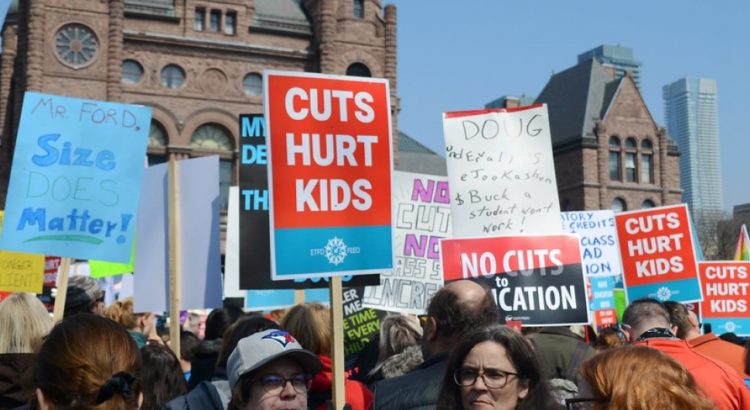
Los recortes perjudican a los niños 
Según los sindicatos, el gobierno anunció desde el principio de las negociaciones que estaba decidido a reducir los costes de la educación, lo cual iba a tener una serie de consecuencias devastadoras:
  • La desaparición de 10.000 plazas docentes
  • Un incremento del tamaño de las clases, algunas de las cuales llegarían a tener más de 40 estudiantes
  • Una disminución de los cursos ofrecidos en la escuela secundaria
  • Menos recursos y apoyo para los estudiantes más vulnerables, entre ellos los estudiantes con necesidades educativas especiales y con dificultades en materia de salud mental La introducción de cursos en línea obligatorios
  • En noviembre de 2019, el gobierno de Ontario aprobó una legislación – La Ley de Protección de un Sector Público Sostenible para las Futuras Generaciones (proyecto de ley 124). En ella se establecen los límites al aumento de las remuneraciones, los sueldos y los beneficios de todos los trabajadores del sector público a un máximo de un 1% anual para los tres años siguientes.
    Restricciones a la negociación colectiva 
    En diciembre, los cuatro sindicatos presentaron demandas judiciales contra el proyecto de ley 124. Los sindicatos alegan que la legislación viola el derecho constitucional de los docentes y los trabajadores de la educación a participar en actividades de negociación colectiva sin restricciones, tal como se garantiza en la Carta de Derechos y Libertades de Canadá. Los sindicatos sostienen que el proyecto de ley 124 es un ataque directo a la libre negociación colectiva en el sector de la educación, a la libertad de expresión y a la libertad de asociación.
    Hacia finales de 2019, y como resultado de la lentitud de la negociación y de la insistencia del gobierno en efectuar los recortes, los cuatro sindicatos celebraron votaciones sobre la huelga que dieron como resultado un apoyo prácticamente unánime a la acción laboral que ha hecho que en los últimos días las escuelas de la provincia estuvieran cerradas.
    Los ciudadanos de Ontario respaldan a los sindicatos en su apoyo a la educación 
    A pesar de los intentos del gobierno de Ford de culpar a los sindicatos por el estancamiento, las encuestas muestran que la gran mayoría de los ciudadanos de Ontario apoyan la posición de los docentes y los trabajadores de la educación. Mientras que el gobierno aboga por efectuar recortes en la educación, los ciudadanos de Ontario prefieren por un amplio margen que se financie la educación antes que los recortes presupuestarios. Están claramente en contra del aumento del tamaño de las clases y del aprendizaje en línea obligatorio, y están a favor de que los salarios en la educación se incrementen en proporción al aumento del coste de la vida.

Fuente de la Información: https://www.ei-ie.org/spa/detail/16626/canad%c3%a1-huelga-de-educadores-por-los-recortes-en-la-educaci%c3%b3n-y-en-defensa-de-la-negociaci%c3%b3n-colectiva

Comparte este contenido:

Canadá: Esta semana inició la segunda huelga masiva de las escuelas primarias de Ontario

Redacción: El Centro Nws

Casi un millón de estudiantes están fuera de clase desde el martes mientras los maestros de primaria se lanzan en masa a los piquetes en Ontario en su segunda huelga provincial para presionar al gobierno en las conversaciones sobre contratos.

La Federación de Maestros de Primaria de Ontario (ETFO, por sus siglas en inglés) también está utilizando los otros cuatro días de la semana para organizar huelgas rotativas, asegurándose de que cada zona de Ontario esté de huelga dos veces por semana.

El presidente de la ETFO, Sam Hammond, ha dicho que el sindicato estaba cerca de llegar a un acuerdo con el gobierno después de tres días de conversaciones recientes, pero los negociadores de la provincia de repente presentaron nuevas propuestas a última hora que el sindicato no pudo aceptar.

Stephen Lecce, ministro de educación de Ontario, ha dicho que la compensación es el tema principal, y que los maestros quieren salarios más altos a expensas de sus estudiantes.

En una declaración emitida en mañana del martes, Lecce dijo que el gobierno está “listo para negociar y llegar a un acuerdo que los estudiantes de Ontario merecen”.

“Es profundamente decepcionante que los padres sigan viendo una repetida escalada a expensas de nuestros estudiantes para avanzar en una mayor compensación, incluyendo planes de beneficios más generosos”, dijo.

Lecce añadió que el gobierno ha hecho concesiones en las conversaciones, incluyendo el compromiso de kindergarten de todo el día. Hammond, sin embargo, ha dicho anteriormente que el lenguaje actual utilizado en el convenio colectivo no asegura el futuro del kindergarten de todo el día en la provincia.

Fuente: https://elcentronews.net/esta-semana-inicio-la-segunda-huelga-masiva-de-las-escuelas-primarias-de-ontario/

Comparte este contenido:

Maestros de Canadá en huelga prolongada y sin consenso

América del norte/Canadá/13 Febrero 2020/https://www.aporrea.org/

Casi cien mil estudiantes en la provincia canadiense de Ontario resultan afectados por las huelgas del sector educativo debido a la falta de consenso entre sindicatos y representantes gubernamentales.

Después de varias jornadas de recientes conversaciones la Federación de Maestros de Primaria de Ontario (ETFO) y su contraparte estuvieron muy cerca de un acuerdo, aún por alcanzar.
La pausa estuvo motivada por propuestas de última hora presentadas por los negociadores del Gobierno local que ‘el sindicato no pudo aceptar’, expresó a la prensa Sam Hammond, presidente de ETFO.

Sin embargo, el ministro de Educación, Stephen Lecce, sostuvo que su representación presentó ‘propuestas razonables’.

Otro de los reclamos fue el de más recursos para estudiantes con necesidades especiales, así como la protección del programa de preescolar, de renombre mundial, y una compensación justa para los educadores, remarcó.

Las huelgas rotativas de los maestros se intensificaron durante las últimas semanas de enero a favor de las reglas debatidas en noviembre pasado e ignoradas casi en su totalidad por las autoridades federales.

El sindicato docente aboga por mantener su postura a fin de presionar al Gobierno para lograr un pronto retorno a la mesa de negociaciones.

Las demandas se oponen a las medidas sobre la educación emitidas por el primer ministro de Ontario, Doug Ford, que incluyen recortes en el número de docentes y aumentos en el tamaño de las aulas; lo que, según los maestros, genera un impacto negativo en los estudiantes.


Proteger la educación pública resulta el incentivo de los llamados a la huelga que denominan como una medida de batalla frente a la escasez de recursos cada día más feroz, dijeron los profesores.

Por primera vez en los últimos 20 años los cuatro sindicatos de la educación en Ontario suman esfuerzos para exigir estos reclamos a los gobiernos provincial y federal, con una huelga mayor anunciada para el 11 de febrero próximo que inspira al sector en otras provincias.

Además de ETFO, se sumaron a los cortes docentes el Sindicato francófono (AEFO), las escuelas católicas inglesas (Oecta) y los trabajadores de la educación de Ontario (Osstf).

ETFO es un sindicato que representa a más de 83 mil maestros de primaria y trabajadores de educación en la provincia de Ontario y según ellos, se identifican como un colectivo ‘comprometido con la educación pública, la justicia social y la equidad’.

AEFO reúne a trabajadores que sirven a establecimientos públicos y privados francófonos en Ontario bajo los valores de la equidad, la transparencia, la solidaridad, la inclusión y el compromiso.

Oecta representa a unos 45 mil maestros de las escuelas católicas inglesas financiadas con fondos públicos de Ontario, que incluye cursos desde el jardín de infantes hasta el grado 12.

Osstf agrupa a otros más de 60 mil trabajadores de la educación en las escuelas de Ontario, desde jardín de infantes hasta los grados conocidos como post secundaria.

Las demandas docentes crecen y encuentran el apoyo de la sociedad

Parece un problema difícil de entender por el Ministerio, sin embargo, los docentes apuestan por explicar a diario sus demandas a los padres de sus alumnos con ejemplos y verdades irrefutables.

En redes sociales Osstf expresa ‘¿Imagina la indignación de los padres si la federación deportiva de Hockey Canadá decidiera aumentar el número de niños en cada equipo?’

Resulta esa una de las tantas interrogantes seguida de otros supuestos como reemplazar las prácticas de hielo con instrucción en línea, eliminar todas las plazas de entrenadores asistentes y suprimir a los equipos que cuenten con jugadores menos calificados.

Con esos y otros mensajes sutiles expresan su descontento por la desatención y los recortes al presupuesto del sector, implementados por los gobiernos federal y provincial.

Fuente e imagen tomadas de: https://www.aporrea.org/internacionales/n351951.html

Comparte este contenido:

Teachers strike puts 950,000 kids out of school. Here’s what’s keeping the Ford government and unions apart

By: Mike Crawley.

Classes are cancelled Thursday for nearly one million elementary school kids, as Ontario’s biggest teachers’ union holds its first provincewide strike.

This move by the Elementary Teachers’ Federation of Ontario (ETFO) marks a significant ratcheting up of the dispute between Premier Doug Ford’s government and the four teachers’ unions.

ETFO’s plans for both provincewide and rotating strikes mean that every elementary school student in the public system stands to lose four days of school in a two-week period.

There are no signs that a deal is imminent for any of the major unions.

  • The Ontario Secondary School Teachers’ Federation (OSSTF) hasn’t bargained with the province and school boards since mid-December.
  • The Ontario English Catholic Teachers’ Association (OECTA) held one day of talks on Monday, but its president says there was «no real progress.» The union went ahead with a provincewide strike on Tuesday, cancelling school for some 500,000 Catholic school students.
  • ETFO was close to a deal last Friday after three days of bargaining, but union president Sam Hammond says the government introduced new proposals that scuttled the talks.

All in all, a bleak situation, whether you’re a teacher, a parent, a taxpayer or a member of the Ford government.

Ontario Education Minister Stephen Lecce’s government must work out separate deals with four different teachers’ unions. (Colin Cote-Paulette/CBC)

So where does it go from here?

It’s important to keep in mind that there are four separate sets of negotiations going on (the fourth, and by far the smallest, union represents teachers in the French-language school system). The Progressive Conservatives need to get deals with each union, and the only way to do that is one at a time, with the hope that each settlement provides momentum toward the next.

ETFO President Sam Hammond on why the union is ramping-up strike action:

Ontario elementary teachers union president explains ramped-up job action

This is one of the ways we’re taking a stand,’  says Sam Hammond, accusing the provincial government of not investing enough in education.  0:37

That’s why Ford and his team might come to regret that they missed the opportunity to get a deal with the ETFO last week.

Considering the different issues at play in each set of negotiations, and the proposals on the table from the province, a deal with the ETFO is arguably the easiest. That’s because the government’s controversial proposals for increased average class sizes and mandatory online courses only affect secondary schools, so they aren’t at issue in the talks with the elementary teachers’ union.

The Ontario English Catholic Teachers’ Association (OECTA) held a province-wide strike on Tuesday, cancelling school for some 500,000 Catholic school students. (Michael Charles Cole/CBC)

Still, there remains plenty in dispute between the ETFO and the province, chiefly:

  • The government wants to limit the wage increase to one per cent annually, while the union wants a wage hike that meets the inflation rate.
  • The government wants to change a rule that requires principals to choose from only the most senior teachers in the supply pool when hiring for long-term and permanent teaching jobs.
  • The union says the government’s proposal for special education funding is less than half what was in its 2017 collective agreement.
  • The union wants enhancements to benefits. It’s not clear how big an ask this is, but government officials hint that it’s on the pricey side.

These gaps are not impossible for the two sides to bridge. But it’s hard to conceive how it actually happens.

The Ford government looks highly unlikely to offer more than a one per cent wage increase. Doing so would breach its own public sector wage-cap legislation, one of its hallmark policies, and set a precedent for the rest of the teachers’ unions, as well as every public sector contract negotiation to come.

ETFO’s plans for both province-wide and rotating strikes mean that every elementary school student in the public system stands to lose four days of school in a two-week period. (Kate Bueckert/CBC)

The teachers’ unions look unlikely to back down. They appear more united than in previous rounds of contentious bargaining, such as 2012 when OECTA agreed to a framework deal that ETFO and OSSTF rejected outright. Strike pay makes picketing days less financially painful for teachers, and the unions’ strike funds are deep enough to sustain further walkouts.

That leaves the prospect of growing disruption to people’s lives as elementary-age kids start losing school days to strikes more frequently.

But predicting how that disruption will affect public opinion is tricky. If parents repeatedly have to scramble for child care, will they blame the unions or the government?

So far, public opinion about the strikes seems to be correlated with people’s overall views of the Ford government. Those who support the teachers generally didn’t vote PC in the last election. Likewise, there’s no evidence that the government’s core supporters object to its handling of the negotiations.

Unless something shifts drastically in the next few days, strikes look set to continue at least until Queen’s Park resumes sitting on Feb. 18. After that, it becomes just a matter of time until the most likely scenario for ending the disputes unfolds: back-to-work legislation.

Source of the article: https://www.cbc.ca/news/canada/toronto/ontario-teacher-strike-etfo-analysis-osstf-oecta-1.5453447

Comparte este contenido:

Canada: Elementary teachers strike in several Ontario school boards, including Ottawa

North America/ Canada/ 11.02.2020/ Source: globalnews.ca.


Elementary teachers hit the picket lines Wednesday at several school boards, including in Ottawa, as part of their rotating strikes that appear to have no end in sight.

The Elementary Teachers’ Federation of Ontario (ETFO) escalated its job action this week and is now targeting each board twice a week, including provincewide strikes set for Thursday and Feb. 11.

Union president Sam Hammond said Tuesday that the union was close to a deal with the government after three days of talks last week, but the province’s negotiators suddenly tabled new proposals at the 11th hour that ETFO couldn’t accept.

The two sides were close to an agreement on three or four key issues when the government changed course, Hammond said, and now there are no new bargaining dates scheduled.

Education Minister Stephen Lecce has said the government has put forward “reasonable proposals.”

ETFO members are off the job Wednesday in the Ottawa-Carleton, Kawartha Pine Ridge, Keewatin-Patricia, Lakehead, Near North, Penetanguishene Protestant Separate, Rainy River, Simcoe County and Upper Canada school boards, as well as the Ottawa Children’s Treatment Centre.

All four major teachers’ unions have been without contracts since Aug. 31, and bargaining is only ongoing with the union representing French teachers. High school teachers have not had talks with the government since Dec. 16, and English Catholic teachers had one day of negotiations Monday after talks broke off last month, but nothing further is scheduled.

All unions are engaged in some form of job action.

Comparte este contenido:

Canada: All 4 Ontario teacher unions now striking after French educators announce plans for provincewide walkouts

North America/ Canada/ 11.02.2020/ Source: globalnews.ca.

All four of Ontario’s major teacher unions will soon be holding weekly strikes after the group representing instructors in the French school system announced its intention to escalate its job actions against the provincial government.

The Association des enseignantes et des enseignants franco-ontariens (AEFO) said it will begin holding provincewide walkouts once a week starting Thursday after contract talks with the government stalled.

AEFO has 12,000 members in the French-language elementary and high school system and had until now only been engaged in a multi-phased work-to-rule campaign.

Union president Remi Sabourin said a lack of progress at the bargaining table forced AEFO to escalate to “Phase 3” to send a message to Premier Doug Ford’s Progressive Conservative government.

“Phase 3 is meant to convey to the government that we can’t just keep staring at each other pointlessly at the bargaining table,” he said in a statement.

Source of the notice: https://globalnews.ca/news/6521841/ontario-teacher-strike-french-educators-walkouts/

Comparte este contenido:
Page 8 of 56
1 6 7 8 9 10 56