Page 146 of 400
1 144 145 146 147 148 400

“Los inmigrantes están infestando este país”: la defensa de Trump de su política de separar a los niños de sus padres indocumentados

Por: BBC.com/20-06-2018

Aparentemente ajeno a las constantes criticas y condenas en aumento, Donald Trump volvió a defender su política de dividir a las familias que entran ilegalmente a Estados Unidos.

Durante una convención de negocios este martes, el presidente dijo que los niños debían ser separados si sus padres eran detenidos por cruzar ilegalmente la frontera de Estados Unidos.

Antes, Trump había provocado gran indignación por publicar en Twitter que los inmigrantes indocumentados «infestarían» Estados Unidos.

El presidente se reunió este martes con legisladores republicanos para discutir un proyecto de ley que propone frenar la política.

«No quiero niños separados de sus padres», dijo. «Pero cuando procesas a los padres por venir ilegalmente, algo que debe pasar, tienes que quitarles a los niños».

Trump dijo que quería «poner fin a la crisis fronteriza» al proporcionar a los funcionarios de la frontera los recursos para «detener y deportar a las familias de inmigrantes ilegales juntos».

Campamento de tiendas de campaña para niños inmigrantes en Tornillo, Texas.Derechos de autor de la imagenADMINISTRACIÓN PARA LOS NIÑOS Y LAS FAMILIAS (ACF)
Image captionLas autoridades facilitaron imágenes del campamento de tiendas de campaña para niños inmigrantes en Tornillo, Texas.

Autoridades de inmigración estadounidenses dicen que 2.322 niños fueronseparados de 2.206 padres desde el 5 de mayo hasta el 9 de junio, en el marco de la campaña de «tolerancia cero» contra la inmigración ilegal presentada por el Fiscal General de Estados Unidos, Jeff Sessions.

Sessions rechazó este lunes las acusaciones de que los centros de detención para niños migrantes separados de sus padres eran como campos de concentración nazis.

«Bueno, es una verdadera exageración, por supuesto», dijo el jefe del Departamento de Justicia a Fox News. «En la Alemania nazi, evitaban que los judíos abandonaran el país».

«Básicamente, estamos haciendo cumplir la ley. Afortunadamente la gente recibirá el mensaje y no cruzará la frontera ilegalmente», agregó.

Mientras, Trump se enfrentó a duras críticas por las palabras elegidas en un tuit publicado este martes en el que aseguró que los inmigrantes amenazaban con «infestar» el país.

Los demócratas son el problema. No les importa el crimen y quieren que los inmigrantes ilegales, sin importar lo malos que sean, entren e infesten nuestro país, como la (pandilla) MS-13. No pueden ganar con sus terribles políticas, así que ¡los ven como potenciales votantes!», tuiteó.

¿Qué dicen los países de origen de los inmigrantes?

El secretario de Relaciones Exteriores de México, Luis Videgaray, dijo este martes que la separación de niños de sus padres en la frontera con Estados Unidos es «cruel e inhumana» y que viola claramente los derechos humanos.

El Ministerio de Relaciones Exteriores de El Salvador, por su parte, emitió un comunicado el lunes diciendo que la política estadounidense estaba «exponiendo a los niños a condiciones extremadamente adversas».

«Nuestra postura es que las familias no deben separarse», dijo el presidente de Honduras, Juan Orlando Hernández.

Guatemala se abstuvo de criticar a Estados Unidos, diciendo solamente querespeta la política de inmigración de otros países.

Mientras tanto, el gobierno de Trump está dando especial importancia a la terminología utilizada para definir la situación actual.

El Departamento de Seguridad Nacional, por ejemplo, enmarca la campaña actual como una «iniciativa» en lugar de «una política».

Describe los centros de detención donde los niños han sido fotografiados detrás de rejas metálicas con pisos de concreto como «refugios» en lugar de «jaulas».

«¿Va a venir mi mami para irme con ella?»: las voces de niños separados de sus padres indocumentados en los centros de detención de EE.UU.

Azalea Aleman-Bendiks, una abogada que defiende a inmigrantes detenidos en McAllen, Texas, le dijo al diario Boston Globe que a varios de sus clientes los agentes de la Patrulla Fronteriza les habían dicho que sus hijos estaban siendo bañados, una práctica que hizo que muchos compararan esta situación con el Holocausto.

A medida que pasaban las horas, las madres comenzaron a darse cuenta de que sus hijos no les iban a ser devueltos de manera inmediata.

¿Qué están haciendo Trump y los legisladores?

Trump acudió este martes al Congreso, que está controlado por miembros de su partido. Durante una hora, estuvo reunido con republicanos de alto rango.

La Cámara de Representantes se prepara esta semana para votar sobre un proyecto de ley de inmigración más moderado.

La medida limitaría las separaciones familiares, pero no las prohibiría directamente. También ofrecería una hipotética vía a la ciudadanía para los inmigrantes indocumentados adultos conocidos como Dreamers que llegaron a Estados Unidos cuando eran niños.

La ley republicana también destinaría US$25.000 millones en fondos para la seguridad fronteriza, incluido el muro proyectado por Trump entre Estados Unidos y México.

«Tuvimos una gran reunión», dijo Trump al finalizar el encuentro este martes por la noche.

Donald TrumpDerechos de autor de la imagenGETTY IMAGES
Image captionTrump aseguró este martes por la noche haber tenido «una gran reunión» tras debatir con legisladores republicanos sobre el proyecto de ley de inmigración.

No se informó de si se lograron avances, pero el portavoz de la Casa Blanca, Raj Shah, afirmó en un comunicado que Trump le dijo al grupo de legisladores querespaldaría el proyecto de ley de inmigración que aprueben.

Mientras tanto, 21 fiscales estatales demócratas exigieron este martes que el Departamento de Justicia ponga fin a la política de «tolerancia cero», argumentando que «está ignorando su obligación legal y moral a favor de una agenda política y a expensas de los niños».

«En pocas palabras, la separación deliberada de niños y sus padres que buscan asilo legal en Estados Unidos está mal», dice la carta de los fiscales, y agrega que la práctica es «contraria a los valores estadounidenses».

*Fuente: http://www.bbc.com/mundo/noticias-internacional-44543521

Comparte este contenido:

Congress Needs To Follow The Research And Prioritize Higher Education

Por: Kim Cassidy

Worldwide, we have seen a trend towards increasing investment in traditional higher education, including and especially liberal arts programs like philosophy, economics, mathematics, biology and chemistry. But in the U.S., we’re questioning not just the dollars-and-cents value of a four-year degree but the developmental, intellectual and societal value.

The tax bill passed in December placed a 1.4% excise tax burden on the investment income of select private colleges, which will reduce funds available for scholarships, academics and facilities. And the overhaul of the Higher Education Act (PROSPER Act) currently making its way through Congress notably increases funding and access to short-term, vocational programs and at the same time cuts $15 billion in federal student aid for college students over the next decade.

While students should have the option to gain the immediate skills they need through vocational programs, the long-term benefits of higher education cannot be pushed aside. Since the end of the Great Recession,college graduates have captured most of the new jobs and pay gains. But the benefits of a college education are not just economic: they’re also neurological.

As a college president and professor of psychology, I am attuned to educational outcomes. I have seen how a college education exposes students to new modes of thinking, pushes them to challenge received ideas, teaches them to make evidence-based arguments and asks them to integrate different kinds and levels of information to solve complex problems (popularly known as systems thinking). I have watched students grow exponentially and become fundamentally different thinkers and learners.

Recent work on adolescent brain development, especially that of neurologist Frances Jensen and psychologist Laurence Steinberg, supports what I have seen myself – that a college education not only imparts information and skills to students, but may change the very structure of their brains.

Using various forms of imaging to study brain function, researchers find that in adolescence (the period between ages 10 and 25) the brain has an increased capacity to build new neurons and new and stronger connections among neurons, contributing to the development of higher-level thinking capabilities such as planning and abstract thinking. In this period, learning is faster and the capacity for new ways of thinking is enhanced. Neuroscientists call this potential for change “plasticity.”

In other words, plasticity creates a heightened ability to benefit from increased intellectual engagement, problem solving, and exposure to novel concepts and skills – exactly like those taught and experienced in college. Failing to maintain exposure to new challenges will ultimately fail to build or expand brain matter in the same way.

*Fuente: https://www.forbes.com/sites/kimcassidy/2018/05/29/congress-needs-to-follow-the-research-and-prioritize-higher-education/#52c0c5ec5d42

Comparte este contenido:

Colleges and State Laws Are Clamping Down on Fraternities

By Kyle Spencer

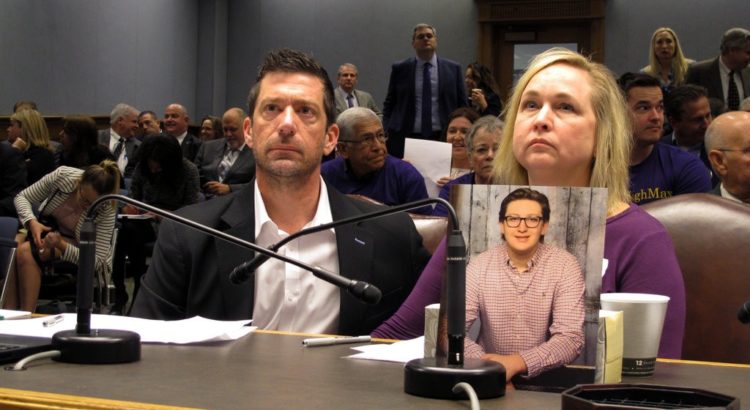
Fraternity members at Louisiana State University adhere to age-old rituals, shrouded in secrecy, that dictate how they gather, greet each other and initiate their young pledges.

But when they return to campus in the fall, one ritual will be drastically different: They will face much more severe consequences for dangerous hazing incidents.

In May, eight months after the death of Maxwell Gruver, a freshman pledge at the university’s now banished Phi Delta Theta fraternity chapter, Gov. John Bel Edwards of Louisiana signed into law an anti-hazing bill that would make it a felony for those involved in hazing that resulted in death, serious bodily harm, or life-threatening levels of alcohol. And students found guilty could land in a Louisiana jail for up to five years.

The new law represents an important departure for Louisiana, which once had some of the most lenient anti-hazing laws in the nation. But it also reflects renewed efforts around the country — in state legislatures, inside courthouses and on campuses — to prevent the hazing injuries and deaths that have plagued college campuses for decades.

“Realistically, the answer is regulation and reform,” John Hechinger, the author of “True Gentlemen: The Broken Pledge of America’s Fraternities,” said during a panel on Greek life last week at The New York Times Higher Ed Leaders Forum. “That is really the only possibility.”

There has been at least one school-related hazing death each year in the United States since 1961, according to Hank Nuwer, a Franklin College journalism professor and the author of multiple books on hazing. Most, but not all, have occurred during fraternity initiation events.

But in 2017, four students, including Mr. Gruver at L.S.U., Tim Piazza, a 19-year-old at Pennsylvania State University and Andrew Coffey, a 20-year-old at Florida State University, lost their lives in hazing-relating incidents. Mr. Coffey died on a fraternity house couch after drinking an entire bottle of bourbon during Big Brother Night. In each case, multiple students were charged.

This fall, Penn State President Eric J. Barron, who appeared on the panel with Mr. Hechinger, said that the incident on his campus had been a “horrible tragedy,” but one that had spurred new interest in reform.

This past year, Dr. Barron banned 13 organizations from his campus and instituted 15 reforms, including switching disciplinary oversight of the institutions from a Greek governing council to university administrators, requiring newcomers to take a pledge about their actions inside their organizations and deferring the initiation process for freshmen until later on in the school year, so they can develop new friends and interests before being faced with hazing.

This winter, officials at Florida State University started a hazing education initiative and increased staff members charged with monitoring Greek life. And at Louisiana State, President F. King Alexander proposed 28 reforms, including a requirement that chapters hire house managers.

College administrators are also beginning to look at the problem collectively. At a meeting in Chicago this spring, representatives from 31 colleges and universities explored ways to garner more cooperation from national Greek organizations, which can resist university oversight.

Dr. Barron is pushing an online safety database that will record incidents at chapters around the country, indicate which institutions are doing exemplary work in their communities and which are experiencing alarming trends.

Penn State and many other universities already have, or are instituting, their own report cards.

The high profile nature of the cases is also impacting state capitals. Pennsylvania, like Louisiana, is expected to soon pass an anti-hazing law that would make death by hazing a felony.

New Mexico has also been exploring the idea.

In Tennessee, state representative John DeBerry Jr. floated a bill that would ban fraternities altogether in the state.

Mr. Hechinger says fighting to make fraternities safer is probably a better use of critics’ energy, as it is unlikely that fraternities will be banned on public campuses where they are powerful.

“If we were going to create a higher education system from scratch, would we have organizations that year after year kill a student? Probably not,” he said at the conference. “But they are very ensconced in higher education, and if you try to do some kind of ban, which is often what people are asking, you run the risk of underground behavior.”

Source of the article: https://www.nytimes.com/2018/06/05/education/learning/colleges-fraternities-laws.html

Comparte este contenido:

Childhood sibling dynamics may predict differences in college education

United States/ 18.06.2018/By: Penn State/ From: www.sciencedaily.com.

The effects of sibling relationships may go beyond childhood bickering and bonding, according to Penn State researchers who found that these relationships may predict similarities and differences in siblings’ education later in life.

In a study spanning about 15 years, the researchers found that when siblings felt more warmth toward each other in childhood, they were more likely to achieve similar levels of education. But, when siblings felt that their parents’ treatment of themselves versus their sibling was unfair, or when their fathers spent more time with one sibling than the other, those siblings achieved different levels of education.

Xiaoran Sun, a doctoral candidate in human development and family studies, said the results held up even when the researchers controlled for the siblings’ grade-point averages across childhood and adolescence, suggesting that school achievement may not be the only factor determining what level of education a person achieves.

«While school is obviously important, this study helps show that what goes on inside families can have an impact, as well,» said Susan McHale, distinguished professor of human development and family studies. «Warmth from siblings may not mean you’re more likely to go to college, but it seems to be a factor in how similarly the two siblings turn out. People don’t tend to think about siblings being important to academic achievement, but our findings highlight the importance of family experiences — beyond what happens at school.»

Previous research has shown that graduating college has an impact on an individual’s employment, health and the way they form families of their own. While it’s been shown that parenting can affect educational achievement, little work has been done to study whether siblings have an effect.

«A lot of research on child development focuses on one child in the family, with the assumption that if you know what happens to this one child, you know how families operate to socialize children,» McHale said. «But in the U.S. and elsewhere around the world, more children grow up in a home with a sibling than with a father figure. So by studying siblings, you start to get a better sense of the larger family context of development.»

The researchers followed the two oldest siblings from 152 families from middle childhood through their mid-twenties. The families lived in central Pennsylvania and were mainly European-American.

When the siblings were an average of 11.8 and 9.2 years old, the researchers measured warmth by asking the children questions, like how often they turned to their sibling for advice or support. Additionally, the researchers gathered data on whether the parents treated their children differently, and whether the siblings thought this different treatment was fair or not. They also measured how much time the siblings spent alone with their mothers and fathers.

When the siblings were around 26 years old, the researchers followed up to ask each sibling about their highest level of completed education.

«The sibling relationship factors that we tested did not predict whether an individual sibling would graduate from college or not, but we did find predictors of whether siblings would achieve different levels of education,» said Sun. «The findings provide clues about how sibling relationships can affect education pathways.»

The researchers said there are a few possible explanations for the findings, which were recently published in the journal Child Development. Sun said that when siblings feel more warmth for each other, they have a closer relationship in general, and thus may be more likely to follow similar paths in their education achievement.

«When two people are closer to each other, they tend to treat each other as role models,» Sun said. «And this could be for better or for worse. They can be ‘partners in crime,’ as some prior work suggests, or partners in achievement, as we found. It’s not that siblings who are close are more likely to graduate from college, they’re just more likely to end up with the same level of education, either graduating from college or not.»

McHale said that for the siblings who ended up with different levels of education, the perception of their parents treating them differently and unfairly may have been part of what drove their different choices.

«Children are vigilant in noticing how they’re treated relative to their siblings, and parents need to be aware of this and on their guard,» McHale said. «Many parents treat their children differently and have very good reasons to do so, but children need to understand parents’ reasons, and parents have to have conversations with their children to explain those reasons. If kids perceive their treatment as fair or justified, even if it’s different from their siblings’, then there’s not the same negative effect.»

Sun said the results could help design future interventions that focus on siblings. The researchers said that it may be helpful to design studies that could explore the possible causal role of sibling relationships on education, as well as studies of more diverse populations.

From: https://www.sciencedaily.com/releases/2018/06/180618102600.htm

Comparte este contenido:

El lingüista Noam Chomsky expresó su apoyo por Gustavo Petro

Estados Unidos/16 de Junio de 2018/El Tiempo

EL TIEMPO obtuvo la declaración del filósofo estadounidense.

A menos de un día de la segunda vuelta electoral en nuestro país, el lingüista, activista político y filósofo estadounidense Avram Noam Chomsky, uno de los teóricos del lenguaje y activistas políticos más importantes del siglo XX, expresó su apoyo por el candidato de Colombia Humana, Gustavo Petro.

Chomsky, quien es profesor emérito de lingüística de la Massachusetts Institute Of Technology y profesor laureado de la Universidad de Arizona, se manifestó luego de que cuatro colombianos que trabajan en universidades de Colombia y Estados Unidos le escribieran un correo solicitando su apoyo público a Gustavo Petro.

Ante eso, en el correo que obtuvo EL TIEMPO, el filósofo contestó: «Escribo para expresar mi apoyo por la candidatura de Gustavo Petro en las elecciones presidenciales. Creo que es un asunto de gran importancia en esta etapa crítica de la transición de Colombia de una trágica historia de violencia y represión a una sociedad libre y próspera que satisfaga las justas aspiraciones de personas que han sufrido durante demasiado tiempo».

Chomsky es autor de libros como ‘Estados peligrosos: Oriente Medio y la política exterior estadounidense’, ‘La (des)educación’ y ‘Los límites de la globalización’. En el 2015 había expresado su apoyo por el proceso de paz en Colombia.

Otros intelectuales ya habían expresado su apoyo por el candidato, tales como el filósofo y animalista australiano Peter Singer y el escritor y economista francés Thomas Piketty, autor del ‘El capital en el siglo XXI’. Además, el pasado 5 de junio, EL TIEMPO había publicado el apoyo explícito del premio nobel de literatura John Maxwell Coetzee, quien se lo había enviado al escritor colombiano Giuseppe Caputto.

Fuente: http://m.eltiempo.com/elecciones-colombia-2018/presidenciales/noam-chosmky-intelectual-que-apoya-a-gustavo-petro-en-elecciones-231402

Comparte este contenido:

Cambridge y Oxford, espacio vetado para los universitarios negros

Estados Unidos/16 de Junio de 2018/El Periódico

Un estudio desvela la escasa propensión de estos centros a aceptar estudiantes afrocaribeños

Los últimos datos revelados por la Universidad de Cambridge muestran que seis de sus 29 facultades han admitido menos de 10 estudiantes negros entre el 2012 y 2016. Una de ellas, el St Edmund’s College, no aceptó ningún estudiante negro de entre los 35 que solicitaron una plaza durante estos cinco años. Estos datos han sido revelados por el diario Financial Times, que solicitó una acta de libertad de información, que permite reclamar una información concreta a entidades públicas.

Estos datos ven la luz después de que el mes pasado se supiera que una de cada cuatro universidades de Oxford no aceptó a ningún estudiante de origen afrocaribeño entre 2015 y 2017 y que los estudiantes blancos tenían el doble de opciones de ser admitidos en igualdad de condiciones.

Propósito de enmienda

La Universidad de Cambridge ha admitido la existencia de este déficit, pero también ha explicado que este año se ha incrementado el número de estudiantes negros en un 62%. También ha dicho que están trabajando para cambiar esto pero que “aun hay que hacer mucho más” y que no lo pueden hacer ellos solos sino que necesitan la ayuda de las escuelas.

Cambridge destaca que han aumentado la partida económica destinada al programa Objetivo Oxbridge, que ofrece asesoramiento individual, cara a cara, a los estudiantes negros en las escuelas, para que se preparen mejor para poder entrar en Oxford y en Cambridge, las dos universidades más prestigiosas del país.

Marcar la pauta

En este sentido, el diputado laborista de origen guyanés, David Lammy, explicó que cuando un joven estudiante negro con las mejores notas de un barrio complicado solicita entrar en Cambridge y lo rechazan, “al año siguiente los vecinos de su misma etnia, brillantes estudiantes, ya no intentan entrar”. El año pasado Lammy, que abandera la lucha contra la falta de diversidad en las universidades, ya acusó el año pasado a Oxford y Cambridge de “apartheid social”.

Fuente: https://www.elperiodico.com/es/internacional/20180605/cambridge-y-oxford-espacio-vetado-para-los-universitarios-negros-6858013

Comparte este contenido:

Estados Unidos: G7 y el BM aportarán 2.9 mil mdd para la educación de las niñas

Estados Unidos/16 de Junio de 2018/Jornada

El Grupo de los Siete (G7) y el Banco Mundial anunciaron hoy que destinarán 2.9 mil millones de dólares estadunidenses para apoyar el acceso de las niñas y mujeres a la educación en regiones en situación de emergencia y conflicto.

Los recursos para el periodo 2018-2020 serán utilizados para combatir las múltiples barreras que las niñas y mujeres enfrentan al querer acceder a las escuelas.

La igualdad de género fue uno de los temas que Canadá, en su calidad de presidente del G7, puso en la agenda de asuntos prioritarios en la 44 cumbre de los países más industrializados más la Unión Europea (UE), que concluye este sábado sus trabajos.

El compromiso de Canadá es aportar 400 millones de dólares canadienses para este plan global, mientras la UE aportará 72 millones de euros, Alemania 75 millones de euros, Japón 200 millones de dólares, Reino Unido invertirá 187 millones de libras y el Banco Mundial dos mil millones de dólares.

En esta cumbre los gobernantes de Canadá, Estados Unidos, Alemania, Japón, Reino Unido, Francia e Italia, acompañados de la directora gerente del Fondo Monetario Internacional (FMI), Christine Lagarde, se reunieron con integrantes del Comité Asesor de Igualdad de Género.

Los fondos anunciados serán utilizados para equipar a niñas y mujeres con las habilidades para los trabajos del futuro, mejorar el entrenamiento de maestros para proveer mejor currículum para este sector e implementar innovadores métodos de enseñanza, sobre todo para los grupos más vulnerables, como los refugiados y desplazados.

Así como para ayudar a los países en desarrollo para que las niñas completen al menos 12 años de educación básica.

A finales de 2016 se registraron 65.5 millones de desplazados a nivel global, la mitad de ellos eran personas menores de 18 años, según el gobierno canadiense.

“Necesitamos trabajar juntos para asegurar que todas las mujeres y niñas tengan acceso a una educación de calidad desde la escuela primaria hasta la secundaria y más allá», indicó el primer ministro canadiense, Justin Trudeau.

«Sabemos que las mujeres y las niñas generarán un cambio positivo y ayudarán a construir una mejor vida para ellas, sus familias, sus comunidades y, a su vez, el mundo”, dijo Trudeau, quien fue el anfitrión de la cita del G7.

Fuente: http://www.jornada.unam.mx/ultimas/2018/06/09/g7-y-el-bm-aportaran-2-9-mil-mdd-para-la-educacion-de-las-ninas-8669.html
Comparte este contenido:
Page 146 of 400
1 144 145 146 147 148 400