Page 196 of 400
1 194 195 196 197 198 400

Rethinking Higher Education in a Time of Tyranny

Dr. Henry Giroux

What kind of democracy is possible when the institutions that are crucial to a vibrant civil society are vanishing?

Many of the great peace activists of the 20th century, extending from Mahatma Gandhi and Paulo Freire to Jane Addams and Martin Luther King Jr., shared a passion for education as an important part of the democratic project. Refusing to view education as neutral or reducing it to the instrumental practice of training, they sought to reclaim education as a practice of freedom, part of a wider struggle to deepen and extend the values, social relations and institutions of a substantive democracy.

They understood that tyranny and authoritarianism are not just the product of state violence and repression; they also thrive on popular docility, mass apathy and a flight from moral responsibility. They argued passionately that education could not be removed from the demand for justice and progressive social change. In doing so, they recognized the value of education and its ability to transform how people understand themselves, their relations to others and the larger world. In the face of massive injustice and indignity, these prophetic voices refused to look away from human suffering, and embraced the possibility for resistance fueled by courage, compassion and the ability to think otherwise in order to act otherwise.

Let us hope that in the midst of our witness to the current revolt against democracy, higher education will neither remain silent nor be too late.

One of Martin Luther King’s great insights was his recognition that education provided a bulwark against both ignorance and indifference in the face of injustice. Like Gandhi, he warned people over and over again not to remain silent in the face of racism, militarism and extreme materialism, and argued that “he who accepts evil without protesting against it is really cooperating with it.” Of the civil rights era, King warned that “history will have to record that the greatest tragedy of this period of social transition was not the strident clamor of the bad people, but the appalling silence of the good people.… In the end, we will remember not the words of our enemies, but the silence of our friends.”1

Advocates of civic courage and compassion reflected in their words and actions what King called the “fierce urgency of now,” reminding us that “tomorrow is today” and that “there is such a thing as being too late.”2 Let us hope that in the midst of our witness to the current revolt against democracy, higher education will neither remain silent nor be too late.

Echoing King’s belief that American innocence was neither tenable nor forgivable, the great novelist James Baldwin filled in the missing language of fear and terrorism at the heart of a racist society. His famed “Talk to Teachers” began with an impassioned warning about the times in which he lived, a warning more relevant now than it was when he delivered the speech in 1963. He said:

Let’s begin by saying that we are living through a very dangerous time. Everyone in this room is in one way or another aware of that. We are in a revolutionary situation, no matter how unpopular that word has become in this country. The society in which we live is desperately menaced… from within. To any citizen of this country who figures himself as responsible — and particularly those of you who deal with the minds and hearts of young people — must be prepared to “go for broke.”3

In the context of a worldwide rebellion currently taking place against democracy, dissent, human rights and justice, I think we need to “go for broke.” Authoritarianism is on the rise once again, emerging in countries in which such a politics, in light of the past, has appeared unthinkable. In Hungary, Russia, India, Turkey and Poland, democracy is being voted down and aggressively dismantled. In addition, a new and dangerous moment has emerged in the United States as it becomes clear that an American-style authoritarianism is no longer the stuff of fantasy, fiction or hysterical paranoia.

In the context of a worldwide rebellion currently taking place against democracy, dissent, human rights and justice, I think we need to ‘go for broke.’

This summer in Charlottesville, hundreds of neo-Nazis marched brandishing torches reminiscent of Hitler’s Germany while shouting white nationalist slogans such as “Heil Trump,” and later unleashing an orgy of violence that led to the deaths of three people. Donald Trump, the president of the United States, stated there were good people on both sides of that rally as if good people march with white supremacists and neo-Nazis who revel in hate and offer no apologies for mimicking the actions that resulted in the slaughter of millions during the fascist nightmare of the 1930s and 1940s.

Donald Trump’s ascendancy to the presidency speaks not only to a profound political crisis but also to a tragedy for democracy.4 His rise to power echoes not only a moral blind spot in the collective American psyche, but also a refusal to recognize how past totalitarian ideas can and have reappeared in different forms in the present. The return of a demagogue who couples the language of fear, decline and hate with illusions of national grandiosity have found their apotheosis in the figure of Donald Trump. He is the living symbol and embodiment of a growing culture of unbridled and naked selfishness, the collapse of civic institutions, and a ruinous anti-intellectualism that supports a corrupt political system and a toxic form of white supremacy that has been decades in the making. There is nothing natural or inevitable about these changes. They are learned behaviors. As shared fears replace any sense of shared responsibility, the American public is witnessing how a politics of racism and hate creates a society plagued by fear and divisiveness.

As shared fears replace any sense of shared responsibility, the American public is witnessing how a politics of racism and hate creates a society plagued by fear and divisiveness.

While numerous forces have led to the election of Donald Trump, it is crucial to ask how a poisonous form of education developed in the larger society, one that has contributed to the toxic culture that both legitimated Trump and encouraged so many millions of people to follow him. Part of the answer lies in the right-wing media with its vast propaganda machines, the rise of conservative foundations such as the Koch brothers’ various institutes, the ongoing production of anti-public intellectuals and a visual culture increasingly dominated by the spectacle of violence and reality TV. On a more political note, it is crucial to ask how the educative force of this toxic culture goes unchallenged in creating a public that embraced Trump’s bigotry, narcissism, lies, public history of sexual groping and racism, all the while transforming the citizen as a critical political agent into a consumer of hate and anti-intellectualism.

News morphs into entertainment as thoughtlessness increases ratings, violence feeds the spectacle and serious journalism is replaced by empty cosmetic stenographers. Language is pillaged as meaningful ideas are replaced “by information broken into bits and bytes [along with] the growing emphasis on immediacy and real time responses.”5 In the face of this dumbing down, critical thinking and the institutions that promote a thoughtful and informed polity disappear into the vast abyss of what might be called a disimagination machine. Nuance is transformed into state-sanctioned vulgarity. How else to explain the popularity and credibility of terms such post-truth, fake news and alternative facts? Masha Gessen is right in arguing that in the Trump era, language that is used to lie and “validate incomprehensible drivel” not only destroys any vestige of civic literacy, it also “threatens the basic survival of the public sphere.”6

We live in a moment of digital time, a time of relentless immediacy, when experience no longer has the chance to crystalize into mature and informed thought. Communication is now reduced to a form of public relations and a political rhetoric that is overheated and overexaggerated and always over the top. Opinion and sanctioned illiteracy now undermine reason and evidence-based arguments. News becomes spectacle and echoes demagoguery rather than questioning it. Thinking is disdained and is viewed as dangerous. The mainstream media, with few exceptions, has become an adjunct to power rather than a force for holding it accountable. The obsession with the bottom line and ratings has brought much of the media into line with Trump’s disimagination machine wedded to producing endless spectacles and the mind-numbing investment in the cult of celebrity and reality TV.7 What kind of democracy is possible when the institutions that are crucial to a vibrant civil society and the notion of the social are vanishing?

What kind of democracy is possible when the institutions that are crucial to a vibrant civil society and the notion of the social are vanishing?

Institutions that work to free and strengthen the imagination and the capacity to think critically have been under assault in the United States long before the rise of Donald Trump. Over the last 50 years, critical public institutions from public radio to public schools have been defunded, commercialized and privatized transforming them from spheres of critical analysis to dumbed-down workstations for a deregulated and commodified culture.

Lacking public funds, many institutions of higher education have been left to mimic the private sector, transforming knowledge into a commodity, eliminating those courses and departments that do not align themselves with a robust bottom line. In addition, faculty are increasingly treated like Walmart workers with labor relations increasingly designed “to reduce labor costs and to increase labor servility.”8 Under this market-driven governance, students are often relegated to the status of customers, saddled with high tuition rates and a future predicated on ongoing political uncertainty, economic instability and ecological peril.

This dystopian view feeds an obsession with a narrow notion of job readiness and a cost-accounting rationality. This bespeaks to the rise of what theorists such as the late Stuart Hall called an audit or corporate culture, which serves to demoralize and depoliticize both faculty and students, often relieving them of any larger values other than those that reinforce their own self-interest and retreat from any sense of moral and social responsibility.

As higher education increasingly subordinates itself to market-driven values, there is a greater emphasis on research that benefits the corporate world, the military and rich conservative ideologues such as the Koch brothers, who have pumped over $200 million into higher education activities since the 1980s to shape faculty hires, promote academic research centers, and shape courses that reinforce a conservative market-driven ideological and value system.9 One consequence is what David V. Johnson calls the return of universities to “the patron-client model of the Renaissance” which undermines “the very foundation of higher education in the United States.”10

Under such circumstances, commercial values replace public values, unbridled self-interest becomes more important than the common good and sensation seeking and a culture of immediacy becomes more important than compassion and long term investments in others, especially youth. As Paul Gilroy has pointed out, one foundation for a fascist society is that “the motif of withdrawal — civic and interpersonal —” becomes the template for all of social life.11

Democracy and politics itself are impoverished in the absence of those conditions under which students and others use the knowledge they gain both to critique the world in which they live and, when necessary, to intervene in socially responsible ways in order to change it. What might it mean for educators to take seriously the notion that democracy should be a way of thinking about education — one that thrives on connecting equity to excellence, learning to ethics, and agency to the imperatives of social responsibility and the public good?

Higher education needs to reassert its mission as a public good. Educators need to initiate a national conversation in which the classroom is defended as a place of deliberative inquiry and critical thinking, a place that makes a claim on the radical imagination and a sense of civic courage.

Second, educators need to place ethics, civic literacy, social responsibility and compassion at the forefront of learning. Students need to learn how power works across cultural and political institutions so that they can learn how to govern rather than merely be governed. Education should be a process where students emerge as critically engaged and informed citizens contributing not simply to their own self-interest but to the well-being of society as a whole.

Third, higher education needs to be viewed as a right, as it is in many countries such as Germany, France, Norway, Finland and Brazil, rather than a privilege for a limited few, as it is in the United States and the United Kingdom. Rather than burden young people with almost insurmountable debt, it should call people to think, question, doubt and be willing to engage in dialogue that is both unsettling to common sense and supportive of a culture of questioning.

In addition, it should shift not only the way people think but also encourage them to help shape for the better the world in which they find themselves. Teaching should not be confused with therapy or reduced to zones of emotional safety. The classroom should be a space that disturbs, a space of difficulty — a space that challenges complacent thinking. Such pedagogical practices should enable students to interrogate commonsense understandings of the world, take risks in their thinking, however troubling, and be willing to take a stand for free inquiry in the pursuit of truth, multiple ways of knowing, mutual respect and civic values in the pursuit of social justice.

Students need to learn how to think dangerously, or as Baldwin argued, go for broke, in order to push at the frontiers of knowledge while recognizing that the search for justice is never finished and that no society is ever just enough. These are not merely methodical considerations but also moral and political practices because they presuppose the creation of students who can imagine a future in which justice, equality, freedom, and democracy matter and are attainable.

Fourth, in a world driven by data, metrics and an overabundance of information, educators need to enable students to express themselves in multiple literacies extending from print and visual culture to digital culture. They need to become border crossers who can think dialectically, and learn not only how to consume culture but also produce it. At stake here is the ability to perform a crucial act of thinking, that is, the ability to translate private issues into larger systemic concerns.

Fifth, there is a plague haunting higher education, especially in the United States, which has become the model for its unjust treatment of faculty. Seventy percent of all part- and full-time instructional positions are filled with contingent or nontenure-track faculty. Many of these faculty barely make enough money to afford basic necessities, have no or little health insurance and are reluctant to speak out for fear of losing their jobs. Many adjuncts are part of what are called the working poor. This is an abomination and one consequence of the increasing corporatization of higher education. These faculty positions must be transferred into full-time positions with a path toward tenure and full benefits and security.

Sixth, while critical analysis is necessary to reveal the workings and effects of oppressive and unequal relations of power, critique without hope is a prescription for cynicism, despair and civic fatigue. Students also need to stretch their imagination to be able to think beyond the limits of their own experience, and the disparaging notion that the future is nothing more than a mirror image of the present. In this instance, I am not referring to a romanticized and empty notion of hope. Hope means living without illusions and being fully aware of the practical difficulties and risks involved in meaningful struggles for real change, while at the same time being radically optimistic. The political challenge of hope is to recognize that history is open and that the ethical job of education, as the poet Robert Hass has argued, is “to refresh the idea of justice going dead in us all the time.”12

The late world-renowned sociologist Zygmunt Bauman insisted that the bleakness and dystopian politics of our times necessitates the ability to dream otherwise, to imagine a society “which thinks it is not just enough, which questions the sufficiency of any achieved level of justice and considers justice always to be a step or more ahead. Above all, it is a society which reacts angrily to any case of injustice and promptly sets about correcting it.”13 It is precisely such a collective spirit informing a resurgent politics that is being rewritten by many young people today in the discourses of critique and hope, emancipation and transformation. The inimitable James Baldwin captures the depth which both burdens hope and inspires it. In The Fire Next Time, he writes: “The impossible is the least that one can demand. …Generations do not cease to be born, and we are responsible to them…. the moment we break faith with one another, the sea engulfs us and the light goes out.”14 It is one of tasks of educators and higher education to keep the lights burning with a feverish intensity.


1. Cited in Marybeth Gasman, “Martin Luther King Jr. and Silence,” The Chronicle of Higher Education [Jan. 16, 2011].

2. Rev. Martin Luther King, “Beyond Vietnam: A Time to Break Silence,” (April 4, 1967) American Rhetoric

3. James Baldwin, “A Talk to Teachers,” in The Price of the Ticket, Collected Non-Fiction 1948-85, (New York: Saint Martins, 1985), 325.

4. I take this up in great detail in Henry A. Giroux, The Public in Peril: Trump and the Menace of American Authoritarianism (New York: Routledge, 2018).

5. Michiko Kakutani, “Texts Without ContextThe New York Times, (March 21, 2010), p. AR1

6. Masha Gessen, “The Autocrat’s Language,” The New York Review of Books, [May 13, 2017].

7. Brad Evans and Henry A. Giroux, Disposable Futures: The Seduction of Violence in the Age of the Spectacle (San Francisco: City Lights, 2016).

8. Noam Chomsky, “The Death of American Universities,” Reader Supported News (March 30, 2015).

9. The definitive source on this issue is Jane Mayer, Dark Money: The Hidden History of the Billionaires Behind the Rise of the Radical Right (New York: Anchor, 2017).

10. David V. Johnson, “Academe on the Auction Block,” The Baffler [Issue No. 36 2017]

11. Paul Gilroy, Against Race: Imagining Political Culture beyond the Color Line, (Cambridge: The Belknap Press of Harvard University Press, 2000), p. 216.

12. Cited in Sarah Pollock, “Robert Hass,” Mother Jones (March/April 1997).

13. Zygmunt Bauman and Keith Tester, Conversations with Zygmunt Bauman (London: Polity Press, 2001), p. 19.

14. James Baldwin, The Fire Next Time (New York: Vintage, 1992) p. 104.

Source:

Rethinking Higher Education in a Time of Tyranny

Comparte este contenido:

EEUU: AU gets grant to study STEM education

EEUU/October 17, 2017/Source: http://www.galioninquirer.com

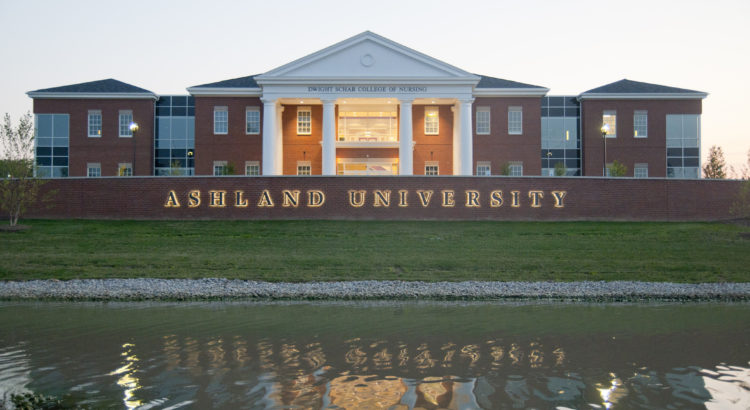
Ashland University has received a $225,032 grant from the National Science Foundation for a project titled “Promoting STEM Education at Two-Year Colleges.” The grant runs through June 30, 2019.

The project, which is under the direction of AU Provost Dr. Eun-Woo Chang and Kathleen A. Alfano, professor emeritus, College of the Canyons, calls for Ashland University to hold a National Science Foundation (NSF) proposal writing workshop to help faculty at two-year colleges successfully obtain NSF funding majorly focused on Advanced Technological Education (ATE) and Scholarships in Science, Technology, Engineering and Mathematics (S-STEM) programs.

“The key outcome of this project will be an increase in the number of competitive ATE and S-STEM proposals submitted by faculty at two-year colleges,” said Chang. “The project design addresses the barriers to participation in ATE and S-STEM competitions faced by faculty at two-year colleges and will address the low number of two-year college applicants and awards made from these programs.”

According to Dr. Chang, the project proposal writing component and two-year mentoring by experienced principal investigators will increase the knowledge and skills of the two-year college STEM faculty at institutions that currently have minimal grant activity, thereby strengthening the personal and institutional ability to pursue other proposal based projects.

“The large number of recruited institutions for the one workshop and two-year mentoring by experienced principal investigators — a total of 50 participating two-year college faculty — will have a positive impact on the quality of STEM education for a great number of students at awarded at two-year colleges,” Chang said.

“The project will lead to an increase in the collaboration between two-year and four-year colleges, benefiting faculty and students at both types of institutions through improved student transfer success, aid in developing articulation agreements, and increased sharing of resources between institutions,” Dr. Chang added.

Source:

http://www.galioninquirer.com/news/23609/au-gets-grant-to-study-stem-education

Comparte este contenido:

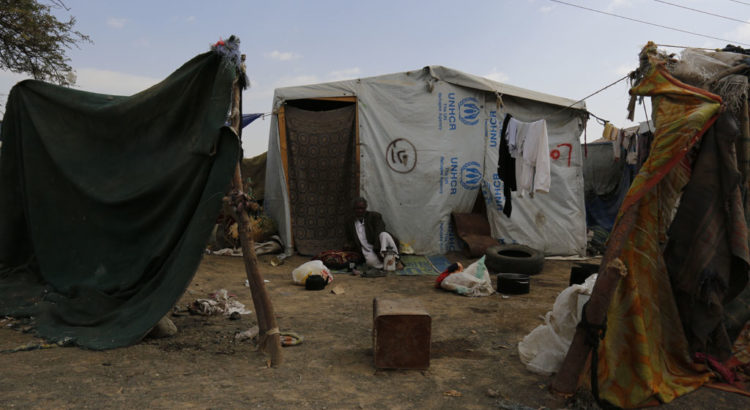
Más de 500 escuelas han sufrido ataques en seis meses, denuncia la ONU

Nigeria/16 de Octubre de 2017/Ecodiario

Más de 500 escuelas han sido atacadas en solo seis meses en países en conflicto, denunció el viernes ante el Consejo de Seguridad Virginia Gamba, representante especial de la ONU para los niños.

«En el transcurso de los últimos seis meses, más de 500 escuelas han sido atacadas», lo que significa que la cifra de 2016 -753 ataques dirigidos contra escuelas y hospitales en veinte países- puede ser superada a final de año, señaló.

Hace una semana, Virginia Gamba había sostenido que «los niños se han convertido en el combustible de los conflictos armados modernos», al presentar el informe anual de la ONU sobre los niños y los conflictos armados.

Entre abril y junio, 174 escuelas han sido blanco de ataques en República Democrática del Congo, la mayoría en la región de Kasai, precisó la responsable. Las escuelas han sido utilizadas con fines militares tanto por fuerzas gubernamentales como por fuerzas rebeldes en la mayoría de los conflictos que afectan a varios países, agregó.

Al relatar su emotivo testimonio delante del Consejo de Seguridad, Joy Bishara, una de las jóvenes estudiantes de Chibok, Nigeria, secuestradas en 2014 por el grupo yihadista Boko Haram y que logró escapar, imploró a los gobiernos «proteger las escuelas».

«Los gobiernos deben proteger las escuelas para que los estudiantes puedan estudiar y cambiar el mundo», dijo. «Si las escuelas no están protegidas, se van a perder generaciones. Si no están protegidas, si no se puede estudiar, todos esos sueños, esas esperanzas desaparecerán, y eso está dañando el futuro de los países», insistió.

Refugiada en la actualidad en Estados Unidos, Joy Bishara quiere convertirse en médica.

Fuente: http://ecodiario.eleconomista.es/internacional/noticias/8673353/10/17/Mas-de-500-escuelas-han-sufrido-ataques-en-seis-meses-denuncia-la-ONU.html

Comparte este contenido:

Estados Unidos deja la Unesco por diferencias sobre Palestina

Estados Unidos/16 de Septiembre de 2017/La Gaceta

Israel también se retira de la agencia de la ONU para educación, ciencia y cultura.

El presidente de Estados Unidos, Donald Trump, retiró a su país de la Organización de las Naciones Unidas para la Educación, la Ciencia y la Cultura (Unesco) por lo que considera una actitud hostil hacia Israel, que poco después anunció que también abandona la agencia.

La salida será efectiva a partir del último día de 2018, señaló la portavoz del Departamento de Estado en Washington, Heather Nauert. Dijo que la decisión no fue fácil y alegó también la necesidad de reforma del organismo y sus retrasos en los pagos.

Poco después, el primer ministro israelí, Benjamin Netanyahu, anunció que secundaba la decisión de Washington. Antes, Netanyahu había saludado la decisión de Washington, y había acusado de parcial a la agencia contra Israel. “Es una decisión valiente y moral porque la Unesco se ha convertido en un teatro del absurdo y porque en lugar de preservar la historia, la distorsiona”, señaló.

La directora general de la Unesco, Irina Bokova, señaló desde París que el secretario de Estado, Rex Tillerson, le comunicó su decisión. “En un momento en que la lucha contra el extremismo violento exige nueva inversión en educación, en diálogo entre culturas para prevenir el odio, es profundamente lamentable que Estados Unidos se retire de la agencia de la ONU que se ocupa de esas cuestiones”, dijo Bokova.

La labor de la organización no ha terminado pero será necesario el compromiso de los Estados miembro, añadió.

Estados Unidos ya había dejado de pagar sus aportaciones al organismo en 2011 en protesta por su decisión de considerar como miembro a Palestina, que aún no es un Estado reconocido por la comunidad internacional, pero no se retiró entonces. También fue controvertida su decisión, hace un año, de declarar la ciudad vieja de Hebrón Patrimonio Mundial palestino, que indignó a Israel.

Estados Unidos espera, sin embargo, mantener una misión de observadores en la agencia para opinar sobre la protección del Patrimonio Mundial, la libertad de prensa o la promoción de colaboración científica y educativa, añadió Nauert.

La retirada de la Unesco no cambia la línea de Estados Unidos de fomentar la cultura, al educación o la ciencia si va en interés del país. (DPA-Reuters)

Fuente: http://www.lagacetasalta.com.ar/nota/91291/actualidad/estados-unidos-deja-unesco-diferencias-sobre-palestina.html


Comparte este contenido:

Resuelto un problema matemático de cien años de antigüedad

Por: Tendencias 21

Sólo 15 pentágonos pueden teselar una superficie plana de forma periódica.

Un científico francés ha resuelto un problema matemático de cien años de antigüedad. Usando la informática, ha establecido que sólo existen 15 tipos de pentágonos que pueden teselar una superficie plana de forma periódica. Aunque 371 familias de pentágonos pueden potencialmente recubrir un plano, sólo 19 lo consiguen, tanto por sus ángulos como por sus lados, pero de ellos, cuatro son casos particulares de los 15.

Cubrir una superficie plana con un motivo único es un problema matemático que intriga a la humanidad desde la antigüedad, especialmente por la calidad estética de los pavimentos, como los mosaicos y los azulejos. 

Uno de los problemas sin resolver en este campo, que cuestiona a la comunidad científica desde 1918, se ha resuelto ya definitivamente a través de la informática: sólo hay 15 tipos de pentágonos que pueden embaldosar una habitación infinita.

Para recubrir un suelo con una única y misma forma geométrica existen varias fórmulas: triángulos, cuadrados, rectángulos, hexágonos, etc. La investigación exhaustiva de todas las formas convexas que pueden pavimentar un piso, es decir, unas formas con ángulos inferiores a 180º y que permiten recubrir toda la superficie sin que falte ni sobre ningún espacio, fue iniciada por Karl Reinhardt en 1918.

En aquel entonces estableció que todos los triángulos y cuadriláteros pueden pavimentar un plano, que sólo 3 hexágonos lo consiguen y que un polígono de 7 lados o más no permiten recubrir un piso sin fisuras. La explicación matemática es que son los únicos cuyos ángulos internos son divisores de 360 grados.  Sólo quedaba pendiente el número de pentágonos necesario.

Desde 1918 y hasta 2015, se han descubierto 15 tipos de pentágonos, pero todavía no se sabía si podían existir nuevas figuras pentagonales capaces de teselar un plano.

Ahora, Michaël Rao, investigador del CNRS (Francia), ha demostrado definitivamente que sólo existe un número finito de familias de pentágonos capaces de conseguirlo, informa el CNRS en un comunicado. Una familia es un conjunto de condiciones que se basan únicamente en los ángulos de un pentágono.

Generando todas las posibilidades a través de un programa informático, ha descubierto que 371 familias de pentágonos pueden potencialmente recubrir un plano.

La exhaustividad de esta lista fue verificada, de manera independiente, por Thomas Hales, que probó la conjetura de Kepler por ordenador. Esta conjetura afirma que si apilamos esferas iguales, la densidad máxima se alcanza con un apilamiento piramidal de caras centradas. Esta densidad es aproximadamente del 74 %.

A continuación, apoyándose también en la informática, Rao testó cada una de las familias de pentágonos que reúnen las condiciones necesarias para cubrir un plano y descubrió que sólo 19 familias lo consiguen, tanto por sus ángulos como por sus lados.

Y que entre esas 19 familias, sólo15 corresponden a los tipos ya conocidos, ya que los otros cuatro restantes son casos particulares derivados de esos 15. En consecuencia, concluye que sólo 15 tipos de pentágono son los únicos capaces de cubrir sin fisuras una superficie plana. Con esta metodología, Michael Rao ha resuelto un problema matemático de más de cien años de antigüedad.


Imagen: 499798
Forma periódica

En el lenguaje 
matemático, la teselación de un plano significa el recubrimiento del plano euclidiano con formas poligonales, en donde se da un número finito de formas diferentes. Se llama teselación, por tanto, al patrón que se sigue al recubrir una superficie.

La cuestión es cómo recubrir completamente el plano, sin huecos ni solapamientos, utilizando solamente estas formas y no otras. Lo que ha descubierto esta investigación es que si se usan pentágonos, sólo hay 15 modelos posibles para cubrir el plano.

Por lo general, los azulejos pavimentan un piso de forma periódica, es decir, repitiendo la pavimentación hasta el infinito.

La mayor parte de las técnicas utilizadas en esta investigación pueden ser utilizadas en el caso de polígonos no convexos y podrían servir de base para la solución de otro problema no resuelto en el campo de los pavimentos, conocido como “Einstein Problem”, del alemán “ein stein” (no tiene nada que ver con Albert Einstein), que pretende aclarar si puede existir una baldosa que forme un pavimento no periódico de un plano.

Fuente: http://www.tendencias21.net/Resuelto-un-problema-matematico-de-cien-anos-de-antig%C3%BCedad_a44186.html
Comparte este contenido:

Estados Unidos: Pagar más a los maestros contribuye a que los jóvenes quieran dedicarse a la enseñanza

Estados Unidos / 15 de octubre de 2017 / Autor: Matt Barnum / Fuente: Univisión Noticias

Cada vez hay más evidencia de que pagarle más a los maestros ayuda a incentivar a los jóvenes a entrar a esta profesión e incentiva a los que ya enseñan a quedarse.

El sueldo de los maestros generalmente lo deciden los presupuestos y la política local, no la investigación de vanguardia. Pero hay más evidencia de que un salario más alto para los maestros contribuye a animar a los jóvenes a dedicarse a enseñar.

El último estudio, publicado en la American Educational Research Journal, revisado por expertos, examina el interés en la enseñanza en diferentes países, incluyendo Estados Unidos.

«En los países donde los sueldos de los maestros son mayores, es más probable que los estudiantes de 15 años de edad se conviertan en profesores», concluyeron las investigadoras Seong Won Han, Francesca Borgonovi y Sonia Guerriero, utilizando datos de la OCDE, el grupo que aplica el examen PISA, el cual pone a prueba a los estudiantes de 15 años de todo el mundo para evaluar los sistemas de educación.

La relación es fuerte: un aumento de un 50% en los sueldos de los maestros se asocia con un aumento del 75% en la probabilidad de que los estudiantes de secundaria digan que quieren dedicarse a la docencia.

Esto se produce en momentos en que menos estudiantes estadounidenses de escuelas secundarias quieren convertirse en maestros, según un análisis realizado por ACT, la compañía de exámenes de ingreso a las universidades. Las autoridades pueden estar particularmente preocupadas por esta tendencia ahora que se conoce qué tanto ha disminuido en los últimos años la cantidad de estudiantes universitarios que se matriculan en programas de formación docente.

Una importante advertencia del estudio, que coincide con trabajos previos, es que los resultados son correlacionales, es decir, el estudio no puede demostrar que los salarios más altos son la causa del aumento del número de estudiantes de secundaria que se interesan en la docencia. Por otra parte, comparar los sistemas educativos de distintos países –con culturas y contextos muy diversos– es intrínsecamente complicado. El informe muestra también que otros factores más allá del sueldo como el respeto hacia los profesores– están relacionados con el interés en la carrera.

Aun así, los resultados en general coinciden con la investigación de EEUU que demuestra que el salario de los profesores es muy importante.

El aumento salarial, incluso mediante bonificaciones, suele hacer que los maestros se queden en su puesto de trabajo durante más tiempo. Hay menos evidencia sobre cómo la compensación afecta la contratación de docentes, pero la que existe es generalmente positiva. Los salarios más altos pueden ser particularmente importantes para retener a los maestros de matemáticas y ciencias –que a menudo son escasos– ya que suelen poder conseguir salarios más elevados fuera del campo de la docencia.

Un estudio reveló que una escuela chárter de la ciudad de Nueva York que le paga salarios de 125,000 dólares a los maestros obtuvo avances notables en los logros estudiantiles (aunque el análisis no pudo mostrar si los excelentes salarios fueron la causa).

Por supuesto, existe un debate importante sobre si el salario se debe basar en el rendimiento y sobre la forma de distribuir los beneficios de jubilación. De forma más general, los investigadores discrepan sobre si a los maestros se les paga en exceso o se les paga muy poco, y cómo determinar esto exactamente.

Los datos de la OCDE sugieren que a los maestros de EEUU se les paga mucho menos que en la mayoría de los demás países, como porcentaje del PIB per cápita. Un análisis más detallado del Instituto de Política Económica, un grupo de estudio a la izquierda del espectro político, reveló que, contando los beneficios y las horas trabajadas, a los maestros se les paga cerca de un 11% menos que a los demás trabajadores con una educación similar.

Las comparaciones son difíciles: otro estudio reciente reveló que aunque los profesores de secundaria están mal remunerados, los profesores de primaria y enseñanza media ganan un poco más que otros profesionales comparables.

Pero preguntarles a los maestros si se les paga en exceso o están mal remunerados puede ser la pregunta equivocada –además de imposible de responder– según algunos investigadores. La pregunta correcta, planteó Dick Startz, economista de la Universidad de California, Santa Bárbara, en una reciente publicación en un blog, es: «¿Estamos atrayendo y reteniendo suficientes buenos maestros?».

«Mi opinión», continuó, «es que estamos recibiendo muchísimos buenos maestros, pero no estamos recibiendo tantos como necesitamos. Si uno está de acuerdo, entonces debe estar de acuerdo también en aumentarles los sueldos a los maestros».

Fuente de la Noticia:

http://www.univision.com/noticias/politica-de-educacion/pagar-mas-a-los-maestros-contribuye-a-que-los-jovenes-quieran-dedicarse-a-la-ensenanza

Comparte este contenido:

Estados Unidos: Juez imparcial: la inteligencia artificial dicta cuál es el mejor método de enseñanza

Estados Unidos / 15 de octubre de 2017 / Autor: Redacción / Fuente: Sputnik News

Una investigación llevada a cabo por la empresa estadounidense de consultoría McKinsey & Company analizó datos del Informe del Programa Internacional para la Evaluación de Estudiantes a través de tecnologías de aprendizaje automático —una forma de inteligencia artificial— para entender cuál práctica de enseñanza es la más provechosa.

El estudio analizó los dos principales métodos de instrucción para entender el impacto relativo de cada una de estas prácticas.

La primera de ellas trata de la ‘instrucción guiada’, en la cual el maestro explica y demuestra ideas, considera preguntas y conduce discusiones entre los estudiantes.

La segunda es la ‘enseñanza basada en la investigación’, en la que se asigna a los estudiantes un papel más prominente en su propio aprendizaje, como por ejemplo el de desarrollar sus propias hipótesis y realizar experimentos.

Al analizar los resultados del Informe PISA, se descubrió que en las cinco regiones observadas —Asia-Pacífico; Europa; América Latina; Oriente Medio y África del Norte; y América del Norte— los puntajes eran generalmente más altos cuando los maestros tomaban la iniciativa, y más bajos con el aprendizaje basado en la investigación.

A primera vista, parece que la enseñanza basada en la investigación es un total fracaso, sin embargo, al profundizar el análisis de los datos, se descubrió que la solución ideal es, en realidad, cuando las dos prácticas son utilizadas conjuntamente.

Además, la investigación descubrió que es sólo cuando los estudiantes dominan suficiente contenido —normalmente obtenido a través de clases dirigidas por el profesor— es que pueden beneficiarse plenamente del aprendizaje basado en la investigación.

Fuente de la Noticia:

https://mundo.sputniknews.com/tecnologia/201710091072996235-estudio-educacion-tecnologias/

Comparte este contenido:
Page 196 of 400
1 194 195 196 197 198 400