Page 217 of 396
1 215 216 217 218 219 396

Por qué enseñar a discutir ayuda a los niños a mejorar en la escuela

Por:

Un estudio realizado en 78 escuelas inglesas determinó que enseñar a los chicos a discutir tiene claras repercusiones en el aprendizaje escolar. Se observó un aumento de sus capacidades cognitivas en materias como inglés, matemáticas y ciencias.

Es muy común escuchar en discusiones entre padres e hijos la frase «no me discutas que soy tu padre». Esta frase debería ser desterrada ya que estudios científicos confirmaron que la discusión es uno de los ejes fundamentales para el desarrollo cognitivo de los más pequeños de la familia.

La investigación fue impulsada por la Universidad Sheffield Hallam y se realizó en 78 escuelas británicas. En el caso de 2.493 alumnos de entre 9 y 10 años, que recibieron una intervención escolar focalizada en aprender a razonar, discutir y argumentar, se observó un importante progreso en materias como matemática, inglés y ciencias. En solo dos meses, los avances de este primer grupo fueron mayores en comparación con los alumnos que no recibieron esta técnica de aprendizaje escolar.

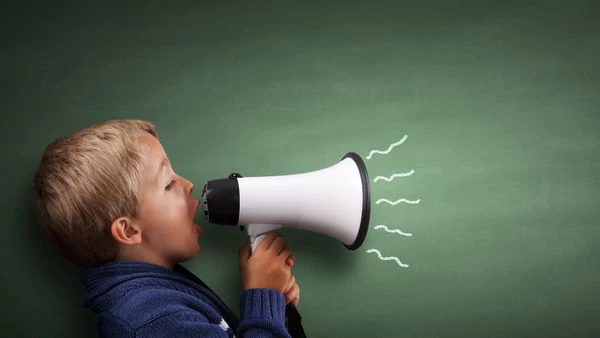
La investigación analizó durante dos meses a 2.493 alumnos de entre 9 y 10 años que demostraron un importante progreso en el aprendizaje en inglés y ciencias (iStock)

La investigación analizó durante dos meses a 2.493 alumnos de entre 9 y 10 años que demostraron un importante progreso en el aprendizaje en inglés y ciencias (iStock)

«Los resultados arrojados por este estudio sugieren que este tipo de enfoque puede mejorar el pensamiento global de los niños y las habilidades de aprendizaje en lugar de fomentar su conocimiento cognitivo en un tema en particular», aseguró en su estudio Kevan Collins, director ejecutivo de la Fundación de Dotación Educativa (EEF).

Los maestros fueron capacitados para poder aplicar esta técnica que tiene como objetivo maximizar el poder de diálogo en el aula para aumentar el compromiso de los alumnos, el aprendizaje y logros personales. El programa utiliza material en video y papel, así como una tutoría en la escuela para apoyar la planificación, la enseñanza y la evaluación de los profesores en diferentes materias escolares.

El programa utiliza material de video e impresión, así como tutoría en la escuela para apoyar la planificación (iStock)

El programa utiliza material de video e impresión, así como tutoría en la escuela para apoyar la planificación (iStock)

«Hacer que los niños piensen y hablen sobre su propio aprendizaje de manera más explícita puede ser una de las herramientas más efectivas para mejorar los resultados académicos. Pero puede ser difícil poner esto en práctica en el aula. Aunque no hay estrategia o truco simple, el informe de evaluación de hoy sobre la enseñanza dialógica da a los directores de escuelas primarias y a los profesores pruebas prácticas sobre un enfoque que parece ser eficaz en diferentes materias», detalló Collins.

El programa desarrolla lo que se conoce como «rutinas de pensamientos» que ayudan a los alumnos a analizar y razonar sobre la temática a trabajar. Se trata de impulsar una pregunta inspiradora que invite a la discusión grupal; estas simples técnicas, si se practican de manera frecuente en el aula, se naturalizan y los sujetos podrán aplicarlas a la totalidad de sus mundos cognitivos.

 El programa desarrolla lo que se conoce como “rutinas de pensamientos” que ayudan a los alumnos a pensar y razonar sobre la temática a trabajar (iStock)
El programa desarrolla lo que se conoce como “rutinas de pensamientos” que ayudan a los alumnos a pensar y razonar sobre la temática a trabajar (iStock)

Pero este modelo educacional ya fue expuesto hace años por uno de los más significativos pedagogos, Paulo Freire, quien aseguraba que el conocimiento no se transmite, sino que se «construye», y que el acto educativo no consiste en una transmisión de conocimientos, sino que es el goce de la construcción de un mundo común entre alumno y docente.

Su teoría ya se ha impulsado en varios países del mundo y evidencia su rotundo éxito en materia de conocimiento y desarrollo intelectual. La coparticipación de los más chicos tanto en las aulas como en el hogar es la puerta para que puedan comprender la fuerza transformadora de su interior.

Está técnica de aprendizaje ya fue desarrollada por el pedagogo Paulo Freire, quien aseguró que la clave del conocimiento es la construcción y no la transmisión (iStock)

Está técnica de aprendizaje ya fue desarrollada por el pedagogo Paulo Freire, quien aseguró que la clave del conocimiento es la construcción y no la transmisión (iStock)

Como lo señaló Freire: «La cultura no es atributo exclusivo de la burguesía. Los llamados ‘ignorantes’ son hombres y mujeres cultos a los que se les ha negado el derecho de expresarse y por ello son sometidos a vivir en una ‘cultura del silencio’«.

Fuente: http://www.infobae.com/tendencias/2017/07/14/por-que-ensenar-a-discutir-ayuda-a-los-ninos-a-mejorar-en-la-escuela/

Comparte este contenido:

Los maestros están más sanos cuando aprenden, además de enseñar

Por: Tendencias 21

Un estudio halla una fuerte correlación entre el aprendizaje, el desarrollo personal y la salud.

Diversos estudios estudios han indicado que existe un vínculo entre el aprendizaje y la salud. Por ejemplo, en 2010, un estudio de la Universidad de California en Irvine (EEUU) reveló que el aprendizaje potencia la salud del cerebro.

Ahora, una nueva investigación, realizada por científicos de la Universidad West y de la Universidad Linnaeus -ambas en Suecia- ha revelado que el aprendizaje puede tener un efecto más general en la salud. Concretamente, en la salud de los maestros de escuela.

El estudio fue realizado con una muestra aleatoria de 229 profesores de 20 escuelas de la provincia sueca de Västra Götaland. Todos ellos respondieron a un cuestionario, que incluyó mediciones sobre su salud, su capacitación y su trabajo, con aprendizaje integrado. Los datos resultantes mostraron una correlación estadística altamente significativa entre dichas mediciones.

Más concretamente, mostraron que, para tener un buen estado de salud, los maestros no necesitan solo enseñar, sino también deben aprender y desarrollarse, informa la Universidad Linnaeus en un comunicado difundido por AlphaGalileo.

Aumentar la fluidez

Un estado pleno de aprendizaje se caracterizaría por una ‘sensación de fluidez’. Esta ha sido descrita por los investigadores como el «estado de inmersión completa en una actividad», de  manera totalmente efectiva y que, al mismo tiempo, produzca «un enorme disfrute».

En el presente estudio, se probó la relación entre una medida de ese «estado de fluidez» y la salud de los maestros. Se constató así la existencia de una fuerte correlación entre ambos factores.

Según Yvonne Lagrosen, investigadora de la Universidad West y coautora del análisis, la correlación podría tener su origen en que la ‘sensación de fluidez’ hace que la carga de trabajo se perciba como más leve.

En otras palabras, que si los maestros disfrutan de su trabajo hasta el punto de quedar completamente absorbidos por él, tendrán más posibilidades de que su labor influya positivamente en su salud.

A pesar de que los investigadores reconocen que su estudio  solo ha sido llevado a cabo en escuelas -por lo que, dicen, las posibilidades de generalizar sus resultados a otros sectores son inciertas-, señalan los resultados obtenidos indican que, para estar sanos, es bueno aprender y desarrollarse constantemente, tanto en la profesión como en la vida.

En términos generales, la salud es uno de los aspectos más importantes de la vida. La mayoría de la gente define su calidad de vida en términos de independencia, seguridad, armonía, relaciones humanas y una buena salud. Sin embargo, a menudo, los factores laborales tienen un impacto negativo en la salud de los trabajadores. Se ha calculado que la mayoría de los trabajadores europeos experimentan al menos un problema de salud al año relacionado con su trabajo.

Referencia bibliográfica:

Stefan Lagrosen, Yvonne Lagrose. Work integrated learning for employee health in school. International Journal of Quality and Service Science (2014). DOI: 10.1108/IJQSS-09-2012-0015.

Fuente: http://www.tendencias21.net/Los-maestros-estan-mas-sanos-cuando-aprenden-ademas-de-ensenar_a39831.html
Comparte este contenido:

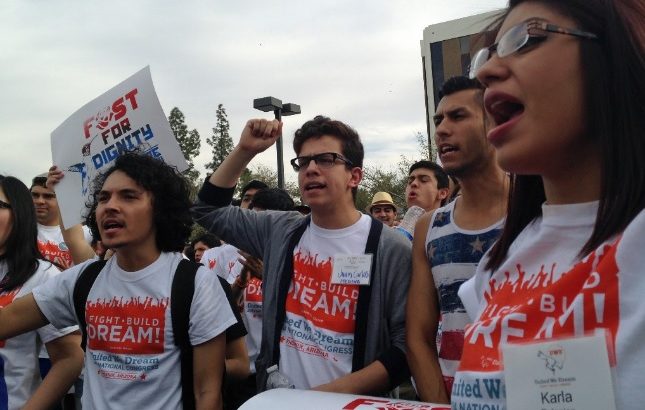
Afecta a ‘dreamers’ aumento de colegiaturas en universidades de EU

Estados Unidos/17 de Julio de 2017/La Jornada

l aumento de colegiaturas entre 30 y hasta 50 por ciento en universidades de Estados Unidos es un nuevo desafío al que se enfrentan los dreamers en la administración de Donald Trump, pese a estar protegidos por el programa de Acción Diferida para los Llegados en la Infancia (DACA, por sus siglas en inglés).

La coordinadora de Agenda Migrante, Eunice Rendón, informó a Notimex que algunas universidades de Texas y en otros estados de la Unión Americana han decidido arbitrariamente que estos jóvenes paguen una colegiatura mayor a la que normalmente se les solicitaba.

“Una de las ventajas que tenían los dreamers era contar con cuotas similares a los de un estudiante norteamericano que son mucho más flexibles, sin embargo hoy les están incrementado la colegiatura como a cualquier extranjero que desea estudiar en los Estados Unidos, lo que afecta a la comunidad de estudiantes mexicanos y por supuesto de otras nacionalidades”, comentó en entrevista.

De tal suerte que esta política, que viene aparejada con las acciones racistas de la administración Trump, “incrementa entre 30 y 50 por ciento los costos para ir a la universidad, además tienen que pagar el DACA, situación que los pone aún más vulnerables”.

Rendón Cárdenas se reunió el fin de semana en la Universidad de Seattle, Washington, con un grupo de dreamers mexicanos, quienes solicitaron becas y apoyos del gobierno mexicano para poder continuar sus estudios, luego del incremento a las cuotas universitarias.

Recordó que el evento tiene gran importancia porque en esta ciudad se detuvo hace algunos meses al dreamer mexicano Daniel Ramírez Medina, de 23 años de edad, quien sigue su proceso en libertad para determinar que sucederá con su caso.

“En Seattle está Daniel, que es uno de los dreamers detenido durante tres meses y cuya detención nos muestra la fragilidad del estatus DACA, porque no había ninguna razón para detenerlo”, recordó.

Detalló que el Servicio de Inmigración y Aduanas (ICE, por sus siglas en inglés) de Seattle nunca comprobó que era integrante de bandas criminales de esa nación. “Lo único que tenía era un tatuaje que decía I love You BC y sin ninguna prueba contundente, se le incriminó y se le quitó el DACA. Actualmente se encuentra en proceso legal”, expuso.

La también extitular del Instituto de los Mexicanos en el Exterior (IME) indicó que los jóvenes binacionales son el puente más importante entre ambas naciones y que su empoderamiento, inserción y vinculación es fundamental para cambiar la visión y la situación de México y los connacionales en Estados Unidos.

“El caso de Daniel es muy simbólico que nos permite vislumbrar cuáles son las dificultades a las que se enfrentan los DACA con un presidente como Trump”, anotó Eunice Rendón.

Durante el encuentro, los jóvenes mencionaron los retos y cambios que ven con las políticas migratorias del presidente de ese país y pusieron sobre la mesa algunas propuestas para fortalecer el papel de México en la Unión Americana a través de las juventudes binacionales.

“La gran ventaja de los DACA binacionales es que podían insertarse a través de la educación en la Unión Americana y eso les daba más posibilidades y perspectivas de poder salir adelante en Estados Unidos, pero con estas medidas, solo van a terminar más discriminados y mal pagados”, acotó.

El foro se realizó en alianza con el Instituto Mexicano de la Juventud (Imjuve), órgano desconcertado de la Secretaría de Desarrollo Social (Sedesol), y con miembros del Consejo Binacional de Dreamers: Uniting Dreams, encabezado por Paul Quiñones.

La exdirectora general de Coordinación Intersecretarial de la Subsecretaría de Prevención y Participación Ciudadana de la Secretaría de Gobernación (Segob) informó que en el encuentro se alcanzaron varios acuerdos.

Entre ellos, difundir e informar de esta situación a través de organizaciones, medios, escuelas, universidades e iglesias, que están cercanas a la comunidad para fortalecer los vínculos de confianza.

En el tema educativo es importante contar con apoyos tanto en Estados Unidos como en México en materia informativa, becas, revalidación y continuidad de estudios”, aprobaron los participantes.

En términos de revalidación, acordaron continuar las reuniones con autoridades del Instituto Mexicano de la Juventud (Imjuve), las secretarías de Relaciones Exteriores (SRE) y de Educación Pública (SEP), para poder llevar a cabo el proceso de revalidación de estudios desde Estados Unidos, con miras a contar con un documento como alternativa educativa ante un eventual regreso a México.

Además, fortalecer campañas masivas de comunicación y sensibilización en México sobre quiénes son los migrantes y su valor positivo para el país.

En temas laborales y de certificación y empleabilidad, determinaron compartir información de las empresas y plataformas comprometidas con los connacionales para su inclusión económica, además de considerar en las estrategias de reinserción la diversidad de perfiles, habilidades y contextos para lograr trajes a la medida.

Finalmente, convinieron en fortalecer programas para impulsar proyectos biculturales de voluntariado, al tiempo de aprender cultura e historia mexicana con becas y alojamiento en México para generar integración e identidad.

Fuente: http://www.jornada.unam.mx/ultimas/2017/07/12/afecta-a-dreamers-aumento-de-colegiaturas-en-universidades-de-eu

Comparte este contenido:

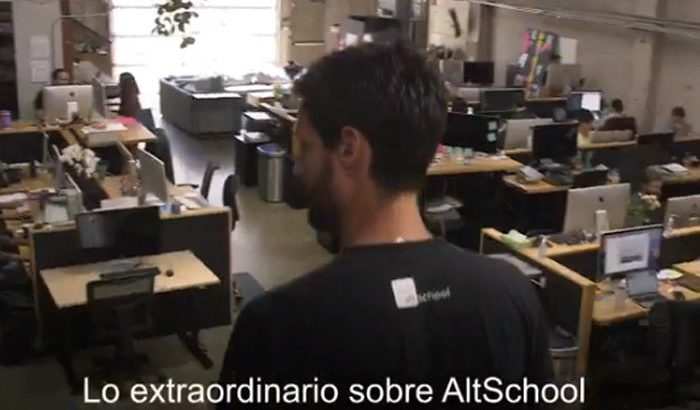
Estados Unidos. VIDEO: AltSchool, lo último en tecnología aplicada a la educación

Estados Unidos/Julio de 2017/Fuente: El Impulso

En esta escuela de San Francisco, EE.UU., las clases las imparte la computadora y no el maestro, que se limita a un rol de mediador entre la tecnología y el alumno.

Cada niño tiene una “lista personalizada” con las materias que debe estudiar que se elaboran gracias a un algoritmo en desarrollo.

Cámaras vigilan el comportamiento de los niños y educadores e ingenieros trabajan en ese algoritmo que sirve para personalizar los contenidos a la medida del niño.

“Si alguien es mejor que yo en lectura, estudiará cosas de un nivel más avanzado”, explica Miles, un niño de 10 años, alumno de AltSchool.

Para Miles, el sistema es “divertido” porque le permite tener un aprendizaje “mucho más personalizado”, asegura.

Su creador, Max Ventilla -un empresario de Silicon Valley que trabajó en Google- quiere vender su idea a escuelas públicas para hacerlo accesible a todo el mundo y que “los niños tengan la mejor educación en el futuro”, le dice a la BBC.

Sin embargo, de momento no es algo al alcance de todas las familias. La matrícula cuesta US$30.000 al año y sólo hay ocho en Estados Unidos.

El método es controvertido. A quienes lo critican les preocupa que reduzca la fuerza e influencia de los maestros en el desarrollo de los niños.

Pero Ventilla lo defiende: “En la tecnología hay un efecto en cadena y cada vez más estudiantes y escuelas usarán este sistema”, advierte.

Fuente: http://www.elimpulso.com/noticias/video-altschool-lo-ultimo-tecnologia-aplicada-la-educacion

Comparte este contenido:

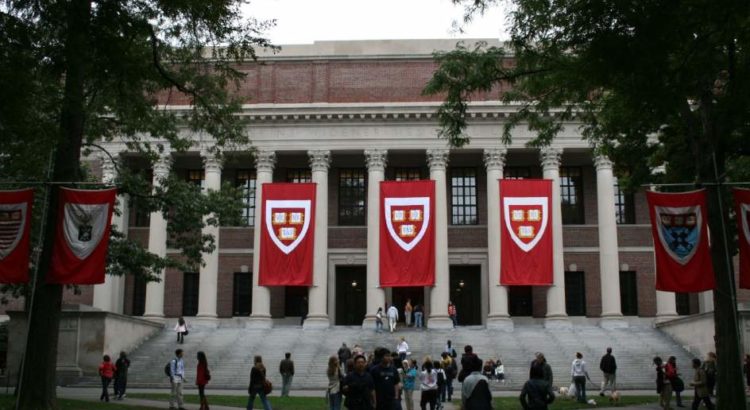
Estados Unidos: Harvard quiere prohibir en 2018 las fraternidades y hermandades por sus efectos «desgarradores»

América del Norte/Estados Unidos/16 Julio 2017/Fuente y Autor: 20minutos

Un comité que se encarga de revisar las políticas de Harvard ha recomendado que a partir de 2018 se prohíban las «fraternidades, hermandades de mujeres y organizaciones similares» por sus efectos «desgarradores», según informa The Washington Post.

Las novatadas y cualquier otro tipo de actividades humillantes desaparecerán de la prestigiosa universidad estadounidense a partir del próximo curso y los jóvenes de estas asociaciones que no respeten esta normativa no obtendrán recomendaciones del Decano para continuar con su vida académica ni podrían participar en los equipos deportivos u organizaciones realmente reconocidas por la institución, como anunció el pasado año el presidente Faust.

Los comentarios escritos por los estudiantes de Harvard en las encuestas anónimas sobre los acontecimientos que ocurren detrás de las puertas cerradas de este tipo de organizaciones son «inquietantes» y los comentarios sobre los efectos negativos de hermandades y fraternidades sobre los compañeros de la comunidad de Harvard son «desgarradores», señala el comité en un informe de 22 páginas.

Debido a su resistencia al cambio, los clubes se han quedado lejos de su tiempo Los continuos casos de violaciones, fiestas negras y muertes por intoxicación de alcohol pueden ser la causa de que el comité haya realizado este documento, aunque esta universidad no es la única que toma medida contra este tipo de asociaciones de un solo género: en los últimos años, campus de todo el país han cerrado o suspendido este tipo de grupos.

«Debido a su resistencia al cambio durante las últimas décadas, los clubes se han quedado relegados, lejos de su tiempo», escriben en el informe. El presidente de Harvard recomienda así que su universidad siga los ejemplos de las universidades de Williams y Bowdoin, que expulsaron de forma gradual las fraternidades y hermandades allá por 1962 y 1997. Por lo que a partir de 2018, estos grupos no podrán admitir a más miembros y esperan haber erradicado ya hermandades y fraternidades de su campus para 2022.

Se espera que una normativa final se discuta durante otoño, para ser aprobada o rechazada por el presidente Faust.

Fuente de la noticia: http://www.20minutos.es/noticia/3089668/0/harvard-mudaprohibir-fraternidades-hermandades-efectos-desgarradores/#xtor=AD-15&xts=467263

Fuente de la imagen: http://cdn.20m.es/img2/recortes/2017/05/31/483378-944-630.jpg

Comparte este contenido:

EEUU: The Supreme Court, religion and the future of school choice

América del Norte/EEUU/Julio del 2017/Noticias/https://theconversation.com/

The Supreme Court recently decided that Trinity Lutheran Church should be eligible for a Missouri state grant covering the cost of recycled playground surfaces. Though the state originally rejected the church’s application on grounds of separation of church and state, the Supreme Court ruled that this rejection was, in fact, religious discrimination.

The case’s impact will probably reach well beyond playgrounds.

As a scholar of education law, I’ve been following the Trinity Lutheran case and what it could mean for the hottest issue in education: school choice. Where in the past states have decided for themselves whether religious schools are eligible for school vouchers and scholarship tax credits, the Trinity Lutheran decision likely signals that the Supreme Court will soon require states to include religious private schools in their programs.

This would be a huge win for school choice advocates and would complete a revolution in the Supreme Court’s understanding of the law on government funding of religious institutions.

Activist group Concerned Women for America shows support for Trinity Luthern Church in front of the Supreme Court in Washington, D.C. AP Photo/J. Scott Applewhite

Of church playgrounds and discrimination

In 1995, Missouri established a program offering reimbursement grantsto qualifying nonprofits that installed playground surfaces made from recycled tires. Trinity Lutheran Church, which runs a preschool and daycare center, applied for a grant in 2012, but the state rejected the church’s application. Why? The Missouri Constitution states that “no money shall ever be taken from the public treasury, directly or indirectly, in aid of any church, sect or denomination of religion.”

Trinity Lutheran challenged the state’s decision as a violation of the Free Exercise Clause, and in June the U.S. Supreme Court agreed.

The Scrap Tire Surface Material Grant was awarded to two applicants in the 2017 fiscal year. ssedroCC BY-NC-ND

This result will strike many as intuitively correct. A playground is a playground whether or not it’s run by a church, so the threat to separation of church and state seems slim, and the cry of religious discrimination seems plausible.

The case’s reasoning, however, may signal a significant shift in how the law views the separation of church and state. To understand why, we need to review some history.

1784: Three pence to religious education

In 1785, James Madison wrote his ‘Memorial and Remonstrance Against Religious Assessments,’ asserting that religion should be kept separate from government. Library of Congress

In 1784, Patrick Henry proposed a bill in the Virginia legislature that would have levied a tax to support “teachers of the Christian religion” (i.e., ministers). James Madison, however, successfully opposed the bill.

On the question of funding religion with tax money, Madison asked: “Who does not see that the same authority which can force a citizen to contribute three pence only of his property for the support of any one establishment, may force him to conform to any other establishment in all cases whatsoever?”

More than 150 years later, in Everson v. Board of Education (1947), this controversy played a prominent role in the Supreme Court’s interpretation of the Establishment Clause of the First Amendment.

Justice Hugo Black in 1937. Library of Congress

In applying the Establishment Clause to states for the first time, the justices in the Everson case emphasized Madison’s objections to the Virginia tax in concluding that the framers of the Constitution had intended to establish “a wall of separation between Church and State.”

In the Everson decision, Justice Hugo Black interpreted this “wall” to mean:

“No tax in any amount, large or small, can be levied to support any religious activities or institutions, whatever they may be called, or whatever form they may adopt to teach or practice religion.”

The Supreme Court changes its tune

Until the mid-1980s, the Supreme Court mostly adhered to the no-funding mantra announced in the Everson case. Gradually, however, the court’s commitment to such hard-line separation waned.

Much of this came down to a shift in perception: The 21st century is very different from the world of the 1780s, where government was small and taxes relatively rare. Today, government is pervasive, and government money flows to a wide range of institutions. Increasingly, the Supreme Court recognized that allowing some money to flow to religious institutions via general government grant programs was quite differentfrom the Virginia tax Madison had opposed.

By 2002, the court had settled on its current approach to the Establishment Clause – an approach much more permissive than what was laid out in the 1947 Everson case.

Fast-forward to 2017, and seven justices agreed that giving Trinity Lutheran Church its playground grant would not violate the federal Establishment Clause. (Justices Sonia Sotomayor and Ruth Bader Ginsburg dissented on this point.)

Ralph Reed, chairman, Faith & Freedom Coalition, pictured at an event in 2014, has spoken in favor of Trinity Lutheran Church. AP Photo/Molly Riley

State bans on funding religion

So, the Supreme Court now holds a more forgiving position when it comes to separation of church and state. But what about individual states?

Nearly every state has provisions in its constitution that address state support for religion, and many of these provisions (like Missouri’s) are more stringently worded than the federal Establishment Clause. Such a provision is exactly why students in Vermont can’t use state funds to attend religious schools. It’s also, perhaps, why some states have not yet adopted voucher policies: Voucher advocates tend to want religious schools to be eligible, but state constitutions often stand in the way.

So, what happens if state constitutional law is more separationist than the Supreme Court’s current reading of the Establishment Clause?

The Supreme Court faced this question once before in Locke v. Davey(2004). The state of Washington offered “Promise Scholarships” to students meeting certain academic and income criteria, and college student Joshua Davey met those criteria. He lost the scholarship, however, when he declared a major in “pastoral ministries” because Washington understood its state constitution to ban the use of public money to support the pursuit of any degree in “devotional theology.” In other words, Washington was taking a stringent view on separation of church and state.

Joshua Davey speaks to reporters outside the Supreme Court in Washington, D.C. in 2003. AP Photo/Dennis Cook

Davey argued that excluding ministry students from the scholarship opportunity was a kind of religious discrimination, violating his right to freely exercise his religion.

The Supreme Court ruled 7 to 2 against Davey. Chief Justice William Rehnquist explained that in a federal system, states should have the right to insist on greater separation of church and state than the federal Establishment Clause requires.

While federal law would not prevent Washington from giving Davey a scholarship, the state could also choose to uphold its stricter separation – without violating the Free Exercise Clause. In other words, just because Washington could fund Davey didn’t mean that it had to.

Does separationism equal discrimination?

Since 2004, lower courts have generally interpreted Locke v. Davey to say that states may choose to exclude religious applicants from public funding programs. Trinity Lutheran will change that.

At least six justices agreed that Missouri’s exclusion of the church from its grant program was religious discrimination, pure and simple – and that this trumps the state’s desire to enforce a strict separation of church and state. Justice Roberts determined that the judgment in Locke did not apply here, as the discrimination alleged in the two cases was different. Justices Thomas and Gorsuch suggested that there was improper religious discrimination in both cases.

Despite their different views of Locke, these justices agreed that the court was required to analyze Missouri’s grant denial under “strict scrutiny.” This is the same level of review the court would give to, for instance, an express ban on Muslims entering the country.

In his opinion in the case, Justice Roberts stressed the differences between Locke v. Davey and Trinity Lutheran Church v. Comer. AP Photo/Stephan Savoia

This is remarkable. Though Joshua Davey had asked the court to review Washington’s scholarship policy under strict scrutiny, the court declined to do so. In that decision, the justices determined that separation of church and state and religious discrimination were horses of a different color. The Trinity Lutheran decision suggests that, at least in the context of general funding programs, the court will now view separation of church and state – a position the court once wholeheartedly embraced – as a kind of religious discrimination.

What happens next?

Standing against this reading of the Trinity Lutheran decision is… well, a footnote. Footnote 3 in Justice Roberts’ opinion reads:

“This case involves express discrimination based on religious identity with respect to playground resurfacing. We do not address religious uses of funding or other forms of discrimination.”

The footnote suggests that the implications of the decision are narrow and shouldn’t be applied to, say, school vouchers. But it’s hard to reconcile the footnote with the seemingly widespread ramifications of the opinion’s text.

Indeed, the day after deciding the Trinity Lutheran case, the Supreme Court vacated four lower court decisions in Colorado and New Mexicothat allowed the exclusion of religious schools from general aid programs. The state courts had based their rulings on separationist language in their state constitutions, but the Supreme Court asked the states to reexamine those decisions in light of Trinity Lutheran. Given the Supreme Court’s treatment of these cases, Footnote 3 may not be much of a limitation after all.

The Colorado and New Mexico courts will have the first shot at deciding what Trinity Lutheran means for school choice. In my view, though, the Trinity Lutheran case signals that the Supreme Court will now generally treat separationist exclusions of religious institutions from government funding as religious discrimination.

If that’s right, we’ll soon have completely flipped the law on government funding of religious schools. Where it had once seemed fairly clear that government money could not be used to support religious instruction at all, it may be only a matter of time before the Supreme Court requires voucher programs to treat religious schools the same as their secular peers.

Fuente :

https://theconversation.com/the-supreme-court-religion-and-the-future-of-school-choice-80588


Fuente Imagen:


https://lh3.googleusercontent.com/dOFJQ36VYsekZIQmMmjSd3pTm9h_bQuWrKgJlt9_eHM44LI8eP-fWBYxcu-egC7ZSm8yYIE=s85


Comparte este contenido:

EEUU: As Schools Tackle Poverty, Attendance Goes Up, But Academic Gains Are Tepid

América del Norte/EEUU/edweek.org

Resumen: la noticia hace referencia a los esfuerzos de la Ciudad de Nueva York para convertir a decenas de escuelas de bajo rendimiento en modelos educativos exitosos, inyectándoles una gama de servicios de salud, y de apoyo social y emocional para estudiantes y las familias de los  estudiantes. Casi tres años después del inicio del programa, los resultados de la escuela PS 123, con sus 530 estudiantes, ofrecen una pequeña ventana a lo que la iniciativa más grande de la ciudad está viendo: un aumento en la asistencia estudiantil y la participación de la familia en las actividades escolares, una caída en el ausentismo crónico, Progreso.  «Eso no es una gran cosa para nadie, pero, en realidad, eso es enorme cuando se trabaja con la demografía con la que trabajamos», dijo Hernández.

P.S. 123, a K-8 school in Harlem, had been a chaotic place when Melitina Hernandez arrived as principal in 2013. Students would often run out of class to get attention. Staff members sometimes dodged confrontational parents. The school had old computers and tattered textbooks.

So Hernandez and her staff set out to make big changes with a $4 million grant from the state. They started with upgrading technology and other classroom amenities. They also turned their attention to the needs of the school’s large population of homeless children. Then their efforts kicked into higher gear in 2014 when P.S. 123 became part of New York City’s broad efforts to turn around dozens of low-performing schools by injecting them with a range of health, social-emotional, and academic support services for students and their families.

Nearly three years later, the results at P.S. 123, with its 530 students, offer a small window into what the city’s larger initiative is seeing: an increase in student attendance and family participation in school activities, a drop in chronic absenteeism, but uneven academic progress. Just 17 percent of P.S. 123’s students in grades 3-8 were proficient on the state’s English Language Arts exam in 2016, but in 2015, it had been even lower at 7 percent.

«That’s not a big thing to anyone else, but, in actuality, that’s huge when you work with the demographics that we work with,» Hernandez said.

Flooding impoverished schools with a range of services and resources is not new, and there’s still lively debate in education circles about whether it’s something schools should take on.

Commonly referred to as «community schools» or «whole-child» initiatives, the approach has been used in districts from Tacoma, Wash., to Cincinnati for several years, but the movement has picked up steam more recently amid a backlash against single-measure, test-based accountability and as an alternative to closing long-struggling schools. It’s gotten robust support from the nation’s teachers’ unions. And some states are looking to incorporate the features of community schools in their plans required by the new federal education law, the Every Student Succeeds Act.

Students at P.S. 188 help clean up their classroom before the last day of the official semester in New York City public schools. The school provides an on-site nurse practitioner, mental health counseling, and other services meant to make it a hub of the community.

Students at P.S. 188 help clean up their classroom before the last day of the official semester in New York City public schools. The school provides an on-site nurse practitioner, mental health counseling, and other services meant to make it a hub of the community.
—Mark Abramson for Education Week.

Pennsylvania, for example, intends to allow districts to use a community schools approach to tackle the problem of chronic absenteeism, to increase the roles that parents play in schools, to address students’ social and emotional needs, and to provide more after-school opportunities, said Pedro Rivera, the state’s education secretary.

«We know that in today’s society, our children … regardless of class, come to our institutions with various needs,» Rivera said. «When properly implemented and supported, community schools will again allow schools to be the nucleus or the hub of their communities.»

Whether community schools initiatives will continue to gather momentum is unclear. President Donald Trump’s proposed federal budget threatens to slash several funding streams that districts, communities, and nonprofit partners use to fund community schools and whole-child initiatives. And the research on whether a community schools strategy is an effective way to increase student achievement paints a complicated, sometimes contradictory, picture.

Benefits for Attendance

An independent study released earlier this year on the Communities in Schools program, one of the country’s largest whole-child initiatives that focuses on dropout prevention, found that while on-time graduation rates rose and the numbers of dropouts decreased in schools with the program, comparison schools also saw their graduation rates go up.

Attendance was higher in elementary schools in the program than in a comparison group of schools, according to the study by MDRC which looked at select schools in Texas and North Carolina.

Test scores improved at both Communities in Schools sites and the comparison schools at the elementary and high school levels. But at the middle school level, state test scores did not improve at those sites, although they did at the comparison schools.

But Linda Darling-Hammond, a longtime education scholar and president of the left-leaning Learning Policy Institute, said there is evidence that the strategy can be used to improve schools. What matters, more often than not, is the implementation, she said.

Schools that use the approach successfully, Darling-Hammond said, know the specific needs of their community and tailor services to meet those and forge strong relationships with families and communities.

In a recent report by the National Education Policy Center and the Learning Policy Institute, researchers analyzed more than 125 studies and research reviews on community schools, and found test score gains showed up in years three, four, and five. In the shorter term, researchers saw improvement in students’ health, attentiveness, and behavior, Darling-Hammond said.

«Whenever you do major structural reforms, if you are successful, the first thing that will respond is attendance,» she said. «And then you will see increases in kids … coming to school, staying in school, graduating, which actually has a much bigger effect on their later life outcomes than test scores.»

Though addressing the needs that poor students face outside of school is important, improving the quality of instruction is the most essential part of making schools better, said Paul Reville, who runs the Education Redesign Lab at the Harvard Graduate School of Education.

«I’d hate to see [community schools] undermined by having unrealistic expectations of it being a short-term silver bullet to bringing about success in these schools,» Reville said. «It’s one piece of a comprehensive strategy for turning around chronically underperforming schools.»

Massive Effort Aimed at Struggling Schools

In New York City, schools like P.S. 123 are in a special category of community schools—a multi-million dollar initiative called «renewal schools» aimed at staving off a state takeover or shutdown of campuses that had lagged academically for years.

Buoyed by some of the results in the wider community schools’ program, Mayor Bill de Blasio announced in May that he will expand the number of participating schools in the fall to 215 , increasing the scale of the program to one previously unseen in the country. The schools will serve about 100,000 students, far bigger than most school districts in the United States. But critics say de Blasio’s embrace of the community schools approach is troubling, since the academic improvements have been modest at best.

Students at P.S. 188 in New York socialize on the playground during the last week of school.
—Mark Abramson for Education Week.

English/language arts and math proficiency rates rose by 5.7 percent and 1.8 percent, respectively, from the 2014-15 school year to the 2015-16 school year, according to city data. Graduation rates for students in community schools averaged a 4.7 percent increase year over year. Chronic absenteeism declined by 3.5 percent in community schools, compared to a little over 1 percent citywide.

«We are targeting really high-need schools that are in neighborhoods with entrenched poverty, so the numbers are not where we want them to be. But we have been pleased with the growth early on,» said Chris Caruso, the executive director of New York City’s community schools program. «A lot of this is about changing culture.»

New York City Chancellor Carmen Fariña stressed that community schools are one of many strategies the district is using to improve schools, and that they offer parents, students, and teachers key advantages. GED and English-as-a-second-language classes for adults help parents participate in their children’s education. The schools provide mental health counselors and other staff from community-based organizations, which frees up teachers and principals to focus on instruction, she said.

A major benefit, Fariña said, are the experiences community schools bring to low-income children that are typical in middle- and upper-income communities. Playing chess, raising chickens, and learning to code, to name a few.

«You don’t ever give up on any community and any child, and this is what we are doing,» she said. «You have to serve the whole child, we are talking about social, emotional, academic learning–what we call the three pillars of education.»

Still, in the city’s renewal schools—where the challenges are even greater and the resources have been more robust—results so far from the community schools initiative show modest, but promising signs. In renewal high schools, the graduation rate jumped on average nearly five points in 2016, to 59 percent. But, that still lagged the city average of 73 percent.

Graduation rates at renewal high schools did not increase more than at comparable high schools, and test scores did not show statistically significant gains compared to select non-renewal schools that did not get extra city resources, according to Aaron Pallas, a professor at Teachers College, Columbia University, who recently analyzed city education data.

But city education officials have called Pallas’s analysis «flawed,» arguing, in part, that renewal schools were chosen based on strict selection criteria that did not match the criteria used in his analysis.

One pro-charter group that has been highly critical of de Blasio’s education agenda—Families for Excellent Schools—thinks a smarter approach would be to shut down the renewal schools and give students the option to attend high-performing schools, including charters.

Others argue that until the city does something dramatic to break up schools with high concentrations of poverty, there won’t be any major academic breakthroughs.

Zeroing In on Chronically Absent Students

While the city’s community schools use a wide variety of strategies to address each school’s and neighborhood’s needs, they all rely on an on-site director as a key ally to principals and the main connection to outside partners. At P.S. 123, Hernandez points to two people who are essential to her school’s program: Jeanine Lascelles, the community school director, and Raymond Blanchard, the mental health clinician.

Lascelles oversees a team of 10, including six «success mentors,» who work directly with 112 students who were chronically absent. The mentors are frontline advocates for homeless students, who may need extra tutoring, an extension to finish an assignment, or more basic supports. The mentors conduct daily check-ins to ensure that students show up to class and make home visits to families. They also meet weekly with the liaison at the shelter in the neighborhood. And when students improve, mentors notify parents through «celebration calls,» Lascelles said.

Their efforts are paying off. About 85 percent of the students who were part of that targeted effort improved attendance over the past year, Lascelles said.

Blanchard, along with other staff members, provide counseling to students and their families, and training for teachers to better recognize signs that misbehaving students need counseling services. They are also trained on de-escalation techniques and other ways to support students, including knowing when a child may just need to take a walk or require additional counseling.

«The learning is 100 percent important, but it’s hard for the students to learn if they are coming in worrying about where they are going to sleep, what they are going to eat, different things like that,» Blanchard said. «It’s providing them support on that emotional level so that they can come in express themselves, let that information out, and then be able to go into the classroom and continue with their day, to continue with learning.»

Fuente: http://www.edweek.org/ew/articles/2017/06/07/when-a-community-loses-its-schools.html
Comparte este contenido:
Page 217 of 396
1 215 216 217 218 219 396