Page 224 of 400
1 222 223 224 225 226 400

EEUU: From public good to personal pursuit: Historical roots of the student debt crisis

América del Norte/Estados Unidos/Julio 2017/Noticias/https://theconversation.com


The promise of free college education helped propel Bernie Sanders’ 2016 bid for the Democratic nomination to national prominence. It reverberated during the confirmation hearings for Betsy DeVos as Secretary of Education and Sanders continues to push the issue.

In conversations among politicians, college administrators, educators, parents and students, college affordability seems to be seen as a purely financial issue – it’s all about money.

My research into the historical cost of college shows that the roots of the current student debt crisis are neither economic nor financial in origin, but predominantly social. Tuition fees and student loans became an essential part of the equation only as Americans came to believe in an entirely different purpose for higher education.

Students took to the streets to protest their debt burdens as part of Occupy Boston in 2011. CampusGrotto/flickrCC BY-NC

Cost of a college degree today

For many students, graduation means debt. In 2012, more than 44 million Americans (14 percent of the total population) were still paying off student loans. And the average graduate in 2016 left college with more than $37,000 in student loan debt.

Student loan debt has become the second-largest type of personal debt among Americans. Besides leading to depression and anxiety, student loan debt slows down economic growth: It prevents young Americans from buying houses and cars and starting a family. Economist Alvaro Mezza, among others, has shown that there is a negative correlation between increasing student loan debt and homeownership.

The increase in student loan debt should come as no surprise given the increasing cost of college and the share that students are asked to shoulder. Decreasing state support for colleges over the last two decades caused colleges to raise tuition fees significantly. From 1995 to 2015, tuition and fees at 310 national universities ranked by U.S. News rose considerably, increasing by nearly 180 percent at private schools and over 225 percent at public schools.

Whatever the reason, tuition has gone up. And students are paying that higher tuition with student loans. These loans can influence students’ decisions about which majors to pick and whether to pursue graduate studies.

Early higher education: a public good

The Stanford University crew team, between 1910-1915. Stanford was founded on the principle of providing a free education. The university did not start charging students tuition until 1920. Library of Congress

During the 19th century, college education in the United States was offered largely for free. Colleges trained students from middle-class backgrounds as high school teachers, ministers and community leaders who, after graduation, were to serve public needs.

This free tuition model had to do with perceptions about the role of higher education: College education was considered a public good. Students who received such an education would put it to use in the betterment of society. Everyone benefited when people chose to go to college. And because it was considered a public good, society was willing to pay for it – either by offering college education free of charge or by providing tuition scholarships to individual students.

Stanford University, which was founded on the premise of offering college education free of charge to California residents, was an example of the former. Stanford did not charge tuition for almost three decades from its opening in 1891 until 1920.

Other colleges, such as the College of William and Mary, offered comprehensive tuition scholarship programs, which covered tuition in exchange for a pledge of the student to engage in some kind of service after graduation. Beginning in 1888, William and Mary provided full tuition scholarships to about one third of its students. In exchange, students receiving this scholarship pledged to teach for two years at a Virginia public school.

And even though the cost for educating students rose significantly in the second half of the 19th century, college administrators such as Harvard President Charles W. Eliot insisted that these costs should not be passed on to students. In a letter to Charles Francis Adams dated June 9, 1904, Eliot wrote, “I want to have the College open equally to men with much money, little money, or no money, provided they all have brains.”

College education becomes a private pursuit

The perception of higher education changed dramatically around 1910. Private colleges began to attract more students from upper-class families – students who went to college for the social experience and not necessarily for learning.

This social and cultural change led to a fundamental shift in the defined purpose of a college education. What was once a public good designed to advance the welfare of society was becoming a private pursuit for self-aggrandizement. Young people entering college were no longer seen as doing so for the betterment of society, but rather as pursuing personal goals: in particular, enjoying the social setting of private colleges and obtaining a respected professional position upon graduation.

John D. Rockefeller was instrumental in bringing about the modern day reality of college tuition and student loans. The Rockefeller Archive Center

In 1927, John D. Rockefeller began campaigning for charging students the full cost it took to educate them. Further, he suggested that students could shoulder such costs through student loans. Rockefeller and like-minded donors (in particular, William E. Harmon, the wealthy real estate magnate) were quite successful in their campaign. They convinced donors, educators and college administrators that students should pay for their own education because going to college was considered a deeply personal affair. Tuition – and student loans – thus became commonly accepted aspects of the economics of higher education.

The shift in attitude regarding college has also become commonly accepted. Altruistic notions about the advancement of society have generally been pushed aside in favor of the image of college as a vehicle for individual enrichment.

Dartmouth College students carving canes on campus in the early 1920s. In the early 20th century, as more students from upper-class families began attending college for the social – rather than educational – experience, many colleges began the practice of charging tuition. Council of the Alumni of Dartmouth College

A new social contract

If the United States is looking for alternatives to what some would call a failing funding model for college affordability, the solution may lie in looking further back than the current system, which has been in place since the 1930s.

In the 19th century, communities and the state would foot the bill for college tuition because students were contributing to society. They served the common good by teaching high school for a certain number of years or by taking leadership positions within local communities. A few marginal programs with similar missions (ROTC and Teach for America) still exist today, but students participating in these programs are very much in the minority.

Instead, higher education today seems to be about what college can do for you. It’s not about what college students can do for society.

I believe that tuition-free education can only be realized if college education is again reframed as a public good. For this, students, communities, donors and politicians would have to enter into a new social contract that exchanges tuition-free education for public services.

Fuente:

https://theconversation.com/from-public-good-to-personal-pursuit-historical-roots-of-the-student-debt-crisis-79475

Fuente imagen:

https://lh3.googleusercontent.com/rwTCWZGYZNrG-MeAdq7_0UzMkgAS_5UBcZ-GROxCnqUjfi3ZoRRQmKokeav0KfX5KlMPOg=s


 

Comparte este contenido:

Estudio: Profesores no innovan por miedo a «hacer el ridículo frente a sus alumnos»

America del NOrte/EEUU/observatorio.itesm.mx

A pesar de ser una institución líder en investigación en educación, la Universidad Carnegie Mellon ha fracasado a la hora de adoptar sus propios hallazgos. Para averiguar por qué, la antropóloga Lauren Herckis observó a profesores de la Universidad Carnegie Mellon durante más de un año.

La Dra. Herckis tuvo la enorme tarea de asistir a todas las reuniones académicas y leer los correos electrónicos institucionales de los profesores para averiguar por qué no estaban cambiando sus estilos de enseñanza, informa David Matthews en el Times Higher Education.

Su conclusión fue sorprendente: los profesores tienen una fuerte necesidad de aferrarse a su «afirmación de identidad personal». En otras palabras, los profesores tienen demasiado miedo de verse estúpidos frente a sus estudiantes, por eso no quieren probar algo nuevo. Aunado a esto, uno de los principales obstáculos para la innovación es el miedo a las evaluaciones de los estudiantes.

La antropóloga también encontró que muchos académicos se aferran a su idea de lo que es una «buena enseñanza». «Cuando nuestro instinto nos dice que hagamos una cosa y un artículo nos dice otra», es muy difícil cambiar el comportamiento dijo la Dra. Herckis.

Además, se encontró que los profesores eran mucho más propensos a entusiasmarse con implementar sus propias ideas, en lugar de adoptar las propuestas de otros.

Después de este estudio, los profesores de la Carnegie Mellon fueron animados a experimentar con nuevas formas de enseñanza y a no «preocuparse si los estudiantes te odian por un semestre».

Fuente: https://observatorio.itesm.mx/edu-news/2017/7/4/estudio-profesores-no-innovan-por-miedo-a-hacer-el-ridculo-frente-a-sus-alumnos

Comparte este contenido:

Estados Unidos: The Future of US Education Is Standing Rock

Estados Unidos / 05 de julio de 2017 / Por:  Sandy Grande / Fuente: http://www.truth-out.org

As a professor of education, an Indigenous scholar and member of the NYC Stands with Standing Rock Collective, I was ecstatic to learn that the Wallace Global Fund recently named the Standing Rock Sioux the inaugural recipient of the Henry A. Wallace Award, a $250,000 prize that includes up to an additional $1 million to support the tribe’s transition to renewable energy.

To be sure, such recognition and capital investment will go a long way in eradicating dependence on fossil fuel. But if the Fund’s broader aim to «lift up the extraordinary courage and will it takes to stand up to oppressive corporate and political power» is to be realized, then a commensurable investment in education will be needed.

As it stands, Wall Street billionaires, hedge fund managers and corporate think tanks are driving education reformnot out of concern for the environment, but in the interest of profit and — still — land. Indeed, historically, US schools were designed for Native erasure and little has changed.

The dominant narrative about Native American students and tribal schools remains that they are «failing.» The evidence? The so-called achievement gap as measured by standardized test scores. Beyond the specious nature of the tests, Native student «failure» should not be confused with the refusal to trade one’s culture and ways of being for a form of «success» marked by individualist modes of competition and an «American Dream» fundamentally reliant upon property ownership and resource exploitation.

Neither Native peoples nor the planet can afford systems of education that are built upon the reduction of life to transactional relationships, whether for profit or individual advancement. So, without an educational paradigm shift, there will always be a next Standing Rock (see: Bears EarsLancaster County, central Florida).

Toward this end, Native education — centered in Indigenous knowledge and decolonial curricula — has much to teach mainstream schools. For example, the Defenders of the Water School, founded by Alayna Eagle Shield at the Oceti Sakowin camp, engaged a curriculum centered on Lakota language, culture and intergenerational knowledge as a practice of Indigenous sovereignty. Students at the school spent their days in song, dance and prayer, as well as learned the history, math and science embedded in their surroundings. Most importantly, however, they witnessed the courageous actions taking place in defense of water and their peoples. And, in so doing, they learned about what it means to be a good relative, to be accountable to each other as well as to the generations to come.

In other words, the children of Standing Rock learned that the resistance was not just about a pipeline or even unchecked corporate power, but rather about their right to defend themselves, their land and relatives, including the Missouri River. It was about the history of US settler colonialism — based on the dispossession of Indigenous peoples from land and Black peoples from labor — and the ongoing impact of these relations of power on their communities. They learned to question and contest alternative facts: that we need more fossil fuel, more extraction, more oil; that climate change is a myth; that we can trust a multibillion-dollar industry to tell the truth about renewable energy; that history doesn’t matter; and that actions of the people don’t make a difference.

In short, they learned that Standing Rock was, and is, about a broader struggle for liberation.

So, what is needed is an education for liberation, one that begins with examining the knowledge systems that gave rise to the dispossession of Native peoples and Black enslavement in the first place. Such an education would not only offer a more accurate, complex and nuanced understanding of the history of the United States as a settler nation, but also help to strengthen solidarities between Black, Indigenous and other colonized peoples working to bring an end to violence and injustice in all forms.

Particularly as the US faces devastating debt, dangerous climate change and unprecedented inequality, understanding settler colonialism as a structure defined by processes of extraction, removal, elimination and consumption is not only instructive, but also imperative for defining alternative ways of being. Henry A. Wallace’s broader vision for a more democratic US that places well-being ahead of profits needs and deserves an analogous vision for education; one grounded in the ethics of relationship so we would no longer need to make the case that #BlackLivesMatter or «water is life.» Enough is enough.

Fuente noticia: http://www.truth-out.org/opinion/item/41146-the-future-of-us-education-is-standing-rock

Comparte este contenido:

Película: Las mujeres de verdad tienen curvas

Las mujeres de verdad tienen curvas es una película estadounidense de 2002 dirigida por Patricia Cardoso de origen colombiano y que es su Ópera Prima.

Argumento

Ana pertenece a una familia mexicana afincada en Estados Unidos. Tiene aptitudes e interés por el estudio, lo que le ha hecho que obtenga una beca para una universidad muy importante en Nueva York, pero su madre se niega a dejarla ir.

Comentarios

Aborda en forma de comedia el enfrentamiento generacional que existe entre Ana y su madre Carmen, que únicamente está obsesionada con que sus hijas se casen, tengan hijos y luego puedan cuidar de ella cuando sea mayor. En cambio, Ana quiere romper con ese modelo de vida y busca su salida en los estudios universitarios que le permitan una vida mejor e independiente.

Ana es una chica de 18 años de origen hispano que reside con su familia. Está a punto de acabar los estudios de secundaria y es la primera de su familia que puede atreverse a soñar con ir a la Universidad. Tiene posibilidades reales de conseguir una beca, pero su madre se opone. No cree que sea lo más conveniente para ella, pues lo que espera es que se ponga a trabajar, adelgace y encuentre novio pronto. Al acabar las clases Ana tiene que empezar a trabajar en el taller de costura de su hermana, presionada por un gran pedido de vestidos, el cual vende a una compañía muy grande que le paga poco por un trabajo muy fuerte.

Ver película haciendo clic aquí:

Fuente de la Reseña:

https://es.wikipedia.org/wiki/Las_mujeres_de_verdad_tienen_curvas

Comparte este contenido:

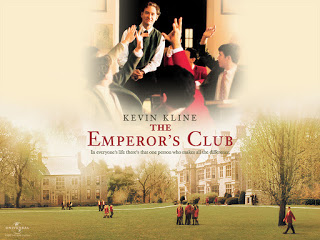
Película: Lección de Honor

Lección de Honor

William Hundert. Un profesor, ya maduro, ha sido convocado en un lujoso hotel para una reunión de antiguos alumnos suyos. Los recuerdos se agolpan en su memoria. Aquel curso del 72, en la prestigiosa escuela de St. Benedict. Un año más, logra apasionar a sus alumnos con la enseñanza de la historia de Roma. Sabe usar recursos pedagógicos para alimentar la curiosidad natural de los adolescentes: como el de hacer leer la inscripción que preside el fondo de la clase, que narra los hechos guerreros de un rey del que, en la actualidad, nadie recuerda siquiera el nombre. Puede empeñarse uno en ganar el mundo entero, pero para que las realizaciones perduren, hay que hacer algo más, salir del cascarón del propio egoísmo.

Hundert lo tiene claro: no sólo enseña una asignatura; ante él hay personas, jóvenes, con toda una vida por delante, que en el futuro ocuparán posiciones importantes en la sociedad. Y tiene que moldear su carácter, ayudarles a forjar su personalidad. Pero ese curso se va a encontrar con un alumno problemático, que llega con el curso ya empezado. Se trata de Sedgewick Bell, hijo de un senador. Un chaval muy listo, pero que va a lo suyo, y sometido a una enorme presión por parte de su padre, quien no se ocupa mucho de él, pero que sí desea su triunfo social.

Para ver la película, haga clic aquí:

Fuente de la Reseña:

http://www.formandotec.com/2010/03/el-club-del-emperador-o-leccion-de.html

Comparte este contenido:

EEUU: California school leaders fear GOP cuts to Medicaid could harm special education

EEUU/July 04, 2017/Source: http://www.scpr.org

California education officials are sounding the alarm over Congressional Republicans’ proposed health care overhaul bills, saying changes to Medicaid could leave the state or school districts scrambling to pay for critical special education services they don’t have the option of cutting.

The health care bill the U.S. House passed in May would place a cap on Medicaid payments to states, a move that could trim states’ Medicaid funding by 25 to 35 percent.

Funding from Medicaid, referred to in California as Medi-Cal, helps school districts cover the costs of serving special education students who are entitled to receive critical healthcare services in school — such as a child who needs a ventilator or a feeding tube.

If a child’s «individual education plan» — the negotiated document spelling out supports a student with disabilities needs in order to receive a «free and appropriate» public education — calls for these services, California Department of Education spokesman Robert Oakes said districts are required to provide them at school, with or without Medi-Cal.

«If Medi-Cal funding drops because there’s a cap,» Oaskes said, «the school districts are going to have to pay for it. We don’t know where that kind of funding is going to come from.»

The current U.S. Senate health care bill also contains cuts to Medicaid. But Majority Leader Mitch McConnell (R-Kentucky) delayed a vote on the legislation before the July 4 recess — in part because members of his own caucus raised concerns about the Medicaid provisions.

Schools across the U.S. receive roughly $4 billion in Medicaid reimbursements, according to a national organization representing school superintendents, and nearly two-thirds of U.S. school districts use this funding to pay for not only health care workers to work with these students, but for speech-language pathologists, school psychologists and school social workers as well.

Medicaid funding also pays for vision and hearing screenings, health aides and other services at school sites for students from Medi-Cal eligible families, Oakes said.

District-by-district figures of how many students receive Medicaid-funded services were not readily available. But Oakes said populations of Medi-Cal-eligible students are highest in rural schools and in urban districts with large low-income populations; in the Los Angeles Unified School District, he said, 55 percent of students are eligible for Medi-Cal.

The Association of California School Administrators and California School Boards Association recently sent a joint letter to the state’s Congressional delegation describing what would be at stake if cuts to Medicaid were realized.

«Absent this essential federal support for our most vulnerable populations,» the letter said, «schools will not only struggle to provide high quality services to students with disabilities, but will also have great difficulty in meeting the federal mandates associated with Individuals with Disabilities Education Act.»

Source:

http://www.scpr.org/news/2017/07/03/73398/california-school-leaders-fear-gop-cuts-to-medicai/

Comparte este contenido:

Estados Unidos: Lanzaron un laboratorio para repensar la educación

Estados Unidos/03 julio 2017/Fuente: mdzol

Lo organizó el Instituto de Tecnología de Masachussetts, para repensar la forma de enseñar y aprender.

El Instituto Tecnológico de Massachusetts (MIT), una de las universidades más prestigiosas del mundo, lanzó un laboratorio mundial de la educación abierto a la participación de todos los países para que se puedan repensar los procesos de enseñanza y aprendizaje a la luz de la irrupción de la tecnología, y a la necesidad de formar estudiantes capaces de resolver los problemas del mundo laboral, atravesados por las cuestiones políticas y ambientales.

El fenómeno de cómo formar las habilidades en los estudiantes para un mundo laboral incierto en países atravesados por guerras, cuestiones políticas y ambientales, «no es privativo de la Argentina. En todo el mundo se hacen esta pregunta, por eso es necesario repensar la educación, sus procesos de enseñanza y aprendizaje, con la tecnología como aliada», dijo a Télam Claudia Urrea, directora asociada del MIT.

La especialista colombiana, quien vino al país para dar una serie de charlas a funcionarios nacionales, provinciales, organizaciones no gubernamentales y privadas dedicadas a la educación, aseguró que en ese laboratorio -que tendrá la forma de comunidad virtual mundial- «cada país hará su propuesta con el objetivo de buscar un renacer de la educación, para empoderar al chico desde el preescolar hasta su salida de la universidad».

«Educar para la vida, pensar un sistema que pase por la educación superior y llegue hasta el mundo del trabajo. El aprendizaje debe ser continuo, hay que formar niños diferentes, estudiantes diferentes y profesionales diferentes. Desde el MIT desarrollamos la investigación, pero son los países los que tienen que definir dónde se quieren ver parados en cinco o diez años, cómo se van a mover y qué recursos van a afectar», explicó.

Urrea, quien vino a dar la conferencia «Los chicos y las pantallas, desafíos para las políticas públicas», organizadas por la OEI y las empresas Samsung y Fibertel, puntualizó que ante la realidad que tenemos «el sistema educativo no responde, inclusive en los Estados Unidos. En la Argentina hay muchas muestras de innovación, creativas y apoyadas en la tecnología, pero no son la regla general».

Para la experta, la tecnología «es lo que amplía las brechas entre aquellos estudiantes que avanzan y los que quedan rezagados. Los que no la usan de una forma empoderada son los que se quedan atrás» y añadió: «la tecnología es una herramienta de la innovación en materia educativa pero hoy ofrece una multiplicidad de variantes que hacen más fácil y entretenido el aprendizaje para los estudiantes».

Entre ellas mencionó la posibilidad de hacer cursos en línea, el aprendizaje personalizado «y la posibilidad de que el estudiante construya su propio aprendizaje a través de simulaciones, con lo que se le acercan conceptos que hasta hace algunos años le eran difíciles de entender y estimula su creatividad».

«La realidad hoy es muy diferente de hace 30 años y el aprendizaje también debe ser diferente», sostuvo.

Urrea destacó que cuando se piensa en tecnología y sólo se le entrega una computadora al alumno, «los países están comprando la solución antes de hacer el diagnóstico del problema. Primero tienen que pensar hacia dónde quieren llegar como estado en cinco o diez años y luego comprar las herramientas en función de ese diagnóstico».

Y puso como ejemplo a Finlandia. «El éxito del sistema educativo en Finlandia se basó en un cambio de sus estructuras no sólo en educación, sino a nivel país, con una visión estratégica a futuro. La altas mediciones que obtienen en las pruebas estandarizadas no son su techo. Estas pruebas a veces son como rocas con las que se castiga a todo un sistema educativo».

«Mi invitación es a pensar qué es lo que queremos que pase en el aula, qué queremos que nuestros estudiantes hagan y luego pensar en qué computadora o sistema usamos para eso. Hay que definir qué valores, habilidades, conocimientos enseñamos, cómo tiene que ser la dinámica del aprendizaje y la relación entre el maestro y su alumno», explicó Urrea.

Para la especialista, este cambio «es muy difícil» y lo más importante «es no darse por vencido, cometiendo errores, pero buscando alianzas, acceder a centros, a materiales que se usan con éxito en otros países, a nuevas formas de formación docente, saber qué es lo que funciona en el mundo y qué no da resultado».

Urrea consideró que la Argentina «está mejor en relación a otros países especialmente en primaria, pero lamentablemente, como ocurre en otras regiones, a medida que el estudiante avanza el mismo sistema los está expulsando. En temas de acceso hay grandes avances, hay experiencias muy poderosas en cuanto a innovación, usando muchas herramientas que se desarrollan en el MIT».

Indicó que «todo esto hay que potenciarlo, trabajar en red, buscar alianzas y preguntarse dónde quiere verse Argentina en cinco o diez años. Hay muchos recursos on line que pueden ayudar y el docente debería ayudar al estudiante a identificar estos recursos con una mirada crítica y pedagógica».

La especialista llamó a los maestros a «no tener miedo de proponerle e invitar a los estudiantes a usar estos recursos tecnológicos, porque los alumnos ¨vuelan¨ con estas herramientas» y mencionó entre otras los juegos como el Minecraft o el Scracht, entre otros como «elementos maravillosos que integran distintos conceptos».

Precisó en este sentido que en las jornadas los funcionarios se mostraron entusiasmados con estas variantes pero tenían dudas sobre cómo conseguirlos, cómo aplicarlos y cómo proponerle al alumno que los utilice .

El laboratorio Mundial de la Educación que lanzó el MIT, «no es un espacio físico es una invitación a crear una comunidad mundial de personas y países que estén interesadas en trabajar con los niños, repensar y renovar los sistemas de enseñanza y aprendizaje en todos los niveles», aseguró la especialista colombiana.

Fuente: http://www.mdzol.com/nota/742228-lanzaron-un-laboratorio-para-repensar-la-educacion/

Comparte este contenido:
Page 224 of 400
1 222 223 224 225 226 400