Page 296 of 396
1 294 295 296 297 298 396

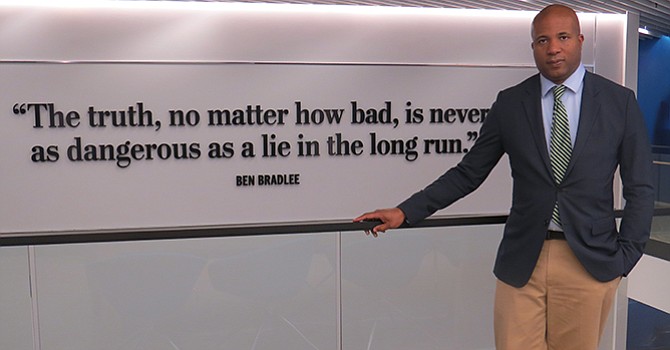
Entrevista a Derrick Gay: «Mayor diversidad en la educación privada»

23 Octubre 2016/Fuente: eltiempolatino/Autor: Miguel Guilarte

El doctor Derrick Gay habla sobre la mayor inclusión y nuevas oportunidades para los latinos

La diversidad, inclusión e igualdad de los estudiantes latinos en la educación privada es una realidad inminente en Estados Unidos, un país de inmigrantes y de características únicas en cuanto a su riqueza geográfica, racial, étnica y cultural.

Ofrecer una educación de calidad, sin discriminación y con un enfoque que considere la diversidad de identidades, necesidades y capacidades de las personas es hoy una meta de creciente importancia para administradores, profesores y padres en las escuelas privadas e independientes.

Y los latinos son un grupo clave por ser esa comunidad la minoría más grande del país.

“Sin dudas las escuelas privadas se están dando cuenta de la importancia de aumentar la diversidad, inclusión e igualdad y los estudiantes latinos son un grupo importante para ellos porque esa comunidad representará aproximadamente el 25 por ciento de la población para el año 2020”, dijo a El Tiempo Latino el doctor Derrick Gay, experto en educación y consultor, en una visita a la redacción en el edificio de The Washington Post, el lunes 17 de octubre de 2016.

Nacido en Chicago, Illinois, y residenciado en Nueva York, Gay es músico, doctor en educación, con 20 años de experiencia como maestro, administrador y consultor.

En los últimos seis años se ha dedicado a asesorar a escuelas privadas, católicas, públicas, chárter e independientes en Estados Unidos y en varios países en los que ha vivido y trabajado. “Tengo 20 años en el área de la educación. Empecé como maestro en la escuela independiente. Fui maestro de español, francés y música”, destacó.

En su dilatada experiencia, Gay ha profundizado en sus estudios sobre diversidad, igualdad e inclusión y sobre la necesidad de entender que aunque todas las personas son iguales, hay valores que las diferencian según el origen de la familia, las costumbres y la sociedad de la que forman parte.

“Hace unos seis años entendí cómo el tema de la diversidad era algo importante para las escuelas, aunque no había mucha programación que de alguna manera incluyera a toda la comunidad. Desde entonces estoy trabajando con estas organizaciones sobre cómo desarrollar un currículum que cubra todas las identidades para que más gente tenga acceso a una mejor educación”, expresó Gay, evidentemente convencido de que el respeto a lo diverso, las culturas y razas, son parte esencial de la educación y enseñanza que se deben inculcar a los estudiantes desde que son muy pequeños.

Gay admite que en la actualidad administradores, profesores, padres y estudiantes de la comunidad anglo están mostrando una mayor disposición para aceptar más a los hispanos.

“Creo que eso es así porque los latinos van a representar el 25 por ciento de la población para el 2020. Es por eso que se les está reconociendo cada vez más”, puntualizó. “Las escuelas están reconociendo que tener una comunidad con gente de todas las razas, grupos, religiones y clases sociales es algo que va a beneficiar a todos”, continuó.

Consultado sobre los aspectos más importantes en los que se debe enfatizar para un mayor acceso a la educación en estas escuelas, Gay asegura que hay que definir qué es diversidad.

Fuente de la entrevista: http://eltiempolatino.com/news/2016/oct/21/diversidad-inclusion-e-igualdad-en-la-educacion/

Fuente de la imagen: http://epmghispanic.media.clients.ellingtoncms.com/img/photos/2016/10/20/Derrick_Gayprincipal_t670x470.jpg?23a6cf1936a4889561e6226c97c290c4239edcb

Comparte este contenido:

EE.UU: Los estudiantes prefieren a los maestros de minorías sobre los maestros blancos

América del Norte/EE.UU/23 Octubre 2016/Fuente y Autor:univision

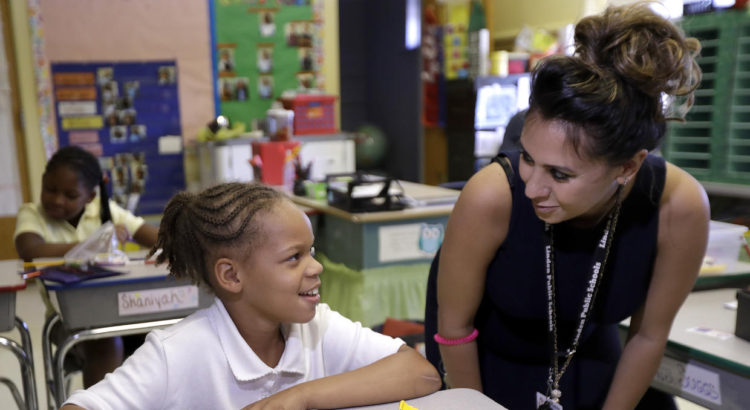
Un nuevo estudio halló que los escolares de intermedia y secundaria sienten que los maestros hispanos y negros se explican mejor y tienen una sensibilidad multicultural que los hace identificarse con ellos de una manera en que los blancos no pueden.

Los estudiantes de escuela intermedia y secundaria en EEUU prefieren a los maestros hispanos y negros antes que a los blancos, según un nuevo estudio llevado a cabo entre 50,000 escolares del país.

El estudio, publicado este mes en la revista científica Educational Researcher, halló que todos los estudiantes, independientemente de su origen étnico, «perciben más favorablemente a los maestros de minorías que a los maestros blancos».

«Puede que los maestros de minorías sean percibidos de manera más favorable por los estudiantes de minorías porque pueden servir como modelos a seguir y son particularmente sensibles a las necesidades culturales de sus estudiantes», dijo Hua-Yu Sebastian Cherng, autor del estudio y profesor adjunto de Educación Internacional de la Universidad de Nueva York (NYU).

«Sin embargo, en nuestro estudio lo que nos sorprendió fue hallar que no solo los estudiantes de minorías tienen más aprecio por los maestros de minorías que por los maestros blancos, sino que los estudiantes blancos también», agregó.

La necesidad de diversidad en las escuelas es importante porque estudios sobre el tema indican que los estudiantes que comparten experiencias, cultura o idioma con sus maestros se sienten más cómodos y los educadores tienen un impacto positivo en su desarrollo académico.

Sin embargo, esa diversidad no existe en las escuelas públicas del país, en donde solo el 18% del cuerpo docente proviene de minorías y la mitad de los estudiantes también, según cifras del Departamento de Educación.

Para su estudio los investigadores utilizaron una serie de encuestas llamadas Measure of Effective Teaching(MET) llevadas a cabo entre 1,680 maestros y 50,000 estudiantes en 200 escuelas urbanas del país, que les preguntaban a los alumnos sobre la percepción que tenían de los maestros y sus métodos lectivos.

La mayoría de los alumnos dio mejores calificaciones a los maestros latinos y afroestadounidenses que a los blancos en varios indicadores como la motivación, el control que mantienen sobre sus clases, la preocupación que demuestran hacia los estudiantes, la manera en que explican los conceptos y los relacionan unos con otros y la manera en que están abiertos a las opiniones de los chicos.

Los alumnos, por ejemplo, consideraron que los maestros latinos y negros eran más claros explicándose que sus colegas blancos.

Los maestros afroamericanos, según los estudiantes, también demuestran tener mayores expectativas para sus estudiantes que los maestros blancos, tienden a apoyarlos más y a proveerles mejores críticas constructivas.

«También hallamos pruebas mixtas en el sentido de que las percepciones de los estudiantes de minorías dependen de la raza/origen étnico de su maestro», agrega el estudio.

«Los estudiantes negros tienen percepciones particularmente favorables sobre los maestros negros, pero no ocurre lo mismo con los estudiantes latinos y los maestros latinos. Es más, hallamos que los estudiantes asiáticos también tienen percepciones particularmente favorables de los maestros negros», agrega el reporte.

Los investigadores creen que estas preferencias que demuestran los estudiantes por los maestros de minorías se deben en parte a que pueden relacionarse mejor con los chicos debido a sus experiencias multiculturales que muchos maestros blancos no tienen.

«Los maestros de minorías pueden usar sus experiencias e identidades para compenetrarse con los estudiantes que no comparten su misma raza o identidad étnica», dice el estudio.

Según Cherng, los hallazgos del estudio «subrayan la importancia de reclutar y retener a maestros de minorías» en las escuelas.

 Sin embargo, la tendencia a tener cada vez más maestros y administradores blancos no da indicios de revertirse en un futuro inmediato.

De acuerdo con un informe sobre diversidad publicado por el Departamento de Educación este año, los estudiantes que se están graduando con licenciaturas en educación y que probablemente se integren a la fuerza laboral como maestros son en su mayoría blancos (73%), mientras que los hispanos representan el 49% de ellos y los afroamericanos son el 42% de dicha población.

Fuente de la noticia: http://www.univision.com/noticias/docencia/los-estudiantes-prefieren-a-los-maestros-de-minorias-antes-que-a-los-blancos

Fuente de la imagen: http://cdn4.uvnimg.com/dims4/default/7205d96/2147483647/thumbnail/1240×698/quality/75/?url=http%3A%2F%2Fcdn1.uvnimg.com%2F9f%2F5b%2Ff91eecde4bcbadcb23cf90fc9804%2Fmanhattan-explosion-niev.jp

Comparte este contenido:

Estados Unidos: 2,000 Seattle Teachers Wear Black Lives Matter Shirts at School

América del Norte/Estados Unidos/Octubre de 2016/Fuente: Telesur

RESUMEN: Al menos 2.000 profesores de Seattle lucían camisas negras en las escuelas de toda la ciudad, el miércoles como parte de varias manifestaciones bajo la bandera de“Black Lives Matter at School” con el fin de presionar por la justicia racial en la educación en los Estados Unidos. El objetivo de la jornada fue para afirmar que «El Negro importa en las escuelas públicas», según los organizadores, que son educadores miembros de la igualdad social, un grupo de educadores dentro del sindicato de maestros de Seattle, informaron a The Seattle Times. La Profesora Diana Romero dijo al diario que decidió usar una camisa «para apoyar a nuestros hermanos y hermanas negros en apoyo a la justicia.» Añadió que como latina, que ella misma había sido testigo de un trato injusto y abuso contra los miembros de su comunidad por parte de la policía.

At least 2,000 Seattle teachers sported Black Lives Matter shirts at schools across the city Wednesday as part of several rallies under the banner of “Black Lives Matter at School” in order to push for racial justice in education in the United States.

The purpose of the day was to affirm that “Black lives matter in the public schools,” according to organizers, who are members of Social Equality Educators, a group of educators within the Seattle teachers union, The Seattle Times reported.

Teacher Diana Romero told the newspaper she decided to wear a shirt “to support our Black brothers and sisters in support for justice.” She added that as a Latina she had herself witnessed unfair treatment and abuse against members of her community by the police.

In addition to saying “Black Lives Matter” the shirts also made reference to Sandra Bland, the Black activist who was killed in police custody in Texas last year, by saying “#sayhername” which people used on social media to protest her death.

Other teachers wore said “Black Lives Matter” and “We Stand Together” T-shirts with an image of a tree. Rallies in some schools saw students and teachers as well as other staff holding banners and signs against police brutality and calling for racial justice in the country.

The rallies were not organized by the official school district. However, the rally coincided with Seattle Public Schools’ “day of unity,” also aimed at bringing more attention to racial equity in education.

The district said in a statement that it had asked students, family, staff and community members to “engage and join the conversation in our united efforts to eliminate opportunity gaps.”

Black Student Union was also part of the organizers of the rallies and its president, Precious Manning, said the gatherings and shirts represented several schools coming together in solidarity, according to The Seattle Times. “Black Lives Matter means making sure everyone is included,” she was quoted as saying by the newspaper.

The news comes amid a national debate in the country about racial injustice, racism and police brutality following several high-profile killings of Black people at the hands of white officers.

Fuente: http://www.telesurtv.net/english/news/2000-Seattle-Teachers-Wear-Black-Lives-Matter-Shirts-at-School-20161019-0026.html

Foto de archivo


Comparte este contenido:

Should you vote for Opportunity School District? Depends on how much you trust state’s charter school record.

By Maureen Downey

In this new essay from his blog, Apperson discusses reasons to vote for and against Amendment 1, the Opportunity School District.

Apperson graduated from New York University with a B.S. in finance and accounting and is pursuing a Ph.D. in economics from Georgia State University. I think both opponents and proponents of the Opportunity School District will consider this a fair analysis. Please note I could not reproduce the cool interactive charts Apperson created so I have repeated the link to his blog whenever he cites the charts. Go to Grading Atlanta to check out his charts.

In alerting me to his analysis, Apperson said, “I’m sure you are probably suffering from OSD fatigue at this point.”

While I’ve been hearing about the OSD from advocates and opponents on the front lines, I haven’t heard many “regular” Georgians raise the issue until this weekend when a half-dozen people asked me about it. I believe the blitz of pro and con TV commercials has increased awareness.  I even saw several yard signs around metro Atlanta.

With that, here is Apperson’s commentary:

By Jarod Apperson

Depending on which ad you’ve seen, Gov. Nathan Deal’s Opportunity School District is either a white knight coming to save public education or a headless horseman coming to pillage the state’s most vulnerable communities.

Such simplistic appeals are inevitable when the general population is asked to vote on an issue that is complicated and requires a great deal of background knowledge to engage with substantively.

As someone with expertise in this area, I feel comfortable saying that frankly we don’t know how this endeavor might turn out if it is approved. There is a real possibility the OSD will improve education, there is a real possibility it will have little impact, and there is a real possibility it will do harm.  An informed vote for or against the OSD depends on which of those possibilities you think is most likely and the extent to which you believe the state should take a risk.  Below I give my take on several key questions and lay out the best available evidence.  I will leave it to readers to weigh the evidence, which points in different directions, and reach their own conclusions about the OSD’s prospects.

What will the OSD do?

The gist: Turn over the management of selected schools from the local school district’s central office to a charter operator selected by an appointee of the Governor.

The detail: Voters will approve or deny the OSD by voting on Amendment 1, appearing on ballots statewide with the following language:

Provides greater flexibility and state accountability to fix failing schools through increasing community involvement. Shall the Constitution of Georgia be amended to allow the state to intervene in chronically failing public schools in order to improve student performance?

Anyone with knowledge of the OSD will recognize this statement fails to paint a clear picture of what the initiative hopes to do.  Based on this description, one could be forgiven for believing Amendment 1 hoped to raise student achievement by encouraging more community bake sales.  That’s not the plan.  But the overly genial language alone doesn’t mean it is a bad idea.

The authorizing legislation spells out more clearly the tools the state will have at its disposal when intervening in schools. They include managing the school directly, stipulating changes the local school district must make, shutting the school down, and selecting a charter organization to operate the school.  It is clear the governor’s preferred course is to select charter organizations to operate the schools, a model used in Louisiana and Tennessee, states that inspired the proposal.

Now that we are clear on what the OSD hopes to do, the most pressing question comes down to whether OSD-eligible schools will be better off or worse off managed by charter organizations. I’ll come back to that discussion in a moment, but first I want to talk a bit about the identification of OSD-eligible schools.

Does the OSD do a good job of identifying low-quality schools?

The gist: Sort of, but it more consistently picks up high-poverty schools than low-quality schools.

The detail: Each year, the state puts out a score it calls College and Career Ready Performance Index (“CCRPI”), which is mostly based on crunching standardized test scores different ways.  This metric forms the basis for schools being selected for the OSD. Any school that scores below a 60 for three years in a row becomes eligible.  One reasonable critique of CCRPI is it doesn’t do a very good job of comparing schools to their peers — other Georgia schools that serve similar students.

Instead, it systematically ranks schools with poor students low and schools with relatively rich students high.  In reality, there are low-quality and high-quality schools at all income levels. (See Apperson’s interactive chart here that presents a better measure of school quality and poverty for all schools in the state.  Highlighted schools are schools that rank in the bottom 6% (the share of Georgia schools that are OSD-eligible) of student growth relative to peer schools.

It is clear the variation in quality at the high-income end is just as wide as the variation at the low-income end. Because the OSD relies on CCRPI rather than the school quality measure presented above, schools deemed eligible tend to systematically be poor schools, rather than schools that have achieved the lowest academic gains relative to their peers. I have created the same chart of quality and poverty, but highlighted the OSD-eligible schools rather than the schools in the bottom 6%.

There is no school without at least 35% of students in poverty that qualifies for the OSD. In contrast, one out of every three schools with more than 60% of students in poverty is on the OSD list. So having a sizable share of poor students is essentially a prerequisite for being selected.  Still, the schools chosen do tend to be below average quality. They may not be the worst schools in the state (and some even have high growth!), but they average around the 28th percentile.

This discussion so far about school quality – as measured by both the CCRPI and my own approach – relies on test scores.  But we ultimately care about whether schools prepare students for successful lives, not whether they can score well on a bubble test at the end of third grade. That brings me to the next question.

Are standardized test scores good metrics for measuring school quality?

The gist: Generally yes, but not always.

The detail: Over the past five years, the relationship between test score gains and long run outcomes has been a topic of great academic interest.  The most compelling evidence suggests teachers and schools that are able to achieve high growth on test scores cause their students to succeed later in life. However, it is also possible for schools to raise test scores using means that do not impart the skills necessary for later success.

There have been three major papers presenting high-quality evidence that schools and/or teachers who are able to raise test scores ultimately cause their students to have better long run outcomes.  Chetty et al. (2014) shows that high-growth New York City teachers reduce teen childbearing, increase college going, and increase earnings at age 28. Dobbie &Fryer (2016) shows that a high-scoring Harlem school reduces teen pregnancy and incarceration rates. Argrist et al. (2016) finds that Boston charters able to raise test scores also increase four-year college going.

A fourth study finds more mixed evidence.  Dobbie &Fryer (2016) analyze Texas charter schools.  They find schools that negatively affect test scores also negatively affect four-year college enrollment and earnings (consistent with findings from the studies above). However, in contrast to the other evidence, schools that are able to raise test scores do not improve long-run outcomes.  One possible explanation the authors provide is that the high-scoring schools in the study may have focused too narrowly on tested skills, taking time away from the development of non-tested skills important for long-run success.

Collectively, these papers suggest test scores are a good proxy for whether schools and teachers are imparting the skills students will need to succeed; however, they also suggest it is possible for schools to achieve high scores without developing those skills.

If test scores are a meaningful measure of skill development and OSD-eligible schools do not now succeed at raising test scores (recall that they on average rank at the 28th percentile in quality), the logical next question is should we expect the schools to do any better if they were taken over by the OSD. Since the governor’s preferred intervention is to select charter operators, the answer hinges on the quality of those operators.

What is the evidence on how charter schools currently operating in Georgia affect standardized test scores?

The gist: Local charters are slightly above average, state charters are significantly below average, and within both groups there is a great deal of variation from school to school.

The detail: Georgia now has about 60 start-up charter schools that operate in grades tested annually (grades 3-8 take Milestones End of Grade Tests).  Before they opened, those schools were reviewed and approved by either the local school board (“Local Charters”) or the State Charter School Commission (“State Charters”).

On average, the charter schools now operating in Georgia are lower quality than traditional public schools. Much like traditional schools, the quality varies a great deal.  Some of the best schools in the state are charters.  Some of the worst schools in the state are charters. Go here to see the same chart of school quality and poverty we looked at before, but now local and state charters are highlighted.

If the OSD could ensure the charter operators it partnered with would achieve results similar to the four KIPP schools (all are 98 or above on the quality measure, compared to 28 for the OSD schools), voting for the amendment would be a no brainer.  But that is probably optimistic to say the least. Most charter applicants don’t come with a proven track record, making it tough for authorizers to ensure quality at the time charters are approved.

If instead, the OSD were to partner with schools similar to the average state-approved charter, schools taken over would likely end up achieving at even lower levels than they are today (State charters’ average quality is 12, even lower than the 28 for OSD schools).  For me, this uncertainty about quality is what causes the most skepticism of Amendment 1’s prospects.

Will the OSD charter operators be like the shining examples of what is possible (KIPP) or will they be subpar (like the average state charter)?

There are some reasons to believe the OSD charter partners will be more successful than state-approved charter schools. First, the funding will be higher. State approved charters are funded at a rate lower than most nearby traditional public schools, and they have to spend part of their funding on facilities. The OSD will fund schools like locally approved charters and give them facilities. Second, the OSD will be tasked with seeking out high-quality charter operators. Depending on how savvy the OSD leader is, he or she may find partners with proven track records elsewhere in the country.

On the other hand, there are reasons to believe the OSD charter partners will be of similar quality to the state-approved charter schools (i.e. worse than the OSD schools themselves). First, there is a limited pool of people capable of starting a high-quality charter.

If anything can be learned from the gap between the results from locally approved charters and state charters, it is probably that good charters tend to get approved locally. It takes an incredible amount of time and dedication to run a successful charter school.

My sense is the size of the high-quality charter school community is more constrained by the number of leaders capable of developing and implementing a strong plan than it is by local districts unfairly rejecting great proposals. If that’s indeed the case, the OSD will likely struggle to find great operators. Those out there are already opening local charter schools.  Second, it appears the OSD may be biting off more than it can chew.

The proposal would allow the OSD to take over up to 20 schools a year (the agency could elect to take over fewer schools). The scope of that potential undertaking is striking given there are only about 20 good charter schools in the whole state today and it took almost two decades to get here. The notion the OSD could open 20 schools of good quality in a single year seems tenuous. I would feel more comfortable if the plan was two per year, rather than 20.

At the end of the day, I think the governor has good intentions and wants to see the OSD-eligible schools improve for the kids who attend them. I don’t buy the narrative he is looking to exploit children to profit his friends (though I do think there are organizations out there who would like to profit from the initiative). I also believe there is plenty of room for improvement at OSD schools.

But I am less confident the OSD will partner with charter organizations capable of delivering that improvement.

If Georgia had a history of holding its charter schools to a high standard, I would feel more comfortable supporting Amendment 1. But with the mixed reality that exists today, supporting the amendment would require me to trust Georgia will raise the charter quality bar in the future, partnering with high-quality organizations.

If that is a risk you are willing to take, vote yes.

If instead you believe the state needs to demonstrate more consistent results from the charters already operating before taking on a new initiative, vote no.

This measure of school quality is the three-year average Student Growth Percentile, with controls for observable characteristics of the students at the school. School performance on this measure is then used to rank schools by percentile. Percentile ranks are helpful for intuitively discussing one school relative to others; however, they may overstate differences around the center of the distribution. Schools between the 40th and th 60th percentile in the state probably differ from each other in less dramatic ways than schools between the 80th and 100th percentile.  If you want to see more about how this is calculated, you can access the data and the STATA code here.

Tomado de: http://getschooled.blog.myajc.com/2016/10/16/should-you-vote-for-opportunity-school-district-depends-on-how-much-you-trust-states-charter-school-record/
Comparte este contenido:

EE.UU: ¿De dónde provienen los graduados más capacitados?

América del Norte/EE.UU./21 de octubre de 2016/mundo.sputniknews.com

Los graduados japoneses parecen ser los más capacitados, según ha puesto de manifiesto un reciente estudio de la Organización para la Cooperación y el Desarrollo Económico (OCDE).

La nación asiática es seguida por Finlandia y Países Bajos. Esa información sugiere que la reputación de la universidad no necesariamente refleja la capacidad de sus alumnos. Y es que el ranking QS World Universidad de 2016-17 nombra al Instituto de Tecnología de Massachusetts, Stanford y Harvard, como las mejores instituciones del mundo.

Andreas Schleicher, director de educación de la OCDE, asegura que a pesar de que los estudiantes de diferentes países cuentan con títulos similares, sus habilidades pueden variar enormemente.

«Cuando se trata de la educación avanzada, podría ser más útil alcanzar un grado de secundaria en Japón, Finlandia o Países Bajos que obtener un título de enseñanza media superior en Italia, España o Grecia», dijo Schleicher a la BBC.

Finlandia y Japón, de hecho, lideran el ranking PISA de la OCDE, en donde se comparan las normas de secundaria de todo el mundo.

Los países con los graduados más capacitados según la OCDE:

1. Japón

2. Finlandia

3. Los Países Bajos

4. Australia

5. Noruega

6. Bélgica

7. Nueva Zelanda

8. Inglaterra

9. Estados Unidos

10. República Checa

Tomado de: https://mundo.sputniknews.com/sociedad/201610201064256908-universidad-enseanza-educacion/

Comparte este contenido:

Latinos y chicanos rechazan a Colón rescatando sus raíces indígenas

En años recientes ha habido una creciente atención por la celebración de los pueblos indígenas, Vermont y la ciudad de Phoenix se han unido a la iniciativa de otros lugares para celebrar la diversidad de culturas que reinaba en el continente antes de la llegada de Cristóbal Colón.

«El liderazgo de la comunidad latina tiene una oportunidad única de descolonizarse con la celebración del día de los pueblos indígenas», escribe Adriana Maestas.

El día del descubrimiento o de Colón se celebra el segundo lunes de octubre cada año en Estados Unidos. Fue nombrado efeméride federal en 1937, por tanto una gran cantidad de oficinas gubernamentales no trabajan este día. Sin embargo, la conmemoración de feriados varía de un estado a otro y entre regiones, de hecho un par de estados no reconocen este feriado. Algunos estados y municipios han decidido conmemorar el segundo lunes de octubre como el día de los pueblos indígenas, con el fin de honrar a quienes habitaban el continente previo a la llegada de los europeos.

En años recientes ha habido una creciente atención por la celebración de los pueblos indígenas, Vermont y la ciudad de Phoenix se han unido a la iniciativa de otros lugares para celebrar la diversidad de culturas que reinaba en el continente antes de la llegada de Cristóbal Colón.

Los chicanos políticamente conscientes de ser mexicano-estadounidenses y los latinos que han sido instrumentales en el avance del reconocimiento de este día, en solidaridad con sus hermanos y hermanas nativos americanos, el cual cobra gran importancia cuando el gobierno pretende «hispanizar» a una comunidad de gran herencia nativa americana, a través de iniciativas como el mes de la herencia hispana.

El gobierno de la ciudad de Denver en Colorado nunca reconoció oficialmente la celebración, pero este año la ciudad propuso un reconocimiento permanente del día de los pueblos indígenas. Sin embargo, el estado de Colorado designa el día del descubrimiento como feriado oficial. Pude conversar con Paul López, un chicano concejal de Denver quien representa a 3 distritos. López nos habló acerca del día de los pueblos indígenas en el contexto del liderazgo chicano y latino.

«Denver no tiene el día del descubrimiento en sus libros. He trabajado con la comisión indoamericana de Denver sobre este asunto. Los chicanos y los mexicanos de Denver consideran que este es un tema importante, pues tiene que ver con nuestra identidad. Solo porque tengamos apellidos españoles o porque hablamos otro idioma no nos hace menos indígenas. Existe un honor inherente y un respeto por nuestras raíces. La historia indígena de Denver comienza con los Arapahoes y los Cheyenes en el río Platte”, afirmó López.

Asimismo, añadió que no ha recibido ningún pushback por su trabajo en el día de los pueblos indígenas y que la celebración de la herencia indígena no ofende a otros pueblos. En Los Angeles, Felicia “Fe” Montes, una artista y activista chicana, cofundadora del colectivo artístico «Mujeres de maíz», estuvo el pasado sábado en una celebración de los pueblos indígenas.

«Los chicanos y de la raza o aquellos de lo que conocemos como isla Tortuga (norte, sur y centroamérica), para nosotros es vital reconectarnos, reaprender y honrar nuestra herencia indígena, para que estemos más en sintonía con la madre Tierra y los elementos. En estos momentos, cuando el agua está en peligro, el cambio climático es inminente y los pueblos indígenas de todo el mundo están luchando por sus derechos humanos y sus sagradas tierras, debemos ser solidarios con ellos. Es momento de convertirnos en protectores de la tierra y de hacer un llamado a la verdad en todos los ámbitos», aseveró Montes.

«No queremos más la visión distorsionada de la Misión de California, no mas día del descubrimiento, no más mes de la hispanidad, en vez un mes de las Américas. Deberíamos honrar a los pueblos indígenas cada día, y la diversidad de la historia de todos y todas las naciones y culturas de las Américas».

El liderazgo de la comunidad latina tiene una oportunidad única de descolonizarse con la celebración del día de los pueblos indígenas. Aquellos que se reconocen como chicanos, ya tienden a reconocer su herencia indígena, pero el gobierno, los medios de comunicación tradicionales y los jugadores políticos continúan hablando del «voto bloque hispano», «la comunidad hispana», «los hispanos», etc., sin mencionar los arraigos profundos que tiene esta comunidad con las Américas.

La celebración del día de los pueblos indígenas, en lugar del día del descubrimiento, o del día de Colón, que solo fue un invasor agresivo y quien no fue el primero en descubrir las Américas, quien esclavizó a los nativos de las islas caribeñas, eso sería señal de que no estamos negando nuestra rica herencia indígena. También ayudaría a distinguir a los latinos indígenas de los latinos eurocentristas que son quienes frecuentemente hablan en nuestro nombre en los medios y en la escena política convencional.

Tomado de: http://www.telesurtv.net/opinion/Latinos-y-chicanos-rechazan-a-Colon-rescatando-sus-raices-indigenas-20161011-0043.html

Comparte este contenido:

EE.UU: Noam Chomsky Explains How He Was Banned From Mainstream Media

North American/USA/OCtober 21, 2016/libertyblitzkrieg.com/Por: Michael Krieger

Resumen: Dice el autor de esta nota refiere el documental de Noam Chomsky, denominado: En Búsqueda del Sueño Americano, el cual proporciona una hoja de ruta histórica de cómo se producen los cambios y que dictamina la política en los Estados Unidos, además de evaluar la naturaleza de los problemas ambientales que ocasiona algunas practicas indiscriminadas producto del consumismo mundial, Noam lo denomina como una eminente colisión con el desastre. Es esta nota también se plantean elementos que tienen que ver con la exposición conveniente de los medios de comunicación a la divulgación y denuncia de algunos temas, como: la guerra, la hambruna, la educación y el financiamiento de armas bélicas.

Noticia original:

I recently watched the 2015 Noam Chomsky documentary, Requiem for the American Dream, and it was excellent. I highly recommend everyone watch it since it provides a historical roadmap for how positive change happens. Lessons that we will all need to put into practice in the coming years if we want to take the world off its current collision course with disaster.

With Chomsky already on my mind, I was excited to see an article published yesterday at AlterNet titled, Noam Chomsky Unravels the Political Mechanics Behind His Gradual Expulsion From Mainstream Media.

Here’s what we learned:

Ralph Nader and leading linguist Noam Chomsky engaged in a much anticipated discussion in early October on Ralph Nader Radio Hour. The two raised questions about changing the media narrative in a totalitatian-like state, and how Chomsky got dismissed from the mainstream altogether. 

“How often have you been on the Op-Ed pages of the New York Times,” Nader asked Chomsky.

For Chomsky, the last time was over a decade ago.

“[I was asked] to write about the Israeli separation wall, actually an annexation wall that runs through the West Bank and breaking apart the Palestinian communities… condemned as illegal by the World Court,” Chomsky told Nader.

Chomsky would later pen a similar piece for CNN on the 2013 Israeli-Palestinian peace talks. But Chomsky has never been interviewed on the network; Nor has he appeared on NBC, ABC or CBS.

“How about NPR and PBS, partially taxpayer-supported.. more free-thinking and more tolerant [outlets]?” Nader wanted to know.

“I’ve been on ‘Charlie Rose’ two or three times,” Chomsky told Nader, adding that he had a curious story about a particularly Boston outlet for NPR based in Boston University.

“They used to have a program in their prime time news programs all things considered some years ago at 5:25… maybe once a week or so, a five-minute discussion with someone who had written a new book and there’s a lot of pressure,” Chomsky began.

NPR was going to allow Chomsky to present his book, “Necessary Illusions: Thought Control in Democratic Societies” (1989). 

“I  got a call from the publisher telling me when I should tune [in at 5pm] and I never listened [before], so I tuned in [and] there was five minutes of music… I started getting phone calls from around the country asking ‘What happened to the piece?’” Chomsky remembered.

He didn’t know.

“I then got a call from the station manager in Washington who told me that she’d been getting calls and she didn’t understand it because it was listed… she called back saying kind of embarrassed … that some bigwig in the system had heard the announcement at five o’clock and had ordered it cancelled,” Chomsky explained.

This is not what a free press looks like.

The irony of Chomsky’s media criticism being dismissed by the media is not lost on the former MIT professor, who remains constantly awed by America’s level of censorship. 

“Any one of the former Bush-Cheney warmongers like Paul Wolfowitz and John Bolton and others have gotten far more press after they’ve left federal positions; in the New York Times The Wall Street Journal the Washington Post,” Nader said.

And unlike Chomsky, “They’ve been on television public television, NPR and they have a record of false statements; they have record of deception, they have record of pursuing policies are illegal under our Constitution under international law and under federal statutes such as criminal invasion of Iraq and other adventures around the world,” Nader pointed out.

But the media problem permeates thouroughly throughout other industries, like education and government. 

“Now a society that operates in a way where propaganda is not only emanating from the major media but it gets into our schools, the kind of courses are taught, the content of the history, is a society that’s not going to be mobilized for its own survival, much less the survival of other countries whose dictators we have for decades supported to oppress their people,” explained Nader.

Below you can find Nader’s full interview of Chomsky as well as the trailer for the documentary, Requiem for the American Dream.

Taken from: https://libertyblitzkrieg.com/2016/10/13/noam-chomsky-explains-how-he-was-banned-from-mainstream-media/


Comparte este contenido:
Page 296 of 396
1 294 295 296 297 298 396