Page 387 of 396
1 385 386 387 388 389 396

Nick Sousanis: El cómic como escenario para la producción de conocimiento

El Espectador / 25 de Marzo del 2016

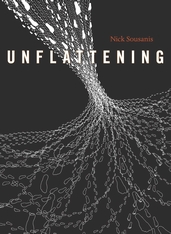
Unflattening, título que se puede traducir al español como «desaplanar», es un reciente ensayo filosófico en forma de cómics acerca de la percepción y la condición humanas. Escrito y dibujado por Nick Sousanis, se trata de un recorrido complejo que analiza distintas maneras de conocer e interpretar la realidad, a la vez que explora el lenguaje del cómic y sus posibilidades comunicativas. No en vano, cuando esta obra fue presentada como tesis doctoral en la Escuela de Pedagogía de la Universidad de Columbia, incluyó el subtítulo «Una investigación verbal-visual sobre el aprendizaje en muchas dimensiones».

Sousanis respondió esta entrevista desde su oficina en la Universidad de Calgary, en donde adelanta una beca posdoctoral en estudios de cómics.

¿Qué entiende por pensamiento visual?

Para mí es reconocer qué tanto usamos lo visual para comprender el mundo. Además, consiste en luego hacer que ello sea parte de nuestra forma de pensar, representar y comunicar esos pensamientos.

¿Por qué la alfabetización visual es relevante en la educación?

La alfabetización y el pensamiento en lo visual son expresiones que se suelen usar como sinónimos. Pero pienso que la alfabetización visual es importante porque internet y la tecnología nos llegan visualmente. Necesitamos poder decodificar y entender e incluso no ser engañados por esos nuevos medios. No podemos ser seducidos por su efectividad. Hace parte no sólo de un estudio formal, sino también como una forma de inocularse contra el espejismo de la imagen. La alfabetización visual nos enseña a ser mejores consumidores visuales. Y, además, a ser más reflexivos y a ser capaces de expresarnos con las mismas herramientas que consumimos. En algunas clases obligo a los estudiantes a dibujar así no sean artistas, porque creo que es importante estimular nuevas formas de trabajar que alteren la manera de pensar el conocimiento. No necesariamente para que todos los estudiantes sean artistas, pero sí para que todos usen herramientas visuales en su vida cotidiana.

¿Cuál es el papel que puede tener el cómic en la alfabetización visual?

Hablando de los medios multimodal, los cómics utilizan el intercambio de texto, pero además comunican a través de acciones, movimientos y formas. Incluso, el estilo personal de la línea también está cargado de sentido. En una obra como Asterios Polyp, de David Mazzucchelli, se ve la capacidad del cómic. En un nivel, parece un libro sencillo porque utiliza un paradigma de simplificación del dibujo, pero es capaz de expresar mucho con el color, las fuentes tipográficas y las demás elecciones que hace el autor.

El cómic le puede parecer simple a alguien que no sepa todos los niveles involucrados en su lectura. Pero al conocerlos se descubre que se trata de una experiencia de lectura compleja.

Exacto. Una parte de la palabra unflattening (desaplanar) tiene un significado frente a la educación, pero también significa qué tanto puede expresar el cómic. Puede parecer plano e inmediato, pero la manera de disponer las viñetas y el uso del color y la interacción entre el texto y la imagen permiten ofrecer más información de lo que parecería posible en una hoja de papel.

Es interesante analizar cómo en el libro están hilvanados tantos niveles de información.

Además, es un argumento a favor de lo interdisciplinario. No uso el término en el libro, pero mi propio recorrido profesional es muestra de eso. En alguna medida es una defensa del valor de abordar algo desde muchas perspectivas. Eso significó que en cada página del libro traté de abordar el tema desde distintos ángulos. Traté de encarnar la metodología de mi análisis. Si una página iba a hablar sobre Sherezada, también debía hacerlo de descubrimientos científicos. En realidad, cada idea viene de múltiples ideas, por eso es un libro difícil de categorizar.

En su trabajo se conjuga la academia y el arte. ¿Qué tan difícil es vivir en varios ámbitos profesionales y ser una especie de forastero en ambos mundos?

Siempre he sido un forastero y no lo veo como algo extraño. En la cultura hay un determinismo que implica que si una persona hace cierto tipo de trabajo debe actuar de cierta manera y no de otra. Me siento parte de la academia, pero, por ejemplo, encontrar trabajo es difícil porque, aunque mi trabajo ha sido muy bien recibido, en el fondo los departamentos son tradicionales y no saben dónde ubicarme. Me siento muy cómodo entre varios mundos. Un día estoy rodeado de artistas de cómic y el otro de académicos. Pienso que eso fortalece mi pensamiento.

Me da la sensación de que muchos académicos están interesados en encontrar nuevas formas de escribir, producir y difundir el conocimiento.

Sí, creo que se está transformando. No se trata de simplificar. Consiste en hacerlo más accesible, que no es lo mismo. De hecho, no me interesa usar los cómics para facilitar la lectura de temas complejos o como puerta de entrada a temas profundos porque quiero que esos nuevos textos también sean profundos y complejos.

¿Cuál es el papel de lo colaborativo en estos procesos?

En muchos casos, un investigador puede querer hacer cómics, pero no tiene el tiempo o el interés en aprender a dibujar. Hice una historieta para Nature junto a Richard Monastersky, y creo que él pensó que escribiría un guion para que yo lo dibujara. Pero desde el comienzo fui claro: no voy a dibujar cabezas parlantes. Teníamos que encontrar formas metafóricas y visuales de encarnar la información.

¿Cómo ve el futuro para el estudio de los cómics?

Ahora muchas universidades ofrecen cursos relacionados con cómics. Hay programas especializados en el tema en la Universidad de Oregón, en Estados Unidos, y en la de Dundee, en Escocia. Está creciendo, pero es difícil saber hacia dónde va. En algunos casos se estudia en departamentos de literatura, comunicación o retórica, pero incluso en disciplinas como medicina y arquitectura se usan o se enseñan. Existe un justificado temor de que asociar la historieta con una disciplina particular reduzca el análisis y se pierdan conexiones que son importantes. El mejor espacio para estudiar el tema es uno que sea interdisciplinario y que incluya a creadores. Es difícil prever el futuro, pero lo seguro es que cada vez se producen más investigaciones.

Fuente de la entrevista: http://www.entornointeligente.com/articulo/8149948/El-coacute;mic-produccioacute;n-de-conocimiento-25032016

Comparte este contenido:

Realidad virtual: la próxima gran revolución para la educación

SAN FRANCISCO/ 27-03.2016

Después de los videojuegos, la realidad virtual y sus cada vez más populares cascos podrían convertirse en la próxima e ineludible plataforma tecnológica e imponerse en las relaciones sociales, predicen expertos.

Con los ojos sumergidos en las imágenes que se proyectan a 360 grados, los usuarios de este aparato que se lleva en torno a la cabeza viven la experiencia como nunca: están en el corazón de un videojuego o una película, escalan las escarpadas montañas vietnamitas o nadan entre los arrecifes de coral australianos.

Más allá del aspecto lúdico, la realidad virtual puede servir además para dar clases a estudiantes del otro lado del planeta o para hacer reuniones de negocios con participantes dispersos en varios continentes.

Pionero en este campo, el casco Rift de Oculus será puesto a la venta a partir de abril a 599 dólares. Su llegada al mercado marca el inicio de la comercialización al público general de una tecnología muy cara y reservada hasta ahora a los profesionales.

En total, junto con la realidad aumentada, la realidad virtual representa un mercado que podría alcanzar los 120.000 millones de dólares en 2020. Para 2016, los analistas confían en ventas por unos 12 millones.

La realidad virtual ha sido el sueño de generaciones de fans de la ciencia ficción. Sin embargo, hasta hace poco, estos cascos futuristas eran de dominio exclusivo de laboratorios de investigación, como el de la interacción entre el hombre y realidad virtual de la Universidad de Stanford, en California: hasta 2014, sus investigadores utilizaban un casco de 40.000 dólares, tan pesado que les causaba dolor de cuello.

«Creo en la realidad virtual y estaba convencido de que podría ser extraordinaria, pero no todo el mundo compartía esa opinión. Era vista como una tecnología muerta», recuerda el inventor de Oculus Rift, Palmer Luckey.

En 2011, cuando tenía sólo 18 años, Luckey creó el famoso casco en el garaje de sus padres, en California, combinando imágenes y sonidos para convencer al cerebro de que está volando sobre una ciudad, por ejemplo.

En marzo de 2014, Palmer Luckey vendió su compañía a Facebook por 2.000 millones de dólares. Oculus Rift ahora juega en las mismas ligas que los gigantes Google, Samsung y Sony.

Aunque la mayor parte del contenido de realidad virtual aún está dedicado a los videojuegos, esta tecnología tiene potencial para tener éxito en campos tan diversos como la arquitectura, el entrenamiento militar o el turismo.

Naciones Unidas ya ha producido una película para realidad virtual en un campamento de refugiados sirios para que esta trágica realidad sea accesible a todos.

Y en Stanford, los investigadores hicieron una película dentro de un arrecife de coral para poner de relieve los efectos de la contaminación humana en estos frágiles ecosistemas.

Estos cascos tienen el potencial de transmitir más empatía, tanto en adultos como en niños, explica Jeremy Bailenson, cofundador del laboratorio de la Universidad de Stanford.

Los peligros del uso en exceso de esta nueva tecnología también plantean algunas cuestiones éticas: «¿Al ver porno ofrece la misma satisfacción que tener relaciones sexuales? ¿Cómo afecta a la reproducción?», se pregunta Bailenson.

Por ahora, Palmer Luckey desea mejorar Oculus Rift y bajar el precio de venta para que «vaya mucho más allá de un simple juguete».

«Esto va a ser el próximo, y último, smartphone. Tan pronto como llegue la realidad virtual perfecta, no habrá razón para crear nada más», pronosticó el joven inventor. «La gente se estará continuamente yendo y viniendo del mundo real al virtual»

Fuente de la noticia: http://www.nacion.com/tecnologia/realidad-virtual-educacion-oculus_0_1551044968.html

Comparte este contenido:

EE.UU: California aprueba de manera fulminante una subida sin precedentes del salario mínimo

Una propuesta de ley de los sindicatos obliga a las instituciones a pactar
en dos semanas la mayor subida estatal de Estados Unidos

LosAngeles/EE.UU/ElPais/1 de abril de 2016/Por: Pablo Ximenez de Sandoval

Partidarios de la subida celebran la aprobación en el Capitolio. AP

15 dólares por hora: la pugna por los salarios toma fuerza en Estados Unidos

Hace solo un mes se consideraba imposible. Pero en apenas dos semanas,
California ha aprobado la subida del salario mínimo más grande de Estados
Unidos, un 50% en los próximos seis años. La subida a 15 dólares la hora es
una reivindicación de los sindicatos y del ala más izquierdista del Partido
Demócrata y es considerada un peligro para la economía y la creación de
empleo por parte de los republicanos y casi todas las organizaciones
empresariales.

California se convierte en el primer estado en adoptar los 15 dólares la
hora,

una
cantidad que ya había sido puesta en marcha por grandes ciudades como Los
Ángeles o San Francisco. Ahora, afectará a 38 millones de personas en el
estado más poblado del país y la economía más desarrollada de Estados
Unidos. Cuando Los Ángeles aprobó esta subida

el
año pasado se convirtió en el laboratorio más grande de EE UU
para ver
los efectos de la medida. Ahora todo California es el laboratorio, tras una
reacción fulminante de sus políticos e impensable hace solo un mes.

La razón de que se haya aprobado tan deprisa está en el particular sistema
de democracia directa de California, uno de los más extremos del mundo
junto con el de Suiza. Los sindicatos habían planteado dos propuestas
diferentes que se dirigían sin remedio hacia la votación en las próximas
elecciones presidenciales de noviembre. La semana pasada, los sindicatos
anunciaron que una de las propuestas ya tenía las firmas necesarias para
ser enviada a votación. Las encuestas indican un amplio apoyo popular a
esta medida. Inmediatamente, el gobernador y los líderes del Legislativo se
sentaron a negociar una propuesta de ley alternativa para evitar ser
atropellados en las urnas.

La posibilidad de renegociar una medida popular solo existe en California
desde el año pasado. Las normas de la iniciativa directa se cambiaron a
propuesta del Instituto Berggruen, de forma que los proponentes de una
iniciativa pueden retirarla si sus demandas tienen respuesta por parte de
los legisladores.

A partir de ese momento, los acontecimientos se han sucedido a toda
velocidad. El pasado lunes, 28 de marzo, la oficina del gobernador Jerry
Brown y los líderes del Legislativo anunciaban un acuerdo con los
sindicatos para matizar la propuesta. Este jueves por la mañana, el
proyecto ha sido aprobado en la Asamblea de California. Por la tarde lo ha
aprobado el Senado e inmediatamente la oficina del gobernador ha enviado un
comunicado diciendo que ratificará la ley el lunes en un acto en Los
Ángeles.

Con el acuerdo enmendado, la subida se va a realizar de forma un poco más
escalonada (en seis años en lugar de cinco) y se añaden algunas
excepciones, como dar un año más a los pequeños negocios. Además, el Estado
podrá suspender la subida en un mal año económico. A partir de 2022, el
salario mínimo quedará indexado al coste de la vida.

La votación en el Capitolio de Sacramento, la capital de California, se
realizó entre gritos de “¡sí se puede!”, el lema con el que César Chávez
movilizó a los jornaleros en los años sesenta y creó el mayor sindicato
agrario de California. Justamente, hoy es el día de recuerdo de César
Chávez en Estados Unidos.

El salario mínimo a nivel nacional

se
mantiene en 7,25 dólares la hora desde 2009, una cantidad que en las
grandes ciudades ha generalizado el problema de los trabajadores pobres, es
decir, gente que trabaja a tiempo completo 40 horas a la semana o más y
tiene que vivir de la beneficencia. Dignificar el salario mínimo es la gran
reivindicación de los sindicatos de Estados Unidos, especialmente los de
hostelería y agricultura, y de la izquierda del Partido Demócrata. En
California era hasta ahora de 10 dólares la hora, uno de los más altos del
país a nivel estatal.

Los sectores más afectados por la subida del salario mínimo son tiendas y
hostelería, que entre los dos tienen un 30% de la fuerza laboral que cobra
el salario mínimo, según un estudio de la Universidad de California en
Berkeley. En total, 5,6 millones de trabajadores se verán afectados, con
una subida media anual en sus ingresos de 3.700 dólares. El 55% de los
trabajadores afectados son latinos.

La velocidad a la que se ha resuelto este asunto ha dejado a superado las
expectativas de todos los políticos. Hasta hace pocos días, el alcalde de
Los Ángeles estaba en campaña para animar a las ciudades vecinas del
condado a que subieran el salario mínimo como ha hecho su Administración.

La medida llega además en medio del debate de primarias del Partido
Demócrata, cuyos candidatos tienen visiones distintas en este asunto. Para
Bernie Sanders, la subida en todo el país a 15 dólares es uno de sus
eslóganes de campaña. Convertir el salario mínimo en un “salario digno” es
una de sus medidas para cerrar la brecha de desigualdad en Estados Unidos.
Hillary Clinton, sin embargo, propone que la subida sea a 12 dólares la
hora y “apoya” los esfuerzos de estados y municipios para ir más allá. La
aprobación desactiva este debate en California, donde los votantes se
podían haber encontrado en la misma papeleta la elección de presidente con
el sí o no a la subida.

Fuente:
internacional.elpais.com/internacional/2016/04/01/actualidad/1459464108_314770.html
tras

California aprueba de manera fulminante una subida sin precedentes del
salario mínimo

Una propuesta de ley de los sindicatos obliga a las instituciones a pactar
en dos semanas la mayor subida estatal de Estados Unidos

LosAngeles/EE.UU/ElPais/1 de abril de 2016/Por: Pablo Ximenez de Sandoval

Partidarios de la subida celebran la aprobación en el Capitolio. AP

15 dólares por hora: la pugna por los salarios toma fuerza en Estados Unidos

Hace solo un mes se consideraba imposible. Pero en apenas dos semanas,
California ha aprobado la subida del salario mínimo más grande de Estados
Unidos, un 50% en los próximos seis años. La subida a 15 dólares la hora es
una reivindicación de los sindicatos y del ala más izquierdista del Partido
Demócrata y es considerada un peligro para la economía y la creación de
empleo por parte de los republicanos y casi todas las organizaciones
empresariales.

California se convierte en el primer estado en adoptar los 15 dólares la
hora,

una
cantidad que ya había sido puesta en marcha por grandes ciudades como Los
Ángeles o San Francisco. Ahora, afectará a 38 millones de personas en el
estado más poblado del país y la economía más desarrollada de Estados
Unidos. Cuando Los Ángeles aprobó esta subida

el
año pasado se convirtió en el laboratorio más grande de EE UU
para ver
los efectos de la medida. Ahora todo California es el laboratorio, tras una
reacción fulminante de sus políticos e impensable hace solo un mes.

La razón de que se haya aprobado tan deprisa está en el particular sistema
de democracia directa de California, uno de los más extremos del mundo
junto con el de Suiza. Los sindicatos habían planteado dos propuestas
diferentes que se dirigían sin remedio hacia la votación en las próximas
elecciones presidenciales de noviembre. La semana pasada, los sindicatos
anunciaron que una de las propuestas ya tenía las firmas necesarias para
ser enviada a votación. Las encuestas indican un amplio apoyo popular a
esta medida. Inmediatamente, el gobernador y los líderes del Legislativo se
sentaron a negociar una propuesta de ley alternativa para evitar ser
atropellados en las urnas.

La posibilidad de renegociar una medida popular solo existe en California
desde el año pasado. Las normas de la iniciativa directa se cambiaron a
propuesta del Instituto Berggruen, de forma que los proponentes de una
iniciativa pueden retirarla si sus demandas tienen respuesta por parte de
los legisladores.

A partir de ese momento, los acontecimientos se han sucedido a toda
velocidad. El pasado lunes, 28 de marzo, la oficina del gobernador Jerry
Brown y los líderes del Legislativo anunciaban un acuerdo con los
sindicatos para matizar la propuesta. Este jueves por la mañana, el
proyecto ha sido aprobado en la Asamblea de California. Por la tarde lo ha
aprobado el Senado e inmediatamente la oficina del gobernador ha enviado un
comunicado diciendo que ratificará la ley el lunes en un acto en Los
Ángeles.

Con el acuerdo enmendado, la subida se va a realizar de forma un poco más
escalonada (en seis años en lugar de cinco) y se añaden algunas
excepciones, como dar un año más a los pequeños negocios. Además, el Estado
podrá suspender la subida en un mal año económico. A partir de 2022, el
salario mínimo quedará indexado al coste de la vida.

La votación en el Capitolio de Sacramento, la capital de California, se
realizó entre gritos de “¡sí se puede!”, el lema con el que César Chávez
movilizó a los jornaleros en los años sesenta y creó el mayor sindicato
agrario de California. Justamente, hoy es el día de recuerdo de César
Chávez en Estados Unidos.

El salario mínimo a nivel nacional

se
mantiene en 7,25 dólares la hora desde 2009, una cantidad que en las
grandes ciudades ha generalizado el problema de los trabajadores pobres, es
decir, gente que trabaja a tiempo completo 40 horas a la semana o más y
tiene que vivir de la beneficencia. Dignificar el salario mínimo es la gran
reivindicación de los sindicatos de Estados Unidos, especialmente los de
hostelería y agricultura, y de la izquierda del Partido Demócrata. En
California era hasta ahora de 10 dólares la hora, uno de los más altos del
país a nivel estatal.

Los sectores más afectados por la subida del salario mínimo son tiendas y
hostelería, que entre los dos tienen un 30% de la fuerza laboral que cobra
el salario mínimo, según un estudio de la Universidad de California en
Berkeley. En total, 5,6 millones de trabajadores se verán afectados, con
una subida media anual en sus ingresos de 3.700 dólares. El 55% de los
trabajadores afectados son latinos.

La velocidad a la que se ha resuelto este asunto ha dejado a superado las
expectativas de todos los políticos. Hasta hace pocos días, el alcalde de
Los Ángeles estaba en campaña para animar a las ciudades vecinas del
condado a que subieran el salario mínimo como ha hecho su Administración.

La medida llega además en medio del debate de primarias del Partido
Demócrata, cuyos candidatos tienen visiones distintas en este asunto. Para
Bernie Sanders, la subida en todo el país a 15 dólares es uno de sus
eslóganes de campaña. Convertir el salario mínimo en un “salario digno” es
una de sus medidas para cerrar la brecha de desigualdad en Estados Unidos.
Hillary Clinton, sin embargo, propone que la subida sea a 12 dólares la
hora y “apoya” los esfuerzos de estados y municipios para ir más allá. La
aprobación desactiva este debate en California, donde los votantes se
podían haber encontrado en la misma papeleta la elección de presidente con
el sí o no a la subida.

Fuente:
internacional.elpais.com/internacional/2016/04/01/actualidad/1459464108_314770.html

Comparte este contenido:

Maestros de Chicago protestan por recortes a la educación.

www.laopinion.com/01-04-2016/

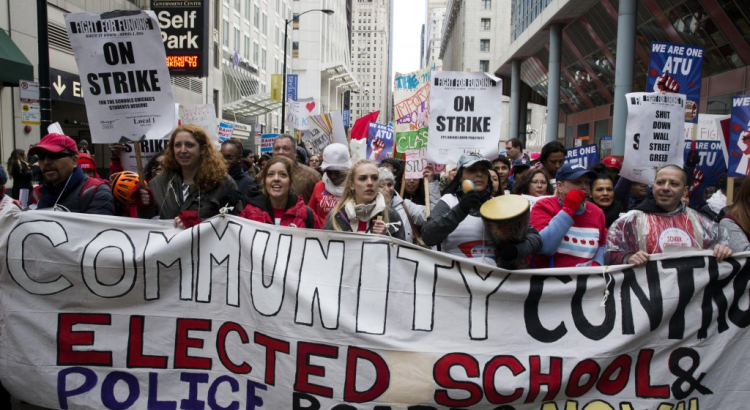
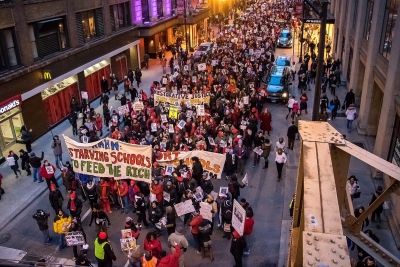
Maestros y estudiantes de Chicago celebraron hoy un «Día de Acción» contra los recortes a la educación

CHICAGO, Illinois- Cientos de personas, entre miembros de sindicatos laborales y estudiantes de secundarias y universidades de Chicago, marcharon hoy en el centro y en diversos puntos de la ciudad en apoyo a los cerca de los 21 mil maestros que están luchando por una renovación de contrato y también para pedir un alto en los recortes a la educación.

La Unión de Maestros de Chicago (CTU) celebró hoy el “Día de Acción” con una huelga en contra de los recortes a la educación, durante la cual alegaron que la ciudad va a paso lento para lograr un acuerdo con los maestros que han estado trabajando sin contrato desde que su contrato de tres años expiró en junio pasado.

Los manifestantes procedentes de diversas escuelas públicas de la ciudad, que llevaban pancartas que decían “En huelga” o “Salva a nuestras escuelas”, entre otras, pidieron además el apoyo del público en general.

“Estamos en huelga hoy no solamente por la educación porque están haciendo recortes a los programas educativos, pero también por todos los trabajadores que necesitan salarios justos y en contra de los recortes del estado”, manifestó la maestra Edith Escarpita.

La Unión de Maestros de Chicago (CTU) celebró hoy el "Día de Acción" con una huelga en contra de los recortes a la educación. Foto: EFE
La Unión de Maestros de Chicago (CTU) celebró hoy el “Día de Acción” con una huelga en contra de los recortes a la educación. Foto: EFE

Maestros y estudiantes de las primarias y secundarias de la “Ciudad del Viento” marcharon desde los barrios mayoritariamente hispanos de Pilsen y La Villita hasta el complejo de cárceles del condado Cook donde gritaron sus consignas e hicieron sus reclamos en contra de los recortes del estado a la educación.

“Subsidia a la Educación. No a las Prisiones”, decía el cartel de un manifestante frente a la cárcel.

También, en tres universidades de la ciudad se llevaron a cabo otros eventos de apoyo a los maestros y a los sindicatos que están luchando por mejoras salariales.

Igualmente hubo protestas en contra de los despidos como es el caso en la Universidad Estatal de Chicago, en donde a partir de la próxima semana la administración empezará a despedir a decenas de empleados y profesores después de la negativa del gobierno estatal de proveer con unos 27 millones a la institución académica.

Hasta hoy, el gobernador de Illinois, el republicano Bruce Rauner, rehúsa otorgar los 400 millones de dólares en ayuda a las Escuelas Públicas de Chicago a menos que los demócratas aprueben su agenda.

Varios sindicatos afiliados a la campaña “Lucha Por $15” y otras uniones de trabajadores también marcharon junto a los maestros mostrando su apoyo al “Día de Acción”.

Comparte este contenido:

Chicago Strikes Again

Labornotes/Abril 2016

It’s not a general strike—not yet, anyway. But April 1 is shaping up to be a big moment for the Chicago labor movement, and once again, teachers are leading the charge.

The Chicago Teachers Union will strike for a day against a double standard. While the city scrupulously honors its deals with the big banks, it’s threatening to unilaterally violate the teachers’ contract and slice their pay—along with the rest of the budget for city schools.

CTU won’t be alone on the picket lines. Dozens of community groups and at least eight unions have signed on to join the day of action, all victims of the slash-and-burn budgeting that’s left Chicago “broke on purpose.” They’re part of an emerging coalition that’s drawing the line between the titans of finance and the needs of the city’s working people.

Last year they forced “Mayor 1%” Rahm Emanuel into Chicago’s first-ever runoff for a sitting mayor. Later protesters disrupted the lucrative Christmas shopping season after allegations emerged that, to protect Emanuel’s reelection bid, the city had covered up video of a police officer killing African American teenager Laquan McDonald. And in March, thousands of Chicago protesters shut down a rally for spiteful billionaire turned presidential candidate Donald Trump.

This year’s Labor Notes Conference kicks off at a hub of resistance, where organized people are building the power to take on organized money.

BLAME GAME

The anger—and the organizing—in Chicago come not a moment too soon. A one-sided class war has funneled almost an entire generation of economic growth to the CEOs, the bankers, and the billionaire class.

Even retirees who worked for decades to earn their pensions are forced into a lopsided battle to stop their nest eggs from being snatched away. Politicians would rather gut public services and public sector jobs than tax the billions in profit that corporations like Boeing, Verizon, General Motors, and General Electric are raking in.

Employers are pointing fingers to make sure the rest of us don’t pick up the pitchforks. Teachers and bus drivers, they say, are bankrupting your city and taxing you out of house and home. If you don’t have a pension and good health care, why should they?

Such divide-and-conquer tactics are out front this election season. Supposedly it’s immigrants, or workers in Mexico or China, who are taking your job. But whether this tired line is coming from the boss or from a CEO con artist with a bad comb-over, the game plan is as old as the need for unions to counter bigotry with solidarity.

Real blame lies squarely at the feet of corporations like Walmart and trade deals like the Trans-Pacific Partnership that are steamrolling good jobs—here and abroad—and the unions that fought for them.

In February, West Virginia became the 26th so-called right-to-work state, following Wisconsin, Michigan, and Indiana. The death of Supreme Court Justice Antonin Scalia brought only a temporary reprieve from the looming threat of open-shop conditions in the public sector, too. The Friedrichs v. California Teachers Association case is delayed, not dead. Meanwhile Friedrichs-style lawsuits sprout up at the state level, as in a recent case against New York’s Public Employees Federation.

Anti-union forces are ready for open-shop America. They’re already training their sights on their next target: unions’ right to exclusively represent a bargaining unit.

RIPPLES OF RESISTANCE

But there’s a bright spot—a stubborn note of resistance in the country’s political mood, evident in the surprising momentum of underdog Bernie Sanders’ campaign for president.

Plenty of union members are also fed up with the status quo. Last fall, for example, Chrysler workers sent the Auto Workers top brass back to the bargaining table, voting no 2 to 1 on a contract that would have cemented their two-tier wage scale.

New hires started at $15.78 an hour, just over half the pay for “legacy workers.” The union had taken the hit in 2007, when two-tier was sold as a salve for the flagging automaker. But by last year, the revived company was making millions—and the second tier had ballooned to 45 percent of the workforce. Thanks to the grassroots revolt, union tops returned with an improved settlement that put most second-tier workers on a path to top pay.

The same spirit roiled Teamsters who haul cars from auto plants to dealerships, who voted down a concession-ridden agreement by 87 percent in October, and mechanics at railroad giant CSX, who in December nixed a job-killing pact by an 8-to-1 vote.

Some unions hit the picket lines to beat back concessions. Steelworkers at Allegheny Technologies endured a six-month lockout rather than let the company gut their contract. Wisconsin’s Kohler factory workers struck for a month against two-tier wages and health care cost-shifting, winning a partial victory that narrowed the gap between the tiers.

Thankfully, more unions are reaching for labor’s oldest weapon, and not just as a last resort. Chicago movers at Golan’s struck for six months to win their first contract, reaching an agreement last year. In November, a small band of IKEA workers struck for recognition.

To protest funding shortfalls, teachers in Washington state staged rolling strikes, culminating in a week-long walkout in September by Seattle educators who demanded, among other things, that kindergartners get at least a half-hour of recess. In the same spirit, teachers in Detroit staged rolling sickouts to protest mice, mold, and crumbling classrooms under their governor-appointed “emergency manager.”

Inside unions, the same spirit of resistance continues to boost reformers running for office, like the professional flight attendants who unseated a management-friendly president last fall and elected a rank and filer to replace her. Teachers and Teamsters alike are seeking out leaders who aren’t afraid to fight the boss. And unions from janitors in the Twin Cities to nurses in New York are proving that, especially when the community has our back, we can win.

THE CHICAGO MODEL

If a comeback is in the cards, some of the essential ingredients are bubbling up in Chicago.

  • Place the Blame on Wall Street: Since new leaders took office in 2010, the Chicago Teachers Union has told the world how Wall Street and the country’s biggest corporations have teamed up to rip off the city and drain millions from public services.Now more and more public sector unions around the country are doing the same. They’re pushing for state and local governments to renegotiate sweetheart loans that are lucrative for the banks, and proposing taxes to target corporations and the 1%.
  • Line Up with Those Ready to Fight the Status Quo: With union density hovering just over 11 percent, finding allies has evolved from a good idea to a necessity. Chicago is an example of what’s possible through coalitions, both inside and outside the labor movement.To their credit, these folks haven’t waited till they could convince the most timid within the House of Labor. They’re clear they’re building a coalition of those willing to upset the apple cart, even if that starts with a handful.
  • Every Movement Needs Infrastructure: Key unions in Chicago, most notably the Service Employees local, Healthcare Illinois-Indiana and the Teachers, created first the community-labor coalition Stand Up Chicago and then the independent political organization United Working Families.When unpredictable sparks flared up—like the Occupy movement and Black Lives Matter—these organizations were there to help meet concrete needs like space and funding, and to act as bridges to institutions and other activist networks.
  • You Lose More than You Win: Since winning their 2012 strike, Chicago teachers have seen 50 schools closed and thousands of educators pink-slipped. They weren’t able to unseat Emanuel. United Working Families won only three of the nine city council seats where it challenged incumbents.But the unions and community groups involved in the April 1 actions have grown even more committed to the strategy of confrontation, recognizing the historical lesson that breakthroughs usually follow a series of defeats. After all their setbacks, 88 percent of all Chicago teachers voted to authorize another strike.
  • Rooted in Real Power: None of this was possible without the organization and ownership of their union that rank-and-file Chicago Teachers have achieved, on a scale few other unions in recent decades have matched.The foundation is old-fashioned organizing—finding leaders in every worksite, identifying issues members care about, and moving co-workers into action. Those are the skills we highlight in our newest Labor Notes book, Secrets of a Successful Organizer, out April 1.

But building power goes beyond good tactics and technique. Unionism at its core is about taking action together.

In too many unions, officers or staff present members with: “Here’s the plan. Are you in, or are you out?” The Chicago Teachers continue to show how much better the results are when you involve everyone in the process that leads you there.

Members go to the mat because they care about what’s at stake and feel like it’s their fight. They’re part of the team steering the ship, from the shop floor to union-wide activities. The choice to be “in or out” evaporates when everyone was “in” from the beginning.

Anyone can tell when they’ve got a real say over what happens, versus just backing someone else’s plan. Chicago is proof positive of one of Labor Notes’ enduring themes—that unions need a «political revolution» too.

Comparte este contenido:

Manifesto por la Paz

El Manifiesto por la Paz que escribiera hace dos meses el Dr. Carlos Alberto Torres Presidente del Consejo Mundial de Sociedades de Educación Comparada lo colocamos hoy a disposición de investigadores, docentes y público en general . Señaló Torres que se iba a crear una Task Force for Peace Education en el Consejo Mundial ya que hay mucha gente interesada. 
A continuación pueden leer la carta en ingles en el siguiente enlace:
A Peace Education Manifesto and the role of WCCES
From the desk of WCCES President Carlos Alberto Torres
Dear colleagues of societies of Comparative Education and Members of the Executive Committee.
“I am not impartial or objective; not a fixed observer of facts and happenings. I never was able to be an adherent of the traits that falsely claim impartiality or objectivity. That did not prevent me, however, from holding always a rigorously ethical position. Whoever really observes, does so from a given point of view. And this does not necessarily mean that the observer position is erroneous. It’s an error when one becomes dogmatic about one’s point of view and ignores the fact that, even one is certain about his or her point of view, it does not mean that one’s position is always ethically grounded.” (Paulo Freire)
Our age of global interdependence is being marked not only by the dialectics of the global and the local that we will discuss in Beijing, but also by the dialectics of terrorism and anti-terrorism. I am writing to you as President of WCCES but also as a victim of state terrorism in Argentina that forced me to exile. I would like to invite the WCCES to a dialogue about our moral responsibilities.
Paulo Freire taught us that domination, aggression and violence are intrinsic parts of human and social life. He argued that few human encounters are exempt from one type of oppression or another. By virtue of race, ethnicity, class and gender, people tend either to be victims or perpetrators of oppression. Thus, for Freire, sexism, racism, and class exploitation are the most salient forms of domination. Yet exploitation and domination exist on other grounds including religious beliefs, political affiliation, national origin, age, size, and physical and intellectual abilities, to name just a few. His vision was prophetic.
We are a professional organization with multiple goals including enhancing global understanding, improving access and quality of education and operation of the educational systems. Most of us are interested in developing and applying models, 2 methods, and theories for the field of comparative education to serve the betterment of children, youth and adults as well as communities and nations.
I have spent my whole academic life developing theories and analyses or conducting empirical research to promote global citizenship education working from Critical Theory in the politics of liberation. However, we cannot dialogue with violence. We cannot tolerate systematic violence against human rights and our existing civilizations, against common people in the streets, going to a market in Lebanon, returning home to Russia after vacations or massacred in restaurants, hotels and theaters like in Paris and Bamako.
Violence and terrorism are being inextricably connected with politics and religion in this globalized world. Violence that exists from Lebanon to a plane downed in the Sinai desert or to Paris, the city of which Thomas Jefferson, a strong supporter of the French Revolution argued that every citizen in the world has two capitals, their own and Paris. There is violence infecting us from Israel to Gaza, to Libya, Chad, Egypt, Tunisia, Afghanistan, Mali, Yemen, Turkey, Belgian and various regions of Middle East, North Africa, Sub-Saharan Africa and Central Asia. The violence that is gaining ground in America with the tragedy of students being slaughtered in Mexico, people being the subject of street violence in Brazil and Argentina, in Central America home of many of the most violent cities in the world and gang terror, with black lives that seem no matter to some in the USA. Not to mention the violence against our environment. The list is long. Violence should stop and peace should prevail. The recent terrorist acts that shocked the globe in Lebanon, the Sinai Peninsula, Nigeria, Paris and Bamako are simply another culmination of a long list of terrorist actions against democracy, humanism, pluralism, multiculturalism and the reign of reason. These violent acts should move us deeply both professionally and in terms of human interest. I convoke all of you today to react with a unanimous voice even though I am sure there are different perspectives, and different analysis of what is going on. Hence I do not expect people to wholesale agree with my analytical and normative perspective. But we should find a minimum common denominator to protect peace in the world. As comparative educators we have no other choice.
There are many faces of globalization, but particularly two that apply to this discussion: the globalization of anti-terrorism and terrorism going global. There is a manifestation of globalization, which extends beyond markets, and to some extent is against human rights. It is globalization of the international war against terrorism. This new form of globalization has been prompted in large part by the events of September 11th 2001— which were interpreted as the globalization of the terrorist threat— and the reaction of the United States to the event. This form of globalization is represented by the anti-terrorist response, which has been militaristic in nature, resulting in two coalition wars led by the US against Muslim regimes in Afghanistan and Iraq, under the auspices of the Global War Against Terror.
Islamophobia is also a theme of this globalization. Terrorism and the terrorist threat were made synonymous with Islam and Muslims, and became a global norm. Yet, the overall theme of this process was not only its military flavor, but also the emphasis on security and control of borders, people, capital, and commodities—that is, the reverse of open markets, high-paced commodity exchanges, and international understanding of “the other.” Security as a precondition of freedom is a key theme of this form of globalization.
There is another form of globalization namely the globalization of terrorism, which is well represented by the decaying Al Qaida network, with terrorist actions of many kinds and the more virulent example of ISIS and Boko Haram and their attempt to move the world to an apocalyptic war of unexpected proportions as a new Crusade. Examples of these actions include Boko Haram’s kidnapping of 300 girls from a Christian school in Nigeria, forcing them to convert to Islam and having them forcefully married to fighters. Another example is the growing consolidation of ISIS in the Middle East providing a platform, a kind of sacred fire for youth who are disaffected and marginalized with modernity and Western practices. Thousands of youths have flown to Iraq and Syria to fight for what they believe is their sacred cause of social change, leading to the establishment of a new Caliphate in the Levant and Middle East. Through a fatalistic and violently narrow interpretation, ISIS attempts to constitute and represent a global Islam, which makes them difficult to contain in a particular territory, as it has been the logic of counter-terrorism of the Obama administration. The motto of terrorism is probably best defined in the following terms: Only chaos will bring about freedom.
We must repudiate all acts of terror being made in the name of politics, religious fundamentalism, or any other of the multiple reasons why human rights are violated in the whole world. On the one hand, to invoke the name of God to conduct indiscriminate killings and barbarian beheadings is blasphemous. On the other, states need to be held responsible for violent retribution through military campaigns and exclusionary domestic policies. Furthermore, people throughout the world must maintain tolerance and mutual respect with those who are different rather than placing blame on the whole. Yet, we are reaching a point in which the world democratic system should act, and do so forcefully and efficiently.
If the intention of a religious fundamentalist project is to build a Global Caliphate to oppress, dominate, and exploit, and to build their dream at any cost with blatant disregard for the dreams of others, and for human lives, this project should be democratically but also forcefully confronted and stopped. Terrorists from any sign should be hunted, captured, prosecuted, and must pay their dues to justice.
As a Critical Theorist I understand some of the roots of ISIS and other contentious groups’ dissatisfaction with the world as it exists today. First and foremost is the imperialism and colonialism of Western powers that for centuries have parceled out human societies, and remaking them into countries out of their own image. Imperial projects attempted to magically integrate and exploit diverse groups within imagined polities and assumed the system would work properly; or least to protect their imperial strategic interests.
Second, the workings of predatory capitalism that is undermining some of the most central ethical mythical components of civilizations and its new incarnation in neoliberalism that Freire characterized as the new Evil of our times. Third, male chauvinism, which has not only affected the process of liberation of women for centuries, but also perpetuates the homophobic ideology that discriminates the non-heterosexual. And last, there is the celebratory logo-centrism and exploitation of resources and people of the European civilizations and Global North condemning the rest of the world, particularly the Global South to subordinate positions. Thus, producing the culture of silence that has been forced upon the subaltern.
To explain the roots of today’s dissatisfaction with modernity, we have theories, and profess them in our classrooms. Alas, we cannot legitimate and argue that the barbarism and horror of the past justifies the barbarism and horror of the present. There is no logical and ethical justification other than religion fundamentalism and fundamentalist nationalism for the acts of terror we have witnessed.
A  great conversation about education for peace at WCCES “Peaceful!and!just!societies!are!a!necessary!precondition!for!sustainable development;!many!conflicts! are!driven!by!poverty,!hunger!and!hopelessness.” “It!was!acknowledged!that!strong!institutions, based!on!the!rule!of!law,!and!not on rule!by law,!are!essential!for!building!peaceful!societies!where!people!live!free!from fear!and!want.!A!culture!of!justice!needs!to!be!created,!and!upheld,!to!empower!all!people, including!the!most!marginalised.”
The UN Assembly in 2015 formulated a consensus built by all nations of the globe. As a UNESCO associated NGO, we need to relate more closely our work to UN models of peace education, education for sustainable development and global citizenship education, recognizing the importance of the 2030 Sustainable Development Agenda with 17 goals and 169 targets and implementing its symbolic five dimensions including people, planet, prosperity, peace and partnership.
Therefore I propose to WCCES to begin the great conversation about education for peace in the context of the 2030 Sustainable Development Agenda. To carry out this conversation, I hope we may reach out to our societies and our modest international structure as well as our standing committees bringing our work more closely aligned to the politics of U.N. and UNESCO. What follow are some key principles for discussion.
First, although France’s violent retribution is already in motion, we must not resort to the failures of the past. We must use this opportunity for a better world with alternative approaches to conflict resolution and peace. Though war might be inevitable (it is after all one of the responsibilities of the Nation-States as defined by Western political philosophy), we must organize against and stop the perpetual visions of foreign policy and economies that thrive on war. We must pressure governments to seek political and diplomatic solutions to global problems. But if ideologies like Nazism in its time,  cannot be persuaded to give up its global ambitions, the world democracies should organize a reasonable response avoiding as much as possible civilian casualties.
Second, we must build global solidarity movements that are founded on the premises to counter racism, Islamophobia and extremist ideologies. Groups need to be established to educate communities about mutual respect, empathy, various privileges, histories of marginalized groups, and community and socially responsible entrepreneurship.
Third, we should host an Angicos-type World Social Forum conference in North Africa and Southwest Asia that brings together various scholars, civil society organizations, youth leaders and activists, and other people to address and organically and inclusively create new peaceful ideologies and social policies that resonate with indigenous structures and beliefs that challenge violence.
Fourth, pressure all governments and the U.N. to conduct war crimes procedures for those responsible for atrocities on all sides of the political spectrum.
Fifth, build spaces for disenfranchised and marginalized youth throughout the world. To listen to their grievances, empower them to participate in society, provide tools for conflict resolution, and have them contributing to addressing social issues. Make sure that we use the power of reason and education to prevent further radicalization of youth following radical religious and nationalistic perspectives giving meaning to lives that find no meaning otherwise. But most of the important, intense conversations about violent interpretations of Islam should take place through the world, conducted by Islamic scholars who should answer these radical interpretations responsible as well for the internecine wars between Islamic faith groups.
Sixth, challenge governments’ adoption of neoliberal based policies. Seek out economic alternatives that are more inclusive and less socially and environmentally destructive.
Seventh, to convey to UNESCO that they need to double its efforts to bring dialogue about conflict and peace in the world system inside our governments, community organizations, social movements, political parties, and world citizens. We need to feature in our mass media more dialogue about peace, global citizenship, and education for sustainable development. We should offer our services to promote peace at any cost. Only in this way we may be able to promote life, liberty and the pursuit of happiness. Peace is a treasure of humanity and we should preserve it at any cost.
Eight, to seek these goals, we should immediately begin an institutional conversation among ourselves of how we can help in the promotion of world peace. This dialogue should take a central role in the World Congress that we will hold in Beijing. I suggest that our Standing Committees take the lead and among them propose an agenda for dialogue on peace within WCCES and to be discussed in our Beijing Congress as well.
Nine, as members of the WCCES community, it is our duty to help educators complicate their understanding of diversity, and subsequently create a more inclusive learning environment for all students. Helping educators to expand student identities toward a more global and interconnected framework is essential in deconstructing the marginalizing and divisive discourses that often permeate our educational institutions. Nobody is free of fear.
Nobody is free if we cannot meet, enjoy a coffee or a meal in a restaurant, congregate in a public place to enjoy music, a movie or theater, going to the 6 market, and gather together to deliberate about the human condition, knowledge, the arts, or business in peace. What happened most recently in Nigeria, Lebanon, France, Mali and the Sinai Peninsula could happen anywhere else, and more often than we may expect.
We cannot remain silent facing these civilizational crises. We cannot remain neutral at a moment of moral crisis. We cannot remain unmoved by carnage, violence, and blood baths of civilians. We cannot simply go on with business as usual in our profession. If we do so, we are accomplices to barbarism.
Yours in peace,
Dr. Carlos Alberto Torres
Distinguished Professor of Education UNESCO Chair in Global Learning and Global Citizenship Education
Director of the Paulo Freire Institute
President of the World Council of Comparative Education Societies (WCCES)
Graduate School of Education and Information Studies University of California-Los Angeles (UCLA)
 
 
Comparte este contenido:

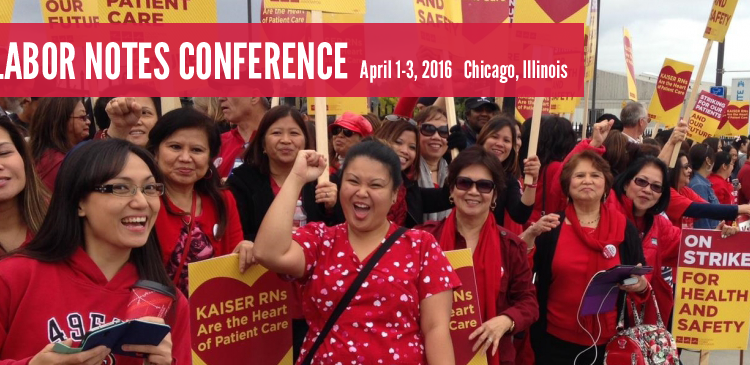
2016 Labor Notes Conference, April 1-3 in Chicago

Labor Notes Conferences are the biggest gatherings out there of grassroots union activists, worker center leaders, and all-around troublemakers. Don’t miss a weekend of inspiration, education, and agitation.

  • Join thousands of union members, officers, and labor activists who are on the front lines in our workplaces and our communities, organizing new workers and agitating together. Meet troublemakers from around the country and around the world.
  • More than 100 meetings and workshops include creative organizing tactics, beating apathy, running for local union office, winning contract campaigns, bargaining over technology, understanding the economy, life after “right to work,” and reviving the strike.
  • Organize with others in your union, industry, or campaign. Face-to-face meetings to share tactics and swap notes are the heart of the Labor Notes Conference. Join an existing industry, union, or caucus meeting—or contact us to set one up.


WE’LL BE THERE!

“The Labor Notes Conference is where union members come together to strategize. Last time we had really productive conversations on how labor and the community are tied together, how to fight privatization, and how unions can connect to wider issues affecting members, like Black Lives Matter. I’ll be there to talk about what’s next.”

Tammie Vinson, Chicago Teachers Union

“Everyone says the Labor Notes Conference is a can’t-miss event! I’m excited to meet brothers and sisters who are organizing and mobilizing to build power in their workplaces. We need a stronger network across the country to take on corporations like AT&T, and I hear Labor Notes is the place to share information on what everybody’s doing locally.”

Manny Hartman, Communications Workers Local 3122, Miami

“I went last year for the first time and learned so much. When I met workers who are organizing in my home country, Brazil, I realized we’re not an island—because of globalization, we’re all facing similar problems. The best part was seeing how motivated everyone was to fight for their rights. I’ll definitely be there.”

Jorge Lopez, Cincinnati Interfaith Workers Center

Comparte este contenido:
Page 387 of 396
1 385 386 387 388 389 396