Page 1261 of 1685
1 1.259 1.260 1.261 1.262 1.263 1.685

México: Jóvenes presentan proyectos a favor del medio ambiente en Yucatán

América del Norte/México/Octubre de 2016/Fuente: 20 minutos

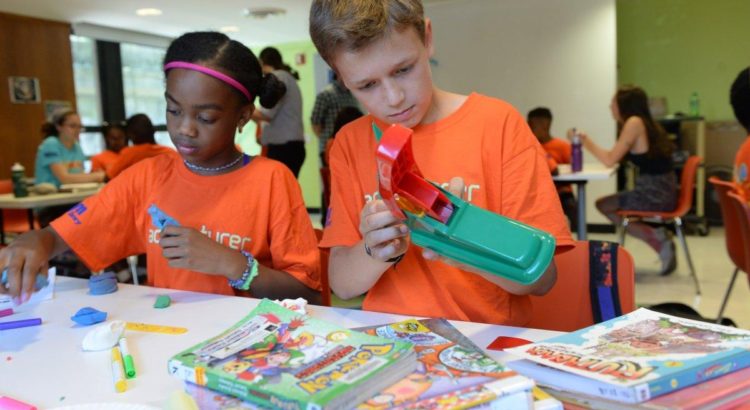
Estudiantes de diversos niveles educativos participan en la edición 19 de la Feria de Ciencia y Tecnología (FCyT), con la exhibición de proyectos a favor del medio ambiente, como el uso de la electricidad en lugar de combustible. Alumnos de la carrera de Ingeniería Electromecánica del Instituto Tecnológico Superior de Motul (ITSM) presentaron sus propuestas en el foro de divulgación científica «Cambio climático: piensa globalmente, actúa localmente. En el stand del ITSM, que junto con otros 69 módulos conforman el encuentro, los estudiantes activaron dos equipos que se operan a través de aplicaciones vía teléfono móvil, diseñados para tareas de exploración e investigación para desplazarse en diversas superficies.
En su presentación, César Ramírez, de 20 años, explicó que con la ayuda de los maestros han llevado a cabo sus planes, en los que aprovechan residuos sólidos para reciclar, ahorrar y darle vida a su propuesta tecnológica, que tiene vocación ecológica. A su vez, el director Regional Sureste del Consejo Nacional de Ciencia y Tecnología (Conacyt), Emilio Martínez de Velasco Aguirre, resaltó que el acontecimiento se realiza de manera simultánea en todas las entidades, en el marco de la vigésimo tercera Semana Nacional de Ciencia y Tecnología.
Asimismo, el titular de la Secretaría de Investigación, Innovación y Educación Superior, Raúl Godoy Montañez, subrayó que en la Expo Ciencia, que concluye el 27 próximo, participan 62 proyectos, agrupados en Pandillas Científicas Kids, Jóvenes, Bachillerato y Licenciaturas.

Fuente: http://www.20minutos.com.mx/noticia/150675/0/jovenes-presentan-proyectos-a-favor-del-medio-ambiente-en-yucatan/

Imagen de archivo
Comparte este contenido:

Estados Unidos: More than one in four teachers are chronically absent from school

América del Norte/Estados Unidos/Octubre de 2016/Fuente: Mail on Line

RESUMEN: Distritos escolares públicos en los Estados Unidos están luchando para hacer frente a lo que el gobierno federal dice que es un problema crónico de ausencias de los maestros. La Oficina del Departamento de Educación para los Derechos Civiles ha acumulado datos que se dice indica que más de uno de cada cuatro profesores pierde más de 18 días de clases regulares. La información, que se aplica a 2014 ya que fue la última que  proporcionaron las cifras, fue obtenida a partir de datos que fue reportado por los distritos escolares propios, de acuerdo con The Washington Post. Esto representa un fuerte aumento a partir del año académico anterior. De acuerdo con el Consejo Nacional para la Calidad de los Maestros, el 16 por ciento de los profesores fueron clasificados como «crónicamente ausentes ‘- aquellos que se perdieron 18 días o más – en el año escolar 2012-2013. El gobierno se enteró de que el problema era más grave en las zonas rurales más pobres del país, así como en una serie de grandes ciudades, donde hasta el 75 por ciento de los maestros estaba ‘crónicamente ausentes’.

Public school districts in the United States are struggling to cope with what the federal government says is a chronic problem of teacher absences.

The Education Department’s Office for Civil Rights has accumulated data that it says indicates that more than one in four teachers miss over 18 days of regular classes.

The information, which applies to 2014 since it was the latest that the figures were provided, was gleaned from data that was reported by the school districts themselves, according to The Washington Post.

That represents a steep increase from the previous academic year.

According to the National Council on Teacher Quality, 16 per cent of teachers were classified as ‘chronically absent’ – those who missed 18 days or more – in the 2012-2013 school year.

The government learned that the problem was more acute in poorer, rural areas of the country as well as in a number of major cities, where as many as 75 per cent of teachers were ‘chronically absent’.

One rural area that was hard hit by teachers missing work days was North Carolina’s Alamance-Burlington School District.

In the 2013-2014 school year, this district, which is located between Greensboro and Chapel Hill, saw an astounding 80 per cent of its 1,500 teachers miss more than 10 days.

In Cleveland, Ohio, 84 per cent of the teachers there were chronically absent.

Clark County School District in Nevada reported that over half of its 17,000 teachers missed over 10 days.

Education experts and observers say that just as student absences adversely impact academic performance and graduation rates, teacher absences have the same effect.

Analysts say that apart from personal absences such as sick days and maternity leave, teachers are feeling less motivated to come to work due to the climate and work environment that they encounter at the schools.

One former teacher at a Washington, D.C., area middle school told the Post that he was mostly healthy on the days that he did not report to work.

‘I would wake up in a panic and feeling like there was a pit in my stomach,’ Sean McGrath, a former social studies teacher at the Stuart Hobson Middle School, said.

‘It was a feeling of dread and despair.’

McGrath said that the feeling was mostly fueled by a combination of the rampant misbehavior by the students as well as what he and other teachers perceived as a lack of support from the principal and administrators.

Nonetheless, teacher representatives say the data paints a misleading picture.

Randi Weingarten, the head of the American Federation of Teachers, a nationwide union representing teachers, said that the root cause of the problem is the work conditions with which teachers have to cope.

She also says that because most teachers are women, they are forced to be at home since they are the primary caregivers in their families.

‘The data also doesn’t address some other basic conditions faced by teachers — the stress, the need to work beyond the school day and the juggling of work and home that interferes more with their family life than most professions,’ Weingarten said. ‘To better address absenteeism, we need to understand root causes.’

The figures were compiled for the 2013-2014 Civil Rights Data Collection, a survey of public schools and school districts in the US.

The study seeks to highlight issues impacting the quality of education provided in public schools as well as factors that contribute to it.

The survey also found that black preschool children were 3.6 times more likely to be suspended at least once than their white counterparts.

Among pupils enrolled in public kindergarten through 12th grade, black children were disproportionately more likely to be suspended than white pupils.

Of the 2.8 million K-12 students who were given out-of-school suspensions for disciplinary problems, 1.1 million were black; 600,000 were Latino; 660,000 were those classified as having disabilities; and 210,000 were foreigners.

Fuente: http://www.dailymail.co.uk/news/article-3876696/Over-1-4-teachers-chronically-absent-school-government-study-finds-poor-work-conditions-rowdy-student-behavior-sapping-teacher-motivation.html

Comparte este contenido:

Estados Unidos: Childhood poverty has lifelong ramifications

América del Norte/Estados Unidos/Octubre de 2016/Autor: Leslie Boid/Fuente: Mountainx

RESUMEN: La pobreza infantil no es simplemente de los pequeños que son incapaces de tener la última moda o gadget; la pobreza es el trauma que induce, Mims dice, y que afecta a más de uno de cada cuatro niños en Carolina del Norte. En algunos condados, más de uno de cada tres niños vive en la pobreza.En la búsqueda de soluciones, Pisgah Legal Services patrocinó su sexto foro anual de la pobreza, el 5 de octubre, con un discurso de apertura por el reconocido defensor de los niños Marian Wright Edelman, fundadora y presidente del Fondo para la Defensa de los Niños. Estados Unidos ocupa el puesto 34 de 35 países industrializados cuando se trata de la pobreza infantil, Edelman dice, con más de uno de cada cinco niños que viven por debajo del nivel federal de pobreza. Sólo Rumania ocupa el menor. En Carolina del Norte, un nuevo informe del Centro de Presupuesto y de Impuestos del Centro de Justicia de Carolina del Norte muestra que la pobreza está en un nivel superior – más del 16 por ciento en general – de lo que era antes de la recesión de 2008. Según reporte de Cuenta de Niños de la Fundación Annie E. Casey, publicado anualmente, en todo el estado de pobreza infantil era de 25,1 por ciento en 2013, el último año del que se dispone de datos.

The little girl needed extensive dental work, says Susan Mims, director of Mission Children’s Hospital. The girl had squirmed in the chair when told she needed to brush her teeth every day and then said she couldn’t.

“We asked her, ‘Why not? What are your barriers?’ and [the girl] told us she had nowhere to spit because she lived in a car,” says Mims.

Child poverty is not simply about little ones being unable to have the latest fashion or gadget; poverty is trauma-inducing, Mims says, and it affects more than one in four children in North Carolina. In some counties, more than one in three children live in poverty.

In the search for solutions, Pisgah Legal Services sponsored its sixth annual poverty forum on Oct. 5, with a keynote address by renowned child advocate Marian Wright Edelman, founder and president of the Children’s Defense Fund.

The United States ranks 34th of 35 industrialized countries when it comes to child poverty, Edelman says, with more than one in five children living below the federal poverty level. Only Romania ranks lower.

In North Carolina, a new report from the N.C. Justice Center’s Budget and Tax Center shows that poverty is at a higher level — more than 16 percent overall — than it was before the 2008 recession. According to the Annie E. Casey Foundation’s Kids Count report, issued annually, child poverty statewide was 25.1 percent in 2013, the last year for which data are available.

According to Kids Count data, Buncombe County’s rate was 22 percent in 2013. Among Western North Carolina counties, Graham County had the highest child poverty rate at 35.9 percent, but Avery, Cherokee, Clay, Haywood, Jackson, Macon, Madison, McDowell, Rutherford, Swain and Yancey counties all had rates above 30 percent.

Nationally, Edelman says, the numbers are 14.5 million children in poverty and 6.5 million living at half the poverty level or below.

The National Center for Children in Poverty places the national number at 15 million, or 21 percent of all children.

The cost of addressing child poverty in the United States — crime, imprisonment, lost work opportunities, illness, etc. — is about $500 billion annually, Edelman says, while the cost of lifting children out of poverty would be about $77 billion.

“If society cares about children, it should spend money on them,” Edelman said during her speech. “We need to create a new Dow Jones … with its stock in children’s lives.”

As researchers have begun to study the results of poverty and its effect on the developing brain, they have found changes in the structure of the brain brought about by the stresses, Mims says, and those stresses have lifelong implications.

People who were raised in poverty have four times the risk of depression and 12 times the risk of suicide, Mims says. They are 2.5 times more likely to develop chronic obstructive pulmonary disease, hepatitis, lung cancer and heart disease.

“We don’t know the exact mechanisms of why this happens, but we know it does,” she says. “We tend to think of trauma as an accident of being beaten up, but this long-term, low-level stress acts the same way [on the brain and body] as trauma.”

The good news, say Mims and Edelman, is that this damage can be mitigated by helping children change their response to stressors. Some schools are replacing detention with meditation, punishment with positive strategies, and that is helping.

More local governments are reacting in creative ways to address the health effects of poverty on children, says Pisgah Legal Services attorney Jackie Kiser, who serves on the advisory board for the Community Health Improvement Process. The group puts together a Community Health Assessment every three years with a list of priorities to be addressed.

The most recent assessment calls for people of all ages to have the opportunity to eat healthy foods, be active and better manage chronic illnesses. It also advocates for children to have safe, stable and nurturing relationships and environments to ensure they reach their full potential.

One barrier to the eradication of child poverty is that American society tends to blame people for their poverty, Edelman says, while refusing to raise the minimum wage to a living wage, failing to fund child care and underfunding education, nutrition programs, housing assistance and other assistance for people in poverty.

“American children in poverty didn’t ask to be born,” she said. “They didn’t choose their parents or their neighborhoods.”

And because of where they live, they attend poorer schools, have fewer safe places to play and are less likely to have a nurturing relationship with a caregiver after school. They get less exercise and have less access to nutritious food because their neighborhoods likely don’t have grocery stores or restaurants that serve healthy food. In addition, their homes are more likely to have mold, lead and other contaminants that make them sick or sicker, says Edelman.

Children in poverty are more likely to attend schools with so-called zero-tolerance policies that criminalize behaviors once handled by school personnel, she continues, so children in poverty are more likely to enter the justice system than those from homes with sufficient incomes.

Libby Kiles, a teacher at Isaac Dickson Elementary School in Asheville, sees the effects of poverty on children every day. “It’s like dealing with PTSD,” she said during a panel discussion after Edelman’s speech. “They’re not in safe places, they witness violence, they don’t get good nutrition, and they don’t get enough sleep.”

And although Asheville and Buncombe County schools are working to address the physical and emotional ramifications of poverty and other traumas, we need to address the problems as a nation, not at school district, city, county or even state levels, said Edelman.

“Children in Massachusetts aren’t more deserving than children in Mississippi,” she said. “I will never understand why any state would refuse Medicaid expansion.”

The best, most practical solution to poverty in America lies with the voters, Edelman said after the program.

“Get to the voting booth,” she said. “Your vote connects right to children. So much is riding on this.”

Fuente: https://mountainx.com/living/childhood-poverty-has-lifelong-ramifications/

Imagen de archivo
Comparte este contenido:

La fuerza del magisterio mexicano

Por: Emilio Téllez

Por un lado, represión y asesinatos, y por el otro, diálogo. Son las formas en las que el gobierno mexicano ha intentado resolver los conflictos sociales desde que inició su período. Represión brutal contra la disidencia y diálogo hipócrita.


¿Qué tipo de estrategia es esta? ¿Qué tipo de legitimidad intenta generar el gobierno? Si bien la anterior administración panista aplicó la violencia al movimiento social con el trasfondo, efectivo ideológicamente, de la guerra contra el narco, ahora que la lucha de clases se muestra más descarnada pado que la confianza de lucha volvía a los profesores. Pero el notable salto en la movilización y organización que se dio en la capital del país, donde se encuentra la mayor concentración de profesores, fue la que ha generado una nueva situación y una relación de fuerzas mucho más favorable. Es destacable que los profesores de la capital habían tenido en esta lucha un retraso inmenso en relación no sólo con la movilización del sur y suroeste, sino con regiones más conservadoras al norte del país. Pero en los días recientes, con centenas de escuelas en paro y bloqueos en cerca de 50 puntos de la ciudad, el magisterio mostró su fuerza en la ciudad ante la cuale el gobierno reaccionó de inmediato pactando con la cúpula del sindicato charro (burocrático) el Sindicato Nacional de Trabajadores de la Educación (SNTE), y retomando algunas de las demandas de los profesores democráticos.

Hoy los profesores organizados sobre todo en la Coordinadora Nacional de Trabajadores de la Educación (CNTE) han generado las condiciones para avanzar de manera más firme contra una de las reformas neoliberales más duras de este régimen. Sin embargo, esto no quiere decir que la victoria está asegurada, de hecho podemos decir que la lucha se desarrollará en un tiempo prolongado y será la paciencia, la capacidad de resistencia y de una coherente autoorganización de los nuevos sectores de profesores que se arrojan a la lucha, lo que decidirá el resultado. Los profesores lo saben bien, la implementación de la reforma pasa por la destrucción de su capacidad de organización en los centros de trabajo y por tanto, de sus derechos laborales. Si los profesores resisten colectivamente no habrá nada que pueda permitir que la reforma entre a las escuelas. La lucha contra esta reforma no ha empezado ahora, desde 2014 tras el desalojo violento del plantón que tenían los profesores en el Zócalo de la Ciudad de México, la tensión ha ido creciendo hasta llegar a los acontecimientos de Nochixtlan.

Por ello en este lapso de resistencia, el significado del triunfo de esta lucha, por más gremial que parezca a algunos, sería enorme para las millones de conciencias que ven a un régimen putrefacto, asesino y cínico como invencible, un régimen que aparentemente ni las elecciones, ni los Ayotzinapa, ni los 132 han podido hacer ceder. Mostraría la posibilidad de avanzar, la confianza en la fuerza de la organización desde abajo y en la lucha decidida contra la violencia de la clase dominante.

Tomado de: http://www.rebelion.org/noticia.php?id=214517

Comparte este contenido:

Is Peppa Pig causing Autism and making kids lose their sense of empathy?

Por: Eunice Alcalá

Each Peppa Pig episode leaves kids laughing, but the charming pig is again under fire for being linked to autism and other long-term developmental issues. A new round of rumors have emerged that the well-loved show poses dangers to its young viewers.

The reports are based on a so-called 2012 research by epidemiologist Marc Wildemberg from Harvard University. Wildemberg claims that children who watch Peppa Pig for at least half an hour have 56 percent increased chances of having autism. While the alleged study already made headlines years ago, several media outlets have brought back the story.

 Stories linking the British cartoon to developmental problems appear to be unfounded because according to some experts, searching for the epidemiologist on Google doesn’t yield any credible information. It is possible that the reports were only fabricated in an attempt to discredit Peppa Pig.

It isn’t the first time that Peppa Pig faced criticisms. In a previous interview with Courier Mail via Daily Mail, Dr. Karen Philip used Peppa Pig as an example of a cartoon that prevents kids from “developing skills in empathy and reading other people’s body language.”

She claims that children aged 4 to 5 get so used to watching the television that they fail to develop complete brain functions. Despite this, she reminds parents that the potentially harmful effects of television may be reversed if parents will allow their children to watch educational programs instead. Philip adds that something good can still come out from watching Peppa Pig.

“If parents interact with them during a show or if they want to watch, say Peppa Pig, and they’re doing the singing and dancing and interacting, that’s completely different.”

Parents have varying opinions when it comes to Peppa Pig. In an article published by Netmums, several parents have been interviewed on why they dislike Peppa.

“Parents complain that their children copy Peppa’s annoying behavior – behaving like a brat, burping and blowing raspberries all the time, and saying ‘I don’t want to play with you anymore’ to their friends (just like Peppa does). That and they start jumping in muddy puddles all the time!”

Some believe that Peppa Pig contains sinister messages and portrays stereotypes. One example that parents cite is that Daddy Pig is the one who has an “important job” while Mommy Pig is the one who often goes around making tea. There are children who allegedly copy George’s responses to food. When asked what they would love to have for breakfast, some kids would answer “chocolate cake.” They would also say “yuck” when parents try to feed them vegetables.

image: http://cdn.inquisitr.com/wp-content/uploads/2016/10/Peppa-Pig-family-670×375.png

Peppa Pig's family

[Image by Nick Jr.]

On the other hand, Lifestyle One reports that many consider Peppa Pig to be educational. One mother, whose son has developmental delays, lauds the show.

“He now knows some things that we have never even mentioned to him, such as actions for Twinkle Twinkle Little Star… We have seen a massive improvement since he has been paying attention to the [show].”

Peppa Pig is deemed as one of the highest-rating television shows for children. The first Peppa Pig episode aired in May 2004 but the show went on hiatus. The new episodes started airing in February 2015 and are now shown in 180 territories. The series, which has been translated into 20 languages, won the Best Pre-School Animation award in 2005, 2011, and 2012.

Many insist that at the end of the day, it is the job of parents to limit their children’s access to technology. There is no evidence yet that watching television indeed leads to autism, but studies advise that a child diagnosed as autistic must have limited access to the screen in order for him or her to have more meaningful pursuits. Cartoons, when carefully selected, can help children connect better with their peers.

Taken from: http://www.inquisitr.com/3626660/is-peppa-pig-causing-autism-and-making-kids-lose-their-sense-of-empathy/

Comparte este contenido:

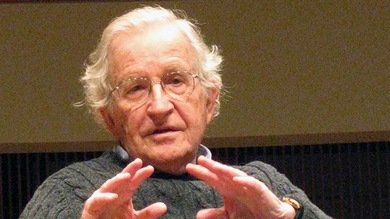
Conference: Reexamining History with Noam Chomsky: New World Order & the Grand Area

América del Norte/EE.UU./28 de octubre de 2016/www.actvism.org

This is the second part of our series called “Reexamining History” in which we explore history and surface facts that are usually suppresse or ignored in mainstream historical literature.

In this installment we talk to Prof. Chomsky about the global plans that the United States drew before the end of the World War II and how it proceeded to implement them.

The following questions will be addressed in this video:

  • What geopolitical plans did the United States draw for the globe before World War II?
  • What is the “Grand Area” and how did it effect the security and economy of the globe?
  • How did countries such as Italy, Germany and Greece fit into this scheme and why did the US crush anti-fascist movements across Europe?

Taken from: http://www.actvism.org/en/politics/chomsky-new-world-order-grand-area/

Comparte este contenido:

México: Abandona más de la mitad de alumnos las aulas

América del Norte/México/28 de octubre de 2016/www.oem.com.mx/Por: Mónica González

En el marco de la inauguración de la Primera Expo Profesiográfica 2016, el rector de la Universidad Autónoma del Estado de Morelos (UAEM), Alejandro Vera Jiménez, invitó a los estudiantes a luchar por su derecho a recibir educación superior, al referir que el 52 por ciento de los jóvenes abandonó sus estudios porque no pudo ingresar al ciclo siguiente, de tal suerte que, dijo, «no se vale que los presupuestos se distraigan en otras cosas y sacrifiquen los espacios educativos».

En el Gimnasio Auditorio de la UAEM, el rector explicó que en el país el sistema de educación provoca que de un ciclo a otro, miles de jóvenes deserten de sus estudios.

«De acuerdo con los datos de la encuesta realizada por la Secretaría de Educación Pública (SEP) en años recientes este es un hecho perverso que nodebemos permitir, no se estudia porque los políticos corruptos se llevan el dinero y no abren espacios educativos para todos ustedes», expresó el rector.

Cabe destacar que la Expo Profesiográfica tiene como objetivo mostrar la oferta educativa de la UAEM a los jóvenes que cursan el último año de preparatoria, para que al terminar sus estudios de nivel medio superior puedan elegir la carrera que quieran estudiar.

En esta ocasión acudieron más de mil 500 estudiantes, tanto de la Universidad como de otras escuelas del estado, ya que es la primera vez que esta expo reúne a todas las unidades académicas de nivel superior en la máxima casa de estudios de la entidad, por lo que hicieron difusión de la ubicación de las facultades, centros de investigación e institutos tanto en el Campus Norte como en las sedes del estado; la infraestructura, equipamiento, planes de estudio, programas culturales, deportivos y de idiomas; la planta de docentes e investigadores con que cuentan, entre otros.

Además de información, los futuros estudiantes universitarios participaron en la conferencia magistral impartida por Verónica Valdés Salmerón, experta en orientación vocacional y autora de diferentes libros en ese ámbito, por la que realizaron un recorrido por el Campus Norte en el «Venado Bus», acompañados por los alumnos de la Escuela de Turismo, quienes explicaron la historia de la Universidad.

Tomado de: http://www.oem.com.mx/elsoldecuernavaca/notas/n4313477.htm

Comparte este contenido:
Page 1261 of 1685
1 1.259 1.260 1.261 1.262 1.263 1.685