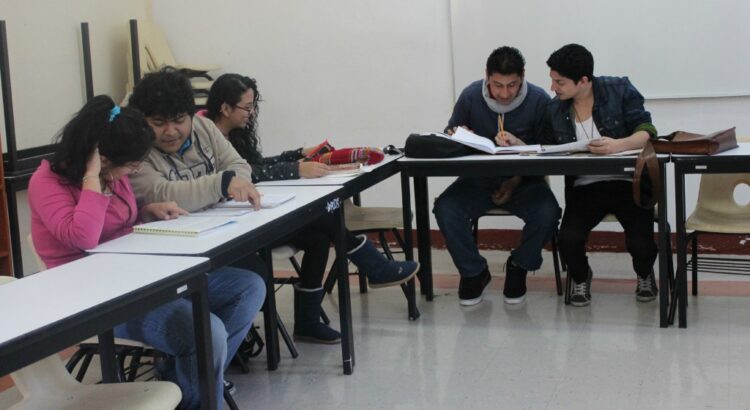
Emiten lineamientos para continuar trámites de RVOE de Instituciones de Educación Superior
Erick Juárez Pineda
Erick Juárez Pineda
Questions about school reopening revealed fresh layers of complications.
The TAKE with Rick Klein
It’s a plan the White House is lauding as «bold and ambitious.»
It’s also grown less so through the early weeks of the Biden presidency — and could reveal political vulnerabilities for the new administration as it pushes for a major COVID-19 relief bill.
President Joe Biden‘s CNN town hall Tuesday night featured multiple questions about school reopening that revealed fresh layers of complications. Biden pointed out the need to upgrade ventilation systems, protect everyone from bus drivers to cafeteria workers, and even potentially hire more teachers, secure additional classrooms and extend the school year into summer.
The president also further clarified his pledge to have the majority of U.S. schools open within his first 100 days in office, saying it was a «mistake in the communication» of that promise to suggest it would extend beyond K-8 classrooms.
Biden didn’t mention teachers’ unions, which have provoked pockets of outrage nationwide for the preconditions some have imposed on reopening. The Biden White House’s labor ties have coalesced into a Republican talking point as the president shops for GOP support for his $1.9 trillion stimulus package.
The reopening of schools is a non-partisan priority for parents and government officials literally everywhere in the country. It’s not an issue that responds naturally or quickly to national guidelines or mandates, as Biden’s team knows well.
Biden on Tuesday laid out a timeline of COVID recovery that would extend well into the next school year. That also puts it well into the next election year before life can be expected to return to normal.
The RUNDOWN with Alisa Wiersema
If there was any doubt before, it’s safe to say by now there’s no love lost between former President Donald Trump and Senate Minority Leader Mitch McConnell. Three days after McConnell first voted to acquit Trump and then publicly rebuked him, Trump railed against the minority leader in a lengthy statement full of personal attacks and political criticisms.
In addition to calling McConnell «a dour, sullen and unsmiling political hack,» Trump indicated he’s willing to wade into future election contests.
«Where necessary and appropriate, I will back primary rivals who espouse Making America Great Again and our policy of America First,» the former president said.
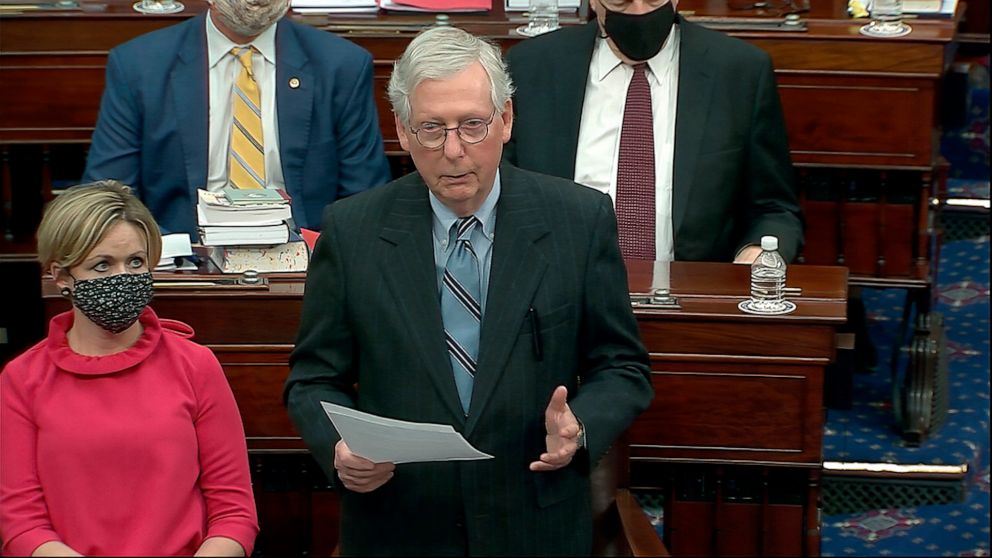
The threat could be just that — for now — it is unclear how involved Trump actually plans to be in the 2022 midterm elections and beyond. In the meantime, the self-imposed caveat of «where necessary and appropriate» gives him room to back away from politics if Republicans distance themselves from prioritizing his base.
Still, Trump’s influence over his party and supporters continues to linger over Capitol Hill as the Senate prepares to hold its first hearing next week to examine security preparations ahead of Jan. 6. House Speaker Nancy Pelosi also endorsed the creation of a 9/11-style, independent commission that would investigate the attack on the Capitol. Legislation to set up the commission could be introduced as early as this week, but it remains unclear when it would be voted on.
The official launch of such a commission requires approval from the Senate and a sign off from Biden. On Tuesday, the White House indicated Biden supports the creation of the commission but put the ball back into Congress’ court on following through — all but ensuring that Trump’s ties to the events of that day will continue to be dissected for weeks to come.
The TIP with Quinn Scanlan
With a gubernatorial and Senate race on the ballot in 2022, Georgia was already set to be the battleground state to watch in the next election cycle. But it’s increasingly looking like those races will be dominated by the ghosts of campaigns past.
Stacey Abrams is expected to seek a rematch against Republican Gov. Brian Kemp, and, after filing a statement of candidacy with the Federal Election Commission, on Tuesday, Republican David Perdue went public with a lengthy statement outlining why he’s considering a comeback bid for U.S. Senate.
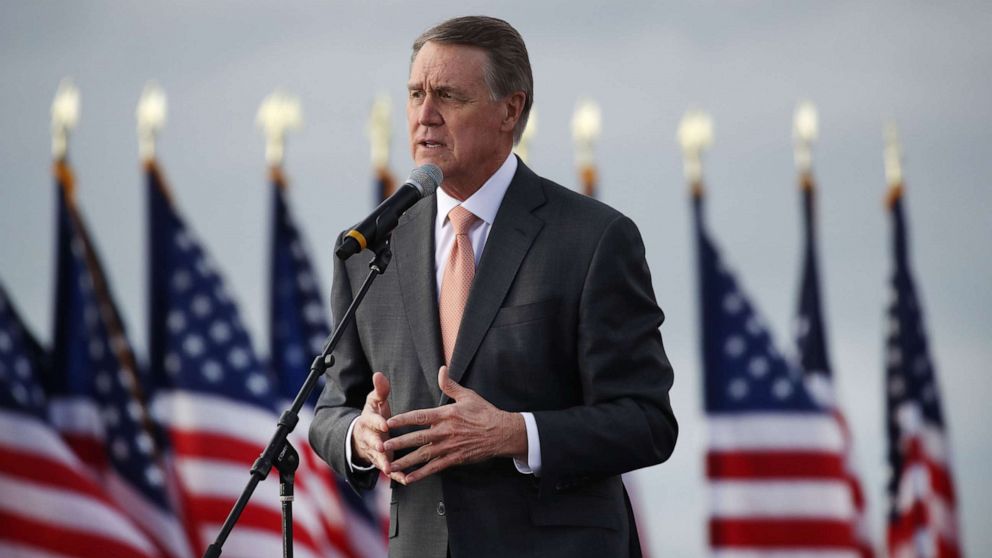
Despite the Peach State delivering electoral victories to Biden and two Democratic Senate candidates last cycle, Perdue claimed that «Georgia is not a blue state,» asserting the November election, when he just barely missed the 50% threshold necessary to avoid a runoff, is more reflective of the electorate than the dual GOP Senate losses in January.
With the Republican Party in the midst of an identity crisis and Georgia Democrats determined to prove their recent statewide wins were not a fluke, Perdue’s pursuit to rejoin the Senate is unlikely to be an easy one.
For starters, he would face a new challenger: Raphael Warnock. In the runoff, the reverend turned senator received about 20,000 more votes than now-Sen. Jon Ossoff did in his race against Perdue, suggesting he may be a more formidable opponent. And if Abrams runs for governor, she and Warnock, whom she personally recruited to run for Senate, are sure to be a dynamic duo on the campaign trail.
THE PLAYLIST
ABC News’ «Start Here» podcast. Wednesday morning’s episode features ABC News Senior Investigative report Aaron Katersky, who tells us about the lawsuit filed against former President Donald Trump and his personal attorney Rudy Giuliani following the Capitol riot. FiveThirtyEight Senior Science Writer Maggie Koerth explains why Texas’ power grid failed under the weight of winter storms this week. And ABC News Foreign Correspondent James Longman takes us inside the rebuilding of Notre Dame cathedral. http://apple.co/2HPocUL
ABC News’ «Powerhouse Politics» podcast. House impeachment manager Rep. Jamie Raskin, D-Md., talks with ABC News Chief Washington Correspondent Jonathan Karl and Political Director Rick Klein about former President Donald Trump’s second impeachment trial and what’s next for Congress. https://bit.ly/3dqyKZ3
FiveThirtyEight’s Politics Podcast. Nevada Democrats introduced a bill on Monday that would change their state’s presidential nominating contest from a caucus to a primary and also dislodge New Hampshire from its position as the first primary in the nation. Also, over the weekend, outgoing Democratic National Committee Chair Tom Perez said, «a diverse state or states need to be first.» In this installment of the FiveThirtyEight Politics podcast, the crew discusses if any potential changes could reshape the nominating process. They also consider why Republican senators’ votes on convicting former President Donald Trump broke down the way they did. And lastly, they check-in on the gubernatorial recall efforts in California that are very likely to result in a recall election for Gov. Gavin Newsom. https://53eig.ht/3pt7TxN
WHAT YOU NEED TO KNOW TODAY
The Note is a daily ABC News feature that highlights the day’s top stories in politics. Please check back tomorrow for the latest.
Fuente de la Información: https://abcnews.go.com/Politics/biden-caught-schools-squeeze-amid-covid-19-relief/story?id=75928795&cid=clicksource_4380645_3_heads_hero_live_hero_hed
Los Angeles County elementary schools will be allowed to reopen for in-person learning after hitting an expected COVID-19 milestone Tuesday.
«The state permits elementary schools to reopen as soon as we reach an adjusted case rate of 25 per 100,000,» the LA County Department of Public Health said in a statement Monday. «We are informing Los Angeles County schools tonight via an emailed letter that we expect to announce we have reached this threshold effective Tuesday, February 16.»
All schools that want to reopen must submit plans to the county and state health departments showing that they’ve put sufficient safety measures in place before they’ll be permitted to resume in-person classes.
«Thank you to everyone who has worn your masks and kept your distance,» Janice Hahn, Los Angeles County supervisor, wrote on Twitter on Monday. «Case rates in LA County are dropping. Now we can continue the work getting our kids and teachers safely back in classrooms where they belong,» she added.
«This is what we have been working towards,» Hahn wrote.
On Friday, the Centers for Disease Control and Prevention released guidelines on schools reopening that said with proper mitigation measures, schools should be able to safely do at least some in-person learning.

LA’s teachers union, United Teachers Los Angeles, pushed back on the CDC’s recommendation on the grounds that the guidelines don’t do enough to address challenges in large urban districts like Los Angeles. «Most troubling is that it does not require vaccinations for school staff, six-foot distancing in all schools, nor improved ventilation as a key mitigation measure,» UTLA said in a statement.
Vaccinating teachers before schools reopen has been a sticking point for union members. «Embedded in our bargaining framework are the components of a safe return,» Cecile Myart-Cruz, UTLA’s president, told ABC’s Los Angeles station KABC-TV.
One of those key components is «vaccines for all educators and school staff,» Myart-Cruz added.
Fuente de la Información: https://abcnews.go.com/Health/los-angeles-county-elementary-schools-reopen-covid-19/story?id=75922269&cid=clicksource_4380645_3_heads_hero_live_headlines_hed
El concejal de Servicios y responsable de limpieza, Jaime Sanz, ha explicado los motivos por los que el Ayuntamiento no suspendió el contrato de limpieza en los colegios durante la fase de confinamiento. “En aquellos días nadie supo con certeza en qué momento se produciría el regreso a las aulas y los colegios debían mantenerse desinfectados y limpiados de forma escrupulosa”, ha asegurado.
Sanz ha recordado que en algunos colegios los comedores ofrecieron la recogida diaria de menús para el alumnado becado y ello implicó la necesidad de no abandonar las tareas de limpieza.
“La empresa nunca estuvo cruzada de brazos porque tuvo que realizar limpieza y desinfección profunda de todas las dependencias, de todo el mobiliario y de gran parte del material escolar para estar siempre preparados para el retorno a las aulas”, ha precisado.
El responsable de la limpieza en la ciudad se ha visto obligado a comparecer públicamente después de que el Grupo Popular en el Ayuntamiento denunciase un supuesto gasto de 300.000 euros que el Ayuntamiento podría haber ahorrado por labores que según el principal grupo de la oposición no se habría desarrollado, que desde el equipo de Gobierno catalogan como «informaciones falsas».
Sanz ha querido ser muy tajante al reprochar al Grupo Popular no haber hecho una sola consulta al Gobierno, a los técnicos municipales o al personal de la limpieza porque “en vez de intentar conocer la verdad o la realidad de esos días, lo que ha hecho es mentir y calumniar.
De hecho, Jaime Sanz ha lamentado que Jaime Carnicero no contase a los medios toda la verdad, y es que “lo que el Tribunal de Cuentas hace es censurar al Ayuntamiento de Guadalajara por no haber vuelto a licitar este contrato de limpieza, que vencía el pasado 1 de enero de 2019. El señor Román forzó a la empresa a seguir prestando servicio después de que la misma renunciase a una prórroga. Y por este mismo motivo el señor Antonio Román ha tenido que presentar alegaciones ante el Tribunal de Cuentas ¿a que de esto no les informó el señor Carnicero?”, se ha preguntado.
El concejal de Servicios sí ha cifrado en 200.000 euros el coste que el ayuntamiento de Guadalajara tuvo que afrontar “por la falta de previsión del anterior equipo de Gobierno que no licitó un nuevo contrato ni hizo absolutamente nada después de que el anterior venciese el 1 de enero de 2019 y de que la empresa renunciase a la prórroga del servicio”.
Fuente de la Información: https://www.guadaque.com/guadalajara-ciudad/el-ayuntamiento-de-guadalajara-explica-por-que-mantuvo-el-contrato-de-limpieza-de-colegios
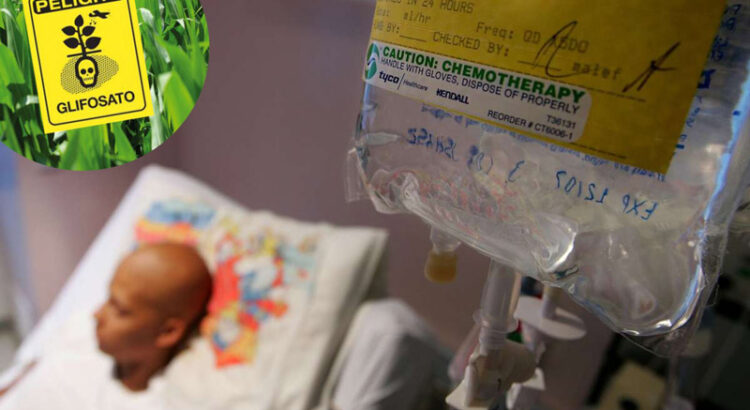
Bayer AG llegó a un acuerdo de 2 mil millones de dólares para resolver futuros reclamos legales relacionados a casos de cáncer en EE. UU. como consecuencia de las fumigaciones con Roundup.
La suma pactada se distribuirá a lo largo de cuatro años y será destinada para cubrir los gastos de análisis y diagnóstico de casos de linfoma no Hodkin, previa aprobación del juez del Tribunal de Distrito de los EE. UU. Vince Chhabria, en San Francisco.
Pese a esta acuerdo, el herbicida a base de glifosato no será retirado del mercado. Bayer solicitará un permiso a la Agencia de Protección Ambiental de EE.UU. para colocar una etiqueta en el producto en la que se informará a los consumidores de un link de referencia con estudios científicos sobre el herbicida.
Cuando Bayer compró a Monsanto, lo hizo también con el litigio originado por las demandas por cáncer a causa de las fumigaciones con glifosato. En ese momento, 2018, ya estaba pagando unos 63 millones de dólares. Luego, en junio de 2020, el acuerdo se amplió a 9.6 mil millones de dólares para resolver las más de cien mil demandas presentadas en EE. UU. por el impacto del herbicida en la salud.
Este nuevo acuerdo, anunciado recientemente, tiene por objeto cubrir futuros reclamos de personas que hayan estado expuestas al Roundup y que tengan diagnóstico de linfoma no Hodgkin. También se incluyen a las personas que desarrollen este tipo de cáncer a futuro.
Ecoportal.net
Fuente de la Información: https://www.ecoportal.net/temas-especiales/transgenicos/glifosato/bayer-llego-acordo-2-mil-millones-de-dolares-por-el-impacto-del-roundup-en-la-salud/
Miriam Lizbeth Martínez Sandoval*
En este tiempo de pandemia, ser docente de educación básica es un arte. El arte de entregarse a los más pequeños conjuntando exigencias, desigualdades, historias, programas, habilidades y carencias propias para lograr algo: aprendizaje.
También es cierto, que hoy más que nunca necesitamos aprender y enseñar habilidades socioemocionales pues tienen un “papel central en el aprendizaje de los niños, así como en la capacidad de las personas para relacionarse y desarrollarse como seres sanos, creativos y productivos” (SEP, 2016, p.173). Seguro que lo queremos, pero ¿lo estamos logrando?
Por otro lado, es necesario pensar que a veces enseñamos algo que no sabemos que enseñamos, esto puede ser parte del currículum oculto.
El concepto de currículum oculto engloba los significados y efectos no previstos de manera oficial en el programa, que se van aprendiendo en el contexto de educación formal (Torres, 1991). Estos aprendizajes no explícitos, pueden ser clasificados como negativos o positivos para los estudiantes.
Hablando de manera negativa, es posible que por falta de tiempo prioricemos los aprendizajes/asignaturas conceptuales porque son los que vienen en el examen trimestral y urge avanzar en contenidos, depositar los más posibles en la mente del alumno para así tener elementos que desde mi autoridad me permitan asignar una calificación.
Derivado de lo anterior, las habilidades socioemocionales las hacemos esperar, pues al no ser sujetas de una evaluación numérica en boleta, ni presentarse en el examen trimestral, las enseñamos cuando hay más tiempo ¿Pueden esperar para cuando haya tiempo? Hoy, sabemos que no.
Nos falta tiempo, y la realidad es compleja, eso es un hecho.
Si bien es cierto que identificar las emociones de los alumnos y ser empáticos ante sus situaciones de vida son los primeros pasos para el trabajo socioemocional; no podemos negar que la salud mental requiere tiempo y práctica constante; por ello, necesitamos concretar situaciones de aprendizaje de autoconocimiento, autonomía, autoestima y regulación emocional, todos los días, aún a distancia.
Por eso, hagamos uso de lo positivo del currículum oculto. Hagámonos conscientes de lo que no sabemos que enseñamos, eliminando lo negativo y buscando lo positivo.
En educación socioemocional, no dejemos de intentarlo. Preguntémonos, conozcámonos, vayamos más allá de lo que nos dicen que hagamos. No nos conformemos con solo cumplir lo que nos toca.
Utilicemos los materiales como los ficheros del Programa Nacional de Convivencia Escolar, las Herramientas para el soporte emocional para la educación en contextos de emergencia, o la misma programación de Aprende en casa II; démosle creatividad y persistencia. No para un Plan Escolar de Mejora Continua, o para mi producto del Consejo Técnico Escolar, sino realmente como mi parte de mi estrategia pedagógica.
Busquemos actividades permanentes, donde el alumno continúe siete días a la semana reflexionando, practicando, compartiendo algo de lo aprendido. Frases inspiradoras pegadas en la pared de la casa, dibujos todos los días, un diario emocional, un club virtual solo para convivir, historias motivantes, poemas que los hagan conscientes de sus sentimientos, utilicemos los videojuegos y los youtubers como aliados; la ropa, la cocina, y las mascotas. Pero pensemos, también, en las habilidades específicas a desarrollar: autoconocimiento, autonomía, autoestima y regulación emocional; todos los días y a todas horas.
Sigamos compartiendo entre docentes, creando situaciones que valoren el aprendizaje informal, motivando intrínsecamente al estudiante, modelemos el aprendizaje, centrémonos en el alumno.
Tal vez ahora todo es más lento, pero por favor, no dejemos de intentarlo.
Referencias:
Secretaría de Educación Pública. (2016). Propuesta Curricular para la Educación Obligatoria. SEP.
Torres, J. (1991). El currículum oculto. Ediciones Morata
*Asesora Técnico Pedagógica de Lenguaje Oral y Escrito, Zona 136 de primarias, Xalapa, Veracruz y Docente Universitaria en Instituto Universitario Veracruzano.
Fuente de la Información: http://www.educacionfutura.org/el-curriculum-oculto-a-favor-de-la-educacion-socioemocional/
Take advantage of nearly a century’s worth of business research at the Forbes School of Business & Technology. The University of Arizona Global Campus and Forbes have built an incredible online business school to better prepare the leaders of the future. Along with a renowned board of advisors who provide unparalleled expertise to continue pushing the envelope in education, the Forbes School of Business & Technology can show you where commerce has been, where it is going, and how you can thrive in today’s—and tomorrow’s—global economic environment. The business courses and online MBA program offered at this accredited online business school are created to help you rise among the rankings of other business professionals, preparing you to become a leader in the business world.
Pursuing an online degree from an accredited college is important, as it’s a sign to employers and other schools that the accredited school adheres to standards recognized as important to the quality of education. Accreditation can help you in the hiring process, as employers often require evidence that applicants have a degree from an accredited school. Additionally, accreditation ensures your credits are accepted by another college if you ever decide to transfer.
The University of Arizona Global Campus has received specialized accreditation for its online business school programs through the International Accreditation Council for Business Education (IACBE) located at 11374 Strang Line Road in Lenexa, Kansas, USA. Learn more about the business school programs that are accredited by the IACBE. Additionally, the Forbes School of Business & Technology at the University of Arizona Global Campus has received specialized accreditation for its accounting programs through the IACBE. The Bachelor of Arts in Accounting have both received this distinguished accreditation.
Join the ranks of previous online MBA graduates. Experience an MBA program that combines an interactive online setting with engaging coursework. The online MBA program at the Forbes School of Business & Technology online business school is designed to prepare you to become a leader in the business world while providing you with the knowledge needed for a wide variety of professional situations. Whether you are an entrepreneur or aspiring CEO, to a single parent or mother of 3, an online MBA from Forbes School of Business & Technology helps determined professionals from all walks of life pursue their career passions.
Fuente de la Información: https://www.uagc.edu/forbes-school-of-business-and-technology