Page 358 of 1684
1 356 357 358 359 360 1.684

Aprende en casa II. ¿Un retroceso de 40 años en la educación?

Iván Enoc Martínez Absalón

Desde el pasado 3 de Agosto, cuando el Secretario de Educación, Esteban Moctezuma Barragán refirió el tan esperado mensaje que daría certeza acerca del inicio del ciclo escolar 2020 – 2021, muchos fueron los sorprendidos con la estrategia «Aprende en casa II», y la modalidad a distancia para comenzar dicho ciclo escolar.

No se hicieron esperar algunos comentarios negativos acerca de la decisión desde la SEP, incluso medios de comunicación replicaron lo que algunos personajes del ámbito educativo afirmaron: «Se ha dado un retroceso de 40 años en educación». Dicho esto a partir del anuncio en el que, previo convenio con las televisoras se notificó que será este el medio en el que (nuevamente) se transmitirán las clases durante el tiempo en el que no sea posible la modalidad presencial. Esta situación aplica para los niveles de Educación Básica y Media Superior.

El punto central de las críticas ha sido que la televisión es un medio unidireccional, en el que se brinda el mensaje (información) y que los estudiantes son tratados como «receptores» de esta información; lo cual, ciertamente se «cree» que se ha dejado atrás en el ámbito educativo.

Desde una opinión personal, pues la intención es que los lectores se formulen la propia, me permito hacer un análisis de dos ejemplos de prácticas educativas que se presentan en la cotidianeidad, sin dejar de lado que la propuesta para esta modalidad es una cuestión atípica temporal, por las necesidades propias que se presentan ante una contingencia sanitaria.

El primer ejemplo, imaginemos un profesor que planificó su clase, para unos niños de primaria, donde el tema sería «las partes del cuento», y para iniciar su clase, el profesor se propuso mostrarles un video animado de «El ratón vaquero»; pues bien, el profesor se presenta al salón de clases, y al intentar conectar su computadora al proyector se da cuenta de que no hay electricidad; su laptop es apenas de 11 pulgadas y tiene más de 25 estudiantes, por lo que poner el video en la laptop no es una opción. Ante estas situaciones decide, en un intento por llevar a cabo su clase y no posponerla para el siguiente día, utilizar la grabadora de la escuela (recargable) y reproducir el cassette que tiene la canción de Cri-cri antes mencionada. ¿Estaríamos presenciando un retroceso en las clases de este profesor? ¿Realmente se presentó una didáctica superada hace 3 o 4 décadas?

El otro ejemplo propuesto, es de un profesor que, para tener un punto de comparación, desarrollaría el mismo tema (las partes del cuento), decide «innovar» y aprovechar que recientemente instalaron la energía eléctrica en la escuela, consigue un proyector y con su laptop tiene planeado presentarles unas diapositivas que elaboró en Prezi y a las que tiene acceso desde Internet, con «las partes del cuento», cuáles son y cuáles son sus características; los estudiantes observan las diapositivas, tal vez las apuntan en su cuaderno, y las repasan en casa. ¿Estamos hablando de educación del siglo XXI?, ¿Es esta la metodología que buscamos a través del uso de las TIC?

Como seguramente notaron, escuchar un audio en una grabadora, no necesariamente significa regresar a la práctica educativa «del pasado»; caso contrario, hacer uso de las TIC, como Internet, Software,  Laptop  y proyector, no asegura que se esté llevando a cabo una educación de actualidad.

Desde mi perspectiva, y he leído a muchos profesores que coinciden conmigo, las clases por TV utilizarán este medio como lo que es, un medio de comunicación. Falta en realidad, la puesta en práctica de la docencia, y que seguramente, de acuerdo al nivel educativo, al subsistema (llámese primaria general, rural, multigrado, unitaria, indígena, bilingüe, secundaria general, técnica, agropecuaria, telesecundaria, bachillerato general, digital, telebachillerato, tecnológico, y alguna que se me escape de momento), de acuerdo a la edad de los estudiantes, al contexto de la escuela, a los accesos a las TIC de cada familia, y a la comunicación con los padres, se llevará a cabo en cada localidad, municipio, región y entidad federativa será una experiencia única y distinta.

Falta aún, como menciona Moya (2013), nos corresponde al profesorado hacer lo posible para lograr pasar de las TIC a las TAC (Tecnologías del Aprendizaje y el Conocimiento).

Referencia:

Moya López, M. (2013). De las TICs a las TACs: la importancia de crear contenidos educativos digitales. Didáctica, innovación y multimedia, (27), 0001-15.

Comparte este contenido:

México: Caretas, el nuevo elemento entre los útiles escolares

Caretas, el nuevo elemento entre los útiles escolares

La empresa Plastygril crea caretas con un soporte rígido de PVC de 3 mm, la mica es de calibre de 15 milésimas y le agregan una divertida impresión sobre el plástico.

Derivado de la contingencia sanitaria los estudiantes mexiquenses deberán incluir entre sus útiles escolares un gel antibacterial y a su uniforme una careta para evitar posibles contagios, con esto presente Miguel Ángel Maldonado, representante de la empresa Plastygril, las fabrica con impresiones especiales para darle un toque único a un objeto que se volvió de uso cotidiano. “Con esta situación del covid, desarrollamos una careta que primero se pensó para protección de los adulto y cuando llegó el 30 de abril se nos ocurrió sacar algún diseño para también tratar de promocionarlo para los niños”.

Aseguró que con el regreso a clases los padres prevén lo que necesitarán sus hijos, por ello dejó de fabricar sellos de goma, letreros, piezas de acrílico y pizarrones para la industria, y migró a las caretas que actualmente le generan casi 100 por ciento de sus ingresos. La careta, dijo, está diseñada con un soporte rígido de PVC de 3 mm, la mica es de calibre de 15 milésimas y la impresión va sobre el plástico, por ello se puede lavar con jabón y agua, o desinfectar con un paño húmedo con alcohol.

Está diseñada con un soporte rígido de PVC de 3 mm.

“Nos han pedido encargos de John Lennon, Harry Potter, Spider-Man, Capitán América, Hulk, princesas de Disney, etc., las desarrollamos y la ponemos en el catálogo, el precio es de 125 pesos”.

Reconoció que este proyecto inició por necesidad y desde el comienzo hubo respuesta por parte de los consumidores, ya fuera por miedo o por cumplir con las recomendaciones sanitarias, la gente lo compró. “Primero fueron sencillas y realizamos una donación al hospital López Mateos, ahí se nos ocurrió ponerle imágenes a las caretas de adultos para los médicos y enfermeras, fue un detalle para que los pacientes ubicaran a las personas, hasta les pusimos nombre, después seguimos con esa idea”.

Para conocer más sobre esta propuesta, pueden consultar sus redes sociales que se encuentran como Plastigryl, donde comparten sus diseños e información relevante para la comunidad, además de responder dudas por medio y recibir pedidos.

Fuente de la Información: https://www.milenio.com/politica/comunidad/regreso-clases-caretas-elemento-utiles-escolare

Comparte este contenido:

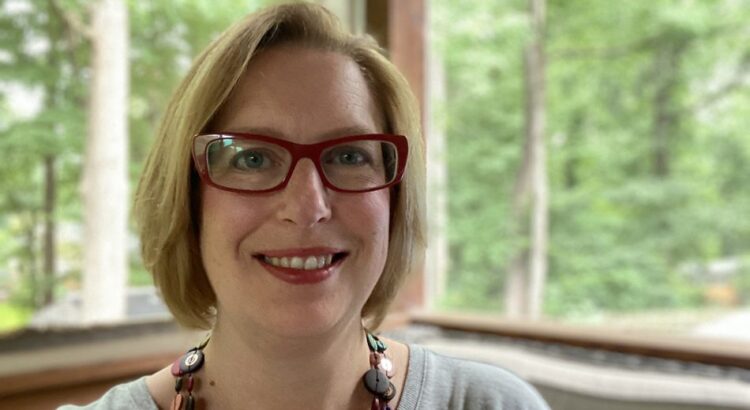
Estados Unidos: #WhyIChoseEducation: ‘I Have Always Enjoyed Being Around Kids from Elementary Age Through High School and/or College. I Enjoy Their Spirit, Optimism, Passion and Humor,’ Says Director of METRC Kerri Brown Parker

#WhyIChoseEducation: ‘I Have Always Enjoyed Being Around Kids from Elementary Age Through High School and/or College. I Enjoy Their Spirit, Optimism, Passion and Humor,’ Says Director of METRC Kerri Brown Parker

This is part of a monthly “Why I Chose Education” series in which NC State College of Education alumni, students, faculty and staff share why they chose education.

As a young girl, Kerri Brown Parker was always excited about starting a new school year and couldn’t wait for summer break to be over. School was an opportunity for her to learn new things, take on new challenges and experiences, and discover new passions and interests. Throughout her life, she was always drawn to working with kids, having served as a babysitter and camp volunteer. And she’s always enjoyed being in the company of children, regardless of age. So, when she decided to pursue a career in education, it was the perfect fit for her.

For the past seven-and-a-half years, Brown Parker has served in the NC State College of Education Media and Education Technology Resource Center (METRC) — first as the instructional technology and literacy librarian before being named director in 2017.

As director of METRC, she provides instruction with METRC resources in literacy and digital innovation; selects, purchases and manages access to library collections; leads and collaborates in future-ready technology developments in the college; and partners and teaches with faculty in technology and literacy resources and instruction. Brown Parker also leads professional development and information learning sessions around technology and literacy resources and instruction, and manages METRC operations and staff.

When she isn’t working, Brown Parker enjoys cooking complicated meals and trying new ingredients, spending time with family, playing board and video games with family and friends and challenging her mom to a game of MahJongg. She likes reading a magazine somewhere outside, whether in a hammock, by the pool or in a lounge chair. She also enjoys reading books, traveling, bicycling, getting crafty and watching sci-fi shows.

Brown Parker shares why she chose education, how education has shaped her into the person she is today and what has inspired her during these unprecedented times.

Why I Chose Education: I was the oldest cousin, the older sister, the neighborhood babysitter, the YMCA camp volunteer … generally drawn to working with kids. I have always enjoyed being around kids from elementary age through high school and/or college. I truly like and respect them. I enjoy their spirit, optimism, passion and humor. I’ve also been told I’m patient, a good listener, and have a talent for reading people’s needs, so teaching was a good fit for me.

How Education Has Shaped Me: I was the kid who couldn’t wait to go to kindergarten and was always ready for summer break to be over. I had good teachers, bad teachers, happy experiences and miserable experiences. School held friends, challenges, new experiences, music, science, anxiety, pride, embarrassment and … everything. I feel like education shaped so many parts of who I am and will continue to be. It’s where I learned from other working moms how to be a parent as well as where I learned that demeaning someone for being “bad at math” has long lasting consequences for self-esteem and even career choices. My closest friends are teacher-friends because there are so many emotions and strong experiences that happen among people who are passionate and caring about their students. It’s truly bonding. Educational experiences as a student, teacher and parent have shaped … all of me.

What I Enjoy the Most About Being Part of the NC State College of Education: Feeling like I contribute to the learning of a broad group of our students and future teachers by working with them individually, in classes and by influencing the faculty who teach them.

What Others Should Know About the NC State College of Education: We value excellence and have high expectations. I want to work in a place that knows educators are important and can truly influence the future so they better be well-prepared. The NC State College of Education is also a collegial place in which many different roles are valued for their contributions.

The Last Thing I Experienced That Inspired Me: Our job in METRC involves many different components and I was drawn to librarianship in large part due to the ever-changing nature of the work. I am sometimes a literacy consultant, a researcher, an instructional technology guide, a teacher, a manager and more. Due to the sudden shift to remote learning in March 2020, METRC staff also felt our role as … technology counselors. All of us in METRC have worked to not just help people survive in their new online reality but thrive, and I’ve been inspired by how our faculty and staff have responded. People are stressed but focused on continuous improvement and staying very positive about how they can continue working to influence a new generation of teachers. Faculty and staff have also been so thankful for the support and guidance we provide in METRC. I’m inspired by their attendance at workshops, willingness to participate in summer book studies, desire to talk out new ideas and general work ethic during so much change.

Fuente de la Información: https://ced.ncsu.edu/news/2020/07/30/whyichoseeducation-i-have-always-enjoyed-being-around-kids-from-elementary-age-through-high-school-and-or-college-i-enjoy-their-spirit-optimism-passion-and-humor-says-director/


Comparte este contenido:

Estados Unidos: As Colleges Move Classes Online, Families Rebel Against the Cost

As Colleges Move Classes Online, Families Rebel Against the Cost

Schools face rising demands for tuition rebates, increased aid and leaves of absence as students ask if college is becoming “glorified Skype.”

CORONAVIRUS SCHOOLS BRIEFING: The pandemic is upending education. Get the latest news and tips as students go back to school.

After Southern California’s soaring coronavirus caseload forced Chapman University this month to abruptly abandon plans to reopen its campus and shift to an autumn of all-remote instruction, the school promised that students would still get a “robust Chapman experience.”

“What about a robust refund?” retorted Christopher Moore, a spring graduate, on Facebook.

A parent chimed in. “We are paying a lot of money for tuition, and our students are not getting what we paid for,” wrote Shannon Carducci, whose youngest child, Ally, is a sophomore at Chapman, in Orange County, where the cost of attendance averages $65,000 a year. Back when they believed Ally would be attending classes in person, her parents leased her a $1,200-a-month apartment. Now, Ms. Carducci said, she plans to ask for a tuition discount.

A rebellion against the high cost of a bachelor’s degree, already brewing around the nation before the coronavirus, has gathered fresh momentum as campuses have strained to operate in the pandemic. Incensed at paying face-to-face prices for education that is increasingly online, students and their parents are demanding tuition rebates, increased financial aid, reduced fees and leaves of absences to compensate for what they feel will be a diminished college experience.

At Rutgers University, more than 30,000 people have signed a petition started in July calling for an elimination of fees and a 20 percent tuition cut. More than 40,000 have signed a plea for the University of North Carolina system to refund housing charges to students in the event of another Covid-19-related campus shutdown. The California State University system’s early decision to go online-only this fall has incited calls for price cuts at campuses from Fullerton to San Jose.
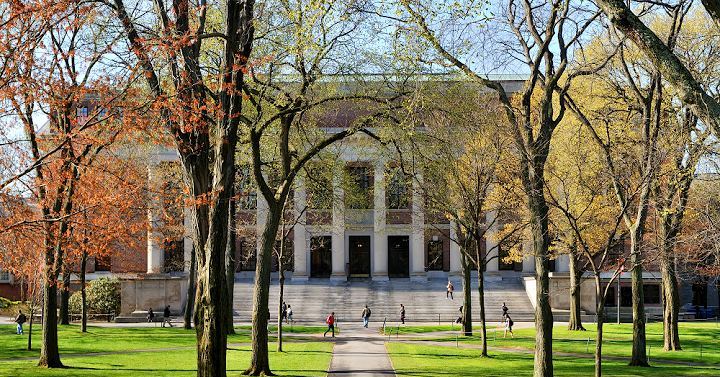
At Ithaca College — student population, 5,500 — the financial services team reports more than 2,000 queries in the past month about financial aid and tuition adjustments. Some 340 Harvard freshmen — roughly a fifth of the first-year class — deferred admission rather than possibly spending part of the year online, and a parents’ lobbying group, formed on Facebook last month, has asked the administration to reduce tuition and relax rules for leaves of absence.

Universities have been divided in their response, with some offering discounts but most resisting, arguing that remote learning and other virus measures are making their operations more, not less, costly at a time when higher education is already struggling.

“These are unprecedented times, and more and more families are needing more and more financial assistance to enroll in college,” said Terry W. Hartle, a senior vice president for the American Council on Education, a higher education trade group. “But colleges also need to survive.”

The roster of colleges that have rescinded plans to reopen their classrooms has been growing by the day. In the past two weeks, the University of Maryland, the University of Pennsylvania, the University of Southern California, the University of Virginia, Princeton and a host of other colleges announced plans to hold all or most of their classes online, citing concerns about the coronavirus. According to the Chronicle of Higher Education, less than a quarter of the nation’s 5,000 colleges are committed to providing instruction primarily or completely in person.

At Illinois State University, an 11th-hour shift infuriated Joseph Herff, a 22-year-old business major. He had locked into an off-campus lease and taken out $10,000 more in student loan debt by the time the school announced that its fall would be mostly online — the result of public health guidance and a shortage of coronavirus tests, according to the university’s president, Larry Dietz.

“I don’t have an issue with moving classes to online. I do have an issue though that classes are charged the same price,” Mr. Herff tweeted on an account that, until this month, he said in an interview, he had largely reserved for sports talk. “Why is this fair?”

Many colleges were facing financial dark clouds even before the coronavirus arrived. Population declines in some parts of the country have dampened enrollment, and soaring tuition has led many families to question the price of a college diploma. Moody’s Investors Service, which in March downgraded the higher education sector to negative from stable, wrote that even before the pandemic, roughly 30 percent of universities “were already running operating deficits.”

Since then, emptied dorms, canceled sports, shuttered bookstores and paused study-abroad programs have dried up key revenue streams just as student needs have exploded for everything from financial aid and food stamps to home office equipment and loaner laptops.

Public health requirements for masks, barriers, cleaning and other health protections also have added new costs, as have investments in training and technology to improve remote instruction and online courses.

Harvard’s campus in Cambridge, Mass. Roughly a fifth of Harvard’s first-year class deferred admission rather than spend the fall online.

“Starting up an online education program is incredibly expensive,” said Dominique Baker, an assistant professor of education policy at Southern Methodist University. “You have to have training, people with expertise, licensing for a lot of different kinds of software. All those pieces cost money, and then if you want the best quality, you have to have smaller classes.”

Chapman’s president, Daniele Struppa, said the university spent $20 million on technology and public health retrofits for the fall semester, and he estimates that the switch to an online fall will cost the school $110 million in revenue. He has cut spending “brutally” from the $400 million annual budget, he said, freezing hires, slashing expenses, canceling construction of a new gym, ending the retirement match to employees and giving up 20 percent of his own $720,000 base salary.

Only students who can demonstrate financial need will get help, he is telling families. “Tuition really reflects our cost of operation, and that cost has not only not diminished but has greatly increased.”

A survey by the American Council on Education estimated that reopening this fall would add 10 percent to a college’s regular operating expenses, costing the country’s 5,000 some colleges and universities a total of $70 billion.

“For institutions,” said Mr. Hartle, who lobbies for the council, “this is a perfect storm.”

Students are feeling tempest tossed, too.

Temple sociologist Sara Goldrick-Rab, founder of the university’s Hope Center for College, Community and Justice, said the organization has been “bombarded” with pleas for help from students who can’t cover their rent and don’t know how to apply for food stamps. At least a third of students had lost jobs because of the pandemic by May, according to the center.

Such situations, Ms. Goldrick-Rab said, are particularly risky because they often prompt students to take on second or third jobs or to become distracted, which in turn imperils financial aid that can be revoked if their grades fall.

Laurie Koehler, vice president for enrollment strategy at Ithaca College, said about one in six students reported in a just-completed survey that the pandemic had significantly hurt their ability to continue their studies. At Lafayette College in Easton, Pa., the school’s president, Alison Byerly, said she expects requests for additional financial aid to grow by up to 15 percent this year.

But the shift online also has accelerated fundamental questions about the future of higher education, said the director of the Edunomics Lab at Georgetown University, Marguerite Roza.

“This is a moment that is basically forcing students and parents to say, ‘What is the value? If I can’t set foot on campus, is that the same value?’”

Will Andersen, an 18-year-old incoming freshman at the University of Wisconsin-Madison, put it this way: “Who wants to pay $25,000 a year for glorified Skype?”

“Education isn’t just information,” agreed Yolanda Brown-Spidell, a Detroit-area teacher and divorced mother of five whose lament last month about remote learning in a private Facebook group for Harvard parents burgeoned into a lobbying push to ease school policies on tuition and fall housing.

“Being able to meet up with friends, have those highly intellectual conversations, walking over to CVS and getting ice cream at 1 in the morning,” she said, ticking off the parts of education her daughter, a rising junior, has missed while working at home on her computer. “And let’s not forget just not being home with your mama, with her eyes on you.”

Some families have sued. Roy Willey, a class-action attorney in South Carolina, said his firm alone has filed at least 30 lawsuits — including against the University of California system, Columbia University and the University of Colorado — charging universities with breach of contract for switching in-person instruction to online classes, and is closely monitoring the fall semester.

Most suits are in their early stages, though several universities have moved for dismissal. “If you and I go down to the steakhouse and order a prime rib, and prepay for it and sit at our table, and a while later the server comes by and says, ‘Here’s two hamburgers, we’re out of prime rib’ — well, we may eat the hamburgers, but they’re not entitled to the money we would have paid for prime rib,” Mr. Willey said.

“This is a moment that is basically forcing students and parents to say, ‘What is the value? If I can’t set foot on campus, is that the same value’,” said Marguerite Roza, director of the Edunomics Lab at Georgetown University.

A handful of universities have announced substantial price cuts. Franciscan University of Steubenville, a private Catholic university in Ohio with about 3,000 students, announced in April that it will cover 100 percent of tuition costs, after financial aid and scholarships, for incoming undergraduates. Williams College in Massachusetts took 15 percent off in June when it announced it would combine online and in-person instruction this fall.

More typical is the 10 percent cut at Catholic University in Washington, which plans to start the semester online and dramatically scale back the number of students allowed back onto campus. Johns Hopkins, Princeton, Georgetown University, Spelman University and other institutions are offering similar reductions. Lafayette College is limiting its 10 percent to students who study from home for the semester. The University of Southern California has offered a $4,000-per-semester “Living at Home Scholarship.”

Some schools are extending freebies. Pacific Lutheran University in Tacoma, Wash., has offered to tack on a tuition-free year of instruction for currently enrolled students, noting on its website that the current situation is not “the college experience they imagined.” St. Norbert College in De Pere, Wis., is offering a free semester.

But most colleges have kept prices flat, and a few have even increased them. They can’t afford to do otherwise without mass faculty layoffs, said Robert Kelchen, a Seton Hall University associate professor of higher education, even though the isolated, monitored experience campuses are selling this fall “is going to feel like some combination of a monastery and a minimum-security prison.”

“This crisis is demonstrating that there is real value in face-to-face instruction,” agreed David Feldman, an economist at William & Mary in Virginia and author, with Robert B. Archibald, of “The Road Ahead for America’s Colleges and Universities.” That recognition, he said, will generally protect better-endowed schools and those with state support.

Even so, he said, a culling is at hand for higher education. His prediction: a consolidation of public university branch campuses and a reckoning for some small, private liberal arts colleges that are already operating on thin margins.

“There will be a shakeout,” he said.

Fuente de la Información: https://www.nytimes.com/2020/08/15/us/covid-college-tuition.html
Comparte este contenido:

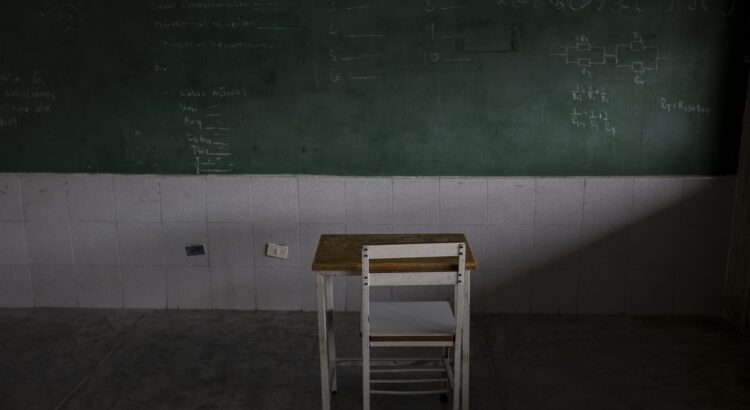
México: Pide SEP a escuelas privadas “conciliar” pagos con padres de familia

América del Norte/México/16-08-2020/Autor: José Antonio Román/Fuente: www.jornada.com.mx

La Secretaría de Educación Pública (SEP) exhortó a las escuelas privadas a “conciliar” con los padres de familia el pago de inscripciones y colegiaturas para el nuevo ciclo escolar, dada el impacto que ha tenido la pandemia de Covid-19 en materia económica.

En la conferencia vespertina en Palacio Nacional, el secretario Esteban Moctezuma aclaró que solo puede hacer una invitación a conciliar, dado que la dependencia no tiene ninguna atribución en el arreglo entre particulares y escuelas privadas, pues pertenecen a un ámbito mercantil.

Incluso, mencionó que cuando hay alguna controversia, más que acudir a la SEP se puede acudir a la Procuraduría Federal del Consumidor (Profeco). “Por eso el llamamiento es que las escuelas vean la situación de los padres de familia y estos vean las de la escuela, porque aun cuando las clases no serán presenciales se necesitan maestros y obvio, también pagarles”, dijo.

Informó también de la creación de grupos virtuales entre maestros y especialistas para diseñar las actividades y programas que se transmitirán en los canales de televisión, en el inicio del ciclo escolar 2020-2021, anunciado para el próximo 24 de agosto.

“Los maestros participan en la elaboración de 4 mil 550 guiones para los programas televisivos del próximo ciclo escolar”, dijo durante la conferencia diaria de la dependencia, en la que informa sobre el regreso a clases bajo el modelo de Aprende en Casa II.

Fuente e Imagen: https://www.jornada.com.mx/ultimas/politica/2020/08/13/exhorta-sep-a-escuelas-particulares-a-201cconciliar201d-pagos-con-padres-6759.html

Comparte este contenido:

Solidaridad con los y las maestras(os) de Michoacán, México


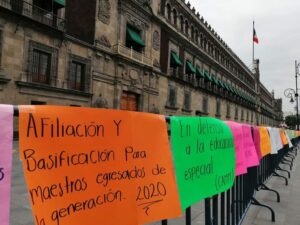
Los abajo firmantes, nos pronunciamos por la respuesta inmediata a los egresados normalistas del estado de Michoacán, para que sean contratados y se integren al servicio educativo nacional de México.

Apoyamos la manifestación que sostienen en la Plaza de la Constitución, en el Zócalo de la Ciudad de México y deseamos que salgan victoriosos en su lucha.

¡Aquí y ahora, con la Coordinadora!

¡Que viva la Sección XVIII de la CNTE, en Michoacán!

Mercedes Martínez (Federación de Maestros y Maestras de Puerto Rico, FMPR), Pedro Hernández (CNTE, Mexico), Luis Bonilla-Molina (Centro Internacional de Investigaciones Otras Voces en educación), Alfredo Velásquez (SUTEP, Perú), Laura Isabel Vargas (UNE, Ecuador), Fernando Abrego (ASOPROF, Panamá), David Lobâo (SINASEFE, Brasil), Eduardo González (MUD, Chile), Denis Solís (APSE, Costa Rica), Marc Casanova (USTEC, España), Vladimir Laura (CONMERB, Bolivia), Fernando Lázaro (CEIP-H, Argentina), Julieta Kusnir (EEUU), Nelva Reyes (CGTP, Panamá), Luis Bueno (Coordinación de sindicatos  universitarios, México), Eliana Laport FeNaPes, Uruguay), Yesid González (La Roja, Colombia), José Cambra (ASOPROF, Panamá), Richard Araujo (ASPOEP, Brasil), Luz Palomino (CII-OVE),

Puedes agregar tu firma en el siguiente enlace

http://chng.it/pLmjkBmYvj


Comparte este contenido:

México: Resolutivos de la asamblea estatal permanente de la Sección VII del SNTE-CNTE Chiapas

América del Norte/México/16-08-2020/Autor(a): Colaboradores de OVE/Fuente: Sección VII del SNTE-CNTE Chiapas 

Este viernes 14 de agosto del presente año se reunieron de manera virtual más de 500 delegados(as) que conforman la Sección VII del SNTE-CNTE Chiapas, surgiendo de esta reunión resolutivos, tareas y pronunciamientos del magisterio chiapaneco que a continuación escribiremos de manera textual:

ASAMBLEA ESTATAL PERMANENTE (VIRTUAL) DE LA SECCIÓN VII DEL SNTE-CNTE
REALIZADA EL 14 DE AGOSTO DE 2020.

Luego de 150 días de confinamiento forzado como consecuencia de una pandemia que ha cobrado (según cifras oficiales) la vida de casi casi 56 mil mexicanos, la vida política, económica y social de todos los pueblos del mundo de ha visto modificada drásticamente.

Mientras la clase trabajadora y el pueblo enfrentan la pérdida del empleo, la pobreza, el hambre y la inseguridad pública, la oligarquía nacional y extranjera han explotado la pandemia para justificar la crisis económica e imponer un nuevo orden político, económico y militar en el mundo. Particularmente en México, la autodenominada Cuarta Transformación (4ªT) ha explotado la cuarentena para imponer a toda costa sus proyectos geoestratégicos y una serie de políticas contrarias a los intereses del pueblo y lesivas a los derechos laborales de los trabajadores.

En este contexto, desde el estado de Chiapas los trabajadores de la educación militantes del Movimiento Democrático Magisterial ratifican su compromiso con las mejores causas de nuestro pueblo y se aprestan a continuar la lucha en defensa del carácter público de la educación, del empleo y los derechos laborales, de la salud y la vida.

Con este objetivo, y con la participación de más de 500 delegados, se ha reunido la Asamblea Estatal de la sección VII del SNTECNTE. Luego de revisar los consensos de base y de un profundo análisis y debate, la Asamblea arribó a los siguientes:

RESOLUTIVOS:

1.- Esta Asamblea Estatal Permanente Virtual RATIFICA los resolutivos del V Congreso Político Extraordinario de la CNTE en la exigencia de la ABROGACIÓN de la nueva mal llamada reforma educativa y sus leyes secundarias.

2.- La Asamblea Estatal Virtual informa a las bases del Movimiento Magisterial que el resultado de la CONSULTA realizada en las asambleas delegacionales y de CT legalmente constituidos mandata, por decisión mayoritaria, NO ACEPTAR LOS TERMINOS ESTABLECIDOS EN LA NORMATIVIDAD EMITIDA POR LA USICAMM.

3.- Esta Asamblea Estatal Virtual se pronuncia en contra de la aplicación del modelo híbrido de educación y el convenio suscrito entre la 4ª T y el monopolio de la TV para la transmisión de clases por mantener un carácter inequitativo y discriminatorio.

4.- Esta Asamblea Estatal Virtual mandata a los Trabajadores de la Educación de los distintos niveles educativos a integrarse a las actividades e implementar el Proyecto de Educación Alternativa diseñado por el CEAS 7 en todas nuestras escuelas.

5.- Esta Asamblea Estatal Virtual acuerda que el retorno presencial a las aulas será cuando el semáforo epidemiológico se encuentre en verde y se tengan además las condiciones de sanidad en cada una de ellas. Exigimos a la autoridad correspondiente la dotación permanente de los insumos que salvaguarden la salud de los padres de familia, alumnos y maestros.

6.- Esta Asamblea Estatal Virtual, exige la cancelación de los procesos normativos implementados por la USICAMM por considerarlas lesivas a los derechos de los Trabajadores de la Educación.

7.- La Asamblea Estatal Virtual, convoca a las bases del Movimiento Magisterial y Popular a la realización de una marcha motorizada de protesta el día 24 de agosto que tendrá como punto de llegada el zócalo central de la ciudad de Tuxtla Gutiérrez. Nota: La logística de operatividad será diseñada por la Dirección Política, Secretarios de Organización y coordinadores regionales.

TAREAS:

1.- Que la estructura del Proyecto de Educación alternativa multiplique sus esfuerzos para concretar la elaboración de los materiales de trabajo con las producciones regionales y el calendario de resistencia para el presente ciclo escolar que haga efectiva la operatividad de las acciones diseñadas por esta comisión.

2.- Enriquecer el Proyecto de Educación Alternativa, con las aportaciones que pudieran hacer los especialistas en materia educativa que se encuentran diseminados en los distintos niveles educativos e incluirlas en el proyecto de trabajo a desarrollar en este ciclo escolar 2020-2021.

3.- Iniciar una campaña de denuncias, convocando a los medios de comunicación en las distintas regiones del Estado para difundir la problemática por la que atraviesa el Movimiento Magisterial y Popular de Chiapas.

4.- Que la Dirección Política del CES concentre las propuestas de acciones emanadas de las asambleas delegacionales y las esquematice en una propuesta de Plan de Acción a corto, mediano y largo plazo que deberá ejecutarse en la presente Jornada de Lucha.

5.- Que la Dirección Política del CES 7 se avoque a la revisión de las estructuras del movimiento magisterial como el CEEAS7 y Caja de Ahorros para buscar la viabilidad de convocar a los congresos respectivos.

6.-Estructurar un proyecto de regularización o nivelación académica para los compañeros de Educación Especial y de otros niveles que ocupen de la propuesta que pueda presentarse en una eventual mesa de negociación.

7.- Elaborar como CES un documento de posicionamiento político dirigido al Gobierno de la República que denuncie las agresiones laborales que padecen los trabajadores de la educación producto de la aplicación de la nueva mal llamada reforma educativa y sus leyes
secundarias.

8.- Que el Secretario General de la Sección 7, convoque a los compañeros directivos integrantes del CEDEF a una reunión de trabajo emergente que permita compartir el proyecto de trabajo con miras al inicio del próximo ciclo escolar.

9.- Convocar a reuniones de padres de familia en las distintas delegaciones sindicales y regiones del estado para informarles de las afectaciones que se tienen por la implementación del modelo híbrido de educación.

PRONUNCIAMIENTOS:

1.- Refrendamos nuestra solidaridad con los trabajadores de la Salud de la Sección 50 del SNTSA, respaldamos su justa lucha en la exigencia de mejores condiciones laborales y por el abasto de medicamentos, insumos e infraestructura en todas las clínicas y hospitales del estado de Chiapas.

2.- Exigimos a la autoridad educativa la contratación de médicos y enfermeras para nuestras escuelas y todos los insumos que se ocupen para la desinfección de las mismas.

3.- Exigimos la LIBERTAD ABSOLUTA E INCONDICIONAL al Dr. Gerardo Vicente Grajales Yuca, injustamente detenido y sujeto a prisión domiciliaria por evidenciar las carencias del Sistema de Salud en Chiapas.

4.- Ratificamos nuestro respaldo a los estudiantes normalistas y de UPN del estado de Chiapas en su lucha por defender la educación pública, exigencia de matrículas, liberación de los egresados de UPN, contratación y examen presencial.

5.- Derivado del resultado de la consulta a las bases en la determinación de rechazar los lineamientos aplicables dela USICAMM se exhorta a nuestros compañeros de los niveles educativos en abstenerse de participar en las convocatorias de cadenas de cambio que la Secretaría de Educación implementó desconociendo la relación bilateral.

¡¡LA RESISTENCIA Y LA DESOBEDIENCIA CONTINÚA!! RESISTIR, ORGANIZARNOS Y LUCHAR… ¡¡ESA ES LA RUTA!!
TODOS: ¡¡A INTEGRARSE VIRTUALMENTE A LA III COMUNIDAD PEDAGÓGICA CRÍTICA ESTATAL!!
¡¡PORQUE VIVOS SE LOS LLEVARON, VIVOS LOS QUEREMOS!!
FRATERNALMENTE
SOLAMENTE LUCHANDO UNIDOS, ORGANIZADOS Y DISCIPLINADOS… ¡¡VENCEREMOS!!
MESA DE LOS DEBATES DE LA ASAMBLEA ESTATAL (VIRTUAL) PERMANENTE DE LA SECCIÓN VII DEL SNTE-CNTE
Secretaría de Comunicación de la Sección VII del SNTE-CNTE

Tuxtla Gutiérrez, Chiapas. Agosto 14 de 2020.

Descargar PDF: ASAMBLEA ESTATAL

Fuente e Imagen: Sección VII del SNTE-CNTE Chiapas

Comparte este contenido:
Page 358 of 1684
1 356 357 358 359 360 1.684