Page 831 of 1671
1 829 830 831 832 833 1.671

México: No deben estudiar, dicen a 2.6 millones de mujeres

México / 12 de noviembre de 2017 / Autor: Teresa Moreno / Fuente: El Universal

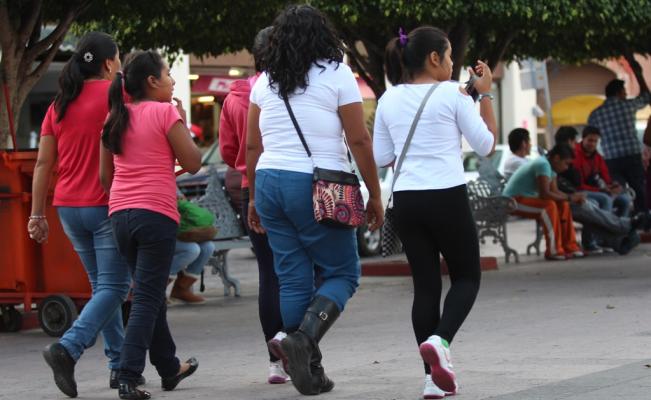
A 2 millones 562 mil estudiantes de 15 años o más les han dicho que ellas no tendrían por qué ir a la escuela

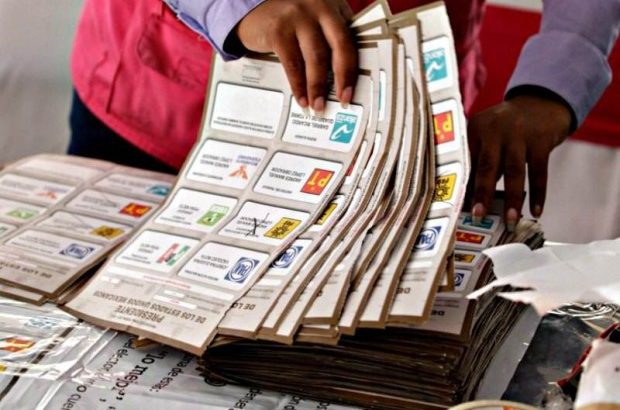
En el país, 2 millones 562 mil estudiantes de 15 años o más, a lo largo de su trayectoria escolar, han tenido que escuchar que sus compañeros o maestros les digan que las mujeres no deberían estudiar, revela la Encuesta Nacional sobre la Dinámica de las Relaciones en los Hogares (Endireh) 2016.

En los últimos 12 meses fueron 288 mil 577 las jóvenes que dijeron haber recibido ese insulto en el ámbito escolar, lo que quiere decir que en todo el país, una vez cada 1.8 minutos un maestro, maestra o compañero de clase le dijo a una alumna que las mujeres no deberían estudiar.

Según la encuesta que realizó el Instituto Nacional de Estadística y Geografía (Inegi), 4 millones 469 mil 129 jóvenes en ese rango de edad reportaron que han pasado por incidentes de violencia emocional en el ámbito escolar a lo largo de su vida, que el instituto define como degradación o acoso emocional e intimidación y acecho que sufren por el hecho de ser mujeres.

Dentro de estas categorías se encuentran las ofensas o humillaciones que reciben las mujeres por el hecho de serlo, que han sufrido 1 millón 617 mil alumnas a lo largo de su trayectoria académica.

Dijeron haber sido ignoradas o no haber sido tomadas en cuenta por ser mujeres un millón 375 mil alumnas en toda su vida, mientras que 2 millones 562 mil han escuchado que las mujeres no deberían estudiar. Aunado a eso, un millón 175 mil alumnas dijeron haber sido vigiladas o seguidas al salir de la escuela en algún momento de sus vidas.

Del total de agredidas, 91.3% no denunció ni pidió ayuda porque no se sintieron afectadas (49%), se sintieron avergonzadas (9.8%) o tuvieron miedo (11%), mientras que 9.7% pensó que las iban a culpar o porque “son las costumbres” (10.3%).

Sin cambios

Para Ana Lau Jaiven, investigadora del Departamento de Política y Cultura de la Universidad Autónoma Metropolitana (UAM) Unidad Xochimilco, los resultados de esta encuesta demuestran que a pesar del trabajo que se ha venido realizando por la igualdad de género, la mentalidad de los mexicanos no ha cambiado. Al igual que los feminicidios, el hecho de que a las mujeres les digan que no deben estudiar, demuestra que en el país no valen “nada”, puesto que se limita su derecho a la educación.

“No ha cambiado la mentalidad, por lo visto seguimos igual. Me tiene impactada. Si te fijas que por cuestiones de género matan a siete mujeres todos los días, esto quiere decir que las mujeres seguimos sin valer nada, que no tenemos derecho a la educación, mejor que nos quedemos barriendo en la casa. Es muy grave que en el siglo XXI siga ocurriendo esto, cuando desde la década de 1960 ha aumentado el número de mujeres en las universidades”, dijo.

Los agresores

Según la Endireh los que más violentan a las mujeres en el entorno escolar son los compañeros varones, con 38.5%; le siguen los maestros varones, con 19.4% de reportes por haber ejercido violencia emocional; después personas desconocidas de la escuela, con 16.3%; siguen las compañeras mujeres, con 8.4%; “otras” personas de la escuela, 7.4% de los casos; las maestras, con 4.6%; trabajadores de la escuela, 2.7%, y el director, en 2% de los reportes.

Mientras que los lugares donde se cometieron estas agresiones son, por orden: la escuela, algún lugar público cerca del plantel escolar, un lugar público lejos del mismo, el transporte, casas particulares y otros.

Son cinco las entidades que reúnen el mayor número de reportes en la materia, por orden en cuanto a la proporción de alumnas que sufrieron un episodio de violencia emocional con respecto a la cantidad de alumnas en su sistema educativo: Querétaro, Jalisco, Aguascalientes, Ciudad de México y Oaxaca.

Machismo inadvertido

La coordinadora del programa de Asuntos de Género en la Universidad Iberoamericana, Elvia González del Pliego, consideró que esta clase de violencia revela un “machismo muy fuerte” que ha pasado inadvertido por las personas que lo ejercen. La violencia se ha generalizado, asegura.

Una respuesta podría ser que las autoridades educativas creen protocolos de atención a la violencia de género e implementen sistemas eficaces de denuncia para las estudiantes.

“En este sistema, la violencia machista está justificada, la misoginia se ve como algo común y, al mismo tiempo, se ve como algo que ‘así es’. Tiene que haber acciones con el profesorado, el alumnado y el personal administrativo. Tiene que haber acciones, un protocolo de atención en las escuelas a la violencia contra las mujeres, y un lugar donde se denuncie”, señaló.

La violencia ejercida en el entorno escolar es especialmente dañina, porque las alumnas pueden llegar a pensar que no tienen la capacidad para estudiar o pueden llegar a dudar de sí mismas.

“Que alguien te humille o te diga que no puedes estudiar, si lo vas escuchando desde la infancia, te hace creer que es cierto, te hace dudar de tus capacidades y genera muchísima confusión e incertidumbre. Es violencia sicológica y emocional porque atenta contra tus emociones, tus sentimientos y tus capacidades, contra tu autoestima”, señaló.

En el tema de violencia física, el Inegi encontró que 7 millones 160 mil jóvenes y adolescentes han sufrido cuando menos un episodio a lo largo de su vida.

Para Verónica Pérez García, investigadora especializada en temas de educación y género de la organización Commenta Diálogos de Saberes, existe un doble discurso en la sociedad, puesto que por un lado se promueve públicamente que las mujeres participen y se inserten cada vez más en la actividad económica y académica del país, mientras que, por el otro lado, se normaliza la violencia de manera que ser mujer en el espacio público se convierte en una acción “crítica y cruda”.

“Hay una doble conducta: la institucional y una realidad que se sigue acentuando e implica la violencia en contra de cualquier mujer que quiera participar o se quiera involucrar y se siente señalada. Hay un traslado de lo que pasa en la sociedad con lo que pasa en la escuela. En gran medida somos esa transferencia y hay niveles de violencia que se ejercen cotidianamente con frases como ‘calladita te ves más bonita’ o el ‘estás en tus días’”, comentó Pérez García.

Fuente:

http://www.eluniversal.com.mx/nacion/sociedad/no-deben-estudiar-dicen-26-millones-de-mujeres

Comparte este contenido:

El SNTE y la artista Elsa Madrigal crean libro objeto sobre la educación

México / 12 de noviembre de 2017 / Autor: Gerardo González / Fuente: La Crónica de Hoy

La educación nos debe convertir en mejores personas, así como el artista visual transforma el libro en algo mejor para una comprensión y experiencia social más profunda, dice Elsa Madrigal Bulnes, maestra en Bellas Artes por la Escuela Nacional de Artes Plásticas y la Academia de San Carlos.

Ella es la autora que hizo realidad un proyecto apoyado por el sindicato magisterial, el SNTE: crear un libro-objeto capaz de reflejar lo que significa el Artículo 3° Constitucional.

La charla entre Madrigal y Crónica se da en las magníficas instalaciones del Centro Cultural del México Contemporáneo, un gran lugar donde el arte se enseñorea, justo a un paso del bullicio popular que baña la Plaza de Santo Domingo, donde otras artes populares lo mismo ofertan impresiones de tarjetas, invitaciones y hasta facturas.

Apasionada por las artes desde que tiene memoria, “desde niña me atraparon” como ella dice, siguió su pasión por encima del consejo de su padre que le sugería mejor estudiar diseño gráfico porque como artista visual se “moriría de hambre”.

Elsa Madrigal desmenuza su Libro Objeto sobre el 3° Constitucional, obra de 7 bocetos que le llevó tres meses realizar, a invitación en enero de este año, de la maestra Evelia Sandoval, entonces directora del cultural recinto, para formar parte del proyecto conmemorativo del Centenario de Nuestra Carta Magna.

–¿Qué es un Libro Objeto y cuál es su diferencia con uno tradicional?

–Son libros alternativos –explica–, diferentes a los comunes y cotidianos que hay en las librerías; son concebidos por el artista plástico para construir un objeto donde más que textos se recrea una idea general desde la forma y el contenido del tema que se aborde, para transmitir de manera diferente la información.

–¿Para qué pensó el SNTE y tú misma en un libro objeto del Artículo 3° Constitucional, el referido a la educación?

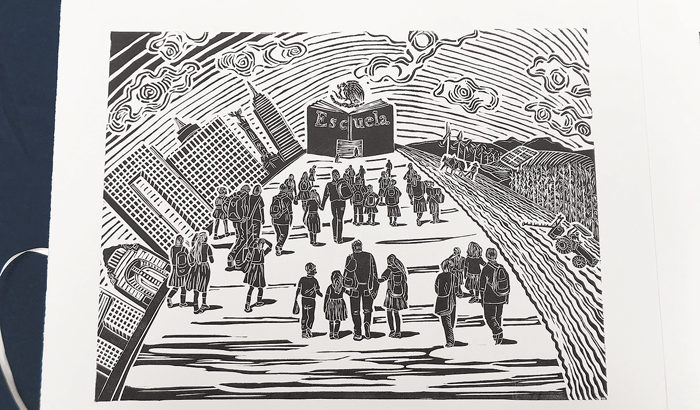
Para dejar algo tangible sobre el Centenario de la Constitución, sobre el Artículo 3°, que para que el Sindicato Nacional de Trabajadores de la Educación es lo más importante. El SNTE resguardará la obra; a través de este libro objeto resguardará este apartado constitucional. Las imágenes que incluye transmiten, plásticamente, la laicidad, obligatoriedad, gratuidad y calidad en la educación.

La artista que realizó siete grabados trabajados en linóleo, así como textos en serigrafía, reflejando estos principios básicos del artículo de la Carta Magna.

En un principio se pensó que se podía hacer una historia, para que se vieran las 10 modificaciones en el tiempo que ha tenido el 3°, pero al final se optó por reflejar la educación del presente y del futuro.

Luego de una investigación para ejecutar la obra (y como artista que es), opina que no se han podido cumplir todos los objetivos del Artículo, la realidad es muy diferente a la gratuidad educativa; sobre la calidad en la educación hay muchas diferencias sociales, mucha pobreza y no es lo mismo una escuela rural que una escuela en la ciudad, las condiciones son diferentes entre las escuelas de la CDMX y las de un pueblo donde los maestros tienen también pocas herramientas y materiales didácticos.

Por ello, al explicar cada uno de los siete grabados que creó, aparecen maestros mejor preparados, y también la aspiración a movimientos pedagógicos modernos que impulsen educación científica, pero sin descuidar a las artes.

De lo contrario, señala Madrigal, el proyecto estaría incompleto, “la educación del futuro es en equilibrio, el corazón con la razón, el pensamiento con lo sensible, y las artes no pueden desaparecer”, agrega.

El futuro plasmado en el libro objeto es, en efecto, tecnología, matemáticas, ciencias y artes, lo que está plasmado en uno de los  bocetos de la obra.

El segundo boceto da especial relevancia a los padres de familia dentro de un esquema de educación de calidad. Dice Madrigal que tomó en cuenta lo importante que es tomar conciencia que la educación del niño y del joven no está solamente en la escuela, sino también está la participación de los padres de familia.

La apuesta plasmada en los bocetos es que padres e hijos se acerquen a los deportes, la cultura mexicana, las artes plásticas, y también a temas de equidad cotidiana, dentro de la casa.

En el libro se pueden ver al papá y al hijo cocinando, en un hogar donde todos son iguales y todos tienen obligaciones; tanto niña como niño pueden cocinar.

Elsa Madrigal señala que su deseo es que todo el público tenga la oportunidad de conocer de cerca este trabajo y disfrute este libro del cual, pese a su engañosa brevedad, es resultado de una larga y detallada reflexión sobre la educación. Finalmente, señala, esta obra la llevó a ratificar su convicción de que la educación ciertamente nos debe convertir en mejores personas.

El Centro Cultural expondrá obras de Madrigal desde el próximo 9 de noviembre, en Leandro Valle 20, Centro Histórico de la Ciudad de México.

¿Para qué educar?

La educación nos debe convertir en mejores personas, señala la artista que, a petición del sindicato magisterial, ha creado un bello libro, único por su naturaleza artesanal, destinado a enaltecer lo que la Carta Magna establece como derechos de todos los mexicanos: aprender y conocer a través de la escuela.

Fuente de la Entrevista:

http://www.cronica.com.mx/notas/2017/1051148.html

Comparte este contenido:

La educación en la sucesión. La sucesión en la educación

Por: Miguel Ángel Pérez

Estamos a unos pocos días para que los distintos partidos (como fuerzas políticas nacionales) den a conocer o hagan publico el anuncio en donde publiciten los distintos candidatos a la presidencia de la republica, a las gubernamentales (para el caso de elecciones estatales) y de diputados y senadores. Aquí parece que primero son los nombres y luego los proyectos.

La educación se teje y se entreteje en los pasillos de la política, paradójicamente los asuntos educativos no son tratados ni por educadores ni por académicos, son tratados por políticos bajo las reglas de dicho campo. La política y la educación caminan de la mano desde hace mucho tiempo, sus fronteras son difíciles de precisar, debido a que son un asunto de atención y de servicio público. La educación es tratada y abordada desde los espacios del poder. Para este escenario en donde los debates confunden la descalificación de las personas antes que la discusión de ideas o de proyectos sobre todo los de largo aliento, es preciso contribuir con reglas claras en el debate educativo al cual no hemos sido invitados.

Es conveniente comenzar a precisar los puntos sobre los cuales girará el debate educativo de los días que vienen. Si bien el asunto de la evaluación, la reforma y el modelo educativo han copado la atención, a lo largo de los años que lleva el actual gobierno, la idea es comenzar a generar una nueva agenda que logre superar el estancamiento de los puntos tratados hasta ahora, que sirva de contra-peso y que sea capaz de comprometer a los candidatos en una agenda verdadera de cara a las necesidades sociales de los ciudadanos en los temas y en los asuntos educativos. Si bien existen infinidad de puntos pendientes considero que se pueden sintetizar en cuatro grandes ejes de discusión para pensar en una plataforma de gobierno. Dichos ejes pudieran ser los siguientes:

  1. Generar un esquema de justifica educativa. En nuestro país la atención educativa es profundamente inequitativa, la educación de buena calidad es para los niños y niñas que están en una situación económica y social desahogada. Los millones de pobres o los niños y niñas que viven en los cinturones de miseria tienen acceso a un servicio educativo de segunda, no cuentan con recursos para pagar por una buena educación y deben de conformarse con lo que el Estado les brinda, que son las sobras o las migajas del sistema. Los indicadores de rezago educativo, reprobación y de bajo aprovechamiento escolar, no tan casualmente golpea a dichos sectores sociales. Un principio elemental de justicia educativa es brindar buena calidad a los que no la tienen.
  2. Blindar los recursos financieros. Si bien el presupuesto educativo en nuestro país, es decoroso para solventar las necesidades que se tienen año con año, muchas veces (como ha pasado en el actual sexenio) dichos recursos son desviados en actividades que no son ni sustantivas, ni tampoco prioritarias. Promocionar la imagen del secretario de educación o de los responsables educativos en los estados es tirar el dinero en nada. Los recursos educativos no sólo deberán blindarse para cumplir con las metas y los objetivos estratégicos del sistema, también habrá de generarse y un fondo de contingencia para asuntos educativos, muy parecido a lo del sismo del 19 de septiembre, dichos recursos pueden ser acumulables y se podrá recurrir a ellos en caso de emergencia.
  3. Pensar en el profesorado y en una verdeara reforma que garantice la formación de mejores docentes.Sigue pendiente la reforma del profesorado y la gran reforma a la Educación Normal. El sistema educativo nacional deberá de pensar en la formación de docentes del siglo XXI. Para ello es necesario rescatar la herencia de todos los aportes que ha dado el normalismo y articularlo con las nuevas propuestas con la intención de mirar el futuro corticamente. Aquí es necesario responder a una pregunta básica ¿cuáles son los docentes que necesita la sociedad mexicana y dónde y cómo formarlos de tal manera que logremos superar los problemas de antaño y mirar estratégicamente el futuro con la capacidad de sacar adelante un nuevo proyecto educativo para el país? Los docentes son la pieza clave del sistema, no pueden seguir siendo tratados como artesanos o como empelados de segunda. Darles el poder y la responsabilidad, sólo así podremos salir adelante de tantos problemas acumulados.
  4. Entender a la calidad como un proceso el cual se desarrolla en contextos específicos. Para ello se requiere generar proyectos educativos contextualizados, vincular la atención educativa con la sociedad, considerar el capital acumulado en los pueblos y las comunidades, para partir de ahí y concluir ahí mismo. La tarea educativa no se reduce sólo a la escuela, es por ello que se requiere generar una sinergia con otras agencias que colaboren y sirvan de aliados al proyecto educativo nacional.

Junto a las anteriores un quinto punto de acción estaría pensado en desmantelar la obsesión por la evaluación y la saturación del discurso eficientista que ha terminado por descontextualizar las acciones educativas de las necesidades de los mexicanos.

Por último necesitamos educar a los políticos y que las sucesiones políticas estén ausentes de demagogia, de mentiras y de promesas incumplidas. Darles la palabra a los y las educadores y educadoras, que sean ellos y ellas los que marquen el rumbo del rostro de la educación que necesita nuestro piais para los próximos seis años. Esa es la tarea en este esencio de sucesión presidencial.

Fuente: http://www.educacionfutura.org/la-educacion-en-la-sucesion-la-sucesion-en-la-educacion/

Comparte este contenido:

Estados Unidos: NC superintendent slams ‘disturbing’ spending at state education agency

Carolina del Norte / 08 de noviembre de 2017 / Por: Kelly Hinchcliffe / Fuente: http://www.wral.com/

State Superintendent Mark Johnson listened last week as State Board of Education members bemoaned the millions of dollars in recent budget cuts to the North Carolina Department of Public Instruction. The cuts have harmed staff and students, one board member explained, and he urged Johnson to join them in reaching out to state lawmakers to say «enough is enough.»

But Johnson declined. Instead, he said in his 11 months as superintendent he has found excessive spending at the state education agency and said he hopes an upcoming $1 million audit he has commissioned will root out any other potential waste at the agency.

«In my time as state superintendent, I have found a lot of things that I’ve found disturbing about this department,» Johnson said. «I will not go into the long list of them, but one little item that I can point out is our SurveyMonkey accounts.»

Johnson explained that the agency uses the online tool to send out surveys to principals, teachers and others to get feedback on important topics. Instead of the agency sharing one account, Johnson said he discovered it was paying for nine accounts. SurveyMonkey plans cost anywhere from $0 for a basic account to nearly $1,200 a year for a premier plan. DPI’s accounts varied in level.

«The really great professional staff (at DPI) pointed that out to me, and that’s something we’re taking care of,» Johnson said.

The communications department’s account alone was $800 to $900 a year, according to newly hired communications director Drew Elliot. He said the agency has stopped anyone from renewing an annually billed account and has begun consolidating them. In addition to the nine SurveyMonkey accounts, the North Carolina Virtual Public School has its own contract with Qualtrics for surveys, Elliot said.

WRAL News asked the superintendent to provide other examples of spending that he has found disturbing since he took office in January. Lindsey Wakely, the superintendent’s senior policy advisor and chief legal counsel, said they did not have a pre-existing document tracking or detailing any examples, but she agreed to put together a list.

«Below are some examples of DPI’s past spending practices and costs, while facing budget cuts, that the Superintendent and his staff have identified and are seeking to address moving forward,» Wakely wrote.

In addition to the nine SurveyMonkey accounts, the superintendent’s office identified the following items:

  • Extensive conference-related costs, such as:
    • Paying excess rates for conference speakers
    • Large sums for meals and room rentals
    • $25,000 to sponsor World View Symposium held by UNC
  • $2,500 to sponsor one episode of a single-market television program.
  • Overhead charges paid to hire personnel through intergovernmental contracts rather than directly hiring personnel, which would cost DPI less.
  • Reversion of over $15 million in Excellent Public Schools Act funds that could have been used to support early childhood literacy.

In an emailed statement, Johnson said «the General Assembly is frustrated with inefficiencies at DPI under the State Board’s leadership, and I understand that. To avoid future cuts, we must work on building trust that we are spending our available dollars wisely – keeping our educators and students as the top priority.»

The board and other education leaders «must be held accountable for the taxpayer dollars entrusted to them,» he wrote. Johnson said the agency did not give educators access to almost $8 million in funds provided in fiscal years 2015 and 2016 for early childhood literacy efforts.

«That’s a total of over $15 million that went unused to support the education of our youngest students,» Johnson wrote. «When I was made aware that the same thing was about to happen earlier this year, I worked with the General Assembly to salvage $5 million to procure digital devices for literacy support under NC Read to Achieve. Moving forward, I am working with DPI literacy and early learning staff to ensure that funding provided by the General Assembly for Read to Achieve is fully utilized to support the critical goal of our children becoming lifelong readers.»

In an interview with WRAL News after last week’s meeting, State Board of Education Chairman Bill Cobey praised the superintendent’s efforts to find wasteful spending at the agency.

«Well, I’m glad to hear that,» Cobey said, adding that he was not aware of what other waste the superintendent had found.

After WRAL News provided Cobey with the superintendent’s list of spending issues, the chairman emailed a statement, saying he «applaud(s) the efficient use of appropriated funds and the elimination of any wasteful spending.»

«As the administrative head of DPI, it is important that the Superintendent and his staff continuously focus on the best utilization of all appropriated funds for the benefit of the public school children of NC,» Cobey wrote.

Lawmakers cut the education agency’s operating funds by 6.2 percent – $3.2 million – this year and 13.9 percent – $7.3 million – next year. State board members have urged the superintendent to speak out against the cuts in recent months, but he has repeatedly refused, saying he prefers to talk with lawmakers privately and does not think it’s productive «to try to negotiate through the media.»

Last month, state board member Greg Alcorn asked the superintendent to address «the elephant in the room» – the budget cuts – during his monthly superintendent’s message so the board could have clarity about where he stands. He declined, saying he wants his monthly report to focus on good things happening in schools.

Last week, state board member Eric Davis tried a different approach and told the superintendent of a recent conversation he had with an unnamed education leader in the General Assembly.

«I brought up these cuts and said, ‘Is there anything we can do to avoid this?’ And this education leader said if the state board and the state superintendent came together to the General Assembly and said, ‘Enough is enough. We can’t serve our students and absorb another cut,’ that would have great weight in the General Assembly,» Davis said. «So I would suggest we take this education leader up on his advice.»

«I would love to talk to that education leader as well,» Johnson responded. «There are many, many different education leaders in the General Assembly that have vastly different opinions. I know that because I’ve been working very closely with all of them. And so, yes, that is a conversation we can have. I’d like to talk to who you talked to.»

Davis tried again.

«Sure. I think this particular advice was keen on that we are together in that request, that we are unified in advocating for the department, that the department can’t absorb any more cuts. It’s important for us to publicly say that,» Davis said.

«I look forward to discussing that with the education leader you discussed it with,» Johnson responded.

«So are we in agreement on avoiding future cuts?» Davis asked.

The superintendent stared straight ahead, not acknowledging Davis’ question, as others in the room laughed nervously at the awkward silence.

A few minutes later, Davis circled back to the discussion, this time urging all of his colleagues to work together to fight budget cuts.

«Before we can confront what we need to do in terms of equity for our students, we have to know who we have on the team that can deliver whatever our message is. We’ll never make progress on equity with a constantly diminishing staff worried about their own jobs, unable to deliver the kinds of (services) needed,» he said. «I hope my colleagues will join me in saying enough is enough, we cannot absorb any more cuts.»

Johnson quickly responded, telling Davis and the rest of the board about the «disturbing» spending he had discovered at the agency and said he will be relying on the upcoming $1 million outside audit to find any other potential waste.

«The operational audit might say no more cuts. It might say here are places where we can be more efficient and drive the work better and combine departments and be better, and that might also mean no cuts,» Johnson said. «But I am very much looking forward to the operational review and having that information to guide these conversations and to tell us what is working and what is not.»

Johnson said he hopes the audit will be ready in April. In the meantime, board member Becky Taylor said she wants everyone to be on the same page.

«I think the audit’s going to be great, because it’s going to provide efficiencies, which all agencies need,» she said. «But I think we need to send the message that we are unified in supporting our DPI staff in delivering the services they need to deliver and really stop the bleeding.»

Fuente noticia: http://www.wral.com/nc-superintendent-slams-disturbing-spending-at-state-education-agency/17089497/

Comparte este contenido:

México: Estamos en la educación masiva, pero aún no en la universal: Malo Álvarez

México / 08 de noviembre de 2017 / Por: Nora Rachel RAMÍREZ / Fuente: https://www.elsoldetlaxcala.com.mx

A México la masificación como la universalización llegaron casi medio siglo más tarde que en el resto del mundo, afirma el subsecretario de Educación Superior de la SEP

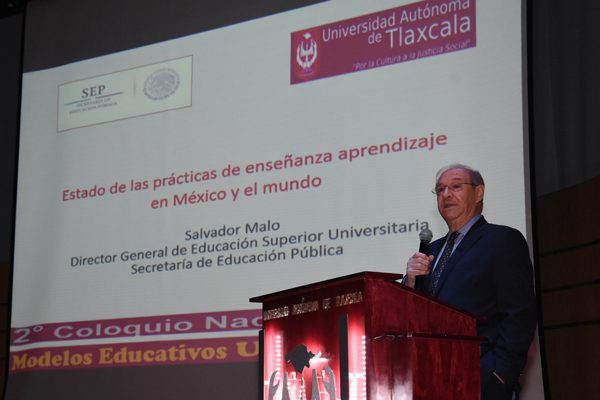
En la segunda mitad del siglo XX empieza lo que se llamó la masificación de las universidades, éstas atendían a más del 15 % de los jóvenes en edad de estudiar, y es hasta el último cuarto de siglo pasado cuando comienza lo que se conoce como universalización de la educación superior, significa que entran más del 50 % de los jóvenes a estas instituciones, reseñó Salvador Alejandro Malo Álvarez, subsecretario de Educación Superior de la Secretaría de Educación Pública (SEP).

Como parte de la conferencia “El estado de las prácticas de enseñanza-aprendizaje en México”, que dictó en el 2do. Coloquio Nacional sobre Modelos Educativos Universitarios, destacó que el país tiene el 35 o 38 % de estudiantes del grupo de edad que entran a las universidades, por lo que “estamos en la educación masiva, pero aún no en la educación universal”.

Expresó que la razón de esta situación es que a México y al resto de América Latina tanto la masificación como la universalización llegaron casi medio siglo más tarde que en el resto del mundo.

“En el caso particular de México dense cuenta que no podemos tener muchos más estudiantes en la educación superior, cuando la educación secundaria se volvió obligatoria apenas en 1993, y la media superior hasta el 2012; es claro que no podemos tener muchos más estudiantes universitarios porque de alguna manera el número de jóvenes que salen de las secundarias, sobre todo de la preparatoria, sigue siendo relativamente pequeño, con lo que se da en otros países”.

El doctor en Física por el Colegio Imperial de Londres explicó que se tienen que cambiar los modelos universitarios, “porque ahora la educación superior es para muchos o para todos, ya no es para una elite (como la que existía a principios del siglo XIX) y, sin embargo, seguimos utilizando los métodos educativos que se usaban para educar a unas pequeñas porciones de la población”.

Ratificó que la matrícula de educación superior en la República mexicana ha cambiado de ser de 50 mil personas, aproximadamente, en 1960, a ser en la actualidad casi cuatro millones, “se ha multiplicado 90 veces en ese periodo, efectivamente ahora la educación superior es para todos”.

Dijo que todo el mundo está yendo a la educación superior, y eso los hace entrar en una situación novedosa a nivel internacional, puesto que “ahora en el mundo tenemos más personas preparadas que nunca, son 270 millones de personas con educación profesional, y viene otro tanto estudiando en las universidades”.

Expresó que para afrontar este tipo de retos es preciso tener más personas preparadas y tener más tecnología, “en suma, el mundo va a tener cada vez más datos, más información, más conocimientos y energía, y eso es lo que va a ayudar, o está ayudando, a que tengamos más gente preparada que pueda aprovechar y usar todos esos datos”.

Señaló que existen factores que están incidiendo en la educación general y particular, por ejemplo, “la dinámica del conocimiento en cualquier área y disciplina es veloz; se están creando conocimientos dentro y fuera de las universidades, la cantidad de éstos hace que ya no podamos tener carreras para la vida”.

Agregó que los estudiantes que cursan una carrera en estos tiempos no podrán pensar que una vez que tengan su título universitario ya no va a estudiar, “ninguna persona va a poder dejar de estudiar si quiere mantenerse al día con lo que está pasando”.

La conferencia del subsecretario giró en torno a qué está sucediendo con las enseñanzas y los aprendizajes no solo en México, sino a nivel mundial; comparó tendencias y analizó hacia dónde se encamina el Modelo Humanista Integrador basado en Competencias (MHIC) de la Universidad Autónoma de Tlaxcala, sede del evento.

Aclaró que cada uno de los individuos aprende de manera diferente y, por lo tanto, enseñar a todos por igual, o esperar a que todos aprendan de la misma manera, es falso, “no podemos superar eso, no todos aprendemos y ni enseñamos por igual”.

Pidió a los docentes que los alumnos aprendan de manera diferencial, y que los profesores puedan por lo tanto preparar sus enseñanzas para que cada uno de los alumnos vaya a distinto paso, según sus propias habilidades y capacidades.

Fuente noticia: https://www.elsoldetlaxcala.com.mx/local/751455-estamos-en-la-educacion-masiva-pero-aun-no-en-la-universal-malo-alvarez

Comparte este contenido:

Qué es Homeschool * Educación en Casa

México / 8 de noviembre de 2017 / Autor: Propósito en Familia / Fuente: Youtube

Publicado el 7 nov. 2017
HOLA A TODOS BIENVENIDOS A MI CANAL En el video de hoy les explico qué es educación en casa o homeschool, quienes lo pueden hacer y sus ventajas. En el canal estaré compartiendo con ustedes todo lo que he aprendido acerca de educación en casa. No se lo pueden perder. Puedes dejar en los comentarios que piensas de la educación en casa o homeschool.
Fuente: https://www.youtube.com/watch?v=uFCsfdXPjCM
Comparte este contenido:

Interview 3: Noam Chomsky and Robert Pollin: Breaking Through the Political Barriers to Free Education

Interview/ By C.J. Polychroniou, Truthout

In an increasingly unequal country, the stakes are high for debates over student debt and the prospect of free higher education. Driven by neoliberal politics, our current educational system is both a product of and a driver of deep social inequities. In this interview, world-renowned public intellectuals Noam Chomsky and Robert Pollin take on the question of who should pay for education — and how a radical reshaping of our educational system could be undertaken in the US.

This is the third part of a wide-ranging interview series with world-renowned public intellectuals Noam Chomsky and Robert Pollin. Read part one here and part two here.

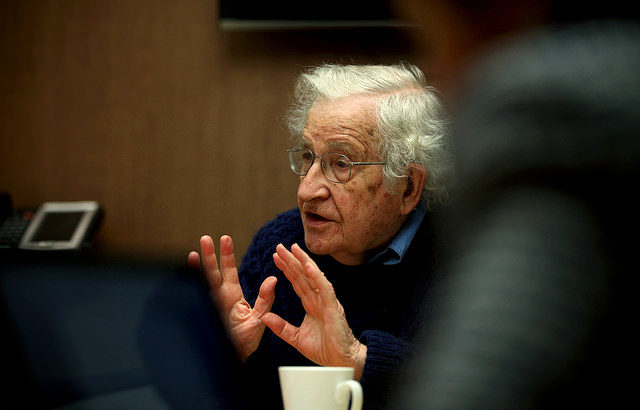
C.J. Polychroniou: Noam, higher education in the US is a terribly expensive affair, and hundreds of billions are owed in student loans. First, do you think that a system of free higher education can coexist alongside tuition-charging universities? Secondly, what could and should be done about student debt?

Noam Chomsky: The educational system was a highly predictable victim of the neoliberal reaction, guided by the maxim of «private affluence and public squalor.» Funding for public education has sharply declined. Tuition has exploded, leading to a plague of unpayable student debt. As higher education is driven to a business model in accord with neoliberal doctrine, administrative bureaucracy has sharply increased at the expense of faculty and students, developments reviewed well by sociologist Benjamin Ginsburg. Cost-cutting dictated by the revered market principles naturally leads to hyper-exploitation of the more vulnerable, creating a new precariat of graduate students and adjuncts surviving on a bare pittance, replacing tenured faculty. All of this happens to be a good disciplinary technique, for obvious reasons.

For those with eyes open, much of what has happened was anticipated by the early ’70s, at the point of transition from regulated capitalism to incipient neoliberalism. At the time, there was mounting elite concern about the dangers posed by the democratizing and civilizing effects of 1960s activism, and particularly the role of young people during «the time of troubles.» The concerns were forcefully expressed at both ends of the political spectrum.

At the right end of the spectrum, the «Powell memorandum» sent by corporate lobbyist (later Supreme Court Justice) Lewis Powell to the Chamber of Commerce called upon the business community to rise up to defend itself against the assault on freedom led by Ralph Nader, Herbert Marcuse and other miscreants who had taken over the universities, the media and the government. The picture was, of course, ludicrous but it did reflect the perceptions of Powell’s audience, desperate about the slight diminution in their overwhelming power. The rhetoric is as interesting as the message, reminiscent of a spoiled three-year-old who has a piece of candy taken away. The memorandum was influential in circles that matter for policy formation.

At the other end of the spectrum, at about the same time, the liberal internationalists of the Trilateral Commission published their lament over «The Crisis of Democracy» that arose in the «terrible» ’60s, when previously apathetic and marginalized parts of the population — the great majority — began to try to enter the political arena to pursue their interests. That posed an intolerable burden on the state. Accordingly, the Trilateral scholars called for more «moderation in democracy,» a return to passivity and obedience. The American rapporteur, Harvard professor Samuel Huntington, reminisced nostalgically about the time when «Truman had been able to govern the country with the cooperation of a relatively small number of Wall Street lawyers and bankers,» so that true democracy flourished.

A particular concern of the Trilateral scholars was the failure of the institutions responsible for «the indoctrination of the young,» including the schools and universities. These had to be brought under control, along with the irresponsible media that were (occasionally) departing from subordination to «proper authority» — a precursor of concerns of the far-right Republican Party today.

There is no economic reason why free education cannot flourish from schools through colleges and university.

The right-liberal spectrum of concerns provided a good indication of what was to come.

The underfunding of public education, from K-12 through colleges and universities, has no plausible economic rationale, and in fact is harmful to the economy because of the losses that ensue. In other countries, rich and poor, education remains substantially free, with educational standards that rank high in global comparisons. Even in the US, higher education was almost free during the economically successful years before the neoliberal reaction — and it was, of course, a much poorer country then. The GI bill provided free education to huge numbers of people — white men overwhelmingly — who would probably never have gone to college, a great benefit to them personally and to the whole society. Tuition at private colleges was far below today’s exorbitant costs.

Student debt is structured to be a burden for life. The indebted cannot declare bankruptcy, unlike Trump. Current student debt is estimated to be over $1.45 trillion, [more than] $600 billion more than total credit card debt. Most is unpayable, and should be rescinded. There are ample resources for that simply from waste, including the bloated military and the enormous concentrated private wealth that has accumulated in the financial and general corporate sector under neoliberal policies.

There is no economic reason why free education cannot flourish from schools through colleges and university. The barriers are not economic but rather political decisions, skewed in the predictable direction under conditions of highly unequal wealth and power. Barriers that can be overcome, as often in the past.

Bob, what’s your own response to the question I posed above?

Robert Pollin: Student debt in the US has exploded in the past decade. In 2007, total student debt was $112 billion, equal to 0.8 percent of GDP. As of 2016, total student debt was [more than] $1 trillion, equal to 5.6 percent of GDP. Thus, as a share of GDP, student debt has risen approximately seven-fold. As of 2012, nearly 70 percent of students left college carrying student loans, and these loans averaged $26,300.

The rise in student debt reflects a combination of factors. The first is that the private costs of attending college have risen sharply, with public higher education funding having been cut sharply. Average public funding per student was 15 percent lower in 2015 than in 2008, and 20 percent lower than in 1990. The burden of the public funding cuts [has] been worsened by the stagnation of average family incomes. Thus, in 1990, average tuition, fees, room and board amounted to about 18 percent of the median household income. By 2014, this figure had nearly doubled, to 35 percent of median household income.

Despite these sharply rising costs, college enrollments have continued to rise. There are many good reasons for young people to go off to college, open their minds, develop their skills and enjoy themselves. But probably the major attraction is the fact that income disparities have increased sharply between those who go to college versus those who do not. This pattern corresponds with the stagnation of average wages since the early 1970s that we discussed [previously]. The reality under neoliberalism has been that, if you want to have a decent shot at a good-paying job with a chance for promotions and raises over time, the most important first step is to get a college education. The pressures to go to college would be much less intense if working-class jobs provided good pay and opportunities to advance, as was the pattern prior to the onset of neoliberalism.

Virtually all student debt in the US is now held by the federal government. It would therefore be a relatively simple matter to forgive some, if not all of it. This would enable young people to transition much more easily into creating their own households and families. At the same time, if the government is going to enact a major program of student debt forgiveness, it should be at least equally committed to relieving the heavy mortgage debt burdens still carried by tens of millions of non-affluent households in the aftermath of the 2007-09 financial crash and Great Recession. Similarly, the government should also be at least equally committed to both lowering the costs of college education in the first place, and [supporting] better wages and work opportunities for people who do not attend college.

The blueprint for a progressive US that the two of you have sketched out requires that a certain course of political action is carried out … which includes educating the masses in getting from here to there. How is this to be done, especially given not only the peculiarities of American political culture, but also the balkanization of progressive and left forces in the country?

Chomsky: The answer is both easy and hard. Easy to formulate (and familiar), and hard to execute (also familiar). The answer is education, organization [and] activism as appropriate to circumstances. Not easy, but often successful, and there’s no reason why it cannot be now. Popular engagement, though scattered, is at quite a high level, as is enthusiasm and concern. There are also important elements of unity, like the Left Forum, novel and promising. And the movements we’ve already mentioned. Significant efforts are underway, such as those alluded to briefly [before], and there’s no reason why they cannot be extended. While the left is famous for constant splits and internal disputes, I don’t think that’s more so now than in the past. And the general mood, particularly among young people, seems to me conducive to quite positive changes.

It is not idle romanticism to recognize the potential that can be awakened, or arise independently, in communities that free themselves from indoctrination and passive subordination.

I don’t feel that there is anything deep in the political culture that prevents «educating the masses.» I’m old enough to recall vividly the high level of culture, general and political, among first-generation working people during the Great Depression. Workers’ education was lively and effective, union-based — mostly the vigorous rising labor movement, reviving from the ashes of the 1920s. I’ve often seen independent and quite impressive initiatives in working-class and poor and deprived communities today. And there’s a long earlier history of lively working-class culture, from the early days of the industrial revolution. The most important radical democratic movement in American history, the populist movement (not today’s «populism»), was initiated and led by farmers in Texas and the Midwest, who may have had little formal education but understood very well the nature of their plight at the hands of the powerful banking and commercial sectors, and devised effective means to counter it….

I’ve been fortunate enough to have seen remarkable examples elsewhere. I recall vividly a visit to an extremely poor, almost inaccessible rural village in southern Colombia, in an area under attack from all sides, where I attended a village meeting that was concerned with protecting their resources, including irreplaceable water supplies, from predatory international mining corporations. And in particular. a young man, with very little formal education, who led a thoughtful and very informed discussion of sophisticated development plans that they intended to implement. I’ve seen the same in poor villages in West Bengal, with a handful of books in the tiny schoolroom, areas liberated from landlord rule by Communist party militancy. The opportunities and, of course, resources are vastly greater in rich societies like ours.

I don’t think it is idle romanticism to recognize the potential that can be awakened, or arise independently, in communities that free themselves from indoctrination and passive subordination. The opportunities I think are there, to be grasped and carried forward.

Pollin: I think it is inevitable that leftist forces in the US would be divided, if not balkanized, to some extent. Among the full range of people who are committed to social and economic equality and ecological [justice] — i.e. to some variant of a leftist vision of a decent society — it will always be the case that some will be more focused on egalitarian economic issues, others around the environment and climate change, others on US imperialism, militarism and foreign policy, others on race and gender equality, and still others on sexual identity.

I certainly do not have the formula for how to most effectively knit all these groups together. But I do think we can learn a lot from the major successes out there. The 2016 Bernie Sanders presidential campaign is a first obvious example. Another is the California Nurses Association/National Nurses United (CNA/NNU) that I mentioned [before]. This is a union, fighting first for the well-being of its members, who are overwhelmingly women, with a high proportion being women of color. At the same time, CNA/NNU has been in the forefront of campaigns for single-payer health care and even the Robin Hood Tax on speculative Wall Street trading.

There are other progressive organizations that have proven track records of success. One is the Los Angeles Alliance for a New Economy (LAANE), which has long been active around both living wage and other worker rights issues, as well as community economic development and environmental justice. A more recently formed coalition is NY Renews, which is comprised of 126 organizations in New York State who have come together to advance a serious program in the state to both dramatically reduce greenhouse gas emissions and expand good job opportunities. The Washington State Labor Council — part of the AFL-CIO — has also been committed and innovative in bringing together coalitions of labor and environmental groups.

The US left needs to learn and build from the achievements and ongoing work of these and similar groups. In fact, as Margaret Thatcher used to say, «there is no alternative» — if we are serious about successfully advancing a left alternative to the disasters caused by 40 years of neoliberal hegemony.

Source:

http://www.truth-out.org/opinion/item/42422-noam-chomsky-and-robert-pollin-breaking-through-the-political-barriers-to-free-education
Comparte este contenido:
Page 831 of 1671
1 829 830 831 832 833 1.671