Page 919 of 1671
1 917 918 919 920 921 1.671

EEUU:The legal threat to diversity on campus

América del Norte/EEUU/Agosto del 2017/Noticias/https://theconversation.com

Last summer, the Supreme Court ruled that colleges and universities can use race as one factor among many in making admissions decisions. The court determined that such policies helped further an institution’s mission to attain the educational benefits of diversity.

A recent report by The New York Times, however, has brought affirmative action back to the forefront. According to The New York Times, the Trump administration may be considering a “project” to direct Department of Justice resources to investigate race-conscious admissions. While Department of Justice officials responded that the internal memo did not reflect new department policy, the story has placed colleges and universities “on notice” that their efforts may face renewed scrutiny.

As an education and legal scholar of equity in higher education, I’ve represented hundreds of social scientists before the Supreme Court to support colleges’ use of race-conscious admissions. My belief – and that of many educators and civil rights advocates – is that the alleged investigation by the Department of Justice is meant to intimidate institutions and, perhaps, sway admissions officers from considering race in their admissions policies.

Unintentional or not, the potential threat of legal action could have a dramatic impact on the diversity of college campuses across the country.

University of Michigan student Ebrie Benton protests against the state’s ban on affirmative action. AP Photo/Al Behrman

Legal intimidation

Despite the Supreme Court’s ruling last year, conservative groups like Students for Fair Admissions continue to press lawsuits against universities that employ race-conscious admissions. Cases against Harvard University and UNC Chapel Hill are making their way through the courts and could potentially bring affirmative action to the Supreme Court again.

However, Harvard and Chapel Hill have some of the largest endowmentsin the country, with US$34 billion and $2 billion, respectively. Might institutions that lack the financial resources to defend against lawsuits begin changing admissions policies and practices in order to avoid potential legal threats?

recent study found that over the last 20 years, a public commitment to race-conscious admissions has become far less common, particularly among institutions that are relatively lower in the status hierarchy. In 1994, 82 percent of “very competitive” public universities openly considered race as one of many factors in admissions decisions. By 2014, that number declined to just 32 percent. The “most competitive” universities, however, have continued their public commitment to race-conscious admissions practices unabated.

While the reasons for this trend haven’t been studied directly, it’s worth noting that the “most competitive” institutions are also the institutions that have more financial resources to defend against potential legal action.

Lawyer Bert Rein speaks to press during the 2015 affirmative action case. He’s joined by his client, Abigail Fisher, and legal strategist Edward Blum, founder of Students for Fair Admissions. AP Photo/J. Scott Applewhite

Why opposition exists

In many ways, higher education provides a pathway to positions of power and influence in the United States.

Attending an elite institution remains an important part of the trajectory for those in the ruling class. Harvard, Stanford and Yale, for example, have graduated considerably more recent members of Congress than other less prestigious schools.

Elite institutions also provide particularly high labor market returns for students of color. Economists have shown, for example, that attending the most selective institutions made an especially big difference in the life earnings for black, Latino and first-generation students.

Keeping the path to high-status positions open for people of color was one of the reasons the Supreme Court found race-conscious admissions to be constitutional. In the words of the court, to cultivate a set of leaders with legitimacy in the eyes of the citizenry, “the path to leadership must be visibly open to talented and qualified individuals of every race and ethnicity.”

recent opinion piece by Emory professor Carol Anderson made the compelling case for why opposition to affirmative action is grounded on the politics of white resentment – that is, a false view that opening the path to the ruling class for black and Latino students represents a “theft” of those resources from white students.

A world without affirmative action

What happens when colleges and universities cannot consider race as a factor in admissions?

Research shows that, without race-conscious admissions, the racial diversity of student bodies drops substantially. For example, African-American and Latino enrollment declined at the most selective undergraduate institutions in states with bans on affirmative action. Similar findings were reported in enrollment at law schools and business schools after these bans were instituted.

My own research documents declines due to affirmative action bansacross a number of graduate fields of study, including engineering and natural and social sciences as well as medical schools.

The decline in racial diversity across these educational sectors exacerbates the already disproportionately low number of students of color in these programs and reduces the variety of perspectives that are needed to foster innovation and advance scientific inquiry.

In short, race-conscious admissions do make a difference in campus diversity, allowing universities to address, rather than exacerbate, existing racial inequities.
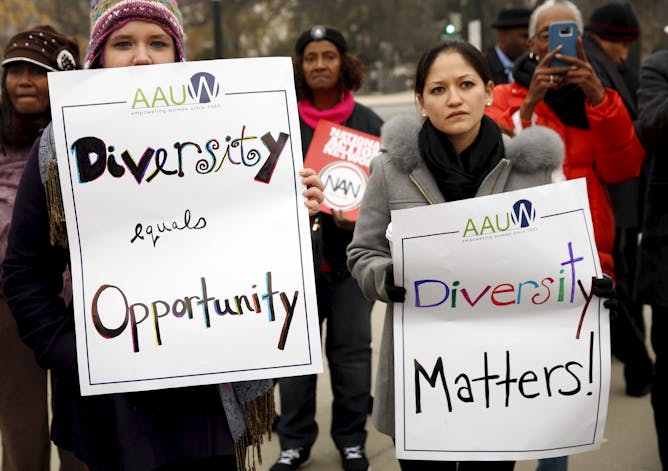
Supporters of affirmative action believe that it’s still the best way to ensure a diverse student body – something that benefits all students. Reuters/Kevin Lamarque

Next steps for universities

Though the Fisher case cleared a path for race-conscious admissions, universities must still do their part. The court ruled that institutions must be able to connect racial and ethnic diversity to their mission and demonstrate why so-called “race-neutral” efforts are not as effective as race-conscious ones.

However, these steps alone are not enough for preserving true diversity in the face of ongoing attacks.

One of the very important aspects of the Fisher decision is that the Court’s rationale reflects a robust understanding of diversity: namely, that diversity is about more than the number of students of color; it’s also about fostering an environment in which students can benefit from diversity.

Research suggests that this means ensuring that students are engaging across racial and ethnic lines. In an analysis of decades of social science research, my co-author and I learned that realizing the benefits of diversity requires healthy, even if uncomfortable, cross-racial interactions.

Doing so requires attending to the ways that race, in explicit and subconscious ways, influences our interactions and shapes educational opportunity. It’s hard to see how institutions can do so without considering race in their educational policies and practices – including college admissions.


Fuente:

https://theconversation.com/the-legal-threat-to-diversity-on-campus-82402

Fuente imagen:

https://lh3.googleusercontent.com/KA7B3ABscoiZu619uFMTBsVxDDjWganqudbq2YcEHLtLRAyo9WgCt–szplV7ZIIVFWlCw=s85

 

Comparte este contenido:

México: Universitarios de Querétaro regresan de China con premio de robótica

América del Norte/México/Agosto del 2017/Noticias//www.20minutos.com.mx


Alumnos egresados de la Escuela de Bachilleres de la Universidad Autónoma de Querétaro (UAQ) obtuvieron el primer premio en la competencia internacional Robot Challenge 2017, que se desarrolló en Beijing, China, del 4 al 6 de agosto. Ximena Valles Novoa y Manuel Alejandro Cardoso Duarte, a su llegada, afirmaron que están orgullosos de poner en alto el nombre de la Universidad de Querétaro y de México. Miembros del Club MekLab, en la Facultad de Ingeniería de la UAQ, los jóvenes alumnos se enfrentaron a una competencia que reunió a representantes de 26 países, mil 976 participantes y mil 316 robots. “No sólo te enfrentas a equipos como en las competencias nacionales, sino que además tienes que hacer frente al idioma”, explicó Manuel Alejandro, quien agregó que a pesar de contar con un traductor, no fue un asunto sencillo enfrentarse a grupos principalmente asiáticos. Por su parte Ximena, quien actualmente estudia la Ingeniería en Nanotecnología de la Facultad de Ingeniería, explicó que gracias a los conocimientos que obtuvieron en el club, pudieron sortear los diferentes retos que representó el concurso de robótica y alzarse con el triunfo en esta edición. El robot con el que participaron está hecho con piezas de LEGO, es programado por computadora y aunque en las otras dos categorías en las que concursaron -sumo y seguidor de líneas- ya estaba previamente construido en el Unknown Mission, había que empezar desde cero un modelo que les indicaban en ese momento. Por su parte, Daniela Trejo Saavedra, asesora del equipo, señaló que es importante observar los logros de los jóvenes y poner a prueba sus habilidades, y que el trabajo que se hace durante cada semana se refleja con esta clase de resultados. Por lo pronto, los jóvenes ya se preparan para participar en la etapa nacional de la World Robot Olimpiad, que será el próximo 9 de septiembre en Monterrey, Nuevo León, y esperan tener buenos resultados dentro de este y otros certámenes.

Fuente  http://www.20minutos.com.mx/noticia/255792/0/universitarios-de-queretaro-regresan-de-china-con-premio-de-robotica/#xtor=AD-1&xts=513356

Fuente imagen https://lh3.googleusercontent.com/KKg_IdB4sXvTGT7f-D3NyrqRV4BT2xHK0JZpHWlkJip–6DXZNIE-umXJxI4cDow2zRh=s85e

Comparte este contenido:

¿El nuevo modelo educativo mexicano se ocupará de la sanidad mental y emocional de los alumnos y maestros?

Por: Daniel Suárez. 

Psicoterapia Gestalt para la Educación Mexicana: Una alternativa de cambio.

El propósito de la Psicoterapia Gestalt es brindar ayuda a la gente para que pueda redescubrir creativamente su capacidad de darse cuenta, percatarse de lo que realmente está vivenciando cualquiera que sea su experiencia; favoreciendo así el aprendizaje necesario para que la persona pueda conocerse mejor estando cerca de sí y viviendo en el aquí y en el ahora con la total intención de que abandone pensamientos o conductas que le generan sufrimiento, promoviendo la expresión de sentimientos y emociones sinceros para evitar la emisión de juicios y la manipulación de otros seres vivos y/o humanos; además de auxiliar, se encarga de proporcionar a las personas alternativas diversas basadas en la filosofía ZEN con las que podrá conectar de mejor manera con la realidad y el Planeta, a dejar de vivir en el pasado o pensar aceleradamente en un futuro incierto. Es ayudar a compartir y relacionarse con lo que tienen y no con lo que no poseen, generando así consciencia sobre la importancia de escuchar, responder clara y asertivamente, para que cuando se presenten situaciones en donde el dolor sea evidente, lo puedan recibir como un conjunto de experiencias y sepan quedarse ahí lo suficiente para crecer y no para estancarse, sino para poder identificar aquellas acciones que ya es importante dejar atrás porque generan inhumanidad; de manera concreta es orientar y sugerir con amor a las personas a que sean responsables de sus actos, a que se acepten tal cual son, pero sobre todo, que busquen a cada momento de su existencia la felicidad, el último grado de evolución humana.

Quienes somos Psicólogos y Psicoterapeutas Gestalt, tenemos una gran responsabilidad: la vida humana de quienes se acercan a solicitar ayuda, por tal, debemos atender de una manera afectiva y efectiva a la gente, considerando que las técnicas a utilizarse deben aplicarse hábilmente con la metodología científica y clínica, ya que si no es así, se afectará a todos los aspectos vitales en los que se desenvuelven las personas; por tal, esto debe respetarse siempre, ya que el no respetar la experiencia de una persona durante su trabajo terapéutico se convierte en una acción de agredir su humanidad. Por tal, hay que dejar muy claro que la Psicoterapia Gestalt dirige hacia una total estabilidad, ya que esta es un ideal que promueve la idea de que la vida no es lineal, es decir, que no sucede lo que nosotros creemos que debería, llegando así a transmitir al paciente, la responsabilidad que él tiene en su vida, la capacidad de elegir y por supuesto que ninguna elección es gratuita, todo tiene un precio (consecuencia), si elegimos algo dejamos otra cosa, pero es más que nada hacer consciente a la persona de que es ella y no los demás quien debe elegir lo mejor para su vida. No se olvide que lo más importante en la psicoterapia es la relación terapéutica, y dentro de ella, como base fundamental, se encuentra el vínculo que permite a nuestro paciente sentirse seguro, confiar, cambiar y crecer. El vínculo terapéutico es aquello que permite al paciente atreverse a enfrentar sus más temidos sucesos y a vivir durante el proceso, con la finalidad de conseguir que lleve ese vínculo presente, aunque no se encuentre el Psicoterapeuta físicamente con él, que se sienta seguro porque cuenta con esa presencia vincular que le protege.

Ustedes se preguntarán ¿Por qué el análisis anterior?, yo les puedo escribir que en mi rol como docente (porque no solo soy agente del sector salud: Psicólogo y Psicoterapeuta Gestalt) al leer, revisar, analizar y reflexionar sobre el “Nuevo Modelo Educativo Mexicano” percibo que sus “creadores” no invirtieron nada por la sanidad mental y emocional de los alumnos y maestros, en ningún momento proponen brindar condiciones óptimas y humanas para que estos actores escolares se puedan desarrollar y lograr mejores aptitudes para generar habilidades de contacto que les ayuden a conocer y comprender su comportamiento, a lograr ampliar todos sus recursos creativos y a que conozcan nuevas maneras de funcionar en la vida, ¿Por qué no existe un apartado, algo, que promueva ayuda para mejorar la calidad de vida de los escolares y docentes?, ¿Para qué seguir estresando al magisterio con plataformas burocráticas “digitales”? ¿Aún no se dan cuenta que el maestro se desvive y desatiende a los grupos por estar registrando documentación innecesaria? ¿Realmente nuestros niños y jóvenes son números a los cuales hay que estresar para que obtengan más números y de ese modo se pueda determinar si saben o no?. Yo creo que el sistema lo único que quiere es favorecer el desarrollo de Trastornos mentales y emocionales, así como enfermedades crónico degenerativas; nuestros maestros, niños, jóvenes y padres mexicanos inmersos en la educación, se están enfermando de neurosis, trastornos del sueño, ansiedad, cáncer, estrés, diabetes, síndrome de burnout, violencia, discriminación, odio, etc.,etc; y si me sigo con la lista, podría hacer un libro con la infinidad de padecimientos que se están generando por la falta de un buen sistema educativo y por la exclusión de programas de salud en donde especialistas del área clínica no tienen intervención alguna; o ustedes saben ¿Qué escuelas de educación básica y pública poseen su médico, psicólogo, nutriólogo, dentista? Yo me pregunto: ¿Quién se ocupará entonces de la sanidad mental y emocional de los alumnos y maestros?

Por tal situación, al no identificar ni encontrar respuesta en el supuesto “nuevo modelo educativo”, propongo que la Psicoterapia Gestalt sea considerada como una alternativa de cambio, creo que puede ayudar a rescatar la educación mexicana; ya que esta, no solo son dinámicas, técnicas, y/o ejercicios, es una practica que promociona el autodescubrimiento a través de experiencias entre grupos de personas y de manera individual, para que faciliten el intercambio con el mundo, con todas las situaciones que los rodean y que se centran en el contexto biopsicosociocultural, como mencionaba líneas atrás, a partir de la Psicoterapia Gestalt se puede promocionar una forma o filosofía de vida centrada en el aquí y en el ahora, consciente de las oportunidades para darse cuenta del momento de cambio, de estar en un proceso constante de humanización. Por eso escribo de manera urgente, y manifiesto que se necesita la Psicología y Psicoterapia Gestalt inmediatamente dentro de todas las escuelas mexicanas de educación pública, desde la modalidad básica hasta la superior, la gente necesita despertar, curarse, darse cuenta y ser creativa, para que obtenga una visión holista de la vida, que sirva directamente para el propio crecimiento personal y el de los demás, con eso me refiero a un progreso colectivo, primero como nación, posteriormente como humanidad. De ahí que Castañeda (1998) cita a Hering y menciona que: la terapia Gestalt se centra en el aquí y ahora y propone que el hombre es creador de sí mismo, lo que se relaciona con el punto de vista de Adler, el cual menciona que el hombre es creador consciente de su propia vida, lo que significa que el individuo es responsable de sus actos por lo que en esta terapia se fomenta el auto-apoyo y la auto-responsabilidad. (p. 69)

Este darse cuenta comprende aquellos acontecimientos, sentimientos, sensaciones, todo lo que sucede en el mundo interior de la persona en definitiva, lo que a cada una experimenta en su cuerpo. El darse cuenta es una función de la manera de sentir, de la experiencia y la existencia, la terapia es un ejercicio, Gestalt es un estilo de vida, por tal ejercitamos la vida para llegar a ser personas íntegras en todos los aspectos existenciales. Con esto la transformación personal, se produce por la propia toma de conciencia de todo nuestro ser, permite ver la dimensión del daño que nos hacemos, hace que paremos, que busquemos realmente otra forma de relacionarnos con nosotros mismos basada en la confianza, la paciencia, el respeto y el amor; con la finalidad de conocer la verdad transparente y sin maquillaje de nosotros mismos. Dentro de la experiencia Gestáltica se pueden distinguir tres tipos de darse cuenta:

  1. a) Darse cuenta de sí mismo o del mundo interior.
  2. b) Darse cuenta del mundo exterior.
  3. c) Darse cuenta de la zona intermedia o la zona de fantasía. (Martín, 2012, p. 51)

Por tal, todo el tiempo vivimos en creatividad, porque desde la Gestalt no decimos que todo es fácil, iremos comprobando que es posible vivir la vida con mayor coherencia, transparencia y bienestar, y por qué no decirlo, también con un sentimiento de felicidad profundo más allá de las circunstancias que nos toca vivir, para que así cada respuesta que nos demos a nosotros mismos, resuene voces internas que tengan que ver con nuestro carácter y nuestra historia. Por otra parte, prestar atención a nuestro propio sentir, reconocer las sensaciones y emociones, nos ayudará a poder distinguir entre aquello que es sano y nos aporta vitalidad de aquello que es pura neurosis, obediencia autómata o ansiedad que nos agota y nos insensibiliza. La Psicoterapia Gestalt sin duda favorece el desarrollo de la personalidad creativa, todos las personas tenemos la capacidad pero mediante ella se genera un proceso psicológico que permite la autonomía, la comprensión del funcionamiento de nuestro self, la herramienta clave para que surja un mecanismo de lucha interna que ayude a resolver y a enfrentar grandes verdades sobre lo que realmente somos, queremos y anhelamos en la vida más allá de las autoimposiciones.

¿Pueden comprender ahora por qué le apuesto a que las escuelas estén equipadas con especialistas clínicos que vean por la salud mental y emocional? Si leen, son grandes los aportes que tiene la Gestalt, mi especialidad, y con base en la teoría y mi experiencia, considero que estas cuatro maneras para identificar momentos creativos en la vida deben ser consideradas para crear modelos educativos:

1)        No dejar pasar las ideas, pues ellas son muy veloces y desaparecen con la misma facilidad en que se presentaron.

2)        Afrontar desafíos: colocarse en una posición difícil con pocas posibilidades de salir airoso. El fracaso suele incentivar la creatividad.

3)        Ensanchar horizontes: cuantos más conocimientos se tengan, tanto mayor será la capacidad creativa. Busque no tanto la cantidad como la variedad de información.

4)        Dar variedad al ambiente: rodearse de estímulos diversos y cambiantes, aún en el propio hogar, estimula la creatividad.    

(Epstein citado por Cazau, 2000, p. 36).

 Para concluir, pienso que logrando implementar esas cuatro maneras gestálticas para identificar los momentos creativos en cada alumno y maestro de cada escuela de educación publica y tomando en cuenta que la Psicología abarca todos los campos existenciales, se puede lograr una re-evolución educativa; yo me enfoco de manera general a la fuerza de la Gestalt o de la “forma” que desde la perspectiva de la Psicoterapia y creatividad gestáltica, puedo asegurar que cada día tiene más alcance en el presente siglo, considerando que su origen es de principios del siglo XX y los principales teóricos a los que debemos esto son: Koffka, Köhler, Wertheimer, Brown, Voth y Fritz Perls; pues ellos fueron quienes lograron unificar aquellas teorías individuales y grupales que hicieron percibir y entender las emociones, sentimientos que procedían del interior de un individuo, llegando así a determinar las características fundamentales de la personalidad de cada ser humano. Como Gestaltista quisiera que mi rama esté más cerca de la educación pública, de ese día en que exista un gobierno que se ocupe por su pueblo, sus alumnos y sus maestros; sin embargo sea cual sea la rama psicológica, desde mi sentir y pensar, mientras esté a favor de un verdadero nuevo modelo educativo para el cambio en el país, bienvenido sea, ya que es indispensable y urgente tener más humanos sensibles con ideales de paz, respeto y evolución; y menos Salinas, Peñas, Duartes, Yarringtons, Azcárragas, Herreras, Montieles, Ceballos, Calderones, Moreiras, Marines, Morenos Valles, Ruizes, etc, etc; con ideales de corrupción, violencia e involución.

“Aprender no es más que descubrir que algo es posible. Enseñar es mostrarle a alguien que algo es posible”

FRITZ PERLS

“Un pequeño arancel, dos copias del papel donde consta que tú eres humano…”

REFERENCIAS:

 ANTOLOGÍA DE LA MATERIA CREATIVIDAD CEIG: BIBLIOGRAFÍA 2: CAZAU, PABLO. Lic. en Psicología y Prof. de enseñanza media y superior en psicología Buenos Aires, julio 2000.

CASTAÑEDA; Patricia (1998). “Bases Psicológicas de la Guestalt”. En Revista Internacional de Guestalt. Vol. I. No.1.1998. 1er. Semestre,IMPG. México. pp. 18-22.

MARTÍN; Ángeles (2012). “Manual práctico de Psicoterapia Gestalt. 8ª. Edición. España. Editorial Desclée De Brouwer DDC. pp.207.

*Fuente: insurgenciamagisterial.com/el-nuevo-modelo-educativo-mexicano-se-ocupara-de-la-sanidad-mental-y-emocional-de-los-alumnos-y-maestros/

Comparte este contenido:

EEUU: Give peace education a chance

América del Norte/EEUU/Agosto del 2017/Noticias/https://theconversation.com/


In times of conflict, education is often viewed as the place to promote better relations. Under the UK’s “Prevent” policy, nurseries, schools and universities are treated as places where the growth of radical extremism may be undermined.

Educators are expected to instil “British values” in their students while also being on the lookout for signs of extremist behaviour or attitudes, which they are required to report.

By contrast, when working in other parts of the world, the UK government encourages a different approach – peace education. It offers funding for this in places like Lebanon, Iraq, Jamaica, Rwanda, and the Somali region of Ethiopia.

The former British prime minister, David Cameron, was co-chair of the UN work that culminated in the Sustainable Development Goals (SDGs). These include a target that children around the world acquire knowledge and skills for peace, non-violence and appreciation of cultural diversity.

But if the UK is happy to support peace education at a global level, why does it adopt such a different approach in British schools?

Peace education focuses on dismantling all forms of violence and on creating a just and sustainable culture of peace. It covers subjects such as human rights, the environment and conflict resolution – and there are many ways of introducing it into education systems.

In Northern Ireland the focus has been on getting young people from Protestant and Catholic communities to interact with each other inside and outside of school.

Another approach uses history as a tool to learn lessons for the present and future. The American organisation, Facing History and Ourselves, has inspired educators in South Africa, Rwanda and the countries which made up the former Yugoslavia.

In Colombia, a new policy requires schools to teach about peace. For some, this has meant the introduction of a new subject, for others it means holding peace events or local history projects.

In Kenya, as a response to the post-election violence in 2007-08, peace education was integrated throughout the national curriculum, in subjects like social studies, religious education and history.

Botswana, a country that has not witnessed major incidents of violent conflict despite being surrounded by neighbours who have, created its post-independence education policy around kagisano (making peace) and continues to involve schools in developing a sense of national unity in an ethnically diverse country.

Peace education and Prevent are both about values. The difference is that peace education seeks to develop values rather than delivering them. Peace education gives students the opportunity to consider the values which are important to them, and to the societies in which they want to live.

Prevent, on the other hand, delivers a set of values (deemed to be British ones) and demands an allegiance to them. It is inherently exclusive, viewing deviation from these values as grounds for concern – a sign of developing extremism.

Peace education would take a more reasonable approach, seeing opportunities for dialogue in the conflict situation. Prevention of violence is, of course, an important part of building peace. But as the Norwegian sociologist Johan Galtung argues, the absence of violence is only the first step towards peace.

Positive peace

Galtung defines the absence of violence as “negative peace”. He calls instead for work towards “positive peace”, which addresses direct violence but also examines its causes and consequences.

To deal with these causes and consequences, societies have to understand them. Good peace education gives young people this chance – encouraging them to explore difficult histories, discuss alternative perspectives, learn lessons from the past and imagine better futures.

Keeping the focus on negative peace in the UK’s classrooms shuts down opportunities for these important discussions. Chances are being missed for young people in increasingly diverse classrooms to learn from one another.

Around the world, countries affected by conflict are turning to their classrooms as a place to build peace. Although the UK is not necessarily viewed globally as a traditional conflict setting, recent events in London and Manchester coupled with the stark reality of the race and hate crimes for England and Wales make clear that relations in the UK are tense and conflicted.

Moving to a broader approach, away from the narrow concerns of Prevent, would align with the UN’s sustainable development goals of achieving quality education and promoting peace, justice and strong institutions.

Fortunately, there is a wealth of international knowledge on peace education programmes from which the UK could directly benefit. It could be used to develop a culture of sustainable peace by enabling difficult discussions and by supporting students to understand and tackle the causes of violence and inequality.

Education is not just about passing exams or economic wealth. To prevent extremism, it needs to enable students to develop alternatives. So, all we are saying, is give peace education a chance.


Fuente :https://theconversation.com/give-peace-education-a-chance-79390

Fuente Imagen:

https://lh3.googleusercontent.com/clNFLJOVsQLzivq2k0EceQxkr2U6xVcS9XO_OfgDn3sTnfkExrtRph5mcV5oeqoVUowS9A=s85

Comparte este contenido:

EEUU: White educators need to fight racism every day

América del Norte/EEUU/Agosto del 2017/Noticias/https://theconversation.com

Like many people, I watched the news coming out of Charlottesville this weekend in horror. Future generations will ask about this moment, wondering: How did this happen? What did you do to resist?

I asked myself: As a white educator, how do I respond? What will I say to future generations? What is my responsibility?

Siva Vaidhyanathan wrote in the New York Times about the choice, as a professor at the University of Virginia, between denying extremists the attention “that feeds their flaming torches” and the call to direct confrontation. I read this piece and wondered, what would I do? What have I done?

In the 2016 documentary I am Not Your Negro, James Baldwin said: “History is not the past. It is the present. We carry our history with us. We are our history. If we pretend otherwise, we are literally criminals.”

So I need to act. White educators need to act. Every day.

Acting against white supremacy and systemic racism is not about white people demanding to be absolved because we are good people, have been discriminated against ourselves or are self-declared allies. It isn’t about insisting on being called Caucasian — a racist term — instead of white. This is white fragility that distracts from talking about white supremacy and instead centres again on white people’s needs and desires.

I find myself, as I write this, thinking I should tone it down. I want to minimize and not offend. As a white person I can tell myself that, overall, society is equal and fair. But this is a dangerous lie and it requires ignoring overwhelming evidence about global inequity.

White supremacy is defined as thinking that white people are superior to all others. Acting against white supremacy and racism is about learning what white supremacy, systemic racism and white privilege really mean.

It is about learning how the stress of racism affects learning. It is about learning how to understand and dismantle racism. It is about selecting children’s books carefully. It is about teaching children and teens to undo racism and white supremacy.

Systemic racism in school

White supremacy and white privilege normalize winning through violence — imperialism, killing, hurting, stealing knowledge, wasting and convincing everyone that white people are No. 1. White supremacy and white privilege involve doggedly refusing to acknowledge the contributions, and the vast knowledge, of the majority of people in the world who are not white.

This logic infects how we educate, who and what we see as leadership, and how we come to see each other and the planet that we are rapidly destroying.

Six people were killed in a shooting at a Quebec City mosque on January 29, 2017. Here hundreds march in solidarity with the victims. THE CANADIAN PRESS/Jacques Boissinot

When I was growing up, the main characters in books were usually white and male. There were some women characters — including Nancy Drew, Wonder Woman, the Bionic Woman and Samantha from Bewitched. But all were white, and their characters often racist. My mother and grandmothers read books with different heroes but what they all had in common is that they were white, and in school we all learned about famous white people. In other words, our education ignored the vast majority of the world’s artists, thinkers, inventors, conservationists and humanitarians.

Today, students are often encouraged to participate in an event to help Africa such as a 24-hour fast that is supposed to enhance their understanding of starvation, or to go build a school or work in an orphanage over spring break. The assumption is that Africa — often represented as one big country rather than a continent with 54 countries — needs the help of us white people to develop.

Their education on Africa doesn’t include facts about African leaders or colonization and the continued violence towards people, water and landsby predominantly white, multinational corporations.

The canon I read in high school was white and predominantly male. The ideas were focused on meritocracy — work hard and you will succeed. Sometimes there were books on totalitarianism, such as 1984 by George Orwell, but race wasn’t discussed. Some of us might have read To Kill a Mockingbird (about a white saviour type). The secondary school students I speak with today have a reading list remarkably similar to what I had back in the 1980s.

So it’s not surprising that scholars, particularly scholars of colour, might anger students and colleagues who presume they’re pushing their special interest if they suggest readings from scholars who are not white. For white students and educators raised on white supremacy and with white privilege, knowledge from people outside of what has been represented as “normal” (code: white) since early childhood seems fringe, it seems special interest, and it seems irrelevant to their education.

It’s not surprising that there is a combination of anger, sadness and confusion when the white savior industrial complex is challenged.

Changing the structures

Bell hooks reminds us that “we have to constantly critique imperialist white supremacist patriarchal culture because it is normalized by mass media and rendered unproblematic.”

Most educators want to do the best for their students. We spend hours in hopes of developing inspiring classes and piquing the curiosity to learn. But we will do harm if we don’t truly act to change the white supremacist power structures we live within. White supremacy isn’t about ignorance, it is about power.

Talking about the crimes committed in the name of white supremacy is painful, but imagine how it is for the mother worried her child might get shot just for having the audacity to walk down the street as a racialized youth. Imagine what it is like for mothers of missing and murdered Indigenous women. Imagine what it is like for students who year after year read stories about white benefactors and superheroes.

We need to refuse to minimize the oppression despite the temptation to do so. White supremacy is real and does immeasurable harm. What do we teach our children? Do they learn about white supremacy and racism and ways to fight against it? Do they learn about people like Rosemary BrownMary Two-Axe EarleyJames BaldwinViola DesmondMary Shadd Cary and Nina Simone who give us new ways to think and act for a better world?

Yes, those of us who are white and want to learn new ways of being will get challenged for racism that we are trying to unlearn. We will be embarrassed and we will often be confused and angry. But we do have a responsibility to keep learning a new way of being, despite the discomfort.

Unlearning white supremacy is a lifelong process. The consequence of not doing so is to continue to create a planet that is uninhabitable for all.

The good news is that there are plenty of resources to educate ourselves, and plenty of opportunities to engage in collective action for a better world.

Places to start

Listen to Minelle Mahtani’s Sense of Place radio show. She is a leading voice and brings on other scholars to talk about critical race studies, Indigenous studies and white supremacy. Start with these episodes:

  1. Black scholars interrogate white nationalism after the U.S. elections, an interview with Annette Henry, Handel Wright and David Chariandy.
  2. The adultification of Black girls, an interview with Collier Meyerson.
  3. Negroland, an interview with author Margo Jefferson.

Read Özlem Sensoy and Robin DiAngelo’s book Is everyone really equal? An introduction to key concepts in social justice education.

Watch The Funky Academic’s videos which set basic philosophy to a dub beat, targeting white supremacy.

Fuente: https://theconversation.com/charlottesville-white-educators-need-to-fight-racism-every-day-82550

Fuente imagen:https://lh3.googleusercontent.com/U2Mxn6IRtsN44KZeFlU-Cpftvhti-qT1tzbqOuvHhUI5-UKuGaeOzISg0tNveXMIPN9_=s85


Comparte este contenido:

México: campaña mundial para exigir justicia para 43 estudiantes mexicanos desaparecidos


América del Norte/México/ Prensa IE

Una campaña mundial para señalar los tres años transcurridos desde la desaparición forzada de 43 estudiantes normalistas (escuela para maestros de primera enseñanza) en México reclama nuevamente una investigación, reparación y justicia.

Durante tres años, las familias de los desaparecidos, ciudadanos privados y la comunidad internacional, incluyendo los sindicatos de la educación y las organizaciones de derechos humanos, han exigido y siguen exigiendo justicia para los 43.

El 26 de septiembre de 2014, estudiantes de la escuela para docentes rurales de Ayotzinapa se reunieron con el fin de dirigirse a la Ciudad de México para asistir a la conmemoración del aniversario de la Matanza de Tlatelolco de 1968, donde fueron asesinados de 300 a 400 estudiantes y civiles por militares, policías y agentes de inteligencia para suprimir la oposición política. Durante su viaje, los 43 estudiantes de Ayotzinapa fueron detenidos, arrestados y nunca más se volvió a saber de ellos.

“Encontrar a los estudiantes no es una cuestión de información ni de recursos, sino de voluntad política”, afirmó Fred van Leeuwen, Secretario General de la Internacional de la Educación (IE). “Las autoridades tienen que permitir y apoyar una investigación exhaustiva e independiente del acontecimiento y restaurar la dignidad de 43 familias en duelo”, añadió.

Con motivo del tercer aniversario de su desaparición, la IE está poniendo en marcha una campaña mundialpara exigir justicia y una investigación exhaustiva e independiente.

Sume su voz a la campaña para exigir la verdad haciendo clic aquí.

Fuente:

Comparte este contenido:

Los Estados evalúan el progreso de los Objetivos de Desarrollo Sostenible

Amèrica del Norte/EEUU/Prensa IE

Los Objetivos de Desarrollo Sostenible se encuentran esta semana en el punto de mira en un Foro de Alto Nivel de la ONU, celebrado en Estados Unidos, pues los países presentan informes de progreso sobre la aplicación de los objetivos.

Los Gobiernos se reúnen esta semana en la sede de Naciones Unidas en Nueva York para evaluar el progreso en la consecución de los Objetivos de Desarrollo Sostenible(ODS). Durante este Foro Político de Alto Nivel, 44 países presentarán evaluaciones nacionalesque examinan su progreso con respecto a la consecución de cada ODS. Dichas evaluaciones también analizan la aplicación a nivel nacional, la arquitectura de seguimiento, y la participación de la sociedad civil, así como de los sindicatos.

IE: Crítica con los fracasos del Gobierno

Como parte de la sociedad civil, la Internacional de la Educación (IE) contribuyó al informe Spotlight de este año, que se centra en las tensiones que existen entre los sectores público y privado a la hora de aplicar los ODS. En su aportaciónal ODS 4 sobre la educación de calidad, la IE critica a los Gobiernos por no reconocer que la prestación pública y la reglamentación de la educación son condiciones previas para la equidad y la calidad. Por otra parte, analiza las amplias consecuencias que entraña la incapacidad de los Estados para garantizar una educación de calidad y equitativa para todos.

Antecedentes

Adoptados en septiembre de 2015, los ODS constituyen un programa universal para el desarrollo social, económico y medioambiental, y comprenden metas sobre la educación de calidad, el trabajo decente y la igualdad de género.

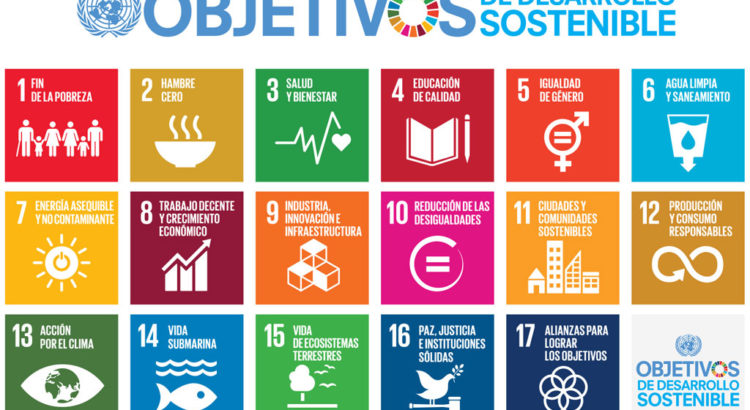
El Foro Político de Alto Niveles la plataforma mundial que supervisa los progresos de los ODS, y tiene lugar en el mes de julio de cada año. El tema de este año se titula Erradicar la pobreza y promover la prosperidad en un mundo cambiante, y se centra en el ODS 1“Fin de la pobreza”, el ODS 2“Hambre cero”, el ODS 3“Salud y bienestar” y el ODS 5“Igualdad de género”, así como el ODS 9“Industria, innovación e infraestructura” y el ODS 14“Vida submarina”.

Fuente: https://www.ei-ie.org/spa/detail/15254/los-estados-eval%C3%BAan-el-progreso-de-los-objetivos-de-desarrollo-sostenible

Comparte este contenido:
Page 919 of 1671
1 917 918 919 920 921 1.671