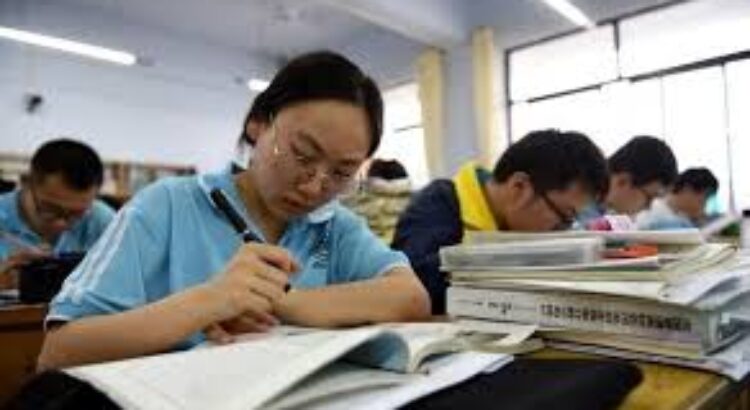
Nearly 90 percent of Chinese high school students intend to pursue higher education, according to recent research by the China Youth and Children Research Center.
The research, jointly conducted with research institutions from the United States, Japan and the Republic of Korea (ROK), aims to compare the learning performance of high school students in the four countries.
It was based on a survey covering 3,903 high school students from China, 1,521 from America, 2,204 from Japan and 1,618 from the ROK.
About 88 percent of Chinese respondents planned to go to college after graduation, 5.5 percentage points higher than those from the United States who ranked second in the survey.
However, they were not as confident as American high school students when it came to the evaluation of their overall learning performance and efficiency.
The survey also found that Chinese high school students were the most independent and best at following the rules, but not as initiative and communicative as their American counterparts.
Only 2.8 percent of Chinese students intended to start working after graduating from high school, compared with 6.6 percent of Korean students.
Source of the notice: http://www.china.org.cn/china/2020-05/14/content_76044223.htm
Asia/China/17-05-2020/Autor(a) y Fuente: spanish.xinhuanet.com
Beijing, la capital china, reabrirá universidades, jardines infantiles y más clases en escuelas primarias y secundarias próximamente, informó el miércoles la Comisión Municipal de Educación.
A partir del próximo 6 de junio, los estudiantes de colegios y universidades que se van a graduar este año pueden regresar voluntariamente a los campus, donde se han implementado ya medidas integrales para evitar la propagación del virus causante de la neumonía COVID-19, según la comisión.
Los jardines infantiles en los que dichas medidas se han implementado plenamente se volverán a abrir a partir del 8 de junio, y los padres pueden decidir por sí mismos si llevan a sus hijos o no.
Todos los estudiantes de secundaria que no están próximos a graduarse y los alumnos de sexto grado regresarán a clases el 1 de junio, mientras que los alumnos de cuarto y quinto grado volverán a clases el 8 de junio.
Los demás grados de las escuelas primarias permanecerán cerrados hasta nuevo aviso.
Este dispositivo es el último ejemplo del uso en China de nuevas tecnologías para intentar controlar el virus, que oficialmente ha causando cerca de 5.000 muertes.
Esta semana millones de alumnos en China regresaron a las escuelas dotados con un brazalete electrónico que da la alerta en caso de fiebre, en momentos en que China teme una nueva oleada de contagios de covid-19.
Este dispositivo es el más reciente ejemplo del uso masivo en China de nuevas tecnologías para intentar controlar un virus que oficialmente ha contaminado en el país a 83.000 personas, causando más de 4.630 muertes.
China, primera nación afectada por el nuevo coronavirus, cerró todos sus colegios en enero. Los cursos se efectuaban desde entonces en línea.
Estos brazaletes inteligentes proporcionan en tiempo real la temperatura de los alumnos. Sus padres y los centros educativos pueden luego vigilar su situación a través de una aplicación en teléfono móvil, según el Diario de Pekín.
En caso de temperatura anormal -superior a 37,2 grados- el brazalete envía una señal a los profesores que son instados a alertar a la policía, precisa el diario. El dispositivo está en fase de prueba en cinco distritos de la capital china.
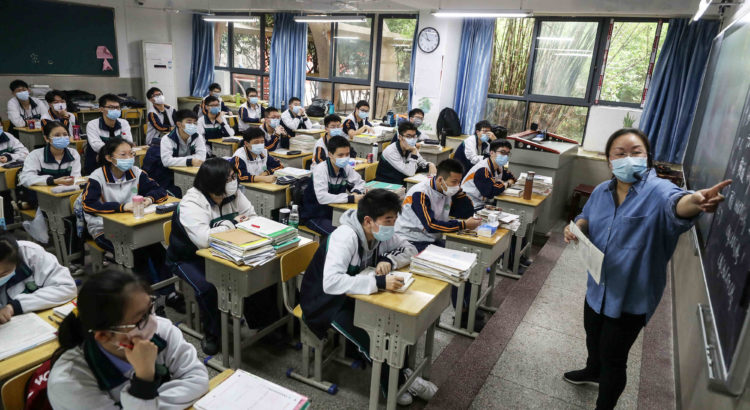
Los controles de temperatura, el uso obligatorio de mascarilla y las medidas de distanciamiento físico se han convertido en la norma en los establecimientos escolares del país, donde las autoridades temen un rebrote de contagios.
Aunque China ha controlado la epidemia en su territorio, el país registró el lunes 17 nuevos casos, diez de origen local, especialmente en Wuhan (centro), metrópolis colocada durante dos meses en cuarentena y donde el virus fue descubierto a fines del año pasado.
Fuente e imagen tomadas de: https://www.semana.com/educacion/articulo/alumnos-chinos-controlados-con-brazaletes-electronicos-para-detectar-coronavirus/671007
The global higher education market was valued last year at $65.4 billion and has been projected to reach $118 billion by 2027.
International education represents a large part of learning activities and is a major source of tuition revenue from nondomestic students. In 2018, nearly 1.1 million foreign students were studying in the United States. Of them, 34 percent came from China, representing approximately $11 billion in fees.
Over the past several years, trends in student mobility have been changing. The US, while still the largest destination for foreign students, has seen the rate of increase in foreign students fall since 2014. As a result, some institutions have seen tuition revenue drop more than 25 percent.
With the global rise of nationalism and protectionism, students have adjusted their choice of destinations, favoring host countries with perceived greater safety and better post-study job opportunities. In a recent survey, 87 percent of high school college counselors in China reported that students and parents were reconsidering plans for studying in the US.
The COVID-19 crisis is exacerbating these trends. In the immediate term, outbound students will experience difficulties in obtaining visas, and many campuses are questioning whether they will open their fall semesters for on-site classes. In the medium term, outbound students will explore destinations closer to home, as well as foreign collaborative programs in their home countries.
Faced with this business challenge, the pursuit of an offensive delocalization strategy makes sense for universities. While delocalization generally refers to moving resources overseas, two different forces of delocalization can be identified: defensive and offensive.
In the former, a company moves resources overseas to benefit from lower production costs. In the latter, resources are moved overseas to better serve international markets. This may be due to reducing barriers to consumption or localization of the product or service to make it more attractive. An example of this strategy can be found in the Disney company, which gambled on a larger market interested in a Disney experience closer to their homes. Tokyo, Paris, Hong Kong and Shanghai now figure prominently in the offer, with each localized to some degree.
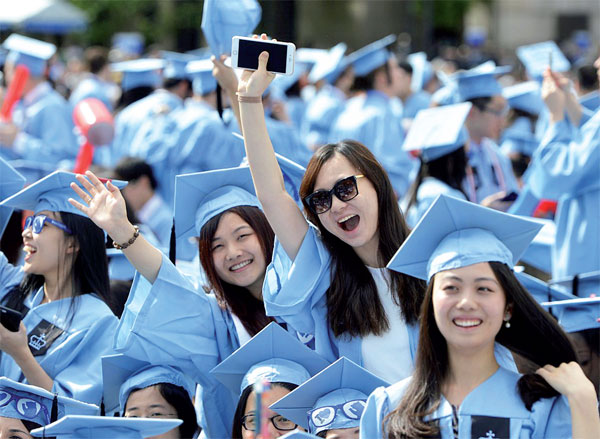
Students from China celebrate their graduation from Columbia University. [Photo/Xinhua]
In the new normal, faced with looming declines in international student enrollments and subsequent loss of tuition revenue, the pursuit of an offensive delocalization strategy makes sense for higher education. This translates into the establishment of overseas campuses, allowing institutions to attract and serve international students more effectively by creating market proximity and reducing barriers to a US education.
This strategy is not new in higher education. INSEAD, the Sorbonne and HEC Paris, for example, operate international campuses. New York University opened its third overseas campus in Shanghai in 2013. Of the 1,600 current students, 50 percent are from China.
Chinese universities provide important support for foreign collaboration in China. NYU Shanghai is jointly established with East China Normal University, and Duke Kunshan University is a partnership with Wuhan University.
Zhejiang University recently established an international campus as a platform for university and program-level cooperative partnerships.
With an international business school and joint institutes with the University of Illinois at Urbana-Champaign and the University of Edinburgh, the new ZJU campus will host multiple foreign collaborative initiatives.
With close to 1 million outbound students per year from China, the nation is the largest single source of international students in the world. At the same time, China has become the third-largest destination for foreign students, thanks to opportunities from the Belt and Road Initiative.
Future development in transnational education will likely see an increase in the establishment of overseas campuses and university-level collaborative programs in China as a way to serve outbound domestic students and international students looking for new destination opportunities.
For institutions relying on tuition revenue from international students, in particular those in the US, delocalization to China should be a strategy to consider.
Source of the notice: https://global.chinadaily.com.cn/a/202005/12/WS5eb9fc91a310a8b241154f1a.html
Asia/China/10-05-2020/Autor(a) y Fuente: spanish.xinhuanet.com
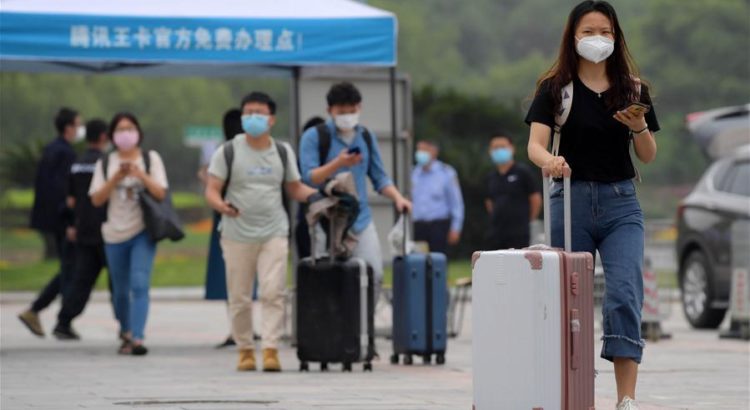
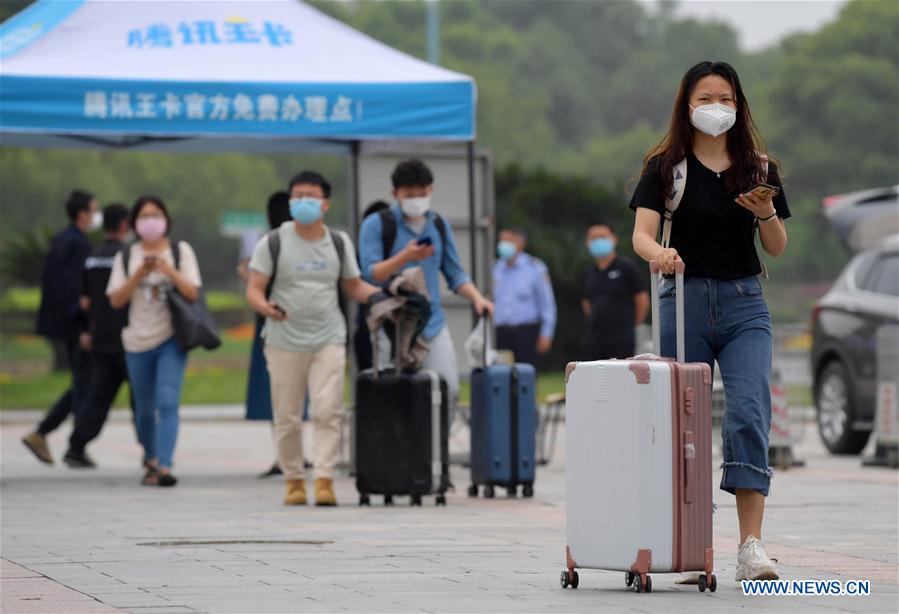
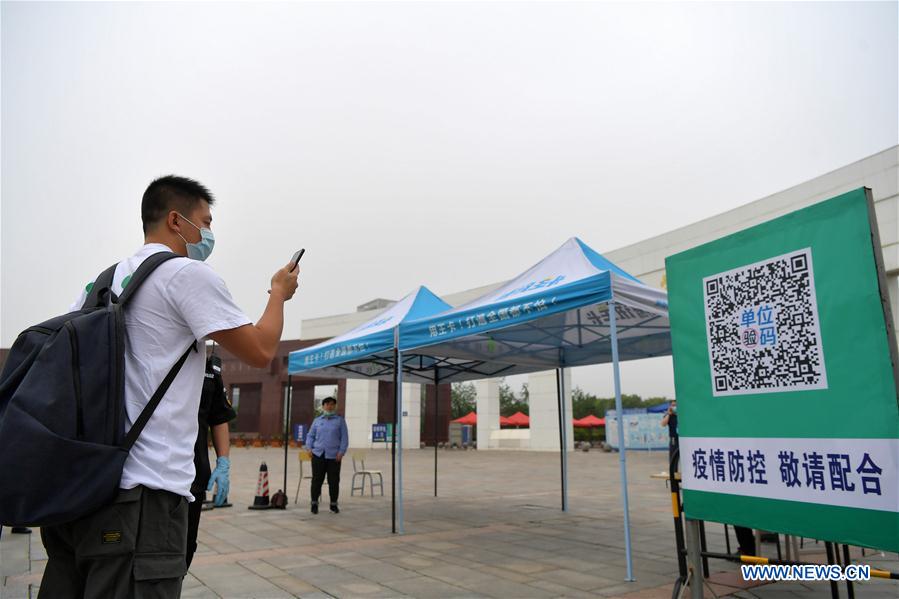
NANCHANG, 7 mayo, 2020 (Xinhua) — Estudiantes ingresan a la Universidad de Nanchang luego de escanear su código QR de salud, en Nanchang, provincia de Jiangxi, en el este de China, el 7 de mayo de 2020. Los estudiantes de la Universidad de Nanchang comenzaron a regresar a la escuela el jueves. La universidad ha tomado diversas medidas de prevención epidémica en el campus para garantizar la seguridad de los estudiantes. (Xinhua/Peng Zhaozhi)
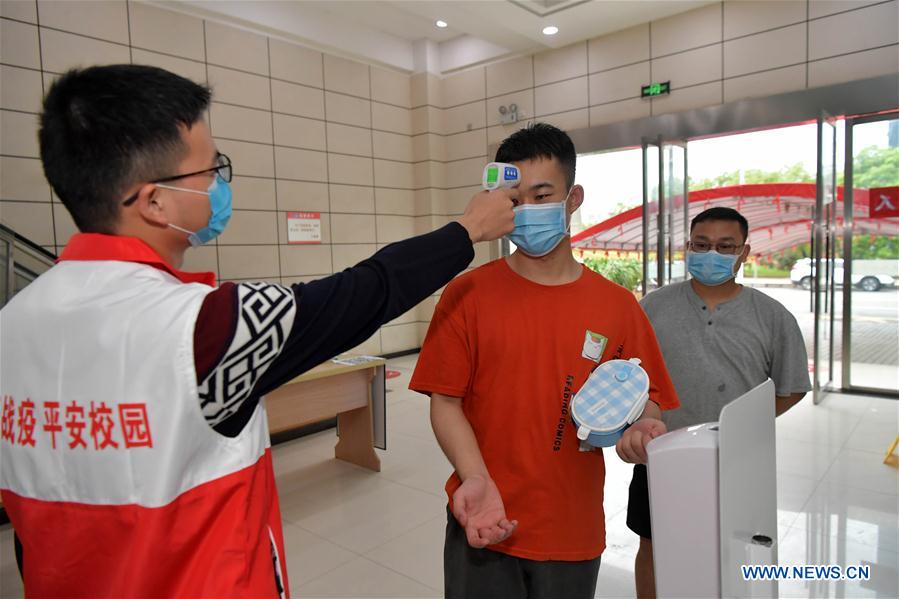
NANCHANG, 7 mayo, 2020 (Xinhua) — Un estudiante recibe un control de temperatura corporal previo a ingresar a la Universidad de Nanchang, en Nanchang, provincia de Jiangxi, en el este de China, el 7 de mayo de 2020. Los estudiantes de la Universidad de Nanchang comenzaron a regresar a la escuela el jueves. La universidad ha tomado diversas medidas de prevención epidémica en el campus para garantizar la seguridad de los estudiantes. (Xinhua/Peng Zhaozhi)
NANCHANG, 7 mayo, 2020 (Xinhua) — Un estudiante recibe un control de temperatura corporal previo a ingresar a la Universidad de Nanchang, en Nanchang, provincia de Jiangxi, en el este de China, el 7 de mayo de 2020. Los estudiantes de la Universidad de Nanchang comenzaron a regresar a la escuela el jueves. La universidad ha tomado diversas medidas de prevención epidémica en el campus para garantizar la seguridad de los estudiantes. (Xinhua/Peng Zhaozhi)
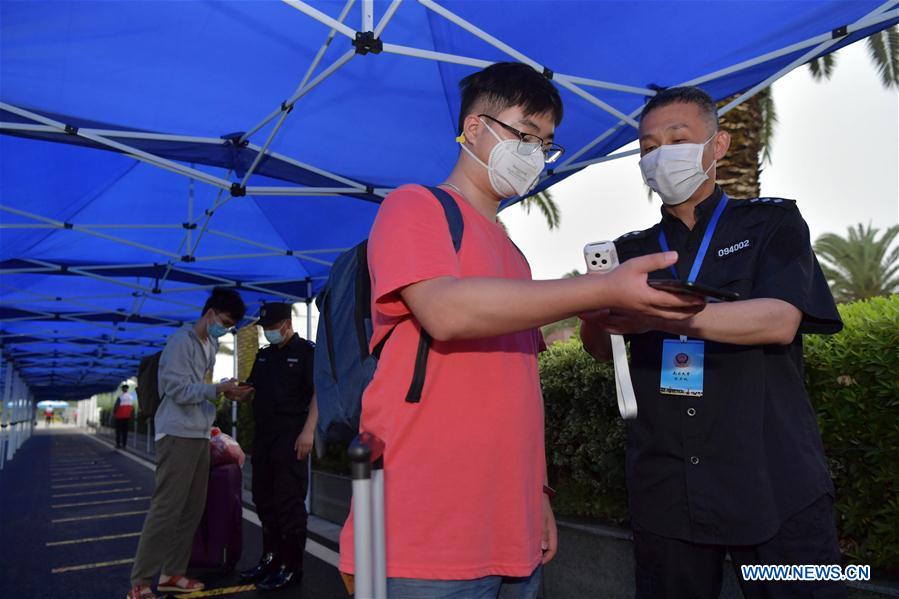
NANCHANG, 7 mayo, 2020 (Xinhua) — Un estudiante escanea un código QR de salud con su teléfono móvil previo a ingresar a la Universidad de Nanchang, en Nanchang, provincia de Jiangxi, en el este de China, el 7 de mayo de 2020. Los estudiantes de la Universidad de Nanchang comenzaron a regresar a la escuela el jueves. La universidad ha tomado diversas medidas de prevención epidémica en el campus para garantizar la seguridad de los estudiantes. (Xinhua/Peng Zhaozhi)
Fuente e Imagen: http://spanish.xinhuanet.com/photo/2020-05/09/c_139039253.htm
Asia/China/05-05-2020/Autor(a) y Fuente: spanish.xinhuanet.com
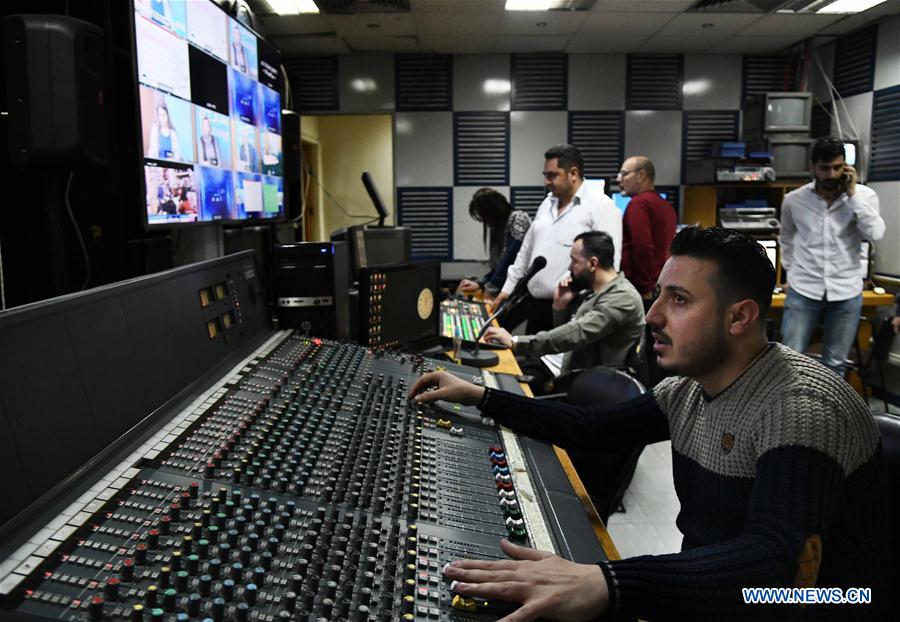
DAMASCO, 27 abril, 2020 (Xinhua) — Imagen del 23 de abril de 2020 de integrantes del equipo técnico trabajando en la sala de control de la Televisión Educativa Siria, en Damasco, Siria. Los estudiantes continúan su educación en la televisión en casa mientras el gobierno usa un canal educativo para transmitir lecciones. (Xinhua/Ammar Safarjalani)
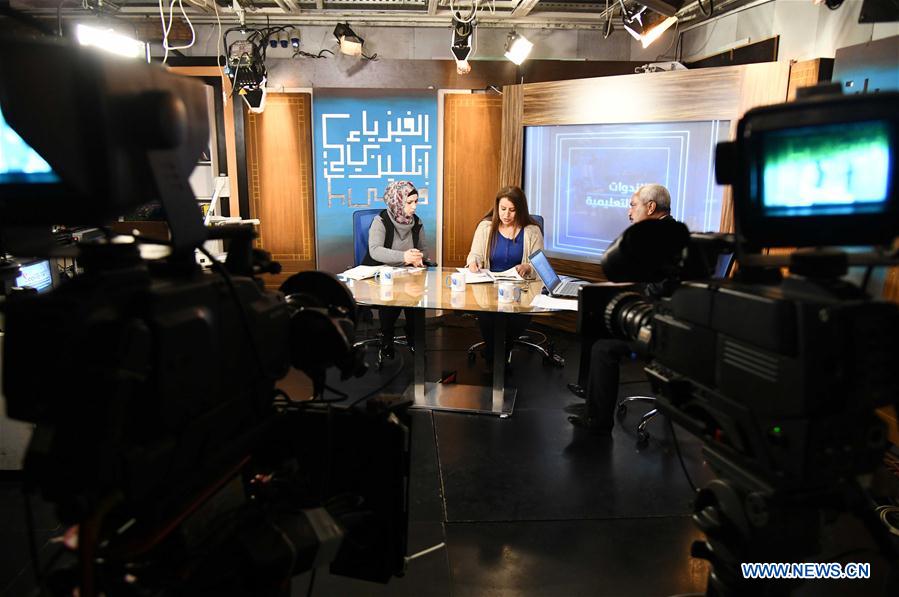
DAMASCO, 27 abril, 2020 (Xinhua) — Imagen del 23 de abril de 2020 de maestros dando clases en un estudio de televisión de la Televisión Educativa Siria, en Damasco, Siria. Los estudiantes continúan su educación en la televisión en casa mientras el gobierno usa un canal educativo para transmitir lecciones. (Xinhua/Ammar Safarjalani)
Fuente e Imagen: http://spanish.xinhuanet.com/photo/2020-05/01/c_139015279.htm
Although most schools remain closed for the rest of the 2019-20 school year in the United States, some countries have started reopening schools during the novel coronavirus pandemic.
Students are returning to class — but things don’t look like they did before schools closed when the coronavirus began to spread around the world. Now, social distancing means students and teachers wear masks and sometimes plastic shields, and the kids sit farther apart than they did before.
Countries where students are returning to classrooms include Germany and Denmark in Europe, and China, South Korea and Vietnam in Asia.
The pictures tell the story:
Novice Buddhist monks, seated to maintain social distancing, participate in a religious class at Molilokayaram Educational Institute in Bangkok on April 15. All schools in Thailand were closed earlier than the scheduled school break due to the outbreak. (Gemunu Amarasinghe/AP)
An Israeli student sanitizes her desk upon the return to school at Hashalom elementary school in Mevaseret Zion, in the suburbs of Jerusalem, on Sunday. (Emmanuel Dunand/AFP/Getty Images)
Palestinian high school students receive exam-seating information in a school in the southern Gaza Strip on Sunday. (Ibraheem Abu Mustafa/Reuters)
Students enter the Sadot Elementary School in the town of Pardes Hanna-Karkur in central Israel on Sunday as the country eases lockdown restrictions. (Jack Guez/AFP/Getty Images)
A student joins a protest of schools reopening in front of the North Rhine-Westphalian Parliament in Düsseldorf, Germany, on Wednesday. (Sascha Steinbach/EPA-EFE/REX/Shutterstock)
Teachers Claudia Mohme and Nicola Witzlau demonstrate the correct application of protective masks on April 23 at the Freiherr-vom-Stein school in Bonn, Germany. (Wolfgang Rattay/Reuters)
Students leave a high school in Beijing on April 27. Senior students in Beijing returned to class for the first time after schools were closed down in January. (Wu Hong/EPA-EFE/Shutterstock)
Chinese leader Xi Jinping inspects a primary school in Laoxian township in Ankang city in northwestern Shaanxi Province on April 21. (Xie Huanchi/Xinhua/AP)
Students sit spaced apart during an exam at Clementi Secondary School in Hong Kong on April 24. (Jerome Favre/EPA/Bloomberg News)
Students take the Hong Kong Diploma Secondary Education visual arts exam at Clementi Secondary School in Hong Kong on April 24. (Jerome Favre/EPA/Bloomberg News)
Teacher Marie Kaas-Larsen speaks with her students at the Norrebro Park primary school outside in a nearby park in Copenhagen on April 29. Denmark was the first country in Europe to reopen its schools for the youngest pupils on April 15. In addition to practicing social distancing and regular hand-washing, classes must be held outdoors as much as possible to limit the spread of the virus. (Thibault Savary/AFP/Getty Images)
A student washes hands at the Korshoejskolen in Randers, Denmark, on April 15, the first day that the youngest pupils returned to school in the country amid the novel coronavirus pandemic. (Bo Amstrup/EPA-EFE/Shutterstock)
After closing amid social distancing restrictions to contain the spread of the novel coronavirus, a school reopens on April 27 in Trondheim, Norway. (Gorm Kallestad/AP)
Second- and third-grade students attend a lesson as school reopened in the village of Kvivik, Faroe Islands, on April 20 after being closed for five weeks. (Jens Kristian Vang/EPA-EFE/Shutterstock)
Students take part in class on April 16 at Sindong Elementary School in Seoul. (Yonhap/EPA-EFE/Shutterstock)
South Korean Education Minister Yoo Eun-hae, center, observes an online class at a high school in Suwon, South Korea on April 9. (Yonhap/EPA-EFE/Shutterstock)
Students walk in the Marie Curie school’s yard in Hanoi on Monday. Students at secondary and high schools in many provinces nationwide have returned to school after a three-month closure. (Luong Thai Linh/EPA-EFE/Shutterstock)
Valerie Strauss is an education writer who authors The Answer Sheet blog. She came to The Washington Post as an assistant foreign editor for Asia in 1987 and weekend foreign desk editor after working for Reuters as national security editor and a military/foreign affairs reporter on Capitol Hill. She also previously worked at UPI and the LA Times. Follow
More from The Post
Source or the notice: http://www.vanitatis.elconfidencial.com/noticias/2014-07-25/carta-abierta-de-javier-bardem-contra-el-genocidio-de-israel-en-gaza_168080/
OtrasVocesenEducacion.org existe gracias al esfuerzo voluntario e independiente de un pequeño grupo de docentes que decidimos soñar con un espacio abierto de intercambio y debate.
¡Ayúdanos a mantener abiertas las puertas de esta aula!

 A Flourish chart


 Users Today : 8
 Total Users : 35460681
 Views Today : 15
 Total views : 3419797