Page 151 of 772
1 149 150 151 152 153 772

UNICEF: 9 niños son asesinados o mutilados diariamente en Afganistán

Redacción: TeleSUR

El documento de Unicef detalla que, entre 2009 y 2018, casi 6.500 niños fallecieron y otros 15.000 fueron lesionados, convirtiendo a este país en «la zona de guerra más letal del mundo».

Un reciente informe publicado este martes por el Fondo de las Naciones Unidas para la Infancia (Unicef) reveló que al menos nueve niños son asesinados o mutilados diariamente en Afganistán.

Según el texto, entre enero y septiembre de 2019 hubo un aumento del 11 por ciento en muertes y mutilaciones infantiles, con respecto al mismo período en 2018, ante el incremento de ataques suicidas con bombas y enfrentamientos.

La directora ejecutiva de Unicef, Henrietta Fore, aseveró que este año «ha sido particularmente mortal para los niños. Ellos, sus familias y comunidades sufren las terribles consecuencias del conflicto todos los días».

Afganistán fue la zona de guerra más letal del mundo en 2018.

Desde 2009, casi 6500 niños han muerto y 15.000 han resultado heridos, denuncia @UNICEFhttps://news.un.org/es/story/2019/12/1466741 

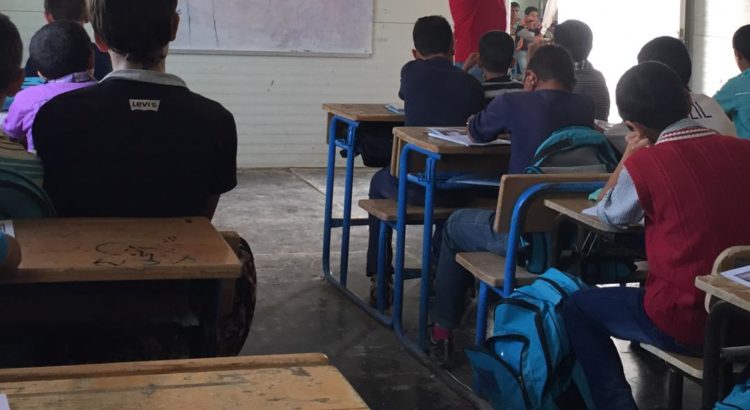
Una niña de doce años junto a su hermanita bebé afuera de un campamento de desplazados internos en Afganistán

Nueve niños son asesinados o mutilados a diario en Afganistán

Afganistán fue la zona de guerra más letal del mundo en 2018. Desde 2009, casi 6500 niños han muerto y 15.000 han resultado heridos. UNICEF pide un mayor compromiso de las partes del conflicto. news.un.org

La funcionaria destacó que estos niños afectados «están desesperados por crecer, ir a la escuela, aprender habilidades y construir un futuro propio. Podemos y debemos hacer mucho más para reforzar su extraordinario coraje y resistencia».

Asimismo, el documento detalla que, entre 2009 y 2018, casi 6.500 niños fallecieron y otros 15.000 fueron lesionados, convirtiendo a este país en «la zona de guerra más letal del mundo en 2018».

De acuerdo con la Organización de las Naciones Unidas (ONU) los constantes enfrentamientos entre grupos a favor y en contra del Gobierno han generado que, el impacto directo de las acciones de violencia, afecten la vida de los niños y niñas de esa nación.

Otras cifras preocupantes sobre Afganistán

A través de su portal web, la ONU reveló otras cifras importantes que revelan la realidad que viven actualmente los niños y niñas de Afganistán.

Entre ellas, el organismo multinacional indicó que 3,8 millones de niños necesitan ayuda humanitaria; 3,7 millones están en edad escolar, pero no recibern educación; 600.000 menores de cinco años presentan desnutrición grave. Además, el 30 por ciento de los niños trabaja.

Fuente: https://www.telesurtv.net/news/unicef-ninos-mutilados-asesinados-diario-afganistan-20191217-0033.html

Comparte este contenido:

Refugee Children Have the Right to a Full Education

Refugee Children Have the Right to a Full Education

Breanna Small

Mohammed should be in a 9th grade classroom right now. Instead, he spends his days selling napkins and dry-cleaning clothes. Mohammed has lived in Jordan for seven years, since his family fled Syria. He desperately wants to study, but his family struggles to meet their most basic needs, and they can’t afford the cost of transportation to school. He is just one of millions of refugee children denied an education today.

Human Rights Watch recently spoke with refugees in Jordan whose children are out of school. The reasons vary. Some cannot afford basic costs. Others faced administrative barriers when they tried to enroll. Still others lament the quality of instruction, as teachers are not trained to work with students dealing with trauma. And children with disabilities often find that schools do not accommodate their needs. Refugee children all over the world face these challenges, which are only compounded as they grow older.

The numbers reflect this grim reality. Though international law provides that secondary education needs to be available and accessible to all, only an estimated 24 percent of refugee children attend secondary school worldwide. Children who don’t complete secondary education are more likely to suffer other human rights abuses, such as child labor and early marriage. Yet secondary education for refugees remains overlooked and underfunded.

This week’s Global Refugee Forum in Geneva presents an opportunity to tackle this problem. Over three days, governments will have the chance to make pledges to improve refugees’ lives. Education is high on the agenda. Participants should consider children like Mohammed, and commit to advance secondary education by pledging to support better teacher training, funding for psychosocial activities and transportation to school, and improvements in school infrastructure and training to better accommodate children with disabilities.

There is momentum to build on. In September 2019, the United Nations refugee agency, UNHCRpledged to help expand secondary education to at least one million refugees. Nongovernmental organizations such as the Inter-Agency Network for Education in EmergenciesEducation International, and Jesuit Refugee Service have also pledged support for secondary education.

These are important steps, but they won’t work unless host governments step up, too. Outcomes in Jordan – which has seen improvements since waiving secondary school fees and documentation requirements, but where many challenges remain – show that countries still need to remove multiple barriers to education.

Refugee children are waiting. It’s time to provide the support necessary for them to be able to access their right to a full cycle of education, including secondary school.

Autor: Breanna Small


Comparte este contenido:

Iraq’s Education Crisis: 2.5 Million Children Are at Risk, Group Warns

Iraq’s Education Crisis: 2.5 Million Children Are at Risk, Group Warns

Young Iraqis in the areas liberated from the Islamic State’s control face an education crisis, with more than 2.5 million school-age children needing help to access education as a result of a large shortage of teachers, overcrowded classrooms and the lack of adequate funding, according to a new report from the Norwegian Refugee Council.

“Many of these children have already lost years of schooling,” said Alexandra Saieh, an advocacy manager with the Norwegian Refugee Council in Iraq. “If the Iraqi government does not prioritize providing trained teachers and building schools for children in displacement areas, they risk losing a lot.”

Two years have passed since the defeat of the Islamic State in Iraq, yet about 1.6 million Iraqis are still displaced, only 25 percent of whom live in camps, according to the independent humanitarian group. More than 90 percent of displaced families decline to return to their homes due to the lack of a clear plan to resettle them. The areas where they live lack the most basic humanitarian services and suffer from a severe shortage of school buildings, which caused more than 240,000 children to be deprived of education last year, the council said in its report, published late last month.

The report, titled “Urgent Measures Needed to Stop Iraq’s Displaced Children Being Left Behind,” documents the period in which the Islamic State, also known as ISIS, controlled large areas of Iraq and caused millions of children to lose three years of school or more.

Some children were forced to study a curriculum imposed by the terrorist group, which banned teaching subjects like history, philosophy and arts and focused instead on military training and teaching the jihadists’ own interpretation of Islamic law. (See a related article, “What Education Is like Under the Islamic State.”)

As a result, many families did not send their children to school.

At the same time, a large number of school buildings were damaged or destroyed in the campaign to reclaim the area from ISIS. In the Nineveh Governorate, there are 1,447 schools now, compared to about 1,870 schools before the extremist group overran the region, according to the report.

Understaffed Schools

Schools in the liberated areas are missing a third of the total number of teachers they need for the current academic year, according to the Iraq Education Cluster Strategy developed by the United Nations Office for the Coordination of Humanitarian Affairs. In a camp for displaced people in Kirkuk, for example, there are only two teachers on the ministry’s list for more than 1,700 pupils enrolled in two primary schools. In another camp nearby, there are eight teachers for more than 700 pupils in primary schools.

“Volunteer lecturers,” some of whom receive wages provided by international organizations, help counter the teacher shortages. However, some of these volunteers have not been paid for a long time. In some cases, displaced families have had to raise funds to support the volunteers, according to the council’s report.

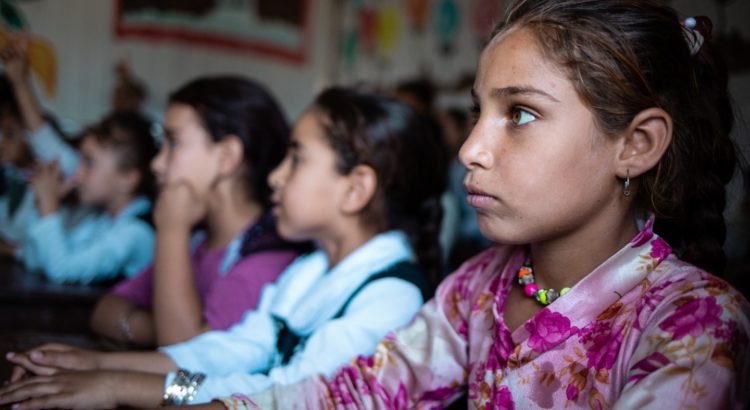
Girls sit in a crowded classroom at a school near Mosul, where many buildings were damaged or destroyed in the fighting against ISIS (Photo: Tom Peyre-Costa/NRC).

“There is a great shortage of educational cadres in Mosul as well as in other areas of displacement,” said Harith al-Abbasi, a teacher from Mosul who now works in an Iraqi private school in Istanbul. “The situation of schools in Mosul in general is very poor.”

The Iraqi government has pledged to hire more teachers, according to Saieh. However, no clear timetable has been set for this.

“With hundreds of schools damaged as a result of the military operations, the classrooms are often overcrowded,” she said. “Many children from the surrounding areas and camps are still without education, as enough trained teachers have not been allocated to ensure that children can get a good education.”

‘ISIS Children’: Stigmatized and Deprived

The report also highlights the denial of the right to education to an estimated 45,000 children whose parents are suspected of having been affiliated with the Islamic State. These children, who were born in or lived in areas controlled by ISIS between 2014 and 2017, lack the civil documents required by the Iraqi government to register in schools.

Iraqi Ministry of Education officials have signaled their approval of a plan to allow unregistered children to enroll in schools, but this agreement has not been fully put in place. One in every five Iraqi families reported that their children were denied access to education and other basic rights, according to an earlier study by the Norwegian Refugee Council.

“Denying children their right to education because of something their parents might have done is a grossly misguided form of collective punishment,” said Lama Fakih, acting Middle East director at Human Rights Watch, in a press statement. “It undermines any potential government efforts to counter extremist ideology by pushing these children to the margins of society.”

To alleviate the education crisis confronting Iraqi children today, the Norwegian Refugee Council’s report recommends six urgent measures that the Iraqi government should take. They are:

  • • Scale up the number of trained teachers in formal schools, particularly in areas with high numbers of displaced people.
  • • Make more school facilities for both primary and secondary education available, and provide government support and staffing for them.
  • • Allow children who lack the required civil documents to attend schools, sit for exams and obtain certificates.
  • End any occupation of schools by the military, security forces or other armed groups, in line with the Safe Schools Declaration, an international commitment by governments to protect education during periods of conflict. Iraq is one of more than 100 nations that have endorsed the agreement.
  • • Provide support to non-formal education programs in camps for refugees and displaced people, and support accelerated learning programs to help students who have been out of school for years to reintegrate into the education system.
  •  Fully fund the education measures called for under the United Nations’ Iraq 2019 Humanitarian Response Plan and ensure that the government allocates adequate support for education.Saieh, from the Norwegian Refugee Council, stresses the importance of supporting the education of children as an investment in Iraq’s future. “If not, a new generation of Iraqi children will be further deprived,” she said. “This will undermine prospects for a stable and inclusive Iraqi society in the future.”

    However, she believes that the Iraqi government cannot afford the cost of such measures on its own.

    “The damage left by the military operations against ISIS has been enormous, one the government will not be able to stand alone,” she said. “That is why we are calling on the international community to support displaced Iraqi children to obtain their right to education.”

    Fuente de la Información: https://www.al-fanarmedia.org/2019/12/iraqs-education-crisis-2-5-million-children-are-at-risk-group-warns/

Comparte este contenido:

Indonesia Education Lags Behind Region

Indonesia Education Lags Behind Region

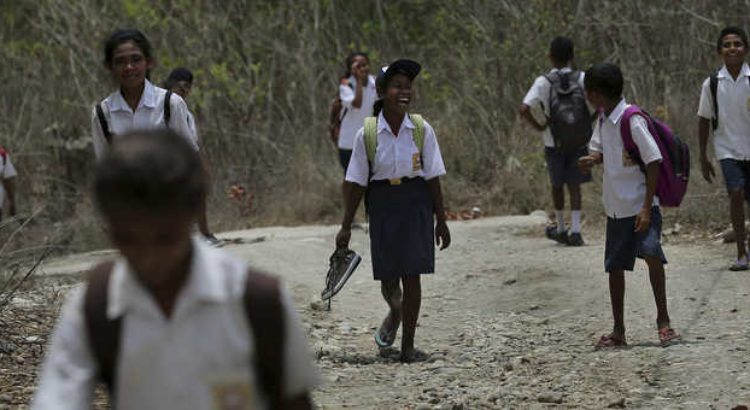
JAKARTA, INDONEISA – Indonesian students are among the lowest performers in Southeast Asia, according to a recent report, The Program for International Student Assessment (PISA),  released  this month by the Organization for Economic Cooperation and Development (OECD). Indonesian 15-year-olds ranked in the bottom ten across 79 surveyed countries in all three subjects under consideration:   math, reading, and science. The results point to education quality issues  in the region’s most populous country.

“It’s a wake-up call for all of us in the education sector,” said Totok Amin Soefijanto, a policy expert at Paramadina University in Jakarta.

Imperfect incentives

Indonesia’s so-called demographic dividend, meaning its proportionally large youth population in a country of over 260 million, holds considerable potential for economic growth, but it is diminished by its low educational achievement to date.

Poorly qualified teachers are a major problem. Sixty-five percent of students surveyed by PISA said their teachers rarely provided direct feedback to them. One in five teachers are regularly absent, according to the World Bank in 2017. The government has run teacher competency tests and in 2015, the average score for the nearly three million teachers who took it was 53 percent, according to an analysis by University of Melbourne professor Andrew Rosser.

“We have not repeated the competency assessment since 2015, which I think was another one of our mistakes, because if we don’t measure this, we don’t know where their skills are decreasing,” said Soefijanto.

Indonesian teachers also face chronically low salaries and are often appointed on the basis of cronyism or favor-trading, according to Rosser, which further decreases their competency.

Map of Indonesia

Decentralization has been another challenge for improving education. Under the authoritarian regime of military general Suharto from 1965 to 1998, the school system was highly centralized. But after the regime ceded to a full democracy, Jakarta slowly yielded control of  educational policy to regional governments. Given Indonesia’s geographic reach of over 15,000 islands, this spread has made it difficult to enforce things like standard curricula or teacher qualifications.

“We also have challenges when it comes to geographic inequities, as we have a lot of remote areas in the country,” said Jakarta-based social worker and activist Ryan Febrianto. “It’s a big country that has a lot of administrative areas, languages, and cultures, so what’s important is to develop policies that can accommodate that.”

Some recent advances

The OECD report itself notes that last year’s country results “must be seen in the context of the vast strides that Indonesia has made in increasing enrolment.” From 2001 to 2018, the PISA sample coverage leaped from 46 percent to 85 percent of 15-year-old students.

According to the report’s authors, when accounting for the weakness of new entrants into a school system, the fact that Indonesia’s results have been relatively stable over this period actually indicates that “Indonesia has been able to raise the quality of its education system.”

Indonesia’s high-profile education minister, Nadiem Makarim, former CEO of the influential ride-hailing startup Go-Jek, told Indonesian newspaper Kompas that the PISA results “should not be packaged as good news” and called for a “paradigm shift” in educational standards. He announced this week that the country’s National Examination would be revamped as a Minimum Competency Assessment that tests students on math and literacy skills.

Weak core subjects

Math was a particularly sore subject for Indonesian students, with only one percent of them performing at the highest levels, compared to 44 percent in mainland China and 37 percent in Singapore, according to the reportThe World Bank has also claimed that 55 percent of Indonesians who complete school are functionally illiterate.

A teacher explains verses of the Quran imprinted on metal plates at a recital class during the holy fasting month of Ramadan at…

In recent years, some resources have been redirected from core subjects to religious studies.   Almost two-thirds of the country’s secondary schools are private and the majority (about 90%) of them are Islamic in nature. Students at religious boarding schools typically score lower than students at nonreligious schools on exams, according to one 2017 study.

It is worth noting that Indonesia may not lack absolute resources to fund education, but rather that its allocation deserves further review. The country spent about 3.6 percent of its GDP on education in 2015, somewhat lower than regional neighbors like Malaysia and Vietnam, but in accordance with a constitutional mandate to spend 20 percent of its national budget on education.

“In recent years, I think the government has been focusing on maintaining and improving enrollment levels as well as improving school facilities… but we [still] have issues in terms of quality improvement,” said Febrianto.

There is much low-hanging fruit for Indonesia’s education budget in coming years, from incentivizing absentee teachers to fine-tuning its domestic national examinations. In the meantime, there is one area in which Indonesian students already score undeniably high: 91 percent of them reported “sometimes or always feeling happy,” a full six points higher than the global average.

Fuente de la Información: https://www.voanews.com/east-asia-pacific/indonesia-education-lags-behind-region


Comparte este contenido:

India: Kerala es el mejor estado para la educación de las niñas, Uttar Pradesh, el peor

Según los datos del gobierno de Modi, Kerala tiene una tasa de asistencia específica por edad del 60% para las niñas en el nivel de preprimaria y del 99.5% en el nivel de las clases 11 y 12.

Asia/India/ 

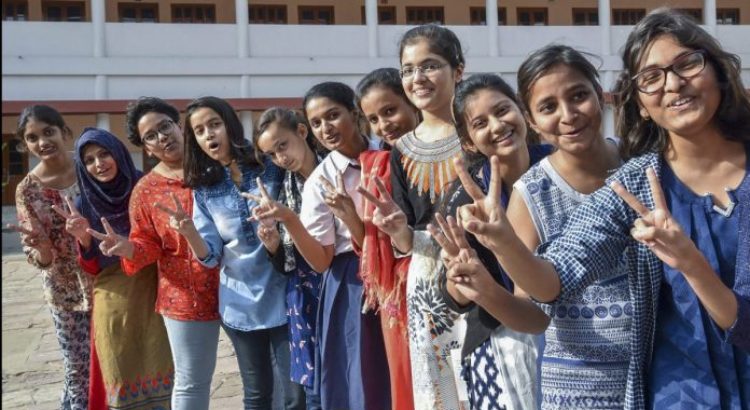
  Kerala continúa mejorando su reputación como uno de los mejores actores del país en lo que respecta a los índices sociales, con el estado del sur encabezando la lista de educación de las niñas en la India, según datos del gobierno de Modi.

Una encuesta titulada “ Consumo social de los hogares: educación ” y publicada por el Ministerio de Estadística e Implementación de Programas (MoSPI) el mes pasado, calculó que Kerala tiene la mayor tasa de asistencia específica por edad (ASAR) para mujeres, tanto en áreas urbanas como rurales comenzando desde el nivel preprimario hasta la educación preuniversitaria.

ASAR es el porcentaje de personas en ese grupo de edad que actualmente asisten a instituciones educativas, independientemente del nivel o clase en la que estudian.

Según la UNESCO , una proporción alta denota un alto grado de participación educativa de la población de la edad en particular. «Se puede considerar que las tendencias crecientes reflejan una mejor participación de la edad en particular».

La encuesta también ha enumerado a Himachal Pradesh, Uttarakhand, Telangana y Tamil Nadu con ASAR altos.

La encuesta

En el nivel preprimario, en el grupo de edad de 3-5 años, Kerala registró un ASAR del 60 por ciento, mientras que en el nivel preuniversitario de las clases 11 y 12, en el grupo de edad de 14-17 años, el estado registró una asistencia relación del 99,5 por ciento. En ambos casos, excedió la proporción promedio nacional de 32.1 por ciento y 77.5 por ciento respectivamente.

El informe aclaró que la asistencia cubría tanto la educación formal como la no formal. «La educación no formal incluía ‘Centro de educación no formal’ (NFEC), ‘Campaña de alfabetización total’ (TLC), ‘Centros de educación para adultos’ (AEC) y otra educación no formal », dice el informe.

Otros estados de alto rendimiento

En el nivel preprimario, aparte de Kerala, Punjab (57 por ciento), Telangana (54 por ciento), Tamil Nadu (54 por ciento), Himachal Pradesh (53 por ciento) y Delhi (50 por ciento) fueron los siguientes. estados de mejor desempeño.

En el nivel preuniversitario, Himachal Pradesh (94,4 por ciento), Uttarakhand (92,7 por ciento), Telangana (92,1 por ciento) y Tamil Nadu (91,6 por ciento) siguieron a Kerala.

Sin embargo, Uttar Pradesh se clasificó como el más bajo para ambos grupos de edad con un 22.7 por ciento y 64.5 por ciento ASAR respectivamente.

Hallazgos similares de Niti Aayog

En un informe publicado por el grupo de expertos del gobierno Niti Aayog sobre el «Índice de calidad de la educación escolar» en octubre, Kerala se ubicó como el mejor desempeño entre los grandes estados, logrando una puntuación de rendimiento general superior al 60 por ciento.

Otros estados importantes fueron Rajasthan, Karnataka, Andhra Pradesh, Gujarat y Assam.

Kerala logró el puntaje de desempeño general más alto de 76.6 por ciento, mientras que Uttar Pradesh terminó último con un puntaje de desempeño general de 36.4 por ciento.

Fuente; https://theprint.in/india/education/kerala-is-best-performing-state-for-education-of-girls-uttar-pradesh-the-worst/335646/

Comparte este contenido:

India: Un padre entregó a su hija para que sea abusada por 30 hombres

Asia/India/15-12-2019/Autor(a) y Fuente: www.diariodecuyo.com.ar

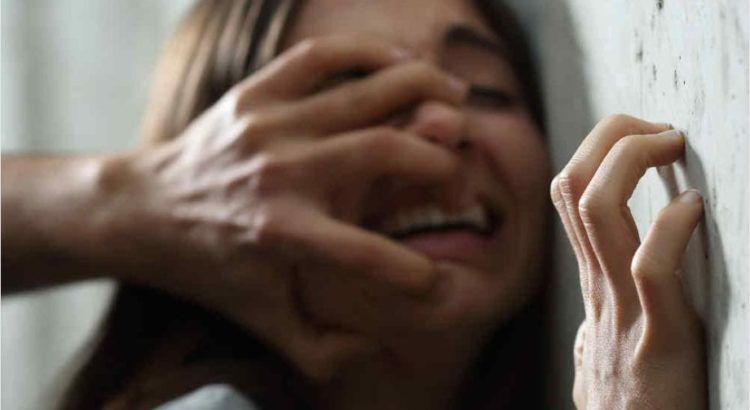
Actualmente la chica de 12 años se encuentra en un refugio. Estas personas le entregaron una importante suma de dinero.

Una pequeña de 12 años fue abusada sexualmente por al menos 30 hombres luego de que su padre la entregase a este grupo de personas, al parecer por una importante suma de dinero.

Esto ocurrió en la India, y según la BBC, actualmente la niña se encuentra en un refugio con otras menores también víctimas de abuso sexual.

La víctima fue explotada sexualmente durante los últimos dos años, y todo comenzó en el momento en el que la chica que recibió el nombre ficticio de Diana conoció a los amigos de su padre.

Una noche, el hombre invitó a su casa a estas personas a beber, y después de tomar varios tragos comenzaron a tocar a la menor.

Desde ese momento, cada fin de semana ocurría lo mismo: amigos de su padre y personas desconocidas llegaban hacia su hogar para encontrarse con la niña, a través de una “reserva” previa. La vida de la adolescente se transformó en un verdadero infierno, mientras su padre recibía constantemente sumas de dinero por entregar a su hija.

Todo cambió recién en septiembre de este año, cuando dos profesores de la niña se dieron cuenta de lo que estaba pasando con Diana, y denunciaron esta situación ante los directivos de la escuela. Los vecinos dijeron que “algo muy grave estaba pasando en su casa”.

Tras los exámenes médicos, los especialistas pudieron comprobar que la niña había sido abusada por al menos 30 individuos en el periodo de 2 años.

Inmediatamente, la pequeña conocida como Diana fue separada de su familia y fue colocada en un refugio con otras menores que también fueron víctimas de abuso sexual. Su padre y cuatro hombres fueron arrestados.

Fuente e Imagen: https://www.diariodecuyo.com.ar/mundo/Un-padre-entrego-a-su-hija-para-que-sea-abusada-por-30-hombres-20191213-0023.html

Comparte este contenido:

Feministas turcas van a prisión por cantar ‘Un violador en tu camino’

Asia/Turquía/ 15-12-2019/Autor(a) y Fuente: www.ruletarusa.mx

El himno feminista chileno ‘Un violador en tu camino’ ha sacudido al mundo. Y sus efectos también.

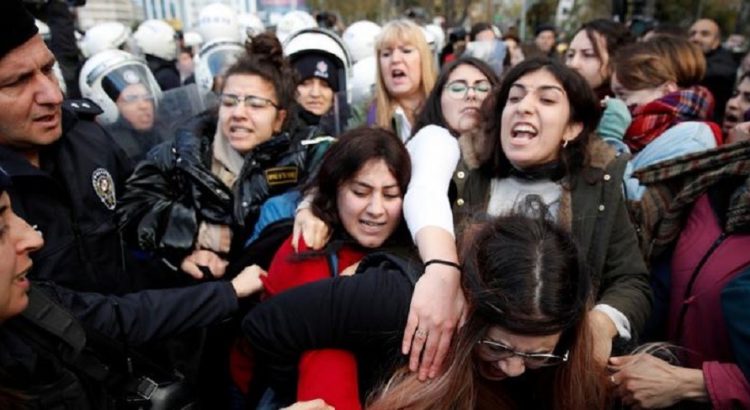
Siete feministas turcas que protagonizaron una coreografía con la canción ‘Un violador en tu camino’ durante una manifestación en Estambul, fueron llevadas a prisión por el gobierno turco. Las acusan de “ofensas al Estado”. El caso ha provocado nuevas protestas.

‘Un violador en tu cambio’ es una canción-coreografía que creó un colectivo de chileno de feministas, denominado Las Tesis, y que se ha ‘viralizado’ en el mundo, desde países tan dispares como Perú o la India, como emblema contra la violencia machista

La manifestación de al menos 300 mujeres turcas que se congregaron este domingo en el barrio de Kadiköy, la parte asiática de Estambul, , fue dispersada con una carga policiaca, según reporta la DW.

Durante la protesta siete de las mujeres que realizaban la coreografía fueron detenidas y están acusadas por el gobierno de Tayyip Erdogan de ‘violentar’ la ley de manifestaciones y por “insultos al Presidente”, según ha denunciado a medios internacionales Atuba Torual, abogada de las mujeres detenidas y encarceladas.

En Turquía la ofensa pública a la nación, el gobierno, el parlamento y los cuerpos judiciales se castiga de seis meses a dos años de prisión.

  • Foto: Reuters

Fuente e Imagen: https://www.ruletarusa.mx/gto/feministas-turcas-van-a-prision-por-cantar-un-violador-en-tu-camino/

Comparte este contenido:
Page 151 of 772
1 149 150 151 152 153 772