Page 149 of 772
1 147 148 149 150 151 772

España: Matronas crean un manual de educación sexual para desterrar la mutilación genital femenina

Europa/España/05 Enero 2020/Diario enfermero

Se estima que más de 140 millones de mujeres y niñas en el mundo han sufrido mutilación genital femenina. Una práctica que constituye una forma clara de discriminación contra las mujeres. Aunque es propia de países en África y Oriente Medio, persiste en las poblaciones emigrantes de Europa occidental, Norteamérica, Australia y Nueva Zelanda. España es uno de los países que se ha convertido en destino de personas procedentes de países donde se practica, por esta razón, un equipo de matronas de distintos hospitales de Madrid y Asturias han elaborado un programa de educación interdisciplinar para que los profesionales sepan cómo prevenir y enfrentarse ante casos de mutilación genital femenina (MGF). Las profesionales sanitarias han centrado este programa en la educación sexual de mujeres que pueden ser víctima de esta práctica .

«Los profesionales sanitarios dedicados a la salud Materno-infantil son quienes están más en contacto con estas mujeres, tanto en Atención Primaria como en Atención Especializada. El profesional de  enfermería es el personal  sanitario  por excelencia destinado a la  Educación para la Salud (EPS)  y más concretamente, la matrona, quien acompaña a la mujer en todas las fases de su ciclo vital, pudiendo detectar casos de MGF durante el seguimiento del embarazo, en el momento del parto o incluso durante la realización de una citología para la detección precoz de cáncer de cérvix. Por eso creemos necesario contar con instrumentos que nos ayuden a mejorar nuestros conocimientos, actitudes y aptitudes para prevenir, detectar precozmente y tratar las complicaciones derivadas de la MGF en mujeres y niñas, así como intentar que esta práctica sea abandonada a nivel mundial», introduce Cristina González, matrona del Hospital Universitario La Paz de Madrid y una de las responsables del programa de Educación para la Salud que ha sido publicado en la Revista Metas de Enfermería.  

Situación en España

De acuerdo a los datos publicados en el estudio, en España se estima que unas 17.000 niñas podrían estar en riesgo de ser mutiladas. Además especifica que Cataluña y la Comunidad de Madrid son las regiones que cuentan con mayor número de mujeres procedentes de países en los que existe esta práctica. Ante esta situación, las matronas responsables de este programa de educación para la salud se centraron en la educación sexual, considerándola esencial para erradicar esta práctica. En primer lugar, el programa, especifica las consecuencias que tiene la MGF para las mujeres -con el objetivo de que quien lo imparta tenga las claves para identificar a las víctimas- y después se centra en dotar a las mujeres de los conocimientos, actitudes y habilidades para tener una vivencia positiva de su sexualidad.

Además, consideran esencial impartir este programa en un contexto adecuado «en las poblaciones en las que se realiza la MGF es frecuente que la sexualidad esté ligada a la vergüenza y la culpa. Por este motivo, la aproximación a la sexualidad no se podrá realizar en estos grupos directamente, sin un trabajo previo en otros campos que propicien un acercamiento continuo a la cultura, y posteriormente a la sexualidad y a la MGF. Para favorecer su abordaje, este tipo de programa ha de incluirse en grupos ya establecidos con otros objetivos como complemento a su formación. Debido a que la captación de mujeres víctimas de MGF es muy compleja, y más aún, tratar de forma directa el problema, es clave que realizarlo en un entorno donde ya exista cierta predisposición social, donde se aborden otras problemáticas de estas mujeres. Creemos que es importante llevarlo a cabo en grupos de encuentro de mujeres, en las que ya existe una sensibilización previa sobre discriminaciones sociales y roles de género», concreta la matrona e investigadora Cristina González.

Un programa de un año

El programa, que consta de seis sesiones, está proyectado para que se realice por tanto en un espacio cedido por una ONG colaboradora donde ya habrá un trabajo previo de acercamiento a estas mujeres. Cuenta con una periodicidad semanal y se ha previsto para que tenga una duración anual, donde en los 120 minutos de duración se hará un acercamiento a las mujeres que participen en él. Los temas que prevé son diversos, desde una introducción a la sexualidad en términos generales o talleres prácticos para que las mujeres conozcan su cuerpo.  Al terminar el taller las participantes deberán contestar un cuestionario de evaluación para que las responsables del programa evalúen con los indicadores del programa si ha resultado efectivo, si no fuese así, las responsables del programa de educación para la salud indican que se propondrán perspectivas de mejora. 

Una iniciativa esencial para erradicar una práctica que parece muy lejana pero cada vez está cobrando más presencia en nuestro país. A través de una herramienta muy útil y efectiva como es la educación sexual.»La educación sexual constituye una herramienta necesaria, privilegiada y útil para el abordaje de la prevención de las mutilaciones genitales femeninas y, por ende, la salud sexual. Hay que tener en cuenta claves interculturales sobre sus vivencias, sus circunstancias, sus necesidades, sus demandas y, por supuesto, sus formas de relacionarse y su sexualidad», concluye Cristina González.

Fuente: https://diarioenfermero.es/matronas-crean-un-manual-de-educacion-sexual-para-desterrar-la-mutilacion-genital-femenina/

Comparte este contenido:

China emite directriz para fomentar ética profesional y virtudes de educadores

Asia/China/04 Enero 2020/spanish.xinhua

China ha emitido una directriz para reforzar la ética profesional de los maestros, anunció hoy lunes el Ministerio de Educación.

El documento incluye 15 medidas en cinco aspectos y pone la ética profesional como el criterio más importante para la evaluación de los docentes, indicó Ren Youqun, funcionario del ministerio en una conferencia de prensa.

Añadió que la nueva directriz forma parte de los esfuerzos de China por elevar la ética y las virtudes de los maestros, así como para alentar el respeto público por los educadores y el apoyo de la sociedad a la educación.

La directriz también señala que se implementarán programas sociales y un enfoque holístico para prevenir violaciones de la ética profesional de los maestros, dijo Ren.

Los infractores de la ética profesional se enfrentarán a severos castigos y las violaciones graves conllevarán una prohibición de por vida para la enseñanza, precisó Ren.

Ren agregó que la directriz cita a la ética profesional como el criterio primordial respecto a la autentificación de la calificación, reclutamiento y clasificaciones profesionales de los maestros.

También por primera vez, el documento presenta los requisitos sobre respeto público para los educadores y el apoyo público para la educación, y propone medidas para elevar el estatus social y garantizar los derechos e intereses de los educadores, dijo Ren.

La directriz fue emitida conjuntamente por siete departamentos administrativos, entre ellos el Ministerio de Educación, el Departamento de Publicidad del Comité Central del Partido Comunista de China, el Ministerio de Hacienda y el Ministerio de Recursos Humanos y Seguridad Social.

Fuente: http://spanish.xinhuanet.com/2019-12/16/c_138635907.htm

Comparte este contenido:

Diputadas turcas cantan ‘Un violador en tu camino’ en el Parlamento “por las que no pueden hacerlo en la calle”

Asia/Turquía/03 Enero 2020/El país

Las congresistas protestan durante una comparecencia del ministro del Interior después de que la policía reprimiera una marcha feminista

Cuando el colectivo chileno Lastesis ideó la letra y la coreografía de la canción Un violador en tu camino, probablemente nunca imaginó que daría la vuelta al mundo hasta convertirse en un himno contra el patriarcado, y mucho menos que terminaría siendo cantada a la cara de un ministro de Interior en el hemiciclo del Parlamento de Turquía. Sucedió en la noche del pasado sábado, cuando varias diputadas de la oposición entonaron la canción mientras golpeaban las mesas de sus escaños, en protesta por la represión violenta contra varias mujeres que interpretaban la coreografía una semana antes en Estambul, que acabó con varias de ellas detenidas.

“No se lo tomó muy bien, la verdad. Se lo tomó personalmente y como una ofensa al Estado”, admite Aysu Bankoglu, del Partido Republicano del Pueblo (CHP) y una de las diputadas de esta formación socialdemócrata —la principal de la oposición turca— que cantó la canción en el Parlamento. La comparecencia del titular de Interior, el derechista Suleyman Soylu, se había alargado y ya casi era medianoche cuando tocó el turno de preguntas de la oposición. Entonces, la diputada encargada del cuestionario, Sera Kadigil, tomó el micrófono y dijo: “Hay una coreografía que empezó en Chile y se ha extendido por todo el mundo para llamar la atención sobre la violencia contra las mujeres. Gracias a usted, Turquía es el único país del mundo donde esta protesta ha sido atacada, así que tenemos un par de cosas que decirle, señor ministro”.

De esta forma, Turquía se convirtió también en el primer país del mundo donde Un violador en tu camino se canta en el Parlamento. Mientras los diputados del CHP enarbolaban retratos de mujeres asesinadas este año en Turquía (ya van 305 en 2019), ellas entonaron la canción de Lastesis. Entre las paredes de la sede de la soberanía nacional resonó la letra, traducida del original en español con pequeñas variaciones. Por ejemplo, a “la culpa no era mía, ni donde estaba ni como vestía” añadieron “ni lo que bebía”, pues el consumo de alcohol ha sido utilizado por algunos fiscales, jueces y políticos islamistas como justificación de casos de violación, incluido uno en el que la víctima fue una ciudadana española.

“Nuestra intención era llevar al Parlamento la voz de aquellas a las que, mediante el gas lacrimógeno y los palos, se les ha impedido cantarla en la calle, reprimiéndolas por orden del ministro de Interior”, explica a EL PAÍS la diputada Bankoglu. Desde hace tres años, prácticamente toda manifestación pública que no cuente con el visto bueno del Gobierno es duramente reprimida, incluidas las marchas por el 8 de marzo y por el Día de la Eliminación de la Violencia contra la Mujer (25 de noviembre).

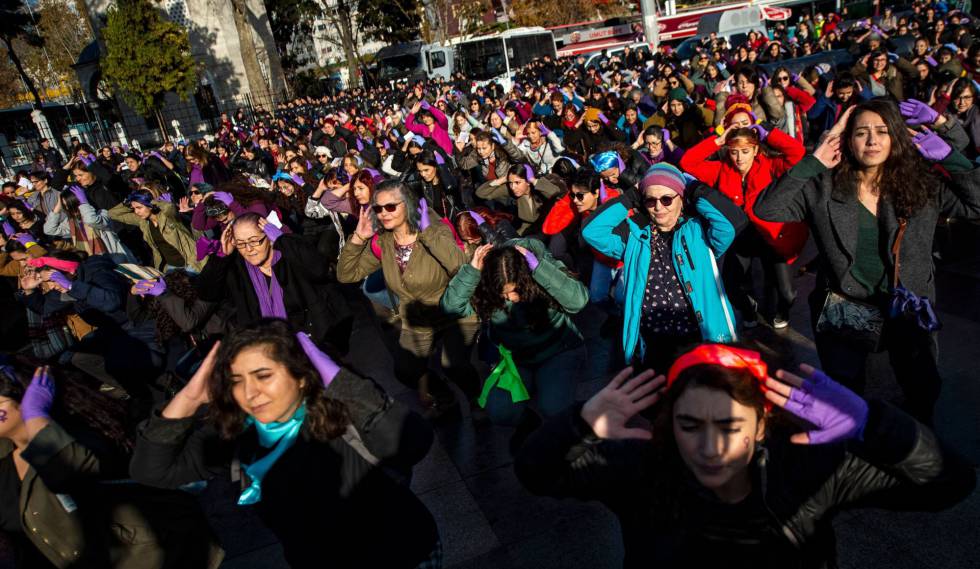
Pero la disolución a palos de la protesta de medio millar de mujeres que se habían reunido en el paseo marítimo de Kadiköy (Estambul) el pasado día 8 al ritmo de la canción de Lastesis ha conseguido el efecto contrario: Un violador en tu camino se ha convertido en un himno también en Turquía y se ha bailado en otras grandes ciudades, como Ankara y Esmirna, mientras las organizaciones feministas ensayan cada semana nuevas performances en diversos lugares. De hecho, este domingo, cerca de 200 mujeres se congregaron de nuevo en Estambul, muchas de ellas ataviadas con guantes de color violeta, y ejecutaron la coreografía ante un fuerte contingente policial, que, a diferencia del domingo anterior, no dispersó la manifestación.

Mujeres turcas interpretan la coreografía de 'Un violador en tu camino', este domingo en Estambul.
Mujeres turcas interpretan la coreografía de ‘Un violador en tu camino’, este domingo en Estambul. YASIN AKGUL AFP

Seis activistas fueron detenidas en la protesta del pasado día 8, acusadas de infringir la ley de manifestaciones y de ofensas al presidente y las instituciones del Estado por los versos “el violador eres tú. La Policía. Los jueces. El Estado. El presidente”. Ahora están en libertad con medidas cautelares y deben firmar cada semana en comisaría. “Es una vergüenza, nos han impuesto medidas que a veces ni siquiera se imponen a los acusados de violencia contra las mujeres”, se queja Fidan Ataselim, una de las arrestadas. “Pero las mujeres estamos ganando confianza en nosotros mismas. ¡Que nos detengan si quieren! No vamos a parar”.

Según datos de la Organización Mundial de la Salud (OMS), casi un 40% de las mujeres en Turquía sufren o han sufrido violencia a manos de sus parejas, frente a un 25% en Europa. En los últimos meses, varios casos han conmocionado a la opinión pública, como el de Ceren Özdemir, asesinada por un desconocido cuando regresaba a su casa. O el de Emine Bulut, cuyo asesinato a manos de su exmarido quedó grabado y las palabras de su hija —“Mamá, no te mueras, por favor”— dieron la vuelta al mundo. O el de Sule Çet, violada por un colega y luego arrojada desde el piso 20 de una torre de oficinas y cuya muerte fue, en un principio, atribuida a un suicidio.

De hecho, la presión de las organizaciones feministas ha hecho que el Gobierno instituya una comisión para investigar varias muertes sospechosas de mujeres cuyos casos habían sido cerrados en falso. El presidente turco, Recep Tayyip Erdogan, ha prometido que hará todo lo que esté en su mano para poner fin a estos crímenes, pero la oposición critica que desde la llegada al poder de su partido islamista en 2002 los crímenes machistas se han multiplicado.

Bankoglu sostiene que precisamente la canción chilena ha prendido con tanta fuerza en Turquía porque refleja bien la “mentalidad patriarcal” que impregna las instituciones del Estado. “El Gobierno trata a la mujer no como un individuo, sino como una parte indisoluble de la familia, y eso contribuye a la discriminación y la violencia”, afirma. Otro ejemplo son los variados motivos por los que los jueces aplican reducciones en las penas de los condenados por violencia contra las mujeres: “Por ejemplo, el acusado se pone corbata durante el proceso y el juez estima que ha tenido un buen comportamiento durante el juicio y le reduce la sentencia de cárcel”.

El problema no son tanto las leyes, dice la diputada, —precisamente la Convención de Estambul de lucha contra la violencia contra las mujeres fue firmada en 2011 bajo el auspicio del actual Gobierno turco—, sino su aplicación o falta de ella. “Hay pocas medidas de protección para las víctimas, falta concienciación en los tribunales y entre los dirigentes. Porque la mayor responsabilidad recae en los dirigentes del Estado que son los que deben hacer más por erradicar la violencia machista”, explica: “También por eso hicimos esta protesta en el Parlamento, porque los responsables del Estado son los que están en posición de acabar con esta violencia”.

Fuente e imagen: https://elpais.com/sociedad/2019/12/16/actualidad/1576485012_315946.html

Comparte este contenido:

Escuelas del Ministerio de Educación de Israel reemplazarán a las de UNRWA

Asia/ Israel/ 02.01.2020/ Fuente: israelnoticias.com.

El Consejo Municipal de Jerusalem aprobó el martes por la noche un plan para construir un campus educativo para las escuelas del Ministerio de Educación cerca de los barrios Arab Shuafat y Anata de la ciudad.

Estas escuelas serán una alternativa a las escuelas de UNRWA (Organismo de Obras Públicas y Socorro de las Naciones Unidas) que actualmente dominan la zona.

El proyecto costará 7.1 millones de NSI ($2.055.617), y estará ubicado en una zona fuera de las fronteras anteriores a 1967, pero dentro de los límites municipales de Jerusalem.

El miembro del Consejo de Jerusalem, Aryeh King, agradeció al alcalde Moshé Lion el avance del proyecto, que reducirá la influencia de UNRWA en la ciudad.

“No estamos hablando, estamos actuando”, escribió King en Facebook. “Mientras que el anterior alcalde, Nir Barkat, publicó durante años comunicados de prensa sobre sus planes para reducir la influencia y la participación de UNRWA en el este de Jerusalem, el actual alcalde, Moshe Lion, aprobó anoche una decisión de una importancia sin precedentes. Le saludo, alcalde”.

Anteriormente, se reveló que UNRWA, que tiene claros lazos terroristas, es responsable desde 1965 de 20.000 “refugiados” que tienen plena ciudadanía israelí y reciben pagos del Seguro Nacional de Salud, atención médica gratuita y otros servicios prestados a los ciudadanos israelíes. También reciben servicios del municipio de Jerusalem, ya que son residentes de la ciudad.

Como parte de sus actividades en Jerusalem, UNRWA administra varias clínicas, así como escuelas, que utilizan libros de texto que no mencionan a Israel ni una sola vez. Todas sus escuelas y clínicas funcionan sin licencias israelíes.

Fuente de la noticia: https://israelnoticias.com/jerusalem/escuelas-israel-reemplazaran-unrwa/

Comparte este contenido:

More support needed for refugee education in Iran

Asia/ Iran/ 02.01.2020/ Fuente: www.unhcr.org.

UNHCR, the UN Refugee Agency, welcomes Iran’s efforts to extend education opportunities for nearly half a million Afghan children in the country, and recognizes that the country needs greater humanitarian support because of the economic challenges it faces today.

Iran has been one of the world’s leading refugee hosts for decades and currently has some one million registered refugees from Afghanistan. In addition, over two million Afghans are estimated to live in Iran either without documentation or on national passports.

Iran leads by example in including refugees in national services. Since a law introduced in 2015, all Afghan children can go to school, regardless of whether they are refugees, holders of an Afghan national passport or undocumented. Refugee children study side by side with their Iranian classmates, following the national curriculum.

Official figures estimate that some 480,000 Afghan refugee and undocumented children are currently enrolled in school for the 2019-2020 academic year, a steady increase from the previous years. In 2019 alone, Iran has created places for some 60,000 new Afghan students in its schools.

Particularly in light of ongoing economic challenges, the country needs additional humanitarian support to ensure education and other services to refugees are maintained.

In the past year the cost of living in Iran has skyrocketed, making it harder than ever before for families – Iranians and Afghans alike – to make ends meet.

UNHCR remains concerned that without additional global support for refugee operations in Iran, our ability to continue supporting the government in providing education to Afghan children will be drastically affected.

In 2019, UNHCR co-funded with the government the construction of a dozen school buildings for refugees and Iranians (each with 12 class rooms) at a cost of US$650,000 each. With increasing construction costs and without enough funding the same may not be possible in 2020.

In 2016, the Government of Iran removed the school fee that refugee families had to pay to secure a place in school for their children, putting refugee families on a par with Iranians. However, an increase in the cost of school supplies and uniforms has put further pressure on families’ budgets, and a recent threefold increase in the price of petrol is expected to raise the cost of transportation to school for families that need it.

Currently, some schools operate on two shifts to give the opportunity to as many children as possible to get an education. But many schools are still overcrowded, with teachers often struggling to allocate enough time to each student.

A worrying number of refugee and undocumented families have told UNHCR that, due to increased daily costs, they may have to take their children out of school and send them out to work to so they can contribute to the family income.

So far for our Iran operations, UNHCR has received only 30 per cent of the required US$98.9 million to date.

Source of the notice: https://www.unhcr.org/news/briefing/2019/12/5dea18ac4/support-needed-refugee-education-iran.html

Comparte este contenido:

Why so many Japanese children refuse to go to school

By: Alessia Cerantola.


In Japan, more and more children are refusing to go to school, a phenomenon called «futoko». As the numbers keep rising, people are asking if it’s a reflection of the school system, rather than a problem with the pupils themselves.

Ten-year-old Yuta Ito waited until the annual Golden Week holiday last spring to tell his parents how he was feeling – on a family day out he confessed that he no longer wanted to go to school.

For months he had been attending his primary school with great reluctance, often refusing to go at all. He was being bullied and kept fighting with his classmates.

His parents then had three choices: get Yuta to attend school counselling in the hope things would improve, home-school him, or send him to a free school. They chose the last option.

Now Yuta spends his school days doing whatever he wants – and he’s much happier.

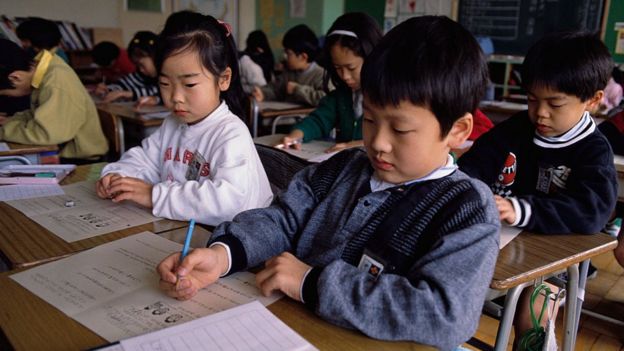
Primary school childrenImage copyrightGETTY IMAGES
Image captionJapanese primary school children (file picture)

Yuta is one of Japan’s many futoko, defined by Japan’s education ministry as children who don’t go to school for more than 30 days, for reasons unrelated to health or finances.

The term has been variously translated as absenteeism, truancy, school phobia or school refusal.

Attitudes to futoko have changed over the decades. Until 1992 school refusal – then called tokokyohi, meaning resistance – was considered a type of mental illness. But in 1997 the terminology changed to the more neutral futoko, meaning non-attendance.

On 17 October, the government announced that absenteeism among elementary and junior high school students had hit a record high, with 164,528 children absent for 30 days or more during 2018, up from 144,031 in 2017.

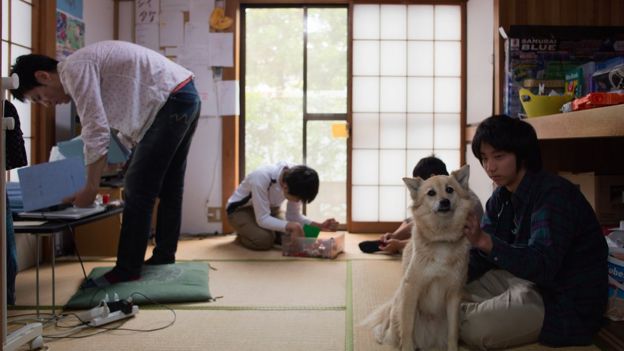
A dog hangs out with pupils at Tamagawa Free School

The free school movement started in Japan in the 1980s, in response to the growing number of futoko. They’re alternative schools that operate on principles of freedom and individuality.

They’re an accepted alternative to compulsory education, along with home-schooling, but won’t give children a recognised qualification.

The number of students attending free or alternative schools instead of regular schools has shot up over the years, from 7,424 in 1992 to 20,346 in 2017.

Dropping out of school can have long-term consequences, and there is a high risk that young people can withdraw from society entirely and shut themselves away in their rooms – a phenomenon known as hikikomori.

More worrying still is the number of pupils who take their own lives. In 2018, the number of school suicides was the highest in 30 years, with 332 cases.

In 2016 the rising number of student suicides led the Japanese government to pass a suicide prevention act with special recommendations for schools.

Tamagawa Free SchoolImage copyrightSTEPHANE BUREAU DU COLOMBIER
Image captionFree schools set their own rules

So why are so many children avoiding school in Japan?

Family circumstances, personal issues with friends, and bullying are among the main causes, according to a survey by the ministry of education.

In general, the dropouts reported that they didn’t get along with other students, or sometimes with the teachers.

That was also the case for Tomoe Morihashi.

«I didn’t feel comfortable with many people,» says the 12-year-old. «School life was painful.»

Tomoe suffered from selective mutism, which affected her whenever she was out in public.

«I couldn’t speak outside my home or away from my family,» she says.

And she found it hard to obey the rigid set of rules that govern Japanese schools.

«Tights must not be coloured, hair must not be dyed, the colour of hair elastics is fixed, and they must not be worn on the wrist,» she says.

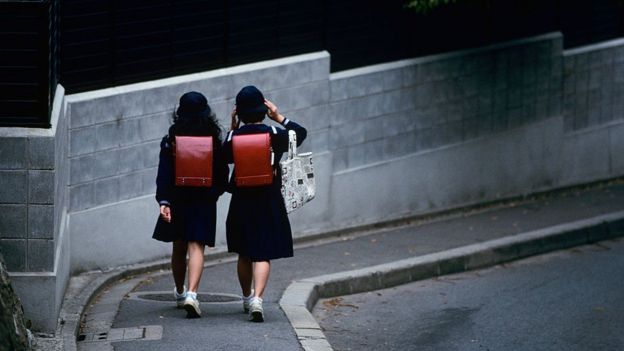
Two girls in school uniformImage copyrightGETTY IMAGES

Many schools in Japan control every aspect of their pupils’ appearance, forcing pupils to dye their brown hair black, or not allowing pupils to wear tights or coats, even in cold weather. In some cases they even decide on the colour of pupils’ underwear.

Strict school rules were introduced in the 1970s and 1980s in response to violence and bullying. They relaxed in the 1990s but have become more severe recently.

These regulations are known as «black school rules», reflecting a popular term used to describe companies that exploit their workers.

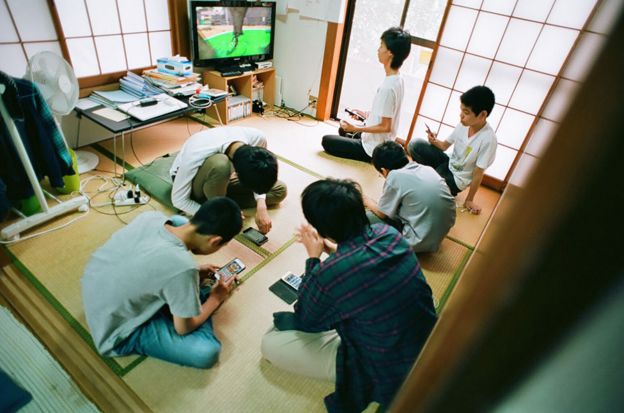
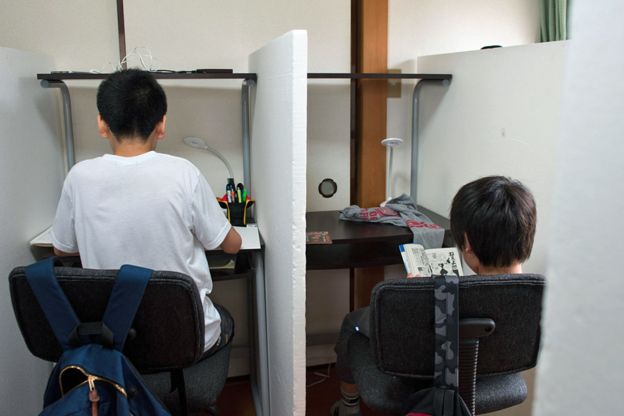
Now Tomoe, like Yuta, attends Tamagawa Free School in Tokyo where students don’t need to wear a uniform and are free to choose their own activities, according to a plan agreed between the school, parents and pupils. They are encouraged to follow their individual skills and interests.

There are rooms with computers for Japanese and maths classes and a library with books and mangas (Japanese comic books).

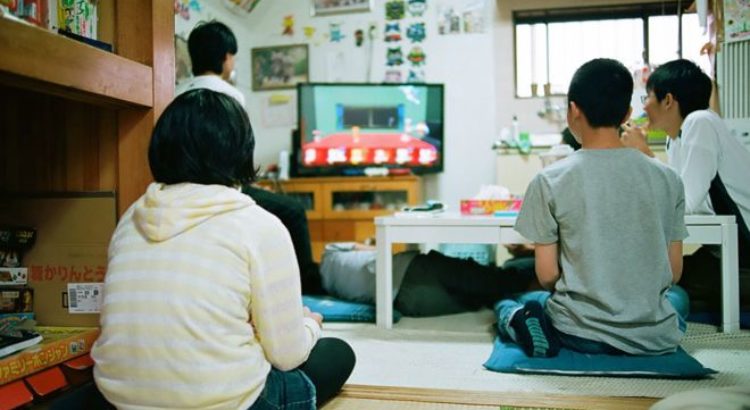
Two students in Tamagawa Free SchoolImage copyrightSTEPHANE BUREAU DU COLOMBIER
Image captionStudents can choose what to activities they want to do in free schools

The atmosphere is very informal, like a big family. Students meet in common spaces to chat and play together.

«The purpose of this school is to develop people’s social skills,» says Takashi Yoshikawa, the head of the school.

Whether it’s through exercising, playing games or studying, the important thing is to learn not to panic when they’re in a large group.

The school recently moved to a larger space, and about 10 children attend every day.

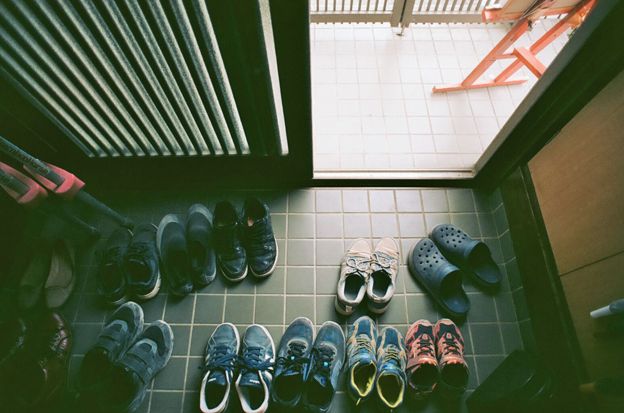
Shoes outside the free schoolImage copyrightSTEPHANE BUREAU DU COLOMBIER
Image captionAbout 10 children attend Tamagawa Free School every day

Mr Yoshikawa opened his first free school in 2010, in a three-storey apartment in Tokyo’s residential neighbourhood of Fuchu.

«I expected students over 15 years old, but actually those who came were only seven or eight years old,» he says. «Most were silent with selective mutism, and at school they didn’t do anything.»

Mr Yoshikawa believes that communication problems are at the root of most students’ school refusal.

Takashi Yoshikawa opened a free school in 2010Image copyrightSTEPHANE BUREAU DU COLOMBIER
Image captionTakashi Yoshikawa first opened a free school in 2010

His own journey into education was unusual. He quit his job as a «salary man» in a Japanese company in his early 40s, when he decided he wasn’t interested in climbing the career ladder. His father was a doctor, and like him, he wanted to serve his community, so he became a social worker and foster father.

The experience opened his eyes to the problems children face. He realised how many students suffered because they were poor, or victims of domestic abuse, and how much this affected their performance at school.

Part of the challenge pupils face is the big class sizes, says Prof Ryo Uchida, an education expert at Nagoya University.

«In classrooms with about 40 students who have to spend a year together, many things can happen,» he says.

Prof Uchida says comradeship is the key ingredient to surviving life in Japan because the population density is so high – if you don’t get along and co-ordinate with others, you won’t survive. This not only applies to schools, but also to public transport and other public spaces, all of which are overcrowded.

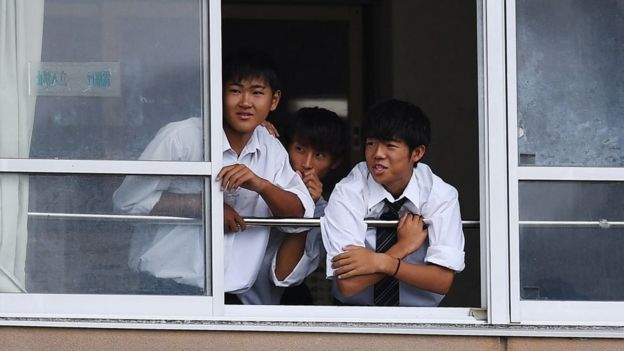
Students watch rugby practice from their classroom in IchiharaImage copyrightGETTY IMAGES
Image captionComradeship is key to surviving school

But for many students this need to conform is a problem. They don’t feel comfortable in overcrowded classrooms where they have to do everything together with their classmates in a small space.

«Feeling uncomfortable in such a situation is normal,» says Prof Uchida.

What’s more, in Japan, children stay in the same class from year to year, so if problems occur, going to school can become painful.

«In that sense, the support provided for example by free schools is very meaningful,» Prof Uchida says. «In free schools, they care less about the group and they tend to value the thoughts and feelings of each single student.»

Children playing in Tamagawa Free SchoolImage copyrightSTEPHANE BUREAU DU COLOMBIER
Image captionChildren playing in Tamagawa Free School

But although free schools are providing an alternative, the problems within the education system itself remain an issue. For Prof Uchida, not developing students’ diversity is a violation of their human rights – and many agree.

Criticism of «black school rules» and the Japanese school environment is increasing nationwide. In a recent column the Tokyo Shimbun newspaper described them as a violation of human rights and an obstacle to student diversity.

In August, the campaign group «Black kosoku o nakuso! Project» [Let’s get rid of black school rules!] submitted an online petition to the education ministry signed by more than 60,000 people, asking for an investigation into unreasonable school rules. Osaka Prefecture ordered all of its high schools to review their rules, with about 40% of schools making changes.

Prof Uchida says the education ministry now appears to accept absenteeism not as an anomaly, but a trend. He sees this as a tacit admission that futoko children are not the problem but that they are reacting to an education system that is failing to provide a welcoming environment.

Presentational grey line

You may also like:

Media captionThe women trying to coax Japan’s reclusive young men out of their bedrooms.

At least half a million young men in Japan are thought to have withdrawn from society, and refuse to leave their bedrooms. They’re known as hikikomori.

Their families often don’t know what to do, but one organisation is offering «sisters for hire» to help coax these young men out of their isolation.

Source of the article: https://www.bbc.com/news/world-asia-50693777

Comparte este contenido:

China took their parents: The Uighur refugee children of Turkey

Asia/ China/ 31.12.2019/Fuente: www.channelnewsasia.com.


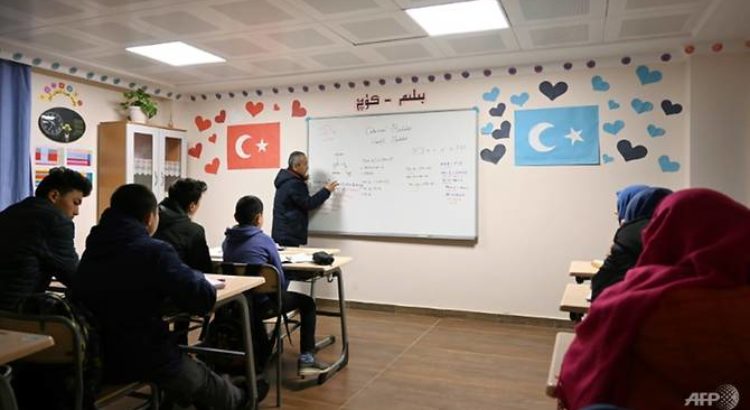
The school on the outskirts of Istanbul is a rare place where Uighur child refugees from China can study their language and culture.

But for several, it has also become an impromptu orphanage.

Having fled a worsening crackdown on Uighur Muslims in northwest China, some of their parents thought it was still safe to return occasionally for business and to visit family, only to disappear into a shadowy network of re-education camps from which no communication is permitted.

Out of just over a hundred pupils at the school, 26 have lost one parent to the camps, seven have lost both, says its head Habibullah Kuseni.

Nine-year-old Fatima has only vague memories of her homeland – and now, of her father, too.

She remembers watching television with him: She wanted cartoons, but he liked watching the news especially about Turkey’s president, Recep Tayyip Erdogan, one of the only leaders in the Muslim world willing to stand up for the Uighurs and risk China’s wrath.

Her father flew back to China from time to time for business before anyone knew about the camps in the Xinjiang region.

«And then he was gone,» she says, tears streaming down her face.

«I thought he would come back, but he never did.»

No one has heard from him in three years.

Exiled Uighur activists in November released evidence of nearly 500 camps and prisons being used against their ethnic group in China, saying the overall number of inmates could be «far greater» than the one million usually cited.

When news of the camps first emerged in 2017, Beijing initially denied their existence.

Many of the Uighur child refugees at the school have lost one or both parents to the network of
Many of the Uighur child refugees at the school have lost one or both parents to the network of re-education camps in China AFP/Ozan KOSE

Later, it claimed they were «voluntary» vocational centres aimed at combating extremism by teaching people Mandarin and job skills.

But leaked internal documents have shown they are run like prisons, while critics say they are aimed at eradicating local culture and religion of Uighurs and other, mostly Muslim, minorities.

«DON’T WORRY ABOUT US»

With some 50,000 Uighur refugees in Turkey, there are many more children like Fatima or even worse off.

Tursunay, 15, hasn’t seen or spoken to either of her parents since July 2017.

«Don’t worry about us,» they said, in their last phone call on a trip back to China.

They said it was strange their passports had been confiscated but were sure it would be resolved soon.

Then, silence.

Tursunay remembers her life in China.

She recalls asking: «Why are they watching us, papa?» when cameras were installed at the entrance to their apartment.

It’s because we are Muslims, her father said.

He burned their collection of religious CDs.

Tursunay has just her little sister now and an older friend they met on the refugee trail who looks after them.

All forms of communication with every family member in China have been cut.

She longs for her parents so much – even just a brief message – that she says she must fight the urge to be angry with them for disappearing.

«I try to stay optimistic and remember that it’s not my parents who have done this to me,» she says.

Many children inside Xinjiang are also reportedly without parents.

Human Rights Watch said in September that Chinese authorities have housed «countless» children whose parents are detained or in exile in state-run child welfare institutions and boarding schools without parental consent or access.

«CRIES OF OUR BROTHERS»

Many Turks feel historic bonds with the Uighurs, either as fellow Muslims or as part of the same Turkic-speaking ethnic group.

Back-to-back rallies were held in December in Istanbul, one by Islamists and another by ultra-nationalists.

«Haven’t the cries of our brothers from East Turkestan reached you?» said Musa Bayoglu during one outside the Chinese consulate, using Uighur activists’ preferred name for their region which is strictly outlawed by China.

«Haven’t the screams of our sisters passed through the walls of your palaces?»

Rallies in support of Uighurs were held in Istanbul recently -- many Turks feel historic bonds with
Rallies in support of Uighurs were held in Istanbul recently — many Turks feel historic bonds with the Uighurs, either as fellow Muslims or as part of the same Turkic-speaking ethnic group AFP/Ozan KOSE

Earlier this year, Turkey’s foreign ministry called China’s crackdown on Uighurs «a great embarrassment for humanity» but since then has been largely silent on the issue.

When Erdogan spoke at the UN General Assembly in September, he reeled off a list of Muslim groups facing persecution, from Palestinians to Myanmar’s Rohingyas. Uighurs were notably absent.

Many fear he is bending to Chinese economic pressure, though Uighurs in Turkey remain hugely grateful for the asylum the country has offered.

«They are providing 50,000 Uighurs a peaceful place to live,» said one Uighur activist in Istanbul.

«No other Muslim country did that, no Western country did that.»

«WE WILL TAKE IT BACK»

The leaked internal documents detailed how Beijing runs the camps.

They included instructions that inmates should be cut off from the outside world and monitored at all times – including toilet breaks – to prevent escapes.

They also indicated that people should be held for at least a year, and released only after being assessed for «ideological transformation, study and training, and compliance with discipline».

At the Uighur school in Istanbul, such stories take a toll.

«I still want to listen to the news, but when I hear about it, I feel bad, uneasy; my stomach aches,» says Rufine, 12, who wants to be a teacher or a doctor when she’s older.

Her mother disappeared two years ago when she went back to look after Rufine’s sick grandmother.

Kuseni, the headteacher, laughs when asked what items in the school would be illegal in China.

«Just coming on holiday to a Muslim country like Turkey would be enough to send you to a camp,» he says.

«As for this stuff …,» he points at the East Turkestan flag and the Uighur Arabic script on the wall, and makes a cutting motion across his throat.

«The Uighurs are facing extinction,» adds 39-year-old teacher Mahmut Utfi. «Our culture, our language. I see my job as a duty.»

Teacher Mahmut Utfi says he sees his job as a duty as the Uighurs are "facing extinction"
Teacher Mahmut Utfi says he sees his job as a duty as the Uighurs are «facing extinction» AFP/Ozan KOSE

For Fatima, the repression has only made her more defiant.

Tears still streaming, her voice cracking, she has a fierce message for the Chinese government: «I would tell them: Just wait a bit. You think we’re weak, but you’ll see. Our nation, our motherland will survive, you won’t be able to stop it.

«Because they took it from us, we will have to take it back,» she says.

Source of the notice: https://www.channelnewsasia.com/news/asia/china-xinjiang-muslim-uighur-refugee-children-turkey-12221948

Comparte este contenido:
Page 149 of 772
1 147 148 149 150 151 772