Page 247 of 773
1 245 246 247 248 249 773

Enfoque de China: Escuelas para superdotados libera potencial de estudiantes

Redacción: Spanish/10-10-2018

A los cuatro años, Ji Tingqiao podía recordar los nombres de todos los huesos del cuerpo. En la escuela primaria, podía entender las antiguas obras clásicas chinas. A los 15 años, el pasado mes de septiembre, entró en la universidad.

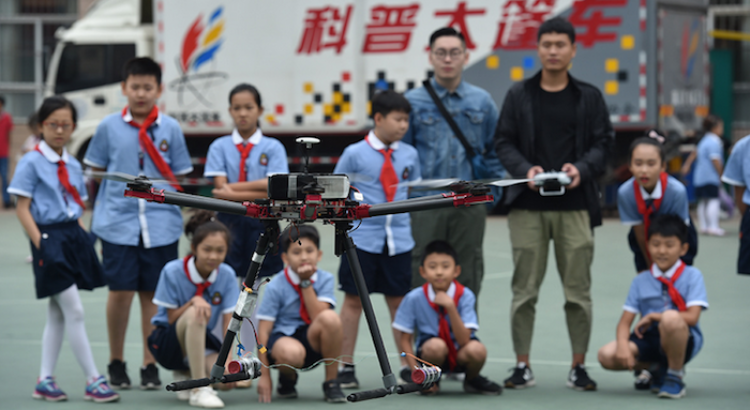
Estudiantes talentosos de todo el país han sido inscritos en los últimos 40 años en un programa especial establecido en la Universidad de Ciencia y Tecnología de China (UCTCh), con sede en la ciudad oriental de Hefei.

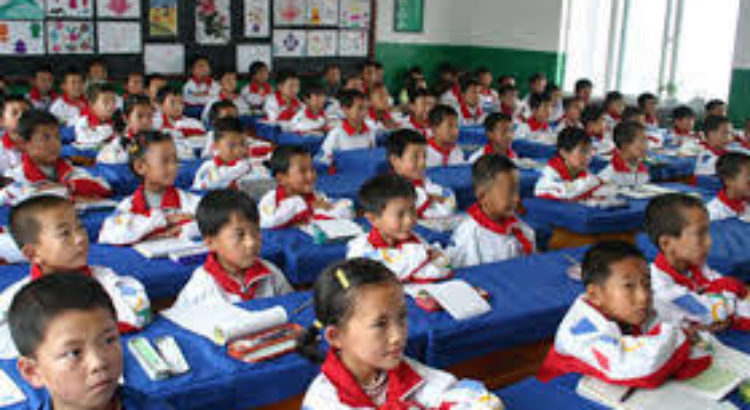
El centro docente inició en 1978 un programa llamado «Clase Especial para Jóvenes Dotados», también llamada «Clase Júnior», que brinda a los jóvenes prodigios la oportunidad de saltarse algunos años de escuela secundaria y empezar la universidad adelantadamente.

Hasta el momento, 1.589 estudiantes se han graduado de las clases, de los cuales un gran número se convirtieron luego en profesores o científicos en universidades como Stanford y Harvard, así como en líderes empresariales, entre ellos Ya-Qin Zhang, presidente del gigante tecnológico Baidu.

A pesar del éxito, el modelo ha tenido sus controversias. Ning Bo, un estudiante estrella de la primera clase junior de 1978, llegó a ser profesor universitario a los 19 años, pero posteriormente arremetió contra la «educación de prodigios» en la televisión.

La sociedad se ha mostrado escéptica acerca de si tales proyectos cultivarían a los mejores talentos o a ‘empollones’ que no se adaptaran a la vida diaria.

Las universidades de todo el país, que en el pasado se apresuraron a establecer programas similares, los fueron cerrando, incapaces de satisfacer a los estudiantes o atender a su desarrollo psicológico.

Sin embargo, tras cuatro décadas, el programa de la UCTCh ha perdurado, tras pasar a centrarse más en la evolución integral de los estudiantes y su potencial individual.

«Nuestra selección no se centra simplemente en la edad temprana ni en un talento específico. Los candidatos han de atender a las cualidades generales», destacó Chen Yang, decano de la escuela de jóvenes superdotados de la UCTCh.

La escuela ha abandonado criterios como las pruebas de coeficiente intelectual y ha adoptado una evaluación más exhaustiva, que combina los resultados del examen nacional de ingreso a la universidad, las pruebas escritas y psicológicas y las entrevistas.

«El objetivo de esta escuela no es seleccionar ni formar prodigios. Es más un lugar que educa a estudiantes con potencial apasionados por la ciencia y la tecnología», explicó.

La escuela proporciona una variedad de actividades extracurriculares para los jóvenes talentosos.

«Tengo una vida ocupada en el campus», dijo Zhu Yuanhao, un estudiante de 19 años que se está preparando para graduarse.

Zhu se especializó en geofísica y pasa mucho tiempo estudiando, pero no ha renunciado a aficiones como la poesía, la guitarra y los videojuegos.

«A veces juego a Minecraft en mi tiempo libre», indicó Zhu, que también es miembro de la asociación de voluntarios de la universidad.

«Hay más de 70 asociaciones en la universidad, y una gran cantidad están dirigidas por los estudiantes de la escuela», señaló Lan Rong, subjefe del Partido Comunista de China en la escuela de jóvenes dotados.

La mayor parte de este grupo de estudiantes celebran su 18º cumpleaños después de inscribirse, por lo que la escuela organiza una ceremonia especial cada año para felicitarlos por su entrada en la edad adulta.

«La ceremonia es importante porque ayuda a concienciarlos de las responsabilidad de la vida», apuntó Lan.

«Los alumnos como Ji son lo normal en nuestras clases, lo que empuja a otros a estudiar más duramente», señaló Zhu en una reunión de recepción de estudiantes recién ingresados. «Sin embargo, todo el mundo sabe que estudiar no es lo único en la vida».

Zhu tiene que decidir sobre su futuro, ahora que está a punto de graduarse.

«No importa qué elija, siempre estaré agradecido por lo que la escuela me ha enseñado», afirmó el joven.

Fuente: http://spanish.xinhuanet.com/2018-10/04/c_137511452.htm
Comparte este contenido:

Vietnam: Schools that lack teachers not allowed to expand staff

Asia/ Vietnam/ 09.10.2018/ Fuente: english.vietnamnet.vn.

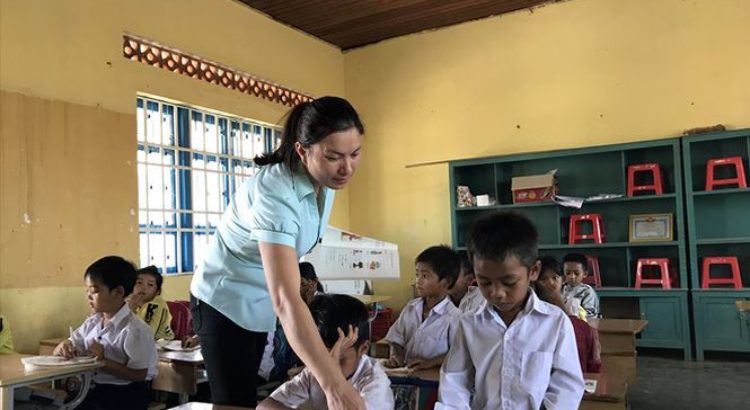
VietNamNet Bridge – Schools have repeatedly complained to the Ministry of Education and Training (MOET) about the lack of teachers, but the Ministry does not have the right to recruit teachers.

MOET’s Deputy Minister Nguyen Duy Thang said at an event held by the National Assembly’s Committee for Culture, Education, the Youth and Children on September 24 that 29 provinces want an additional 40,447 civil servants for the education sector this year. Thanh Hoa province alone needs 7,519.

According to MOET, schools now lack 80,000 teachers, including 43,000 for preschools.

The shortage has forced schools to employ teachers under short-term labor contracts. They are not official civil servants and do not receive salaries from the State.

Dang Thi My Huong, a National Assembly deputy, has raised questions about the responsibilities of MOET and the Ministry of Interior Affairs (MIA) for teacher shortage.

29 provinces want an additional 40,447 civil servants for the education sector this year. Thanh Hoa province alone needs 7,519.

According to Huong, the teachers working under labor contracts signed with schools receive “starvation” salaries, about VND2 million a month.

The jobs are unstable because schools may terminate the contracts at any time.

In reply, MOET’s Minister Phung Xuan Nha said MOET is aware of teacher shortage, but the ministry does not have the right to recruit teachers. MIA is in charge of recruiting civil servants.

He said this was a difficult question to solve as schools want to recruit more teachers, while Vietnam is trying to cut out waste in organizations to ease the burden on the state budget.

Tran Hong Quan, deputy chair of Ca Mau province, also said that while the number of students increases every year (the population of the province increases by 10,000 each year), the number of teachers do not.

Van Thi Bach Tuyet, a National Assembly deputy from HCMC, commented that the solutions mentioned by MOET and MIA cannot settle the problem quickly. She suggested a mechanism under which cities and provinces have self-determination, with no need to wait for MIA’s approval on the personnel list.

Meanwhile, most National Assembly deputies agree that the problem lies in the recruitment scheme.

Nha said that under current laws, MOET and local education departments can only make suggestions, while it is MIA which makes final decisions in recruiting teachers.

Tran Thi Tam Dan, former chair of the National Assembly’s Committee for Culture, Education, the Youth and Children, said: “Those who use workers need to be given the right to recruit workers. It is unreasonable to assign teacher recruitment to MIA.”

“Only education establishments know how many teachers they need and what they have to do to settle the problem,” she said.

Fuente de la noticia: https://english.vietnamnet.vn/fms/education/209484/schools-that-lack-teachers-not-allowed-to-expand-staff.html

Comparte este contenido:

Ta’allum educators speak about ‘engaged learners’

Asia/ Qatar/ 09.10.2018/ Source: www.thepeninsulaqatar.com.

Three Ta’allum educators spoke at the national Teaching and Learning Forum sponsored by Qatar Foundation’s Education Development Institute.

The conference took place on October 7 at the Qatar National Convention Center. The theme of the forum was engagement, with keynote speeches and workshops by international educationalists like Steve Francis and Joy Marchese.

Aimed at motivating teachers to reach for the highest level of student, staff and parent engagement and achievement, participants gained tools to inspire young people to excel personally and academically.

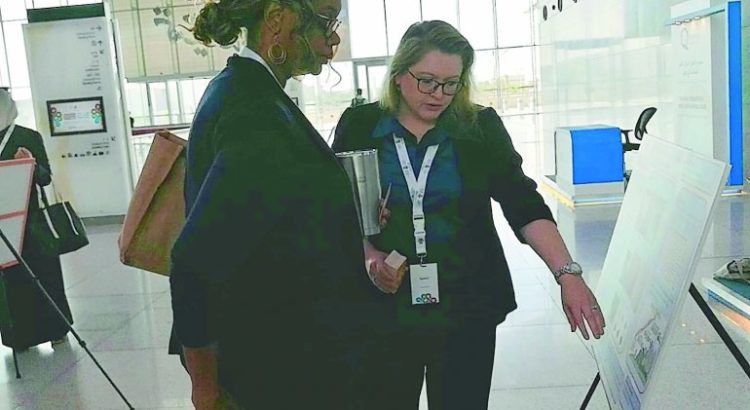
Ta’allum delegates Jude Ensaff, Samera Kouser, and Rukshana Begum spoke to visitors about the great work that has been achieved in Ta’allum academies over the past three years.

Taallum’s contribution, a poster presentation entitled ‘Moving learners from passive to engaged: a strategic approach’ outlined the steps taken in the three academies to move Early Years and Primary classrooms from teacher-directed to learner-centred approach.

The delegates further described the ongoing journey in Al Maha Academy for Girls, Al Maha Academy for Boys and Al Jazeera Academy to learner-driven classrooms.

Some of the key methods that make the transition to learner-driven classrooms are the professional development of staff, use of hands-on resources and approaches, and the introduction of more speaking opportunities through practicals.

Mohammed Saefan, Ta’allum Director of Education, said: “At the three academies, we are harnessing our resources in training our students to become independent learners. We are acquiring new technology and instructional materials to promote enquiry-based learning. As our presentation described it at this important forum, the learner is at the centre of the learning process.”

Ta’allum schools have made great strides forward for student engagement and achievement. This first foray into national and regional forums in education opens doors of opportunities in future for more sharing of Ta’allum successes.

Source of the notice: https://www.thepeninsulaqatar.com/article/09/10/2018/Ta%E2%80%99allum-educators-speak-about-%E2%80%98engaged-learners%E2%80%99

Comparte este contenido:

Indonesia Needs to Educate on Natural Disasters

Asia/Indonesia/09.10.2018/Source: www.fairobserver.com.

fter another earthquake and tsunami in Indonesia, it is clear that people are not taught what to do in the event of natural disasters.

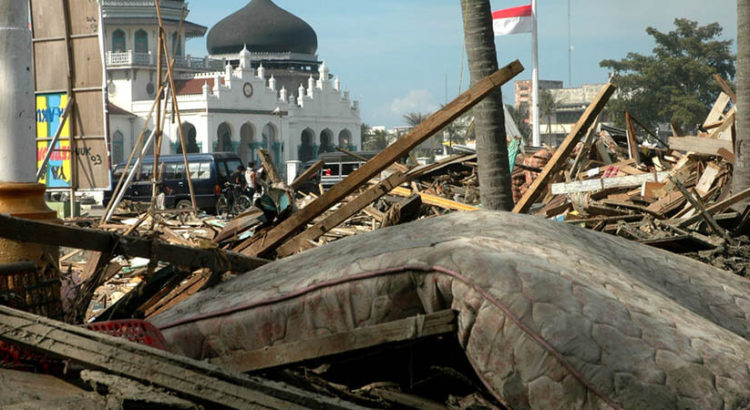
Indonesia has once again been hit by a natural disaster. On September 28, a 7.5-magnitude earthquake followed by a tsunami struck the cities of Palu and Donggala on the island of Sulawesi. At the time of publishing, at least 1,424 people died, with thousands more injured. With homes in ruin, tens of thousands have been forced to live in makeshift refugee camps.

According to Reuters, Indonesia’s geophysics agency, BMKG, lifted a tsunami warning too early, just before the waves hit the coast of Palu. It is also understood that buoys — which are connected to the seafloor to detect tsunamis — in Sulawesi have not worked for the past six years and had not been fixed due to a “lack of funding.” With poor planning in place, Indonesians were left with little notice of an imminent disaster.

As reported by The Guardian, Phil Cummins of the Australian National University and Adam Switzer of Nanyang Technological University in Singapore believe the earthquake and tsunami were not the result of a failure in technology, but rather due to the lack of education among the people.

In 2004, Southeast Asia was left devastated by an earthquake and tsunami that quickly spread across the Indian Ocean. Unlike that time, the wave that struck Sulawesi was not was prompted by an earthquake hundreds of miles out in sea. Instead, it was a localized tsunami resulting from an earthquake close to the coast. The tsunami waves hit Palu just 30 minutes after the quake which, according to Switzer, “should have been the early warning.”

Cummins added that to blame technology is “misguided.” Instead of relying on a warning system, he said, people should have sought “high ground immediately. They cannot afford to wait for a siren or a warning, they need to move instantly.” The issue is that Indonesians in Sulawesi did not really know they should have done that.

He added: “Either they didn’t know they needed to do that or they didn’t believe anything would happen, and in either case that says the people in Sulawesi were not educated about what they need to do in this situation. And that’s what killed people.”

THE NEED TO EDUCATE

The conditions in Palu should be a wake-up call about the need for education — especially for those living in earthquake-prone areas — not only about natural disasters in general, but what people must do to ensure their safety. It is indeed difficult to predict when a natural disaster will occur. But considering Indonesia is vulnerable to such situations, it needs a comprehensive plan so that citizens are educated in how to respond to earthquakes and tsunamis. Sufficient response plans would mean that every Indonesian has basic knowledge about what to do when disaster strikes.

In Indonesia, most elementary school textbooks in social studies contain a a lesson about natural disasters. These include that cutting down trees can cause landslides and trigger floods or about how earthquakes occur. But there is no lesson about what to do when an actual quake takes place. Presumably, mitigation in Indonesia has not become a serious issue just yet.

Records over the past 15 years show there have been two devastating earthquakes in the country, leading to thousands of casualties. The 2004 earthquake and tsunami in Aceh caused 230,000 deaths across 14 countries around the Indian Ocean — the majority of those in Indonesia. Another earthquake took place in Yogyakarta in 2006, which claimed the lives of 5,000 people.

Several years have passed, but Indonesians still do not understand what to do when an earthquake occurs, other than running out of a building or trying to protect themselves under a table. With the country situated in an active geological area, Indonesia must prepare itself for natural disasters.

EARTHQUAKES AND TSUNAMIS

It should be made clear that educating people about what to do when an earthquake takes place is as crucial as having advanced technology to predict when disasters may occur. According to the US Department of Homeland Security’s Ready website, when an earthquake shakes the ground and you are in a vehicle, you should immediately pull over and stop. If you’re in bed, you should stay there. If you are outdoors, you should stay outdoors. Such valuable information is often unknown to Indonesians and should be an example for authorities and nongovernmental organizations in helping to increase people’s readiness to face earthquakes.

There is also a need for disaster exercises such as practicingdrop, cover and holdAs per Ready, this involves dropping on the ground to your hands and knees; covering or protecting your head and neck with your arms; crawling to the extent needed to avoid falling or collapsing materials; and holding onto strong furniture or doorways in a building until an earthquake stops.

No less important is making an emergency communicationpattern with your family. In an earthquake-prone country like Indonesia that has the 2004 tsunami in its memory, this is necessary.

There are also reasons why you are advised not to run out of a room if there is an earthquake. Trying to run when an earthquake takes place is very dangerous due to potentially falling debris or broken glass. It is safer for people to stay at home and protect themselves by crouching under a table.

Earthquakes do not usually last for very long. It only takes tens of seconds for an earthquake to occur. However, when the the ground stops shaking, people must be aware of the possibility of a tsunami, especially if they live on the coast. Again, these things are not taught to the average Indonesian.

In 2004, the tsunami in Aceh was preceded by a 9.2-magnitude earthquake that lasted for an estimated 10 minutes. In such instances, it is important to educate fishermen who work at sea.

Nature will usually give a number of signs before a tsunami hits. When a tsunami approaches the coastline, water will usually spread toward dry land and cause the inside of the sea to be exposed, showing its contents, corals and fish in the sea itself. Because of the low tide, there are often many fish floundering on the beach. Due to a lack of understanding, fishermen may not always act immediately. They need to be aware that they should not pick up the fish and should instead seek high ground.

Tsunamis cause abnormal sea activities. The key sign is the presence of a wall of water with a great roar. Imagine a sound that resembles that of a train or jet.

PREPARING FOR NATURAL DISASTERS

The theory seems easy, but the practice is difficult. As natural disasters are hard to predict, humans can only anticipate them by preparing themselves. Therefore, there is a need to make sure that training is carried out in Indonesia.

There are many things that can be done to educate people about disaster avoidance efforts. Schools could conduct regular evacuation exercises for earthquakes. Posters can also spread awareness about what can be done during natural disasters. National media outlets can also be used to educate people, such as making earthquake alertness videos. Relevant institutions and government ministries also need to make more of an effort to ensure that those who live and work on the coast are sufficiently educated about the signs of natural disasters and what they need to do in such events.

What is clear is that, learning from Palu and previous natural disasters, more efforts are needed by both the Indonesian government and other relevant stakeholders to educate people not only about basic information concerning natural disasters, but also what they need to do to recognize signs and steps to be taken when those disasters occur. Doing so could save lives.

Source of the notice: https://www.fairobserver.com/region/asia_pacific/indonesia-earthquake-sulawesi-tsunami-natural-disasters-asia-news-today-24920/
Comparte este contenido:

Coquille Tribe moving forward with Indian education curriculum, celebrating culture


The Coquille Indian Tribe has a long cultural history, broken apart by the loss and restoration of their «Tribe» designation.

The tribe has not always been given the chance to teach their history to the younger generation.

Newly passed legislation, Senate Bill 13, puts into law the process to make sure the next generation knows and celebrates their culture.

The Oregon Department of Education will draft a mandated statewide curriculum for the 2019-2020 school year. and the nine tribes of Oregon can submit their own lesson plans specific to their history.

«What an Indian is and what they look like is the story of their tribe,» said Bridgett Wheeler, the tribes’s culture, education and library director. «One of the things I’ve struggled to convince my children is that they are, in fact, legit Indians of the Coquille Indian tribe.»

According to the tribe, after miners arrived and the government pushed the indigenous people from their lands in the 1850s, few Coquille women with white husbands were allowed to stay.

Many married white people, and these mixed-race families now make up the Coquille Tribe.

Kristina Simpson, Head Start director, said educating the younger generation is important to her as a mom and a tribal spouse.

They are currently accepting bids for proposed lesson plans that are in line with state and federal standards

«Our expectation is we lay out what we would like people to provide us,» Wheeler said, «their expertise, examples of lesson plans, basically, what their plan and price would be for them to provide this product.»

Source of the notice: https://kcby.com/news/local/coquille-tribe-moving-forward-with-indian-education-curriculum-celebrating-culture

Comparte este contenido:

China celebrará conferencia anual de educación internacional del 18 al 21 de octubre

Asia/China/09.10.2018/Fuente: spanish.xinhuanet.com.

La 19ª Conferencia Anual de China de Educación Internacional se celebrará en Beijing del 18 al 21 de octubre, centrada en el tema de la «Modernización de la Educación — Práctica y Exploración».

El evento de este año, organizado por la Asociación de la Educación de China para los Intercambios Internacionales, incluirá una expo de educación y seminarios sobre proyectos de cooperación entre las universidades chinas y extranjeras y las universidades mixtas.

Tres informes sobre el desarrollo de la educación superior china, las universidades mixtas en China y el estudio en China se publicarán durante la conferencia.

La expo de educación se celebrará en Beijing, Chengdu, Guangzhou y Shanghai del 20 al 28 de octubre y ha atraído a expertos de más de 400 instituciones educativas de unos 30 países y regiones del mundo, que compartirán sus experiencias y perspectivas y explorarán caminos para modernizar la educación.

Más de 40 de las principales universidades de Rusia, el país invitado de honor a la expo, participarán en el evento.

Fuente de la noticia: http://spanish.xinhuanet.com/2018-10/06/c_137514822.htm

Comparte este contenido:

Compuses adapt to rise in Southeast Asian students

Asia/Taiwan/08.10.2018/Source:

From Prayer rooms for Muslims to the diversity of food available at school cafeterias, university campuses in Taiwan have over the past few years been stepping up their efforts to accommodate an increasing number of Southeast Asian students.

The number of students from Southeast Asia and India enrolled in colleges and universities in Taiwan has tripled over the past decade, said Bi Tzu-an (畢祖安), director-general of the Department of International and Cross-strait Education Affairs at the Ministry of Education.

Ten years ago, the number of Indian and Southeast Asian students at universities in Taiwan was about 8,000. In 2016, 28,000 students from ASEAN member states were enrolled at tertiary institutions, a figure that rose to 38,000 last year, the ministry said.

The rising trend is expected to continue, Bi said, adding that Taiwan aims to increase student numbers from ASEAN countries to 58,000 by next year.

Taiwan has been focusing on not only nurturing local talent, but also forging ties with neighboring countries and attracting more students as part of its New Southbound Policy.

In 2016, Malaysian students comprised the majority of the ASEAN student population at 13,380, followed by Vietnam at 4,463 and Indonesia at 4,061.

Malaysia has always contributed the largest portion of ASEAN students in Taiwan because of the country’s large overseas Chinese population, said Chen Shang-mao (陳尚懋), a professor with Fo Guang University’s public affairs department, adding that they choose to study in Taiwan because of their knowledge of Mandarin.

Liu Kuo-wei (劉國偉), vice president for international affairs at Ming Chuan University, said that Vietnamese students come to Taiwan to experience the culture and, after their studies, return home to pursue careers at Vietnam-based Taiwanese firms.

The number of Indian students in Taiwan has also been increasing over the past few years.

National Tsing Hua University, for example, has been ramping up efforts to attract students from India after President Tsai Ing-wen (蔡英文) said the country was key to her administration’s New Southbound Policy.

In April last year, the Hsinchu school established its Center for India Studies — the first of its kind in Taiwan.

Center director Wang Wei-chung (王偉中) said that there were only 40 Indians studying at the university 10 years ago, but that figure has now surpassed 200.

They come to study at the university partly due to the cost, as it is cheaper compared with the US, which has traditionally been a major education destination for Indians, Wang said.

Source of the notice: http://www.taipeitimes.com/News/taiwan/archives/2018/10/07/2003701910


Comparte este contenido:
Page 247 of 773
1 245 246 247 248 249 773