Page 249 of 773
1 247 248 249 250 251 773

Viceprimera ministra china pide mejor educación para desarrollo integral de estudiantes

Asia/China/03 Octubre 2018/Fuente: Spanish.xinhua

La viceprimera ministra china Sun Chunlan pidió más esfuerzos para mejorar la educación y formar a las generaciones de jóvenes capaces para que estén bien preparados para unirse a la causa socialista.

Sun, también integrante del Buró Político del Comité Central del Partido Comunista de China, hizo las declaraciones durante una gira de inspección en la provincia de Gansu, noroeste de China.

Se debe impulsar que los jóvenes tengan una base moral, intelectual, física y estética integral con un espíritu trabajador, dijo Sun.

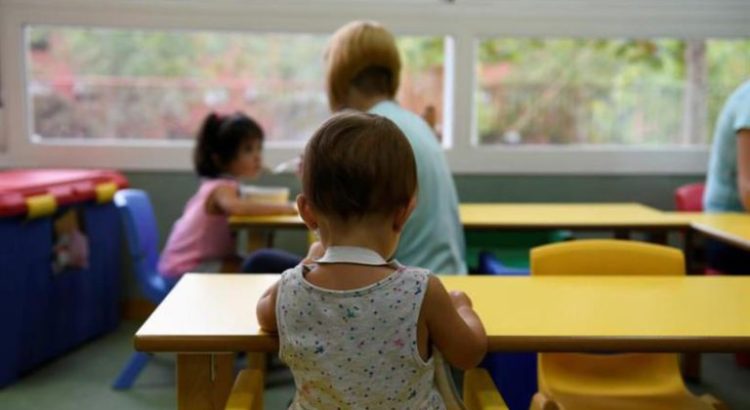
Al visitar un jardín de niños y una escuela primaria en la ciudad de Dunhuang, en Gansu, Sun pidió un acceso más fácil a la educación preescolar, una regulación más estrecha de los planes de estudio de las escuelas y un sistema de evaluación mejorado para que los estudiantes logren el desarrollo integral.

Sun también pidió una mejor asignación de los recursos educativos, construir escuelas de pequeña escala en aldeas menos pobladas, establecer internados en poblados y mejorar el ingreso y las condiciones de trabajo de los maestros.

Durante la inspección, Sun también visitó las Grutas de Mogao, un sitio patrimonio mundial en Gansu, donde enfatizó la necesidad de garantizar la protección y seguridad de las reliquias culturales y el uso de tecnología digital en el despliegue de la cultura tradicional.

Fuente: http://spanish.xinhuanet.com/2018-09/29/c_137499902.htm

Comparte este contenido:

Chinese students, made to study Communism, are rising up for workers’ rights

By

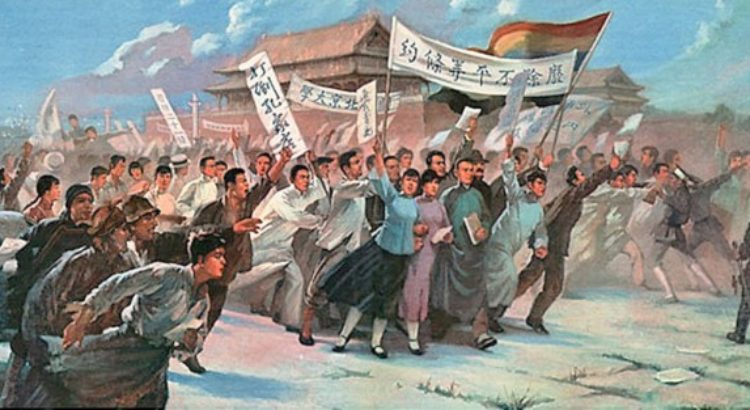
In 1989, the Chinese government slaughtered pro-democracy student activists whose commitment to justice swept the nation; now they’re facing a new student uprising, one comprised of ardent Communist youth whose state-mandated education in the works of Marx, Lenin and Mao have prompted them to stand up for oppressed workers who labor in the for-profit factories that have flourished since the Deng reforms.

President Xi has pursued a program of increased, unchecked personal power and a movement away from western media influences; as part of this, Chinese curriculum has pursued a new emphasis on Communist literature.

The Communist students staged mass, illegal demonstrations in Huizhou in sympathy with a wildcat workers’ strike, bearing portraits of Mao, singing socialist anthems, and chanting «You are the backbone of the working class! We share your honor and your disgrace!»

On August 24, police cracked down on the students, arresting 50 organizers in raids as they sang «The Internationale» in Chinese. Some organizers remain in prison, accused of being secret agents of foreign powers.

Communist student movements are springing up all over China, and local police are cracking down on their leaders.

The dispute in Huizhou began in July, after Jasic Technology, a manufacturer of welding equipment, prevented its workers from forming an independent union. China allows labor organizing only under the auspices of the official, party-controlled All-China Federation of Trade Unions.

The workers said managers had seized control of their branch of the official union. Complaining of being underpaid and treated like slaves, they began to organize a petition before the police intervened and detained several of them.

The young activists learned of the workers’ plight on internet messaging apps and took up their cause, with about 40 students and recent graduates going to Huizhou, a manufacturing hub of 4.8 million people in Guangdong Province. Hundreds of others spoke out in support online — so many that several universities warned students not to go to Huizhou

Source of the notice: https://boingboing.net/2018/10/01/with-chinese-characteristics.html

Comparte este contenido:

UNICEF is concerned for safety of thousands of children in Indonesia following Sulawesi earthquake and tsunami

Asia/Indonesia/02.10.18/Fuente:

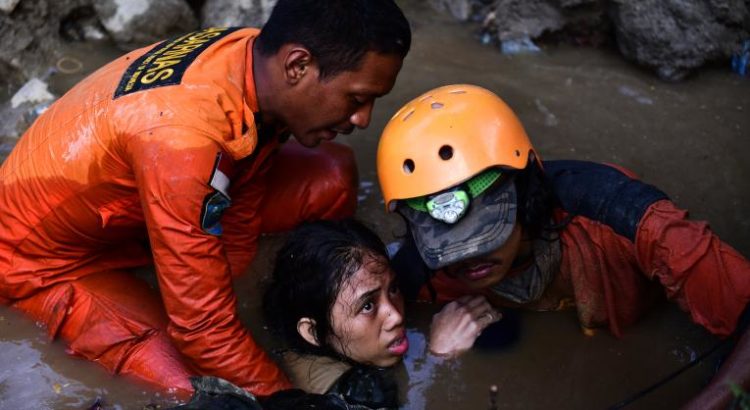
Three days after the earthquake that shook the Indonesian island of Sulawesi and the devastating tsunami that swept through Palu City, UNICEF says the situation for tens of thousands of children will remain extremely precarious in the days ahead. Children in Palu, Donggala and other affected sites in Sulawesi need urgent help to recover. Many have lost their loved ones, homes and neighbourhoods.

“With each new report about this devastating earthquake and tsunami, our concern increases for the safety of children in Palu, Donggala and other sites hit by the disaster,» said Amanda Bissex, OIC for the UNICEF Representative in Indonesia. «UNICEF Indonesia, in partnership with the Government, is doing everything it can to respond to this emergency, which hit the country just one month after another powerful earthquake resulted in hundreds of deaths in Lombok.”

As of 1 October, the Government has confirmed 844 deaths and 632 people injured, with 90 missing and 48,025 internally displaced. The Government estimates around 1.5 million people are potentially affected. It is likely that these figures will increase as more areas become accessible and additional assessments are conducted.

Based on the initial assessment with partners on the ground, immediate needs include evacuation and management of injured, medical and health services including referral services, water and sanitation, food and non-food items and emergency shelter. More than 1,000 schools are feared to have been damaged, directly impacting about 19 per cent of the students in Central Sulawesi.

Based on UNICEF’s experience in Indonesia, essential supplies include food (ready-to-eat meals), water and sanitation materials, primary healthcare items, medicines, and female hygiene kits. In addition, services for the identification and referral of separated and unaccompanied children, prevention of family separation, psychosocial support and education, will need to be scaled up as quickly as possible to protect children and help reestablish a sense of normalcy.

UNICEF is appealing for US $5 million to cover education, health, nutrition, sanitation and child protection needs for the current emergency as well as the lasting impact of the Lombok earthquake.

Fuente de la noticia: https://www.unicef.org/press-releases/unicef-concerned-safety-thousands-children-indonesia-following-sulawesi-earthquake

Comparte este contenido:

Vietnam increases domestic participation in international schools

By Anton Crace

A new decree from Vietnam’s government will increase the allowed proportion of domestic students in foreign-owned international schools, in a move being viewed by experts as a bid to attract more foreign investment and potentially encourage more students to remain in the country.

Decree 86, which was first mooted in 2017 and came into effect on 1 August, will allow international schools in Vietnam to have 50% of their enrolments made up of domestic students, upping the proportion from 10% for primary and 20% for secondary education.

“It is likely to become a ‘buyer’s market’ to the benefit of the target clientele of parents and students”

“The government is keen on attracting more foreign direct investment and expanding educational opportunities for its young people,” said Mark Ashwill, managing director of Capstone Vietnam.

“I think this is part of the recent trend of encouraging more foreign direct investment, and opening up Vietnam’s economy to the world. It’s a smart and timely decision.”

There has been increased interest in international schools among middle-class families in Vietnam, and the decree, which now permits teaching the National Curriculum in those schools, will likely have a positive impact on student choice, according to Ashwill.

“With more choices available than ever for parents and students, international schools will have to be at the top of their games in terms of curriculum, teaching staff, facilities, ancillary services, and reputation in order to be successful in the long-term,” he said.

“It is likely to become a ‘buyer’s market’ to the benefit of the target clientele of parents and students.”

In creating a buyer’s market, Phan Manh Hung, the attorney who helped the Vietnamese Ministry of Education and Training create the decree, said the new objective would also have a positive impact on state-owned schools.

“The Vietnamese government is hoping… more families stay in the country”

“The state-owned school systems reveal poor performance with a lot of weakness in terms of training quality,” he said.

“The competition between the private schools and state-owned schools would create the good opportunities for improvement of training quality.”

In implementing decree 86, which replaces the earlier decree 73, Hung said the government was tweaking its policies in order to alleviate concerns from foreign investors that setting up international schools would not be viable without domestic students.

As well as primary and secondary education, Hung said the Vietnamese government had also started eyeing investment in higher education, after a recent report from the department of foreign training noted more than 110,000 of its citizens were studying abroad, paying up to US$40,000 per year.

“This suggests that Vietnam is exporting about US$3bn every year to overseas education,” he said.

“The Vietnamese government is hoping that more K-12 international school options for local families in Vietnam will encourage more families to stay in the country, at least until higher education if not beyond, thereby reducing the number of Vietnamese studying abroad.”

Conversely, Ashwill said the decree might increase the opportunities for Vietnamese students to travel for their studies.

“[The new decree] will enable more children from well-to-do families to attend international schools, which will better prepare them for overseas study, the ultimate goal of many,” Ashwill said.

Among its other changes, decree 86 will also allow local kindergartens to link up with foreign entities, and sets the minimum investment to establish a university to one trillion Vietnamese dong, or 250 billion for a foreign-branch campus.

Vietnam has been active recently in establishing its ties with other countries, signing an agreement with Ireland and entering talks with other European nations in late 2017.

Source of the article: https://thepienews.com/news/vietnam-increases-domestic-participation-in-international-schools/

Comparte este contenido:

New measures fuel speculation about Islamist ban in Mauritania

Africa/Mauritania/01.10.2018/By Lamine Ghanmi/Source: thearabweekly.com.

The closures came after Ould Abdel Aziz spoke critically of political Islam, saying it has done more harm to Arab countries than the state of Israel.

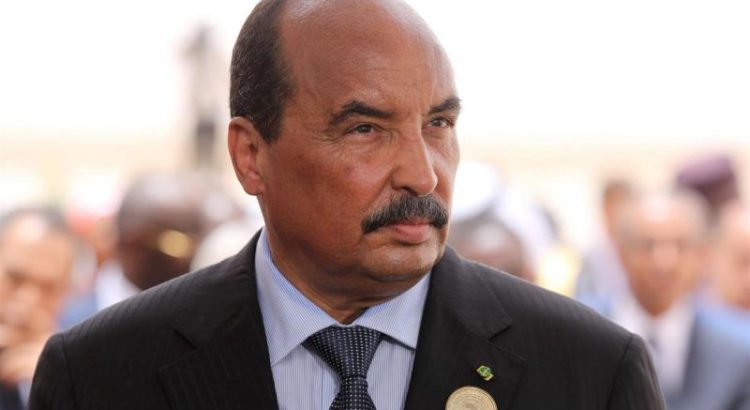
Authorities shut down an Islamic university and an Islamic training centre linked to a prominent Muslim Brotherhood preacher as part of Mauritanian President Mohamed Ould Abdel Aziz’s crackdown on Islamist extremism.

Mauritania’s High Education Ministry ordered the closure of Abdallah ibn Yassine University, headed by Islamic fundamentalist preacher Muhammad al-Hassan Ould al-Dadou, who is a member of the Muslim Brotherhood-affiliated International Union for Muslim Scholars.

The move came three days after the government outlawed the Islamic Scholars Training Centre, also run by Ould al-Dadou. Analysts speculated that the government could next ban the Muslim Brotherhood-affiliated political party in the country.

The closures came after Ould Abdel Aziz spoke critically of political Islam during a September 22 news conference, saying it has done more harm to Arab countries than the state of Israel.

Asked about the government’s position on the country’s Muslim Brotherhood affiliate, the National Rally for Development and Reform, also known as Tewassoul, Ould Abdel Aziz said: “One thing at a time. We are live on the air.”

Tewassoul was the main opposition to the president’s ruling Union for the Republic (UPR) party and has one of the most loyal support bases in the country.

Following Ould Abdel Aziz’s remarks, Muslim Brotherhood activists attacked the president on social media, with some calling him a “five-star shibiha,” a reference to the Syrian state-sponsored militia that assisted government troops in cracking down on its opponents.

Ould al-Dadou responded to Ould Abdel Aziz with a sermon defending Islamists in the region and charged Ould Abdel Aziz and other Arab regimes with “injustice and despotism.”

Ould al-Dadou’s sermon went viral on social media and the next day the government announced it would shut down the imam’s training centre.

Ould Adel Aziz has led a charge against Islamists since the run-up to his country’s parliamentary, regional and municipal elections in September. During one rally, he charged that “proponents of political Islam are all extremists… Activists of the political Islamist parties are extremists. They take up weapons when they fail to achieve their objectives and goals by political ways.”

In separate remarks, Ould Abdel Aziz blamed Muslim Brotherhood-linked parties and other Islamists for causing “the ruin and destruction of nations wealthier and stronger than Mauritania.”

“We must block the route to them. We must shut the door before them in the elections to shield our nation and protect our society,” he said.

Ould Abdel Aziz’s fiery campaign against Islamists is credited with helping the UPR secure a large majority in parliament, regional councils and municipalities.

Analysts said the president’s continued attacks on Islamists, even after their poor performance in elections, could be part of a plan to outlaw the group.

Tewassoul leader Mohamed Mahmoud Ould al Sidi said in a statement that talk of outlawing the party was part of an attempt to pave the way for the president to secure a third mandate in office, which would require changing the constitution.

While Ould Abdel Aziz has ruled himself out of elections next year, he has vowed to leave office protecting the “achievements” of his administration and his critics suspect he could be angling for another term.

Ould al Sidi said: “We refuse to be neutral in the fight against a third mandate and for the respect of the constitution.”

Addressing Ould Abdel Aziz’s criticism, he said: “We follow a path of moderation and middle ground but we refuse to abandon our Islamic references and vision,” adding that the Mauritanian authorities failed to present evidence suggesting his party was involved in extremism.

“They are extrapolating the reality of other Islamists upon us. It is better for them to give proof and facts to back their accusations,” he said. “The difference between us and the others is that we are inspired by Islamic values in our political activities while others are exploiting Islam for their political benefit.”

The closed Islamic training centre denied authorities’ claims that it was linked to extremism, saying the institution “contributes to cementing societal peace in Mauritania, in the region and elsewhere in the world by teaching moderate Islam.”

However, the National Union of Mauritania’s Imams and the League of Mauritania’s Islamic Scholars supported the closure, saying that “these centres have not succeeded in graduating a single scholar since they were opened many years ago.”

They warned against any violent reactions to the ban, saying that “religion forbids any reckless action that would cause strife and undermine peace.”

Pro-government intellectuals urged authorities to ban Tewassoul and its civic associations.

“Genuine Mauritanian political parties belong to the homeland with ideas and organisations in contrast to the front windows of the clandestine organisation of the Muslim Brotherhood that takes advantage of our democracy,” said political writer Ishaak al-Kounti. “These windows have no place in our political map. The solution is to ban them.”

Source of the notice: https://thearabweekly.com/new-measures-fuel-speculation-about-islamist-ban-mauritania
Comparte este contenido:

India: Promote excellence in education to transform society, says Tharoor

Asia/India/01.10.2018/Source: www.thehindu.com.


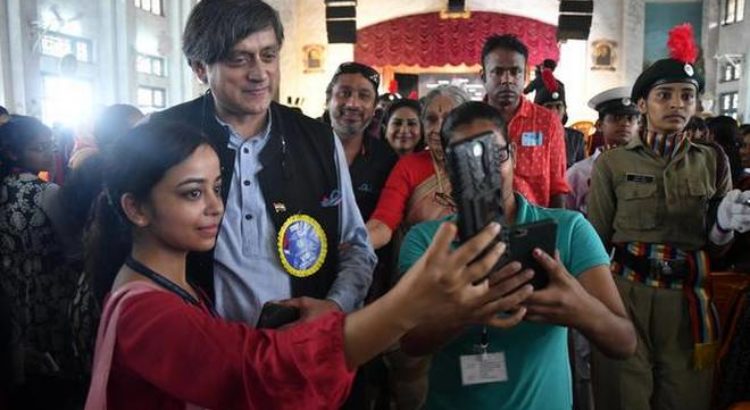
Shashi Tharoor, MP, has said that the country’s demographic dividend will turn out to be a demographic disaster if “we do not provide education to all sections of society including the poor, the marginalised, Dalits and tribals.”

“If we don’t, the alternative stares us on the face because [in] the 125 of the 625 districts, we have seen Maoist violence as unemployed, undereducated and unemployable young men, particularly from tribal populations, are induced by wrong-headed ideologues to take up a life of violence with a thousand rupee and Kalashnikov,” he said at the ‘Excellence for Social Transformation’ lecture 2018 on ‘Education and India’s future’ at Sacred Heart College, Thevara, here on Friday.

Stating that education is not only a tool for social transformation, but also important for national security, Mr. Tharoor pointed out that the education system has failed to give them [Maoists] a stake in society.

“It has failed to equip them with the skills that would give them a chance to make a decent living for themselves and their family, and therefore they have no stake in Indian economy, no stake in the future of India, because they believe they have no part in it and that’s why they have turned to Maoism and to violence,” he said.

Suggesting that the country promote excellence in education to transform society, Mr. Tharoor said that it’s very important to provide value education and instil gender sensitivity from a young age.

“Because we have unfortunately a mentality of disrespect for women on the part of many boys in various parts of the country. It’s a reflection of our failure to educate children the equality of sexes and the importance of treating girls with dignity,” he said.

Expressing gratitude to his parents for allowing him to pursue humanities instead of science, Mr. Tharoor urged parents to “let their children study what they want to study”. “Don’t ask them to fulfil your dreams. Don’t force them to take a course of your choice,” he said.

K.V. Thomas, MP, Hibi Eden, MLA, Fr. Augustine Thottakkara, Manager, and Fr. Prasant Palackappillil, Principal, attended. The lecture was part of the platinum jubilee celebrations of the college.

Dissent in democracy

Speaking on ‘Dissent and Democracy’ at a programme organised by the Centre for Human Rights and the National Service Scheme unit of National University of Advanced Legal Studies, Kalamassery, he said there is a thin line of dissent in democracy, which often gets mistaken for contempt.

A release issued by the organisers quoted him as saying that it was a matter of concern for society when somebody takes law into their hands and indulge in mob-lynching.

Source of the notice: https://www.thehindu.com/news/cities/Kochi/promote-excellence-in-education-to-transform-society-says-tharoor/article25073254.ece

Comparte este contenido:
Page 249 of 773
1 247 248 249 250 251 773