Page 290 of 774
1 288 289 290 291 292 774

Yemen’s children have been forgotten by the world for too long

Por: George Graham

Just 12 percent of the funds required to support education activities in the war-torn country this year have been raised

As we approach the entrance to the school, enthusiastic children flock towards us, excited by a visit from outsiders and a distraction from their usual routine. We could be visiting a school in any country – except we’re here in Yemen, a country torn apart by three years of conflict.

I’m visiting schools in Aden, in southern Yemen, which is relatively peaceful now, but saw heavy fighting three years ago when the Houthis captured the city and were then driven out by the Saudi-led coalition. By contrast, Sanaa, the capital city in the north, was being hit by air strikes just a week ago. My colleagues described parts of the northern governorate of Saada as «flattened».

Children robbed of their futures

Even so, in Aden, there’s devastation everywhere. Building after building is a bombed-out carcass, including two of our offices. But the damage isn’t only physical: the economy is in tatters, and many families are struggling to make ends meet. Some supplies and commodities are getting in, but the Yemeni rial has plummeted so much that most people can afford very little. The influx of displaced people from the frontlines has added to the pressure.

The impact of the conflict on the lives of children has been devastating. It has killed them, maimed them, taken the lives of their family and friends, and left many starving and without medical care. It’s also robbing them of their futures.

The girls’ school had been hit by explosive weapons earlier this month, when a nearby fight strayed into the schoolyard

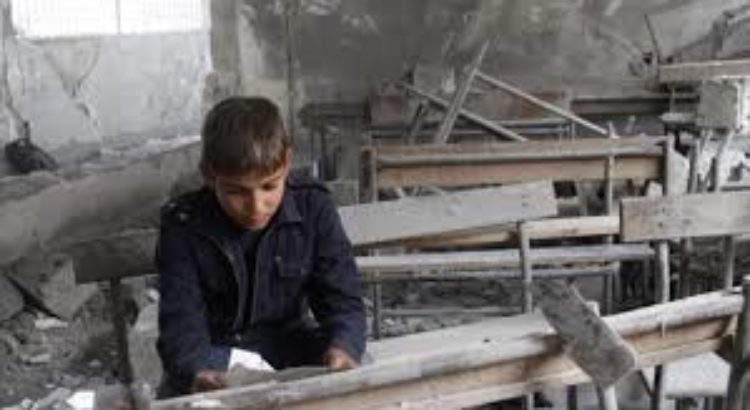
Across the country, schools have been attacked, destroying the structures and the lives of those trapped inside. More than 1,800 schools have been directly impacted by the conflict, including more than 1,500 that have been damaged or destroyed and 21 that are occupied by armed groups. But that’s just the start of it.

The entire education system has been decimated. There’s a severe shortage of teachers; no one has been hired since before the war, leaving many schools reliant on volunteers. The shortage of female teachers is of particular concern, causing many parents to pull their girls out of school. A dire lack of materials, such as textbooks, has left the bookshelves in school libraries almost bare.

Schools decimated

Sometimes there aren’t even buildings in which to teach, so lessons are held outdoors, often in intolerable weather conditions. One «school» we visited was a cluster of sweltering white tents erected next to the obliterated remains of what was once a school building. The Saudi-led coalition bombed the original school, which had been occupied by Houthi armed forces.

Yemen was already a severely impoverished country, and the conflict has not only stopped further development, but rolled back valuable gains. Many children must spend part of their day working to help support their families, leaving them too tired to learn. Classrooms are immensely overcrowded, so children study in shifts.

Displaced Yemeni children sit on tyres at a camp in the Yemeni coastal city of Hodeidah on 17 February 2018 (AFP)

In one of the schools I visited, more than 100 students packed each classroom, with four girls sharing a desk. These children are the lucky ones – close to two million others are out of school.

The girls’ school had been hit by explosive weapons earlier this month, when a nearby fight strayed into the schoolyard. When we met them, the girls were animated and full of hope, but the headteacher told us that they had been terrified that day, fleeing out of doors and windows in panic, and that the whole school was now tense with worry.

The students with whom I spoke were energetic and joyful, giggling as they told me about their dreams of growing up to become doctors, teachers and social workers.

But according to the UN Panel of Experts on Yemen, alarmingly, many boys are being recruited to fight for armed groups instead – stopping their education in its tracks and reducing their future ability to rebuild their country when peace eventually comes. Learning conditions for those still in school are abject, and I found it hard to feel confident that these children’s hopes would ever be realised.

The funding gap

Organisations like Save the Children run programmes, such as catch-up classes to try to stop students from falling too far behind, but the funding is completely insufficient to support the number of children in need.

At the end of my visit, it was abundantly clear that these children have been forgotten by the world for too long. The international community must do much more to protect Yemen’s children.

Pressure must be put on all parties to the conflict to allow life-saving supplies to reach those who need it, to respect their obligations under international law, and most importantly to find a peaceful solution to the war. Ultimately, the crisis will only end through a peaceful and permanent political solution.

READ MORE ►

The war in Yemen: A modern-day Vietnam for the Saudi-led coalition

Meanwhile, governments and other donors must also step up. Twenty-two million people – three-quarters of the population – require some form of humanitarian assistance. Half of those are children. Worryingly, just 12 percent of the funds required to support education activities this year have been raised; it’s time for donors to recognise the critical nature of this part of the response.

One day, this war will end. And we owe it to the children of Yemen – these future doctors, teachers and engineers  –  to ensure they have the basic skills to take control of their future by helping to rebuild their country.

George Graham is Save the Children’s director of conflict and humanitarian policy.

The views expressed in this article belong to the author and do not necessarily reflect the editorial policy of Middle East Eye.

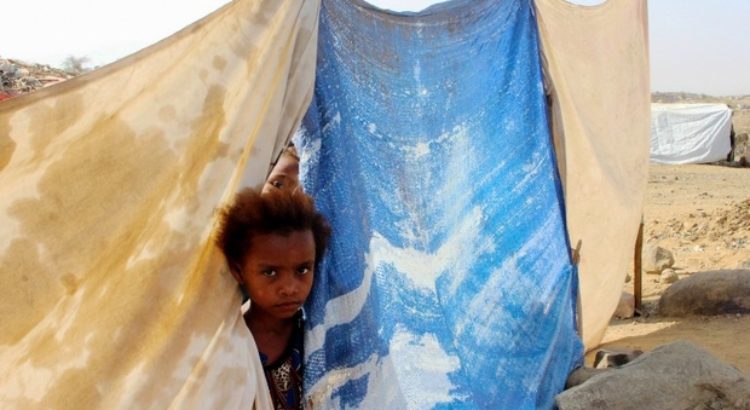
Photo: Yemeni children look out from hung sheets at a makeshift camp for displaced people in the northern Abys district of Yemen’s Hajjah province on 16 April 2018 (AFP)

*Fuente: http://www.middleeasteye.net/columns/children-yemen-deserve-better-1988641947
Comparte este contenido:

‘We have received nothing’: Sinjar’s only school pleads for help in post-IS Iraq

Por: Tom Westcott/middleeasteye.net/02-05-2018

Teachers in north Iraq struggle with class sizes of 100, few texts and no electricity – and no one has helped them get back on their feet

SINJAR, Iraq – Children pour out of overcrowded classrooms with shattered windows, running out onto Sinjar’s decimated streets in a cacophony of happy shouts and screams. Behind them, weary volunteer teachers head towards the sparsely furnished staff room for their daily meeting with headmaster Alias Nimr Azdo.

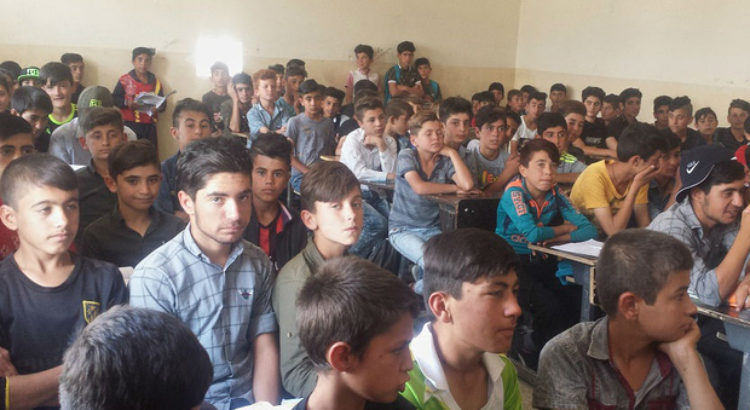
Most classes have over 100 pupils, who cram into classrooms sitting four to a desk

«This is the only functioning school in the whole of Sinjar and we run two shifts – morning and afternoon – to try and provide access to education for everyone here,» he told Middle East Eye. «But we are running this school with almost nothing.»

Even with all the classrooms in use during both shifts, Sinjar Mixed School is much too small for the number of pupils, who currently number more than 1,300, including 75 Muslim Shia children.

Most classes have over 100 pupils, who cram into classrooms sitting four to a desk. With insufficient teachers or space to cater for different age groups, they often have an unusual mix of ages and abilities.

But while Sinjar’s other former schools lie in ruins, either destroyed by the Islamic State (IS), which occupied much of Sinjar for a year and a half, or damaged by fighting and air strikes during the battle for liberation, there is no imminent solution to ease overcrowding.

And as word spreads that the school has reopened, it continues to attract more children, both new returnees and from Sinjar’s many outlying villages.

After four years of living as internally displaced people (IDPs), often without access to proper schooling, most families are keen for their children to try and catch up, although teachers say more than 1,000 children in nearby villages are still unable to reach the school because of transport difficulties.

Few books or pens

«We are trying to follow the official Iraqi curriculum, which is the same one as is taught in Baghdad schools, and we only teach in Arabic, even though most of the teachers don’t even speak perfect Arabic themselves, but we only have a few textbooks, so there are huge gaps in the curriculum we are able to teach,» said Azdo.

No funding or practical support, not even the textbooks which are compulsory across Iraq, have been sent to Sinjar by either the Iraqi government or the Nineweh Local Council, under whose jurisdiction Sinjar falls, he said.

We have received nothing, not even one single pen from the department of education

– Khairo K Wahb, teacher 

Since the area was liberated from IS in late 2015, no representative from the Ministry of Education has even visited the town, although Azdo insisted that the terrible situation faced by the school has been made clear through multiple and regular phone calls to the ministry.

IS militants stripped the premises of all its furnishings and Azdo first opened the school using empty cardboard boxes as furniture before members of the local Hashd al-Shaabi (Popular Mobilisation) forces managed to procure desks from elsewhere.

«We have received nothing, not even one single pen from the department of education,» said qualified teacher Khairo K Wahb, shaking his head.

Two children walk home after school, past the ruins of Sinjar Old Town (MEE/Tom Westcott)

When the school first opened last October, it tried to operate a system where parents paid 5,000 dinars ($4) per month towards schooling costs. But with most of Sinjar’s residents living below the poverty line and unable even to spare one dinar, this was abandoned.

As pupils across Iraq prepare for their end of term exams, already overwhelmed volunteer teachers have clubbed together and bought a computer and printer with their own money, to enable Sinjar’s pupils to take the national exams.

With no electricity and no running water, the premises lack even the most basic facilities, and the handful of toilets used daily by over 1,000 children are unsanitary.

The Iraqi government continues to work on repairing infrastructure damaged by fighting, and electricity supplies have been restored to some parts of Sinjar town but these have not yet reached the school.

A privately owned minibus ferries some children between their homes and the school but many others, whose families cannot afford to pay for the bus, and several of the volunteer teachers, have to walk up to 5km to attend the school.

Children leave afternoon classes at the school (MEE/Abbas al-Karady)

Volunteer teachers

Azdo is one of only three qualified teachers at the school, only two of whom receive a government salary. The remaining 14 teachers are all young people who have finished secondary school and, despite having no teaching experience, are doing their best to help provide basic education.

«We had to ask people to volunteer to teach in order to save the future of more than 1,000 students, and give them their right to an education,» explained 26 year-old Shevan Khero, the school’s only English teacher and himself a volunteer.

I have just one textbook, so I am gradually writing out the whole textbook on the blackboard, and the children are supposed to copy that down

– Hana Hassan, Arabic teacher

A month ago, there was almost double the number of volunteer teachers but, worn down by the difficult job and with no prospect of financial support, many have left.

Qualified teacher Wahb admits that classes are often so loud and unruly that lessons are feats of crowd-control, with teachers struggling to quiet down overexcited pupils enough to be able to try and teach.

«I volunteered here because I knew the children needed teachers so I was happy to do something to help,» said Arabic teacher Jian Nawaf, 19, who started working at the school in November. «But it’s very difficult because I have 120 pupils in my class and the noise they all make means teaching is almost impossible and, to be honest, I often long for the classes to end.»

Blankets and pieces of carpet keep out the elements (MEE/Tom Westcott)

Hana Hassan, 21, who also teaches Arabic, admits the job is tougher than she had expected. «I have just one textbook, so I am gradually writing out the whole textbook on the blackboard, and the children are supposed to copy that down, but they don’t all have paper and pens and there are so many children, I can’t even show them pictures and diagrams from the textbook.»

Scant follow-through on NGO promises

Despite the overcrowding, dilapidation and insufficient materials and resources, there is a charming atmosphere in the school and Sinjar’s children say classes are a highlight of their lives, living amidst the tragic ruins of Sinjar.

While his brothers play in the street on a sunny afternoon, seven-year-old Hassan proudly reads aloud from a battered geography textbook pulled from the ruins of a collapsed house. Heavily-scrawled by former students, it has now become a valuable and cherished item. «There are 70 pupils in my class but I love going to school,» he said happily.

«Ninety percent of the pupils here don’t have books or materials for study,» said Khero. «The only way I can teach them English is by speaking and writing on the board because there are no textbooks and most of the pupils don’t have pens or exercise books. It’s very difficult for me but it’s much more difficult for them.»

Sinjar’s overwhelmed and overworked teaching staff were also critical of international NGOs who, they said, despite making numerous visits, have done little more than make empty promises.

«More than ten international organisations have visited the school and seen the situation we face here and they have promised all sorts of things, but nothing ever comes of these promises,» said teacher Bashar Omar Ali.

He said so many NGOs had visited the school, staff struggled to keep up with the names of all the organisations, adding that, since the promises had proved to be only empty words, this was largely irrelevant.

Children wait outside Sinjar school for their parents to collect them (MEE/Abbas al-Karady)
UNICEF spokesperson Laila Ali told MEE that during 2017 and 2018, it had supported 10 Arabic schools (3,477 children) and 17 Kurdish schools (5,298 children) across the Sinjar region, providing 106 boxes of educational supplies, and had supported the transportation of over 15,000 school textbooks.

Supplies from any organisation or government, however, have not reached Sinjar town’s only school since the beginning of the school year until now.

Teacher Omar Ali said representatives claiming to be from a UN organisation had made three visits and given extensive promises, including replacing shattered window glass, currently patched up with cardboard or draped with blankets to keep out the elements, and providing much-needed new water tanks. But nothing had yet been done.

Ali, the UNICEF spokesperson, said the organisation had not visited the school nor had not made any such promises.

And even when help does occasionally materialise, said Wahb, this is not always well thought out.

«The last international organisation to visit us made a one-off payment to half the teachers while leaving the other half unpaid, which made a very big problem among the teachers because it was so unfair,» he said.

International aid agencies, mostly working out of Baghdad or Erbil, struggle to provide detailed and accurate accounts of work they have apparently undertaken in the remote Sinjar region, usually carried out by local partner organisations.

Local medics told MEE that work was of a very low standard and often left incomplete, including faulty electrics and broken water systems in one healthcare clinic «renovated» by a major NGO.

*Fuente: http://www.middleeasteye.net/news/worst-school-sinjar-139676923

Comparte este contenido:

«La lección más grande del mundo»: el proyecto educativo de la ONU

ONU/01 de mayo de 2018/Fuente: http://noticias.universia.es

La erradicación de la pobreza y el cuidado del planeta es cosa de todos y es un proyecto de educación mundial.

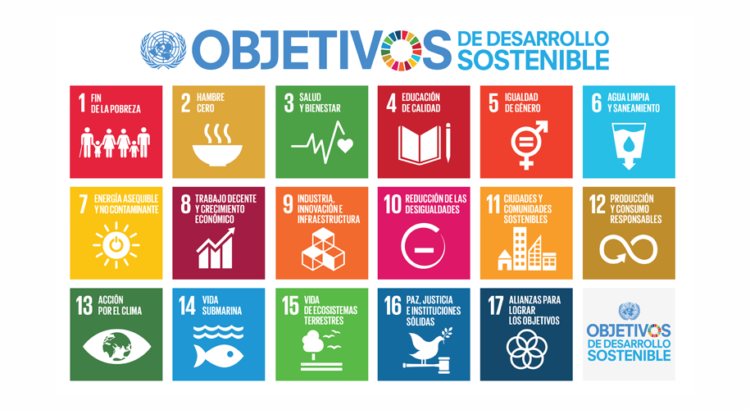
  • “La Lección más Grande del Mundo” es el proyecto lanzado por las Naciones Unidas que recoge los 17 Objetivos Mundiales para el Desarrollo Sostenible.
  • Te damos a conocer estos objetivos y las metas que persigue, porque es responsabilidad de todos colaborar para conseguirlos.
  • Este proyecto educativo conlleva que docentes y alumnos sean conscientes del valor de la educación social y que todos tenemos mucho que aportar.

«La lección más grande del mundo” es el proyecto de educación social y mundial creado por la ONU y en el que se ha dado forma a diversos objetivos para el alcance de unas metas que terminen con la pobreza extrema, apoyen la igualdad social y luchen contra el cambio climático.

Este proyecto de educación mundial necesita de una importante difusión, de manera que todos los ciudadanos conozcamos esos objetivos y trabajemos para llevarlos a cabo, tanto en nuestra faceta personal como profesional.

Objetivos Mundiales difundidos por la ONU

Es importante que conozcamos los objetivos, trabajemos en ello y los compartamos en nuestro entorno y comunidad para que más gente se una a este proyecto mundial.

1. Erradicar la pobreza en todas sus formas y en todos los lugares del mundo.

2. Luchar contra el hambre, logrando la seguridad alimentaria, una buena nutrición y promoviendo la agricultura sostenible.

3. Buena salud y un nivel de bienestar aceptable para todos los habitantes del planeta.

4. Educación de calidad, inclusiva y equitativa.

5. Igualdad de género y empoderamiento de mujeres y niñas.

6. Agua potable y saneamiento.

7. Uso de energías renovables, sostenibles y accesibles para todos.

8. Empleo digno y crecimiento económico.

9. Innovación e infraestructuras para una industria sostenible e inclusiva.

10. Reducir la desigualdad social y favorecer la inclusión de todo tipo de nacionalidades, etnias o creencias.

11. Ciudades y comunidades sostenibles.

12. Consumo responsable, siendo conscientes de las repercusiones de lo que producimos y gastamos.

13. Erradicar el cambio climático de forma urgente con medidas que frenen su impacto.

14. Cuidado de la flora y fauna acuática. Reestablecer la salud de los océanos y de la vida marina.

15. Cuidado de la flora y fauna terrestres. Promover ecosistemas que favorezcan la biodiversidad y combatan la degradación del suelo.

16. Paz y justicia, trabajando en la creación de sociedades pacíficas y dialogantes.

17. Alianzas para conseguir los Objetivos Mundiales con el compromiso de todos los países.

«La lección más grande del mundo» es un proyecto de educación social que estará vigente hasta 2030, con la esperanza de haber resuelto gran parte de estas problemáticas mundiales y que suponga la solidez de unas medidas y alianzas que favorezcan un desarrollo próspero y sostenible.

¡Es hora de ponerse manos a la obra y aportar nuestro grano de arena!

Fuente de la Noticia:

http://noticias.universia.es/educacion/noticia/2018/04/30/1159291/leccion-grande-mundo-proyecto-educativo-onu.html

Comparte este contenido:

United Arab Emirates: Students throng education expo in search of sponsors

United Arab Emirates/May 01, 2018/Source: https://gulfnews.com

Government entities, education institutions guide students in choosing courses and careers.

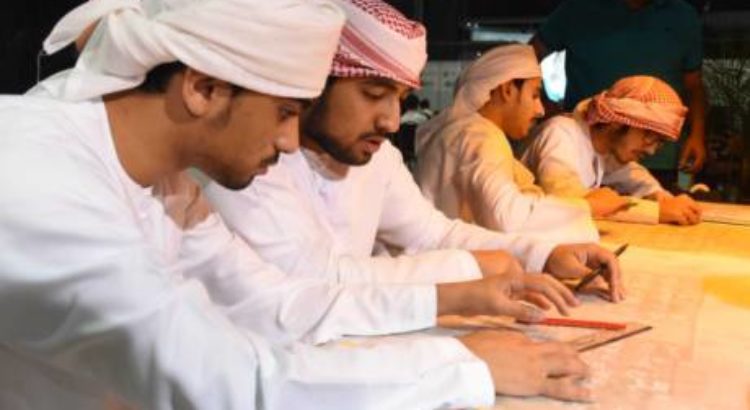
Hundreds of students from different educational institutions of the country flocked to the education interface exhibition on Yas Island on Tuesday and explored future academic opportunities, sponsorships and programmes.

A number of government entities including the Ministry of Interior, public and private educational institutions also offered students guidelines and avenues to join them through qualifying their tests after Grade 12.

The two-day 5th Education Interface Exhibition and the Middle East Youth Expo, which opened at Du Forum on Yas Island of the capital, will conclude on Wednesday. The event is being held under the patronage of Lt-General Shaikh Saif Bin Zayed Al Nahyan, Deputy Prime Minister and Minister of Interior.

The exhibition aims to offer future opportunities and guidelines to youth.

Speaking to Gulf News at the Adnoc stand, Fatima Al Za’abi, team leader of admissions and registrations at Adnoc Technical Academy [ATA], said, “We are here to encourage students to register with us and join us; we will sponsor their higher academic qualification and provide them stipend too.”

The starting monthly stipend will be Dh5,000 at Adnoc, while studying, she said. All students who have passed Grade 10th and 12th are able to register under the ATA.

“A lot of students registered with Adnoc on the first day,” she said adding, there are currently 777 students at the ATA. “We want to tell the people about our educational programmes where they will be fully supported and recruited upon completion of their studies.”

The Ministry of Interior’s stand also encouraged students to join the ministry after their Grade 12 and the ministry will sponsor them for their future higher education inside or outside the country.

An official at the stand said, “We will provide them guaranteed jobs, with a fixed monthly salary until they finish their studies and we will finance their studies as well.”

“They need to just register and quality our examinations,” he said.

Students streamed in to the venue in groups to explore the different higher education programmes on offer at different stands.

Fatima Khadar, 17-year-old, from Syria, said, “I visited stands of different universities and found out different specialisation programmes they offer.

“I am happy to find that a lot of universities have been brought under one roof,” the Grade 11th student from Al Israa’ Private School in Al Ain who wants to become a pharmacist in future, said. Another Syrian student from the same grade and school, Shaima Al Amri, 17, said, “I navigated lots of stands along with my classmates. I was looking for some sponsorship for my future studies. I want to pursue my studies in law.”

Amnah Salem, Grade 12 student from Omamah Bint Al Harith Secondary School, said, “I want to enrol in Khalifa University or UAE University for my higher studies but looking for some sponsors to finance my education.”

Salem, an Emirati from Abu Dhabi, wants to pursue bio-medical engineering.

Her classmate, Sara Khalid Al Nabhani, was also looking for sponsors to study engineering at Khalifa University in Abu Dhabi.

“We were looking for sponsorship and exploring study programmes of different universities,” Al Nabhani said.

Cultural education

At a stand in a corner at the venue, three women could be seen weaving different kinds of bags from sheep wool, showcasing hand paintings on wooden boxes called mandoos and preparing big umbrella-shaped lid [makabba], which is used to cover food, giving youth a taste of the local culture.

Ahmad Al Rumaithi, director of Abu Dhabi Centre of Emirates Heritage Club, said, “We intend to highlight the local culture and traditions which our forefathers used to practise in the past.

“We need to preserve them, spread them among youth. If you don’t have a past preserved, you can’t have a future,” he said.

Handicrafts on show also included small woollen carpets, pillow covers and woollen strings for decorations.

Source:

https://gulfnews.com/news/uae/education/students-throng-education-expo-in-search-of-sponsors-1.2214949

Comparte este contenido:

Piden a las escuelas y padres chinos que tomen medidas para evitar que los niños y jóvenes se hagan adictos a internet

China/01 de mayo de 2018/Fuente: http://spanish.people.com.cn

Las autoridades han pedido a las escuelas primarias y secundarias de China que tomen medidas para evitar que los estudiantes se hagan adictos a internet, informó este martes el Ministerio de Educación de China.

También se les señaló a las escuelas que mejoren la consciencia de los estudiantes sobre los violentos y vulgares contenidos que se distribuyen en ciertas plataformas de internet y acerca de los impactos negativos de los juegos en línea, además de proporcionar asistencia y orientación a los estudiantes que muestran signos de adicción a dichos contenidos o juegos, detalló el Ministerio de Educación de China en un comunicado de prensa.

También hay que fortalecer la gestión del acceso a internet en las escuelas y regular el uso de teléfonos móviles dentro de las instituciones escolares.

Asimismo, el Ministerio de Educación de China publicó una carta abierta a los padres, exhortándolos a ser más conscientes sobre este nuevo problema para que puedan combatirlo mejor.

Li Mingxin, director de una escuela primaria de Beijing, precisó a Xinhua que las nuevas orientaciones son muy necesarias e importantes.

“Hay que admitir que el uso de teléfonos móviles y el fácil acceso a internet han causado problemas entre algunos estudiantes y en la gestión de la escuela”, afirmó Li, y añadió que la política del Ministerio de Educación de China apoya a las escuelas para que disciplinen a los alumnos en el uso racional de sus teléfonos móviles.

Fuente de la Noticia:

http://spanish.people.com.cn/n3/2018/0425/c31614-9453537.html

Comparte este contenido:

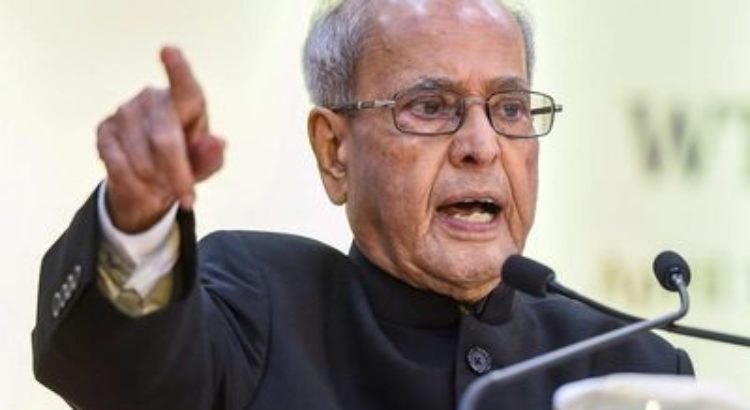
India: Pranab urges govt to invest more on education, R&D

India/May 01, 2018/Source: https://timesofindia.indiatimes.com/

Former President of India Pranab Mukherjee on Monday emphasised on more research and development and urged the government to invest more in this area.

«Today, not as a former President but as a citizen of India, I want greater investment in education and research and the country will benefit from this,» Mukherjee said here today while delivering an endowment lecture at the Ramkrishna Mission Institute of Culture, Golpark.

He however, regretted the dwindling budget towards education and R&D of the country.

Citing example of Germany that stood strong even during the Eurozone crisis, he said it was possible because of its continuous focus on R&D.

«In 1991, the budget on education was six per cent of the GDP but in 2018-19 Union budget allocation is just 3.6 per cent of the national GDP, though the allocation of Rs 80,500 crore may seem to be a huge sum.»

According to a UNESCO report, secondary level dropout is 45 lakh, he said.

Mukherjee said by 2025, India will have the largest young population, becoming the biggest workforce in the world.

«If we are unable to convert this population into suitable workforce and not able to create jobs by adopting new technologies, then instead of ‘demographic dividend’ it will be a ‘demographic disaster’,» Mukherjee said.

Mukherjee said, we are not able to get the finest talent in education and research. They move to corporate sector due to their lack of sense of societal giving back and not thinking what society has invested on them so that they can bloom.

Student-teacher relation is also vital for shaping of a student. Taking his example, he recalled the role of his teachers including those in Siuri Vidyasagar College in Siuri, for being what he is today.

Source:

https://timesofindia.indiatimes.com/home/education/news/pranab-urges-govt-to-invest-more-on-education-rd/articleshow/63978303.cms
Comparte este contenido:

2,8 Millones de menores llevan 7 años sin escolarizar por la guerra en Siria

Siria / 29 de abril de 2018  /Autor: EFE / Fuente: La Vanguardia

Al menos 2,8 millones de menores no han sido escolarizados en los siete años de conflicto en Siria, según los datos publicados hoy por el Fondo de Naciones Unidas para la Infancia (Unicef) antes del inicio, mañana, de una conferencia de apoyo a este país en Bruselas.

Unicef destacó en un comunicado que desde 2011 algunos menores no han ido nunca al colegio, mientras que otros han suspendido su educación todo este tiempo, con lo que va a ser «extremadamente difícil» que se pongan al día cuando puedan regresar a las aulas.

La nota subrayó que ir a clase puede ser «cuestión de vida o muerte» debido a la violencia.

Unas 309 instalaciones educativas han sido blanco de ataques, mientras que una de cada tres escuelas en Siria ha quedado completamente fuera de funcionamiento por haber sido destruidas, dañadas o usadas con propósitos militares o para acoger a familias de desplazados.

Según los datos de Unicef, el 40 % de los menores sin escolarizar tienen entre 15 y 17 años, con lo que sufren el riesgo de ser reclutados para combatir o ser obligados a casarse o a trabajar.

La agencia de la ONU explicó que estos problemas se están volviendo prevalentes conforme las familias recurren cada vez más a «medidas extremas de supervivencia».

Pese a estas dificultades, Unicef afirmó que 4,9 millones de menores siguen teniendo acceso a la educación dentro de Siria.

En los países vecinos, que acogen a refugiados sirios, los Gobiernos están abrumados por los casi dos millones de menores sirios que tienen que ser absorbidos por sus sistemas educativos en mitad de una situación económica inestable, indicó.

De los menores que están escolarizados tanto en Siria como en los Estados vecinos, el 90 % asisten a clase en colegios públicos e incluso comparten aula con los niños de esos países, como es el caso del Líbano y Jordania.

El director regional de Unicef para Oriente Medio y el Norte de África, Geert Cappelaere, alabó los esfuerzos de distintas partes para ayudar a los niños y adolescentes sirios.

«La financiación masiva de los donantes, la generosidad sin precedentes de los Gobiernos y comunidades de acogida, el trabajo implacable de profesores heroicos y la determinación de los menores sirios y sus familias han ayudado a millones de niños sirios lograr educación», apuntó.

No obstante, agregó, «como los líderes mundiales se reúnen en Bruselas esta semana para la Conferencia de Apoyo al Futuro de Siria y la Región, les hacemos un llamamiento para que no abandonen a los niños y jóvenes que ya han pasado por mucho».

Recordó que se necesita una financiación «continua, flexible, incondicional y a largo plazo» en el sector educativo para mejorar los sistemas ya existentes y aumentar las alternativas en Siria y en los países que albergan refugiados sirios de la región.

Sin embargo, advirtió, «solo con la generosidad no se pondrá fin a la crisis Siria. La protección y las necesidades de los menores debería ser una prioridad para quienes toman decisiones y para aquellos que luchan sobre el terreno».

Fuente de la Noticia:

http://www.lavanguardia.com/internacional/20180423/442895485376/28-millones-de-menores-llevan-7-anos-sin-escolarizar-por-la-guerra-en-siria.html

Fuente de la Imagen:

https://www.hispantv.com/noticias/sociedad/57244/unicef-millones-ninos-sirios-escuela-conflicto

Comparte este contenido:
Page 290 of 774
1 288 289 290 291 292 774