Page 312 of 772
1 310 311 312 313 314 772

China y Alemania establecen 11 plataformas de innovación tecnológica

 Asia/China/01 Marzo 2018/Fuente: Spanish.xinhuanet

China y Alemania han establecido 11 plataformas de cooperación en innovación, anunció hoy el ministro de Ciencia y Tecnología de China, Wan Gang.

Las plataformas abarcan ámbitos como vehículos eléctricos, ciencias biológicas, agua potable, manufactura inteligente y energías limpias, dijo Wan en la V Conferencia de Innovación China-Alemania.

Wan señaló que en las últimas cuatro décadas, China y Alemania han sostenido modelos de cooperación efectivos y han promovido la transformación de avances científicos y tecnológicos.

«La cooperación científica chino-alemana representa un exitoso ejemplo de cooperación tecnológica entre grandes países», indicó Wan.

Georg Schuette, secretario de Estado del Ministerio de Educación e Investigación de Alemania, dijo que el gobierno alemán otorga gran importancia a la cooperación con China en innovación científica y tecnológica, y reforzará la cooperación en cambio climático, protección ambiental, Internet de las Cosas y manufactura ligera.

China y Alemania han adoptado respectivamente las estrategias «Hecho en China 2025» e «Industria 4,0» en respuesta a la nueva revolución industrial.

Muchas compañías alemanas como BMW y BASF han establecido grandes centros de investigación y desarrollo en China.

La inversión china en Alemania se ha incrementado de forma significativa en los últimos años y muchas compañías chinas han establecido centros de investigación y desarrollo en Alemania.

El creciente número de parques industriales China-Alemania también fomentará la cooperación industrial bilateral.

Fuente: http://spanish.xinhuanet.com/2018-03/01/c_137006793.htm

Comparte este contenido:

Embajada de China teme que huelga en universidades de RU afecte a estudiantes chinos

Asia/China/01 Marzo 2018/Fuente: Spanish.people

La embajada de China en Reino Unido expresó hoy al gobierno británico su preocupación por el hecho de que las actuales huelgas de personal universitario británico han afectado a muchos estudiantes chinos.

La embajada dijo en una declaración que expresó su preocupación al Ministerio de Educación británico y que mantendrá el contacto con el ministerio para «asegurar los legítimos derechos de los chinos que estudian en Reino Unido».

«Recientemente, el personal de algunas universidades británicas realizaron una huelga que afecta el estudio normal de los estudiantes chinos en Reino Unido», dijo la embajada de China en una declaración.

En la actualidad, Reino Unido tiene la mayor comunidad estudiantil china de Europa con más de 170.000 estudiantes y académicos chinos estudiando en Reino Unido,

El número de estudiantes chinos en instituciones británicas de educación superior supera por mucho al de otras nacionalidades, indicó la Agencia de Estadística de Educación Superior de Reino Unido.

La embajada china pidió a los estudiantes chinos estar atentos a los informes sobre la huelga y a presentar sus exigencias a través de canales legítimos para proteger sus legítimos derechos e intereses.

Hasta el momento, 65 universidades se han unido a la huelga por los recortes en las pensiones iniciada la semana pasada, dijo el Sindicato Universitario el lunes.

El personal señala que los cambios en las pensiones costarían al académico promedio 10.000 libras (13.782 dólares) al año en su jubilación, pero los patrones señalan que el plan tiene un déficit de más de 6.000 millones de libras.

Fuente: http://spanish.people.com.cn/n3/2018/0301/c31618-9431499.html

Comparte este contenido:

Unos 13 mil niños sufren cáncer cada año en Bangladesh

Asia/Bangladesh/01 Marzo 2018/Fuente: Prensa Latina
Unos 13 mil niños se ven afectados cada año en Bangladesh por el cáncer, entre otros motivos, por diversos factores ambientales, reportó hoy la agencia de noticias oficial BSS.
La cifra fue divulgada en una conferencia de la Sociedad de Oncología y Hematología Pediátrica de Bangladesh (Phosb), celebrada en esta capital.

Para enfrentar la situación debemos incrementar el número de especialistas y de centros médicos, pues solo existen en el país nueve centros de hematología y oncología pediátrica, estimó el secretario general de la Phosb, Amirul Morshed Khasru.

En similar sentido se pronunció el presidente de la Asociación de Pediatría de Bangladesh, Mohammod Shahidullah.

Por su parte, el vicerrector de la Universidad Médica Bangabandhu Sheikh Mujib, Kamrul Hasan Khan, destacó que las enfermedades no transmisibles, particularmente el cáncer, son un importante problema.

Según la Agencia Internacional para la Investigación del Cáncer, esa enfermedad afecta no solo a los menores de Bangladesh.

Cada año casi 12 mil mujeres padecen cáncer uterino en el país, aunque unas 59 millones sufren el riego de contraerlo, precisó esa institución en un reciente informe.

Fuente: http://www.prensa-latina.cu/index.php?o=rn&id=155280&SEO=unos-13-mil-ninos-sufren-cancer-cada-ano-en-bangladesh
Comparte este contenido:

NASSCOM y Don Tapscott construirán  Centro de Desarrollo Educativo, Empresarial y Gubernamental de Blockchain en India

India/ 27 de febrero de 2018/Por: Andrea Leal/Fuente: https://www.criptonoticias.com

La Asociación Nacional de Empresas de Software y Servicios de la India, mejor conocida como NASSCOM, firmó esta semana un memorando de entendimiento con el Instituto de Investigaciones Blockchain de Canadá (BRI) para conformar un centro de educación y capacitación sobre las tecnologías de contabilidad distribuida en la India. Una iniciativa que podría motivar la adopción de las herramientas DLT y las monedas criptográficas en este reticente territorio asiático.

El noticiero tecnológico CIO y el medio de la India INC42 fueron las plataformas que reportaron el consenso realizado por estas dos firmas empresariales. Asimismo, BRI twitteó recientemente una foto donde se encuentra su co-fundador, Don Tapscott, junto a Sangeeta Gupta, vicepresidente de NASSCOM, y Sanjay Tugnait, CEO de la firma de consultoría Capgemini Canadá —compañía que también estuvo presente en la asociación— firmando el documento que sella la alianza.

 Todo apunta a que NASSCOM y BRI establecerán un “centro de excelencia” en la India, donde se puedan fomentar abiertamente la adopción de las tecnologías de contabilidad distribuida en el sector empresarial, educativo y gubernamental por medio de la capacidad tecnológica de alta gama que ofrece BRI.

El proyecto estará constituido por un grupo de seminarios web y cursos presenciales. Asimismo, la investigación tendrá dos fases constitutivas: la primera que buscará profundizar en los sistemas de incentivos y descuentos dentro de la blockchain, y la segunda tratará de generar una plataforma DLT que ayude a hacer crecer el ecosistema digital del Estado indio de Telengana.

De esta manera, el centro podría convertirse en una plataforma capaz de brindar aprendizaje, permitir la creación de prototipos y afianzar el lanzamiento de herramientas funcionales en el sector DLT. Es debido a todas estas posibilidades, que Raman Roy, presidente de NASSCOM, cree que las tecnologías de contabilidad distribuida tiene un alto poder de transformación.

En este sentido, Roy declaró que la alianza podría fomentar el desarrollo de las herramientas DLT dentro de territorio nacional, así como tendrá la capacidad de mejorar “la visión de la economía global” que tiene actualmente el gobierno y los ciudadanos de la India sobre las monedas criptográficas y las herramientas blockchain.

 Por otro lado, Don Tapscott, también ha asegurado que esta clase de alianza podrían motivar un verdadero despertar tecnológico en la India. Una realidad que tarde o temprano enfrentaría la nación debido al nuevo contexto digital (globalizado) en que se encuentran sumergidas las sociedades actuales.

En concordancia con este logro, Roy sabe que alentar la adopción de blockchain en la India es un proyecto a largo plazo, el cual estará marcado por la espera y un enorme esfuerzo de dedicación. No obstante, por los momentos, Raman se encuentra muy satisfecho y feliz con todo lo obtenido.

La importancia de la India en el ecosistema de criptomonedas radica en gran medida a su enorme población y sus constantes proyectos basados en blockchain. En este sentido, el mercado de monedas criptográficas se ha visto perjudicado en varias ocasiones debido a la tensión gubernamental y regulatoria de estas herramientas financieras, cayendo el precio del Bitcoin debido a medidas de pago de impuestos, prohibición de intercambios y constantes advertencias financieras. Un suceso que afectará a la comunidad de criptomonedas hasta que la nación esclarezca su posición frente a las monedas digitales.

Fuente de la Noticia:

https://www.criptonoticias.com/educacion/nasscom-don-tapscott-contruiran-centro-desarrollo-educativo-empresarial-gubernamental-blockchain-india/


Comparte este contenido:

Interview with Ong Ye Kung: Skills are something that activate your knowledge

In the first of a four-part series, Education Minister Ong Ye Kung explains why he places skills above degrees

A man who places such a high premium on skills over the paper chase does not mind sharing that this year, under his watch, more school leavers will be able to land a place in the local universities.

The cohort participation rate (CPR) – or the proportion of those from this age group making their way to universities – will rise to 37.5 per cent from 35 per cent last year.

Despite the shrinking cohort size, this means the number of those heading to the six publicly funded universities is still higher than last year’s figure and translates to just over 16,000 places.

Between them, they will enrol in over 250 degree programmes, including new courses in emerging fields such as smart city management, data science and artificial intelligence.

Education Minister in charge of Higher Education and Skills Ong Ye Kung, who revealed this in an interview with The Straits Times, says with the increase, the Ministry of Education is well on track to meeting the 40 per cent cohort participation rate that the Government aims to achieve by 2020.

What happens after 2020? Will this figure be relooked? After all, there has been much discussion recently on the Singapore economy needing a more highly educated and skilled workforce.

 Minister Ong says the figure of 40 per cent for 2020 refers only to funded places at the autonomous universities for junior college or polytechnic students proceeding to full-time undergraduate studies before they enter the workforce.
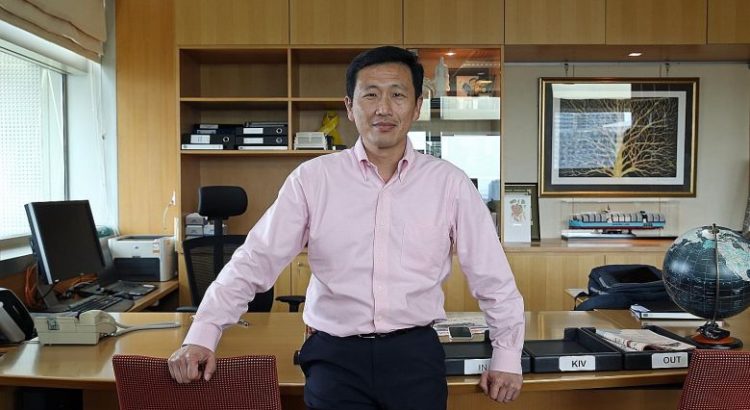
Mr Ong Ye Kung, 48, was elected Member of Parliament for Sembawang GRC in September 2015, and subsequently appointed Acting Minister for Education in charge of higher education and skills.

He was also concurrently appointed Senior Minister of State for Defence.

On Nov 2016, he was promoted to Education Minister (Higher Education and Skills), and concurrently Second Minister in the Ministry of Defence.

Prior to his Cabinet appointment, Mr Ong held the position of director of group strategy at Keppel Corporation, overseeing long-term strategic planning of the group’s activities.

Before joining Keppel, he was the deputy secretary-general of the National Trades Union Congress, overseeing the labour movement’s employment and employability programmes.

He held various positions in the Government earlier.

These include being chief executive of Singapore Workforce Development Agency, where he spearheaded many initiatives to build up the continuing education and training infrastructure.

He was principal private secretary to Prime Minister Lee Hsien Loong from 2003 to 2005, and press secretary to Prime Minister Lee from 1997 to 2003.

Mr Ong was also the deputy chief negotiator for the US-Singapore Free Trade Agreement.

Mr Ong graduated from the London School of Economics and Political Science with a first-class honours Bachelor of Science (Economics) degree, and holds a Master of Business Administration degree from the Institute of Management Development in Lausanne, Switzerland.

He is married with two teenage children.

POLYTECHNIC OR UNIVERSITY?

It’s hard to say. When I was young, I was always interested in art. I drew comics, superheroes, gongfu characters – so if I were to follow my interests it will probably take me into art – perhaps digital animation. I will look at what course will train me best in those skills, so I will probably go to a polytechnic. If there is a degree in that field, I might go for it, provided it could teach me the skills I need. But having said that, I am also interested in science and maths, and if I go with the flow of what is expected of me, I may take a degree pathway, especially since degrees are still the dominant currency.

MR ONG YE KUNG, on whether he would choose the skills or degree path if he were 18 again and heading to further studies.

It does not take into account those who study part-time for degrees at both the public and private institutions here as well as those who head overseas. If these figures were included, then the proportion of degree holders among an age group is likely to be 50 to 60 per cent, similar to that for many developed countries.

But pressed further, he says: «In time to come, we hope that 100 per cent of Singaporeans will have skills or qualifications that are on a par with having a degree, or even master’s, in terms of job prospects.»

He stands by his constant refrain that Singaporeans should stop believing that university education is the only way to develop an individual’s potential.

«This could be in the form of a degree, a master’s, a specialist diploma, an accumulation of short courses attained in different phases of your life, or just something that the industry knows you are good at, without any paper qualifications. It is about having a high level of expertise, passion and mastery in a particular area, » he says.

Although university degrees are the «currency» to land good jobs at the moment, he stresses that deep skills are what will count for career progression.

He notes that Singapore’s economy has diverse needs and will require diverse talents from a spectrum of expertise. As such, the Government is looking at providing «diverse and multitudinous» pathways for people to build skills.

«Ultimately, it is not about having a degree for its sake, but about skills for work and for life. Throughout their lifetime, everyone should have that depth of knowledge and agility in applying their skills in different contexts. There are many paths to arrive there.

«One dominant path is to study, get a degree and work for the rest of your life. For that, we have a CPR that we plan for. Even in that traditional path, we are trying to make it more varied, through different universities, different teaching methods, different subjects and different domain expertise.»

But he admits that many employers still hire on the basis of qualifications, and this gets in the way of Singaporeans chasing skills instead of degrees.

«I speak to many employers and the bosses all agree with the idea of looking beyond academic results and degrees. Yet, they have not changed their hiring practices significantly. One employer of a fairly big company recently told me that he hires for skills, but when elaborating, he said he doesn’t just go for second upper honours any more… Now he hires graduates with second lower honours as well.»

Mr Ong urges employers to «go through the trouble» and be open to using various assessments and to hire based on skills, so as to find workers with the right fit to grow their businesses.

He goes on to list the important skills – both hard and soft – that all Singaporeans, including graduates, should acquire .

Because technological changes are «turning industries upside down», graduates need to understand the latest technologies and be able to work with them.

«I am not saying you need to be a coder or an IT expert. But it will be good to have a basic understanding of technology and how it can be used in the field you are in.»

With the advance of artificial intelligence, he advises Singaporeans not to be like robots.

«If you work like a robot, you will be replaced by a robot,» he said. In this era we must be «more human than ever – in anything we do», he says, pointing to the fact that AI is not very good at jobs that require creativity, empathy, critical thinking, leadership or artistic expression.

The other force to be reckoned with is globalisation, which is still gathering pace.

«Singapore’s economy will become more connected than ever to the region and the world,» he says. So Singaporeans must aim to take a cue from the expatriate talents coming to the Republic. They must have the hunger and sense of adventure to go out of Singapore and seize opportunities in a foreign land.

And Singaporeans must be able appreciate and operate within different cultures. Mr Ong reminds graduates that with half of their peers holding degrees, they cannot rely on just their qualifications to stand out from the crowd.

«In this landscape, you can no longer say, ‘I am a degree holder and am therefore different from others.’ You have to go beyond that. You have to develop a niche… and be able to sell and present that niche as your area of mastery and differentiate yourself,» he says.

Asked if he would place skills above degrees, he says it need not be one above the other.

«The traditional view is that a degree is above skills, but that is because when we think of skills in Singapore, we think of vocational skills acquired through polytechnic and Institute of Technical Education courses.

«You accumulate knowledge through a degree course, but to convert the knowledge into something useful to society, you require skills. Skills are something that activate your knowledge. From that perspective, skills are above degrees.

«The truth is, both are needed – it is a mesh of what you know and what you can do.»

He stresses that parents, students and employers all need to embrace this larger definition of skills future.

«That’s really the skills we’re referring to in SkillsFuture,» he says, referring to the national movement to harness the aspirations and talents of the population and encourage Singaporeans to keep on learning and upgrading their knowledge and skills.

He hopes that society as a whole will recognise and celebrate the spectrum of success in different fields. » If society sticks to a narrow notion of success, then we will always be stuck in it. Society must embrace them all. Only then will we have true diversity in meritocracy… not just academic meritocracy but a meritocracy of skills.»

In partnership with

By: Sandra Davir.

From: http://www.straitstimes.com/singapore/education/minister-skills-are-something-that-activate-your-knowledge-about-mr-ong-ye-kung


Comparte este contenido:

Singapore: Degrees or skills? ST Education Forum to debate issue

Asia/ Singapore /26.02.2018 / From: www.straitstimes.com. By: Fabian Koh.

Con la cantidad de plazas universitarias en aumento este año, más estudiantes que abandonan la escuela tendrán una oportunidad de obtener una educación de nivel de grado.

With the number of university places increasing this year, more school leavers will have a shot at degree-level education.

There will be slightly over 16,000 places in the six publicly funded universities, despite a shrinking cohort size. This means the cohort participation rate will reach 37.5 per cent, up from 35 per cent last year.

Minister for Education (Higher Education and Skills) Ong Ye Kung told The Straits Times that his ministry is on track to meeting the 40 per cent cohort participation rate announced six years ago.

Degrees have typically been associated with better job prospects and higher salaries. Degree holders draw higher starting salaries compared with diploma holders, and the earnings gap widens over the years.

Those who cannot get into a local public university tend to look overseas or take the private school route.

However, in an age of technological advancements and disruptions in the workplace, degree holders are increasingly unemployed, or underemployed, in many economies.

The oversupply of degree holders has also had a dampening effect on graduate salaries.

  • EVENT INFORMATION

  • The Straits Times Education Forum on Degrees versus Skills is supported by the Singapore Management UniversityDate: March 17 ( Saturday)Time: 10am to 12pm (Registration begins at 9am, guests to be seated by 9.50am)Location: Singapore Management University School of Law Building, Basement 1 SMU Hall, 55 Armenian Street, Singapore 179943Cost: Free for ST readersOnline registration: http://str.sg/st-education-forum-2018

    Limited seats are available.

In such a climate, does the conventional thinking that a degree equals success still hold true? Or should young people be focused on developing skills in fields relevant to the economy in this new age?

Singapore Management University (SMU) president Arnoud De Meyer said: «A university degree is more than just a piece of paper; it is more than just a way to get a good job. University education equips students with the ability to learn how to learn; it stimulates their curiosity and develops the whole person for lifelong benefits.»

Professor De Meyer will be part of a debate on the degrees versus skills issue at The Straits Times Education Forum, presented by SMU, on March 17.

The debate will be held at the SMU School of Law Building in Armenian Street.

Straits Times editor Warren Fernandez said: «This is a longstanding issue – do you need a degree to get ahead? – but it has added resonance today given the massive disruption across industries.

«It is pertinent to ask how best our people should prepare for work in the future and whether degrees or skills will help them more?»

Along with SMU law dean Goh Yihan, Prof De Meyer will be arguing against the motion: «You don’t need a degree to succeed in life.»

On the other side of the debate will be Organisation for Economic Cooperation and Development education director Andreas Schleicher and SkillsFuture Singapore chief executive Ng Cher Pong.

The debate will be moderated by Mr Patrick Daniel, consultant to Singapore Press Holdings.

A version of this article appeared in the print edition of The Straits Times on February 26, 2018, with the headline ‘Degrees or skills? ST Education Forum to debate issue’.

From: http:///singapore/education/degrees-or-skills-st-education-forum-to-debate-issue

Comparte este contenido:

भारत: अर्धा महिना संपला तरी शिक्षकांचा पगारच नाही

भारत / 25 फेब्रुवारी, 2018 / लेखक: लेखन / स्त्रोत:पौधी न्यूज

मुंबई : प्रतिनिधी

शालार्थ सॉफ्टवेअर बंद पडल्याने राज्यभर शिक्षकांचे पगार उशिरा होत आहे. अर्धा महिना संपला तरीही पगार झालेले नाहीत. त्यामुळे आर्थिक गणित कोलमडल्याने शिक्षक प्रचंड अस्वस्थ आहेत. पगार रखडल्यानंतर उशिरा जाग आलेल्या शिक्षण विभागाने ऑफलाईन पगाराचे आदेश दिले, मात्र त्याबाबत वित्त विभागाकडे पाठपुरावा केलेला नाही.अजूनही शालार्थ सॉफ्टवेअर बंद आहे, पुढच्या महिन्यातही ऑफलाईन पगार होणार असल्याने शिक्षकांची चिंता वाढली आहे. शिक्षण विभागाच्या ढिम्म कारभाराचा फटका राज्यातील शिक्षकांना बसत आहे.

गेली सहा वर्षे सुरळीत होत असलेले मुंबईतील शिक्षकांचे पगार शिक्षण विभागाने राष्ट्रीयीकृत बँकेतून मुंबई जिल्हा बँकेत ढकलले. आंदोलनं, निदर्शने, पत्रव्यवहार, वरिष्ठ मंत्र्यांच्या भेटीगाठी घेतल्या, पण शिक्षण विभाग दाद द्यायला तयार नाही. अखेर शिक्षक भारतीने मुंबई हायकोर्टात रीट याचिका दाखल केली.

नुकताच झालेल्या निकालात हायकोर्टाने मुंबईतील शिक्षकांच्या बाजूने निर्णय देत शिक्षण विभागाला चपराक दिली आहे. मुंबई जिल्हा बँकेत पगार नेण्याचा निर्णय रद्द केला आहे. आता कोर्टाच्या आदेशाची अंमलबजावणी करून शिक्षण विभागाने मुंबईतील शिक्षकांचे पगार पूर्ववत तातडीने युनियन बँकेतून केले पाहिजेत, असे मत शिक्षक संघटनांनी व्यक्त केले आहे.

बातम्या स्त्रोत:

http://www.pudhari.news/news/Mumbai-Thane-Raigad/Teacher-salary-issue/

Comparte este contenido:
Page 312 of 772
1 310 311 312 313 314 772