Page 313 of 772
1 311 312 313 314 315 772

NASSCOM y Don Tapscott construirán  Centro de Desarrollo Educativo, Empresarial y Gubernamental de Blockchain en India

India/ 27 de febrero de 2018/Por: Andrea Leal/Fuente: https://www.criptonoticias.com

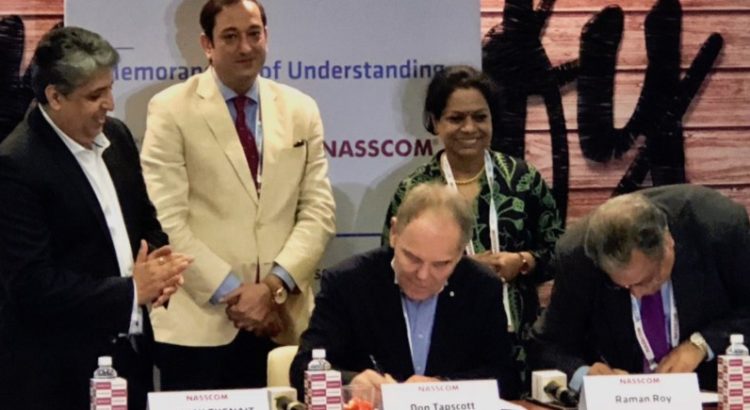
La Asociación Nacional de Empresas de Software y Servicios de la India, mejor conocida como NASSCOM, firmó esta semana un memorando de entendimiento con el Instituto de Investigaciones Blockchain de Canadá (BRI) para conformar un centro de educación y capacitación sobre las tecnologías de contabilidad distribuida en la India. Una iniciativa que podría motivar la adopción de las herramientas DLT y las monedas criptográficas en este reticente territorio asiático.

El noticiero tecnológico CIO y el medio de la India INC42 fueron las plataformas que reportaron el consenso realizado por estas dos firmas empresariales. Asimismo, BRI twitteó recientemente una foto donde se encuentra su co-fundador, Don Tapscott, junto a Sangeeta Gupta, vicepresidente de NASSCOM, y Sanjay Tugnait, CEO de la firma de consultoría Capgemini Canadá —compañía que también estuvo presente en la asociación— firmando el documento que sella la alianza.

 Todo apunta a que NASSCOM y BRI establecerán un “centro de excelencia” en la India, donde se puedan fomentar abiertamente la adopción de las tecnologías de contabilidad distribuida en el sector empresarial, educativo y gubernamental por medio de la capacidad tecnológica de alta gama que ofrece BRI.

El proyecto estará constituido por un grupo de seminarios web y cursos presenciales. Asimismo, la investigación tendrá dos fases constitutivas: la primera que buscará profundizar en los sistemas de incentivos y descuentos dentro de la blockchain, y la segunda tratará de generar una plataforma DLT que ayude a hacer crecer el ecosistema digital del Estado indio de Telengana.

De esta manera, el centro podría convertirse en una plataforma capaz de brindar aprendizaje, permitir la creación de prototipos y afianzar el lanzamiento de herramientas funcionales en el sector DLT. Es debido a todas estas posibilidades, que Raman Roy, presidente de NASSCOM, cree que las tecnologías de contabilidad distribuida tiene un alto poder de transformación.

En este sentido, Roy declaró que la alianza podría fomentar el desarrollo de las herramientas DLT dentro de territorio nacional, así como tendrá la capacidad de mejorar “la visión de la economía global” que tiene actualmente el gobierno y los ciudadanos de la India sobre las monedas criptográficas y las herramientas blockchain.

 Por otro lado, Don Tapscott, también ha asegurado que esta clase de alianza podrían motivar un verdadero despertar tecnológico en la India. Una realidad que tarde o temprano enfrentaría la nación debido al nuevo contexto digital (globalizado) en que se encuentran sumergidas las sociedades actuales.

En concordancia con este logro, Roy sabe que alentar la adopción de blockchain en la India es un proyecto a largo plazo, el cual estará marcado por la espera y un enorme esfuerzo de dedicación. No obstante, por los momentos, Raman se encuentra muy satisfecho y feliz con todo lo obtenido.

La importancia de la India en el ecosistema de criptomonedas radica en gran medida a su enorme población y sus constantes proyectos basados en blockchain. En este sentido, el mercado de monedas criptográficas se ha visto perjudicado en varias ocasiones debido a la tensión gubernamental y regulatoria de estas herramientas financieras, cayendo el precio del Bitcoin debido a medidas de pago de impuestos, prohibición de intercambios y constantes advertencias financieras. Un suceso que afectará a la comunidad de criptomonedas hasta que la nación esclarezca su posición frente a las monedas digitales.

Fuente de la Noticia:

https://www.criptonoticias.com/educacion/nasscom-don-tapscott-contruiran-centro-desarrollo-educativo-empresarial-gubernamental-blockchain-india/


Comparte este contenido:

Interview with Ong Ye Kung: Skills are something that activate your knowledge

In the first of a four-part series, Education Minister Ong Ye Kung explains why he places skills above degrees

A man who places such a high premium on skills over the paper chase does not mind sharing that this year, under his watch, more school leavers will be able to land a place in the local universities.

The cohort participation rate (CPR) – or the proportion of those from this age group making their way to universities – will rise to 37.5 per cent from 35 per cent last year.

Despite the shrinking cohort size, this means the number of those heading to the six publicly funded universities is still higher than last year’s figure and translates to just over 16,000 places.

Between them, they will enrol in over 250 degree programmes, including new courses in emerging fields such as smart city management, data science and artificial intelligence.

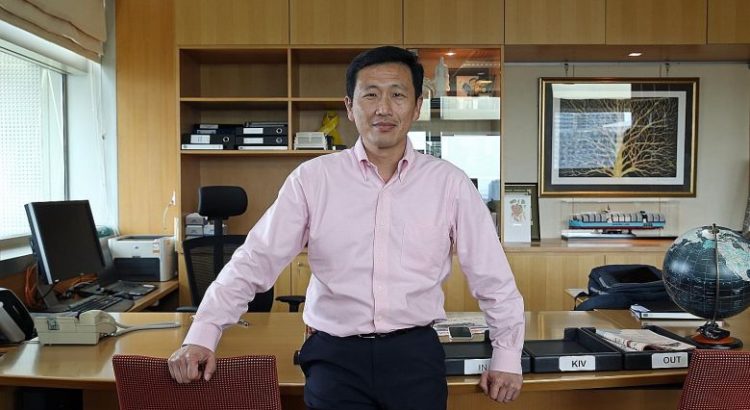
Education Minister in charge of Higher Education and Skills Ong Ye Kung, who revealed this in an interview with The Straits Times, says with the increase, the Ministry of Education is well on track to meeting the 40 per cent cohort participation rate that the Government aims to achieve by 2020.

What happens after 2020? Will this figure be relooked? After all, there has been much discussion recently on the Singapore economy needing a more highly educated and skilled workforce.

 Minister Ong says the figure of 40 per cent for 2020 refers only to funded places at the autonomous universities for junior college or polytechnic students proceeding to full-time undergraduate studies before they enter the workforce.
Mr Ong Ye Kung, 48, was elected Member of Parliament for Sembawang GRC in September 2015, and subsequently appointed Acting Minister for Education in charge of higher education and skills.

He was also concurrently appointed Senior Minister of State for Defence.

On Nov 2016, he was promoted to Education Minister (Higher Education and Skills), and concurrently Second Minister in the Ministry of Defence.

Prior to his Cabinet appointment, Mr Ong held the position of director of group strategy at Keppel Corporation, overseeing long-term strategic planning of the group’s activities.

Before joining Keppel, he was the deputy secretary-general of the National Trades Union Congress, overseeing the labour movement’s employment and employability programmes.

He held various positions in the Government earlier.

These include being chief executive of Singapore Workforce Development Agency, where he spearheaded many initiatives to build up the continuing education and training infrastructure.

He was principal private secretary to Prime Minister Lee Hsien Loong from 2003 to 2005, and press secretary to Prime Minister Lee from 1997 to 2003.

Mr Ong was also the deputy chief negotiator for the US-Singapore Free Trade Agreement.

Mr Ong graduated from the London School of Economics and Political Science with a first-class honours Bachelor of Science (Economics) degree, and holds a Master of Business Administration degree from the Institute of Management Development in Lausanne, Switzerland.

He is married with two teenage children.

POLYTECHNIC OR UNIVERSITY?

It’s hard to say. When I was young, I was always interested in art. I drew comics, superheroes, gongfu characters – so if I were to follow my interests it will probably take me into art – perhaps digital animation. I will look at what course will train me best in those skills, so I will probably go to a polytechnic. If there is a degree in that field, I might go for it, provided it could teach me the skills I need. But having said that, I am also interested in science and maths, and if I go with the flow of what is expected of me, I may take a degree pathway, especially since degrees are still the dominant currency.

MR ONG YE KUNG, on whether he would choose the skills or degree path if he were 18 again and heading to further studies.

It does not take into account those who study part-time for degrees at both the public and private institutions here as well as those who head overseas. If these figures were included, then the proportion of degree holders among an age group is likely to be 50 to 60 per cent, similar to that for many developed countries.

But pressed further, he says: «In time to come, we hope that 100 per cent of Singaporeans will have skills or qualifications that are on a par with having a degree, or even master’s, in terms of job prospects.»

He stands by his constant refrain that Singaporeans should stop believing that university education is the only way to develop an individual’s potential.

«This could be in the form of a degree, a master’s, a specialist diploma, an accumulation of short courses attained in different phases of your life, or just something that the industry knows you are good at, without any paper qualifications. It is about having a high level of expertise, passion and mastery in a particular area, » he says.

Although university degrees are the «currency» to land good jobs at the moment, he stresses that deep skills are what will count for career progression.

He notes that Singapore’s economy has diverse needs and will require diverse talents from a spectrum of expertise. As such, the Government is looking at providing «diverse and multitudinous» pathways for people to build skills.

«Ultimately, it is not about having a degree for its sake, but about skills for work and for life. Throughout their lifetime, everyone should have that depth of knowledge and agility in applying their skills in different contexts. There are many paths to arrive there.

«One dominant path is to study, get a degree and work for the rest of your life. For that, we have a CPR that we plan for. Even in that traditional path, we are trying to make it more varied, through different universities, different teaching methods, different subjects and different domain expertise.»

But he admits that many employers still hire on the basis of qualifications, and this gets in the way of Singaporeans chasing skills instead of degrees.

«I speak to many employers and the bosses all agree with the idea of looking beyond academic results and degrees. Yet, they have not changed their hiring practices significantly. One employer of a fairly big company recently told me that he hires for skills, but when elaborating, he said he doesn’t just go for second upper honours any more… Now he hires graduates with second lower honours as well.»

Mr Ong urges employers to «go through the trouble» and be open to using various assessments and to hire based on skills, so as to find workers with the right fit to grow their businesses.

He goes on to list the important skills – both hard and soft – that all Singaporeans, including graduates, should acquire .

Because technological changes are «turning industries upside down», graduates need to understand the latest technologies and be able to work with them.

«I am not saying you need to be a coder or an IT expert. But it will be good to have a basic understanding of technology and how it can be used in the field you are in.»

With the advance of artificial intelligence, he advises Singaporeans not to be like robots.

«If you work like a robot, you will be replaced by a robot,» he said. In this era we must be «more human than ever – in anything we do», he says, pointing to the fact that AI is not very good at jobs that require creativity, empathy, critical thinking, leadership or artistic expression.

The other force to be reckoned with is globalisation, which is still gathering pace.

«Singapore’s economy will become more connected than ever to the region and the world,» he says. So Singaporeans must aim to take a cue from the expatriate talents coming to the Republic. They must have the hunger and sense of adventure to go out of Singapore and seize opportunities in a foreign land.

And Singaporeans must be able appreciate and operate within different cultures. Mr Ong reminds graduates that with half of their peers holding degrees, they cannot rely on just their qualifications to stand out from the crowd.

«In this landscape, you can no longer say, ‘I am a degree holder and am therefore different from others.’ You have to go beyond that. You have to develop a niche… and be able to sell and present that niche as your area of mastery and differentiate yourself,» he says.

Asked if he would place skills above degrees, he says it need not be one above the other.

«The traditional view is that a degree is above skills, but that is because when we think of skills in Singapore, we think of vocational skills acquired through polytechnic and Institute of Technical Education courses.

«You accumulate knowledge through a degree course, but to convert the knowledge into something useful to society, you require skills. Skills are something that activate your knowledge. From that perspective, skills are above degrees.

«The truth is, both are needed – it is a mesh of what you know and what you can do.»

He stresses that parents, students and employers all need to embrace this larger definition of skills future.

«That’s really the skills we’re referring to in SkillsFuture,» he says, referring to the national movement to harness the aspirations and talents of the population and encourage Singaporeans to keep on learning and upgrading their knowledge and skills.

He hopes that society as a whole will recognise and celebrate the spectrum of success in different fields. » If society sticks to a narrow notion of success, then we will always be stuck in it. Society must embrace them all. Only then will we have true diversity in meritocracy… not just academic meritocracy but a meritocracy of skills.»

In partnership with

By: Sandra Davir.

From: http://www.straitstimes.com/singapore/education/minister-skills-are-something-that-activate-your-knowledge-about-mr-ong-ye-kung
Comparte este contenido:

Singapore: Degrees or skills? ST Education Forum to debate issue

Asia/ Singapore /26.02.2018 / From: www.straitstimes.com. By: Fabian Koh.

Con la cantidad de plazas universitarias en aumento este año, más estudiantes que abandonan la escuela tendrán una oportunidad de obtener una educación de nivel de grado.

With the number of university places increasing this year, more school leavers will have a shot at degree-level education.

There will be slightly over 16,000 places in the six publicly funded universities, despite a shrinking cohort size. This means the cohort participation rate will reach 37.5 per cent, up from 35 per cent last year.

Minister for Education (Higher Education and Skills) Ong Ye Kung told The Straits Times that his ministry is on track to meeting the 40 per cent cohort participation rate announced six years ago.

Degrees have typically been associated with better job prospects and higher salaries. Degree holders draw higher starting salaries compared with diploma holders, and the earnings gap widens over the years.

Those who cannot get into a local public university tend to look overseas or take the private school route.

However, in an age of technological advancements and disruptions in the workplace, degree holders are increasingly unemployed, or underemployed, in many economies.

The oversupply of degree holders has also had a dampening effect on graduate salaries.

  • EVENT INFORMATION

  • The Straits Times Education Forum on Degrees versus Skills is supported by the Singapore Management UniversityDate: March 17 ( Saturday)Time: 10am to 12pm (Registration begins at 9am, guests to be seated by 9.50am)Location: Singapore Management University School of Law Building, Basement 1 SMU Hall, 55 Armenian Street, Singapore 179943Cost: Free for ST readersOnline registration: http://str.sg/st-education-forum-2018

    Limited seats are available.

In such a climate, does the conventional thinking that a degree equals success still hold true? Or should young people be focused on developing skills in fields relevant to the economy in this new age?

Singapore Management University (SMU) president Arnoud De Meyer said: «A university degree is more than just a piece of paper; it is more than just a way to get a good job. University education equips students with the ability to learn how to learn; it stimulates their curiosity and develops the whole person for lifelong benefits.»

Professor De Meyer will be part of a debate on the degrees versus skills issue at The Straits Times Education Forum, presented by SMU, on March 17.

The debate will be held at the SMU School of Law Building in Armenian Street.

Straits Times editor Warren Fernandez said: «This is a longstanding issue – do you need a degree to get ahead? – but it has added resonance today given the massive disruption across industries.

«It is pertinent to ask how best our people should prepare for work in the future and whether degrees or skills will help them more?»

Along with SMU law dean Goh Yihan, Prof De Meyer will be arguing against the motion: «You don’t need a degree to succeed in life.»

On the other side of the debate will be Organisation for Economic Cooperation and Development education director Andreas Schleicher and SkillsFuture Singapore chief executive Ng Cher Pong.

The debate will be moderated by Mr Patrick Daniel, consultant to Singapore Press Holdings.

A version of this article appeared in the print edition of The Straits Times on February 26, 2018, with the headline ‘Degrees or skills? ST Education Forum to debate issue’.

From: http:///singapore/education/degrees-or-skills-st-education-forum-to-debate-issue

Comparte este contenido:

भारत: अर्धा महिना संपला तरी शिक्षकांचा पगारच नाही

भारत / 25 फेब्रुवारी, 2018 / लेखक: लेखन / स्त्रोत:पौधी न्यूज

मुंबई : प्रतिनिधी

शालार्थ सॉफ्टवेअर बंद पडल्याने राज्यभर शिक्षकांचे पगार उशिरा होत आहे. अर्धा महिना संपला तरीही पगार झालेले नाहीत. त्यामुळे आर्थिक गणित कोलमडल्याने शिक्षक प्रचंड अस्वस्थ आहेत. पगार रखडल्यानंतर उशिरा जाग आलेल्या शिक्षण विभागाने ऑफलाईन पगाराचे आदेश दिले, मात्र त्याबाबत वित्त विभागाकडे पाठपुरावा केलेला नाही.अजूनही शालार्थ सॉफ्टवेअर बंद आहे, पुढच्या महिन्यातही ऑफलाईन पगार होणार असल्याने शिक्षकांची चिंता वाढली आहे. शिक्षण विभागाच्या ढिम्म कारभाराचा फटका राज्यातील शिक्षकांना बसत आहे.

गेली सहा वर्षे सुरळीत होत असलेले मुंबईतील शिक्षकांचे पगार शिक्षण विभागाने राष्ट्रीयीकृत बँकेतून मुंबई जिल्हा बँकेत ढकलले. आंदोलनं, निदर्शने, पत्रव्यवहार, वरिष्ठ मंत्र्यांच्या भेटीगाठी घेतल्या, पण शिक्षण विभाग दाद द्यायला तयार नाही. अखेर शिक्षक भारतीने मुंबई हायकोर्टात रीट याचिका दाखल केली.

नुकताच झालेल्या निकालात हायकोर्टाने मुंबईतील शिक्षकांच्या बाजूने निर्णय देत शिक्षण विभागाला चपराक दिली आहे. मुंबई जिल्हा बँकेत पगार नेण्याचा निर्णय रद्द केला आहे. आता कोर्टाच्या आदेशाची अंमलबजावणी करून शिक्षण विभागाने मुंबईतील शिक्षकांचे पगार पूर्ववत तातडीने युनियन बँकेतून केले पाहिजेत, असे मत शिक्षक संघटनांनी व्यक्त केले आहे.

बातम्या स्त्रोत:

http://www.pudhari.news/news/Mumbai-Thane-Raigad/Teacher-salary-issue/

Comparte este contenido:

O’zbekiston: Institutda 2018-2019 o’quv yili uchun qabul kvotalarini shakllantirish bo’yicha yig’ilish o’tkazildi

O’zbekiston / 2018 yil 25 fevral / Muallif: Yangiliklar / Manba: Andmiedu

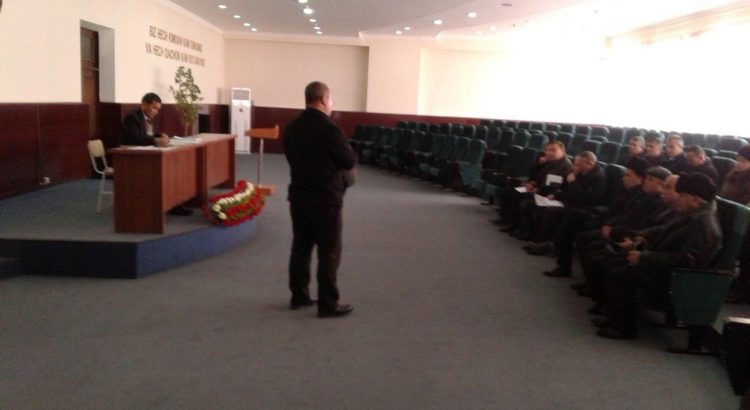
2018 yil 17 fevral kuni institutning katta anjumanlar zalida yig’ilish o’tkazildi.

Ushbu yig’ilishni O’quv ishlari bo’yicha prorektor Q.Ermatov olib bordi.

Yig’ilishda institutning 2018/2019 o’quv yili uchun qabul kvotasi bo’yicha

ta’limning kunduzgi, sirtqi va kechki shakliga korxona va tashkilotlarning

kadrlarga bo’lgan talab va extiyojlaridan kelib chiqib shakllantirilgan

ma’lumotlar Viloyatning iqtisodiyot va hududlarni kompleks rivojlantirish

bosh boshqarmasiga taqdim etilganligi bildirildi.

Marketing bo’limi boshlig’i, fakultet dekanlari va yo’nalish kafedra

mudirlariga o’z yo’nalishlari va mutaxassisliklari bo’yicha bakalavriat

ta’lim yo’nalishlarining kunduzgi, sirtqi va kechki ta’lim shakllari  va

magistratura mutaxassisliklari bo’yicha korxona va tashkilotlardan

tushgan talab va ehtiyojlar sonini yana bir bor muvofiqlashtirish, va

yetishmayotganlarini shakllantirish bo’yicha yo’l qo’yilgan kamchiliklarni

bartaraf etish bo’yicha topshiriqlar berildi.

Vazirlar Mahkamasining 2006 yil 10 fevraldagi 20-son qarori bilan

tasdiqlangan “Oliy ta’lim muassasalariga pedagog xodimlarni tanlov

asosida ishga qabul qilish tartibi to’g’risida nizom” talabalaridan kelib

chiqib kelgusi tanlovlarda  barcha professor-o’qituvchilar fol qatnashishi

lozimligi to’g’risida Kadrlar bo’limi boshlig’i Q.Mirzaev o’z so’zida to’xtalib o’tdi.

SHuningdek, fakultet dekanlariga va barcha kafedra mudirlariga 2017-2018

o’quv yilining kuzgi semestri yakuni bo’yicha 2-qaydnomalarni yakunlashlari

xususida aniq ko’rsatmalar berildi. Yig’ilishda fakultet dekanlari, kafedra mudirlari

va bo’lim boshliqlari qatnashdilar.

Yangiliklar manbasi:

https://atm.andmiedu.uz/2018/02/19/institutda-2018-2019-oquv-yili-uchun-qabul-kvotalarini-shakllantirish-boyicha-yigilish-otkazildi/

Comparte este contenido:

“Malala: mi historia”, notas personales sobre paz y educación

Pakistán / 25 de febrero de 2018 / Autor: Redacción / Fuente: Tras Leer Un Libro

El comienzo del siglo XXI en la pequeña comunidad de Mingora, en Swat (Pakistán) no fue fácil. Por ese entonces, Malala Yousafzai (1997-) asistía al Colegio Kushal de niñas, fundado por su padre, Ziauddin Yousafzai. Esta institución no era como todas las demás, pues les otorgaba libertad de pensamiento y opinión a sus estudiantes, además de albergar las ciencias y la literatura como herramientas para entender el mundo, todo esto sin abandonar la religión musulmana. Toda esta atmósfera recreativa y educacional se va trizando a medida que Fazlullah, la voz radial que defiende los ideales de los talibanes, comienza a declararle la guerra a todo aquel que desobedezca al Corán. Poco a poco, el universo de Malala peligra, lo que va fortaleciéndola para defender lo que ella considera justo. Ya a los once años, comienza anónimamente a dar cuenta de los hechos pasados y presentes en Swat, para luego denunciar de manera pública los atentados a escuelas y los asesinatos en masa. Así, Malala se convierte en un referente y una amenaza al mismo tiempo, una esperanza que casi le cuesta a la vida producto de un atentado. Desde ese momento, renace su gran deseo: todos hablan de ella, se preocupan por ella, toman partido por ella; su causa se hace universal, dará forma a una fundación, emitirá discursos en importantes estamentos y será reconocida por su lucha pro derechos de todos los niños a la educación.

Este es el argumento de Malala: mi historia (I am Malala, 2014) de Malala Yousafzai y Patricia McCormick. Se trata de un relato vivo, una biografía escrita en primera persona que trastoca por la sinceridad característica de una adolescente, porque nadie debería quedarse indiferente ante las manifestaciones de los jóvenes. Es una historia asombrosa, desde el punto de vista de los hechos relatados. Podría ser inquietante que una niña de ocho años sepa la diferencia entre terrorismo y miedo. El roce entre las balas y las constantes amenazas las que llevan a reflexionar sobre el tema.

La autobiografía de la Nobel de la Paz 2014 predica con el ejemplo, es decir, no hay venganza en sus palabras, sino reconciliación con las escenas descritas. En sus propias páginas, Malala se define como una niña curiosa, serena y vanidosa. Estos elementos se conjugan en la historia, evolucionan. No hay rencor en sus ideas, sí mucho asombro ante la brutalidad a la que asiste. Y lo expresa en sus propios términos, con un doble grado de consciencia: por un lado, sabiendo las implicancias que tienen sus opiniones; por otro lado, conociendo el alcance de réplica de sus palabras. Esto vale para sus entradas al blog de la BBC hasta su discurso en la ONU.

El choque cultural entre Oriente y Occidente penetra en la casa de Malala. Todo en ella se convierte en críticas: su ropa, sus libros, su televisión, sus clases, sus dichos y los dichos de su padre. La fragilidad de cada capítulo se presenta con la naturalidad que conlleva el vivir siendo amenazada, cambiando tus pasos para llegar a casa; borrándote de las ventanas para no recibir las balas de la calle; escuchando el virus de la radio, ese que se come la libertad de expresión, ese que conjura versículos religiosos para cercar y oprimir al pueblo. Pero el problema no es la religión musulmana, piensa ella, porque se puede creer en Alá y descubrirse el rostro.

Resulta llamativo que todo lo que encarga Malala sea impulsado por su padre, Ziauddin. Ella indica que su padre no se deja abatir por nada. Siente el temple de su progenitor y guía; por él, ella no puede quedarse atrás. Por eso, post-atentado, él le dice que debió recibir los disparos por ella. La relación entre ambos es recíproca, se complementan sus puntos de vista y comparten las decisiones del otro.

Igualmente, ella se preocupa de agradecer o reconocer a cada persona que estuvo con ella, desde su amiga/rival del colegio Moniba, pasando por sus padres, sus hermanos, sus doctores en Birmingham, hasta Gordon Brown, Selena Gomez y Madonna. Por último, el libro ofrece imágenes del archivo personal de la autora, una cronología de los hechos más destacables de Pakistán y su propia vida, un glosario de palabras y datos sobre Malala Fund, la fundación que recoge sus ideales.

Fuente de la Reseña:

https://trasleerunlibro.wordpress.com/2018/02/21/malala-mi-historia-notas-personales-sobre-paz-y-educacion/

Comparte este contenido:

No hay tiempo que perder contra la mutilación genital femenina

Por: Will Higginbotham y Tharanga Yakupitiyage


Más de 200 millones de mujeres sufrieron algún tipo de mutilación genital y todavía hay muchas más en peligro de padecer la práctica que pone en riesgo no solo a la persona afectada sino a comunidades enteras.
La prevalencia disminuyó en el mundo, pero nuevos datos del Fondo de Población de las Naciones Unidas (UNFPA) prevén que cualquier avance logrado podría desaparecer porque hay 68 millones de niñas en peligro de sufrir mutilación genital en 2030. Los datos se conocieron en el marco del Día Internacional de la Tolerancia Cero contra la Mutilación Genital Femenina (MGF), conmemorado el 6 de febrero.

“Los nuevos datos significan que la práctica amenaza la vida y el bienestar de más mujeres y niñas de las que se pensaba al principio”, dijo a IPS la coordinadora del Programa Conjunto UNFPA-Fondo de las Naciones Unidas para la Infancia (Unicef) sobre la MGF, Nafissatou Diop. “Tu y yo y la vecina pueden verse afectadas”, indicó. La MGF, a veces llamada circuncisión o corte, suele practicarse por motivos religiosos, personales, culturales y dentro de los rituales de iniciación de las adolescentes a la vida adulta. Según el UNPFA, la mayoría de los casos afectan a niñas pequeñas y hasta los 15 años. El aumento de casos “en riesgo de sufrir la MGF” se debe, en parte, al crecimiento de la población en países donde es una práctica común, principalmente el norte y oeste de África, Medio Oriente y algunas zonas de Asia.

Solo en Egipto, más de 90 por ciento de las mujeres fueron mutiladas. Tanto Unicef como UNFPA denunciaron la MGF por considerarla una “violación de los derechos humanos” y una “práctica cruel” que inflige un daño emocional y afecta a las personas más vulnerables de la sociedad. “Es inadmisible que 68 millones de niñas se agreguen a las 200 millones de mujeres y niñas que ya soportaron la MGF”, subrayó.

Daño que cambia la vida

La MGF puede dejar traumas de por vida, como problemas urinarios y vaginales, mayor riesgo de complicaciones durante el parto y trastornos psicológicos como depresión, ansiedad, estrés postraumático y baja autoestima. La directora ejecutiva de la división de derechos de las mujeres de Human Rights Watch, con sede en Nueva York, Liesl Gerntholtz, dijo a IPS que era “inaceptable” que hubiera 68 millones de casos. “Es una violación de los derechos humanos fundamentales que puede arruinar la vida vida de las niñas”, alertó. “Es común que no puedan opinar, en la infancia ¿qué pueden decir?”, acotó. “No trae beneficios para la salud de las mujeres cortadas, y tiende a verse en esas sociedades que no tienen igualdad de género. Es una práctica arraigada en la desigualdad de género”, remarcó Gerntholtz.

MGF expresión de desigualdad de género

Gerntholtz subrayó que para hacer frente a la mutilación genital femenina, la comunidad internacional debe atender no solo la práctica misma, sino la cuestión más general de la arraigada desigualdad de género. “Como comunidad internacional, podemos luchar contra la MGF no solo apoyando iniciativas específicas vinculadas a ella, sino también mirando de forma holística la desigualdad de género en esas regiones e invirtiendo en programas que apoyen los derechos y la educación de las niñas; y la educación de la comunidad, también es clave”, explicó. Por su parte, la directora ejecutiva de UNFPA, Natalia Kanem, coincidió, y recordó que el mundo ya sabe qué hacer para afrontar el problema.

“Sabemos qué funciona, inversiones dirigidas destinadas a cambiar normas sociales, prácticas y vidas”, precisó. “Cuando se hace frente a las normas sociales de pueblo en pueblo, cuando hay acceso a la salud, a la educación y a servicios legales, cuando las niñas y las mujeres están protegidas y empoderadas para alzar su voz”, añadió. El cambio viene particularmente del ámbito comunitario. Latifatou Compaoré, de 14 años, se volvió una luchadora contra la práctica tras conocer la experiencia que había sufrido su madre por la MGF. “Me contó que una de las niñas a la que habían cortado el mismo día que a ella, habría sufrido problemas graves y murió de una hemorragia que nadie pudo parar”, relató en entrevista con el UNFPA. “Cuando se convirtió en madre, se prometió a sí misma que si tenía niñas, nunca las cortaría; y cumplió con su palabra”, añadió. En los países donde trabajan Unicef y el UNFPA, unas 18.000 comunidades rechazaron la práctica y muchos otros tomaron medidas legales para prohibirla.

Por ejemplo, después de que Kenia prohibió la MGF en 2016, el número de casos cayó de 32 a 21 por ciento.

Se necesita una acción acelerada

Pero no bastan las leyes ni los compromisos de palabra, observó el secretario general de la Organización de las Naciones Unidas, António Guterres. “Sin una acción concertada y acelerada, vemos que otras 68 millones de niñas pueden sufrir esa práctica dañina”, alertó. Diop también reclamó más esfuerzos para destinar fondos y recursos humanos a esta lucha. La meta de frenar la MGF tiene un lugar destacado en los Objetivos de Desarrollo Sostenible (ODS). Su inclusión se consideró un reconocimiento de las vastas consecuencias que tiene la MGF, que van más allá del impacto individual e incluye un impacto social y económico para comunidades enteras. “No se puede lograr el desarrollo sostenible sin el total respeto de los derechos humanos de mujeres y niñas”, reza la declaración de Guterres.

El secretario general pidió a los gobierno que aprueben y apliquen las leyes que protegen los derechos de niñas y mujeres y eviten la mutilación genital. También anunció una nueva iniciativa de la ONU llamada “Iniciativa Spotlight”, que procura crear una fuerte asociación para poner fin a todas las formas de violencia contra mujeres y niñas. “Cuando está en juego la dignidad, la salud y el bienestar de millones de niñas, no hay tiempo que perder”, remarcó. “Juntos podemos y debemos terminar con esta práctica perjudicial”, añadió Guterres.

Fuente: https://www.rebelion.org/noticia.php?id=238209

Comparte este contenido:
Page 313 of 772
1 311 312 313 314 315 772