Page 422 of 772
1 420 421 422 423 424 772

Nueva resolución de la ONU insta a fortalecer el compromiso por la educación pública

ONU- CLADE/4 de julio de 2017/Autor: CLADE/Fuente: https://www.aler.org

La resolución reafirma la importancia de la educación pública así como la urgencia de abordar los impactos negativos de la comercialización de la educación.

Adoptada por consenso por el Consejo de Derechos Humanos de las Naciones Unidas el pasado jueves 22 de junio, la resolución reconoce la importancia de la inversión en educación pública con el máximo de los recursos disponibles, y aumentar y mejorar el financiamiento interno y externo para la educación, como se estableció en Declaración de Incheon, así como de garantizar que las políticas y medidas en materia de educación sean compatibles con las normas y principios de derechos humanos, y de fortalecer el compromiso de todas las partes pertinentes para contribuir a la educación como bien público (párrafo 3).

Además, insta a todos los Estados a establecer un marco regulador para los proveedores de educación (ya sea que operen de manera independiente o en asociación con los Estados), con arreglo a las obligaciones internacionales en materia de derechos humanos, aludiendo a normas y estándares mínimos para la creación y el funcionamiento de servicios educativos, al abordaje de cualquier impacto negativo de la comercialización de la educación, al fortalecimiento del acceso a recursos apropiados y a  la reparación de las víctimas de violaciones del derecho a la educación (párrafo 2.e).

Asimismo,  exhorta a todos los Estados a que regulen y supervisen a los proveedores de educación, responsabilizando a aquellos cuyas prácticas tienen un impacto negativo en el disfrute del derecho a la educación, así como apoyar actividades de investigación y sensibilización para comprender mejor el amplio impacto de la comercialización de la educación sobre el disfrute de este derecho (Párrafo 4).

Para conocer más sobre esta resolución, pueden encontrar en adjunto el comunicado de prensa firmado o acceder al texto del mismo en línea aquí.

El texto completo de la Resolución A/HRC/35/L.2 del Consejo de Derechos Humanos sobre el derecho a la educación pueden encontrarla aquí.

Fuente de la Noticia:

https://www.aler.org/index.php/node/2054


Comparte este contenido:

Chile: Fondo anglo-israelí- invertirá en educación tecnológica

Chile/ 04 de julio de 2017/Fuente: http://aurora-israel.co.il

MindCET, el brazo tecnológico en Israel del Centro para la Educación en Tecnología (CET), ha anunciado la fundación de un fondo para la inversión en educación tecnológica en cooperación con el gobierno británico.

El fondo, llamado TaskForce, invertirá inicialmente 250 mil dólares en cada uno de cuatro o seis negocios anualmente. En la siguiente etapa, es probable que el fondo crezca a 30 millones de dólares. Toman parte en el proyecto en el Reino Unido la British Educational Suppliers Association (BESA) y la anglo-israelí Tech Hub, el centro de innovación de la Embajada del Reino Unido en Israel.
El inversor principal en la empresa será el fondo Arie Capital, un fondo del Reino Unido especializado en la inversión tecnológica israelí, junto a la Fundación Beracha, una organización filantrópica israelí; el CET mismo; la empresa de tecnología educativa Educorp Technologies; una empresa japonesa; y un inversionista chino no revelado. Detrás de la empresa está el productor y director de cine británico Lord David Puttnam, que produjo “Midnight Express” y “Chariots of Fire”, y que ahora dedica su vida a promover la educación en el Reino Unido. También será el director general del fondo.
La educación es un campo conservador, y la inversión en tecnologías educativas tiene la intención de saldar las amplias brechas entre tecnología y educación.

Fuente de la Noticia:

http://aurora-israel.co.il/fondo-anglo-israeli-invertira-en-educacion-tecnologica/

Comparte este contenido:

Combating global poverty with education

By: Sarwar Md. Saifullah Khaled

Education is at the core of progress in all fields in the world. Its role in eradicating poverty through equitable distribution of income and achieving progress and prosperity can hardly be over-emphasised. There is no alternative to education to achieve Sustainable Development Goal (SDG) to alleviating poverty by 2030. A new United Nations Educational, Scientific and Cultural Organisation (UNESCO) policy paper shows that the global poverty rate could be more than halved if all adults completed secondary school.

But new data from the UNESCO Institute for Statistics (UIS) show persistently high out-of-school rates in many countries. This makes it likely that completion levels in education will remain well below the target for generations to come. The paper titled ‘Reducing global poverty through universal primary and secondary education’ is being released ahead of the UN High Level Political Forum (10-19 July), which will focus on poverty eradication in pursuit of the 2030 Agenda for Sustainable Development (ASD).

The paper demonstrates the importance of recognising universal primary and secondary education as a core lever for ending poverty in all its forms everywhere in the world. UNESCO Director-General Irina Bokova was quoted as saying in a message received from Paris that the new analysis on education’s far-reaching benefits should be good news for all those working on the Sustainable Development Goal (SDG) to eradicate poverty by 2030. She said, «It shows we have a concrete plan to ensure people no longer have to live on barely a few dollars a day».

The new analysis on education’s impact on poverty and income inequality by the UNESCO’s Global Education Monitoring (GEM) Report team is based on average effects of education on growth and poverty reduction in developing countries from 1965 to 2010. It shows nearly 60 million people of the world could escape poverty if all adults had just two more years of schooling. If all adults completed secondary education, 420 million could be lifted out of poverty in the world, reducing the total number of poor people by more than half globally and by almost two-thirds in sub-Saharan Africa and South Asia. Studies have shown that education has direct and indirect impacts on both economic growth and poverty.

Education provides skills that boost employment opportunities and incomes of people while it helps protect people from socio-economic vulnerabilities. A more equitable expansion of education globally is likely to reduce inequality of income, lifting the poorest from the bottom of the income ladder. Despite education’s immense potential, the new UIS data show that there has been virtually no progress globally in reducing out-of-school rates in recent years. Nine per cent of all children of primary school age globally are still denied of their right to education with rates reaching 16 per cent and 37 per cent for youth of lower and upper secondary ages, respectively. In total, 264 million children, adolescents and youth were out of school in 2015.

Sub-Saharan Africa remains the region with the highest out-of-school rates for all age groups. More than half (57 per cent) of all youth between the ages of 15 and 17 are not in school, as are more than one-third (36 percent) of adolescents between 12 and 14 years and one-fifth (21 percent) of children between the ages of about 6 and 11. Six countries, namely Ethiopia, India, Indonesia, Nigeria, Pakistan and Sudan are home to more than one-third of all out-of-school children of primary age. Of the 61 million children of primary school age currently out of school, 17 million will never to set foot in a classroom if current trends continue. This affects one in three children out of school in sub-Saharan Africa, Western Asia and Northern Africa, and more than one in four of those in Central Asia and Southern Asia.

Girls in poor countries continue to face barriers to education. According to UIS data, in low-income countries, compared to almost 9 million of boys, more than 11 million girls of primary age are out of school. But the good news is that the girls who do manage to start school at primary level tend to complete the primary cycle and pursue their studies at the secondary level.

Education must reach the poorest to maximise its benefits and reduce global income inequality. Yet the GEM Report shows that children from the poorest 20 per cent of families are eight times as likely to be out of school as children from the richest 20 per cent in lower middle-income countries like Bangladesh. Those of primary and secondary school age in the poorest countries are nine times as likely to be out of school as those in the richest countries.

While urging countries to improve the quality of education, the paper stressed the need to reduce direct and indirect costs of education for families. New UIS data confirm that many households still have to bear expenses relating to education, totalling US $87 per child for primary education in Ghana, US $151 per child in Côte d’Ivoire and US $680 in El Salvador. This is higher in comparison to the level of cost that they can afford comfortably.

Source:

http://www.thefinancialexpress-bd.com/2017/07/02/75725/Combating-global-poverty-with-education

Comparte este contenido:

China Online Education industry expected to grow to 241.6 million in 2021

China/ July 4, 2017/Source: http://www.marketwatch.com

China’s online education industry has expanded at a rate of around 20% in recent years, with the market worth of RMB150.7 billion in 2016, a year-on-year growth of 23%.

Meanwhile, user scale also increased rapidly, reaching 89.27 million in the same period, a 21.9% rise from a year ago.

Propelled by favorable policies and capital inflows, the Chinese online education market and user scale will maintain a rapid growth rate, hitting an estimated RMB421.6 billion and 241.6 million in 2021, respectively.

Despite a high concentration of online education in PC, mobile-client has the advantage of enabling users to maximize fragmented time to learn, while PC cannot allow users to study in any place and at any time.

It is expected the Chinese K12 online education market will grow at a pace of over 30% over the next five years, reaching RMB82.31 billion in 2021.

Due to environmental protection and supply-side reform in the coal industry, the output of coal-based activated carbon will decline, while that of wood-based and coconut shell-based activated carbons will rise steadily.

Online education industry in China was characterized by and showed the trends as follows in 2016:

1. Steady growth in market size and user scale
China’s online education industry has expanded at a rate of around 20% in recent years, with the market worth of RMB150.7 billion in 2016, a year-on-year growth of 23%. Meanwhile, user scale also increased rapidly, reaching 89.27 million in the same period, a 21.9% rise from a year ago.

Propelled by favorable policies and capital inflows, the Chinese online education market and user scale will maintain a rapid growth rate, hitting an estimated RMB421.6 billion and 241.6 million in 2021, respectively.

2. Industry development driven by capital injection
More governmental spending on education, accelerated revision of the laws on private education and supporting policies, and introduction of relevant policies create broad space for the development of online education in China and attract the attention of capital market. In 2016, there were a total of 140 domestic online education investment programs with aggregate amount of more than RMB14.886 billion, including 32 ones each worth of over RMB100 million.

3. Shift from PC to Mobile Client
Despite a high concentration of online education in PC, mobile-client has the advantage of enabling users to maximize fragmented time to learn, while PC cannot allow users to study in any place and at any time. Meanwhile, 95.1% of Chinese internet users are mobile netizens, meaning that people’s living habits are growingly based on mobile client, which provides a foundation for mobile online education. Hence, driven by changes in user demand and living habits, domestic online education is shifting from PC to mobile client.

4. Huge development potential of K12 online education market
As the younger generation (post-80s and 90s) become parents, they have higher requirements on education for children and spend more on education; as the two-child policy is implemented, the number of children in K12-education age group will increase steadily and market demand will further expand. It is expected the Chinese K12 online education market will grow at a pace of over 30% over the next five years, reaching RMB82.31 billion in 2021.

In addition, among 32 programs each with a total amount of more than RMB100 million in online education industry in China in 2016, 15 ones involved K12 online education, making up 46.7%. The flow of capital clearly shows the development potential of K12 online education market.

China Online Education Industry Report, 2016-2021 highlights the following:
Education industry in China (spending on education, various kinds of schools and students, private education);
Online education in China (development course, environment, status quo, market size, user scale, financing, and development trends);
Online education market segments in China (enterprise E-learning, online higher curricula education, online vocational education, K12 online education, and online language education).

Source:

http://www.marketwatch.com/story/china-online-education-industry-expected-to-grow-to-2416-million-in-2021-2017-07-03

Comparte este contenido:

Lack of sex education hurts female labor migrants

Ana P. Santos

Getting pregnant has little to do with promiscuity but everything has to do with ignorance.

On the wall hung a framed cartoon of a perplexed obstetrician looking at the patient sitting up on the examination table. The patient was a mermaid.

Dr Christine Felding translated the Danish cartoon for me as talking about how an obstetrician needs to be prepared to see all kinds of patients and we both had a laugh.

It wasn’t exactly what I expected to find in an abortion clinic. Till then, my experience with abortions in the Philippines had been limited to dark back alleys and eccentric hilots (roughly translated, a masseuse) who claimed to have the power to induce an abortion through magical chants.

I was in Denmark where abortions are legal up to the 12th week of pregnancy and where women’s health clinics like the one I was in treat patients for a full circle of sexual health conditions: pregnancy, infertility, and reproductive health diseases. Included in this bundle is medical abortion.

Dr Felding’s clinic was made up of white walls with pictures of flowers and witty cartoons and windows where warm sunlight streamed through. In the waiting room, I could sit by the window and have a full view of the tree-lined streets of Rungsted, a very affluent suburb just outside Copenhagen.

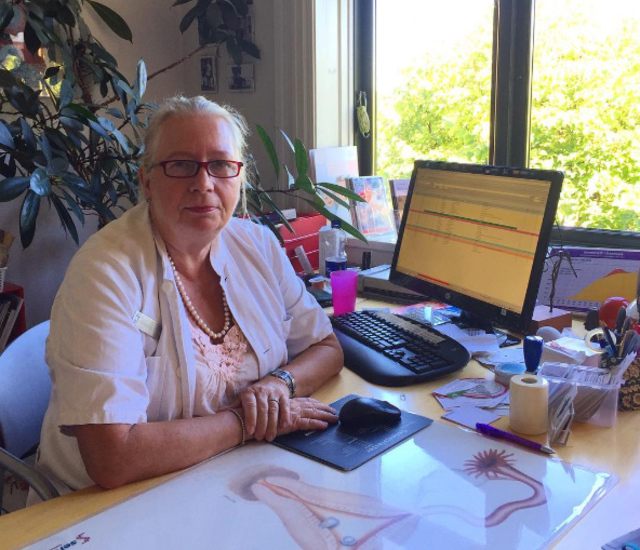
SURPISED. Dr. Christine Felding was surprised to see that it was mostly young Filipino women coming to her clinic for abortion services. Photo by Ana P. Santos/Rappler

SURPISED. Dr. Christine Felding was surprised to see that it was mostly young Filipino women coming to her clinic for abortion services. Photo by Ana P. Santos/Rappler

I was there to see Dr Felding who had been cited in news reports as saying that most of her patients coming in to get an abortion were Filipino women.

I came there to get behind the why. I wasn’t convinced that the young Filipino women who came to Denmark to work as au pairson a cultural exchange program had a monopoly on sexual liaisons.

«When I ask them about contraception, they say they haven’t heard of it or don’t use it. When I ask them why, they say it’s because they’re Catholic,» Dr Felding told me.

Unplanned pregnancies beyond borders

I’ve had variations of this conversation in other parts of the world highlighting the problem of unplanned pregnancies among female migrant workers.

On one hand, this is somewhat an extension of what is happening in the Philippines where one out of 4 pregnancies is unplanned and the rate of teen pregnancy is soaring.

Our conservative and prudish refusal to teach sex education is hurting our migrant women. It is leaving them unprepared for the physical and psychological realities of living abroad.

Having an unplanned pregnancy at home in the Philippines can set off a chain of events with a list of long-term health and economic ramifications.

Imagine having an unplanned pregnancy as a migrant worker in a foreign country where your earning capacity is directly tied to you being able to work in your host country. In some cases, you may not even be there legally.

An unplanned pregnancy puts you in a very tight corner where only hard choices are left.

In Denmark, where many Filipino migrant workers fall into the category of au pairs on a cultural exchange program, the employment contract stipulates that au pairs must be single and must not have children.

Before Danish laws softened in 2015, a pregnancy automatically meant employment termination for the au pair and deportation.

Currently, a pregnant au pair can stay in Denmark for the duration of her pregnancy and up to two months after – provided that her host family/employer allows it.

In Gulf countries where more than two million Filipino migrant workers are deployed, an unplanned pregnancy has even more dire consequences.

Pregnancy outside a legal marriage is a criminal act. It is a violation of zina laws patterned after Islamic legal tradition which define any act of illicit sexual intercourse between a man and woman as unlawful.

Collectively known as «love cases», acts such as unmarried sex, pregnancy outside of marriage and adultery are punishable by imprisonment of up to one year. If the offender is a Muslim, the sentence will carry an additional punishment of 100 lashes. Married Muslim offenders will be sentenced to death by stoning.

Both men and women can be charged with the crime of zina, but since it is only women who get pregnant, it is mostly women who are prosecuted.

In Dubai, there are reports of babies being abandoned at hospitals so unmarried mothers can avoid detention. Alongside this are stories of women giving birth at home, of clandestine arrangements with doctors who agree to perform pre-natal checkups on unmarried patients without reporting them to the authorities. A higher consultation fee is paid to buy their silence.

Human Rights Watch is calling for the abolition of zina laws, calling them archaic, inhumane and unjust because they are discriminately applied and disproportionately affect low-skilled migrant women.

On a recent reporting trip to Doha last May, I visited two jails and saw that the women detained with their children for breaking zinalaws were mostly domestic workers from the Philippines, Bangladesh, and India.

Overlooked and absent

There are no official statistics on the number of Filipino migrant women who have unplanned pregnancies, but the reports from the different countries attest to its high level of occurrence.

If we trace back the causes, we will find ourselves with the basics: the absence of adequate sex education.

I’ll go even further to include the dichotomy of our social conditioning that excessively romanticizes relationships and motherhood, but stigmatizes contraception and slut-shamesanyone who needs to use it.

You may argue that other labor-sending countries don’t have a stellar record as far as progressive sex education is concerned and that is true. But neither do they have the record of having one of the best practices when it comes to migrant worker support.

The Philippines has been applauded as having successfully institutionalized a labor exportation policy that prioritizes the welfare of its citizens. This is supported by the mandatory orientation seminars and the presence of welfare offices in countries with a large Filipino migrant population.

In Doha, for example, when I visited the jails, the lady guards automatically assumed I was from the embassy. When I told them I wasn’t, they said that it is only the Philippine embassy that regularly sends officers to visit detained citizens, monitor their cases and provide legal advice.

But clearly, there is one aspect of protection that we are overlooking. Reproductive health education needs to be integrated in a migrant woman’s preparation for her life abroad.

On the average, a Filipino female migrant worker is between 25 to 29 years old, and for the most part, single with dependents. The typical duration of an employment contract is two years. It is not realistic to expect that a migrant worker will not explore romantic relationships during that time.

Being away from family and friends compound feelings of homesickness and loneliness. Adjusting to a new place, a foreign culture and a language you do not speak add to the isolation.

It is natural to seek out companionship of friends or other like-minded individuals. Romantic relations may be viewed as a welcome distraction and a form of validation.

However, what seems less obvious is that intimate relationships do not need to result in pregnancies.

Love, romance, sex education

There is a need to equip our migrant women with information about reproductive health information and reinforce the consequences of unplanned pregnancy for a labor migrant.

This gap can be filled by distributing information at the various touch points labor migrants are required to cross before they leave the country.

One is the pre-departure orientation seminar (PDOS) required by the Philippine Overseas Employment Agency. As required by law, an HIV 101 module is already integrated in the PDOS; a reproductive health segment can be easily tucked on.

Direct hires can be informed at the OFW desks in the airports where their employment documents are screened. Recruitment agencies where a lot of people spend a lot of time lining up may also be another channel.

To be clear, I am not talking about a medical brochure with illustrations of a uterus. Neither do I envision something pornographic or bordering on salacious. I do envision a graphic romance novel written as a friendly non-judgmental narrative and presented in the language that the migrant worker is most familiar with.

I imagine it to be a story framed around the complicated realities of falling in love and managing relationships as a female migrant worker. I expect it to be entertaining as well as educational.

Just like any other bit of information that needs to be learned, social media can be utilized to amplify this information in channels that OFWs can access even while overseas.

In more liberal host countries like Denmark, there could be informal sessions and workshops on relationship and cultural norms similar to those dating workshops given to refugee men in Norway.

Not promiscuous just ignorant

Clearly, something must be done to address the problem.

Dr Felding seemed pensive and wistful when she talked to me about the Filipino au pairs who came to her clinic.

Her clinical experience gave her the perspective of two different worlds: one where Danish women are empowered to make decisions about their bodies and another where Filipino women are clueless and left to suffer the consequences.

In the case of the latter, getting pregnant had little to do with promiscuity but everything had to do with ignorance.

«I’ve always said that when that plane from Manila comes in, the au pairs should already have a pill in their mouth,» Dr Felding said.

Sadly, a pill in your mouth or a condom in your bag won’t be of much help unless you have the information on how to use it. – Rappler.com

Reporting for this piece was supported by the Pulitzer Center on Crisis Reporting in Washington, D.C.

Source:

http://www.rappler.com/thought-leaders/174450-lack-sex-education-hurt-female-labor-migrants
Comparte este contenido:

Aprendizaje social y emocional beneficia a niños chinos

China/03 julio 2017/Fuente: spanish.china

Al compartir que habían sufrido acoso escolar, varios niños no pudieron contener las lágrimas.

«Me rompió el lápiz sin ningún motivo, me dio un puñetazo e hizo que me sangrase la nariz cuando le pedí que me pagase el lápiz», relata temblando un alumno de cuarto grado ante sus compañeros de clase.

El menor se quita las gafas, se limpia las lágrimas y rompe a llorar de nuevo. Su profesora se acerca a él y lo abraza sin decir nada.

Esta clase de la Escuela Experimental Étnica de Sanjiang, en el distrito autónomo de la etnia dong de Sanjiang, en la meridional región autónoma de la etnia zhuang de Guangxi, recibe el nombre de aprendizaje social y emocional y es un proyecto que se desarrolla en cooperación entre el Ministerio de Educación chino y Unicef.

Con esta clase se pretende ayudar a que los alumnos desarrollen habilidades como el autorreconocimiento y la confianza en sí mismos, que comprendan y sepan gestionar las emociones y que mantengan relaciones positivas con otros. «Di no al acoso escolar» es uno de los temas que se tratan.

A lo largo del curso, Zhou Lihong, la profesora, cuenta el acoso que sufre durante mucho tiempo una niña con mucha imaginación e introvertida y les pide a los alumnos sugerencias sobre cómo ayudarla.

Algunos proponen hacerse sus amigos, otros le aconsejan que recurra a sus profesores o a sus padres y les pida ayuda y alguien sugiere practicar el «ojo por ojo».

«El acoso escolar es constante y con intención y lo inicia el más fuerte contra el vulnerable. Deberíamos aprender a protegernos a nosotros mismos y, al mismo tiempo, a no acosar nunca a nadie», les dice Zhou a los niños.

La pedagoga Guo Xiaoping, que trabaja en Unicef, señala que desde que se puso en marcha el proyecto de aprendizaje social y emocional en 2013, el número de colegios que participan en el mismo se ha incrementado por encima de 500.

Estas escuelas están principalmente en partes menos desarrolladas del país, en el centro y el oeste, como el citado distrito de Guangxi, el de Panxian de la provincia de Yunnan y el de Zhongxian de la Municipalidad de Chongqing, explica Guo.

«Con el apoyo de las autoridades educativas locales y expertos, algunas escuelas que no están incluidas en el piloto también se han unido», indica.

La responsable de la parte de primaria de la Escuela Experimental Étnica de Sanjiang, Wu Xinyun, concreta que los estudiantes dedican tiempo al aprendizaje social y emocional cada dos semanas y para ello utilizan libros de texto proporcionados por el proyecto.

«Hemos descubierto que hay menos conflicto físico entre los niños», señaló. Cada clase tiene en torno a 60 alumnos, muy por encima de la media nacional aconsejada, de 45 como máximo.

«El contacto físico es muy frecuente en el aula y condujo muchas veces a peleas en el pasado. El aprendizaje social y emocional ayuda a los alumnos a comprenderse los unos a los otros, así que las peleas son mucho más infrecuentes», expuso.

Muchos países, como Estados Unidos y Australia, incluyen este tipo de aprendizaje en el currículum estándar y es útil para el progreso académico de los menores, según Guo.

Cita un estudio sobre las escuelas de primaria, los institutos y las guarderías estadounidenses realizado en 2011 que mostró que los participantes en aprendizaje social y emocional fueron mejores en 11 puntos que los grupos de control.

Una alumna de 12 años, Wei Jiaqi, ha hecho un dibujo de un compañero tapándola de la lluvia con un paraguas. Ha llamado a su dibujo «Gracias por preocuparte por mí».

«Estaba disgustada porque mi madre me había regañado aquel día. Y mi compañera me hizo compañía», explica. «Cambié a mi compañera por un chico porque es más fácil dibujar chicos», dice con una sonrisa y luego añade que les gustan mucho las clases de aprendizaje social y emocional.

Li Fuzhuo, responsable de la educación de los profesores en la Universidad Normal de Guangxi, indica que este aprendizaje pretende crear una atmósfera en la que los alumnos sientan, experimenten, piensen y adquieran las habilidades correspondientes. Para ello es vital que haya profesores competentes.

Para hacer frente a esto, el Ministerio de Educación y Unicef organizan a menudo cursos de formación y demostración para los directores y los profesores de las escuelas.

El proyecto también anima a los padres a participar. El equipo está reuniendo artículos sobre el aprendizaje social y emocional para divulgarlos a través de la cuenta de WeChat de Unicef.

De esta manera, los padres, en especial los que son trabajadores migrantes que han dejado a sus hijos en su lugar de origen, podrán unirse al proyecto.

Una funcionaria del Ministerio de Educación, Huang Guizhen, cree que el aprendizaje social y emocional no solo mejora la competencia docente, sino que permite a los grupos vulnerables, como los hijos de trabajadores migrantes que se han quedado en su lugar de origen, sentir más atención y cariño de la escuela y de la familia.

«Queremos ampliar el proyecto a más escuelas, de modo que se beneficien más niños», agregó.

Fuente noticia: http://spanish.china.org.cn/science/txt/2017-07/03/content_41141136.htm

Fuente imagen: https://www.familiesforlife.sg/discover-an-article/PublishingImages/StartPrimary1.jpg


Comparte este contenido:

Investigadores diseñan una herramienta para medir la resiliencia de los refugiados sirios adolescentes

Por: La Vanguardia

  • Investigadores de la Universidad de Yale, en Estados Unidos, junto con socios de universidades de Canadá, Jordania y Reino Unido, han desarrollado una herramienta breve y fiable para medir la resiliencia en niños y adolescentes que han sido desplazados por el conflicto en Siria. Más de cinco millones de personas han sido forzadas a huir del conflicto de seis años en Siria y más de 650.000 sirios están ahora reconstruyendo sus vidas en la vecina Jordania.

El restablecimiento de la resistencia en las personas afectadas por la guerra es una prioridad para los trabajadores humanitarios, pero no hay una medida establecida que pueda ayudar a evaluar las fortalezas que los jóvenes de Oriente Próximo tienen en la adversidad, lo cual dificulta la evaluación de la naturaleza de la resiliencia y el seguimiento de los cambios en el tiempo.

Los investigadores, en colaboración con organizaciones humanitarias que trabajan en la frontera sirio-jordana, han diseñado y probado una herramienta culturalmente relevante en inglés y árabe, cuyos resultados se detallan en un artículo publicado este jueves en ‘Child Development’.

«Las organizaciones humanitarias se esfuerzan por aliviar el sufrimiento y también nutren la resiliencia de los refugiados, su capacidad para superar la adversidad –explica la principal autora del estudio, Catherine Panter-Brick, profesora de Antropología y Asuntos Mundiales de la Universidad de Yale–. Si sólo te concentras en lo negativo –el trauma de la gente– entonces te falta la imagen completa. Hemos desarrollado una herramienta para medir con precisión la resiliencia en los jóvenes que hablan árabe. Esta encuesta ayudará a los investigadores y proveedores de servicios a diseñar intervenciones eficaces que refuercen las fortalezas de las personas».

La herramienta es útil para medir rápidamente la resiliencia en las comunidades de refugiados y de acogida. Identifica fortalezas a nivel individual, familiar y cultural, incluyendo así fuentes individuales, interpersonales y colectivas de resiliencia. Pide a los encuestados que califiquen 12 declaraciones, incluyendo «tengo oportunidades de desarrollarme y mejorar para el futuro», «mi familia está a mi lado en tiempos difíciles» y «la educación es importante para mí», en una escala de cinco puntos desde «en absoluto» a «mucho».

En consulta con grupos de jóvenes refugiados sirios y anfitriones jordanos, el equipo de investigación examinó primero la comprensión local de la resiliencia. Luego, adaptaron y tradujeron una herramienta que se ha utilizado con éxito en otras culturas con poblaciones vulnerables –la Medida de Resiliencia del Niño y la Juventud– para hacerla contextualmente relevante para su uso en comunidades de refugiados de habla árabe.

MENOS ESTRÉS A MAYORES NIVELES DE RESILIENCIA

Para probar la herramienta, los investigadores entrevistaron a 603 niños y niñas de 11 a 18 años de edad, incluidos refugiados y no refugiados, que vivían en cinco ciudades cerca de la frontera sirio-jordana. Como era de esperar, encontraron que los niveles más altos de resiliencia se asociaron con menos estrés y menos problemas de salud mental, además de diferencias interesantes en las fuentes de resiliencia dentro de las poblaciones encuestadas.

Los niños y las niñas pusieron un énfasis diferente en la importancia del apoyo familiar, la participación en actividades religiosas y la educación como puerta de entrada al «futuro». Y mientras que los jordanos identificaron modelos de roles como importantes para la resiliencia, los jóvenes refugiados sirios sacaron fuerzas de superar sus experiencias traumáticas, sintiéndose reestablecidos, manteniendo la ambición y creyendo que la educación formal era todavía importante.

Para todos estos jóvenes, la confianza en los lazos familiares fue primordial, más que las relaciones con los compañeros, señalaron los investigadores. «Esta nueva herramienta mide un aspecto importante del bienestar, que examina la fuerza positiva, más que la vulnerabilidad y las dificultades –afirma la coautora Rana Dajani, líder del equipo, en la Universidad Hachemita, en Jordania–. Ayudará a las organizaciones humanitarias a evaluar sus programas para los jóvenes y sus familias».

Fuente: http://www.lavanguardia.com/vida/20170615/423417912094/investigadores-disenan-una-herramienta-para-medir-la-resiliencia-de-los-refugiados-sirios-adolescentes.html

Comparte este contenido:
Page 422 of 772
1 420 421 422 423 424 772