Page 420 of 772
1 418 419 420 421 422 772

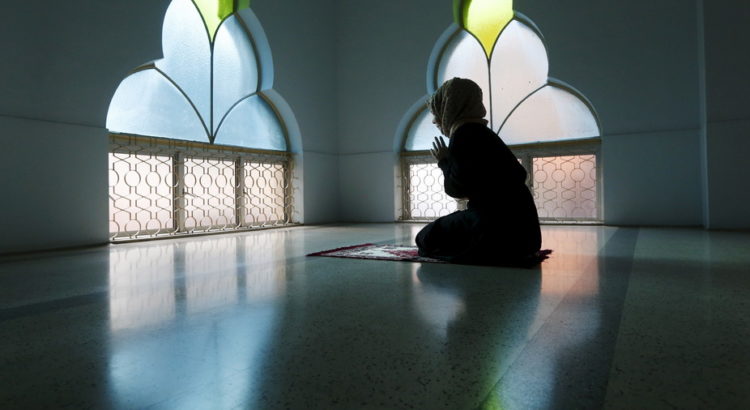
To fight radicalisation in Southeast Asia, empower the wome

Asia/Julio del 2017/Noticias/https://theconversation.com

Women have always been a quiet force to be reckoned with in uprisings worldwide. But, until recently, most studies focused on their roles as suicide bombers and combatants.

Terrorism research is now seeing a notable shift, with analysis examining the role women play as possible instigators of violence: mothers and mother-figures who are raising the next generation of soldiers.

Women as radicalisers

In Southeast Asia, for example, over the past year, there has been a rise in the number of stories of women involved in planning acts of terror and declaring support for extreme religious beliefs.

And ISIS is known to actively indoctrinate women in order to nurture young holy warriors.

Networks of women who pledge allegiance to the cause – whether ISIS’ or other extremist ideology – can exchange radical ideas among themselves and inculcate their children through a sustained domestic radicalisation strategy.

This suggests that terrorism prevention efforts should target not just extremist elements themselves, but also women, as possible vectors of radicalisation.

In Southeast Asia, home to 25% of the world’s Muslims, however, this proposition may sound particularly offensive. Here, women are often portrayed as symbols of virtue, selflessness and purity; entire sermons and treatises are dedicated to reverence for mothers.

A selection of hadiths, or Islamic teachings, about revering mothers are often cited as the reason for this inculcated respect, but even before the advent of Islam, Southeast Asian cultures treated mothers with great reverence.

Asian myths of various origins often feature a mother goddess who is deemed the personification of motherhoodfertility and creation.

Malay communities, for example, espouse a mother’s cherished status, and it is commonly believed that the pathway to heaven is in the footsteps of the mother.

The notion that it might lead instead to extremist thought and violent action is a dramatic departure from traditional thinking.

Nonetheless, across Muslim Southeast Asia, there are clear indications of increasing religiosity, from the controversial election, in April, of a conservative Muslim as Jakarta’s governor to purported support and empathy for ISIS in Malaysia.

Could mothers, those glorified beings, be part of the problem? Given dramatic economic and cultural changes underway in the region, the notion is not unfounded.

From distress to reprieve

As many parts of rural and coastal Southeast Asia undergo rapid development and urbanisation, many communities are quickly losing the natural habitats upon which their traditional livelihoods, like fishing and farming, depended.

Some families have been forced to migrate or commute to urban areas to seek employment in manufacturing, but volatile economic conditions and increasing automation have cast doubt on the longevity of even these jobs.

As a result, societies in which men have typically been the main breadwinner are now leaning on women to put food on the table.

To do so, mothers often rely on informal women’s networks . These provide information on bargain shopping or bartering for food. They might also resort to income-generating activities that men disdain as too difficult (such as the sale of homemade products) or too demeaning (such as collecting snails and greens in the forests).

When people are displaced for economic reasons, the women are in charge of feeding the family. Edgar Su/Reuters

Even as women in Southeast Asia increasingly serve as the family backbone, they receive little recognition or support for this role. Mental health services and financial assistance for women under pressure, such as those provided in some rural parts of India, are rarely, if ever, available here.

On the contrary, research has shown that that when men perceive that their public standing has been diminished by the inability to provide for the family, they may seek to exert more control in the personal sphere, translating into even more prohibitions on their wives and children.

Such economic and psychological burdens may leave poor, isolated women with religion as virtually their only reprieve.

Women as the family’s beacon of religion

A 2009 study of upper middle-class urban Malaysian women by Sylvia Frisk found that in spite of societal patriarchy, mothers and mother-figures are primarily responsible for disseminating and enforcing religious knowledge and rituals within their families.

And, in a decade of fieldwork in Malaysian coastal areas, we have seen that women who are most constrained by their husbands or families also most proactively take command of religious enforcement in their homes.

In other words, women who are under the most mental, physical or emotional pressures seem to find a sense of power that they are unable to exercise in other parts of their lives by compelling religious compliance in those closest to them.

Dictating religious practice becomes a way to exercise some form of control. The promise of a happier afterlife may also provide some sustenance.

The danger is that, unlike the upper middle-class women in Frisk’s study, poorer women have limited access to religious information. Their social circles are smaller, their movements more limited and they are less likely to read widely and critically question what they are taught.

If such women rely on a single source of Islamic learning, and that source is a radical one, they can be convincingly poisoned by extreme teachings. From here, it is not difficult to envision children being imbued with radical thought as well.

Empower the mothers

Women enforcing religious thought is innocuous on its own. But it becomes a concern when considered alongside the rise in female engagement with Islamic extremism.

In the Middle East, the existence of radical Muslim women’s networks has been documented. In several high-profile cases, mothers have encouraged their sons to fight the “holy war”.

At times, mothers appear to have even celebrated their children’s deaths as martyrs.

This is now happening in Southeast Asia too. As the recent case of Malaysian women selling their property to be with their ISIS loversshows, radicalisation among women is on the rise.

Muslims across Southeast Asia are becoming more religious. Edgar Su/Reuters

We also found that it is increasingly socially unacceptable to speak out against or disagree with a religious entity – a religious school or a faith leader, for example – in Malaysian society today, which allows venues for extremist education to flourish unchecked.

Among Malay Muslim, the fear that not abiding by anything taught by a religious teacher can lead to a loss of pahala, the reward of heaven, encourages compliance with religious instruction – no matter its source or content.

All of these factors combined create the perfect setting for women to disseminate radical Islamic beliefs, both intentionally and unintentionally. Their offspring may then fulfil their filial duty to obey.

To reduce the likelihood that radical thought will be spread in Southeast Asia, empower the mothers. Providing socioeconomic support where it is most needed – among women – is the best insurance against future terrorism, ensuring that mothers and families remain vectors for positive action and tolerant beliefs, not hotbeds of distress and discontent.

Fuente:

https://theconversation.com/to-fight-radicalisation-in-southeast-asia-empower-the-women-79387

Fuente Imagen:

https://lh3.googleusercontent.com/ycMtzRQPAG–IJfaOWc28_CsD5_iEFKy3BMw6YztymZpfcjWOwb2A358E7K-R7KrVjvVxQ=s85
 

Comparte este contenido:

Reseña: Diversidad Cultural e inclusión socioeducativa

Pedagogía Social. Revista Interuniversitaria

Pedagogía Social. Revista interuniversitaria (PSRI) es una revista científica periódica, de carácter semestral, editada de forma ininterrumpida desde 1986 por la Asociación Iberoamericana de Pedagogía Social. El fin principal de la Revista es la difusión de los resultados de investigación original que se realizan tanto a nivel nacional como internacional sobre Pedagogía Social y Educación Social, constituyendo un medio de expresión para la publicación de trabajos de acreditada calidad científica dirigidos a profesionales, profesorado de los diferentes niveles educativos, y/o investigadores en general interesados en los diferentes aspectos de la realidad social y educativa.

Se trata de una publicación bilingüe (español o portugués e inglés) cuyos trabajos son arbitrados y evaluados por expertos externos (sistema de evaluación peer-review, doble ciego).

Desde el año 2012 la revista se edita exclusivamente en formato electrónico (e-1989-9742) y cuenta con el Sello de Calidad Editorial y Científica de las Revistas Científicas Españolas otorgado en 2010 por FECYT .

Está indexada, entre otros, en ERIH PLUS, In-RECS, FRANCIS, ERIH, DOAJ y, desde finales de 2015 está presente también en la Colección principal de Web of Science, en su nueva Base de datos ESCI ( (Emerging Sources Citation Index).

Núm. 29 (2017): Diversidad Cultural e inclusión socioeducativa

En el presente monográfico aportamos una serie de innovaciones educativas que buscan anticipar respuestas a nuevos desafíos y  necesidades de la escuela actual ante el reto de la diversidad cultural y la inclusión social y educativa

Número completo

Ver o descargar el número completo PDF (ES)PDF (EN) (ENGLISH)

Tabla de contenidos

Editorial

Susana Torio López
9-18

Presentación

Rocío Cárdenas Rodríguez, Teresa Terrón Caro
21-24

Monográfico

Teresa Terrón-Caro, Rocío Cárdenas-Rodríguez, Rocío Rodríguez Casado
25-40
María-Jesús Martínez-Usarralde, Carmen Lloret-Catalá, Manuel Céspedes Rico
41-54
Margarita Machado-Casas, Iliana Alanis, Elsa Ruiz
55-66
Luis Amador Muñoz, Francisco Mateos Claros, Macarena Esteban Ibáñez
67-80
Verónica Cobano-Delgado Palma, Mercedes Llorent-Vaquero
81-96
Inmaculada Egido Gálvez, Marta Bertran Tarrés
97-110

Investigación

Carmen Orte Socías, Lluís Ballester Brage, Rosario Pozo Gordaliza, Margarita Vives Barceló
113-127
Cristóbal Ruiz-Román, Ignacio Calderón-Almendros, Jesús Juárez Pérez-Cea
129-141
Anna Mundet Bolós, Nuria Fuentes-Peláez, Crescencia Pastor
143-156
Janire Fonseca Peso, Concepción Maiztegui Oñate
157-170
Ermelinda Maria Bernardo Gonçalves Marques, Eduardo Manuel Pinto Bárbara, Joana Maria Rabaça Lucas, Luís António Videira
171-182
Juana Robledo Martin, Cristina Martín-Crespo Blanco, Azucena Pedraz Marcos, Francisco Cabañas Sánchez, Alfredo Segond Becerra
183-196
Martha Esther Serrano Arias, Martha Frias Armenta
197-210

Resúmenes de tesis

Ana Fernandez-Garcia
213-216
Rosa M.ª de Castro Hernández
213-216
Beatriz Morales Romo
213-216

Reseñas

María Julia Diz López
217-224
José Luis Rodríguez Díez
217-224
Fernando López Noguero
217-224
Jaime Cuenca Amigo
217-224
Amaia Makua Biurrun
217-224
Fernando Bayón Martín
217-224
José Vicente Merino Fernández
217-224

Fuente: https://recyt.fecyt.es//index.php/PSRI/issue/view/2926/showToc

Comparte este contenido:

India: Teachers meet Education Minister, settle few demands

Asia/India/Tribune News Service

Resumen: Se ha producido un deshielo en el enfrentamiento entre militantes del Sindicato de Maestros de gobierno y el Ministro de Educación del gobierno Indio, al aceptar una reunión para discutir varias demandas claves que mantienen a los maestros del estado asediado por diversos temas. Un terreno común se ha encontrado en varios temas controvertidos para el Departamento de Educación, incluyendo  las promociones oportunas de maestros, la asignación de licencias médicas de emergencia y la dotación oportuna de los libros – entre otras cuestiones.


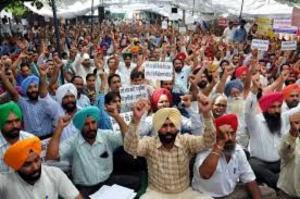
There has been a thaw in the stand-off between activists of the Government Teachers Union and the government with the Education Minister agreeing to several key demands today, which were keeping teachers of the state embattled on various issues. A common ground has been found on several controversial issues of the Education Department, including timely teacher promotions, allocation of emergency medical leaves and timely disbursal of books – among other issues, on which the state was previous seeing the teachers taking up cudgels against the government.

Several long-pending and key demands of the teachers of the state were agreed upon in a meeting of the Government Teachers Union with the Education Minister here today. While an assurance regarding the meeting of some of these demands – especially regarding granting of medical leaves, provision of school books till July 20 and implementation of the 4-9-14 scheme, have formally been provided, the Education Minister has also said the rest shall be ensured soon.

As per the 4-9-14 scheme, a teacher’s promotion report was to be revised and a new promotion granted every five years. An agreement was also reached regarding a fair allocation of medical leaves. Teachers have been demanding to avail their medical leaves as and when required, while as per a government notice, they were supposed to be given medical leaves of 15 days together, which was leading to chaos as in case of mild illnesses or emergencies, teachers were being forced to avail leaves of 15 days.

Other demands of teachers agreed on the occasion included – receipt of children’s books by July 20 (and next year’s to be ensured at least by January 31), online systems for availing all kinds of leaves, DPC regarding teachers’ promotions to be held every six months, electricity bills of schools be given directly to the electricity board by the government rather than through teachers.

Other demands included suspension of non-teaching works, transfer-related rules to be implemented as per the red book of 1978, contractual teachers and office employees be regularised soon, all office works of teachers be made timely, special priority be given to the regularisation of 3442/7654 cases, 5178 teachers to be regularised soon, rationalisation not to be restricted to a certain cadre, pre-primary classes be started soon and 25 per cent direct promotion cases to be sought soon.

Jarnail Singh, district president of the Government Teachers Union, who was present for the meeting, said, “We have received assurance on these key demands and with the timely promotions of teachers and clearance regarding books and leaves received, many of the key grouses are expected to be addressed. We have also received positive indications regarding these from education secretary Mr Krishan Kumar, whom we shall meet on Tuesday. The intentions of the government seem inclined towards constructive change, at least as of now.”

Fuente: http://www.tribuneindia.com/news/jalandhar/teachers-meet-education-minister-settle-few-demands/432415.html

Comparte este contenido:

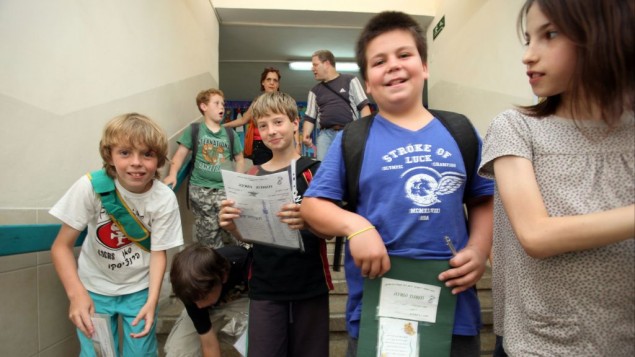
Israel: Education minister seeks to shorten school vacation

Asia/Israel/timesofisrael.com

Resumen: Según informes, el ministro de Educación Naftali Bennett tiene la intención de acortar las vacaciones escolares de primera a tercer grado a partir del próximo año académico. Bennett dijo que quiere que sea más fácil para los padres, muchos de los cuales tienen dificultades para encontrar opciones de cuidado de niños mientras van a trabajar en los días de vacaciones escolares. Actualmente, además de dos meses de vacaciones de verano, los alumnos tienen unos 44 días de descanso durante el año, mientras que los padres tienen muchos menos días de descanso.

Education Minister Naftali Bennett is reportedly planning to shorten school vacation for first- to third-graders beginning in the coming academic year.

The minister, who leads the Jewish Home party, is considering three options, each said to cost millions of shekels, the daily Yedioth Ahronoth reported Thursday.

Bennett said that he wants to make it easier for parents, many of whom struggle to find childcare options while they go to work on school vacation days.

Currently, in addition to two months of summer vacation, pupils have some 44 days off during the year, while parents have far fewer days off.

Initially the additional school days will be for pupils in grades 1 to 3, though Bennett is seeking funding to extend it to kindergarten and then to the other grades in elementary school, the report said.

Education Minister and Jewish Home party leader, Naftali Bennett, leads the faction meeting at the Knesset on July 3, 2017. (Yonatan Sindel/Flash90)

According to the new plan, pupils will have school on the days immediately following the three festivals of Passover, Shavuot and Sukkot, and the Passover and Hanukkah vacations, which begin several days before the festivals, will be shortened.

Reportedly, the minister is weighing three options to staff the extra teaching days. In one plan, teachers would be expected to work on those additional seven days, but would receive seven days of vacation in lieu, to be taken at their discretion.

Another option would be for those additional seven days to not be devoted to the regular curriculum but rather to enrichment activities. The teachers would be given preference if they want to run the activities on those days; otherwise, schools would engage other staff.

A third option, which is considered less likely to be approved, would be to give the teachers less vacation and force them to work on the extra days.

“We are talking about a heavy burden on working parents in Israel, and I am sensitive to their feelings,” Bennett said. “We are working to bring a comprehensive and serious solution to the gap between the parents’ vacation days and those of their children.”

Bennett said that he is working with Finance Minister Moshe Kahlon (Kulanu) on the solution, and will first seek out approval from the teachers’ union for any plan.

“Calculations that we have conducted show that finding a solution to the problem of vacations will boost the economy and increase the GDP because parents will be able to work,” Bennett said. “We are currently holding discussions with the Finance Ministry.”

Teachers oppose measures to lengthen the school year, the report said, and say that the state should instead increase the number of paid vacation days to which parents are entitled.

Fuente: http://www.timesofisrael.com/education-minister-seeks-to-shorten-school-vacation-report/

Comparte este contenido:

Malasia: Gov’t committed to improving quality of Tamil education – Subramaniam

Asia/Malasia/english.astroawani.com

Resumen: El rápido desarrollo de las escuelas tamiles en todo el país muestra el compromiso del gobierno para asegurar que la calidad de la educación en escuelas de este tipo sea del más alto nivel, lo que ha ayudado a cambiar la percepción de la comunidad con respecto al sistema de educación, dijo MIC presidente Datuk Seri Dr. S. Subramaniam. Señaló al respecto, que el apoyo proporcionado por el primer ministro Datuk Seri Najib Tun Razak había permitido un desarrollo más integral del sistema de educación escolar Tamil y la mejora de la prestación de una educación de calidad en este tipo de escuelas.

KUALA LUMPUR: The rapid development of Tamil schools throughout the country shows the commitment of the government in ensuring that the quality of education in such schools is at the highest level as well as to change the perception of the community on that education system, said MIC president Datuk Seri Dr S. Subramaniam.

He said the support provided by Prime Minister Datuk Seri Najib Tun Razak had enabled a more holistic development of the Tamil school education system and improved the delivery of quality education in such schools.

«In the past, the middle class ignored Tamil schools. They used to look down upon Tamil school education.

«Now, with the construction of more Tamil schools, especially in middle class residential areas, it will boost confidence and change the public perception on the quality of Tamil schools,» he said at the ground- breaking ceremony for Sekolah Jenis Kebangsaan Tamil (SJKT) Bandar Mahkota Cheras here today.

Also present at the ceremony were Deputy Education Minister Datuk P. Kamalanathan and Deputy Minister in the Prime Minister’s Department Datuk Seri S. K. Devamany.

Subramaniam said Tamil schools needed to focus on various areas, including reducing the level of dropouts among pupils, and called on all parties to cooperate to make Tamil schools the school of choice for parents.

Met by reporters after the event, Subramaniam announced that SJKT Mahkota Cheras was expected to be completed in the third quarter of next year to become the 99th Tamil school in Selangor and the 527th in Malaysia.

SJKT Bandar Mahkota Cheras was built to accommodate students from nearby areas who were forced to attend school in SJKT Kajang and SJKT Serdang, said Subramaniam, who is the Health Minister.

Built at an overall cost of RM21.08 million by the Education Ministry on a 6.2-acre site, the school will be able to accommodate between 800 and 900 pupils.

In 2012, Najib had announced that the government would building six new SJKT schools, namely SJKT Taman Keladi in Sungai Petani, SJKT Heawood in Sungai Siput, SJKT Taman Sentosa in Klang, SJKT Taman PJS1 in Petaling Jaya, SJKT Bandar Mahkota Cheras and SJKT Bandar Seri Alam in Johor

Fuente: http://english.astroawani.com/malaysia-news/govt-committed-improving-quality-tamil-education-subramaniam-147819

Comparte este contenido:

Bangladesh, Problem in Education: Quality not priority

Asia/Bangladesh/thedailystar.new/Wasim Bin Habib

Resumen:  Aunque el gobierno ha aumentado las asignaciones presupuestarias para el sector de la educación en los últimos años adjuntando la máxima prioridad a la misma, la asignación sigue siendo insuficiente para garantizar una educación de calidad. Se debe a que una gran parte del presupuesto de educación se gasta en fines no de desarrollo, principalmente para los salarios de los profesores, lo que deja poco margen para la inversión en educación de calidad. En su discurso sobre el presupuesto, el ministro de Finanzas AMA Muhith propone una asignación de 50.432 millones de rupias Tk en el presupuesto para el año fiscal 2017-18 para el sector de la educación, el aumento de la asignación de alrededor de un 14 por ciento desde el año fiscal saliente.

Although the government has increased budgetary allocations for the education sector over the years attaching top priority to it, the allocation is still inadequate for ensuring quality education.

It is because a large portion of the education budget is spent on non-developmental purposes, mainly for teachers’ salaries, leaving little scope for investing in quality education.

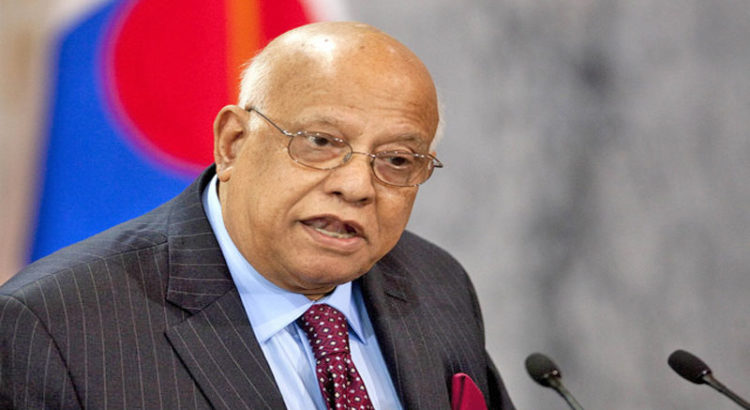
In his budget speech, Finance Minister AMA Muhith proposed an allocation of Tk 50,432 crore in the budget for 2017-18 fiscal year for education sector, raising the allocation by around 14 percent from the outgoing fiscal year.

The amount is 2.2 percent of the GDP (gross domestic product) and 12.6 percent of the total outlay.

In the revised budget of the previous fiscal year, the allocation for education was Tk 44,260 crore.

The finance minister yesterday set aside an allocation of Tk 28,410 crore for the two newly created divisions under the education ministry and another Tk 22,022 crore for the primary and mass education ministry.

Of the proposed allocation, the proposed non-development expenditure is Tk 34,676.

The size of the national budget is increasing every year; the budgetary allocation to the education sector also rises. But the share of the education budget has been remaining almost static over the years, both as percentage of GDP and as a share of total outlay.

In the last six years since 2011, the rise of allocation has been hovering around 10 to 12 percent except that of last year when the jump was over 14 percent, according to the budget documents.

The ratio of education budget to GDP stood around two percent over the last 15 years, which is lower than that of many other Asian countries, like Vietnam and Nepal.

Bangladesh committed in the Dakar Declaration in 2000 and other global forums that it would spend 6 percent of the GDP or allocate at least 20 percent of the national budget for education. The Unesco also stipulates that the budgetary allocation for education should constitute at least 6 percent of the GDP and 20 percent of the total budget.

Against such a background, educationists said Bangladesh should invest more in education, especially in quality education, if it wanted to change its future and achieve the goals set in the National Education Policy 2010 and Vision 2021.

«It is not possible to ensure quality of education with this amount. The government expenditure on education has to be increased,» Manzoor Ahmed, professor emeritus of Brac University, told The Daily Star over phone yesterday.

Although the government repeatedly promises to raise the allocation, but it does not do so as per expectation. The budgetary allocation for education is quite low compared to other South Asian countries, he added.

«We have been observing that the allocation remains almost at the same level.»

As per the international benchmark, the allocation in the education sector should be 20 percent of the total budget, said Manzoor.

«Setting the 20 percent allocation as our target, the government should increase the allocation every year,» he added.

NEW PLANS FOR PRIMARY AND SECONDARY EDUCATION

In his budget speech, the finance minister said they planned to build ICT-based interactive classrooms at 503 model primary schools to enhance both capacity and quality in primary education.

Besides, the government planned to undertake two projects at a cost of Tk 14,864 crore to create appropriate learning environment at the primary schools, he said.

Stressing the need for developing quality of secondary education, he said a five-year long project titled «Secondary Education Development Programme» is being undertaken with an estimated cost of $18.2 billion.

«However, we need to recognise that improvement of quality of education will take some time,» he said.

Muhith said the government was initially focusing on expanding the opportunities for education. «Our next priority is to build a pool of trained teachers,» he said.

FIVE NEW UNIVERSITIES

The finance minister said the government would strengthen its efforts to set up five new public universities.

«It may be mentioned here that the law regarding setting up of five universities has been enacted, while the projects for constructing the physical infrastructure for three universities are at the approval stage,» he said.

Stay updated on the go with The Daily Star News App. Click here to download it for your device.

Fuente: http://www.thedailystar.net/Bangladesh-Budget-2017-18/frontpage/still-not-enough-quality-education-1414294

Imagen tomada de: http://www.theindependentbd.com/assets/news_images/Finance-Minister-AMA-Muhith5.jpg

Comparte este contenido:

Turquía elimina la teoría de la evolución de planes de enseñanza

Turquía/Julio de 2017/Fuente: El Comercio

La decisión del ministerio de Educación turco de eliminar de los planes de enseñanza media la teoría de la evolución ha provocado una ola de indignación, en que la oposición denuncia un “lavado de cerebro” puesto en marcha por el gobierno islamo-conservador. El jefe del Consejo de Educación, Alparslan Durmus, anunció a fines de junio que la teoría de la evolución no se enseñará más a partir del próximo curso, en tanto el conjunto de la reforma educativa entrará en vigor de aquí a 2019. “Dejamos de lado ciertos sujetos polémicos, porque sabemos que es imposible para nuestros estudiantes contar con los conocimientos científicos o los elementos necesarios para aprenderlos”, declaró Durmus en un video en el que presentaba la reforma de los programas escolares. La enseñanza de la teoría de la evolución en adelante comenzará a nivel universitario. Además, los programas escolares darán la espalda a “una visión eurocentrista, por ejemplo en los cursos de historia”, según Durmus. El viceprimer ministro Numan Kurtulmus había calificado, en enero pasado, a la teoría de la evolución como “científicamente obsoleta y podrida”. “No existe una regla que diga que hay que enseñarla” de manera absoluta, había declarado. Según el ministro de Educación, Ismet Yilmaz, los nuevos programas tiene por objetivo “ofrecer a los niños una mucho mejor educación”. El fin, según Yilmaz, es hacer las cosas de tal manera que “los niños y estudiantes no se limiten a utilizar el conocimiento y la tecnología, sino que los creen”. Pero, para Feray Aytekin Aydogan, que dirige al poderoso sindicato de docentes Egitim Sen, crítico con el gobierno, esta reforma es “un paso atrás” y “será negativa para el país”. Insistiendo sobre el “peligro” que implica la reforma, Aydogan subraya que en Irán, una República islámica, se consagran 60 horas de cursos a la teoría de la evolución y 11 horas a Charles Darwin, padre de la misma. “No nos someteremos al oscurantismo. Continuaremos promoviendo la educación científica”, afirmó la dirigente sindical. “Este gobierno AKP lava el cerebro de nuestros jóvenes con este programa retrógrado”, declara a la AFP Baris Yarkadas, diputado del principal partido de oposición (CHP, socialdemócrata), afirmando que se trata “de acercar a Turquía a países islamistas dirigidos por la sharía (ley islámica)”, como Arabia Saudita. “Lo que ellos quieren es retirar completamente la educación laica y científica para evitar que haya una generación que reflexione, cuestione y cree”, añade. La misma preocupación por la juventud manifiesta la diputada independiente Aylin Nazliaka. “Quieren crear un aparato ideológico con jóvenes que piensen como ellos”, fustiga. El ministerio de Educación, contactado por la AFP , rechazó hacer comentarios al respecto. Los detractores de la reforma critican también que casi no se le brinda lugar a la enseñanza de la historia de Atatürk, padre fundador de la República turca moderna y laica. Antes del anuncio oficial de los detalles de la reforma, la presidenta de la Asociación del pensamiento kemalista (ADD, que defiende los principios de la República creada en 1923) , Tansel Cölasan, había afirmado a la AFP que el objetivo es crear una mentalidad hostil a la república. “Esta república democrática, laica, ha sido construida gracias a la educación científica”, había insistido. Para ella, este proyecto se inscribe en la voluntad del poder de crear una “nueva Turquía” antes del 100º aniversario de la república, en 2023. Cuando el esbozo de reforma fue presentado al público, a comienzos de este año, el ministerio de Educación recibió más de 180.000 quejas y comentarios, principalmente respecto a la enseñanza de la herencia de Atatürk, según el diario Hürriyet. En la mayoría de los comentarios, el público pedía el mantenimiento de la teoría de la evolución en el liceo y que se le acordara más espacio a Atatürk, según la misma fuente.

Fuente: https://www.elcomercio.com/tendencias/turquia-eliminacion-teoriadelaevolucion-charlesdarwin-ensenanza.html

Comparte este contenido:
Page 420 of 772
1 418 419 420 421 422 772