Saltar al contenido principal
Page 1230 of 2742
1 1.228 1.229 1.230 1.231 1.232 2.742

My Dreams for Indigenous Education in Canada

  1. By: Jo-ann Archibald.

Stó:lō educator Jo-ann Archibald, new Order of Canada recipient, imagines the brightest future for her field.

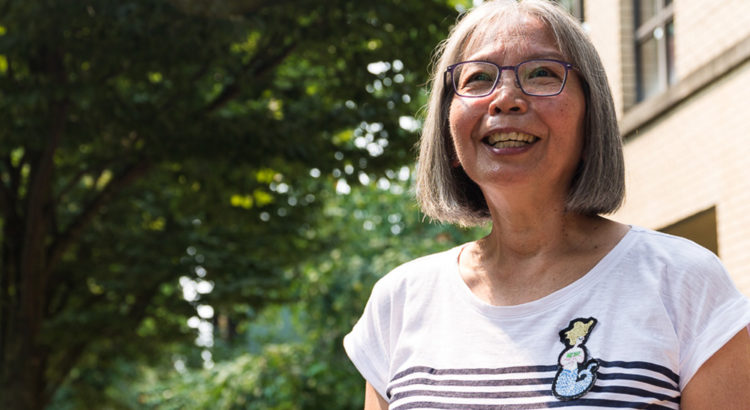
[Editor’s note: Jo-ann Archibald, University of British Columbia professor emeritus of education and member of the Stó:lō First Nation, is one of 15 people appointed Officer of the Order of Canada for 2019. Archibald, whose Indigenous name is Q’um Q’um Xiiem, spent her 45-year academic career Indigenizing education, from teaching, to teacher education and curriculum development, to university education. Archibald spoke to Tyee reporter Katie Hyslop about where she wants to see Indigenous education in 20 years.]

I’d like to be able to look back in 20 years and say, “Gee, we’ve really made some big steps, instead of the small steps we’ve been making over the years.” For example, ensuring Indigenous ways of knowing are more firmly embedded in all areas of education, moving from the margins to core parts of learning in early learning, Kindergarten to Grade 12, and post-secondary education.

Now we’re at the stage where we have pockets where Indigenous ways of knowing have been introduced, and in some areas we actually have Indigenous programs. We have had success for those who are lucky enough to experience these programs. But those are few.

In 20 years, Indigenous ways of knowing should be more widespread and shared in ways that are meaningful, of good quality and engaging. Teachers who take on this role should feel more confident in introducing the topics, the resources and most importantly work with Indigenous families and community members to supplement what the teachers are doing. Research should be connected to these approaches so that we can learn what’s working, what needs to be improved, and share that widely.

Some teachers will say, “I can’t do anything about the Indigenous kids; they come from poor homes,” and feel hopeless. I would hope this feeling shifts to excitement and confidence in working with Indigenous students and parents, rather than feeling it’s a dismal situation. That point came out in a 2015 auditor general’s report in British Columbia; it is called the racism of low expectations. I hope we wouldn’t have that anymore in 20 years time.

And we need to question our biases and keep examining our own perspectives: “What’s my attitude to Indigenous peoples or the history? What has shaped my attitudes and how I approach these areas in my own practice?” Those questions are so important, and even somebody who feels they are not biased, when they look at their assumptions might think, “Oh, maybe I need to get more informed, get some help from others to deal with some of these questions that I have.” I think it’s really important to question, but you need to act on those questions.

More Indigenous teachers!

We seem to have more Indigenous teachers who act as resource teachers in the public school system, which is important, but at the same time we need to have the Indigenous teachers as classroom teachers, too. That leads up to post-secondary education, where many more Indigenous faculty members are needed for teaching and doing research.

I do see more Indigenous people entering post-secondary education now, and these could be the future teachers and educational leaders at all levels of education. The teachers to me are so central to Indigenous students’ success, which is why I have dedicated much of my educational career to teacher and graduate education.

Including more Indigenous ways of knowing in curriculum

We’ve been working on many areas of Indigenous curriculum, preparation of teachers and educational leaders and increasing the educational involvement of community members. But we really need to ensure that the funding for these approaches continues, and that’s a difficult area, because if educational systems and universities start to have a financial issue the Indigenous programs are often the ones that suffer the most.

Currently, there is a requirement from the B.C. Ministry of Education to include Indigenous topics and resources at every grade level and subject area. Some innovative approaches ensure that students have opportunities to be out in nature to learn about the rivers, the land and the affinity and kinship one can acquire by being on and with the land. They have stories to help them, Elders or knowledge holders doing activities with them out on the land, and the teachers help relate this Indigenous knowledge to science, math, reading, physical activity and more. It can be holistic and integrated, starting with the use of Indigenous traditional stories.

In contrast, it’s not doing a little bit and feeling, “Okay, that’s my Indigenous activity for the year,” which may give students the impression that this learning is not that important. It’s important that teachers, whether they are K-12 or at university, try something, and that could be their first time. But it should not be their last time.

Non-Indigenous students benefiting, too

Non-Indigenous students may develop an awareness that Indigenous people were living on this land going back thousands of years. They managed to survive, to live on and with the land, learned or developed technologies to help them and had their own values and laws.

The other part that students have to know is the history of colonization and to think about the results. If they then hear on the news that Indigenous people are protesting some of the pipelines, logging or the missing and murdered Indigenous women, they will have an understanding about why our society is in this predicament today. Whereas when they don’t learn the history, all they see are the images on the news, and they’re not given an understanding about what are the issues, how they’ve come about, what people want to happen and the racism and how that plays out.

More emphasis on education as a life-long journey

I’d like to see more Indigenous families and community members feeling positive about their engagement with the school, that school is not for them a scary place or a place they don’t belong, which is often a prevalent feeling.

We need to also put the same attention on this lifelong or long-term commitment. It is important for these different systems to work co-operatively: the early childhood education to K-12, then K-12 into post-secondary, then post-secondary to career/business/industry. Right now, it’s not a seamless kind of journey for the learners.

Indigenous learners have often been channelled into some areas that are limited, where they may not take the math or English courses that would get them into a university, for example. That can be problematic when it’s done through bias; we want to make sure if learners decide they want to go into a trades program, they do it knowingly and they feel good about it. At the same time, they should have the option to go to college and university.

Twenty years from now we would have much more flexible educational systems where Indigenous learners feel included, that they belong, that they feel good about who they are as Indigenous people, and that there is this caring and meaningful trajectory for them.

Stronger connections between education systems, community

Where I see a lot of exciting things happening right now is in the Indigenous early childhood programs. Across the country they have been working on ensuring the programs are Indigenous — learning an Indigenous language, Indigenous stories — while they’re also doing child development, learning and communication activities that all children should get at that level.

At the same time, post-secondary Indigenous education in Canada is expanding to include more Indigenous courses, programs and support units for students and faculty. What is needed are ways to connect these various public and Indigenous educational systems so that those students who experience Indigenous learning transition successfully to their next level of learning, where that system is also responsive to Indigenous learners and to Indigenous ways of knowing.

If Indigenous students do need any particular supports, there are ways to find the supports, or draw on the strength that child has or strength from the family and community. That’s where the educational systems could then work with the community.

Or later, for career or job areas, there are partnerships where students can have internships and co-op placements. So that child knows, ‘Hey, somebody cares about me,’ and they are prepared and they are given options. In 20 years, that continuum should be a standard way of thinking about Indigenous students.

That kind of approach is starting to happen. I have been involved with a non-profit society, Dogwood 25, that’s trying to look at this Indigenous learning continuum going from the early years right through into career and work. We are trying to get school districts, post-secondary, business and industry working in partnership so we can develop this kind of continuum planning and program approach.  [Tyee]

Source of the article: https://thetyee.ca/Opinion/2019/01/14/Indigenous-Education-Dreams/
Comparte este contenido:

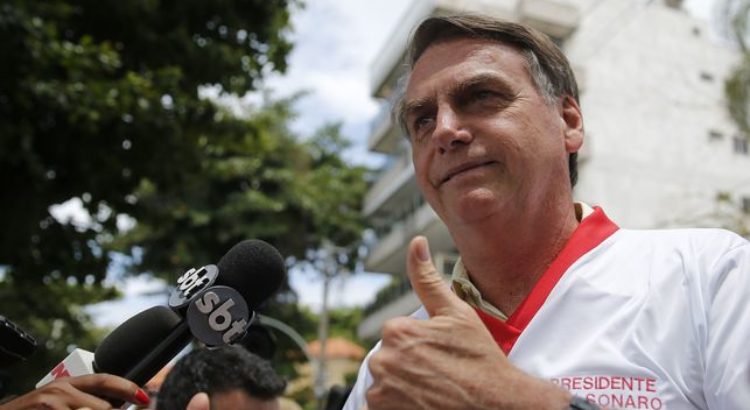
Educación en el Brasil de Bolsonaro: sin Marx, sin el Che y sin repudio a la dictadura

Por: Víctor David López.

El ministro de Educación, Vélez Rodríguez, es un incondicional del régimen militar y profesor emérito de la Escuela de Comando y el Estado Mayor del Ejército

Quieren evitar que «la educación de género» y la «reescritura de la historia» desmonten valores como la «preservación de la vida, la familia, la religión y el patriotismo»

Pocos conceptos ha tenido más claros el ultraderechista Jair Bolsonaro en estos últimos años, rumbo a la presidencia de Brasil, que el de, en su opinión, «los adoctrinadores» del sistema educativo brasileño. Esos que «explican básicamente que el capitalismo es el infierno y el socialismo es el paraíso». El mensaje ha calado fácil entre su electorado, que le respalda en sus apuestas para que la «educación sexual sea cosa de papá y mamá» o para que en las aulas «no haya ninguna ideología; el profesor no puede abusar de aquella audiencia cautiva para imponer su ideología».

Si a Jair Bolsonaro le irritan los «libros con fotos del Che Guevara como un gran líder», a su nuevo ministro de Educación, Ricardo Vélez Rodríguez, le ofende que «las universidades brasileñas, en especial las públicas, controladas a partir de la apertura democrática por la izquierda rabiosa, hayan acabado haciendo de la memoria de 1964 [el año del golpe de estado] un acto indiscriminado de repudio a los militares y a las directrices trazadas por ellos».

Vélez Rodríguez, colombiano nacionalizado brasileño, es profesor de la Universidad Federal de Juiz de Fora (Minas Gerais), así como profesor emérito de la Escuela de Comando y el Estado Mayor del Ejército. No es muy conocido dentro del entorno académico: fue el escritor y filósofo Olavo de Carvalho, una especie de guía espiritual de Bolsonaro –con opciones de ser el futuro embajador de Brasil en Estados Unidos– el que recomendó al presidente electo el fichaje del profesor. Ha sido necesario, después, el aval de la bancada evangélica del Congreso para oficializar su nombramiento.

El nuevo ministro de Educación –sirva para situar sus preferencias– no tiene reparos en defender al régimen militar que gobernó Brasil entre 1964 y 1985. Asume que fueron autoritarios y que las Fuerzas Armadas no están orientadas a la gobernabilidad, pero destaca que la intervención «evitó que los comunistas tomasen el poder, instaurando la dictadura del proletariado, con el baño de sangre que eso provocaría en un país de dimensiones continentales como Brasil. La opinión pública sabe que la extrema izquierda buscaba eso».

Estas afirmaciones están archivadas en su blog personal, y forman parte de una columna publicada en 2014 en el diario «O Estado de São Paulo», bajo el título «1964 medio siglo después». Añade Vélez Rodríguez que bajo la dictadura militar, «en lo que respecta a la economía, Brasil se transformó en un país industrializado», subrayando los avances en telecomunicaciones y en construcción de carreteras.

Critica también la Comisión Nacional de la Verdad, encargada de recuperar y documentar algunos de los casos más escabrosos de la dictadura, porque, en su opinión, se convirtió en una «omisión de la verdad», que analiza «la represión practicada por el Estado, sin, en cambio, recordar nada del terrorismo practicado por la izquierda radical».

«Escuela sin partido», para controlar al profesorado

Vélez Rodríguez, como Bolsonaro, como la bancada evangélica, y como todo el conservadurismo brasileño, están alineados con el movimiento «Escuela sin partido», que tomó fuerza en la pasada legislatura, y que ha desembocado, incluso con apoyo del propio presidente electo, en un llamamiento generalizado para que los estudiantes graben en vídeo y denuncien a profesores que incluyan en sus explicaciones valores fuera de lo establecido por este nuevo orden impuesto. «Vamos a grabar lo que sucede en el aula y vamos a divulgarlo», animaba Bolsonaro en un vídeo dirigido a los alumnos de todo el país. «Vuestros padres, los adultos, los hombres de bien de Brasil, tienen el derecho de saber lo que estos profesores, entre comillas, hacen con vosotros en el aula». Algo similar a las «Escuelas Neutras» propuestas por la extrema derecha de Alternativa para Alemania.

El programa de «Escuela sin partido», convertido en propuesta de ley, será votado en el Congreso brasileña en las próximas semanas. En el Tribunal Supremo, además, será juzgada la posible inconstitucionalidad de la ley inspirada en este movimiento que ha sido aprobada en el estado de Alagoas. Según este movimiento, los profesores no se aprovecharán de los alumnos «para promover sus propios intereses, opiniones, concepciones, o preferencias ideológicas, religiosas, morales, políticas y partidarias». También indica entre sus puntos que, al tratar cuestiones políticas, socioculturales y económicas, «el profesor presentará a sus alumnos, de forma justa –es decir, con la misma profundidad y seriedad– las principales versiones, teorías, opiniones y perspectivas a ese respecto».

Para la Campaña Latinoamericana por el Derecho a la Educación (CLADE), el proyecto incentiva la censura a los docentes. Así lo explicaron, recibiendo el apoyo de 87 países, en la 6ª Asamblea Mundial de la Campaña Global por la Educación (Katmandú, Nepal), el pasado mes de noviembre. Según CLADE, detrás de la «Escuela sin partido» se esconden «prácticas persecutorias y violadoras de derechos humanos, que tienen el control como principio y finalidad».

Días antes de ser nombrado nuevo ministro de educación, Vélez Rodríguez enumeraba, de nuevo desde su blog personal, algunas de las recomendaciones para la cartera que ahora dirige. Ya era consciente de que estaba entre los principales candidatos al puesto, y afirmaba que trabajaría para que el sistema educativo crezca desde el ámbito municipal, siguiendo el lema del presidente: «Más Brasil y menos Brasilia». Opina el ministro que «la proliferación de leyes y reglamentos sofocó en las últimas décadas la vida ciudadana, convirtiendo a los brasileños en rehenes de un sistema de enseñanza ajeno a sus vidas y afinado en la tentativa de imponer a la sociedad un adoctrinamiento de índole cientifista y enquistado en la ideología marxista travestida de revolución cultural gramsciana».

Protesta de lo que denomina «invenciones perniciosas» como «la educación de género, la dialéctica de nosotros contra ellos, y una reescritura de la historia en función de los intereses de los denominados intelectuales orgánicos», destinada, en su opinión, a «desmontar los valores tradicionales de nuestra sociedad, en lo que respecta a la preservación de la vida, la familia, la religión, en suma, del patriotismo». Estas últimas referencias no podían faltar, si quería el beneplácito de los grupos evangélicos que apoyan a Bolsonaro.

Fuente del artículo: https://www.eldiario.es/internacional/Educacion-Brasil-Bolsonaro-Marx-Che_0_843066559.html

Comparte este contenido:

Moctezuma y la Educación Superior

Por: José Luis Camacho Vargas.

Uno de los más grandes debates actuales en torno a los sistemas educativos en distintas partes del mundo es su universalización. En estos tiempos, ningún país que se precie de ser democrático duda que la educación sea un derecho fundamental de todo ser humano y que el Estado debe hacer todo lo que le sea posible para garantizarla en sus niveles más esenciales.

La duda surge cuando hablamos de hasta dónde esta garantía debe aplicarse sin interferir con la natural competencia que promueve la calidad en todo proceso. Y es que, dado que no todos nacemos con las mismas capacidades y aptitudes, promover por mero decreto político el acceso y estancia en los más altos niveles de una actividad que es competitiva por naturaleza, derivaría en un inevitable abaratamiento de la calidad.

No debiese ser considerado en absoluto un hecho discriminatorio admitir que no todos podemos tener las aptitudes requeridas para cursar estudios universitarios. Esta situación es corroborada por los datos que nos arrojan distintos estudios en torno a la elevada deserción escolar universitaria.

Esto no quiere decir de ninguna manera que aquel que no posea las características propicias para enrolarse con éxito en una carrera universitaria deba ser hecho a un lado del sistema, jamás debiese ser así, pero es que el sistema educativo no debiese estar enfocado a producir licenciados al por mayor, sino a explotar las cualidades de cada persona de acuerdo con sus habilidades potenciales.

Y es que un buen sistema educativo no es el que más licenciados produce en el año, sino el que sabe potenciar y encausar las habilidades y aptitudes del estudiante hacia un campo de acción específico. Esto lo demuestran distintos sistemas educativos a nivel mundial que logran canalizar al estudiante hacia las áreas en las cuales por su perfil profesional y características emocionales mejor podría desarrollarse.

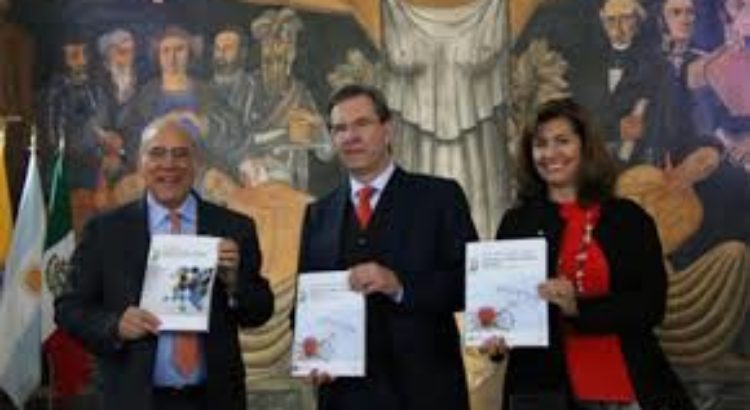
Este planteamiento cobra especial relevancia tras lo dicho por el secretario de Educación Pública, Esteban Moctezuma Barragán, en el sentido de repensar completamente la política nacional en educación superior de México.

Para ello, el egresado de la UNAM ha dicho que se trabajará en coordinación con toda la comunidad universitaria, rectores, expertos, estudiantes y maestros, a fin de “crear una visión de cómo se formará a los mexicanos del futuro desde la educación inicial hasta la conclusión de sus estudios”, ha dicho Moctezuma Barragán.

Se trata de atender el pendiente que desde hace lustros se ha hecho presente, como lo es la reforma de la educación superior en México.

Hace 158 años el Presidente Benito Juárez promulgó la Ley de Instrucción Públicaconvencido de que para la niñez mexicana, aprender a leer y escribir los despojaba del lastre de la ignorancia, la opresión y el sufrimiento. Hoy se debe seguir el ejemplo del más ilustre mexicano y pugnar ya no sólo por que nuestra niñez y juventud aprendan a leer y escribir, sino que reciban una educación de calidad, que los aleje de la violencia, frustración e ignorancia.

Fuente del artículo: https://www.elsoldemexico.com.mx/analisis/moctezuma-y-la-educacion-superior-2914500.html

Comparte este contenido:

Cuatro formas de segregar a los alumnos en las escuelas y parar el ascensor social

Por: Sara Montero.

  • «En España el alumnado resiliente es bajo, es decir, son pocos los niños que sacan mejores notas teniendo una situación socioeconómica baja».
  • Segregar por sexos, el gran peso de la concertada o el sistema bilingüe en Madrid son instrumentos que dejan fuera al alumnado con más necesidades.

La Educación es una de las vías de integración más importante de un país y tiene capacidad transformadora. Por eso, siempre es una batalla entre gobiernos de distinto signo de un mismo país y, como prueba, las sucesivas leyes educativas que no han logrado darle un marco estable en España. Aunque la Constitución consagra que “todos tienen el derecho a la educación” y a una enseñanza básica “obligatoria y gratuita”, hay muchos mecanismos que obstaculizan la igualdad de oportunidades entre el alumnado que debe garantizar la enseñanza pública y ralentizan (cuando no paran) el ascenso social. 

Los movimientos sociales y laborales, como la Marea verde, llevan años denunciando que los gobiernos han adelgazado la enseñanza pública con los recortes durante la crisis, pero estos activistas también están vigilantes sobre cómo se desvía el dinero público a la empresa privada o cómo se segrega a los alumnos dejando al margen a los que tienen una mayor necesidad de atención por parte de las administraciones autonómicas que ostentan esta competencia.

Son muchos los factores que hacen que los alumnos vayan peor o mejor en el colegio, con el origen socioeconómico como uno de los que más pesan. Los conocimientos que se aprenden en el colegio se refuerzan en casa y, por tanto, la situación de las familias es determinante. Tampoco es lo mismo poder pagar profesores particulares y actividades extraescolares que no poder hacerlo. “En España el alumnado resiliente es muy bajo, es decir, son pocos los niños que sacan mejores notas teniendo una situación socioeconómica baja” explica Alonso Gutiérrez, de la secretaría de Política Educativa de la Federación de Enseñanza de CCOO. 

Aunque la Constitución consagra que “todos tienen el derecho a la educación” y a una enseñanza básica “obligatoria y gratuita”, Gutiérrez recuerda que la ola de neoliberalismo busca subterfugios para debilitar lo público. “Si pones exenciones fiscales a ciertos colegios no haces uso directo del dinero público, pero la administración deja de ingresar dinero que luego irá a los colegios públicos”, explica. También recela de medidas como el cheque escolar. “Si no se acompaña de una política de creación de centros públicos, al final se favorece a la empresa privada”. Todas las modulaciones de las comunidades autónomas hacen que se den fenómenos como el de la Comunidad de Madrid, que siendo una de las regiones más ricas de España tiene uno de los modelos más segregadores, según las conclusiones de un estudio publicado en la Revista de Sociología de la Educación.

Para descubrir en qué pisos educativos se para este ascensor, charlamos con dos personas que pelean por la pública desde dos trincheras diferentes:  Gutierrez, de CCOO, y Miguel Guerrero, activista de Marea Verde. Unas veces estas modificaciones tienen un fin ideológico, otras motivos de clase y otras puramente económicas: “Si el mercado de la escuela pública se liberalizara, su valor valdría millones de euros”, explica el miembro de CCOO sobre el jugoso mercado que supone privatizar. Para los defensores de estos modelos dan libertad a los padres para escoger la educación de sus hijos. Para sus detractores, es una manera de segregar.

Separar niños y niñas

La cuestionada Ley orgánica de mejora de la calidad educativa (Lomce), aprobada por el PP, decreta que la educación “diferenciada por sexo”, no constituye discriminación y no debe suponer “una desventaja” a la hora de “suscribir conciertos con las Administraciones educativas”. La revista Science publicó en 2011 el artículo ‘La seudociencia de la escolarización por sexos’, en el se asegura que las afirmaciones que sustentan este tipo de enseñanza son científicamente débiles. Por tanto, para los entrevistados separar a niños y niñas no tiene más sentido que el puramente ideológico.

Aún así, cuando el PSOE presentó un recurso ante el Tribunal Constitucional, éste avaló la financiación pública de estos centros en una sentencia que reavivó la polémica. “No hay evidencias científicas ni pedagógicas. No es que hombres y mujeres aprendan de manera diferente, es que todos lo hacemos. La diversidad es propia del ser humano, pero financiar este tipo de enseñanza es un retroceso”, explica este miembro de CCOO.

Es el modelo educativo intermedio entre la escuela privada y la pública. La administración es privada, pero los centros reciben dinero público, aunque puedan pedir cuotas voluntarias a los padres. Su presencia en España es muy significativa, ya que un 25,9 % del alumnado español se matricula en esta enseñanza, algo que Gutiérrez califica de “excepción” en Europa: “Su presencia corresponde a un momento histórico concreto, los 80, en el que se incorporaron grandes cantidades de alumnos al sistema y esto supuso que no hubiera centros públicos suficientes para este alumnado. Por tanto, se planteó concertar con otros centros, sobre todo, con la Iglesia católica. Pero esa necesidad tenía que haber desaparecido. Los conciertos han sido avalados por distintas leyes y ahora es complicado revertir la situación”, argumenta Alonso Gutiérrez. El País Vasco y la Comunidad de Madrid son las dos áreas en las que cuenta con mayor presencia.

Pero financiar con dinero público centros privados tiene un componente de clase muy claro para Miguel Guerrero, que afirma que hay zonas de Madrid donde solo 1 de cada 4 plazas pertenece a una escuela pública, por lo que los hijos de las familias con menos recursos van a los mismos colegios, provocando una segregación socioeconómica: “Hay un mal entendido prestigio social en la concertada para la gente que se cree clase media sin serlo y que no se puede pagar una privada porque es muy cara”. Para este padre y activista, la concertada “cambia el sistema” aplicando las leyes del mercado a un bien público como es la enseñanza universal.

El sistema bilingüe

El bilingüismo está implantado de manera muy irregular en cada comunidad autónoma. Por eso, hay que analizar cada caso. El Gobierno de la Comunidad de Madrid es uno de los ejecutivos que con más intensidad ha apostado por este sistema y, además, presume de buenas estadísticas. “En Marea verde no estamos en contra de que se implemente un sistema para que los alumnos aprendan inglés, pero no estamos de acuerdo con este modelo“, asegura Guerrero, que ve dos problemas importantes. El primero, la segregación que supone para el alumnado. Cuando llegan al instituto, los alumnos que tienen un nivel de inglés adecuado van a sección y los que no, a programa. Esto relega a la misma aula, no solo a los que optan por no cursar en bilingüe, sino también a los que tienen más dificultades para aprender o los que sufren fracaso escolar.
Guerrero también apela a una segunda cuestión más abstracta: el bilingüismo como herramienta para laminar el sentido crítico. Este activista asegura, además, las clases en inglés se convierten en memorización de vocabulario y los alumnos no profundizan en el conocimiento de la temática en favor del conocimiento de la lengua.

Los recortes y la falta de recursos

El desvío de dinero público a los concertados y los recortes que se perpetraron con la crisis hacen que aún sigan faltando recursos.”Todos los centros escolares no pueden ser tratados de la misma manera. Quizá habría que plantearse que los que están en contextos más desfavorecidos tengan ratios más bajos”, explica el sindicalista sobre la importancia de más profesores y orientadores por alumno cuando tienen más dificultades. También propone incentivar al profesorado para que los mejores vayan a los centros más complicados.

Ningún padre piensa el primer día que su hijo pisa el colegio que pueda tener problemas en su aprendizaje. Pero a veces ocurre. En ese momento, tener recursos a su alcance que le den un empujón en su desarrollo se vuelve vital.

Fuente del artículo: https://www.cuartopoder.es/espana/2019/01/14/cinco-formas-de-segregar-a-los-alumnos-en-las-escuelas-y-parar-el-ascensor-social/

Comparte este contenido:

Two challenges confronting education

By Hazlina Aziz.


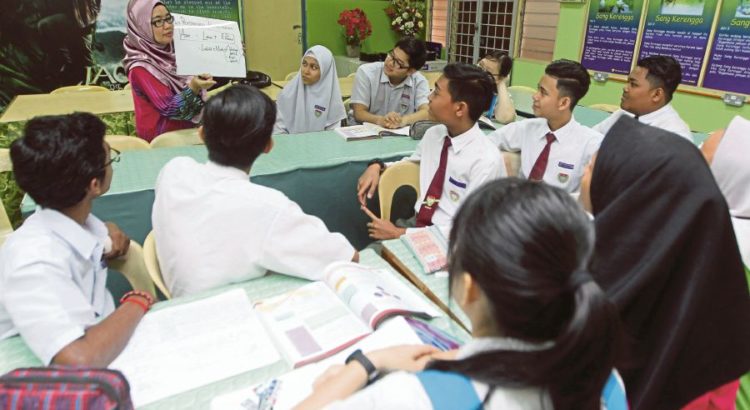
With the students heading back to school yesterday for the new school year, let me lay out two challenges confronting education today that I think will dominate the year if we do not focus on certain areas.

The first is the lack of acceptance by students and parents of their responsibilities, and the subsequent undermining of discipline.

Nowadays, far too many parents are passive, protesting that they cannot handle their own children. Others actively undermine the disciplinary process, questioning the right of teachers or schools to impose discipline or to insist that all students be governed by the same set of rules.

We don’t talk very much any more about whether, for instance, parents are pushing their children to do their homework and school projects or respect their teachers.

The recent case of Cikgu Azizan brought up many discussions among Netizens on issues leading to the difficulties in educating youths today. The lack of student-parent accountability can be frustrating in regard to student discipline and striving to ensure that students accept responsibility for their behaviour and actions.

Responsibility for exam results, and for student success and behaviour cannot rest on the overloaded backs of teachers alone. Education would function best as a stool strongly supported by three legs — teachers, students and parents. Instead, it far too often stands on only one leg, that of the teachers.

Part of a teacher’s job is finding the way to open a student’s heart and mind. By the same token, though, the job of parents and guardians is to send to school children who are responsible, respectful and ready to learn. While compulsory attendance regulation can make children show up in schools, it is still hard to teach those who do not want to learn.

The days of parents adopting a hands-off approach to their child’s education and that it is the teacher’s job must come to an end soon. Parents, and even more importantly, students themselves, must be held accountable.

The other challenge is a generation addicted to smartphones or other mobile devices which leads to inability to focus and engage in the actual tasks at hand. Along with the Internet and its infinite distractions, there are a lot more products and platforms competing for attention today than there were 30 years ago.

One example is how to get students who are used to a different source of distraction every few seconds to focus, for instance, on reading a chapter from the textbook, analysing a poem, or writing a coherent essay. It is not easy and it will grow more difficult for teachers to get their attention during lessons.

Some students can “switch” attention between the phone as an entertainment device and as a learning tool; for others, the phone’s academic potential is routinely ignored.

Boys in their teens are addicted to video games and can play incessantly if given the chance. Girls of the same age, on the other hand, are addicted to social media wanting every moment for Snapchatting or Instagramming.

The problem as a result of this addiction runs deeper and is far more difficult to solve. We might think that students can handle the multitasking that using phones and devices for studies would require. For others, they are almost always a distraction. Even the visible presence of a phone pulls students — and many adults — away from their task at hand.

Yes, smartphones and other devices can be used in learning activities. They can provide instant access to information from a myriad sources and for a myriad reasons.

Although technology and the wealth of information that they can provide has the potential to shrink achievement gaps, the opposite can also take place within the classroom.

The Education Ministry’s plan to allow students to bring mobile devices to help in the learning process should be considered.

We must be selective on technology use in school not just because it is available, as it should be a means to a meaningful end, not an end in itself as teachers work to enrich the student experience.

In the New Year, the Malaysian Education Blueprint gets into its fifth year of implementation in transforming our education system.

The master plan needs a review along the way to add value and rectify any shortcomings to maximise its target by 2025. These two issues mentioned can have a negative impact on teachers and students if we do not address them properly.

Teaching, which is one of the very best jobs in the world, will remain one of the hardest jobs today. I wish a happy and successful new school year for all those who returned to the classroom yesterday.

Source of the article https://www.nst.com.my/opinion/columnists/2018/01/320906/two-challenges-confronting-education

Comparte este contenido:

Perceived dearth of freedom in Japan’s schools reflects wider woes

By: Michael Hoofman. 

What a strange place a school is — a world within a world, a society within a society. Kids grow up in it asking themselves, “Is the real world like this?”

Yes and no. It is and it isn’t.

In December, the weekly Aera published the results of an online survey asking parents and teachers, “Are schools, from the children’s point of view, not free?” Yes, said 93.3 percent of 6,821 respondents.

How free should schools be, given the special nature of their mission? It’s a free society the children will enter upon maturity. It’s also a disciplined society. Freedom and discipline both make demands on education, but the overwhelming disapproval — almost disgust — that Aera elicits conveys such dissatisfaction and frustration that readers can’t help wondering: If parents and teachers feel this way, how must the kids be squirming under rules that demand obedience — not for any rational end they serve but simply because obedience is deemed a virtue?

The mother of a first-grader describes her shock, on entering her daughter’s classroom on parents’ day at lunchtime, to hear — nothing. Silence. Why? It’s the rule, she was told. Children talking dawdle over their meal. Yes, but enforced silence at mealtime is morbid. Well, anyway, that’s the rule.

A junior high school teacher in his 30s ruefully counts among his extra-curricular responsibilities that of inspecting the outdoor footwear students leave in the shoe cupboard before donning indoor shoes and proceeding to class. What’s the point? It’s part of taking attendance. Isn’t roll call enough? No. Why? Well — it’s not, that’s all. It’s always been done this way. If it’s absurd, it’s absurdity sanctioned by time. Does time sanction absurdity? Who has time to consider such questions?

Japanese teachers are said to be the busiest in the developed world. Fourteen-hour days are not unusual. Teachers not teaching are preparing lessons, or doing office work, or enforcing meaningless rules, or supervising extra-curricular sports or craft clubs, or supervising lunch, or placating ever-more-demanding parents who feel their children are being overlooked, or undermarked, or under-recognized for latent genius, or something. More children in recent years come from broken homes or abusive families. This can involve teachers in social problems that are — says one teacher to Aera — beyond their competence. They are teachers, not social workers. Then of course there’s the hoary old problem of bullying, technologically magnified by the virtual powers at every student’s fingertips. A teacher who consulted police about an online slander campaign against one of his students was given short shrift. Insults are not a crime. Threats, yes; not insults. Insults are a moral issue, not a legal one.

In an age of expanding diversity, Aera finds, schools remain wedded to uniformity — down to the color of students’ underwear, fumes one parent. The mother of an elementary school girl works at a day care center where, she feels, kids are free in ways her child is not. She explains: “When (a pre-schooler) is cold, I say, ‘Put on a sweater.’ If an item of clothing gets dirty I say, ‘Change into something else.’ Then the kids move on to elementary school, and suddenly they’re not allowed to use their own judgment about anything. Everyone has to be the same as everyone else. Maybe it’s easier for teachers and students if nobody has to think, but it seems to me there’s more loss than gain.”

Teachers, if not students — probably students, too — are too busy to think. In terms of working hours, 30 percent of elementary school teachers and 60 percent of junior high school teachers are “past the karōshi line,” according to an education ministry report Aera cites. “Karōshi” means death due to overwork. The “line” beyond which that becomes an officially acknowledged danger is 80 hours a week. Stress builds. It must be vented on somebody. “Power harassment,” a familiar affliction of the adult or “real” world, haunts schools too, driving some students, Aera says, into chronic absenteeism.

Life’s a pressure cooker, a jungle — choose your time-honored metaphor. Power harassment we get from our jungle forebears, the apes, writes neurologist Nobuko Nakano in the bimonthly Sapio (November-December). Male apes have their power displays, we have ours. Ours are more complex, more nuanced. We don’t beat our breasts; instead we “dress for success,” bully our subordinates, drive ourselves to exhaustion chasing quantifiable results to brandish as symbols of having “arrived” — where? That’s another question. But today’s young people are different, Nakano says.

A kind of apathy has set in, she finds, that sets the current young generation apart from those of the high-growth and bubble periods, circa 1960-90. Then the goal was clear — growth; and the path to it sure — hard work. Today — what are we striving for? Doubts outweigh certainties. Will my company still exist 10 or 20 years from now? Will my job, my occupation? Will artificial intelligence elbow me aside? “Young people must seem spiritless to their bosses,” Nakano reflects. Shaped by different times, they nourish different ambitions, pursue different status symbols. Yesterday’s goals were promotion, performance, luxury. Today’s, she says, are more likely to be “likes” and “followers” on social media.

There’s another uncertainty weighing on the young: the old. In a separate Sapio article, novelist and essayist Akira Tachibana compares the swelling ranks of Japan’s elderly to the needy foreign refugees and migrants straining Europe’s liberal tolerance. Will the social welfare costs implicit in Japan’s historically unprecedented demographic — more and more elderly increasingly dependent on fewer and fewer young — shred the latter’s post-retirement safety net? Whether or not they end up doing so, the fear that they will is corrosive to morale. The steadily declining birthrate is both symptom and symbol.

So Japan, as Tachibana would have it, is a “refugee” society in spite of itself, its “refugees,” unlike Europe’s, native born and home grown. “Of course,” he writes, “Japan is not on the verge of collapse, like Zimbabwe or Venezuela. … Still, with more and more people living past age 100, there’s no guaranteeing that people now in their 20s, still less generations unborn, will enjoy a secure and prosperous old age.”

In school or beyond school, one way or another — rules here, economic and demographic pressures there — freedom fights for survival, its ultimate victory by no means certain.

Big in Japan is a weekly col

Source of the article https://www.japantimes.co.jp/news/2019/01/12/national/media-national/perceived-dearth-freedom-japans-schools-reflects-wider-woes/

Comparte este contenido:

Educación Física, una asignatura para preparar el cuerpo y el alma

Por:  Mirtha E. Guerra Moré.

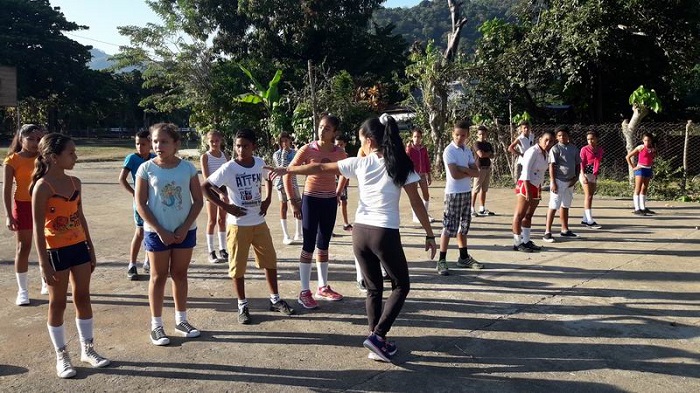
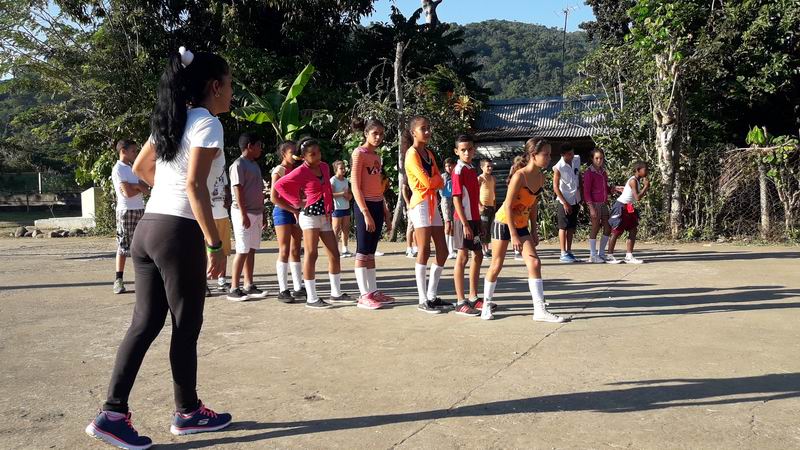
El sonido de un silbato le permite a Leticia Cutiño Pérez poner orden en cada una de sus clases de Educación Física.Con seis años de trabajo en la Secundaria Básica Arístides Pérez Palomino, ubicada en San Pablo de Yao, Granma,la profesora asegura que el éxito en la práctica de un deporte radica en el respeto de los alumnos hacia la disciplina.

“La Educación Física no debe ser tomada como una asignatura inferior. Como mismo los profesores de Biología o Historia planifican una lección determinada, la concepción de un grupo de ejercicios para calentar el cuerpo también lleva tiempo y preparación. Los estudiantes deben tener bien clara esta idea a la hora de entrar a un área deportiva”, afirma Cutiño Pérez a sus 42 años de edad.

Encargada de impartir clases a los niveles de séptimo y octavo grado, la profe Letty como todos la nombran en la escuela, asevera que la Educación Física debe ofrecer las mismas oportunidades para cualquier alumno sin importar las limitaciones del mismo.

“No puede haber límites. Un estudiante encamado por cualquier motivo de salud también tiene derecho a recibir una preparación física. Hace un tiempo tuve un alumno que vivía en Yao Vivero y sufría de hidrocefalia. Él no podía venir al área deportiva. Yo iba a su casa y allí le impartía los ejercicios”, apunta la profesora granmense.

Clases de Educación Física

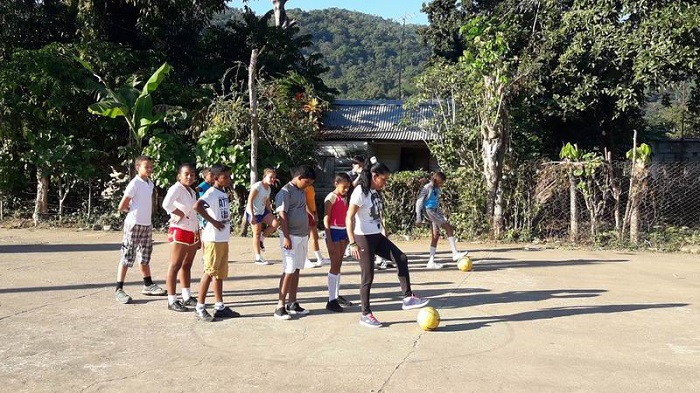
Con la experiencia de haber compartido sus conocimientos de Cultura Física en escuelas de Venezuela, Leticia Cutiño advierte que la enseñanza de deportes como el fútbol o el voleibol, puede ayudar a fortalecer valores como la solidaridad en cada uno de los alumnos.

“El trabajo en equipo es esencial en una clase de Educación Física. Cuando un niño o niña está involucrado en un juego colectivo donde tiene que pasar el balón a un compañero para poder anotar o ganar ventaja sin duda ahí se están creando lazos de hermandad”, apunta Cutiño Pérez.

Clases de Educación Física

Amante de la composición gimnástica y la gimnasia musical aerobia, la profesora granmense afirma que una buena clase de Educación Física también puede ayudar a los alumnos a sentir orgullo por su Patria.

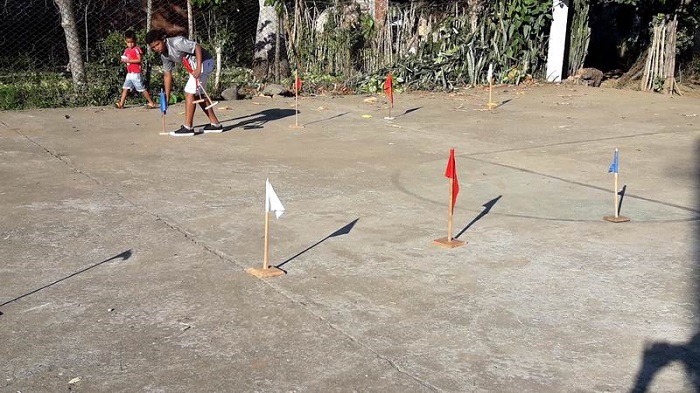
“Cada clase debe comenzar con un lema o la lectura de una frase de algunos de los héroes de nuestra Historia. Por otra parte, las pequeñas banderas ubicadas alrededor del área deportiva guardan un significado en sus colores. Por ejemplo, el rojo significa la sangre derramada por los cubanos para dar libertad a la Isla y el blanco, la paz”, señala la educadora.

Clases de Educación Física

Reconocida en el territorio por obtener buenos resultados en la gimnasia musical aerobia, Leticia Cutiño asegura que sus alumnos disfrutan cada uno de los turnos de Educación Física.

“La Educación Física no es aburrida. Los estudiantes están en constante movimiento a diferencia del aula donde deben permanecer quietos en una silla. Me alegro mucho cuando los veo entrar poco a poco en el área deportiva. Se les puede ver el entusiasmo por comenzar a jugar,” apunta Cutiño Pérez.

Incluida en los planes de estudio del sistema educacional cubano, la Educación Física es impartida en la Isla desde la enseñanza primaria hasta la universidad.

Clases de Educación Física


Fuente del artículo: http://www.cuba.cu/educacion/2019-01-10/educacion-fisica-una-asignatura-para-preparar-el-cuerpo-y-el-alma-/45167

Comparte este contenido:
Page 1230 of 2742
1 1.228 1.229 1.230 1.231 1.232 2.742
OtrasVocesenEducacion.org