Page 549 of 1656
1 547 548 549 550 551 1.656

Use of isolation booths in schools criticised as ‘barbaric’ punishment

By Frances Perraudin

Parents attack ‘consequence rooms’ where pupils are made to sit alone in silence for hours

Parents have criticised the use of isolation booths at secondary schools across the country, after concerns were raised about the “zero-tolerance” behaviour policies run by some academy trusts.

Guardian analysis found this week that 45 schools in England excluded at least 20% of their pupils in the last academic year. The Outwood Grange Academies Trust – which runs 30 schools across Yorkshire, the Humber and the east Midlands – ran nine out of the 45.

Outwood Academy Ormesby in Middlesbrough topped the list, with 41% of its pupils receiving at least one suspension in the last academic year.

Parents with children at schools in the trust raised concerns that, as well as the high levels of exclusions, many schools were also using “consequences rooms” – small booths in which a child sits alone and in silence for hours on end as punishment for breaking school rules.

The booths have been described as “internal exclusions” and parents called on academy trusts to release information on the number of hours of education children were missing while in the booths.

According to Outwood Grange Academies Trust’s behaviour policy, “the rule when in detention and in the consequences room is occupy and ignore”.

“Students cannot sleep or put their heads on the desk. They must sit up and face forward,” it adds.

When in the booths, children are not allowed to “tap, chew, swing on their chairs, shout out, sigh, or any other unacceptable or disruptive behaviour”.

“You will be allowed to go to the toilet up to a maximum of three times during the day (maximum five minutes per visit),” the policy reads. “You must use the closest toilet and go directly there and back. You will be escorted to get your lunch, but you must stay silent.”

Pupils may complete work they have brought themselves but they do not have to.

One mother, whose son goes to an Outwood Grange school in Wakefield, said her son had lost days of his education sitting in a consequence room. “It’s a small booth. They can’t look left or right, they can’t look behind. They have to focus in front all the time. They can’t speak to anyone for the whole day. It’s basically an internal exclusion. It’s barbaric,” she said.

Another mother, whose son goes to a school in Yorkshire run by the DeltaAcademies Trust, said he was “just a regular kid” and there had never been serious concerns raised about his behaviour before the school’s new discipline policy was introduced.

“Then he got 22 hours in an isolation booth in one week and he was just an absolute mess,” she said. “He came out at the end of the day and he didn’t look well. His legs were shaking and he could hardly string a sentence together. He looked completely done in.

“My concern is they’re not using other methods that actually keep the children in the classroom. Eight hours is far too long to keep a child in isolation. I don’t think they want to put the resources into other ways of dealing with behaviour. They are multi-academy trusts and I think they want to try and keep costs down.”

In March, delegates at the National Education Union conference in Brighton voted unanimously to oppose “the move towards ever more punitive behaviour policies in schools”, saying it was feeding a mental health crisis for children.

The motion read: “The increasing use of detention, isolation and exclusion, often talked of as being ‘zero -tolerance’ approaches, usually mean ignoring the varied difficulties children have, in favour of punishment. We believe that, above all else, children need support, respect and love.”

A spokesperson for the Outwood Grange Academies Trust said: “The use of isolation booths and rooms allow students to calm down, reflect and often self-correct their behaviour that may have led to that situation.

“The trust employs all reasonable adjustments for students with special needs within their behaviour policy and invest in the pastoral and welfare support of all our students.”

The trust added: “Ofsted have inspected our academies using this behaviour policy for the past 15 years and in every case found the academy to have transformed the education that students receive, with five being rated ‘outstanding’.”

Like Outwood Grange, the Delta Academies Trust, which runs 46 schools across the country, said pupils were given a number of warnings before being put in isolation and that wraparound support was provided for them.

“It is not unusual in secondary schools for students to have periods of time in isolation as a result of persistent defiance and disruptive behaviour,” said a spokesperson.

“This is the case in both local authority schools and academies and is an effective measure to reduce low-level disruption and truculent behaviour, which is widely reported as having a deleterious effect on the quality of education in our country. Obviously students who are in isolation will complain they don’t like it; that is because it is a punishment for disrupting other children’s education.”

A Department for Education spokesperson said: “It is up to schools to decide what forms of discipline they adopt, as long as they are lawful and used reasonably. If a school chooses to use isolation rooms, pupils’ time in isolation should be no longer than necessary and used as constructively as possible.”

Source of the article: https://www.theguardian.com/education/2018/sep/02/barbaric-school-punishment-of-consequence-rooms-criticised-by-parents

Comparte este contenido:

Docentes exigirán a Educación que garantice la enseñanza del griego

Europa/España/03.09.18/Fuente: www.cope.es.

Distintas asociaciones de profesores de lenguas clásicas se concentrarán ante el Ministerio de Educación para exigir al Gobierno que regule con urgencia la presencia de griego y latín en el currículo de Bachillerato y garantice su enseñanza con independencia del número de alumnos matriculado

Distintas asociaciones de profesores de lenguas clásicas se concentrarán ante el Ministerio de Educación para exigir al Gobierno que regule con urgencia la presencia de griego y latín en el currículo de Bachillerato y garantice su enseñanza con independencia del número de alumnos matriculados.

El próximo sábado 8 de septiembre a las 12 horas, diferentes colectivos pedirán a las puertas del Ministerio de Educación que las lenguas clásicas se consideren estratégicas en el currículo educativo y se asegure su impartición en los itinerarios de Humanidades y Ciencias Sociales.

Secundarán la concentración la Plataforma Educativa «Escuela con Clásicos», la Sociedad Española de Estudios Clásicos, la Sociedad de Estudios Latinos, la Asociación Cultura Clásica,el Collegium Latinatis, la Sociedad Cultural Hispano Helénica, la Sociedad Española de Bizantinística y la Asociación Murciana de Profesores de Latín y Griego.

«La pervivencia de las Clásicas en nuestros centros de Enseñanzas Medias está seriamente amenazada por la supresión de los grupos de griego en muchos institutos españoles. (…) «Es inadmisible que nuestro sistema educativo se vea privado del estudio de Griego en Bachillerato», explican los colectivos en un comunicado.

A su juicio, «si no se pone remedio», el griego desaparecerá de manera inminente: «Está en juego el modelo humanista de nuestra educación», denuncian.

Fuente de la noticia: https://www.cope.es/actualidad/sociedad/noticias/docentes-exigiran-educacion-que-garantice-ensenanza-del-griego-20180901_254070

Comparte este contenido:

Primero de educación sexual

Por Ángela Fernández

La sociedad debe exigir, por el bien de todos, una educación sexual unitaria que fomente un modelo basado en la salud, el placer y la responsabilidad

falta de que madure la propuesta y de que puedan conocerse los detalles, el planteamiento de Carmen Calvo sobre la reforma del Código Penal en relación al delito de agresión sexual ya ha despertado la polémica. El motivo es que la vicepresidenta del Gobierno y ministra de Igualdad ha anunciado su intención de que se recoja que «si una mujer no dice sí expresamente, todo lo demás es no».

Carmen Calvo ha comunicado el interés de que España se mire en espejos como Suecia -que acaba de modificar la ley al respecto-, Alemania, Bélgica o Reino Unido. En total, sólo once de los treinta y tres países de la Unión Europea atienden al consentimiento como eje central de la normativa, y no así a la violencia o a la intimidación. De cualquier forma, ni las leyes ni los síes ni los noes categóricos van a impedir la interpretación subjetiva por parte de los miembros del proceso legal ni las valoraciones o intenciones individuales de los participantes de un acto sexual. Porque el propio lenguaje específico no siempre significa lo que es, sino que además atiende a diferentes lecturas, salvo en casos tremendamente claros.

Por lo tanto, ni las leyes ni los síes ni los noes son suficientes sin que trabajemos la base de todo este asunto: una educación sexual integral y obligatoria en colegios, institutos y universidades que verse sobre los aspectos cognitivos, psicológicos, físicos y sociales de la sexualidad. Pero ¿sólo a alumnos en centros educativos? Desde luego que no. La educación sexual debería ser extensiva a padres y madres que, en definitiva, son el ejemplo directo de los niños y adolescentes, y que no siempre están libres de tabúes ni de prejuicios.

Tras los últimos informes emitidos, España suspende en educación sexual. En la 28ª sesión organizada por el Comité de Derechos Económicos, Sociales y Culturales de la ONU, celebrada el 29 de marzo de este año, nuestro país no sale bien parado. El texto hace referencia a la falta de programas escolares específicos sobre sexo. Asimismo, la Unesco, en los datos sacados a la luz en enero del año presente, ha calificado de urgente una educación sexual de calidad que informe y oriente «respecto a la transición de la infancia a la edad adulta y los cambios físicos, sociales y emocionales que esta conlleva». Actualmente, en España, la formación en educación sexual depende de cada comunidad autónoma y, aunque existe una estrategia nacional sobre salud sexual y reproductiva, los centros que la cumplen (o no la cumplen, como muchos de los colegios concertados y religiosos) se limitan, en cantidad de ocasiones, a tocar temas como la prevención de enfermedades, el embarazo y el nacimiento, importantes asuntos, pero insuficientes.

En España se registran cuatro denuncias por violaciones y diez por abuso sexual a menores por día. La sociedad debe exigir, por el bien de todos, una educación sexual unitaria que fomente un modelo basado en la salud, el placer y la responsabilidad. Apremia establecer unas bases de enseñanza sexual, porque los roles en el sexo cambian y porque debe dejarse de lado la herencia cultural que impide establecer el valor de la libertad y el disfrute pleno del sexo. Llegados a este punto, el sexo no debería ser tratado sólo como un acto íntimo y de desarrollo personal, sino además como una acción que contiene unas responsabilidades y consecuencias sociales. Temas como la prevención y la identificación de violencia y abuso sexual, el acoso sexual y la intimidación, la tolerancia ante las diferentes orientaciones sexuales e identidad de género, el consentimiento, la igualdad y un largo etcétera, son sustanciales. Pero no sólo es importante la temática, sino que la materia en educación sexual hay que transmitirla de forma efectiva y adecuada a la edad y a ambos sexos. Si bien la educación sexual no va a prevenir a corto plazo las agresiones sexuales, sí es seguro que favorecerá una mayor concienciación y denuncia.

Con ironía se habla ya de si hombres y mujeres deberán firmar un contrato para mantener relaciones sexuales o de si podría inventarse una aplicación para saber si el consentimiento es explícito, pero el asunto es mucho más serio de lo que acontece, y mucho más sencillo. La Organización Mundial de la Salud (OMS) define la violencia sexual como «todo acto sexual, la tentativa de consumar un acto sexual, los comentarios o insinuaciones sexuales no deseados». Sería importante atender al deseo y, algo vital, a la empatía sexual, claves para asegurarnos unas relaciones aceptadas, voluntarias, conscientes y positivas.

Fuente del artículo: https://www.diariodejerez.es/opinion/tribuna/Primero-educacion-sexual_0_1277272601.html

Comparte este contenido:

Dozens of secondary schools exclude at least 20% of pupils

By Frances Perraudin and Niamh McIntyre

Call for government to act after Guardian investigation reveals high suspension rates in England

The government has been urged to address “deeply concerning” rates of exclusion in England’s secondary schools after a Guardian investigation revealed dozens had suspended at least one in five of their pupils.

Of those 45 schools handing at least 20% of their pupils one or more fixed-period exclusion in 2016-17, the overwhelming proportion were academies, with one of them, the Outwood academy Ormesby in Middlesbrough, excluding 41%. Five were run by local authorities and six were free schools.

Fixed-period exclusions are when a pupil is formally suspended from school for a set time, usually up to three days. A student may have multiple exclusions in the same year.

Nine of the 45 schools were part of the Outwood Grange academy trust, a multi-academy trust that runs 30 schools across Yorkshire, the Humber and the east Midlands.

The national average of pupils receiving at least one suspension in the last academic year is 4.6%. Outwood academy Ormesby excluded 41% of pupils, giving out 2,405 fixed-period exclusions to 274 pupils in a single year.

Outwood academy Bishopsgarth, a 10-minute drive away in Stockton-on-Tees, had the second highest rate, excluding 34% of pupils last year. This amounted to 1,268 fixed-period exclusions given to 182 pupils.

A spokesman for the trust said it had taken over “some of the toughest schools in England” and repeatedly turned around their performance. He said that in many cases, the schools it had taken over had previously been excluding high numbers of children informally, meaning the increase in the number of official exclusions was misleading.

The trust said pupils at Outwood academy Ormesby had beaten the school’s GCSE record for the last three years and that the school was oversubscribed. It pointed to an Ofsted report that praised the school for “bringing about change and improvement successfully, and at remarkable speed”.

The trust also said Outwood academy Bishopsgarth had seen a 7% increase in what were already record GCSE results this year.

“Fixed-term exclusions are never issued for ‘minor’ incidents, but may result from a student’s poor choice of reaction or response to a reasonable request,” it said.

Angela Rayner, the shadow education secretary, said the fact that some schools were recording such high rates of suspension “should be a matter of huge concern to the government, and to the schools affected”.

Some people believe schools are increasingly “playing” the system – getting rid of students who might do badly in their GCSEs and compromise the school’s performance in league tables.

In June, an Ofsted investigation into the practice of “off-rolling” – where pupils disappear from the school register just before GCSEs – found that more than 19,000 pupils who were in year 10 in 2016 had vanished from the school roll by the start of year 11, the year when pupils sit their GCSEs.

Figures published by the Department for Education last month found that there were more than 40 permanent exclusions a day (total of 7,700) during the 2016-17 school year, compared with a little over 35 a day the previous year. Fixed-term exclusions increased by about 40,000, to a total of 382,000, meaning nearly one in 20 pupils were given a fixed-period exclusion in that school year.

In March the DfE launched a review into school exclusions, led by the former Conservative MP and children’s minister Edward Timpson. The government said the review would “explore how head teachers use exclusion in practice, and why some groups of pupils are more likely to be excluded”, but that it would not examine exclusion powers. It is expected to report by the end of the year.

The launch of the review came after Cathryn Kirby, Ofsted’s regional director for the North East, Yorkshire and the Humber, wrote to secondary headteachers in the region to complain about the high rates of fixed-period.

“Schools should only ever use exclusions as a last resort,” she said. “If not properly applied, being removed from school can disrupt a child’s education and affect their future life chances.”

Secondary schools in Middlesbrough gave the highest number of fixed term exclusions of any local authority area in the last academic year, handing them to 11.67 pupils in 100. Doncaster and Barnsley also excluded more than one in ten pupils from secondary schools.

Yorkshire and the Humber saw the most fixed-term exclusions of any region in the country, with an overall rate of 5.8 per 100 pupils. Inner London had the second highest rate (5.3 in 100) and the north east the third highest (4.9 in 100).

South Leeds Academy, now operating as Cockburn John Charles Academy, came third on the list for rates of fixed-term exclusions, suspending 30% of their pupils in the last academic year. Outwood Academy Shafton, in Barnsley, came fourth, suspending 29.8%, and the Telford Park School in Shropshire, came fifth, suspending 28.1%.

Kevin Courtney, joint general secretary of the National Education Union, said that it was deeply concerning to hear that so many schools were excluding such high numbers of pupils.

“Real-terms funding cuts have forced schools to make behavioural and specialist learning support assistants redundant, many of whom supported pupils at risk of exclusion, including those with special educational needs or disabilities (SEND),” he said. “Alongside this, schools have lost external support because of the funding cuts to local authority specialist support services.

“The reasons for a huge variance in rates of permanent and fixed term exclusions need to be examined carefully. However, it is clear that the competitive and fragmented system produced by the academy reforms encourages schools to compete for the pupils most likely to get high grades and increase exclusions of pupils who may be more challenging to teach.”

A spokesperson for the Department for Education said the decision to exclude should be reasonable and fair, and that permanent exclusion should only ever be used as a last resort. “Statutory guidance also states that schools should consider the underlying causes of poor behaviour before excluding a pupil,” they said.

“While we know that there has been an increase in exclusions there are still fewer than the peak ten years ago. We have launched an externally led review to look at how exclusions are used and why certain groups are disproportionally affected.”

Source of the notice: https://www.theguardian.com/education/2018/aug/31/dozens-of-secondary-schools-exclude-at-least-20-of-pupils

Comparte este contenido:

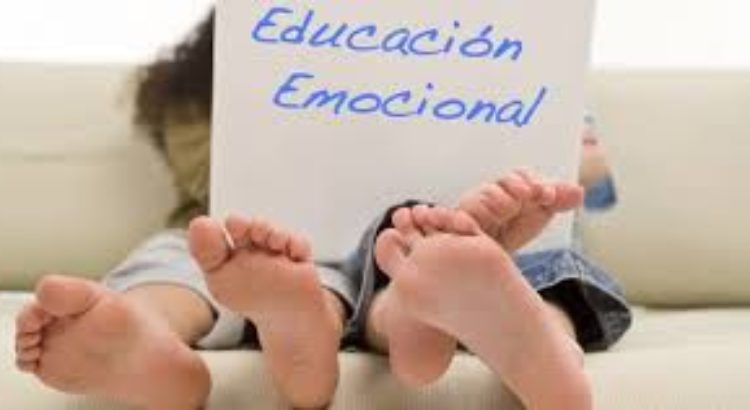
La educación emocional «dentro del currículo»

Por Gipuzkoa

– ¿Ha subido la nota en educación emocional o sigue siendo una asignatura pendiente?

– Vamos mejorando, ya es una signatura de libre configuración en la Comunidad de Canarias, en Castilla-La Mancha se debe evaluar la competencia emocional y cada vez más familias y docentes se forman en este tema. Llevo dando formación en educación emocional más de veinte años y la demanda sigue creciendo, esto significa que cada vez más adultos son conscientes de su importancia. Pero podríamos mejorar la situación si en los planes de estudios de los futuros profesores se tuviera en cuenta dentro del currículum y si en todos los centros educativos se convirtiera en uno de los objetivos dentro del gran objetivo de la educación integral del alumnado.

– Suele referirse a la «mirada de jardinero» del profesorado. ¿Cómo ve en la actualidad a los ‘jardineros’ cuidando de su semillero? ¿Qué déficit apremiantes detecta en el sistema educativo?

– La mayoría de los educadores quiere hacer bien su trabajo pero hay un exceso de tareas administrativas que les llevan demasiado tiempo, tiempo que resta para el trato con el alumno. Por otra parte, el acceso a la docencia exige casi exclusivamente dominar unos conocimientos y no se tiene en cuenta sus habilidades emocionales personales e interpersonales de modo que a algunos docentes solo les interesa dar su asignatura sin tener en cuenta la persona que hay detrás de cada alumno. Por fortuna, cada vez son menos pero no deberían existir. Pienso que debe haber grandes cambios en el sistema educativo para que los profesores se puedan convertir en jardineros que cuiden con amor y conocimientos su particular huerto, que descubran las particulares inteligencias de sus alumnos, las valoren y les ayuden a desarrollarlas para aportar lo mejor de sí mismos a la mejora del mundo.

Fuente de la entrevista: https://www.diariovasco.com/gipuzkoa/educacion-emocional-dentro-20180902000523-ntvo.html

Comparte este contenido:

Presidentes de Chile y España acuerdan sobre educación y ciberseguridad

Chile – España / 2 de septiembre de 2018 / Autor: Redacción / Fuente: Xinhua

El presidente de España, Pedro Sánchez, se reunió este lunes con su homólogo chileno Sebastián Piñera en Santiago de Chile, en un encuentro en el que ambos mandatarios acordaron sobre temas de educación y ciberseguridad.

«Acabamos de celebrar un convenio que permite reconocernos mutuamente los títulos y facilitar el intercambio de estudiantes, de intelectuales, entre España y Chile», señaló Piñera durante un discurso que celebró en el palacio de La Moneda, la casa Presidencial del país sudamericano.

Piñera agregó que «hemos avanzado también en lo que se trata de unir fuerzas para combatir con mayor eficacia la amenaza que significa la ciberseguridad para todos nuestros países».

«Y ésa es un área donde, sin duda, tenemos mucho que aprender de España, que en esta materia ha logrado avances que son muy importantes, que queremos, sin duda, conocer y aplicar en la medida de lo posible en nuestro país», aseveró.

Piñera destacó que han logrado avanzar con España en muchos frentes, como en la colaboración que requiere el país sudamericano para mejorar y modernizar los acuerdos con la Unión Europea.

«España fue un gran aliado del ingreso de Chile a la Unión Europea, fue un gran aliado del ingreso de Chile a la Organización para la Cooperación y el Desarrollo Económicos (OCDE), y el presidente Sánchez ha ratificado que va a ser un gran aliado para esta nueva etapa y esta nueva relación que queremos emprender con la Unión Europea», indicó.

Sobre ciberseguridad, Sánchez aseguró que «lo que es evidente es que hay una amenaza de desestabilizar las principales instituciones, no solamente públicas sino también económicas y empresariales de los países y los Estados lo que deben hacer es adecuarse y anticiparse a esos ataques».

«Tenemos experiencias muy interesantes que estamos deseosos de compartir con el gobierno de Chile y desde luego trasladar tanto las garantías del tejido empresarial como a la sociedad española que el gobierno se toma muy en serio la ciberseguridad».

El presidente de España, Pedro Sánchez, inició este lunes en Santiago su gira por Latinoamérica, su primer viaje fuera de Europa desde que asumió el poder el 2 de junio pasado.

La gira del mandatario europeo continuará por Bolivia, Colombia y Costa Rica, donde se reunirá con los respectivos presidentes americanos.

Fuente de la Noticia:

http://spanish.xinhuanet.com/2018-08/28/c_137424549.htm

ove/mahv

Comparte este contenido:

56ºICA: «La crisis del conocimiento de la educación» (Video)

España / 2 de septiembre de 2018 / Autor: Universidad de Salamanca / Fuente: Youtube

Emitido en directo el 17 jul. 2018
56º CONGRESO INTERNACIONAL DE AMERICANISTAS Martes, 17/07/2018 – 09:0010:00 Edificio Histórico – Aula Salinas Conferencia «La crisis del conocimiento de la educación» José Gimeno Sacristán (Universidad de Valencia)

Fuente: https://youtu.be/kacWh_suNP8
ove/mahv
Comparte este contenido:
Page 549 of 1656
1 547 548 549 550 551 1.656