Siempre se habla de que la escuela pública tiene que ser democrática, pero pocas veces de cómo ha de darse para que lo sea, qué características tiene que tener para considerarse como tal.
Siempre hubo tiempos peores y, ahora que vivimos en un estado democrático, muchas personas piensan que es poder votar cada cuatro años, pero la democracia implica mucho más. Es necesario tener una conciencia colectiva que nos ayude a escuchar más allá de las voces dominantes o las más votadas.
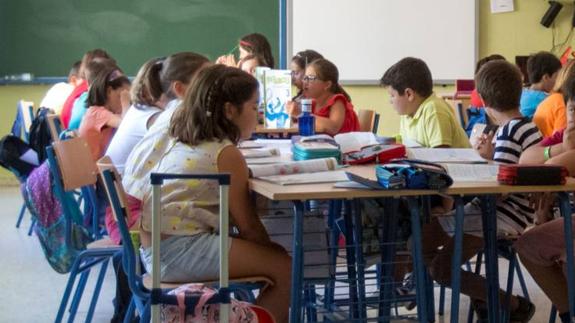
La escuela es uno de los primeros lugares donde los niños y las niñas se relacionan con sus iguales, comienzan a establecer relaciones humanas y aprenden, poco a poco, a convivir. Por tanto, la escuela necesita una organización democrática en cuanto a gestión, objetivos e actividades, que implique a los profesionales de la educación, a las familias y, por supuesto, al alumnado.
El pilar básico de la democracia es la participación. Crear en las escuelas y en el entorno educativo una cultura de participación hace que la aceptación de las diferencias, la gestión de los conflictos y el consenso sean elementos básicos que contribuyen al desarrollo personal y a la formación colectiva.
Por tanto, será primordial propiciar espacios y tiempos que generen proyectos, y dinamizar procesos que permitan analizar y mejorar la práctica educativa en todos los aspectos que dan vida al centro. El profesorado no puede sentir una pérdida de identidad, al revés, reforzaría su labor educativa al compartir procesos, a analizar la práctica y buscar estrategias que ayuden a mejorar el proceso educativo. Sentir que la escuela es de todos y todas, y crecer juntos.
Las asambleas, que hasta ahora parecen asociadas solo a Educación Infantil, son momentos enriquecedores que pueden darse en todas las etapas y en todos los grupos de trabajo. En estos espacios se da una aplicación sistemática del diálogo, una negociación continua para gestionar conflictos y vivirlos de manera enriquecedora, participar de manera activa en deliberaciones y decisiones. Es muy importante dotar de contenido las asambleas, gestionar grupos de trabajo con objetivos concretos, permitir diferentes niveles de participación, asumir responsabilidades con la rotación de cargos y funciones. Pueden darse las asambleas dentro de cada aula, entre delegados y delagadas, de familias, de familias y profesorado, de barrio, de toda la comunidad educativa…
Cada centro tiene una organización interna que viene dada por la Administración, como son un equipo directivo, claustro y consejo escolar, y son en estos espacios donde se pueden impulsar la participación, la orientación, la metodología y la coordinación pedagógica. Primero, tiene que haber una voluntad para que el centro sea verdaderamente democrático, y vivirlo de manera positiva y enriquecedora. Un centro educativo será democrático si los fines y objetivos que se propone son compartidos por todos los miembros del demos escolar.
Somos seres sociables por naturaleza y la convivencia es nuestra manera de relacionarnos con los demás y con la naturaleza. Debemos aprender a vivir en compañía, a respetar el medio ambiente y nuestro barrio, y participar en mejorarlo exigiendo a los ayuntamientos su cuidado y mejora. Educar en la ciudadanía para la participación crítica y responsable.
De un tiempo a esta parte se han reducido gravemente los espacios sociales que permitan asociarse para elaborar proyectos de participación. Son pensamientos muy claros e intencionados de fomentar el individualismo, la desconfianza hacia el otro, marcando las diferencias como puntos de separación e irreconciliables, cauces guiados por el capitalismo para potenciar una sociedad de consumo con falsas expectativas. Por eso, es importante trabajar en las escuelas el trabajo en equipo, cooperativo y solidario. Crear una conciencia social, fomentar la comunicación, recuperar en nuestra sociedad el sentido colectivo de lo público, sentir nuestros derechos y nuestros deberes como ciudadanos y ciudadanas libres.
Xbox lays out its vision to transform the education system globally.
I have two younger brothers.
All three of us began our working lives as video game testers at the same company.
I always loved the writing, so I found my way from there into journalism. My middle brother discovered a knack for management, so ended up pursuing a career in business development. Meanwhile my youngest sibling was fascinated by the science and coding of games. He’s just found his first programming job at a major studio.
It’s the latter Dring that has had the most challenging of the career paths. Not only is computer science a difficult subject to master, you’re simply not taught it at school. I learned writing at a young age (as most of us did), but my brother had to teach himself the basics of coding, and strolled into university with little prior understanding of what he was about to study.
In the UK, Computer Science has recently been worked into the school curriculum, which is good news for our industry. But it’s hard to implement, because first you need to teach the teachers; they weren’t taught programming at school, either.
That’s why what Microsoft has been doing with Minecraft is so important. The Education Edition has been used in schools to teach a broad range of subjects, but with the introduction of Code Builder this month, it’s now a means for teaching kids to code – even from as young as six years-old.
Deirdre Quarnstrom, Minecraft’s head of education
«One of the top things we hear from educators is that they want to be able to use [Minecraft] for coding,» says Deirdre Quarnstrom, head of education for Minecraft.
«They see the enthusiasm and engagement that they have with Minecraft, and coding is both top of mind as a critical skill, and something that feels inaccessible to educators who don’t have the technical training in it. Sometimes the students even have a point-of-view that coding is boring. The idea is to solve those issues through Minecraft, which is an environment where students can feel comfortable and confident. So there has been a tonne of excitement around that.
«We were in Brussels last week for a Microsoft event, and there were two classes that had been using it for just two weeks, and the level of competency that they have with it was just amazing. They had taken it, they’ve learned it, and they were actually building a future environmentally-friendly version of their city using Code Builder.»
Minecraft Education Edition now features a Code Builder
Learn-to-code software – such as Scratch, for instance – has been utilised in schools for some time. Quarnstrom says that Minecraft: Education Edition doesn’t necessarily replace these services, but can actually augment them.
«You can connect Scratch into Minecraft, so you can take that Scratch world, and the sprites and commands that are available in that, and then it opens up and expands to all Minecraft commands and inventory items,» she tells us. «You take that basic experience, which is a very good learn-to-code experience, and you expand it out to a full 3D Minecraft world, then all of a sudden they’re using their imaginations and creativity, because the toolset they have is so much bigger.»
James Protheroe, a Minecraft Education Edition mentor and an assistant headteacher agrees: «It is all about making that link. I know from my own use of Scratch, and coding with the children, it is difficult sometimes to get that wow factor. But when you connect that to the 3D environment within Minecraft, and see the impact of the coding that they have actually done, it is just amazing. It has such an impact.»
«If we can take a generation of Minecraft players and encourage them to become content creators and software engineers, that would be amazing»
Deirdre Quarnstrom
And of course, this coding education will hopefully (at least from Microsoft’s perspective) create a new generation of programmers and game designers.
«Absolutely,» begins Quarnstrom. «If we can take a generation of Minecraft players and encourage them to become content creators and software engineers, that would be amazing. We think about Code Builder as a means to the end. The activity of coding is not the thing you are investing in, the thing you are investing in is to become a game developer.
«We launched Minecraft Hour of Code Tutorial programmes two years ago. We did two of those, and they’ve had over 59m play sessions. That to me is unbelievable. It introduces students and helps teachers with the process of: ‘What is a command? What is a variable? What is a function? What is an event? And how does that work?’ They can go as slowly or as quickly as they want. That provides a great introduction.
«The challenge is that it is visual programming language, so you are kind of limited over what you can do there. With Code Builder you can switch from a visual programming language to javascript, and then back. So it provides that next step. It has typically been a pretty big gap from a visual block-based programming language, to actually writing code in a more professional environment. So we are excited to see how this encourages players.»
Minecraft Education Edition is being used at both Primary and Secondary School level
Much like a lot of things in Minecraft, the original idea for an Education Edition came from the community.
«Since early on, Mojang saw that Minecraft was an amazing environment for teaching and learning,» Quarnstrom continues. «People were going into an open world, with no instructions and no rules, and figuring out how to do things. They were teaching each other, creating videos and tutorials. Teachers saw that too – it was teachers who started to see that this was an amazing toolset that inspires creativity. Two teachers actually created a mod for the original Java edition of Minecraft, called Mincraft EDU. They developed this passionate following of early adopters. These were educators who were bringing technology into the classroom and investing in game-based learning.
«About two years ago, when Mojang and Minecraft became part of Microsoft, I said I wanted to work on this education opportunity. I went over to Stockholm and sat down with the team and to find out their vision for education». They said they wanted to change the world.» So I was like, ok that is overwhelming and maybe a bit naive. But we talked about it in that initial conversation, and discussed the fact that the next generation of world leaders are growing up playing games. They are playing Minecraft, learning about consequences and rules of society and how people work together. So it is incredibly powerful.
«Everyday since then, I have become more passionate about it. Generally educators will enter into it with some scepticism and anxiety. They are anxious about it because, generally, the students know more than they do. Every single student in that class is generally more comfortable in a gaming environment than the teacher is. School administrators have some concerns, but when we show them some examples of classes using Minecraft, they come out, almost universally, wanting to learn more about it, wanting to bottle it, package it and take it into their classrooms.»
Protheroe is a primary school teacher and he talks about how Minecraft in the classroom has encouraged communication, collaboration, problem-solving and also confidence.
«We brought it in specifically for one project a couple of years ago, and immediately you could see the potential it had for developing these skills,» he explains. «We have our digital leaders within the school, and very soon they were training staff on using the controls. So really it is pupils who were leading and supporting the teachers. I feel that working with the students in this way helps me unlock the potential of what they can do. Because of the demand, we’ve invited people in to show people what we’re doing in school. So the children said: «We have people coming in to see us work, maybe we could go out into their schools.» So they set up as an enterprise business, and they go out to work with the students and the teacher in their own classrooms. It is very much an introduction to work, but from a child’s point-of-view.»
It’s not just for primary school, though. Microsoft is keen to point out this is for all ages.
Minecraft Education Edition is being used in schools from over 100 different countries
Quarnstrom explains: «We see really interesting applications across primary and secondary school. Often in primary school, people will use it to introduce technology and the concept of digital citizenship. We learn very young in the playground that if we push one of our friends there are consequences to that. People get hurt. But in a virtual environment, sometimes those lessons aren’t as obvious. So educators are using Minecraft really effectively to teach, reinforce and encourage that concept of digital citizenship and responsibility in an online environment. They’re also teaching how to move around with a mouse and keyboard and navigate a 3D environment. And we usually see Minecraft brought in for specific subjects. It can be really effective for students with different learning styles, maybe they’re more visual learners.»
The big challenge now is to encourage more teachers to come on-board. Protheroe was convinced by his students to use the game, and now he’s one of 60 Minecraft mentors who are going around speaking to educators. Quarnstrom says this is key as teachers prefer to speak with their peers. «They speak the same language,» she says. «They understand the needs of the classroom.» There are now 30,000 educators who have created profiles on the Minecraft community site, with schools in 100 countries (including the likes of Tanzania) using the title.
Minecraft: Education Edition is not free. It costs $5 per user per year, although there are offers available for bulk licences. It may not sound like a lot, and on the face of it it isn’t, but the pressures on school budgets have never been higher. Every penny counts and so even if we were to believe every word of Quarnstrom and Protheroe’s pitch, it’s not an easy decision to make.
«From an Xbox and Minecraft point-of-view, this work in education lends credibility to gaming»
Deirdre Quarnstrom
Furthermore, you can understand if there’s a bit of scepticism around Microsoft’s intentions here. Is this really a desire to help education, or more a commercial and marketing exercise?
«For me, I had spent three years as Chief of Staff for Phil Spencer and the Xbox business,» Quarnstrom concludes. «I played games when I was younger, but I hadn’t really played games for a long time. When I went into Xbox, I was amazed by all the things that went into games. The art and science, the narrative design, the creative process… the technical innovation. That doesn’t get enough credibility for what that contributes to society. So I developed this much deeper passion for gaming. However, so many of the games that were popular were first person shooters or mature games. So when Minecraft came along, I saw that this was something that was open for anybody, with any learning or play style. It is this very accessible level-playing field for people. We see girls and boys playing almost equally on Minecraft, and you just don’t see that with most other games.
In this edition of our miniseries, marking the 300th anniversary of the birth of Empress Maria Theresa, we look at one of the most important reforms she introduced: compulsory schooling for all, which set the foundations for a centralized education system, the basics of which remain to this day.
Empress Maria Theresa liked order and this trait was highly prominent in many of the reforms she undertook be it the running of the state administration, the introduction of numbers for houses in place of names which made it easier to find an address or the fact that she ordered the first ever census of the population, albeit concerned only men and cattle in those days. She was equally methodical in introducing compulsory education for all, ordering that all children, boys and girls alike between the age of 6 and 12 years should attend school or receive a private education. Magdalena Šustová of the Museum of Pedagogics says that, while a vast number of people were illiterate at the time, it was actually poverty that prompted the empress to introduce compulsory schooling.
“Soon after ascending the throne Maria Theresa was unwillingly dragged into wars and conflicts and paradoxically it was the consequences of those wars that led her to introduce her school reform. The war left many orphans and impoverished families and created areas which today we would call “socially excluded areas”. Many people had no livelihood and one of the instruments that was to reduce poverty in all the empress’ dominions was education and the reform of the school system.”
Up until then, education was almost exclusively in the hands of religious orders and only accessible to the higher classes. Maria Theresa changed that. She introduced compulsory education for boys and girls across the board, establishing the first network of public schools, and giving them their first curricula by stating what subjects should be taught and overseeing the introduction of the first school book. The reform was not popular with the lower classes, who sent their children to work in the field, but the empress pushed it through with force, threatening to throw parents who refused to send their children to school in prison. The rich, who could afford tutors, were free to secure their children’s education by private means.
In introducing the foundations of a modern-day school system the empress looked abroad for inspiration and was not loath to learn from her enemies. Magdalena Šustová again:
“Her biggest inspiration came from Prussia, from the education reform in Prussia. Although she fought against Prussia she was smart enough to learn from them and commissioned a respected Prussian scholar –Abbot Ignaz Felbiger to draft an education reform plan which she then implemented. So her main inspiration was Prussia.”
In 1774 Felbiger came to Vienna and was appointed General Commissioner of Education for all of Maria Theresa’s Habsburg dominions. The school reforms were aimed to create a sense of national unity of the population of the Austrian Empire and set higher education standards. The same year he issued a common school ordinance and in 1775 produced a school methodology book: Methodenbuch für Lehrer der deutschen Schulen. It contained instructions regarding the methodology of teaching, and introduced the practice of questioning pupils. It was a revolution in the field of education, which until then relied heavily on memorizing. In fact, in 1774 there were many teachers who themselves could not read and write.
Schools were gradually established around the monarchy and the education system was centralized. Magdalena Šustová explains:
“Children were taught to read, write and count and they were taught religion – back then it was the Catholic religion but during the reign of Josef II who decreed religious tolerance also Lutheran or Calvin. Compulsory school education lasted for six years. In the bigger towns the schools were of a higher standard and pupils were taught German as a second language, but in village schools pupils were taught in their native language –so here it was Czech or German in areas where the majority population was German. In secondary schools all subjects were taught in German and it was the same at universities. So a higher education meant you had to learn German.”
Despite her busy schedule, Maria Theresa closely monitored the school reform and her own sixteen children were subjected to a demanding regime. She was a hard disciplinarian who controlled every minute of their time, following their progress and sending their tutors lengthy instructions regarding which areas needed to be improved. She criticized their speech, their behaviour, the fact that they slouched or rested their elbows on their desks. In later life she kept up the stream of letters telling her daughters how to improve their marriage and hold their husband’s interest. She insisted that girls be equally well educated as boys with only a few minor differences.
“Compulsory education was the same for boys and girls. The only area where the education differed was in handwork where girls usually took sowing classes or needlework while the boys were taught things like beekeeping and crop growing. But it is true that the foundations for an equal education were laid down by Empress Maria Theresa.”
The education reform is one of the most highly valued reforms introduced by the empress. When she came to the throne the level of illiteracy was very high and although the progress made was gradual historians say that ten years after it was launched seventy percent of children in her dominions attended school.
El Gobierno de Alemania aprobará una ley para sancionar con multas de hasta 2.500 euros a aquellos padres que se nieguen a recibir información sobre los planes de vacunación infantil antes de matricular a sus hijos en una guardería.
Según la nueva normativa, que será aprobada el 1 de junio en el Parlamento alemán, las guarderías estarán obligadas a comunicar a las autoridades sanitarias la identidad de aquellos padres que rechacen cualquier asesoramiento sobre vacunas.
«No podemos ser indiferentes con el hecho de que aún mueran personas por el sarampión. Por eso vamos a reforzar las normas de vacunación», ha asegurado el ministro de Sanidad alemán, Hermann Gröhe, al diario «Bild».
En Alemania no es obligatorio vacunar a los niños. Sin embargo, desde que en 2015 el país sufrió un brote de sarampión, la canciller alemana, Angela Merkel, modificó la legislación y obligó a los padres que querían matricular a sus hijos en una guardería a entregar un justificante que confirmara que habían sido informados sobre los planes de vacunación.
A pesar de ello, eran las propias escuelas infantiles las que decidían si comunicaban o no la identidad de los padres que se negaban a recibir dicha información a las autoridades sanitarias.
Las leyes de vacunación están siendo reforzadas en toda Europa, donde la caída de la inmunización ha causado un aumento en enfermedades como elsarampión, la varicela y las paperas, según ha asegurado el Centro Europeo para la Prevención y Control de Enfermedades (ECDC).
La semana pasada, el Gobierno italiano aprobó una ley que establece la vacunación obligatoria para los niños de 0 a 6 años y sanciones a los padres que no cumplan con el calendario.
En el caso de la escuela primaria, con niños mayores de seis años, los padres deberán de pagar una multa si sus hijos no están correctamente vacunados, aunque el incumplimiento del calendario de vacunación no impide el ingreso en los centros educativos.
La consejería contempla ampliar las becas que concede en la actualidad ante la progresiva implantación de la enseñanza virtual.
La Consejería de Educación y Empleo de la Junta de Extremadura concederá becas para la adquisición de libros de texto digitales, una medida que convivirá y complementará las ayudas que se otorgan actualmente para comprar los ejemplares en formato papel.
La implantación de las nuevas tecnologías en los centros educativos de la región ha recibido un nuevo impulso en los últimos años con la compra de pizarras digitales, tabletas convertibles y ordenadores portátiles para alumnos y profesores; además de mejorar la conectividad con fibra óptica y redes wifi para las aulas. Al mismo tiempo, la Junta puso en marcha en la pasada legislatura el proyecto eScholarium, una plataforma que desarrolla un entorno virtual de aprendizaje para enseñanzas no universitarias que fomenta el uso de libros de texto digitales y el seguimiento telemático de la práctica educativa.
La Consejería de Educación y Empleo plantea la extensión de este proyecto a todos los centros públicos de la región, con lo que en el futuro crecerá la utilización de libros de texto digitales. Por ese motivo, se plantea que las becas para volúmenes en papel también deberán extenderse a este formato.
En cualquier caso, Educación señala que no se puede dar una fecha sobre cuándo el libro digital sustituirá al de papel de forma definitiva, ya que será un proceso que se irá acometiendo a demanda de los docentes de la región.
Según explica la consejería, serán los departamentos de los centros los que decidan emplear el libro digital o el impreso. Como indica, todos los profesores tienen acceso a los programas informáticos de eScholarium, pero sólo pueden formar parte del programa educativo quienes reciben la formación metodológica. Educación añade que actualmente hay cien centros participantes en el proyecto y que el próximo curso se sumarán otros cien.
Junto a esto, para facilitar su implantación en el futuro se crearán agrupaciones de docentes que deseen utilizar la plataforma con el objetivo de que accedan a la formación metodológica. Estos grupos se crearán por zonas y contarán con la ayuda de un docente con experiencia en el uso de este sistema. «La idea es que estos docentes interesados en su uso, una vez formados, lo vayan introduciendo en esos centros que aún no están en eScholarium», apunta Educación.
La Consejería de Educación y Empleo afirma que en los centros convivirán libros digitales y de papel, y que serán los departamentos los que decidan para qué asignatura usan uno u otro.
De esa forma, las ayudas para libros de texto digitales dependerá de su efectiva utilización en los centros educativos, tanto para alumnos becados como para el resto. En cualquier caso, la consejería explica que el procedimiento a seguir será muy similar al que se emplea para el formato papel.
Como indica, el alumno con derecho a beca tendrá descargado en la plataforma el libro digital que su centro haya decidido usar en este formato. El resto podrá adquirirlo por varios procedimientos. Bien a través de la página web de la editorial correspondiente, tras lo que debería remitir el recibo del pago a la consejería; o bien en las librerías, donde se registrará en un sistema informático el número de licencia con el nombre del comprador y automáticamente lo tendrá disponible en eScholarium.
Extensión de eScholarium
En cualquier caso, la aplicación de este nuevo material de enseñanza deberá acompañar a la extensión de la plataforma eScholarium. La Consejería de Educación y Empleo ha puesto en marcha un concurso para su ampliación, mejora y mantenimiento. El presupuesto asciende a 1,4 millones de euros y el plazo de ejecución es de dos años, con otros dos de prórroga. El pliego de condiciones recoge que se pretende ampliar este entorno virtual de enseñanza de cien centros en la actualidad a 750 al final del contrato, y de 36.000 alumnos a 200.000.
Según explica la Administración regional, este contrato pretende añadir funcionalidades a la plataforma y mejorar las existentes. Además, contempla la creación de un servicio de atención al usuario, lo que abarca a docentes, alumnos y familias. En el caso del profesor, esta nueva prestación incluirá un acompañamiento de carácter formativo y la elaboración de guías y manuales de buen uso metodológico de las distintas aplicaciones.
Educación y Empleo señala que este contrato no se debe confundir con el proyecto educativo eScholarium, cuyo desarrollo será el que marque las pautas del proceso del cambio metodológico que se quiere conseguir y que formará parte de una convocatoria específica.
De ese modo, esta nueva licitación tiene un objetivo puramente técnico y está centrada en el software, los programas informáticos que se emplean en eScholarium. Entre otras cuestiones, se va a habilitar el acceso a todos los docentes y al alumnado que forman parte del sistema público a través del usuario de Rayuela, la plataforma que permite el intercambio de información de forma telemática entre la comunidad educativa.
La consejera de Educación del Gobierno Vasco, Cristina Uriarte, ha sostenido que la educación «no puede ser usada como arma, no se debe tomar como arma política» sino que, por contra, «nos ha de unir». Asimismo, se ha referido a la importancia de la evaluación y al sistema propio de evaluaciones.
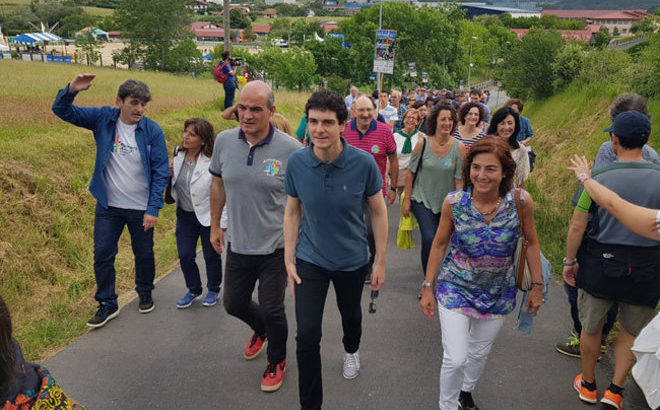
Uriarte ha participado este domingo en el acto de apertura de la fiesta Ibilaldia 2017, organizada por la Ikastola Larramendi bajo el lema ‘Egunero alkarregaz’ en Mungia.
Junto con el resto de autoridades invitadas, entre las que ha estado el diputado general, Unai Rementeria, también han asistido en representación del Gobierno Vasco la viceconsejera de Administración y Servicios, Olatz Garamendi, y la viceconsejera de Política Lingüística, Miren Dobaran, según ha informado el Ejecutivo.
Durante su intervención, Cristina Uriarte se ha referido al sistema propio de evaluaciones y a la importancia de la evaluación, destacando que el objetivo de estas evaluaciones es la mejora del sistema.
«Cuando hablamos de evaluaciones, nos referimos a nuestro propio sistema de evaluaciones. Puesto que resulta necesario para conocer si la progresión de nuestro alumnado es la adecuada, para mejorar el trabajo que estamos desarrollando, y tomar las decisiones oportunas. Y todo esto, mediante nuestro propio sistema de evaluaciones», ha recalcado.
A su juicio, ésta también es una labor que se ha de hacer entre todos pues es útil tanto para el alumnado como para las familias. «Analizar la trayectoria del alumnado y de los centros de enseñanza, con el objetivo único de su mejora. Entendamos la evaluación como una oportunidad de mejora. Ese es su objetivo, y así lo hemos de entender todos: familias, agentes educativos y administración. El fin único es el bienestar de nuestros hijos e hijas», ha asegurado.
COLABORACIÓN
En ese sentido, Uriarte ha expresado que, al igual que en la pasada legislatura, el trabajo colaborativo y el acuerdo son los principales retos del Departamento que ella dirige también para la presente legislatura, «construir en torno a las opiniones, necesidades, modos de pensar o voluntades de todos los agentes», ha explicado.
En este contexto, ha advertido de que «la educación no puede ser usada como arma, no se debe tomar como arma política; la educación nos ha de unir».
«El camino a seguir es el del acuerdo entre todas las partes, y hemos de estar dispuestos a ello», ha continuado, para añadir que «ése es el compromiso y el reto del Gobierno, y todos debemos participar en ello».
Asimismo, ha defendido que se debe alcanzar el acuerdo en torno a los aspectos básicos que desarrollará la futura ley de educación. «Ese es nuestro reto, un reto de país, en el que todos somos responsables. Serán bienvenidos todos aquellos y aquellas que respondan a esta llamada al acuerdo que el Gobierno Vasco lleva tiempo haciendo», ha concluido.
Las jornadas de debate ‘ConCrit – Constructive Criticism’ sobre la infancia y la educación han reunido hoy en Barcelona a unos 50 maestros, educadores y pedagogos europeos para compartir reflexiones alrededor de estos temas.
Las jornadas, que han empezado hoy a las 14 horas y acabarán mañana por la tarde, se celebran en la plaza del Pueblo Romaní, en el barrio de Gràcia, un espacio público abierto para que los debates sean accesibles a todo el mundo.
La presidenta de la Asociación de Profesores Rosa Sensat, entidad fundadora de la red internaiconal ‘ConCrit’, Francina Martí, ha explicado a Efe que las jornadas «tienen un componente muy crítico hacia el orden establecido», pero «desde un punto de vista constructivo», para estudiar «cómo se puede hacer una pedagogía más acorde con la naturaleza de la infancia».
Martí ha denunciado la concepción «competitiva» de la educación que «impulsan modelos como el examen PISA» porque «se le roban al niño las ganas de jugar».
La jornada se estructura alrededor de varias ponencias y debates abiertos, que cuentan con la participación de pedagogos y educadores de Dinamarca, Grecia, Francia o Portugal, además del visionado del documental «Childhood», que tiene lugar esta tarde en los Cines Girona.
OtrasVocesenEducacion.org existe gracias al esfuerzo voluntario e independiente de un pequeño grupo de docentes que decidimos soñar con un espacio abierto de intercambio y debate.
¡Ayúdanos a mantener abiertas las puertas de esta aula!