Page 1029 of 6819
1 1.027 1.028 1.029 1.030 1.031 6.819

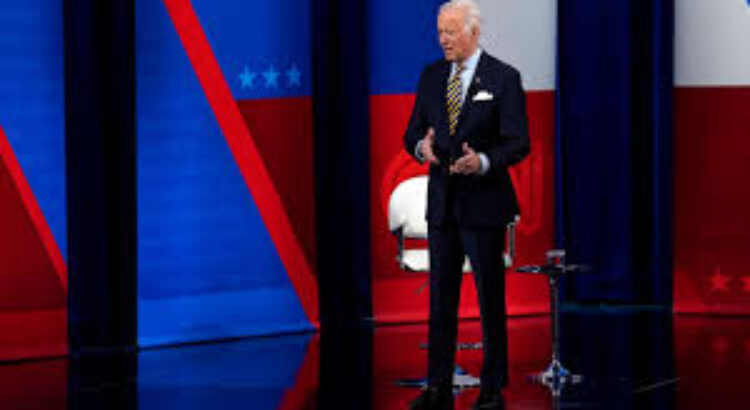
Estados Unidos: Biden caught in schools squeeze amid COVID-19 relief push: The Note

Biden caught in schools squeeze amid COVID-19 relief push: The Note

Questions about school reopening revealed fresh layers of complications.

The TAKE with Rick Klein

It’s a plan the White House is lauding as «bold and ambitious.»

It’s also grown less so through the early weeks of the Biden presidency — and could reveal political vulnerabilities for the new administration as it pushes for a major COVID-19 relief bill.

The president also further clarified his pledge to have the majority of U.S. schools open within his first 100 days in office, saying it was a «mistake in the communication» of that promise to suggest it would extend beyond K-8 classrooms.

Biden didn’t mention teachers’ unions, which have provoked pockets of outrage nationwide for the preconditions some have imposed on reopening. The Biden White House’s labor ties have coalesced into a Republican talking point as the president shops for GOP support for his $1.9 trillion stimulus package.

The reopening of schools is a non-partisan priority for parents and government officials literally everywhere in the country. It’s not an issue that responds naturally or quickly to national guidelines or mandates, as Biden’s team knows well.

Biden on Tuesday laid out a timeline of COVID recovery that would extend well into the next school year. That also puts it well into the next election year before life can be expected to return to normal.

The RUNDOWN with Alisa Wiersema

If there was any doubt before, it’s safe to say by now there’s no love lost between former President Donald Trump and Senate Minority Leader Mitch McConnell. Three days after McConnell first voted to acquit Trump and then publicly rebuked him, Trump railed against the minority leader in a lengthy statement full of personal attacks and political criticisms.

In addition to calling McConnell «a dour, sullen and unsmiling political hack,» Trump indicated he’s willing to wade into future election contests.

«Where necessary and appropriate, I will back primary rivals who espouse Making America Great Again and our policy of America First,» the former president said.
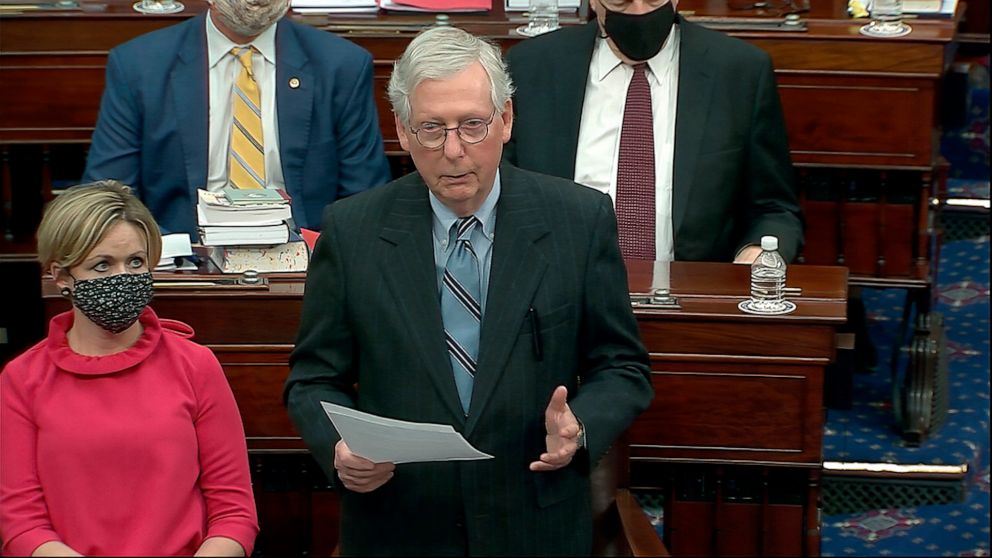
PHOTO: In this image from video, Senate Minority Leader Mitch McConnell, speaks before the Senate voted to award the Congressional Gold Medal to Capitol Police offer Eugene Goodman for his actions during the Jan. 6 riot at the Capitol, Feb. 12, 2021.

The threat could be just that — for now — it is unclear how involved Trump actually plans to be in the 2022 midterm elections and beyond. In the meantime, the self-imposed caveat of «where necessary and appropriate» gives him room to back away from politics if Republicans distance themselves from prioritizing his base.

Still, Trump’s influence over his party and supporters continues to linger over Capitol Hill as the Senate prepares to hold its first hearing next week to examine security preparations ahead of Jan. 6. House Speaker Nancy Pelosi also endorsed the creation of a 9/11-style, independent commission that would investigate the attack on the Capitol. Legislation to set up the commission could be introduced as early as this week, but it remains unclear when it would be voted on.

The official launch of such a commission requires approval from the Senate and a sign off from Biden. On Tuesday, the White House indicated Biden supports the creation of the commission but put the ball back into Congress’ court on following through — all but ensuring that Trump’s ties to the events of that day will continue to be dissected for weeks to come.

The TIP with Quinn Scanlan

With a gubernatorial and Senate race on the ballot in 2022, Georgia was already set to be the battleground state to watch in the next election cycle. But it’s increasingly looking like those races will be dominated by the ghosts of campaigns past.

Stacey Abrams is expected to seek a rematch against Republican Gov. Brian Kemp, and, after filing a statement of candidacy with the Federal Election Commission, on Tuesday, Republican David Perdue went public with a lengthy statement outlining why he’s considering a comeback bid for U.S. Senate.
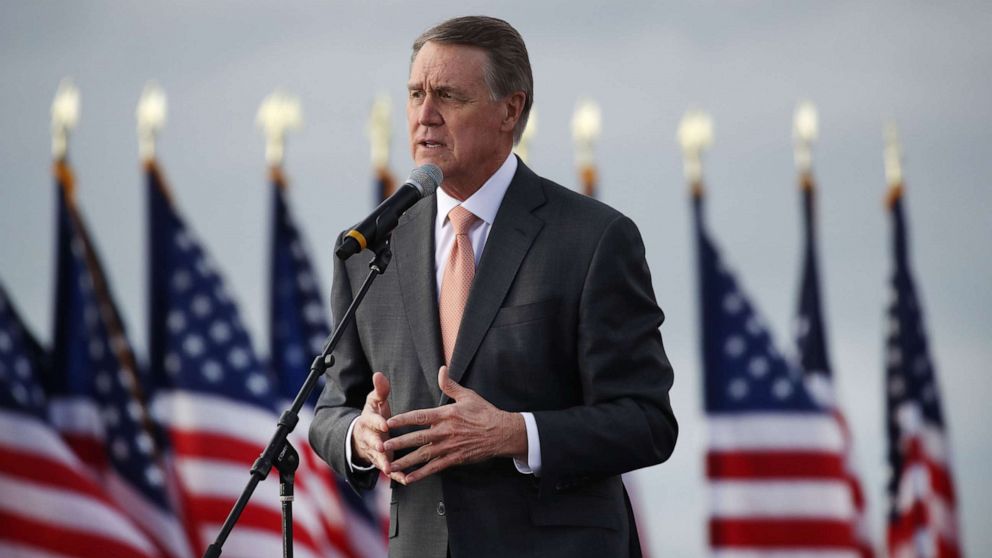
PHOTO: Sen. David Perdue attends a rally with Vice President Mike Pence in support of both he and Sen. Kelly Loeffler on Dec. 04, 2020, in Savannah, Ga.

Despite the Peach State delivering electoral victories to Biden and two Democratic Senate candidates last cycle, Perdue claimed that «Georgia is not a blue state,» asserting the November election, when he just barely missed the 50% threshold necessary to avoid a runoff, is more reflective of the electorate than the dual GOP Senate losses in January.

With the Republican Party in the midst of an identity crisis and Georgia Democrats determined to prove their recent statewide wins were not a fluke, Perdue’s pursuit to rejoin the Senate is unlikely to be an easy one.

For starters, he would face a new challenger: Raphael Warnock. In the runoff, the reverend turned senator received about 20,000 more votes than now-Sen. Jon Ossoff did in his race against Perdue, suggesting he may be a more formidable opponent. And if Abrams runs for governor, she and Warnock, whom she personally recruited to run for Senate, are sure to be a dynamic duo on the campaign trail.

THE PLAYLIST

ABC News’ «Start Here» podcast. Wednesday morning’s episode features ABC News Senior Investigative report Aaron Katersky, who tells us about the lawsuit filed against former President Donald Trump and his personal attorney Rudy Giuliani following the Capitol riot. FiveThirtyEight Senior Science Writer Maggie Koerth explains why Texas’ power grid failed under the weight of winter storms this week. And ABC News Foreign Correspondent James Longman takes us inside the rebuilding of Notre Dame cathedral. http://apple.co/2HPocUL

ABC News’ «Powerhouse Politics» podcast. House impeachment manager Rep. Jamie Raskin, D-Md., talks with ABC News Chief Washington Correspondent Jonathan Karl and Political Director Rick Klein about former President Donald Trump’s second impeachment trial and what’s next for Congress. https://bit.ly/3dqyKZ3

FiveThirtyEight’s Politics Podcast. Nevada Democrats introduced a bill on Monday that would change their state’s presidential nominating contest from a caucus to a primary and also dislodge New Hampshire from its position as the first primary in the nation. Also, over the weekend, outgoing Democratic National Committee Chair Tom Perez said, «a diverse state or states need to be first.» In this installment of the FiveThirtyEight Politics podcast, the crew discusses if any potential changes could reshape the nominating process. They also consider why Republican senators’ votes on convicting former President Donald Trump broke down the way they did. And lastly, they check-in on the gubernatorial recall efforts in California that are very likely to result in a recall election for Gov. Gavin Newsom. https://53eig.ht/3pt7TxN

WHAT YOU NEED TO KNOW TODAY

  • White House COVID-19 Response Team and public health officials hold a press briefing at 11 a.m.
  • President Joe Biden and Vice President Kamala Harris receive the president’s daily brief at 11:30 a.m., have lunch at 12:30 p.m. and meet with labor leaders to discuss the president’s coronavirus relief plan and get input on his infrastructure plan at 3:30 p.m.
  • White House press secretary Jen Psaki and deputy national security adviser for cyber and emerging technology Anne Neuberger hold a press briefing at 12:30 p.m.
  • First lady Jill Biden hosts a virtual roundtable conversation on military child education at 1 p.m.

The Note is a daily ABC News feature that highlights the day’s top stories in politics. Please check back tomorrow for the latest.


Fuente de la Información: https://abcnews.go.com/Politics/biden-caught-schools-squeeze-amid-covid-19-relief/story?id=75928795&cid=clicksource_4380645_3_heads_hero_live_hero_hed
Comparte este contenido:

South Africa: COVID-19 pushes inequality in schools to crippling new level, risks a lost generation of learners

South Africa: COVID-19 pushes inequality in schools to crippling new level, risks a lost generation of learners

The COVID-19 pandemic has plunged South Africa’s schools further into crisis, exposing how the country’s education system continues to be shaped by the legacy of apartheid, Amnesty International said today.

«A child’s experience of education in South Africa is still dependent on where they are born, how wealthy they are, and the colour of their skin.»

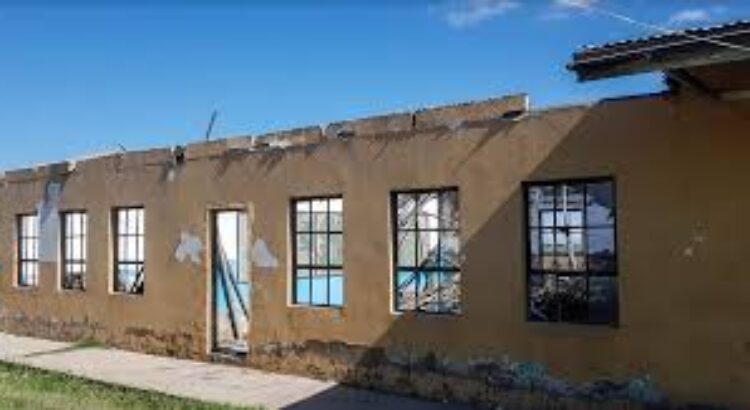
In a new report, Failing to learn lessons: The impact of COVID-19 on a broken and unequal education systemthe organization highlights how students from poorer communities have been cut off from education during extended school closures, in a country where just 10 percent of households have an internet connection. Meanwhile historic underinvestment and the government’s failure to address existing inequalities has resulted in many schools not having running water or proper toilets whilst struggling with overcrowded classrooms, meaning they cannot provide a safe learning environment amid the pandemic.

“A child’s experience of education in South Africa is still dependent on where they are born, how wealthy they are, and the colour of their skin. The COVID-19 pandemic has made a broken and unequal system even worse, putting students from poorer communities at a huge disadvantage. Remote learning is not an option for the vast majority,” said Shenilla Mohamed, Executive Director of Amnesty International South Africa.

“South Africa’s schooling system is so under-equipped that the pandemic has all but ended education for many students, especially those from already disadvantaged communities. Unless urgent access is taken, the future livelihoods of an entire generation will be at risk.”

Disturbing picture

Amnesty International’s report is based on extensive desk research, including analysis of statistical data and institutional studies and surveys, between March 2020 and February 2021.

The education system in South Africa continues to be shaped by the legacy of apartheid. Previous research by Amnesty International showed how many communities continue to live with the consequences of political and economic decisions made during the apartheid era where people were segregated according to their skin colour, with schools serving white communities much better resourced.

When schools first closed in March, for almost three months, the widespread lack of internet access needed for remote study was laid bare. Nationally, only 22% of households have a computer and 10% an internet connection. In North West and Limpopo provinces, only 3.6% and 1.6% respectively have access to the internet at home. By contrast, students from wealthier communities with computer access have been able to continue their education particularly through remote learning provided by better resourced schools.

Further school shutdowns came in July 2020 and January 2021. The closures not only interrupted learning, but also severely affected access to food for around nine million students who depend on school meals for their daily nutrition. The situation became so bad that NGOs were forced to go to court to compel the government to resume the National School Nutrition Programme.

Hazardous and unhygienic

When schools have been open, hazardous and unhygienic conditions have prevented them from meeting basic COVID-safe requirements. Thousands of schools in South Africa have no running water – more than half of schools in some regions. Social distancing is also impossible in many schools. One study by Stellenbosch University found that at least half of South African learners would not be able to comply with distancing rules due to overcrowded classrooms.

The government has failed to ensure that schools in poorer communities have the additional resources they need to provide a secure learning environment. As a result, many have had to shut down repeatedly due to high COIVD-19 infection rates.

The toll on staff needs also to be recognised. By the beginning of 2021 it was estimated that up to 1,700 teachers have lost their lives to COVID-19, more than 300 alone during the recent school holidays.

Drastic budget cuts are not the solution

Despite the clear evidence that school infrastructure and equipment can play a key role in ensuring safer learning environments, in June the government announced that it was planning to divert over R2 billion (US$ 0.13 billion) from the provincial education infrastructure grant. The recent medium-term budget statement revealed that, adjusted for inflation, the education budget will be reduced over the next three years with a cut of over 4% for this financial year.

Amnesty International is calling on the South African authorities to reverse that decision, and commit sufficient funds to address longstanding and ongoing infrastructure failings. These have not just been documented by Amnesty and other organisations but are also confirmed by the government’s own statistics. In March 2020, just before COVID-19 struck, it was reported that only 266 out of 3,988 schools that needed it had benefitted from the President’s own 2018 Sanitation Appropriate for Education (SAFE) campaign to address inadequate sanitation. 56% of South African head teachers reported in a survey conducted by the OECD in 2018 that a shortage of physical infrastructure is hindering their school’s capacity to provide quality instruction. Many of the deficiencies are in breach of the government’s own Minimum Norms and Standards for educational facilities.

Amnesty International acknowledges that guaranteeing access to education during a pandemic is not easy. It also acknowledges that the government has both put various procedures in place  and taken action to seek to ensure both some limited access to remote learning during lockdown and to protect the safety of learners and teachers when schools have reopened.

However, the government needs to do more from exploring further innovative ways to provide access to education for as many students as possible where schools are partially or totally closed due to the pandemic, to  ensuring that all schools have sufficient supplies of personal protective equipment such as masks and hand sanitizer, as well as clean water facilities. Above all it must commit sufficient resources to address the infrastructure crisis in schools which is continuing to undermine the goal of safe learning spaces for all young people.

In certain key areas, the government has failed to meet its obligation to provide equal and accessible education to ALL learners.

«The Constitutional and international human right to quality education includes access to safe, clean and adequate school facilities»

“The Constitutional and international human right to quality education includes access to safe, clean and adequate school facilities,” said Shenilla Mohammed.

“However, this right is clearly being denied to too many learners across the country. Schooling in South Africa has operated on a two-tier system for far too long. Now is the time to take concrete action to ensure that every child in South Africa has equal access to education, during and after the pandemic.”

Fuente de la Información: https://www.amnesty.org/en/latest/news/2021/02/south-africa-covid19-pushes-inequality-in-schools-to-crippling-new-level-risks-a-lost-generation-of-learners/

Comparte este contenido:

Estados Unidos: Los Angeles County elementary schools can reopen as COVID-19 cases drop

Los Angeles County elementary schools can reopen as COVID-19 cases drop

Los Angeles County elementary schools will be allowed to reopen for in-person learning after hitting an expected COVID-19 milestone Tuesday.

«The state permits elementary schools to reopen as soon as we reach an adjusted case rate of 25 per 100,000,» the LA County Department of Public Health said in a statement Monday. «We are informing Los Angeles County schools tonight via an emailed letter that we expect to announce we have reached this threshold effective Tuesday, February 16.»

All schools that want to reopen must submit plans to the county and state health departments showing that they’ve put sufficient safety measures in place before they’ll be permitted to resume in-person classes.

«Thank you to everyone who has worn your masks and kept your distance,» Janice Hahn, Los Angeles County supervisor, wrote on Twitter on Monday. «Case rates in LA County are dropping. Now we can continue the work getting our kids and teachers safely back in classrooms where they belong,» she added.

«This is what we have been working towards,» Hahn wrote.

On Friday, the Centers for Disease Control and Prevention released guidelines on schools reopening that said with proper mitigation measures, schools should be able to safely do at least some in-person learning.

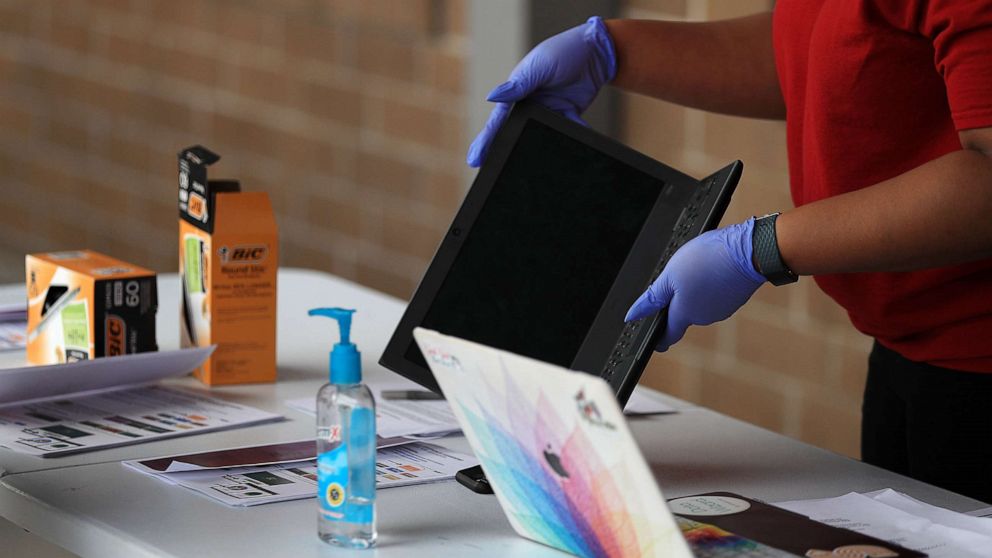
PHOTO: Paul Habans Charter School handed out supplies including food, books and computers to students and the community, when Louisiana schools closed due to the spread of coronavirus in New Orleans, La., March 17, 2020.

LA’s teachers union, United Teachers Los Angeles, pushed back on the CDC’s recommendation on the grounds that the guidelines don’t do enough to address challenges in large urban districts like Los Angeles. «Most troubling is that it does not require vaccinations for school staff, six-foot distancing in all schools, nor improved ventilation as a key mitigation measure,» UTLA said in a statement.

Vaccinating teachers before schools reopen has been a sticking point for union members. «Embedded in our bargaining framework are the components of a safe return,» Cecile Myart-Cruz, UTLA’s president, told ABC’s Los Angeles station KABC-TV.

One of those key components is «vaccines for all educators and school staff,» Myart-Cruz added.

Fuente de la Información: https://abcnews.go.com/Health/los-angeles-county-elementary-schools-reopen-covid-19/story?id=75922269&cid=clicksource_4380645_3_heads_hero_live_headlines_hed

Comparte este contenido:

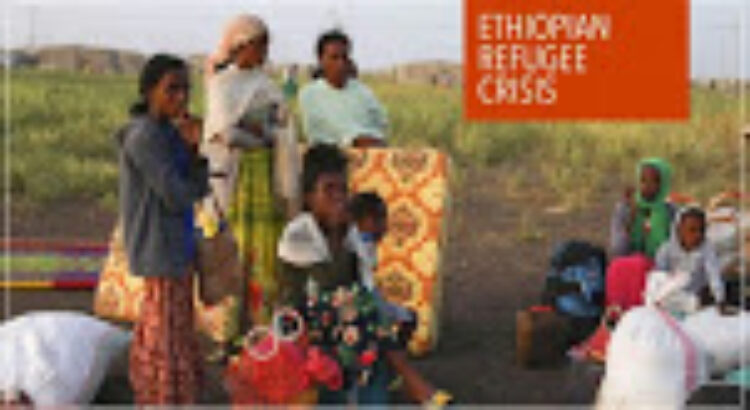
Ethiopian Refugee Crisis

Ethiopian Refugee Crisis

A power struggle between Ethiopia’s federal government and the northern Tigray Region’s political leaders has spawned a military conflict and humanitarian crisis that threaten to destabilize the Horn of Africa.

On November 4, 2020, Ethiopia’s federal government launched what it called a “law enforcement operation” against “rogue” leaders of the Tigray People’s Liberation Front (TPLF), the region’s ruling party, after TPLF fighters attacked a federal military base. TPLF leaders called the federal government’s response a war against the people of Tigray.

But tensions between the central government and TPLF have been smoldering since Prime Minister Abiy Ahmed’s appointment in April 2018 following a monthslong popular revolt.

He initiated a peace agreement with neighboring Eritrea and pushed for reforms such as opening trade, releasing political prisoners and unifying ethnic groups under his new Prosperity Party — measures that also sapped power from the long-dominant TPLF. Reforms that opened up political and economic space also have fueled inter-ethnic violence across the country, with more than 1.2 million people displaced by conflict in 2020 even before the Tigray crisis, the International Organization on Migration reports.

The fighting in Tigray in its first month alone is believed to have claimed thousands of lives and displaced more than 1 million people.  At least 50,000 have fled to neighboring Sudan, the U.N.’s refugee agency says.  Ethiopia itself hosts more than 1 million refugees from other countries.

VOA journalists are reporting on the crisis for TV, radio and digital media. Covering the plight of refugees and displaced people around the world is one of VOA’s top priorities, as part of its mission to inform, engage and connect people in support of freedom and democracy.

ETHIOPIAN REFUGEES FLEE TO SUDAN

THE DIVISION OF ETHIOPIA’S MAJOR ETHNICITIES

Fuente de la Información: https://www.voanews.com/ethiopian-refugee-crisis


Comparte este contenido:

SUTEP Puno demanda al Gobierno central entrega de tablets y acceso a internet para alumnos y docentes

SUTEP Puno demanda al Gobierno central entrega de tablets y acceso a internet para alumnos y docentes

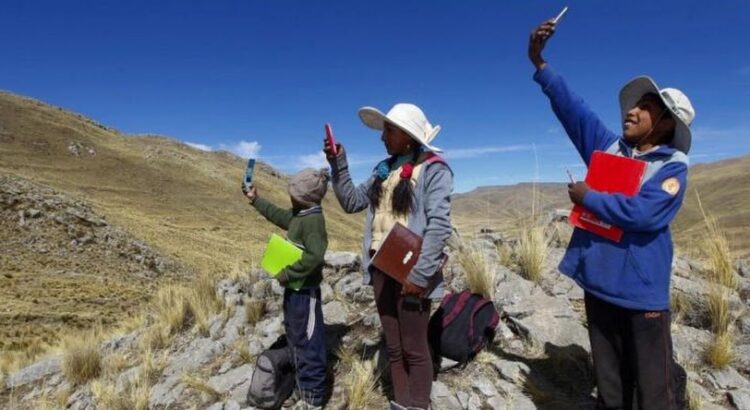
Estando a un mes del inicio del Año Escolar 2021, el Gobierno central debe garantizar la dotación de equipos tecnológicos y el acceso a conectividad para todos los alumnos, señaló el secretario regional del Sutep Puno, Moisés Chipana.

Indicó que el 70% de instituciones educativas de la región, no reúnen las condiciones para el retorno a clases semi presenciales o presenciales, ya que no cuentan con servicios básicos ni infraestructura adecuada; por ello, se debe incidir en la entrega de equipos tecnológicos y acceso a internet, teniendo en cuenta que el año escolar iniciará de forma remota.

«Desde el Sutep hemos planteado que el acceso a conectividad sea un derecho fundamental para estudiantes y maestros, pero el Gobierno central y el Ministerio de Educación hasta la fecha no garantizan ello», dijo a través de Pachamama Radio.


Señaló que a nivel regional son un aproximado de 300 mil estudiantes, y la gran mayoría se ha visto perjudicados por la falta de acceso a internet y equipos tecnológicos que coadyuven a su formación académica a través de la educación a distancia.
Fuente de la Información: https://noticia.educacionenred.pe/2021/02/sutep-puno-demanda-gobierno-central-entrega-tablets-acceso-internet-alumnos-218856.html
Comparte este contenido:

Paraguay: Docentes temen por el aumento de contagios tras el retorno a clases presenciales

Docentes temen por el aumento de contagios tras el retorno a clases presenciales

Sin embargo, el plantel docente de la institución está preocupado por los posibles contagios de coronavirus y piden al Ministerio de Educación y Ciencias (MEC) garantías para el retorno seguro.

La directora de la institución educativa, Vivian Martínez, señaló en una nota para Telefuturo que para esperar la llegada de los insumos todavía están a tiempo y que están a contrarreloj con la construcción de lavamos de material y para juntar más aporte para la obra.

Supuestamente, el Gobierno desembolsó solamente G. 1.500.000 para los elementos de bioseguridad, monto que apenas alcanzaría para la mano de obra, aseguró.

“Los docentes, hasta el momento, 30% presentan vulnerabilidad. Por eso, por lo menos pedimos un poco más de tiempo para empezar las clases, tres meses más mientras esperamos la vacuna. El miedo es que los docentes se enfermen”, enfatizó la directora.

El viceministro de Educación, Robert Cano, afirmó la semana pasada en Monumental 1080 AM que el MEC va a asignar recursos para los insumos de bioseguridad (alcohol, lavandina y jabón), a excepción de tapabocas para los estudiantes y docentes, al menos este sector en principio no por el alto costo que implica.

De esta manera, el funcionario afirmó —tal como lo cuestionó la Organización de Trabajadores de la Educación (Otep – Auténtica)— que el MEC se limitará a entregar aportes de gratuidad para que directores se arreglen en la búsqueda y adquisición de todo lo necesario para arrancar el año lectivo.

Cano mencionó el mes pasado que los docentes con comorbilidades van a seguir trabajando para este año lectivo, pero de modo virtual. Tendrán a su cargo grupos de alumnos virtuales.

Desde el MEC aseguran que el 99,3% de los docentes estarán disponibles para este regreso semipresencial a las aulas.

Apenas 542 profesoras de un total de más de 70.000 educadores presentaron sus certificados de vulnerabilidad que les impide dar clases presenciales en el 2021.

El inicio de clases en las escuelas y colegios públicos está previsto para el próximo 2 de marzo.

El MEC cuenta con un apartado en su página web donde los padres deberán identificarse con sus nombres y apellidos, para que puedan ser vinculados con los datos escolares de sus hijos.

Con dichos datos proveídos se comenzará a trabajar en la formación de los grupos burbuja. Dicha inscripción se va a cerrar alrededor del 20 de febrero.

Última Hora

Fuente de la Información: https://www.nodal.am/2021/02/paraguay-docentes-temen-por-el-aumento-de-contagios-tras-el-retorno-a-clases-presenciales/


Comparte este contenido:

Amnistía Internacional alerta del perfeccionamiento de los instrumentos represivos en Nicaragua

Amnistía Internacional alerta del perfeccionamiento de los instrumentos represivos en Nicaragua


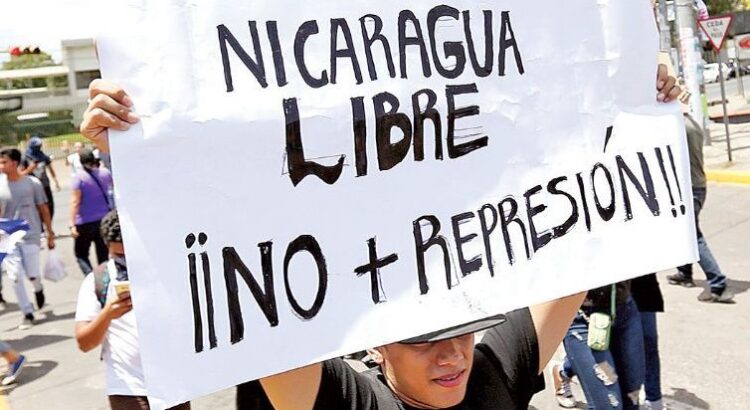
Han pasado casi tres años desde el estallido social que se produjo en Nicaragua. El calendario marca en rojo el 18 de abril de 2018, cuando las protestas contra los abusos del régimen sandinistas de Daniel Ortega y su esposa Rosario Murillo, presidente y vicepresidenta, respectivamente, estallaron por todo el país, primero como consecuencia de una reforma de la Seguridad Social, y después por la respuesta represiva de la policía contra los pensionistas que salieron a las calles a clamar contra ella. Fue en ese momento cuando los jóvenes se echaron también a la calle a defender a sus mayores. La olla a presión del descontento social que se venía acumulando desde hacía tiempo saltó por los aires, y el Gobierno nicaragüense no dudó en aplastarlo primero por la fuerza de la violencia, y después con la aprobación de leyes que criminalizan cualquier acto de rechazo contra él. Leyes que buscan reducir cualquier tipo de oposición a Ortega, que buscará perpetuarse en el poder en las próximas elecciones de noviembre.

Casi tres años después, el balance del estallido social es este: 328 muertos, 2.000 heridos, más de 100 presos políticos, 150 estudiantes expulsados de las universidades, más de 400 sanitarios despedidos y más de 100.000 personas que han tenido que salir del país (la mayoría a Costa Rica), entre ellos 90 periodistas. A pesar de estas cifras, son pocas las referencias que existen en la agenda internacional a lo que sucede en Nicaragua, si bien es cierto que tanto la Unión Europea como Estados Unidos han aprobado sanciones contra militares, miembros del Gobierno y de la policía por los actos de represión. Pero esto no ha aliviado la represión, que ha bajado de intensidad en apariencia, pero que en la realidad se ha recrudecido gracias al «perfeccionamiento del aparato represor a través de nueva herramientas», como denuncia Amnistía Internacional (AI) en un nuevo informe hecho público este lunes.

«Nosotros ya publicamos otros dos informes anteriormente – ‘Disparar a matar‘ y ‘Sembrando el terror’-, que se enfocaban en aquellos momentos de la crisis. En este lo que hacemos es profundizar en la situación actual: en cómo se han perfeccionado las tácticas, las estrategias; y también mostramos cómo la crisis de Derechos Humanos continúa», explica a ABC la abogada especializada en Derechos Humanos e investigadora de AI, Ingrid Valencia, responsable de este informe titulado: «Silencio a cualquier costo. Tácticas del Estado para profundizar la represión en Nicaragua».

Detenciones arbitrarias, delitos falsos

En el informe se detallan tres nuevas herramientas, algunas de las cuales se han «perpetuado en el tiempo, pues fueron implementadas en momentos previos o iniciales de la crisis. Y otras que son más nuevas», explica Valencia. Entre las que se han perpetuado se encuentran las detenciones arbitrarias (según la Comisión Interamericana de Derechos Humanos, en 2018 fueron detenidas de forma arbitraria 1.614 personas), que se implementaron desde el comienzo de la crisis, «pero que no han cesado. Continúan. Y más de 100 personas están detenidas por ejercer sus derechos, por lo que sigue estando vigente el llamamiento para la liberación de los detenidos».

Esta sería una de las estrategia utilizadas por el régimen de Ortega, pues ni siquiera la pandemia ha frenado que se siga produciendo. De hecho, según el informe, a lo largo de 2020 fueron excarcelados más de 6.000 presos por miedo a que se propagara el virus en unas cárceles hacinadas en las que no se aplicaban los protocolos contra el Covid-19 (como la utilización de test). Esta medida no afectó, sin embargo, a aquellas personas detenidas por motivos políticos, ya que tan solo cuatro de los 80 presos por esa razón fueron excarcelados. «Esto muestra un trato diferenciado entre las personas detenidas por ejercer sus derechos o activistas y el resto de la población carcelaria. Para los activistas, las pruebas sanitarias son prácticamente inexistentes, y en un contexto de pandemia se encuentran aún más vulnerables», señala la abogada. La Comisión Interamericana de Derechos Humanos (CIDH) otorgó medidas cautelares de protección a favor de 41 presos políticos que se encontraban en esta situación.

«Existe un trato diferenciado entre las personas detenidas por ejercer sus derechos o activistas y el resto de la población carcelaria. Para los activistas, las pruebas sanitarias son prácticamente inexistentes»

Otra variante incorporada al sistema de represión son los cargos a los que se enfrentan los opositores y activistas. «Las detenciones arbitrarias se siguen produciendo sin cumplir las garantías básicas, pero además, en las ultimas fases de estas detenciones, los cargos de los que son acusados han cambiado: son cargos vinculados con delitos relacionados con el tráfico de drogas, con la extorsión, el secuestro…» Anteriormente, a los opositores y manifestantes se les detenía y se les acusaba de delitos como el terrorismo (en septiembre de 2018 el Gobierno aprobó una ley contra las manifestaciones que llevaba implícita esa acusación). Se ha pasado así de acusar con cargos de perfil político a cargos por delitos comunes, con el objetivo, según Valencia, de «dañar la reputación de las personas activistas».

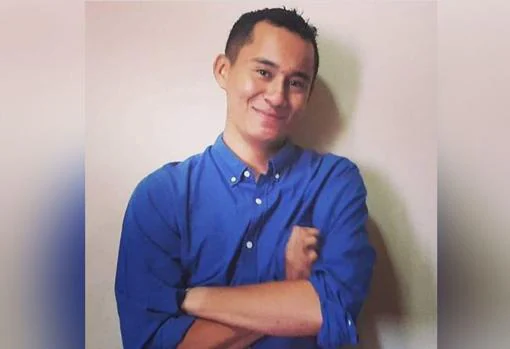
El informe recoge varios casos relacionados con esta estrategia, como el del joven Jhon Christopher Cerna Zúñiga, estudiante de 24 años que participó en las protestas de 2018 y que fue acusado en febrero de 2020 de tráfico de drogas en un juicio con nulas posibilidades de defensa, según sus abogados que continúan apelando su sentencia de 12 años de prisión. María Esperanza Sánchez García, activista política, corrió una suerte similar. Arrestada en enero de 2020, fue condenada a diez años de cárcel. Según su testimonio, recogido por AI en el informe, «los interrogatorios no tenían nada que ver con los delitos por los que la estaban acusando, solo le hablaban de cosas políticas, sobre con quién trabajaba políticamente, con qué opositores trabajaba, en eso enfocaba el interrogatorio, y amenazas contra la familia», relató una persona cercana a María Esperanza a la ONG. «Evidentemente, esta serie de delitos relacionadas con las drogas son utilizados como fachada», asevera Valencia.

El estudiante nicaragüense John Cerna, encarcelado durante 12 años por un presunto delito de tráfico de drogas tras participar en las protestas

Otro punto que preocupa a AI sobre las detenciones arbitrarias son las «condiciones en prisión». «Los reportes de las familias de los detenidos indican que hay limitación para la entrada de productos a la cárcel, como artículos de limpieza, algo muy preocupante en un contexto como la pandemia». A esto se suma la denuncia de violencia de otros presos, de guardias seguridad, o malos tratos y torturas cuando son llevados a celdas de máxima seguridad. «Celdas que son diseñadas evidentemente para presos de alta peligrosidad, pero que en el contexto de la crisis también sirven como zona de castigo para activistas».

Leyes para acallar a los críticos

La segunda táctica represiva del Gobierno de Ortega que aborda el informe es la aprobación de leyes para «acallar» a quienes le critican. «Ahí apreciamos un síntoma del recrudecimiento de la represión, se ve reflejado cómo colabora el poder legislativo para generar un ambiente hostil, de hostigamiento y amenaza. Esto se ha visto de diferentes maneras -explica Valencia-: uno, con la cancelación de registros legales de las organizaciones de derechos humanos, y con la destrucción reciente de organizaciones y medios de comunicación (como El Confidencial), así como con la aprobación de un paquete de leyes que se inició en octubre y que limita y pone en riesgo los derechos humanos», sostiene Valencia.

Estas leyes son la Ley de Regulación de Agentes Extranjeros, que afecta directamente a las ONG y que ya ha forzado el cierre de varias, entre ellas la fundación de la expresidenta Violenta Chamorro; la Ley de Ciberdelitos, que bajo el pretexto de evitar la propagación de «noticias falsas» reprime la libertad de expresión de aquellos que se muestran en desacuerdo o critican al Gobierno de Ortega. También se ha aprobado, en primera lectura, una reforma constitucional que permitirá la cadena perpetua, con un texto cuya «vaguedad» hace pensar en que podría ser utilizada contra opositores al régimen. La norma aprobada más recientemente es la Ley de Defensa de los Derechos del Pueblo a la Independencia, la Soberanía y la Autodeterminación para la Paz, que limita el ejercicio de los derechos políticos protegidos por las normas internacionales de derechos humanos. «Todo esto es una pieza más para el obstáculo del ejercicio de derechos humanos. Y con ello se pone sobre papel una represión que se viene realizando contra las ONG y medios de comunicación». Así mismo retrata «claramente» la ausencia de la independencia de poderes en Nicaragua. «En el aparato legislativo el partido en el Gobierno es quien tiene la mayoría, con lo cual la aprobación de leyes ha sido un proceso muy expédito, a pesar de que organismos de derechos internacionales, como la CIDH o el Alto Comisionado han mostrado su preocupación cuando estas leyes estaban en discusión. Ahora se tiene un set de leyes para acallar a quienes critican las políticas del Gobierno».

Fuente de la Información: https://www.abc.es/internacional/abci-amnistia-internacional-alerta-perfeccionamiento-instrumentos-represivos-nicaragua-202102151557_noticia.html


Comparte este contenido:
Page 1029 of 6819
1 1.027 1.028 1.029 1.030 1.031 6.819