Page 1075 of 6736
1 1.073 1.074 1.075 1.076 1.077 6.736

Argentina: Tras meses de lucha, las trabajadoras de Casas Particulares fueron convocadas a negociación paritaria

Tras meses de lucha, las trabajadoras de Casas Particulares fueron convocadas a negociación paritaria

En marzo, tras declararse la pandemia, la Comisión Nacional del Sindicato de Trabajadoras en Casas Particulares emitió una resolución sin el aval de las organizaciones sindicales por el cual se estableció un 5 por ciento de incremento de haberes para marzo y un 5 por ciento más para mayo, mientras anunció que luego reiniciaría la discusión paritaria.

Pese a que varias trabajadoras del rubro se enfermaron y hasta fallecieron por trabajar en medio de la pandemia, nunca más se abrió la posibilidad para discutir sus ingresos, hasta hoy.

Sonia Kopprio, titular del Sindicato del Personal del Servicio Doméstico de Río Negro y Neuquén, manifestó su “alegría inmensa” por esta noticia y contó parte de la lucha que tuvieron que llevar adelante junto a las compañeras de San Juan y otros gremios para conseguir este llamado.

Según relató la dirigente, desde los sindicatos que integran el sector le han enviado diversas cartas, incluyendo como destinatario al presidente Alberto Fernández, manifestándole la necesidad de recuperar la pérdida del poder adquisitivo ante el proceso inflacionario que se vivió durante todo el año.

Kopprio advirtió que actualmente los salarios de su sector están “por debajo de la línea de la pobreza”, y agregó que “no llegan a cubrir sus necesidades básicas, ni las de sus familias”.

Por tal motivo, señaló que esperan que el próximo 25 de noviembre, cuando se concrete la reunión paritaria, puedan lograr “una solución para el bienestar económico de las trabajadoras de casas particulares”.

Sin embargo, Sonio Kopprio advirtió que no es el único objetivo de recomposición que tienen por delante: “Quedó pendiente el tratamiento de la zona desfavorable, antigüedad y la implementación de medidas de gobierno de ayuda a las trabajadoras del sector”.

En ese sentido, explicó que el incremento por zona desfavorable está en un 25%, mientras que con lo adeudado entre el año pasado y el actual, debería estar en el 40%”.

Fuente de la Información: https://www.agenciacta.org/spip.php?article32075


Comparte este contenido:

Perú queda sin presidente ni jefe de Congreso tras fallida votación en medio de crisis

Perú queda sin presidente ni jefe de Congreso tras fallida votación en medio de crisis

Gerson Guzmán D.

Durante la jornada de este domingo el Congreso de Perú realizó una votación para determinar si, en lista única, se podía designar una mesa directiva tras la destitución de Martín Vizcarra y la renuncia del interino Manuel Merino, quien tuvo que salir del cargo tras extensas jornadas de violencia en el país.

Tras varias horas de votación, el Congreso no logró los votos para instaurar la lista encabezada por Rocío Silva Santiesteban (Frente Amplio) en la presidencia; Francisco Sagasti (Partido Morado) en la primera vicepresidencia; Luis Roel Alva (Acción Popular) en la segunda vicepresidencia y Yessica Apaza Quispe (UPP) en la tercera vicepresidencia.

Tras este fracaso en las votaciones, en que la lista solo recibió 42 votos a favor, es decir menos que la cantidad de congresistas a los que la lista representa, y que tuvo 52 votos en contra (con 25 abstenciones), se suspendió la sesión y se convocó a una Junta de Portavoces.

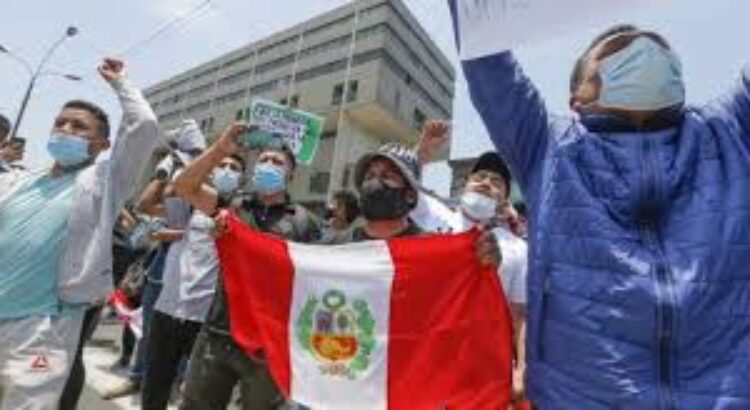
Todo esto se da porque el presidente de Perú, Manuel Merino, dimitió este domingo cinco días después de haber asumido el poder, lo que desató una celebración en las calles peruanas tras varias jornadas de protestas duramente reprimidas por la policía, en las que hubo dos muertos y un centenar de heridos.

“Quiero hacer de conocimiento a todo el país que presento mi renuncia irrevocable al cargo de presidente de la República”, declaró por televisión el fugaz gobernante.

Merino había sustituido el martes al popular mandatario Martín Vizcarra, un día después de que éste fuera destituido por el Congreso por un caso de presunta corrupción.

El Congreso deberá ahora designar a un nuevo presidente que pacifique el país. Será el tercero en menos de una semana, en una nación muy golpeada por la pandemia del coronavirus y la recesión económica, que se sumió en una crisis política tras la destitución de Vizcarra.

Merino, un centroderechista de 59 años, dijo que para que no haya “vacío de poder”, los 18 ministros que él juramentó el jueves seguirán en sus puestos temporalmente, aunque prácticamente todos habían renunciado tras la represión a los manifestantes el sábado.

Tras la dimisión de Merino, Perú estará este domingo unas horas sin presidente, hasta que el Congreso designe a uno nuevo entre sus miembros, posiblemente alguno de los 19 parlamentarios que no votaron a favor de destituir a Vizcarra.

El Congreso había exhortado minutos antes al presidente a dimitir, bajo la amenaza de que iba a echarlo si no renunciaba. Los líderes parlamentarios, que acompañaron a Merino en el juicio político contra Vizcarra, abandonaron al nuevo gobernante tras la violenta represión de las protestas, que generó una ola de condenas en el país y el exterior.

“Lo logramos”

Apenas Merino hizo el anuncio, las calles de Lima se llenaron de manifestantes que golpearon cacerolas y gritaron consignas en una bulliciosa celebración.

“Lo logramos. ¿Se dan cuenta de lo que somos capaces de hacer?”, escribió en las redes sociales el seleccionado peruano de fútbol Renato Tapia.

El exmandatario Vizcarra celebró la renuncia del presidente y exhortó al Tribunal Constitucional a pronunciarse lo antes posible sobre su destitución del cargo el pasado 9 de noviembre. “Ha salido un dictadorzuelo de palacio. Merino ha dado un paso al costado. Estaba resquebrajando nuestra democracia”, dijo a la prensa.

El pleno del Parlamento fue convocado para las 16h00 locales (21h00 GMT) para escoger al nuevo gobernante, que podría salir del centrista Partido Morado, el único que se opuso en bloque a la destitución de Vizcarra.

Las manifestaciones del sábado han dejado dos muertos y 94 heridos, según responsables del Ministerio de Salud. Pero la Coordinadora Nacional de Derechos Humanos afirmó que los lesionados son 112 y alertó que además hay 41 manifestantes “desaparecidos” tras las marchas en Lima y otras ciudades del país.

La represión de esas protestas le costó el poco apoyo político que tenía a Merino. El presidente del Congreso, Luis Valdez, exigió su “renuncia inmediata”, sumándose a la demanda que miles de manifestantes hacían desde el martes.

“El Congreso debe pedir perdón al país por una decisión tan irresponsable (de destituir a Vizcarra)”, dijo la legisladora izquierdista Mirtha Vásquez, del Frente Amplio, una de las 19 integrantes del Parlamento que votó contra la destitución de Vizcarra.

Merino, un político provinciano casi desconocido para los peruanos antes de asumir el mando, fue criticado incluso por figuras de su propio partido, la centroderechista Acción Popular, como el alcalde de Lima, Jorge Muñoz.

Los muertos en las manifestaciones del sábado fueron identificados como Jack Bryan Pintado Sánchez, de 22 años, e Inti Sotelo Camargo, de 24, según la policía. En las redes sociales circulan fotos de ambos bajo el título “Héroes del Bicentenario” (que Perú cumple el 28 de julio de 2021).

“Una persona independiente”

La actuación policial ha sido severamente cuestionada por la ONU y organizaciones de derechos humanos, como Amnistía Internacional, desde que empezaron las protestas el martes, el día que asumió Merino.

La Comisión Interamericana de Derechos Humanos (CIDH), un ente de la Organización de los Estados Americanos (OEA), lamentó la muerte de los dos manifestantes “durante acciones de represión estatal a las protestas multitudinarias” y exigió “investigar inmediatamente los hechos y establecer responsabilidades”.

“No tengo responsabilidad en la violencia”, declaró este domingo el número dos del gobierno, el primer ministro Ántero Flores-Aráoz.

Desde España, el escritor y premio Nobel peruano Mario Vargas Llosa había pedido el cese de la “represión contra todo el Perú” y solicitado que Merino fuera reemplazado por “una persona que sea realmente independiente” y que dé garantías de imparcialidad en las elecciones presidenciales y legislativas de abril de 2021.

Fuente de la Información: https://www.biobiochile.cl/noticias/internacional/america-latina/2020/11/16/peru-no-logra-instalar-mesa-directiva-del-congreso-para-acelerar-sucesion-presidencial.shtml

 

Comparte este contenido:

Venezuela: Responsabilidades suyas y mías en pandemia

Responsabilidades suyas y mías en pandemia

  Esta cuarentena prolongada no puede acostumbrar a ver normal lo que no está bien. En plena cuarentena tenemos responsabilidades ciudadanas, las de siempre y las necesarias para enfrentar la pandemia. La disciplina personal y colectiva es urgente.

En estos días salí a hacer mi compra semanal de frutas y hortalizas. Confieso que no sé qué me tenía más preocupada –o atemorizada–: si el COVID-19 y el descuido de la gente –tapabocas de collar, distanciamiento físico inexistente en colas, gente conversando tranquilamente en la calle– o la cantidad de transgresiones de conductores –semáforo para qué, hablar por el celular mientras conducían, nada de reducir velocidad en las esquinas, estacionar en cualquier parte–.

En esta pandemia, que no ha terminado ni creo que esté tan controlada como nos lo dicen autoridades, tenemos responsabilidades individuales y colectivas, las de antes y las de ahora, y veo muy poca disciplina en los ciudadanos, muy pocos deberes cumplidos.

Empecemos por las de siempre. Las mínimas: respetar las señales de tránsito, los semáforos –cuando están buenos y hay electricidad, aunque haya menos tráfico– y la velocidad en las esquinas. Solo esas dos protegerían enormemente a los transeúntes y a los que van en carro también. Agrego tres más: estacionar donde es debido y no en las esquinas; concentrarse en la conducción del vehículo y no estar hablando por el celular ni mucho menos contestando mensajes (está prohibido por la ley y realmente es peligroso); respetar el flechado. ¡Es increíble cómo hasta en eso nos hemos indisciplinado! Tanto motorizado, incluyendo uniformados, como ciclistas, como vehículos “tragándose” las flechas… La verdad es que no hay más accidentes en este país porque Dios es muy grande. No veo otra explicación “científica”. Los ángeles de la guarda están trabajando extra todo el tiempo. Ya me lo dijo el otro día un cuidador de carros, cuando insistía en que me estacionara en un lugar prohibido, y yo se lo hice ver. Me miró con cara de, “¿Esta de dónde salió?” y me dijo: “Señora, eso era antes. Ahora todo el mundo hace lo que le dé la gana”. No le hice caso, por supuesto, pero pensé que no le faltaba razón, aunque esté mal.

Fíjense ustedes que respetar las normas de tránsito generan un bien para usted y para los otros. Cuidamos a los demás y nos cuidamos nosotros mismos. Egoísmo legítimo pues.

Veamos ahora las responsabilidades generadas por esta pandemia y el peligro de contagio que todos tenemos. Lo que sigue, en buena parte, lo escuché en uno de esos excelentes seminarios que la Escuela de Psicología de la UCAB Caracas. El tema era precisamente: ¿La pandemia en Venezuela está controlada? La respuesta de los 3 invitados fue que no. Pero quiero detenerme en lo que el doctor Gustavo Peña, psicólogo, mencionó. Lo hago de manera desordenada, y seguro se me escapan cosas interesantes. El especialista decía que no estamos haciendo lo suficiente. Se refería a nosotros, los ciudadanos. Nos hemos ido acostumbrando a este “riesgo crónico” y entonces hemos ido aflojando las medidas. ¿No ven ustedes lo mismo? La cantidad de gente con su mascarilla de collar, el apurruñamiento en las colas o en lo que queda de transporte público, por mencionar dos aflojamientos en las medidas recomendadas.

Otro elemento que comentó el doctor Peña, es que hay que gente que no percibe el peligro. Eso no sólo pasa aquí, en Venezuela. También sucede en otros países. Y dio algunos datos de estudios hechos en otras partes: hay un 30% de la población que no considera que de verdad se puede contagiar; hay un 25% que considera que hay alto grado de peligro y un 45% que alguna vez se le ha ocurrido que puede tener riesgo. ¿No ha escuchado usted desconocidos y conocidos diciendo que estamos exagerando cuando recordamos las normas de prevención? Si no percibo riesgo, simplemente no hago nada.

Hay también cierta “filosofía simplista”. Este calificativo lo pongo yo, no el doctor Peña. “De algo nos tenemos que morir”, y entonces hacemos poco o nada.

Otra creencia que conspira contra el comportamiento adecuado para la prevención es creer que nos podemos contagiar solo de los desconocidos, pero no de los amigos y allegados. Por eso, entre otras cosas, las fiestas y reuniones sociales en plena pandemia.

No puedo resumir en pocas líneas todo lo interesante que fue ese foro, pero en el canal de YouTube de la UCAB puede recuperar el contenido completo.

Claro que toda la responsabilidad no está en nosotros, los ciudadanos. Por supuesto que las autoridades son las llamadas a orientar a toda la población, no sólo con las campañas y los informes cotidianos y con la aplicación de pruebas –que entiendo que aquí se hacen muy pocas–. Si tenemos unas autoridades poco creíbles o nos parece que no hacen lo suficiente, nos corresponde a nosotros cuidarnos y cuidar a los demás.

Esta cuarentena se va a seguir prolongando. Tenemos que aprender a vivir con ese virus procurando salir airosos. Tenemos que cumplir con nuestras responsabilidades personales y hacer algo para que sean colectivas. No seamos pues parte del problema sino parte de la poca solución que podamos aportar.  Eso es lo verdaderamente ciudadano y lo inteligente.

Fuente de la Información: http://www.correodelcaroni.com/opinion/7537-responsabilidades-suyas-y-mias-en-pandemia

Comparte este contenido:

El Frente Polisario declara el fin del alto el fuego tras el ataque militar marroquí a civiles saharauis

El Frente Polisario declara el fin del alto el fuego tras el ataque militar marroquí a civiles saharauis

Mediante un decreto presidencial el Secretario General del Frente Polisario y presidente de la República Saharaui, Brahim Ghali declaró el viernes el fin del alto el fuego tras la violación del mismo por las fuerzas de ocupación marroquíes. Esta declaración supone la reanudación de las hostilidades en defensa de los legítimos derechos del pueblo saharaui.

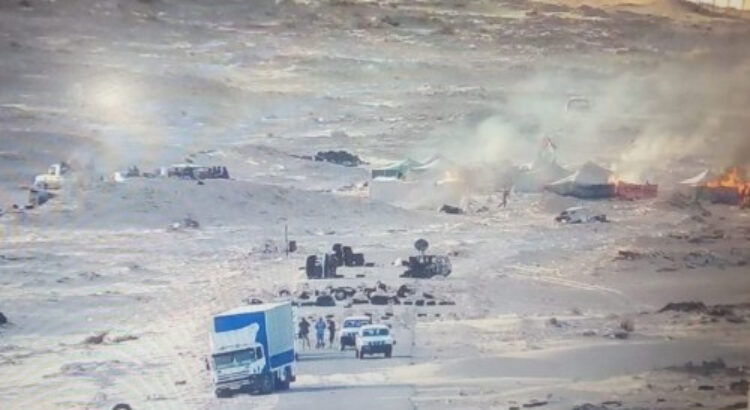
La declaración es la respuesta del pueblo saharaui a la violación por parte del Reino de Marruecos del alto el fuego el viernes, cuando su ejército atacó a los civiles saharauis que se manifestaban pacíficamente en la brecha de Guerguerat, abierta en el muro marroquí, al sur del Sáhara Occidental.

El objetivo de la ofensiva militar marroquí es poner fin a la movilización de civiles saharauis que bloquean pacíficamente el paso fronterizo desde el pasado 21 de octubre. Aunque no se han dado cifras del número de víctimas el campamento donde se concentraba la protesta ha terminado en llamas. Las fuerzas de ocupación marroquíes están impidiendo además que los corresponsales de prensa puedan tener acceso a la zona.


El Frente Polisario acusa a Marruecos de violar el alto al fuego después de haber entrado en la parte del territorio saharaui liberada de la ocupación y de haber atacado a civiles.

En los campamentos de refugiados de Tinduf, en Argelia, numerosos jóvenes saharauis han mostrado su indignación exigiendo al Frente Polisario una respuesta inmediata a la invasión militar y a la represión del territorio libre del sur del Sáhara Occidental donde se ha producido la agresión.

Sigue la lucha del pueblo saharaui por su legítimo territorio contra el ocupante marroquí

Hay que recordar que el acuerdo de alto el fuego fue firmado entre el Frente Polisario y el Reino de Marruecos en 1991 bajo la supervisión la ONU como implementación de la Resolución 690 de 1991 del Consejo de Seguridad para organizar un referéndum de autodeterminación para el pueblo saharaui, que nunca se ha llegado a producir por la oposición de la monarquía marroquí y la complicidad de la llamada «comunidad internacional», aliada a los intereses del autoritario y represor régimen alauita.

El Frente Polisario fue creado en 1973 para exigir la descolonización española, que reconoció las aspiraciones colonizadoras de Marruecos sobre el territorio en 1976. Desde entonces, combinando represión y colonización, la monarquía marroquí ha expulsado por la fuerza a gran parte de la población saharaui, refugiada principalmente en los campos del sur de Argelia, y ha construido un muro de ocho tramos que totalizan 2720 km en el territorio ocupado, una zona militar con búnqueres y campos de minas para impedir las incursiones del Frente Polisario y el retorno de los refugiados saharauis a su legítimo territorio.

Fuente de la Información: https://kaosenlared.net/el-frente-polisario-declara-el-fin-del-alto-el-fuego-tras-el-ataque-militar-marroqui-a-civiles-saharauis/

Comparte este contenido:

China: Holograms of award-winning vocalists take flight as virtual reality dance show tackles climate change

Holograms of award-winning vocalists take flight as virtual reality dance show tackles climate change

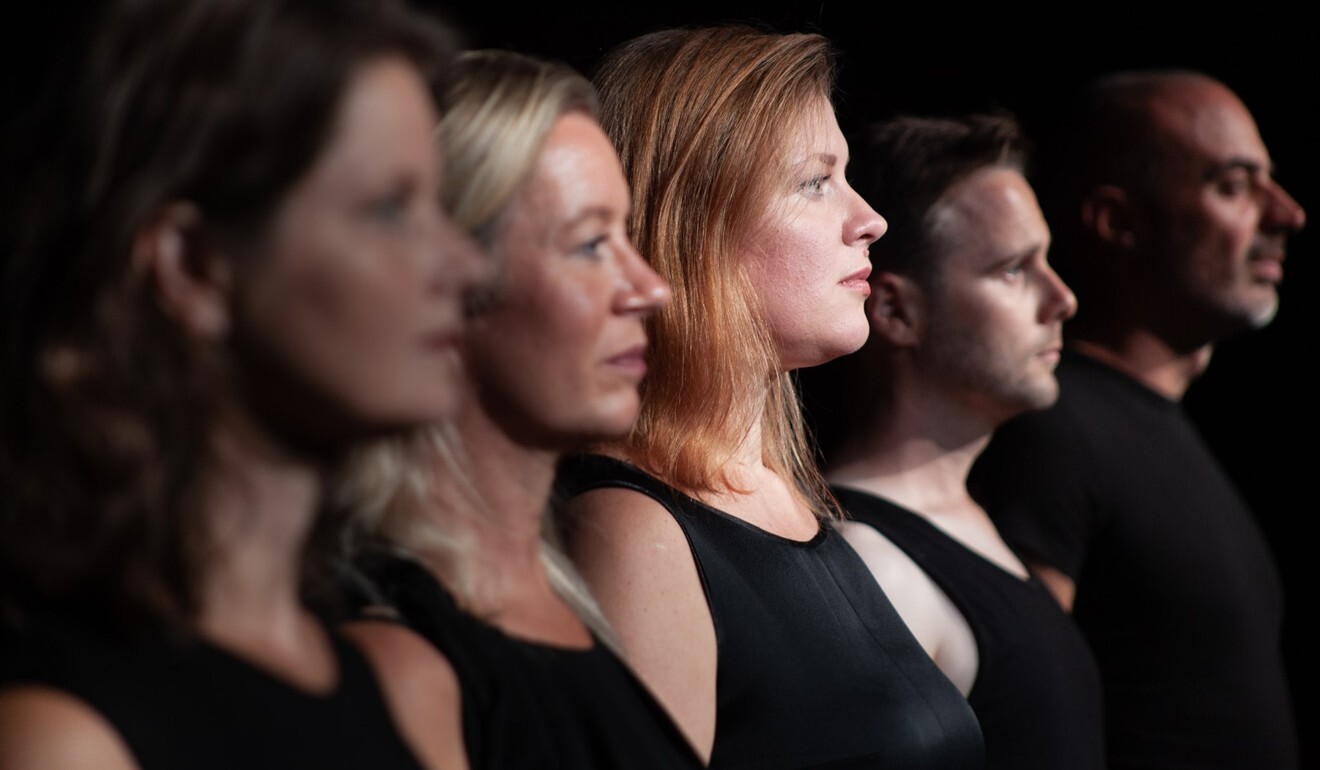
Hong Kong’s virtual reality night production, Aria, sees members of Denmark’s vocal ensemble, Theatre of Voices, appear via hologram alongside a live performance by the Hong Kong Children’s Choir.

Artists have long celebrated the beauty and power of the natural world. But as concerns grow over global warming and the melting polar ice caps, rising levels of toxic smog polluting cities and deadly wildfires ravaging forests, they have become increasingly vocal about safeguarding the planet.

They are now using art, theatre, dance and music as platforms to call for change and urgent action to tackle the climate-change problems threatening the Earth’s future before it is too late.

We wanted to make [the public] aware of the things we take for granted, like air. Climate change is established science, but somehow people don’t feel it affects themDr Eugene Birman, composer and co-director, Aria

Many artists have embraced technology, such as virtual reality (VR) and augmented reality (AR) to heighten the emotional response of audiences.

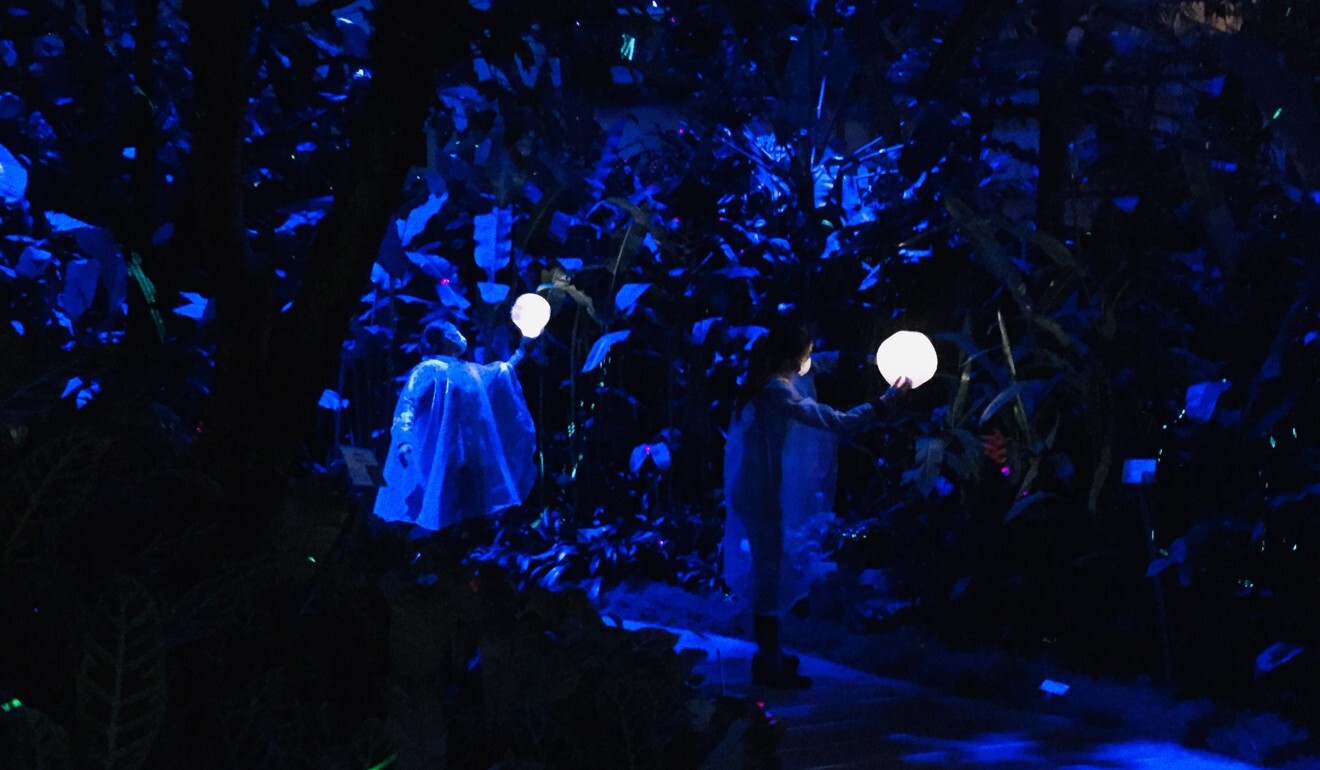
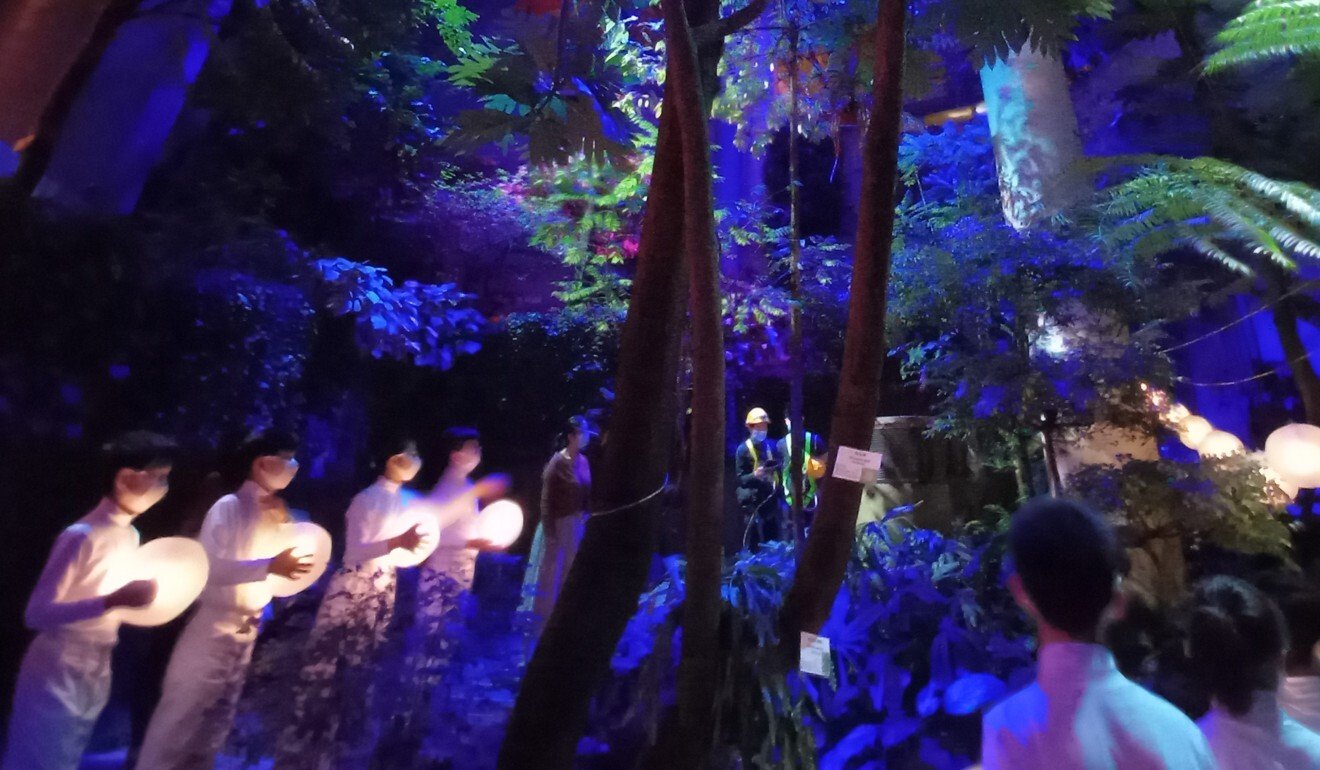
Dancers lead the way in Hong Kong’s production of Aria, which takes people on an after-dark journey of music, art and dance through a greenhouse, while highlighting global problems such as pollution and climate change.
In New York last summer, artist Valentino Vettori invited a group of contemporaries to create a 15-room pop-up exhibition, Arcadia Earth, featuring installations made of recycled waste.

The show, which closes at the end of the year, uses AR and VR to transport viewers to vivid marine landscapes and forests that are under threat, accompanied by alarming text and statistics.

Organisations such as the UN have been taking advantage of the large captive global audience forced to stay indoors by the Covid-19 pandemic by getting their messages across online.

The UN’s Environment Programme, for example, created a VR experience  where viewers are confronted with a huge orange ball of gas, representing their carbon footprint, which grows ominously as they navigate their way through various everyday scenes and make choices that either harm or help the environment.

Dynamic, multisensory night show

This month Hong Kong will present an impressive VR night production, Aria, with vocal performances, dance, holograms and light installations set inside Hong Kong Park’s Forsgate Conservatory, which aims to draw attention to the global problems of air pollution and climate change.

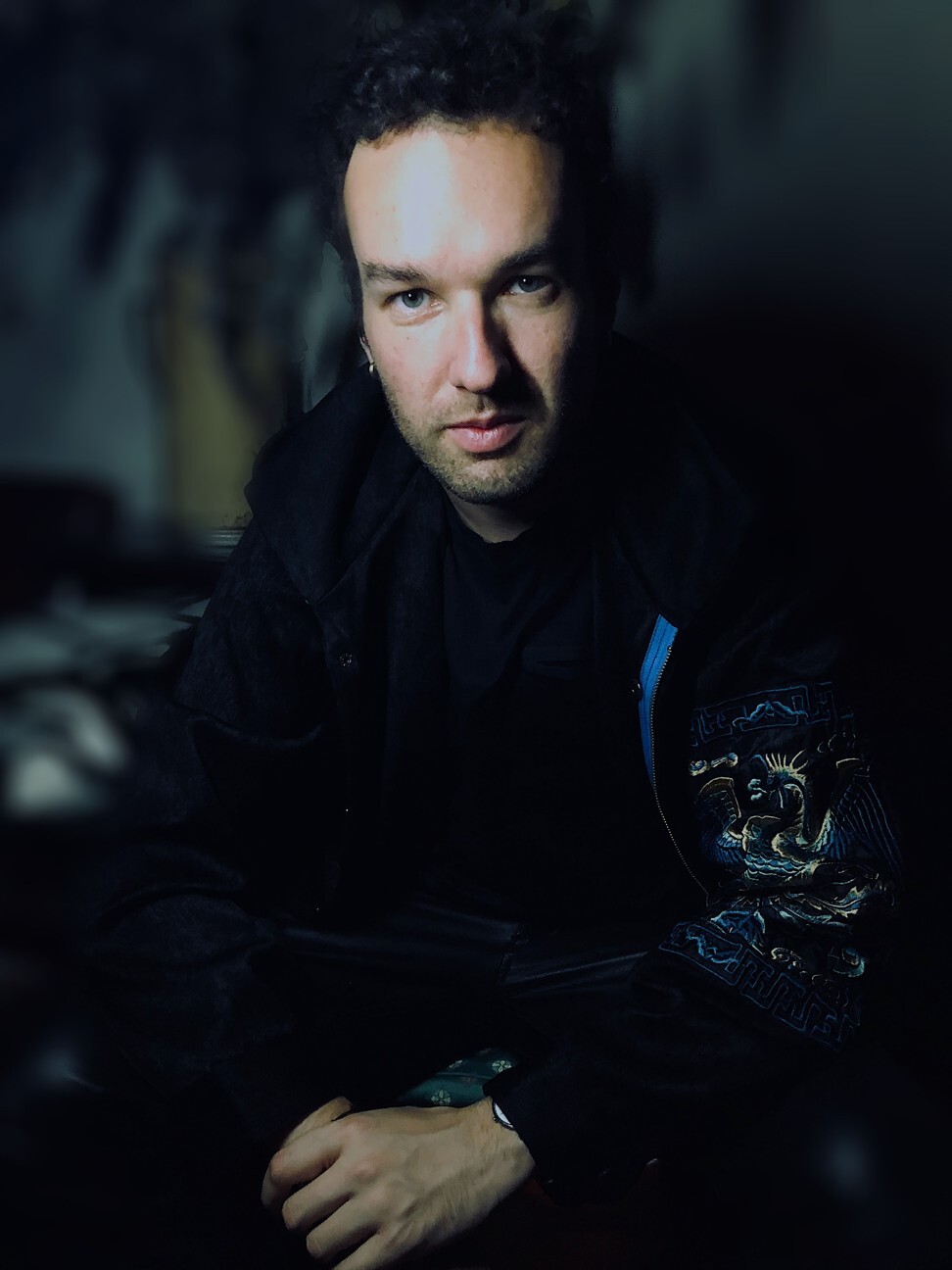
The show – co-directed by internationally acclaimed composer Dr Eugene Birman, assistant professor at Hong Kong Baptist University’s (HKBU) department of music, and renowned local visual artist Kingsley Ng – features the vocal talents of the Grammy award-winning Danish vocal ensemble, Theatre of Voices, who appear via holograms, and live performances by the Hong Kong Children’s Choir and local dancers.

Greenhouses are often seen as an ideal world, like this Avatar-esque conception of a [verdant] forest, but there’s also the subtext of the greenhouse effect hereDr Eugene Birman

The live, near-80-minute production, curated by Stephanie Cheung, which runs for eight nights from November 12, provides an after-dark experiential multisensory journey through the park’s 1,400-square-metre (15,000-square-foot) greenhouse.

The 360-degree VR version, lasting five minutes, will go live on YouTube on the day of the premiere.
Denmark’s vocal ensemble, Theatre of Voices, appear as holograms in Hong Kong’s virtual reality night production, Aria.

Aria is one of the most highly anticipated events at this year’s ReNew Vision, an online platform that showcases newly commissioned online works by prominent local and overseas artists, which was launched by the New Vision Arts Festival.

The biennial event, known for staging groundbreaking arts performances, which was postponed this year because of the outbreak of the coronavirus disease, Covid-19, will become an annual event from 2021.

When art and science combine

Aria – a pilot project of HKBU’s Augmented Creativity Laboratory, which was set up to support cross-disciplinary projects – was created after a two-year research collaboration between its music and computer science departments.

“We wanted to make [the public] aware of the things we take for granted, like air,” says Birman, 33, who explored social issues such as Estonia’s 2008 financial crisis and Russian border treaties in his previous work.

“Climate change is established science, but somehow people don’t feel it affects them. They say ‘Yes, the sea is rising, or the weather is different, but it doesn’t affect my daily life’.”
Dr Eugene Birman, assistant professor at Hong Kong Baptist University’s department of music, created the music for Aria and also co-directed the show.

He says the aim of Aria was to use art and ordinary people’s comments about the environment to make the science more accessible to audiences.

To gather impartial views about pollution in Hong Kong, Birman worked with a computer science research team who analysed the mainland Chinese social media channels, Weibo and WeChat, to find comments that included keywords about Hong Kong air pollution.

The team also searched social media posts in Denmark and other countries, and gathered additional statistics on pollution.

American writer Scott Diel combined a selection of the social media posts and data into a libretto, sung by Theatre of Voices, with Birman composing the score.

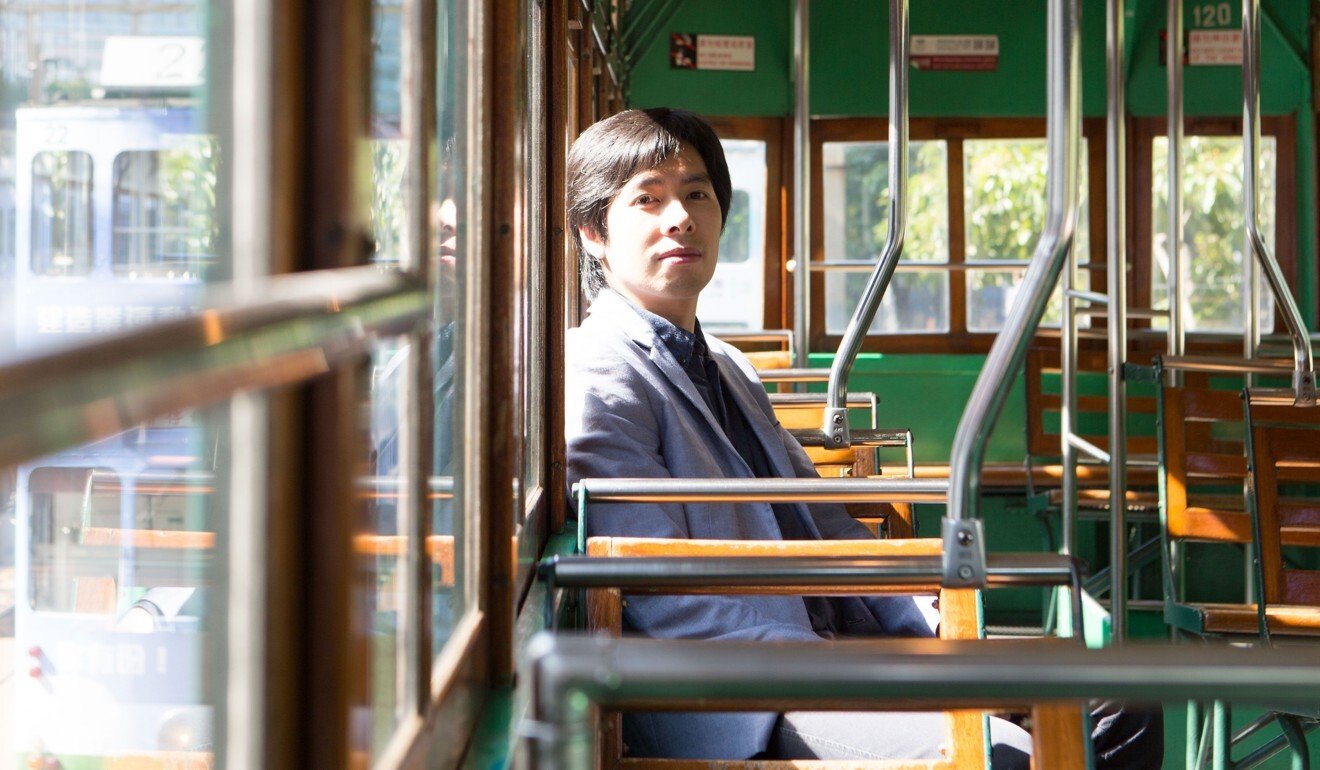
Kingsley Ng, a visual artist and assistant professor at Hong Kong Baptist University’s Academy of Visual Arts, also served as the co-director of the production, Aria.

Kingsley Ng, a visual artist and assistant professor at Hong Kong Baptist University’s Academy of Visual Arts, also served as the co-director of the production, Aria.

The Danish ensemble – one of Europe’s foremost vocal groups focused on performing new music, which is conducted by Paul Hillier – has performed at leading concert halls including New York’s Carnegie Hall, London’s Barbican Centre and Sydney Opera House.

It won a 2010 Grammy for The Little Match Girl Passion, the 2008 choral work based on Danish author Hans Christian Anderson’s story, The Little Match Girl. The group’s evocative vocals can also be heard on film soundtracks such as La Grande Bellezza and Arrival.

Someday humans will listen to air; air won’t smell of garbage, but of strawberry confectionery and flowersA lyric in Aria, written by Hong Kong Children’s Choir

Birman and Ng both felt it was important to give Hong Kong youth a platform by involving the children’s choir in the show.

“Any work about the environment is essentially about the future and the next generation,” says Ng, 39, who is also assistant professor at HKBU’s Academy of Visual Arts.

Members of the choir, who are aged from 11 to 17, sing in both Cantonese and English, using lyrics they wrote, based on their concerns about air and the health of the planet, including one line: “Someday humans will listen to air; air won’t smell of garbage, but of strawberry confectionery and flowers.”

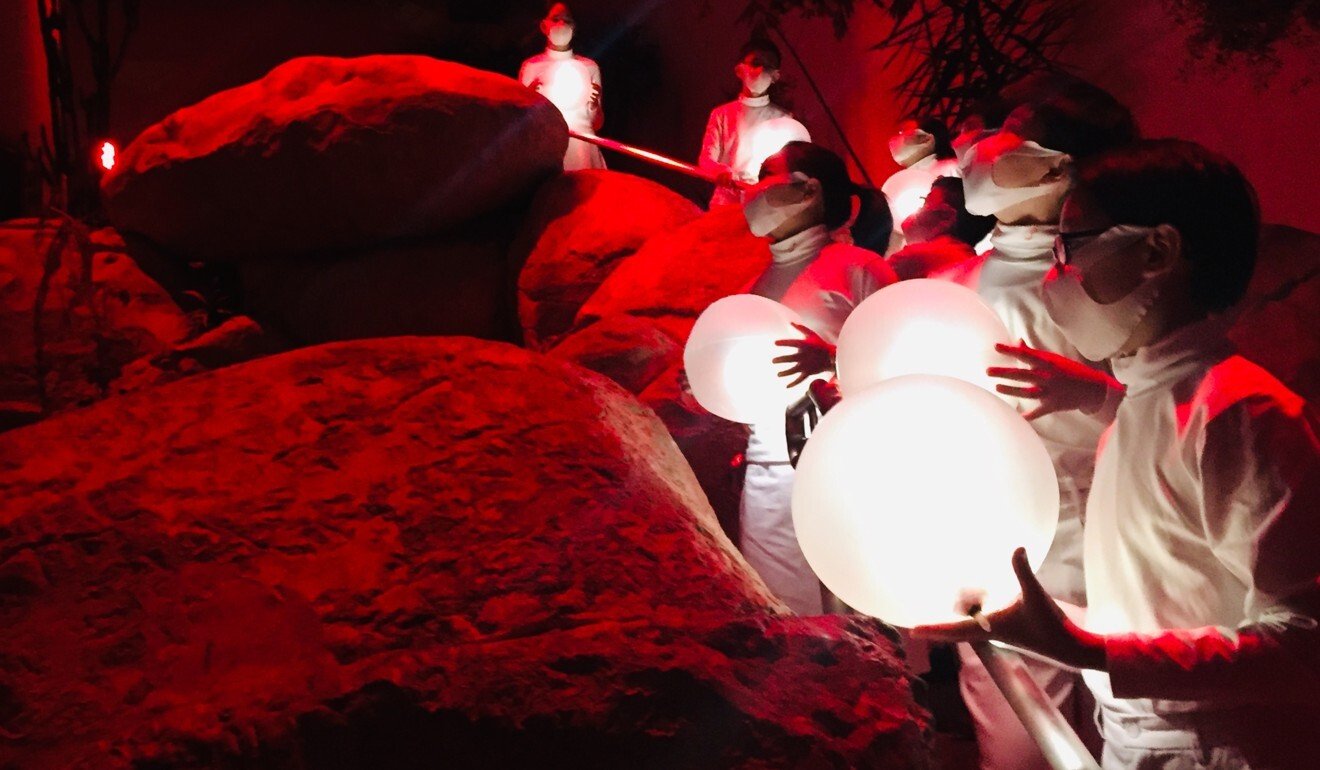
Members of Hong Kong Children's Choir sing lyrics they wrote themselves on their concerns about pollution and the health of the planet in the after-dark experiential production, Aria.

Members of Hong Kong Children’s Choir sing lyrics they wrote themselves on their concerns about pollution and the health of the planet in the after-dark experiential production, Aria.

Experiential trip with a message

Ng says Aria starts with dancers, dressed in costumes designed by Hofi Man Ho-yin, who are meant to personify air and “express freedom, confusion, agitation through their movements”, guiding audience members in groups of 20 through three sections of the greenhouse.

A staircase leads to the Humid Plant House, a cool moist environment where the audience is immersed in a fairy-tale scene with what appear to be thousands of fireflies – created by stage designer Lee Chi-wai using tiny laser beams.

“Greenhouses are often seen as an ideal world, like this Avatar-esque conception of a [verdant] forest, but there’s also the subtext of the greenhouse effect here,” Birman says.

[Virtual reality] gives you the best seat – and the only seat – and there’s something to that … It’s very powerful, because it gives you the personal connection to something that you [create] on your own termsDr Eugene Birman

“There’s a tension between this ethereal, beautiful space and words and sounds that are suggesting not all is well.”

Dancers lead the audience, accompanied by the children’s choir and a conductor, into the Dry House, which is filled with ominous red light, creating the impression it is a desert. Negative social media text about air quality appears on LED scrollers placed alongside cactuses, while images of Theatre of Voices appear on hologram fans.

“It’s like the world that we are experiencing now with global temperatures getting hotter and desertification intensifying,” Cheung says.

A hologram of one of the Danish Theatre of Voices performers appears on a water vapour screen during the production, Aria.

A hologram of one of the Danish Theatre of Voices performers appears on a water vapour screen during the production, Aria.

The audience lastly enters a dark space – or “void”, says Cheung – with fleeting sounds, light and airflow, in the conservatory’s Display Plant House, ahead of the show’s climax.

As viewers step from the conservatory into an outdoor podium, they will see holograms of the Theatre of Voices projected on a big fog screen, made from water vapour, against the backdrop of the city skyline.

“You’re no longer in the rarefied air of the greenhouse,” Birman says. “You’re in the real air of the world, and that’s when we bombard the audience with the heavy stuff.”

Solos by members of Theatre of Voices feature alongside dance sequences, to help leave viewers reflecting on what man has done to the Earth’s environment.

VR can be catalyst for change

While Birman and Ng had planned to create a VR version of Aria before the Covid-19 pandemic, they accept that the show has gained even greater resonance by being staged during the continuing outbreak.

Instead of simply recreating the production using VR, Ng says they wanted to offer a different experience for audience members by capturing unusual perspectives of the greenhouse, which are normally not visible to the naked eye, such as the point of view of an insect or a bird flying above the plants.

Hong Kong’s virtual reality version of Aria offers a 360-degree perspective of the production, with cameras showing unusual viewpoints, such as that of an insect or a bird in flight.

Hong Kong’s virtual reality version of Aria offers a 360-degree perspective of the production, with cameras showing unusual viewpoints, such as that of an insect or a bird in flight.

The show’s producers hope that by choosing to feature Theatre of Voices in hologram form, rather than flying the group to Hong Kong to perform, it will help to emphasise the need for artists, musicians and other performers to reduce air travel and their carbon footprints in future.

Birman says VR helps to give viewers an intimate experience which can help drive home important messages.

“It puts you in a new world, basically, and sometimes that’s what somebody needs, to be completely enveloped in something,” he says.

“It gives you the best seat – and the only seat – and there’s something to that … It’s very powerful, because it gives you the personal connection to something that you [create] on your own terms.”

Aria’s presentation of Hong Kong students’ thoughts about air pollution and the dangers facing the planet through the performances of the children’s choir also echoes recent youth climate change protests, which last year saw four million young people around the globe taking to the streets demanding action to tackle the problems.

Birman says by combining the visceral qualities of VR with children’s voices, Aria has the power to be a catalyst for change.

“Art is one of the few outlets where children’s voices can be heard … it can amplify something that is otherwise very quiet or completely silent,” he says.

Fuente de la Información: https://www.scmp.com/presented/lifestyle/arts-culture/topics/when-artworks-click/article/3108245/holograms-award-winning

Comparte este contenido:

Tailandia: Students Climb Monument, Rappers Target Monarchy

Students Climb Monument, Rappers Target Monarchy

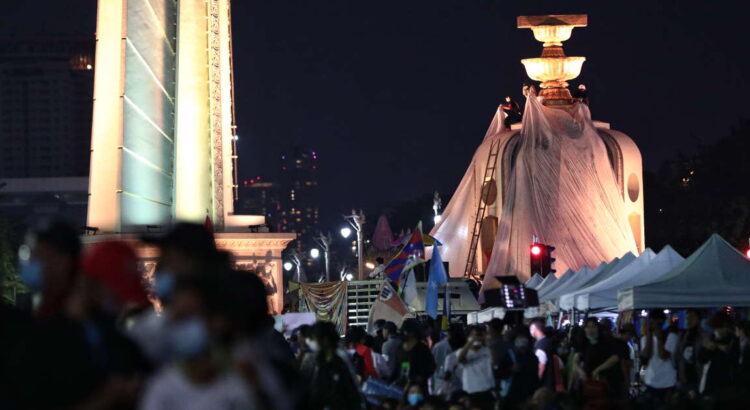
A part of the Democracy Monument is draped with a large white sheet with messages from pro-democracy protesters during an anti-government rally in Bangkok on 14 November, 2020. (AFP Photo)

Thai pro-democracy protesters scaled a Bangkok monument Saturday night to unfurl a giant banner scribbled with anti-government slogans, and a Thai hip hop group took aim at the monarchy with their new song.

The kingdom has for months experienced massive student-led demonstrations demanding a new constitution, changes to how the royal family operates and for Prime Minister Prayut Chan-o-cha –who rose to power in a 2014 coup – to resign.

Several thousand people turned out for a carnival-themed rally dubbed «Mob Fest» at the Democracy Monument, a major intersection in Bangkok.

In the afternoon, high school students and other demonstrators wrote in marker pens and spray-painted messages on giant white sheets.

«You have been stealing my bright future,» one message said. «Democracy will win.»

Bangkok graphic designer Pearl, 25, watched as a group of protesters used ladders to climb up the three-metre (nine-foot) high central turret of the Democracy Monument, as musicians played a drum beat.

«This is a symbolic act of free speech,» she said.

Protesters sang a Thai version of Les Miserables «Do You Hear the People Sing?» and the crowd raised their hands in three-finger salutes – a pop culture reference to the «Hunger Games» movies.

Earlier they turned their backs and did the same gesture as the royal motorcade drove past.

King Maha Vajiralongkorn and Queen Suthida were en route to open a new train line elsewhere in the city – with thousands of royalist supporters wearing yellow turning out to show support.

Rapping For Reform

Thai hip-hop sensation Rap Against Dictatorship debuted their latest song ‘Reform’ in front of a live audience at the protest on Saturday night.

The group released the music video clip on Friday, which has already garnered 1.4 million views on YouTube and was shot at previous rallies.

The counter-culture music icons have long irked Thai authorities and two band members, Dechathorn Bamrungmuang «HockHacker» and Thanayut Na Ayutthaya «Eleven Finger», were arrested and charged with sedition in August, but later released on bail.

“You feast on our taxes so we ceased to be mute. No, we ain’t gonna grovel, here’s our three-finger salute,» the band raps in their new song.

Dechathorn said the song was inspired by the government’s lack of response to the protest movement and failure to act on its demands.

«Yes, I am afraid of being arrested again – that’s why the words of the song have come from the protest mob,» Dechathorn said.

«We are raising questions rather than just cursing the government in this song,» Nutthapong «Liberate P» Srimuong said, adding he hopes it brings the reform agenda to a broader audience.

Monks Defy Protest Ban

Thailand’s National Office of Buddhism this week issued an order barring monks and novices from attending mass protests, but that didn’t stop two monks from taking to the stage.

«The leaders of Buddhism have warned if we participate, they will take our titles and chase us out of the religion. They should do that to the Lord Buddha too,» one monk told the crowd.

«I’m right to use my orange robes as a shield for the people.»

Earlier angry high school students calling themselves the Bad Student movement rallied outside the Thai education ministry before marching to join the main rally.

They want Education Minister Nataphol Teepsuwan to resign and staged a fake funeral for him.

«He has failed to reform the education system so he is dead to us,» Anna 15, said, as she put flowers into a wooden coffin, next to a picture of the minister.

The students are calling for an overhaul of the school system, curriculum, strict rules, dress codes and standardised haircuts.

Thai authorities deployed 8,000 police to patrol Saturday’s protest.

Police used a water cannon against demonstrators at a rally last Sunday. It was only the second time such tactics were used. – AFP

Fuente de la Información: https://theaseanpost.com/article/students-climb-monument-rappers-target-monarchy


Comparte este contenido:

Estados Unidos: John M. Belk Endowment Impact Fellows Gain Valuable Research, Career Experience Through Work at Belk Center for Community College Leadership and Research

John M. Belk Endowment Impact Fellows Gain Valuable Research, Career Experience Through

Work at Belk Center for Community College Leadership and Research

Kenzie Bell has always been interested in the intersection of education and policy, particularly as public education relates to nonprofits and government entities, so when she learned about an opportunity at the NC State College of Education’s Belk Center for Community College Leadership and Research just four days before the application deadline, she rushed to apply.

Bell was selected as one of three John M. Belk Endowment Impact Fellows from across the state who will work with faculty and staff at the Belk Center from August 2020 to May 2021. The fellowship is a paid program that provides hands-on experience for students currently enrolled in a higher education program in North Carolina with a goal of helping students gain exposure to the inner workings of organizations playing a variety of critical roles across North Carolina’s education landscape.

“When I saw the description of the fellowship and how it was trying to get young people from different backgrounds to think about education in this way, I thought it was perfect,” Bell said.

Since beginning her fellowship in August, Bell has been largely focused on logistical aspects and communications related to the Dallas Herring Lecture, which took place on Nov. 10, 2020, while fellows Grey Martineau and Julia Whitfield have been focused on helping to draft a series of policy briefs related to various issues surrounding community college education and equity in community colleges.

“I feel like I’m getting a lot of hard skills to put on my resume, especially in terms of what research looks like in a professional setting,” Martineau said. “All of the research that I’ve ever done has been for class papers, but it’s been really interesting working with a team for research and it’s been a good experience in learning what that delegation looks like.”

Whitfield, who is currently applying to Ph.D. programs, said that the opportunity to witness and contribute to the Belk Center’s research and to see how faculty are conducting research to disseminate practical information that can have a significant impact has been valuable.

The experience she’s gained so far as a John M. Belk Endowment Impact Fellow, she said, has helped her to see new possibilities for her future career.

“I want to do a Ph.D. program and I know with that comes publishing papers, but after that I’m not totally certain that I’ll stay at an institution. Some kind of policy or advocacy work at some kind of organization would be ideal, but that still requires the research aspect,” Whitfield said. “I would really like to work at a place like the Belk Center, because I feel like they have their hands in a lot of important places.”

All three fellows are supervised by Jemilia Davis, Ph.D., director of strategic initiatives and external relations at the Belk Center, but they have had the opportunity to work and speak with other faculty members including Audrey Jaeger, Ph.D., W. Dallas Herring Professor in the College of Education and executive director of the Belk Center, as well as Assistant Director of Research Andrea DeSantis and Postdoctoral Research Scholar Monique Colclough, Ph.D.

Bell, who is currently earning a master’s degree in elementary education from Wake Forest University, also had the opportunity to have a conversation with College of Education Dean Mary Ann Danowitz, D.Ed., about her future career as an educator.

“It was really great to talk to her and I really appreciated speaking with her about how education is a network and hearing her thoughts. To hear her talk about the theoretical underpinnings in education and the way the College of Education approaches education was really interesting,” Bell said. “She gave me advice to learn as much as I can and to get as much out of the fellowship as I can.”

Fuente de la Información: https://ced.ncsu.edu/news/2020/11/13/john-m-belk-endowment-impact-fellows-gain-valuable-research-career-experience-through-work-at-belk-center-for-community-college-leadership-and-research/


Comparte este contenido:
Page 1075 of 6736
1 1.073 1.074 1.075 1.076 1.077 6.736