Page 1161 of 6820
1 1.159 1.160 1.161 1.162 1.163 6.820

Estados Unidos: John M. Belk Endowment Impact Fellows Gain Valuable Research, Career Experience Through Work at Belk Center for Community College Leadership and Research

John M. Belk Endowment Impact Fellows Gain Valuable Research, Career Experience Through

Work at Belk Center for Community College Leadership and Research

Kenzie Bell has always been interested in the intersection of education and policy, particularly as public education relates to nonprofits and government entities, so when she learned about an opportunity at the NC State College of Education’s Belk Center for Community College Leadership and Research just four days before the application deadline, she rushed to apply.

Bell was selected as one of three John M. Belk Endowment Impact Fellows from across the state who will work with faculty and staff at the Belk Center from August 2020 to May 2021. The fellowship is a paid program that provides hands-on experience for students currently enrolled in a higher education program in North Carolina with a goal of helping students gain exposure to the inner workings of organizations playing a variety of critical roles across North Carolina’s education landscape.

“When I saw the description of the fellowship and how it was trying to get young people from different backgrounds to think about education in this way, I thought it was perfect,” Bell said.

Since beginning her fellowship in August, Bell has been largely focused on logistical aspects and communications related to the Dallas Herring Lecture, which took place on Nov. 10, 2020, while fellows Grey Martineau and Julia Whitfield have been focused on helping to draft a series of policy briefs related to various issues surrounding community college education and equity in community colleges.

“I feel like I’m getting a lot of hard skills to put on my resume, especially in terms of what research looks like in a professional setting,” Martineau said. “All of the research that I’ve ever done has been for class papers, but it’s been really interesting working with a team for research and it’s been a good experience in learning what that delegation looks like.”

Whitfield, who is currently applying to Ph.D. programs, said that the opportunity to witness and contribute to the Belk Center’s research and to see how faculty are conducting research to disseminate practical information that can have a significant impact has been valuable.

The experience she’s gained so far as a John M. Belk Endowment Impact Fellow, she said, has helped her to see new possibilities for her future career.

“I want to do a Ph.D. program and I know with that comes publishing papers, but after that I’m not totally certain that I’ll stay at an institution. Some kind of policy or advocacy work at some kind of organization would be ideal, but that still requires the research aspect,” Whitfield said. “I would really like to work at a place like the Belk Center, because I feel like they have their hands in a lot of important places.”

All three fellows are supervised by Jemilia Davis, Ph.D., director of strategic initiatives and external relations at the Belk Center, but they have had the opportunity to work and speak with other faculty members including Audrey Jaeger, Ph.D., W. Dallas Herring Professor in the College of Education and executive director of the Belk Center, as well as Assistant Director of Research Andrea DeSantis and Postdoctoral Research Scholar Monique Colclough, Ph.D.

Bell, who is currently earning a master’s degree in elementary education from Wake Forest University, also had the opportunity to have a conversation with College of Education Dean Mary Ann Danowitz, D.Ed., about her future career as an educator.

“It was really great to talk to her and I really appreciated speaking with her about how education is a network and hearing her thoughts. To hear her talk about the theoretical underpinnings in education and the way the College of Education approaches education was really interesting,” Bell said. “She gave me advice to learn as much as I can and to get as much out of the fellowship as I can.”

Fuente de la Información: https://ced.ncsu.edu/news/2020/11/13/john-m-belk-endowment-impact-fellows-gain-valuable-research-career-experience-through-work-at-belk-center-for-community-college-leadership-and-research/

 

Comparte este contenido:

Suth Korea ‘Yogurt Ladies’ of South Korea Deliver More Than Dairy

‘Yogurt Ladies’ of South Korea Deliver More Than Dairy

SEOUL, South Korea — An hour before dawn, Kang Hye-jeong was already ​out cruising on her battery-run mobile refrigerator, briskly moving through alleys in Cheongdam-dong, a district of southern Seoul.

She parked her refrigerator and darted among apartments and office buildings, door to door and desk to desk, punching in building entry codes with ease as if she were another family member or colleague.

But to her loyal customers, Ms. Kang is simply known as a “yakult ajumma.”

Dressed in beige uniforms and quick with smiles and greetings, yakult ajummas have been fixtures in South Korea for decades. They sell yakult — a sweet, drinkable yogurt invented in Japan in the 1930s — from refrigerated carts. In many Korean communities, they have evolved from door-to-door saleswomen to surrogate mothers, daughters and aunts.

Ajumma is a Korean word often used affectionately to describe middle-aged women with children.

“I deliver yogurt but also cheerfulness and energy,” said Ms. Kang, 47, a yakult ajumma since 2012, who knows her customers’ orders by heart. “People, especially the elderly, feel good to see a cheerful and hardworking woman, and some of them eventually start buying from me.”

Kang Hye-Jeong preparing her CoCo, a battery-run mobile refrigerator used to sell yakult, a drinkable yogurt, in South Korea.

Ms. Jeon starts the workday by filling her CoCo.

Ms. Kang was flagged down by a ​neighbor who bought yogurt​ but also gave her some of his rice cake​. An old janitor ​greeted ​her warmly and gave her a cup of coffee in the chilly morning.

“​She is always on time, with her smile and greeting,” said Lee Hae-sook, a wine-shop owner. “​I buy ​yogurt ​from her and she helps me start my morning feeling good​. It’s a win-win deal​ for both of us​.”

Yakult ajummas have a long history in Korea.

In the early 1970s, the government provided farm subsidies to promote the country’s livestock industry. The growing cow business created a milk surplus because Koreans at the time had little appetite for dairy products. So Korea Yakult, in a joint venture with Yakult Honsha of Japan, introduced a sweet probiotic drink made from fermented milk, advertising the health benefits of “yusangyun,” or lactic acid bacteria, long before probiotic drinks became a part of the health food vernacular.

Yakult Honsha had already been using a network of women for home delivery in Japan, and the company’s Korean counterpart took to the idea. In 1971, a few dozen women looking for jobs to supplement their household income became the nation’s first yakult ajummas.

The work was hard. Lacking cold storage for fresh drinks, the women had to pull carts filled with ice to sell the yakult.

And buyers didn’t come readily. At first, the women were accused of selling “germs.”

The company launched an aggressive “good-for-​gut ​health” ad campaign. Now there are customers in hillside shantytowns and gleaming apartment buildings, ​factories and Parliament.

There are roughly 11,000 yakult ajummas in South Korea, the nation’s largest female-only, home-delivery sales network. Half of them can be seen cruising around Seoul, riding their sleek mobile refrigerators called CoCos, short for “cold and cool.”

Yakult ajummas have been credited with helping to establish South Korea’s taste for dairy, and are so ubiquitous they have become minor pop culture celebrities. Their image has given rise to a song, and K-pop stars have even ​tried to do ​the job for a day.

Jeon Deuk-soon, 49, started working in Bongcheon-dong, a district in southwestern Seoul, as a yakult ajumma 17 years ago. The hilly neighborhood dotted with car-repair shops​ and sewing factories has been her beat ever since.

Ms. Jeon first carried her yakult in a push-and-pull ​trolley packed with blocks of ice to keep her drinks cool. When an alley got too narrow or steep, or when she faced steps, she switched to an insulated cooler bag slung over her shoulder.

“Imagine how I felt when I ​​faced a three-block stretch of uphill climb,” Ms. Jeon said. “But I have always been constant, walking my streets whether it sweltered, snowed or rained.”

Ms. Jeon making a sale while on her delivery rounds. She has been a yakult ajumma for 17 years, and started the job after her husband’s bottled-water business failed.

In 2015, as the proliferation of refrigerated trucks and convenience stores brought stiff competition to the market, Korea Yakult introduced the CoCo. The vehicle, which looks like a cross between a Segway and a golf cart, ​has helped rejuvenate sales by allowing the women to zoom up to five miles an hour​ on busy streets. Its 220-liter fridge carries cheese, cold-brew, fresh eggs and meat and even meal kits.

The yakult ajummas are part of the wave of women who joined the work force in large numbers in the 1970s. Often these women were driven by a fierce desire to finance their children’s education to elevate their family’s status.

They found work as street vendors, restaurant workers or whatever job was available outside their homes. In doing so, they were sometimes stereotyped as aggressive — willing, for example, to shove their way through crowds to find seats on the bus or subway after an exhausting day of work.

Ajummas were flouting traditional gender roles that expected women to be shy and focusing mainly on household work. And so they came to be nicknamed “a third sex.”

Today’s yakult ajummas are mostly in their 40s. They tend to work in the same neighborhood for their entire career, staying in the job for an average of 12.5 years. The job remains popular among women raising children who are attracted to the flexible hours and commission-based pay.

“When I started ​my gig, I had my grade-school daughter tag along on my​ round on Saturdays when she didn’t go to school,” Ms. Kang said.

Ms. Jeon, in Bongcheon-dong, said that she started the job after her husband’s bottled-water business failed​, and that she has never taken more than a week off at a time. She said her income made selling yakult helped her raise two sons.

Ms. Kang making a delivery in an office building in Seoul.

Over time, most yakult ajummas become cherished for more than their tiny grocery store on wheels.

Neighborhood women running late have called on them for help with child care and school bus pickups. ​They have been known to run errands and watch pets. And they are especially appreciated by their older customers.

“Old clients stop me to share all kinds of personal stories when I visit them,” Ms. Kang said. “I get impatient because I still have my route​ to cover. But I remember my own mom and listen to them​, sometimes crying with them​. ​In this modern world, they lack someone to talk to​.”

Adult children living in distant cities will sometimes arrange for yakult​ ajummas to check on their aging parents and report back after making their delivery. In ​community ​programs coordinated with local governments, yakult​ ajummas bring free milk and yogurt and check on 30,000 seniors who live alone, often in semi-underground urban homes.

Such intimacy is part of what has kept the profession thriving in South Korea for half a century.

“I have raised six stepchildren​ and I don’t even know where they live now,” said Yang Hae-in, 91, who is one of Ms. Jeon’s customers. Ms. Jeon comes to see her every day, Ms. Yang said. The two held hands during a recent visit.

“She is like a daughter to me.»

Ms. Kang taking a call from a client who needed to schedule a new delivery time.

Fuente de la Información: https://www.nytimes.com/2020/11/14/world/asia/south-korea-yogurt-yakult-ajumma.html

Comparte este contenido:

Clara Cordero: “Al utilizar videojuegos en el aula prima el objetivo didáctico”

Por: Educación 3.0

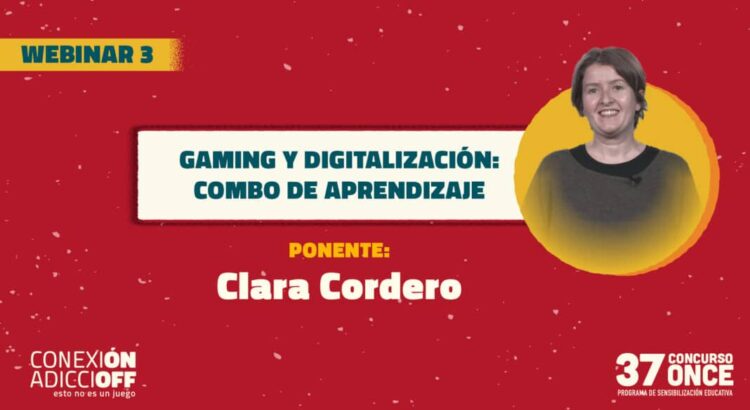
El potencial educativo del gaming como herramienta y recurso didáctico es el tema en torno al que girará la ponencia ‘Gaming y digitalización: combo de aprendizaje’, que se celebrará el próximo 19 de noviembre a cargo de Clara Cordero, maestra y especialista en innovación educativa. Se trata de una de las sesiones formativas online que ofrece el 37 Concurso Escolar ONCE.

Cuando Clara Cordero, maestra y formadora docente en innovación educativa, habla del combo de educación y gaming, lo tiene claro: “No se trata de ponerse a jugar, se trata de ver en el videojuego un recurso y analizarlo para la ocasión”. La docente será una de las participantes en las sesiones formativas del 37 Concurso Escolar ONCE, el próximo 19 de noviembre a las 17:00 horas, donde explicará a fondo el potencial educativo de la gamificación.

Bajo el lema, ‘ConexiÓN / AdicciOFF. Esto no es un juego’, la 37 edición del Concurso Escolar ONCE tiene como objetivo transmitir el mensaje de que la tecnología es nuestra aliada siempre que se haga un uso responsable de la misma, y no un abuso que puede conllevar riesgos y consecuencias no deseadas. Una idea muy importante sobre todo en esta época en la que el mundo digital, las nuevas tecnologías e internet se han revelado como herramientas extremadamente valiosas.

Por ello, y por quinto año consecutivo, el Grupo Social ONCE ofrece recursos educativos como webinars formativos online interactivos a cargo de expertos en innovación educativa. Clara Cordero impartirá su ponencia el próximo 19 de noviembre a las 17:00 horas pero antes nos avanza parte de su contenido.

Pregunta: Los niños pasan gran parte de su tiempo libre jugando en el entorno digital, ¿por qué es una buena idea trasladarlo también al mundo educativo?

Respuesta: Lo que trasladamos de los juegos y del entorno digital al entorno educativo es el hecho de que es un recurso que sabemos que motiva a los niños y niñas y del que podemos sacar provecho en el día a día en el aula. Se sabe que el cerebro interacciona exactamente igual ante escenarios simulados que reales y los videojuegos son la oportunidad perfecta para desarrollar competencias.

Se trata de alfabetizar digitalmente al alumnado con sus propias herramientas, de desarrollar competencias que en este tipo de entornos seguros y lúdicos se promueven y facilitan, y de aprender a gestionar el entorno digital y lúdico de una manera responsable, consciente y eficaz.

Clara Cordero

P: ¿Cómo pueden los docentes utilizar el gaming para educar sin caer en el riesgo de crear adicción al juego entre los jóvenes a través de la tecnología?

R: Utilizar los videojuegos en el aula supone un proceso de planificación donde prima el objetivo didáctico. El docente ha de ser consciente de las medidas que hay que tomar para evitar los excesos y debe consensuar con las familias los tiempos dedicados a los videojuegos, explicando claramente cuál es el objetivo, qué temporalidad tendrá el uso del videojuego, etc. Normalmente el videojuego se introduce en el aula como apoyo o dinamización de un contenido.

“Hay que trabajar la competencia digital de un modo transversal en las escuelas”

P: ¿De qué manera puede la gamificación fomentar la inclusión?

R: La gamificación busca recrear una estética concreta donde podemos observar algunas de las claves que se perciben al jugar y que generan una experiencia motivadora. Como un espacio seguro que apoya al jugador permitiéndole elegir una identidad que no será cuestionada y un entorno que alienta la participación para la consecución de objetivos, flexibilizando el proceso y creando una comunidad con intereses compartidos. También se forma un espacio creativo y crítico que permite generar pensamiento y aprender haciendo, además de un modelo accesible que tiene en cuenta alfabetos reconocibles que facilitan la autoexpresión.

Fuente e Imagen: https://www.educaciontrespuntocero.com/entrevistas/clara-cordero-videojuegos-gamificacion/

Comparte este contenido:

Brasil: Associativismo e sindicalismo de trabalhadores(as) da Educação e os efeitos e possibilidades do trabalho remoto diante de pandemia

América do Sul/Brasil/15-11-2020/Autor e Fonte: sinasefe.org.br

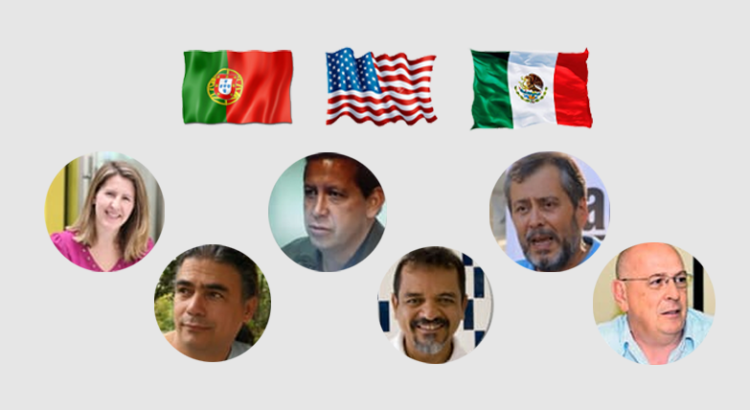
A Faculdade de Educação da Unicamp realizará, no dia 15/12, às 14h30, um debate virtual via YouTube. Com a participação de convidados dos EUA, México e Portugal, o debate terá o seguinte tema: “Associativismo e Sindicalismo dos Trabalhadores e Trabalhadoras da Educação e os Efeitos e as Possibilidades do Trabalho Remoto diante de Pandemia”. Os professores Evaldo Piolli (FE/Unicamp) e Dr. Carlos Bauer (Uninove) são os responsáveis pelo evento. Clique aqui e inscreva-se na atividade virtual.

Convidados

  • Drª Rebecca Tarlau (PennState College of Education, EUA);
  • Dr. José David Alarid Dieguez (Universidad Pedagógica Nacional, México);
  • Prof. Dr. Mário Nogueira (Federação Nacional dos Professores, Portugal);
  • Mediação: Prof. Dr. Evaldo Piolli (FE/Unicamp)

Objetivos do evento

A análise do contexto político e econômico em Portugal, EUA e México e as políticas educacionais, os efeitos e as alternativas pleiteadas pelos trabalhadores e trabalhadoras da educação serão objeto deste evento. Serão realizadas considerações sobre o trabalho remoto no contexto da pandemia, o conjunto dos interesses aliados ao emprego sistemático de tecnologias voltadas para o ensino a distância, bem como, os limites e as possibilidades de construção da resistência sindical dos trabalhadores e trabalhadoras da educação.

Realização

Grupo de Estudos Trabalho, Saúde e Subjetividade ( NETSS-FE/Unicamp), Grupo de Pesquisa em História e Teoria da Profissão Docente e do Educador Social (GRUPHIS/Uninove). Com o apoio: Faculdade de Educação/Unicamp, Rede de Pesquisadores e Pesquisadoras sobre Associativismo e Sindicalismo dos Trabalhadores e das Trabalhadoras em Educação (ASTE).

*Com informações da Faculdade de Educação da Unicamp.

Fonte e imagem: https://sinasefe.org.br/site/associativismo-e-sindicalismo-de-trabalhadoresas-da-educacao-e-os-efeitos-e-possibilidades-do-trabalho-remoto-diante-de-pandemia/

Comparte este contenido:

Puerto Rico: Director cita a maestra que se hizo viral por desahogo

América Central/Puerto Rico/15-11-2020/Autor(a) y Fuente: www.metro.pr

La educadora se mostró frustrada por el desinterés de algunos de sus estudiantes para aprender.

Frances Sánchez, la maestra del Departamento de Educación (DE) que se hizo viral por utilizar las redes sociales como un espacio de desahogo, fue citada por su director de escuela.

En entrevista con Radio Isla 1320am, Sánchez confirmó la información y explicó alguna de las razones por la que se expresó triste sobre el interés de sus estudiantes, pero también de los padres de estos.

Yo convoque una reunión para hablar con los padres. De 78 a 81 estudiantes solo 10 padres participaron de la reunión», comentó la educadora.

Sin embargo, Sánchez reconoció contar con padres y estudiantes responsables, asegurando que no son la mayoría.

Yo tengo estudiantes y padres muy responsables. Yo estoy clara que no son todos, pero son la mayoría”, indicó agregando otros ejemplos como “estudiantes que se conectan, pero no quieren prender las cámaras. O cuando los llamas para participar no están”.
Fuente e Imagen: https://www.metro.pr/pr/noticias/2020/11/12/director-cita-a-maestra-que-se-hizo-viral-por-desahogo.html
Comparte este contenido:

Uruguay: Trabajadores del Mides en preconflicto en rechazo a despidos injustificados

América del Sur/Uruguay/15-11-2020/Autor(a) y Fuente: www.republica.com.uy

También reclaman el pago de los salarios adeudados a casi 100 funcionarios que no han cobrado haberes.

La Unión de Trabajadores y Trabajadoras del Ministerio de Desarrollo Social (Utmides) se declaró en preconflicto en rechazo a despidos injustificados y en reclamo del pago de salarios adeudados para casi 100 trabajadores y trabajadoras que continúan sin cobrar sus haberes. Para el sindicato, es un problema de «voluntad política».

Según explicó al portal del PIT-CNT la secretaria general de Utmides Lucía La Buonora, hay una situación «insostenible» que están atravesando unos cien trabajadores y trabajadoras a los que se les adeudan sus salarios. «Después de cinco meses en esta situación, ahora se suman los despidos de tres compañeras y el anuncio que habría una lista con una cantidad indeterminada de despidos».

Para el sindicato, el recorte de recursos humanos «no tiene ningún fundamento técnico» y concretamente en los tres casos recientes, las autoridades «no supieron explicar ni aportaron ningún motivo para los despidos de estas tres compañeras».

La Buonora dijo que en el ámbito de una instancia de negociación colectiva se llegó a un acuerdo con las autoridades del ministerio de que «no iban a despedir a nadie de manera injustificada» y que en los casos que existieran desvinculaciones, las autoridades presentarían los motivos ante el sindicato, para que el o la persona afectada pudiera presentar sus descargos. Al respecto, Utmides en su momento solicitó «evaluaciones claras» con la participación de la Oficina Nacional del Servicio Civil y la respuesta de las autoridades fue que no había tiempo, que no era oportuno esto.

Falta de criterio

«La semana pasada nos comunicaron de manera informal la desvinculación de tres compañeras que habían ingresado por concurso hace dos años, que cumplen tareas de cargos técnicos en el interior del país y que además desarrollan tarea sindical. Cuando fuimos a recibir los motivos, realmente no pudieron explicitar ninguno. Además, estamos a la espera de un listado de personas con las que va a pasar algo similar. No sabemos la magnitud ni cantidad ni criterio».

Según enfatizó La Buonora, el sindicato «no va a permitir de manera alguna ningún despido injustificado» y exigirá el estricto cumplimiento de los caminos establecidos en la negociación colectiva.

La dirigente recordó que los acuerdos que el sindicato defiende fueron firmados por los nuevos jerarcas y no con administraciones pasadas. «Este acuerdo se llegó a partir de la negociación colectiva y un trabajo sindical muy fuerte ante estas autoridades y ellos lo firmaron», remarcó.

«Los tres despidos injustificados nos obligan a declararnos en preconflicto, con una alerta muy fuerte porque una parte importante de nuestro funcionariado está contratado de manera precaria».

Fuente e Imagen: https://www.republica.com.uy/trabajadores-del-mides-en-preconflicto-en-rechazo-a-despidos-injustificados-id797835/
Comparte este contenido:

Kenya: MKU VC lauds digital learning as University welcomes new students

Africa/Kenya/15-11-2020/Autor(a): Hunja Macharia/Fuente: www.kbc.co.ke

Mount Kenya University has successfully embraced digital platforms to support online learning through innovative and collaborative technologies.

MKU Vice Chancellor Stanley Waudo says the decision was arrived at after the Government closed all learning institutions early in the year after the outbreak of COVID-19 pandemic.

“On-line learning is student-centered; it encourages students to take responsibility of their own learning through solving problems, practicing, progressing and has real-time feedback from educators. Undoubtedly, with the wider spread of technology, online learning has the potential of being a viable alternative mode of learning,” Waudo said.

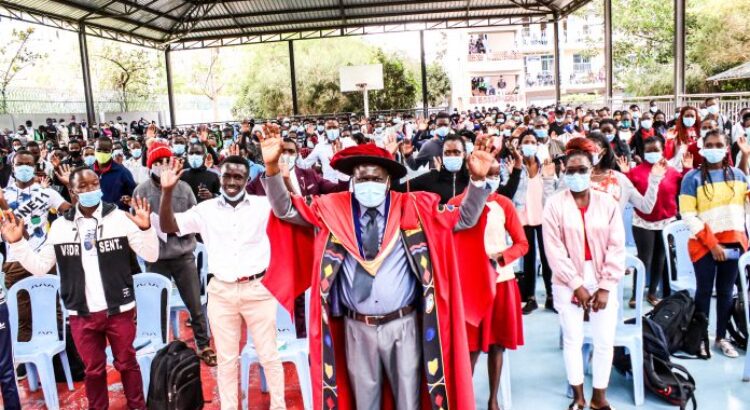
The Vice Chancellor spoke during the orientation of new students who are joining the University to undertake various courses.

He said the purpose of student orientation is to equip new students with information that can facilitate adaption to an academic environment.

Waudo emphasized on the need for students to embrace online learning saying, “Digital transformation in Kenya and across the globe is a trend that has redefined learning through creating learning experiences that inspire lifelong learning.”

He called for student responsibility in online learning saying they must Overcome perceptions and preconceptions about online learning as well as avoid dependence on teachers.

Waudo said the University stands for innovation, excellence, integrity and unity of purpose and urged the new students to put a lot of emphasis on the values.

“I draw your attention to the four MKU core values which will enable each one of you to adapt positively within our environment,” He said.

Source and Image: https://www.kbc.co.ke/mku-vc-lauds-digital-learning-as-university-welcomes-new-students/

Comparte este contenido:
Page 1161 of 6820
1 1.159 1.160 1.161 1.162 1.163 6.820