Page 2488 of 6792
1 2.486 2.487 2.488 2.489 2.490 6.792

Sigue el fascismo en Brasil: Bolsonaro hará un «test ideológico» para otorgar becas a estudiantes

América del Sur/ Brasil/ 08.01.209/ Fuente: www.eldestapeweb.com.

Sigue el fascismo en Brasil: Bolsonaro hará un «test ideológico» para otorgar becas a estudiantes

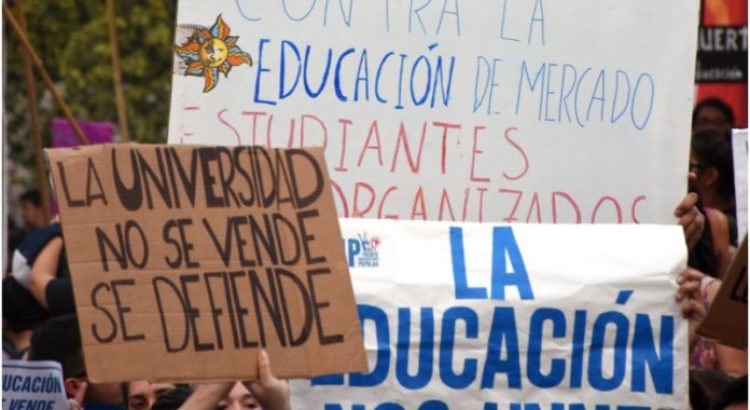
Brasil avanza a paso firme hacia el fascismo. Ahora, el presidente Jair Bolsonaro impondrá un filtro ideológico a la hora de otorgar becas para estudiantes brasileños en el exterior.

Según una publicación del sitio O Globo, el Gobierno revisará el criterio para ayudar a los estudiantes de grado y posgrado y para ello incluirá un filtro ideológico, que será el más importante para criterio del Estado.

El Ministerio de Educación de Brasil otorga lo que se llama «bolsas de estudios», que son programas de financiamiento para quienes quieren ir a la universidad. Hay programas tanto para estudiar en Brasil como en el exterior y uno de ellos, el Prouni, fue creado por el gobierno de Lula Da Silva en 2005.

Ahora, el gobierno de ultraderecha pondrá como criterio para otorgar o no esa ayuda económica un filtro ideológico, dentro del proceso de «despetización» de Brasil que impulsa el fascismo sudamericano.

Inclusive, aclara el artículo de O Globo, el Gobierno analiza dar de bajas algunas de las actuales becas con el mismo criterio. Esto se aplicaría para becas de posgrado y doctorado que se ejecutan en el exterior.

En la primera semana de Bolsonaro al frente de Brasil, su jefe de Gabinete, Onyx Lorenzoni, reconoció el despido masivo de empleados públicos con criterio ideológico.

Fuente de la noticia: https://www.eldestapeweb.com/sigue-el-fascismo-brasil-bolsonaro-hara-un-test-ideologico-otorgar-becas-estudiantes-n54256


Comparte este contenido:

Understanding the teaching crisis facing South Africa

Africa/ South Africa/ 07.01.2018/By: Natasha Robinson/ Source: www.thesouthafrican.com.

What will it take to improve teacher quality and professionalism in the country?

Half of all South African pupils who attended school for five years can’t do basic calculations. This is according to a 2015 TIMMS report on mathematics achievements among Grade 5 learners in South Africa.

At the same time, it’s calculated that 10% of the country’s teachers are absent from school each day, while researchfound that 79% of South African Grade 6 mathematics teachers were classified as having content knowledge levels below the level at which they were teaching.

Given that teacher quality is one of the biggest factors determining the learning outcomes of students, what will it take to improve teacher quality and professionalism in the country?

Numerous suggestions have been floated. But one idea has recently generated particular interest among education departments, statutory bodies, and academia – the introduction of “teacher professional standards”. These can be broadly defined as a set of common standards that include the professional knowledge, skills and conduct that characterise good teaching.

Their development began in the US in the late 1980s. It was stimulated by the view that higher expectations for student learning could be accomplished only by higher expectations of teaching quality. In the South African context, teacher standards are a response to a lack of teacher accountability. This has been identified as a cause of the poor quality of South African education.

The basic premise of teacher standards is that if you expect more from teachers, don’t allow them into the classroom until they’ve met a basic set of criteria, and hold them to account if they fall short, then the quality of teachers will improve.

But introducing teacher standards in South Africa also comes with a caveat. Research into the value of teacher standards for South Africa warns that this approach could serve to de-professionalise the country’s teaching force if not approached carefully.

This is because there are effectively two types of teacher standards, and it’s important not to conflate the two. There are standards that professionalise teaching and standards that simply manage teachers. While standards which professionalise create cultures of collegiality, expertise and pride among teachers, standards that manage can leave them feeling brow-beaten, untrusted, and demotivated.

Yet management standards are often mistaken for professional standards. When this happens, teacher morale drops. This is a common trend in countries like South Africa which have a “vicious” rather than “virtuous” schooling cycle.

How the schooling cycle works

The quality of a nation’s teachers cannot be divorced from the quality of its learners exiting schools. This is because successive cohorts of learners progress through school, enter university as student teachers, and graduate as teachers where they nurture the next cohort through the cycle. The end of school is therefore the beginning of higher education.

In a virtuous schooling cycle, such as Finland, education is a desirable career choice for top graduates. This allows for competitive entry requirements for teacher education programmes, which in turn allows for rigorous and challenging courses. This, in turn, produces high quality teachers who improve learner outcomes. The quality and professionalism of the teachers nurtures the next generation of high-quality teacher trainees.

In a virtuous cycle the system can afford to set standards that reflect the best professional knowledge internationally. Initial teacher education is intensive and teachers exit the programmes with high levels of subject and pedagogical knowledge. As a result, their learners perform well and the school system enjoys a high level of public esteem.

Consequently teaching is a prestigious and attractive profession which recruits the brightest and most motivated school graduates, who don’t require continual monitoring and oversight. Teachers instead enjoy professional autonomy; they are trusted in key decisions about their teaching and professional development.

Compare this to South Africa, which has a vicious schooling cycle. Initial teacher education is highly variable but generally insufficient. For example, a study found that three out of five of the Higher Education Institutions that were sampled provided no English language, literature, or linguistic education for teacher trainees not specialising in this subject, despite poor English language proficiency among teacher trainees being a ubiquitous concern.

Unsurprisingly then, research on newly qualified teachers indicates that students enter their studies with very poor skills, and leave with little more. Consequently, their learners do very poorly and teaching is perceived as a low status career. Teacher education programmes are therefore in general unable to reliably attract high quality graduates, and so tend to be less demanding. The vicious cycle repeats itself.

In vicious schooling cycles governments take it upon themselves to hold teachers accountable. Standards are used to manage teachers, and to protect students from the worst educators through supervisory surveillance and control. Invariably, the relationship between teacher unions and governments becomes antagonistic and generates feelings of fear and mistrust. This, in turn, alienates the best school graduates who frankly have better career options.

While in-service training programmes attempt to make up the backlog, and some are succeeding in achieving small learning gains, they cannot fully compensate for the lack of teacher skills resulting from poor initial teacher education and generally unskilled matriculants.

Not all standards professionalise teaching

Given its vicious cycle, management standards may be more likely than professional standards in South Africa. Does this mean that South African teachers are damned to the stick, rather than the carrot? Not necessarily. There are many excellent teachers who are hungry for opportunities to develop in ways that nurture autonomy and collegiality.

South Africa should not shy away from developing and promoting professional best practice, and providing the opportunities for teachers to reach them.

At the same time, management standards must be considered carefully. While they may prevent the worst teaching, they’re unlikely to create the professional culture that promotes the best teaching and attracts the best candidates.

Source of the notice: https://www.thesouthafrican.com/south-africa-school-teacher-crisis/


Comparte este contenido:

Why we need to take food education in Australian schools more seriously

Oceania/ Australia/ 07.01.2018/ Source: theconversation.com.

Schools are expected to do a lot of important things. We frequently hear calls for schools to make children job-ready, help drive economic innovation, provide them with greater literacy and numeracy skills, maintain social cohesion and fairness through anti-bullying and gender equity programs, prevent obesity and promote students’ mental health. And much more. So what is happening about food in secondary schools?

The renewal of interest in food issues

In recent years, there has been a renewal of interest in food education, particularly in secondary schools. This is partly encouraged by celebrity chef television shows, the surge in obesity, growing unease about our environmental impacts, and the diverse, multicultural nature of contemporary Australian food. This range of interests is reflected in what is being taught in Australian schools.

The renewed interest is seen among various international innovations. One example is compulsory cooking programs in English and Welsh schools. These programs require students to develop an enjoyable meal repertoire consistent with the UK dietary recommendations, and sustainably source school food.

An associated venture is the Food Teachers’ Centre in London. This provides in-school professional development for food teachers.

How is food education taught in Australian secondary schools?

The current Australian curriculum splits food education into two streams: the health and physical education (HPE) stream and the design and technologies stream. Nutrition principles are taught in the HPE stream and food skills (such as cooking) are taught in the technologies stream. If a school is fortunate enough to have a year 7 or year 8 home economics course, the two streams may be combined in the one course.

The duration of food education courses in secondary schools varies a lot, from none to one or two hours a week, often for a year or less. At senior levels (years 11 and 12) elective subjects are offered in the various states and territories such as Food Technology or the new food studies curriculum in Victoria.

Research with home economics teachers in Queensland and elsewhere in Australia suggests time and resources are often inadequate for teaching the diverse knowledge and skills associated with food.


Aspects of food may be taught in science (such as food chemistry) or in humanities (such as cultural foods and environmental issues) or in PE. But most food education happens in home economics, and contrary to many people’s opinions, it is alive and well in many parts of Australia.

Food education takes place in preschools, primary schools and secondary schools, though in different ways and to different degrees. Programs like the kitchen garden scheme have been well received.

Many teachers deal with food, in all its aspects, across the school years. These include activities like growing food in school gardens, cooking it, analysing its nutritional properties and environmental impacts, exploring local farms, shops and food markets, taking part in BBQ or Masterchef style competitions and catering for schools and Fair Food Universities.

Research in secondary food education

growing evidence base, mainly in the US, Canada, western Europe and Australia suggests food literacy and skills education programs lead to greater confidence in performing practical food skills, such as planning and preparing meals, interpreting food labels, basic food safety, food regulations. This, in turn, is associated with healthier dietary choices.

Australian research in this area has grown strongly over the past ten years. It has provided evidence for the establishment of several food literacy frameworks with focuses on food gatekeepers and families as well as broader environmental aspects of food systems.

Understanding how to read food labels can help people make healthier choices. from www.shutterstock.com

Recent research has shown many secondary school food teachers tend to favour practical domestic skills and associated knowledge. They express less interest in broader historic, social, environmental and ethical issues. Food and health professionals remain strongly supportive of food education – especially for acquiring practical skills – as does the general public.

Our recent work has also examined the views of parents and recent school leavers who live independently. Although they hold a broad spectrum of opinions, around two thirds see food education as an important life skills subject. Most think it should be compulsory for between one and three hours per week in each of years 7 to 10. These views contrast sharply with the priorities of most secondary schools.

Current and future challenges

Food education in Australian secondary schools is now facing several challenges. These challenges are related to changes in population health status, changing food patterns, food technologies, food and beverage marketing and environmental impacts.

The fundamental question is: Does it meet the present and future life needs of students and their families? At present, food education tends to be patchy, with some emphasis on students’ acquisition of food preparation skills but lesser coverage of environmental and social issues, marketing practices or family dynamics.


Possible solutions include providing more intensive education about food in university teacher education programs and continuing professional education for food teachers. These teachers also need more adequate timetable allocations and resources.

A comprehensive food education framework from pre-school to senior secondary school is required to prevent repetition and reinforce skills learned in the early years. This has begun in the UK and in the RefreshED program in Western Australia. A more focused curriculum across all years of education is required. This should be accompanied by continuing evaluation of the impact of food education on students, their families and the wider population.

Source of the notice: https://theconversation.com/why-we-need-to-take-food-education-in-australian-schools-more-seriously-106849


Comparte este contenido:

Top Latest Japan World Business Sports Entertainment Opinion Lifestyle Features Photos Videos School attendance of 16,000 foreign children across Japan unknown: Mainichi survey

Asia/ Japan/ 07.01.2018/ Source: mainichi.jp.

It is unknown if as many as 16,000 children of foreign nationality across Japan are attending elementary or junior high schools, which are compulsory for Japanese children, a Mainichi Shimbun survey has found.

This number makes up for at least some 20 percent of all children of foreign nationalities who have their residency registered with local governments and are aged 6 to 14. Some may have already returned to their home countries, but as no compulsory education requirements exist for foreign children in Japan, many could simply not be receiving education.

The survey covered 100 municipalities with higher numbers of foreign children of school age from September through November 2018, and asked how many such juvenile residents are attending public schools as of May 2018, the month after the beginning of the academic year in April. For municipalities that lacked data for that time, enrollment data around that month was requested. Using this method, answers were gathered from all 100 municipalities that were the target of the survey.

According to the survey results, those municipalities had some 77,500 non-Japanese children registered as residents. Of them, 57,013, or more than 73 percent, were attending public elementary and junior high schools. Another 3,977 were attending international or ethnic schools or private «free schools.»

Of the roughly 20 percent or so remaining, whose attendance status is unknown, appears to include those living in the municipality but not enrolled in a school, those whose whereabouts are unknown, children who moved to other parts of Japan or went home without their guardians going through the procedures to cancel their residency, or children who are attending private schools or international or ethic schools outside the local governments’ knowledge.

By municipality, the Kanagawa prefectural capital of Yokohama, south of Tokyo, with the highest number of registered foreign children, did not know if some 30 percent of the total, or roughly 1,400 kids, were going to school. The number was 1,307 or 30 percent in the western city of Osaka, which has the second largest population of registered children with foreign backgrounds. In Tokyo’s Edogawa Ward, the status of 1,030 children — or half of the total — was unknown.

Meanwhile, the central Japanese city of Hamamatsu, Shizuoka Prefecture, which was ranked fifth with 2,034 registered foreign children, had only two children whose educational status was not known to the municipal government. The city of Kawaguchi, Saitama Prefecture, north of Tokyo, which was ranked sixth, also had only six such children out of 1,680 registered. The two cities check in on all children registered as residents who are not attending public elementary or junior high schools.

Many municipalities that did not keep track of the status of foreign children of school age answered that they do not perform the checks because the children are not required to receive compulsory education under Japanese law, unlike their Japanese counterparts.

Associate professor Yoshimi Kojima of Aichi Shukutoku University, an expert on the schooling of foreign children in Japan, warned that some of the kids whose educational status is unknown are left out without a chance to go to school at all.

«The central government should no longer leave the matter up to local municipalities, and introduce national standards on the issue,» he said.

Source of the notice: https://mainichi.jp/english/articles/20190107/p2a/00m/0na/002000c

Comparte este contenido:

Más de 8 millones de estudiantes regresan a clases

América del Sur/ Venezuela/ 07.01.2018/ Fuente: www.eluniversal.com.

En el retorno a las aulas persistirá malestar de docentes por tablas salariales

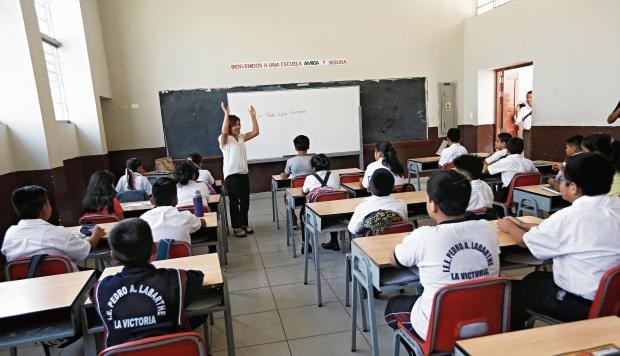
Autoridades estiman que más de ocho millones de estudiantes regresen hoy a clases en las escuelas y los liceos del territorio nacional tras el asueto de Navidad y Año Nuevo.

De este total, 6 millones 442.269 están inscritos en planteles públicos, de los cuales 1 millón 575.714 están registrados en educación inicial; 2 millones 869.310 en primaria; 1 millón 651.001 pertenecen al nivel de educación media; 135 mil 512 a educación técnica; 171 mil 643 en educación de adultos, y 39 mil 117 están en el nivel de educación especial, reseñó AVN.
En su cuenta de Twitter el Ministerio para la Educación informó que el personal docente, administrativo y obrero participó en jornadas de mantenimiento escolar, para la vuelta a los planteles educativos.
El pasado jueves 3 de enero, el ministro para la Educación, Aristóbulo Istúriz, sostuvo el primer gabinete ministerial de esta cartera de 2019, con la finalidad de apoyar las políticas impulsadas por el presidente Nicolás Maduro «que buscan fortalecer el Sistema Educativo Bolivariano».
El titular de Educación informó sobre la primera videoconferencia del año que lideró la semana pasada, junto a los viceministros, presidentes de entes adscritos, jefes de Zonas Educativas y de División; y jefes de las misiones a escala nacional, desde la sede del Ministerio del Poder Popular para la Educación.
Desde la zona educativa del estado Anzoátegui, Istúriz aprovechó la oportunidad para anunciar el regreso a clases e invitó a toda la comunidad educativa a participar activamente en diversas actividades.
Aristóbulo Istúriz aseguró la semana pasada que en 2018 se firmaron 140 contratos colectivos, de los cuales 20 fueron en el sector público, lo que beneficia a 5.894.510 trabajadores.
Cuadrillas de la gobernación del estado Miranda y distintos equipos de trabajo voluntario atendieron 1.500 escuelas de la entidad a las que hoy, están llamados cerca de 400.000 alumnos a retomar las clases.
En Nueva Esparta docentes, representantes y personal de ministerio de Educación llevarán a cabo jornadas de trabajo voluntario en las escuelas y demás planteles. Asimismo, las diversas zonas educativas del país preparan actividades deportivas, a propósito de la Celebración del Día Nacional del Deporte celebrado ayer, así como para conmemorar el día del Educador el 15 de enero.
Por otra parte, la investigadora Olga Ramos, miembro de la asociación civil Asamblea de Educación, alertó que los estudiantes y miembros de la comunidad educativa enfrentarán los mismos problemas que empañaron el primer trimestre del año escolar 2018-2019, muchos de los que se agudizarán debido, en parte, a la hiperinflación.
La también presidenta del Observatorio Educativo de Venezuela estima que en aquellas escuelas donde no se realizaron reparaciones en su infraestructura durante las vacaciones se acelerarán las averías. Algo asimilar vaticinó para aquellos planteles que reportaron fallas de agua o electricidad que entorpecen el desarrollo de las actividades. La profesora considera que en este regreso a clases persistirá el malestar del personal docente que desató distintas protestas en los últimos meses del año pasado para exigir reivindicaciones salariales y otras exigencias.
Fuente de la noticia: http://www.eluniversal.com/politica/29879/mas-de-8-millones-de-estudiantes-regresan-a-clases
Comparte este contenido:

El Ministro de Educación de Brasil elimina la Secretaría de diversidad

América del Sur/ Brasil / 07.01.2018/ Fuente: www.actuall.com.

Ricardo Vélez Rodríguez, el ministro de Sanidad de Brasil ha eliminado la Secretaría de diversidad que se encargaba de ver los temas de diversidad, derechos humanos y relaciones étnicas raciales.

Fuente de la noticia: https://www.actuall.com/democracia/el-ministro-de-educacion-de-brasil-elimina-la-secretaria-de-diversidad/
Comparte este contenido:

Defensoría del Pueblo: Estado debe facilitar aprendizaje de Braille en Perú

América del Sur/Perú/ 07.01.2018/ Fuente: larepublica.pe.

El representante de la Defensoría del Pueblo señaló que también es necesario asegurar que las personas ciegas puedan tener acceso a todos los niveles del sistema educativo

En el Perú, existen un millón 473 mil 583 personas que presentan dificultad visual, de las cuales 61% son mujeres y el 39% hombres. Debido a ello, Walter Gutiérrez Camacho, representante de la Defensoría del Pueblo, exhortó al Estado a facilitar el aprendizaje del sistema Braille. Asimismo, aseguró que se debe asegurar la educación de las personas ciegas en todas las modalidades y niveles del sistema educativo.

“A través del método Braille las personas ciegas leen, reciben información, se comunican, aprenden; es decir, permite la plena realización de sus derechos humanos. Por eso, es importante entregar la información oficial en el referido sistema cuando así lo requiere la persona”, afirmó el defensor del pueblo.

El pasado 4 de enero se celebró el Día Mundial del Braille por primera vez. Esta fecha fue proclamada por las Naciones Unidas con el objetivo de crear mayor conciencia sobre el uso del Braille como medio de comunicación para las personas con este tipo de discapacidad visual.

La Jefa del Programa de Defensa y Promoción de los Derechos de las Personas con Discapacidad, Malena Pineda, señaló que la proclamación del Día Mundial del Braille es importante para poder lograr ‘‘la inclusión social de las personas ciegas en igualdad de condiciones a las demás’’.

Ella agregó que existen muchas personas ciegas que no pueden continuar su educación, debido a la falta de acceso al aprendizaje de Braille existente. Además del tema educativo, aprender este sistema de comunicación también permite que sean autónomas y puedan construir una vida independiente.

Pineda afirmó que el Estado está en la obligación de emplear a profesores que conozcan el sistema Braille en todos los niveles y modalidades del sistema educativo que hay en el Perú.

Fuente de la noticia: https://larepublica.pe/sociedad/1389293-defensoria-pueblo-debe-facilitar-aprendizaje-braille-inclusion-social-educacion-discapacidad-visual

Comparte este contenido:
Page 2488 of 6792
1 2.486 2.487 2.488 2.489 2.490 6.792