Page 2648 of 6815
1 2.646 2.647 2.648 2.649 2.650 6.815

Zambia gov’t responds to protests of university students

Africa/ Zambia/ 17.10.2018/ Source: www.africanews.com.

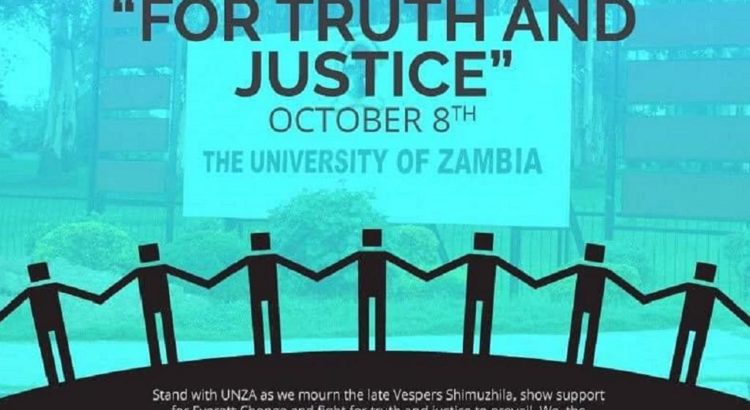
Hundreds of students of the University of Zambia (UNZA) marched on Monday, protesting the death of their colleague during last week’s protests over delayed meal and accommodation allowances.

Vespers Shimuzhila, a fourth year student at UNZA died of suffocation when police fired a teargas cannister into her room, while another student Everett Chongo, sustained severe injuries when she jumped off the the third floor of her hostel on Thursday night.

Evelyn is to be evacuated to South Africa for specialised treatment, according to the health minister Chitalu Chilufya.

We need to dialogue on how to fund higher education going forward. Tax payers supporting drunkenness and violence at UNZA can’t continue.

Demanding #JusticeForVespers, photos and videos shared on social media showed students wearing black, marching together as they mourned their dead colleague.

The country’s minister of information and government spokesperson, Dora Siliya, also took to Twitter to say that students who had organised Thursday’s riots, despite the fact that bursaries were expected on Saturday should be held responsible for Vesper’s death.

‘‘We need to dialogue on how to fund higher education going forward. Tax payers supporting drunkenness and violence at UNZA can’t continue,’‘ Dora Siliya said.

President Edagr Lungu, said government will await the outcome of a police investigation into the cause of the riots before taking action.

Government officials believe that the riots were fuelled by the opposition whose ‘inflammatory’ press conference they say was attended by some students before the riots.


Source of the notice: http://www.africanews.com/2018/10/08/zambia-gov-t-responds-to-protests-of-university-students/

Comparte este contenido:

Australia: Economy relies on China as international students prop up our universities

Oceania/ Australia/ 17.10.2018/ Source: www.news.com.au.

IT WAS 3.30pm as I waited at a popular Melbourne cafe in the heart of the city. I had arranged to meet Xing Wu, a 32-year-old Chinese international student from the Fujian Province in the southeast of China.

I had arrived early — enough time to sit back and watch pedestrian traffic. I couldn’t help but notice the high levels of young Asian students streaming past to Central Station, across the road from the city campus of RMIT.

When Xing arrived, I offered the traditional Western greeting of a handshake and a hello. In return, he offered me the traditional Chinese custom of a gift — in this case a sweet Chinese berry drink, bought from one of Melbourne’s ever-increasing supply of Asian specialty stores.

I had arranged to speak with Xing to better understand his experience. Why study here?

Why travel thousands of kilometres and pay exorbitant fees? In Xing’s case, he has paid around $64,000 for a two-year accounting course.

His response was surprisingly simple and relatable: “I wanted to experience the outside world. Away from the Chinese regional life where my father works as a public servant and my mother who is a retired factory worker.”

When discussing his studies, Xing laments the hardest part of his course is the high level of English proficiency required.

While he had hoped to improve his English here, one of the biggest challenges is that he’s just one of thousands of other Chinese students in Australia. He’s much more likely to speak Mandarin in his day-to-day interactions than English.

“There were so many Chinese students in the class, everyone reverted back to speaking it together.”

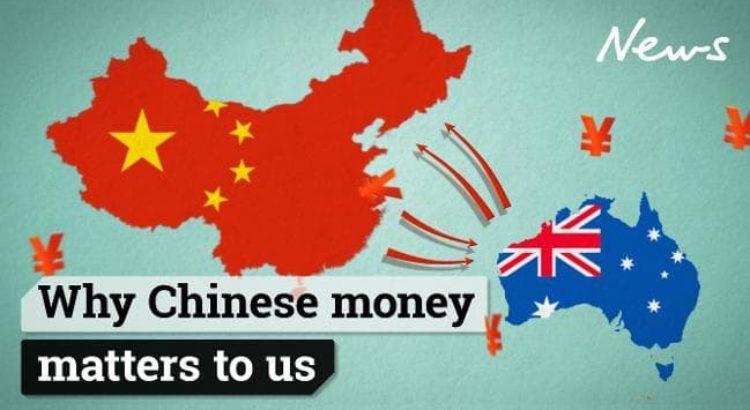
Xing’s insight isn’t surprising. He is just one of 187,547 Chinese International Students who were enrolled to study in Australia in 2017-18.

Education is Australia’s third largest export after iron ore and coal, other industries heavily reliant on the Chinese purchasing power.

It’s a statistic that worries Peter Jennings. He was a senior adviser for strategic policy in the Howard government, and he’s now executive director of the Australian Strategic Policy Institute, a think tank focused on international relations and defence.

“Australian Universities are overly reliant on Chinese international students, causing an unhealthy dependence from catering to this market” Mr Jennings said.

“This (over-reliance) has left many universities highly vulnerable to either a natural reduction in Chinese students, or at the potential whim of the Chinese Government.”

While that sounds alarmist, Mr Jennings believes there’s sinister activity already occurring.

“There have been cases of Chinese students reporting back to the Chinese Embassy on fellow students that have not followed Beijing rhetoric.”

“It is a possible scenario that China could ban their students from attending Australian Universities over a diplomatic row.”

Mr Jennings believes Australian universities need to cap the number of students they accept from each country, in order to avoid being overly reliant on one economy.

“Australian universities need to stop being so greedy. The ongoing obsession of universities to continue to expand enrolments from international students needs to stop. If this results in a reduction of revenue, that is the price that needs to be paid.”

This year there are nearly 200,000 Chinese students studying in Australia. Picture: The Department of Education and Training

This year there are nearly 200,000 Chinese students studying in Australia. Picture: The Department of Education and TrainingSource:Supplied

While a worst-case scenario of a full withdrawal of Chinese nationals enrolled in Australian universities might appear far-fetched, there have been recent examples of

serious push back from the Chinese Government over international disagreements.

One example that has caused South Korea pain is Seoul’s agreement to deploy the US Terminal High Altitude Area Defence system to counter military threats from North Korea.

Beijing countered this decision by putting in place a consumer boycott of certain products. Hyundai in particular was hurt badly. Sales dropped by 64 per cent in the second quarter of 2017.

The company’s own research institute said this led to a revenue loss of $21 billion.

Australia has also felt the threat from Beijing in recent years.

When former Prime Minister Malcolm Turnbull attempted to introduce laws that would have banned foreign political donations, required registration of lobbyists, and strengthened anti-espionage laws the blow back from Beijing was swift — despite

the idea being blocked in parliament.

In the following weeks Australia was voted “the most unfriendly country” to China in 2017 in a poll of about 14,000 Chinese citizens conducted by the tabloidGlobal Times(owned by the People’s Daily).

MORE: Tensions rise as Chinese Government’s influence infiltrates Aussie universities

But Universities Australia deputy chief executive Catriona Jackson doesn’t think there’s cause for alarm.

“International education has been a huge success story for Australia — one that has been built up deliberately and strategically over the past 60 years,” she said.

“Not only does international education bring $32 billion worth of export income to our economy and support 130,000 jobs — it gives Australia access to a future network of business and political leaders and makes an important contribution to Australia’s foreign policy, soft power diplomacy and regional security.”

She dismissed Mr Jennings’s arguments as “a distraction”, confident that the sector would continue to thrive.

Returning to Xing’s story, it’s clear he, along with all other international students, are providing this country with much more than money.

Looking at the stores and restaurants surrounding RMIT, you can see that Melbourne, like many other Australian cities, is changing.

And even if many of the students frequenting those businesses eventually go home to China, we’re making global connections with tomorrow’s leaders, changing the way they think.

Xing sums it up well. After a lifetime of learning in China where he was told to listen and follow, he’s now been taught to “think critically and embrace an independent learning model”. Although he plans to return home to look after his parents, his world view has been impacted for life. And it could affect generations to come.
Source of the notice: https://www.news.com.au/finance/economy/australian-economy/economy-relies-on-china-as-international-students-prop-up-our-universities/news-story/6bea7fc2c0c7dbd364346b74722c67df

Comparte este contenido:

Zambia: 250 children are learning under a Mango tree at Matipa Community School in Lunga District

Africa/ Zambia/ 17.10.2018/ Source: www.lusakatimes.com.

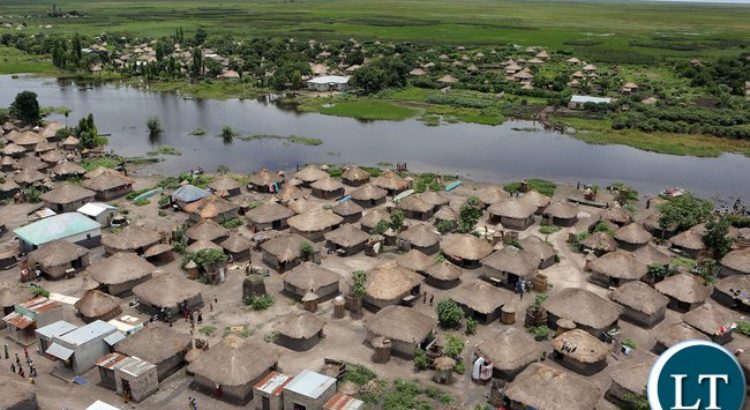
About 250 children are learning under a Mango tree at Matipa Community School in Lunga District of Luapula province.

The Community school has no infrastructure and the Church building the pupils were squatting in collapsed two weeks ago forcing them to attend classes under a mango tree.

The school goes up to grade 3 with volunteer teachers among them grade 12 school leavers.

This came to light last week when First Lady Esther Lungu visited the area on her continued tour of the Luapula Province.

Mrs. Lungu interacted with the pupils and encouraged them to concentrate on their education.

Last week, Acting Minister of General Education Vincent Mwale announced that K19.5 million has been embezzled at the Ministry resulting in the suspension of funding by the International Development.

Source of the notice: https://www.lusakatimes.com/2018/10/14/250-children-are-learning-under-a-mango-tree-at-matipa-community-school-in-lunga-district/

Comparte este contenido:

Qatar stresses vow to protect children’s rights

Asia/ Qatar / 17.10.2018/ Source: www.gulf-times.com.

Qatar affirmed Friday its commitment to protecting the rights of children at the national, regional and international levels.

The country would also spare no effort in providing the necessary support to the protection of children in all circumstances and by all means, in order to help ensure their development and education take place in safe and healthy conditions.
This came in the statement read by Qatar in a meeting on the sidelines of the 73rd UN General Assembly on enhancing and protecting the right of children.
The statement was read by member of the Qatari delegation participating in the 73rd UN General Assembly Mariam Ali al-Mawlawi.
She said that Qatar signed an agreement with the Office of the UN Special Representative for Children and Armed Conflict on September 28, 2018 to open a centre for children and armed conflict in Doha, which will contribute significantly to strengthening knowledge and skills for the protection of children affected by armed conflict in the region.
She noted that the move reflected Qatar’s commitment to protecting the rights of children, particularly in times of armed conflicts.
She also stressed that Qatar has made great strides in promoting and protecting the rights of children by taking a number of legislative and executive measures in various fields and sectors, such as education, health, social protection and family policies.
These measures were implemented within the framework of Qatar National Vision 2030 and the other national development strategies, and in line with international conventions on the subject.
The Qatari official also highlighted the country’s effort in preventing violence against children, noting that the State has developed a system for early detection of child abuse and neglect through increasing the number of social workers in schools, developing their knowledge and skills on the subject, developing an awareness programme for students about violence and protection, establishing a hotline for schools to report cases of violence.
There are also other programmes, such as the one run by Hamad Medical Corp to detect and report suspected cases of violence, provide care for abused children and promote a safe environment for children at home.
The Social Rehabilitation and Protection Centre (AMAN), a civil society organisation, carries out awareness-raising activities in schools to develop the skills of teachers and social workers for early detection and response to peer abuse.
Al-Mawlawi stressed that the issue of protecting the right to education is of great importance in the implementation of Qatar’s policy in international co-operation and its development and relief programmes, based on Qatar’s belief that education is the key to development and the importance of investing in the upbringing, protection and education of children, and based on its conviction that the right to education does not fall due to emergency circumstances.
She added that the State has been able to realise many achievements in this field in co-operation with its partners in the international community, where Education Above All foundation in partnership with Unicef and more than 80 global partners has managed to provide quality education for 10mn children without school in more than 50 countries around the world, including areas plagued by armed conflict, poverty and natural disasters.
Qatar has also recently provided $70mn to Unicef to support Yemen’s water and sanitation sector to reduce the spread of diseases related to contaminated water, such as cholera and others, which will save the lives of thousands of children in Yemen.

Source of the notice: https://www.gulf-times.com/story/609225/Qatar-stresses-vow-to-protect-children-s-rights

Comparte este contenido:

Venezuela: Plan Conuco en todas las escuelas del país

América del Sur/ Venezuela/ 16.10.2018/ Fuente: www.venezuelaaldia.com.

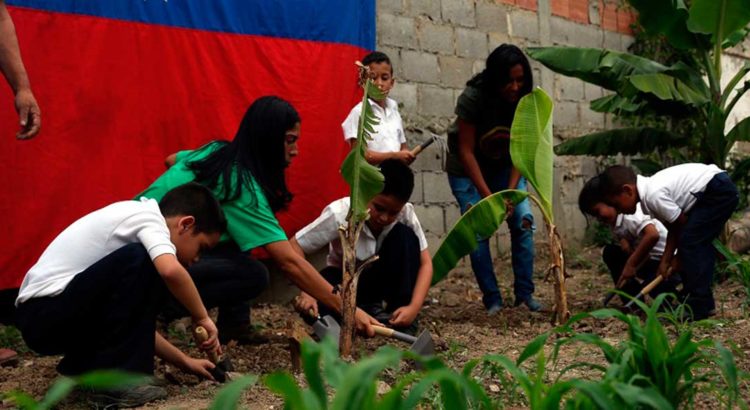
El presidente Nicolás Maduro realizó un contacto telefónico durante el reciente encuentro Avances y Retos de la Educación Técnica para el año escolar 2018- 2019 que realizó el Ministerio de Educación para mantener su apoyo al Plan Conuco.

Yo he querido rescatar desde hace tiempo ese concepto en el campo de la agricultura extensiva, sin lugar a dudas es un concepto que puede llevarse a toda la agricultura en todas sus escalas. En este caso lo estamos llevando al campo de la educación“, expresó el mandatario nacional con el objetivo de brindarle una mejor idea a los jóvenes en cuanto el bienestar del planeta.

Hay gente que trata de disminuir el papel de esta idea, diciendo que se pretende alimentar a un país produciendo en las escuelas, no se trata de eso. Se trata de construir una nueva cultura productiva, que las escuelas puedan tener sus alimentos, parte de su reserva alimentaria, de la producción de sus propias manos“, destacó.

“Estamos en el camino correcto de la educación para el trabajo, para los valores, para la producción, de la educación para una nueva sociedad, esa nueva sociedad se gesta, se está gestando del trabajo del Plan Productivo, Plan Conuco en las Escuelas”, puntualizó Maduro.

A pesar de estas declaraciones por parte de Maduro, muchos especialistas en la materia refutan sus declaraciones, pues han convertido la educación en un sistema de ideología revolucionaria, obligando a los niños a mostrar su apoyo al régimen para poder recibir los bolsos y uniformes subsidiados por el Gobierno.

Fuente de la noticia: http://www.venezuelaaldia.com/2018/10/14/maduro-implementa-el-plan-conuco-en-todas-las-escuelas-del-pais/

Comparte este contenido:

Presupuesto 2019 con fuerte ajuste. Priorizar la educación, por otro proyecto de país

América del Sur/ Argentina/ 16.10.2018/ Fuente: mst.org.ar.

El Presupuesto 2019 proyecta un fuerte ajuste educativo. Macri, Cambiemos y el PJ se alinean con el FMI. Necesitamos lo opuesto: priorizar la educación, hacia otro proyecto de país.

«El ajuste de gastos que proyecta el gobierno nacional para el año que viene se sentirá con fuerza en la educación inicial, primaria y secundaria. Casi todos los programas del Ministerio de Educación destinados a fortalecer esos segmentos sufrirán recortes pronunciados en 2019». Así arranca el conservador diario La Nación. No es la Multicolor, CTERA o CONADUH, sino el exponente burgués en la prensa nacional.

El relato es tan descarado, al desnudar el tijeretazo de Macri-FMI, que hasta su ministro Finocchiaro intentó infructuosamente desmentir al diario.
La nota agrega: «Las caídas más marcadas se registran en los programas de Fortalecimiento Edilicio de Jardines de Infantes, que cae 68,4% en términos reales; el Plan Nacional de Educación Digital, con un recorte del 68,8% real; la partidas para Infraestructura y Equipamiento, que caen 77% real, y las de Formación Docente que se reducen 36,3% real».

Se prevé una caída real del 39,3% en la casi totalidad de los programas y partidas del sector educativo del Ministerio de Educación. Las Becas a Estudiantes (Progresar) tienen una reducción real del 24,9%. También caen las partidas de Mejoramiento de la Calidad Educativa (-34% real) y de Innovación y Desarrollo de la Formación Tecnológica que cae 43% real.

Esto, mientras Macri insiste con su promesa de reducir la pobreza y que para lograrlo es clave la tecnología. Y que más argentinos tengan acceso a internet y a una conexión a la altura del siglo XXI, en cada rincón del país. Un descaro total.

En materia universitaria el proyecto 2019 supone una caída real del presupuesto de 15,9% en dos años. Así lo determina el Consejo Interuniversitario Nacional (CIN), integrado por los rectores del país. Mientras en Ciencia y Técnica, al «aumentar» por debajo de la inflación real, hay una reducción real del 3,3 % anual.

¿Presupuesto PRO bonistas y FMI o para la mayoría social?

Así el Presupuesto 2019 macrista se alinea con un modelo social que prioriza el pago de la deuda a bonistas y el FMI, antes que resolver la deuda con nuestro pueblo. Un proyecto acorde al papel que el capitalismo imperial nos asigna en la división internacional del trabajo –rol que el PRO asume y el PJ acompaña- como proveedor de materias primas, extractivista y de servicios con poco valor agregado.

La educación pasa a ser funcional a esta economía primarizada que no requiere «educar al soberano», más allá de conocimientos básicos y habilidades instrumentales. Lo opuesto a lo que fuera la educación al servicio de un modelo de desarrollo. Se insiste con los lineamientos del Banco Mundial, la OCDE y el FMI que ponen a la educación en clave economicista, opuestos a una escuela estatal como conquista social.

La enseñanza pública intenta servir a la productividad capitalista y no a las mayorías ni al desarrollo de la persona en su integralidad. El gobierno intenta avanzar así en su nuevo paradigma educativo: ir por la escuela estatal y sus partidas, poner el foco en la docencia y transformar la educación en redituable área de negocios, privatizando lo que sea posible. Es lo que debemos rechazar, reforzando la lucha. Sin esperar al 2019 como plantean los K y el PJ.

El salario como variable de ajuste 

En ese sentido Macri insiste con desentenderse de los aportes que realiza al salario de más de un millón de docentes del país. Y representan del 10% al 15% del sueldo de una maestra, según la jurisdicción. A saber, el Incentivo que mantiene congelado hace tres años y el Fondo de Compensación Salarial que destina a las provincias que no pueden pagar el mínimo salarial y pretende reducir un 75% este año.

Por el volumen de gasto que representa, el mayor ajuste se da con el congelamiento del Incentivo Docente (FONID), que pasa de $25.522 millones a $26.419 millones, un aumento nominal del 4% y una caída real del 22,5%. El FONID está congelado en $1.210 por cargo desde julio de 2016. Considerando la inflación que hubo y la que prevé el gobierno para 2019, el Incentivo debería pasar de 1.210 a 2.731 pesos para recuperar el valor de entonces.

Al representar la masa salarial el 85% a 90% de los presupuestos, el ajuste que se realiza vía inflación, devaluación y recesión licua intencionalmente los salarios docentes. Así, en los primeros 6 meses de 2018 el salario real de los docentes bonaerenses cayó más de 2%. Mientras que había caído el 4% entre noviembre de 2015 y diciembre de 2017.
Además, en 17 provincias los aumentos anuales cerrados entre la Celeste y los gobiernos ni siquiera compensó la inflación en los primeros 7 meses del año. Y sólo con una nueva negociación o un pago extra podrían acercarse a la inflación.
Lo mismo ocurre con los docentes universitarios que, entre marzo y agosto, perdieron 6% de poder adquisitivo. Tanto que para compensar las pérdidas que vienen sufriendo ante la inflación, necesitarían un aumento del 25% y un bono extra de 13 a 21 mil pesos.

Nuevo modelo educativo y social

Nuestro sistema educativo demanda cambios. Pero las medidas del PRO van en sentido opuesto a la demanda social. Con estos 10 puntos planteamos una verdadera revolución a favor de la educación estatal.

  1. Una nueva matriz salarial con un básico nacional que cubra la canasta familiar y el acceso a los bienes culturales. Blanqueo de las sumas en negro, incluido el Incentivo. Para trabajar en un sólo cargo y en cursos de 20 alumnos máximo.
  2. Anular el impuesto al salario. 82% móvil real, jubilación con 25 años de servicio, sin límite de edad. No armonizar las Cajas.
  3. Aumento ya del presupuesto al 10% del PBI, por condiciones dignas para enseñar y aprender: Plan nacional de refacción edilicia y construcción de aulas, escuelas y jardines. Crear los cargos necesarios. Más y mejores becas, comedores, transporte, guardapolvos, indumentaria y material didáctico que garanticen inicio, trayecto y finalización escolar a todes. Proveer de mobiliario, calefacción, internet y demás insumos. Gabinetes psicopedagógicos y equipos interdisciplinarios.
  4. Educación como derecho social garantizado por el Estado. Anular los subsidios a la enseñanza privada, impuestos progresivos a los que más tienen, no pago de la deuda externa.
  5. Democratizar el gobierno de la educación. Congreso Pedagógico Nacional donde educadores y la comunidad definamos el proyecto educativo y la construcción de saberes socialmente significativos. Basta de planes hechos por tecnócratas, según la OCDE y el Banco Mundial.
  6. Evaluación social de las políticas educativas. Ninguna injerencia privada en educación.
    Efectiva capacitación en servicio, gratuita y a cargo del Estado. Basta de mercantilizar la formación y la política editorial.
  7. Una izquierda pedagógica que genere debates e intercambio sobre pedagogías críticas y articule con otras experiencias.
  8. Unir esas demandas con el pueblo trabajador, por un plan económico que garantice empleo y salario a las familias para asegurar la educación.
  9. Sistema educativo nacional, único y estatal; obligatorio, gratuito, científico y laico; democrático, participativo y que respete la diversidad cultural y de género. Con ESI feminista y disidente. con perspectiva de género, que forme integralmente, en un pensamiento crítico, dialéctico, con visión humanística y que aporte a una sociedad solidaria, justa y emancipada, una Argentina socialista.

Fuente de la noticia: https://mst.org.ar/2018/10/11/presupuesto-2019-fuerte-ajuste-priorizar-educacion-proyecto-de-pais/

Comparte este contenido:

Colombia: Fecode anuncia que entrará en paro nacional

América del Sur/ Colombia/ 15.10.2018/ Fuente: www.eltiempo.com.

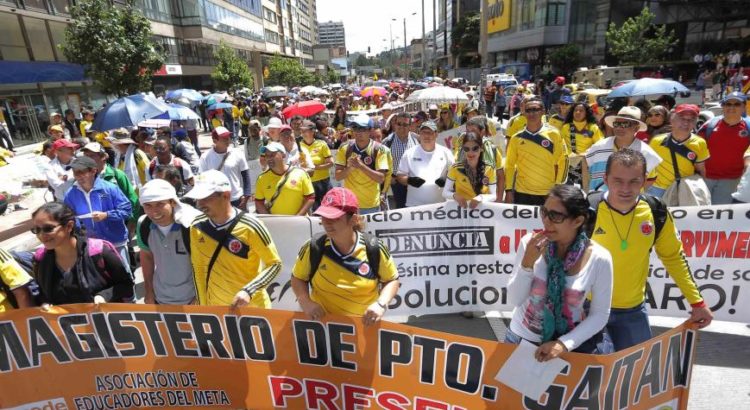
La Federación Colombiana de Trabajadores de la Educación, Fecode, anunció que entrará en paro nacional. La fecha y duración todavía no se conocen, pero según fuentes del sindicato, el jueves 18 de octubre se tomará la decisión.

Fecode asegura que el principal motivo del paro es que durante las reuniones que sostuvo con la ministra de Educación, María María Victoria Angulo, se le planteó la posibilidad de retirar el proyecto 057, pero «ella dijo que el Gobierno de Iván Duquepiensa apoyar la discusión de este proyecto».

«Fecode lo rechaza totalmente porque afecta tanto las finanzas de las entidades territoriales destinadas a educación pública, como a los docentes», asegura el gremio.

Este documento, que ya se encuentra en el Congreso de la República, plantea cambios al Sistema General de Participaciones y reorganizar los recursos de sectores como la educación, salud y el Programa de Alimentación Escolar (PAE), entre otros.

«Pero va más allá de eso, al buscar congelar la planta docente, reducir el presupuesto del PAE y acabar con la educación gratuita», asegura Fecode.

Otros puntos que motivan a la realización de la jornada son los incumplimientos de los acuerdos firmados el pasado 17 de junio de 2017 con el Gobierno Nacional.

De 24 puntos, los cuales fueron estipulados el año pasado para poner fin al paro que duró 37 días, se estima que hasta el momento se han cumplido 12, según información de la cartera de educación. Seis están próximos a cumplirse y los seis restantes están en proceso.

«Aunque hay avances en algunos puntos, otros siguen sin materializarse», dice Fecode.

Fuente de la noticia: https://www.eltiempo.com/vida/educacion/las-razones-de-fecode-para-entrar-en-paro-nacional-280592


Comparte este contenido:
Page 2648 of 6815
1 2.646 2.647 2.648 2.649 2.650 6.815