The International Atomic Energy Agency (IAEA) held the first in a series of six regional training courses for secondary school science teachers last month in Indonesia. The courses aim to equip teachers in Asia Pacific to inspire a new generation of nuclear scientists and engineers by engaging students and enhancing their understanding of nuclear science and technology.
The first two-week course was attended by 26 teachers from 17 countries. The course comprised presentations, laboratory work and technical visits to Indonesia’s National Atomic Energy Agency (Batan). It also served a good opportunity for teachers from different countries to network and exchange experiences in teaching. The IAEA said the course marks the first time that it had formally engaged with the secondary education teaching community.
The participants were introduced to diverse methods of teaching nuclear science and technology to children aged 12-18 in an effective and engaging manner. The IAEA said it hoped the attendees will become mentors to other teachers in their countries. «This way, the project aims to reach one million students by 2021,» it said.
Sunil Sabharwal, a radiation processing specialist at the IAEA, said: «The idea is to introduce teachers to the link between the key role being played by nuclear science in enhancing the quality of our everyday life and the simple nuclear concepts being taught in schools as well as to provide them with innovative methods to deliver this knowledge to students through academic as well as extra-curricular approaches.»
Following the course, Jordanian teacher Amal Al-Khassawneh said, «The training course provided me with the necessary confidence, courage and knowledge to talk about the real facts of nuclear science with students.»
The course followed a Regional Workshop on Curriculum Development and Launching of Nuclear Science and Technology for Secondary Schools that took place in the Philippines in February. During an earlier workshop, in Japan, a regional nuclear science and technology competency framework was established that serves as reference for national educational curriculums. The IAEA said the competency framework was crucial in the preparation of the training course in Indonesia.
The next regional training course for secondary school teachers will take place at the Argonne National Laboratory in the USA in August. The following four will take place in Japan, the Philippines, Malaysia and Australia this year and next.
Between 2012 and 2016, the IAEA and experts from Australia, India, Israel, Japan, South Korea and the USA developed a compendium that collects unique teaching strategies and materials to introduce science and technology in education systems across Asian countries. This compendium was piloted in Indonesia, Malaysia, the Philippines and the UAE and reached 24,000 students. The IAEA said the pilot demonstrated that students «were more receptive to learning about nuclear science and technology when teachers used a diverse set of methods, which also increased their problem-solving skills».
The IAEA said an updated version of the compendium will be prepared over the coming years.
Source of the notice: http://www.world-nuclear-news.org/NN-IAEA-nurtures-nuclear-education-in-Asia-Pacific-2007185.html
América del Sur/Venezuela/23.07.18/Fuente: www.noticias24.com.
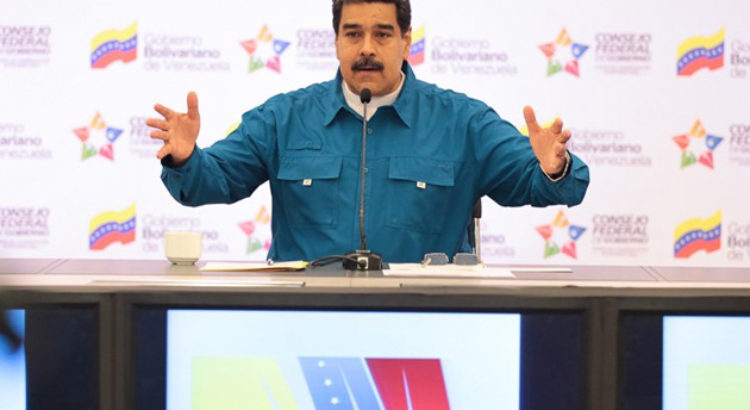
El presidente de la República, Nicolás Maduro, enalteció el esfuerzo y entrega de los estudiantes venezolanos destacados en su consecución académica y ratificó el impulso a las políticas sociales para seguir apoyando a la juventud.
Su comentario lo expresó este sábado a través del Twitter, a propósito de la entrega, el pasado viernes, por parte del ministro para la Educación, Elías Jaua, de los certificados a mil cinco bachilleres con los mejores promedios en educación media del país, en un acto que se celebró en la Plaza Bicentenario del Palacio de Miraflores, Caracas.
La joven Ariadne Chirinos fue una de las jóvenes reconocidas, cuya semblanza fue compartida en la red social por el mandatario nacional a partir de una nota de Prensa Presidencial.
“En Venezuela gracias a la Revolución Bolivariana, jóvenes como Ariadne Chirinos se benefician con educación gratuita y de calidad, desde primaria hasta sus estudios universitarios. Nuestra juventud se forma para construir la Venezuela del futuro”, es el mensaje con el cual el jefe de Estado compartió la publicación.
La joven Ariadne Chirinos, egresada como bachiller en Ciencias del Liceo Bolivariano Pedro Rolingson Herrera, ubicado en Píritu, estado Anzoátegui, acumuló un promedio de 19,50 puntos y manifestó: “El futuro de los jóvenes está en Venezuela, no en otros países. Con perseverancia vamos a sacar el país adelante”.
Fuente de la noticia: http://www.noticias24.com/venezuela/noticia/345470/el-ejecutivo-nacional-impulsara-politicas-sociales-para-garantizar-la-educacion-gratuita/
Centro América/Puerto Rico/Fuente: www.elvocero.com.
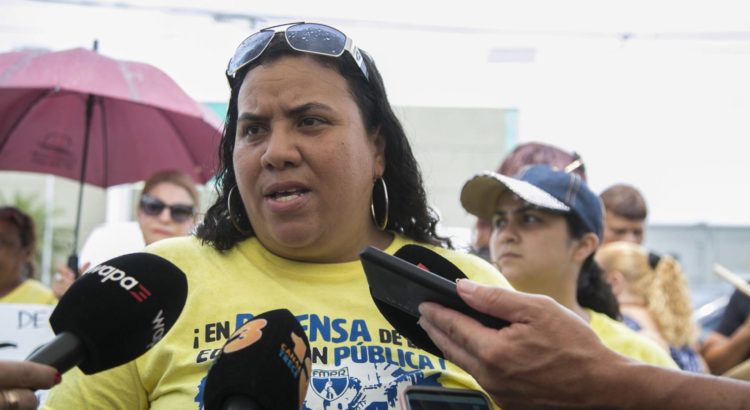
La Federación de Maestros de Puerto Rico (FMPR) denunció ayer que, tal y como lo advirtió en audiencias públicas en el Senado hace un año, el Departamento de Educación ha ubicado a unos 1,200 maestros permanentes en proyectos donde tendrán que cambiar forzosamente sus categorías y los cursos que imparten.
“Confirmado. Miles de educadores designados a la fuerza a proyectos especiales tendrán que ofrecer cursos que no son para los que estudiaron y fueron certificados y, si en dos años no logran los requisitos para la plaza que se les impuso, serán despedidos. Así lo admitió la secretaria de Educación, Julia Keleher, tras días de zozobra para miles de maestros y maestras declarados excedentes o recursos disponibles”, aseguró Mercedes Martínez Padilla, presidenta del sindicato magisterial.
Añadió que “el Departamento de Educación ha cerrado cientos de escuelas y aumentado el tope de estudiantes por salón para reducir la cantidad de maestros necesarios. Todo esto se hace en detrimento de la calidad de la enseñanza y el aprovechamiento académico de los niños y niñas”.
Según la líder gremial, “la secretaria Keleher ubicó en esta condición a unos 3,600 docentes permanentes, de los cuales 1,200 han sido señalados para proyectos especiales. La amenaza para los que no acepten esta precaria situación es que, de no hacerlo, perderán sus empleos”.
En declaraciones a la prensa, Keleher indicó que “lo que estoy tratando de evitar es decirle que no necesito de sus servicios y quedas despedido”.
“Esto constituye un chantaje descarado para que los maestros acepten este abuso. Si el gobierno respondiera a las necesidades de los niños y niñas, mantendría las escuelas abiertas, ofreciendo un currículo amplio y elevaría los niveles de excelencia de la enseñanza. Establecería periodos de 50 minutos para ampliar la oferta curricular, integrando bellas artes, cursos vocacionales, salud escolar y cursos electivos. No habría personal en exceso”, sostuvo Martínez.
Movimientos apoyados en ley
El Proyecto del Senado 563, convertido en la Ley 84 del 7 de agosto de 2017, faculta a la secretaria de Educación para llevar a cabo estas reubicaciones de educadores. La FMPR se opuso a esta medida, propuesta por el senador novoprogresista Abel Nazario Quiñones, y presentó un memorial explicativo en el que se opuso a que no se convocara al magisterio a audiencias públicas en un tema tan importante.
Martínez señaló que “en adición a los maestros permanentes que ubicarán en proyectos especiales, los cierres de escuelas dejarán fuera a sobre 3,000 transitorios este año, muchos de los cuales calificaban para sus permanencias, pero, en violación a la Ley 312, no se les otorgó. Se trata de un despido disfrazado”.
“Reasignar maestros a cursos y especialidades que no estudiaron, ni tienen la aptitud, es un claro atropello. El maestro ya estudió unas materias a base de sus intereses y capacidades y nadie puede obligarle a certificarse en otra área para la que posiblemente no tiene destrezas, máxime cuando su contrato con el DE (formulario 409) señala claramente la categoría para la que fue reclutado”, afirmó Martínez.
Opinó que “los maestros y maestras en esta situación deben impugnar estas reubicaciones. La Federación de Maestros representará a sus afiliados en las vistas que se señalen en sus casos y se mantendrá firme defendiendo los derechos del magisterio”.
Fuente de la noticia: https://www.elvocero.com/educacion/condenan-la-reasignaci-n-de-maestros/article_4e90d1ac-8c81-11e8-92a7-97b710588c12.html
Campaigners say having different abortion laws on either side of Irish border breaches Good Friday agreement
The number of women travelling from Northern Ireland to have an abortion in England has jumped dramatically since the government set up a special hotline in March.
A total of 342 women and girls – including at least one 12-year-old – went to England for a termination through the British Pregnancy Advisory Service (BPAS) in the three months since March: a significant increase on the 190 women who travelled to use the same service in the previous nine months.
The figures have been released as pressure mounts on the government to repeal 19th-century legislation that prevents women from having an abortion in Northern Ireland. It is now the only part of Europe apart from Malta where abortion is illegal, after the Irish referendum in May.
On Wednesday, Theresa May will meet Leo Varadkar, the taoiseach, for the first intergovernmental conference between Britain and Ireland since 2007.
A letter to the leaders, signed by 173 parliamentarians from every major political party in Ireland and the UK, calls for the repeal of sections 58 and 59 of the Offences Against the Person Act 1861. In England, Wales and Scotland, the legislation has been superseded by the Abortion Act 1967 and other legislation, but it does not apply in Ulster.
Campaigners including Stella Creasy, the Walthamstow MP, who is one of the letter’s signatories, say that having different abortion laws in Ireland and Northern Ireland is a breach of the Good Friday agreement, which commits both governments to having equivalent legislation on both sides of the border.
Creasy called the letter an unprecedented intervention. She said: “We cannot let the human rights of women of Northern Ireland be forgotten. Our duty under the Good Friday agreement is to protect them, not let Theresa May sacrifice them to the political expediency of having the DUP prop up her government.
“Without action it’s clear hundreds of women and girls as young as 12 who are UK citizens are being forced to travel overseas for healthcare – and many more may be forced to continue an unwanted pregnancy as a result. The government must name the date when parliament can repeal this cruel legislation or else risk making a rape victim having to take them to court to vindicate the basic human rights of Northern Irish women.”
On 6 March the Department of Health and Social Care set up a central booking system so that women in Northern Ireland could call a phone number to make an appointment through BPAS. The figures show that an average of 28 women a day crossed the Irish Sea for an abortion through BPAS between March and May, with more than half drawing income support or having an income of less than £15,276 a year.
In 2017, 919 Northern Irish women travelled to England for an abortion, most using clinics run by BPAS or Marie Stopes.
In June, the supreme court said the abortion law in Northern Ireland was not compatible with the European convention on human rights.
Source of the article: https://www.theguardian.com/world/2018/jul/21/women-travelling-from-northern-ireland-to-england-for-abortions
América del Sur/23.07.18/Fuente: www.la-razon.com.
Ante la noticia falsa que circula en las redes sociales sobre la ampliación del descanso pedagógico, El ministerio de Educación emitió un comunicado para desmentirlo.
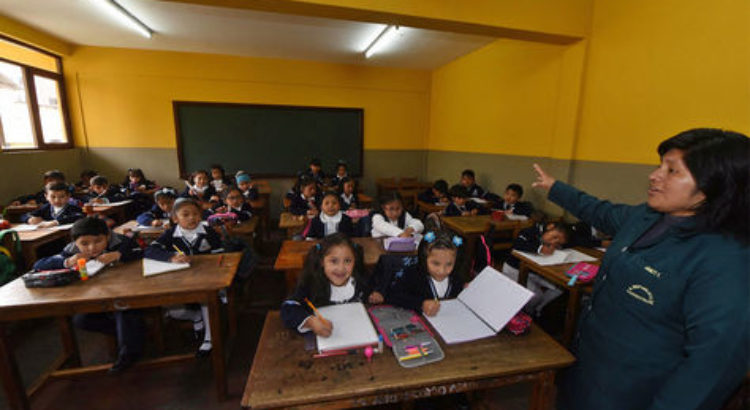
El Ministerio de Educación desmintió este domingo, mediante un comunicado, una supuesta ampliación del descanso pedagógico en los departamentos de La Paz, Oruro y Potosí.
«Ante la noticia falsa que circula en las redes sociales sobre la ampliación del descanso pedagógico. El Ministerio de Educación comunica, que NO HABRA AMPLIACION EN LA PAZ, ORURO Y POTOSÍ, las regiones afectadas por la intensa nevada suspenderán clases por emergencia climática», remarca ese comunicado difundido en la cuenta Twitter de esa cartera de Estado.
Fuente de la noticia: http://www.la-razon.com/sociedad/educacion-descanso-pedagogico-desmentido_0_2969703018.html
La consejera de Educación, Soledad Monzón, cree que las dudas sobre la entrada de videojuegos deportivos a las aulas se disiparán o, por lo menos, se atenuarán, una vez sus críticos entiendan que la puesta en marcha de una liga de eSports en 20 centros educativos el próximo curso sirve para educar en su uso responsable.
Soledad Monzón presentó ayer el proyecto educativo piloto para fomentar el uso responsable de los videojuegos entre los alumnos, que se basa en una actividad extraescolar que se ofrece dos veces a la semana y durará diez semanas, del 11 de octubre al 15 de diciembre.
La actividad sobre videojuegos deportivos, que se ofertará en centros de Secundaria, Bachillerato y Formación Profesional de La Graciosa, Fuerteventura, Gran Canaria, Tenerife, La Palma y La Gomera, contempla que un día de la semana los 20 alumnos repartidos en equipos mixtos que participen por centro dediquen una hora a entrenamientos, otra hora a talleres educativos y otra a actividad física.
La Asociación de Pediatría de Atención Primaria de Canarias (APAPCanarias) ha considerado inapropiado el apoyo del Gobierno a los videojuegos deportivos y partidos como el PP, Podemos y Nueva Canarias han criticado esta iniciativa. Sin embargo, Monzón cree que las críticas que se han vertido tienen que ver con el desconocimiento. «No se trata de una liga escolar pura y dura», sino que detrás de ella hay un proyecto educativo.
En su opinión, demonizar la liga «es eludir la realidad».
Según la Consejería de Educación, en Canarias, el 76% de niños entre 6 y 10 años juegan a videojuegos, el 78% entre 11 y 14 años y 65% entre 15 y 24 años.
Fuente de la noticia: http://eldia.es/canarias/2018-07-21/10-Educacion-presenta-proyecto-educativo-videojuegos.htm
The New Orleans turnaround shows the power of giving more freedom to teachers and principals — and then holding them accountable for their performance
Twelve years later, Nigel Palmer still remembers the embarrassment of his first days as a fourth grader in Monroe, La. He was a Hurricane Katrina evacuee from New Orleans, living with his family in a La Quinta Inn, 250 miles from home. As soon as the school year began, he could tell that the kids in his new school seemed different from him.
They could divide numbers. He really couldn’t. They knew the 50 states. He didn’t. “I wasn’t up to par,” he quietly told me. It’s a miserable feeling.
Until the storm, Palmer had been attending New Orleans public schools, which were among the country’s worst. The high-school graduation rate was 54 percent, and some students who did graduate had shockingly weak academic skills.
After Katrina’s devastation, New Orleans embarked on the most ambitious education overhaul in modern America. The state of Louisiana took over the system in 2005, abolished the old bureaucracy and closed nearly every school. Rather than running schools itself, the state became an overseer, hiring independent operators of public schools — that is, charter schools — and tracking their performance.
Dominique Newton was the 2016 valedictorian of G.W. Carver High School. But she initially struggled in college, at Xavier, while also helping care for her father, who is on dialysis. She now is doing better, and majoring in political science.CreditWilliam Widmer for The New York Times
This month, the New Orleans overhaul entered a new stage. On July 1, the state returned control of all schools to the city. The charter schools remain. But a locally elected school board, accountable to the city’s residents, is now in charge. It’s a time when people in New Orleans are reflecting on what the overhaul has, and has not, accomplished.
So I decided to visit and talk with students, teachers, principals, community leaders and researchers. And I was struck by how clear of a picture emerged. It’s still a nuanced picture, with both positives and negatives. But there are big lessons.
New Orleans is a great case study partly because it avoids many of the ambiguities of other education reform efforts. The charters here educate almost all public-school students, so they can’t cherry pick. And the students are overwhelmingly black and low-income — even lower-income than before Katrina — so gentrification isn’t a factor.
Performance on every kind of standardized test has surged. Before the storm, New Orleans students scored far below the Louisiana average on reading, math, science and social studies. Today, they hover near the state average, despite living amid much more poverty. Nationally, the average New Orleans student has moved to the 37th percentile of math and reading scores, from the 22nd percentile pre-Katrina.
This week, Douglas Harris — a Tulane economist who leads a rigorous research project on the schools — is releasing a new study, with Matthew Larsen, another economist. It shows that the test-score gains are translating into real changes in students’ lives. High-school graduation, college attendance and college graduation have all risen.
Jewel Dauphin, a 2017 Carver graduate, now attends Opportunities Academy, a program that teaches life skills. He also does work as an advocate pushing the city to improve transportation options for people with disabilities. CreditWilliam Widmer for The New York Times
One example: In most of Louisiana, the share of 12th graders going directly to college has fallen in recent years, probably because of budget cuts to higher education. In New Orleans, Harris and Larsen report, the share has jumped to 32.8 percent, from 22.5 percent before Katrina.
People here point to two main forces driving the progress: Autonomy and accountability.
In other school districts, teachers and principals are subject to a thicket of rules, imposed by a central bureaucracy. In New Orleans, schools have far more control. They decide which extracurriculars to offer and what food to serve. Principals choose their teachers — and can let go of weak ones. Teachers, working together, often choose thei
r curriculum.
“It puts decisions really close to the school site and the students,” Towana Pierre-Floyd, the principal of KIPP Renaissance High School, told me. Victor Jones, an English teacher at G.W. Carver High School, says, “We don’t have to wait to make changes when we know changes need to be made.”
Jones and his colleagues recently decided that their ninth graders needed more writing practice than they were getting from their literature-heavy curriculum. But the teachers still wanted to expose the students to great books. So they combined two curriculum plans to get the right mix, cutting down on novels without eliminating them. The students now read “Lord of the Flies,” “Romeo and Juliet,” “Parable of the Sower,” Ray Bradbury short stories and journalism about terrorism, among other things, and also do more writing than they used to.
Crucially, all of this autonomy comes with accountability: Schools must show their approach is working. They are evaluated based on test scores, including ACT and Advanced Placement, and graduation rate — with an emphasis on the trend lines. Schools that fail to make progress can lose their contract.
Over the past decade, the district has replaced the operators of more than 40 schools in response to poor performance. “You have to meet these minimum standards to continue to have the privilege of educating kids,” Patrick Dobard, the superintendent until last year, told me. Harris’s research has found that much of the city’s progress has stemmed from closing the worst charter schools and letting successful charters expand.
Think about how different this is from the norm in American education. In most districts, a single entity — a board of education — is responsible for both running schools and evaluating them. That combination is not a recipe for rigorous evaluation and consequences. It’s akin to letting students grade themselves.
Obviously, very few districts elsewhere are going to replicate the New Orleans model and start from scratch. But most would benefit from introducing both more freedom and more accountability. Together, the two spark human ingenuity.
For all of the improvement here, the schools still have their troubles. The academic results still trail those in less impoverished districts, and progress has slowed lately. “We’re not where we want to be,” Rhonda Dale, the principal of Abramson Sci Academy, said. Some residents told me they hoped that the new local control could accelerate academic progress – while also making the school system feel like more a local institution and less like one imposed on the city. My column next week will focus on these challenges.
Yet even with the caveats, it would be a terrible mistake to let the imperfections obscure the progress here. The city’s residents certainly recognize that progress. In a recent poll by Tulane’s Cowen Institute, 70 percent of public-school parents said the charter schools had improved education.
And what ended up happening to Nigel Palmer? In seventh grade, he moved back to New Orleans, a stronger student than when he left. Fortunately, the city’s schools had improved too. His high school, KIPP Renaissance, was “a fun, competitive environment — people wanted a high G.P.A.,” he said. “School was cool.”
This spring, he graduated from Xavier University, a historically black Catholic college here, and he recently started his first job — as a middle-school social studies teacher in New Orleans.
Source of the article: https://www.nytimes.com/2018/07/15/opinion/columnists/new-orleans-charter-schools-education-reform.html
OtrasVocesenEducacion.org existe gracias al esfuerzo voluntario e independiente de un pequeño grupo de docentes que decidimos soñar con un espacio abierto de intercambio y debate.
¡Ayúdanos a mantener abiertas las puertas de esta aula!







 Users Today : 312
 Total Users : 35532833
 Views Today : 420
 Total views : 3766112