Saltar al contenido principal
Page 2886 of 6727
1 2.884 2.885 2.886 2.887 2.888 6.727

Entrevista: “No estamos preparados para lo que viene”, futurista Mike Walsh

Por: Dinero.com/23-05-2018

¿Cómo serán los negocios en el futuro? ¿Quiénes serán los nuevos ricos del planeta? El futurista australiano Mike Wash habló con Dinero en exclusiva para darle una mirada al futuro. Walsh nos cuenta por qué no estamos preparados para lo que viene…

El australiano Mike Walsh, CEO de la consultora Tomorrow, es un reconocido futurista en el mundo de los negocios a nivel internacional, enfocado en tecnología emergente y comportamiento disruptivo del consumidor. Walsh estuvo en Colombia durante el más reciente Congreso de Acceso a Servicios Financieros y Medios de Pago realizado en la ciudad de Cali por Asobancaria y Dinero lo entrevistó en exclusiva para saber  cuál será el futuro de los negocios en el mundo:

¿Cómo ve a Latinoamérica en innovación con respecto a otras regiones del mundo?

Yo creo que en Latinoamérica la innovación es una idea, no necesariamente una realidad. Hay tantos mercados industrias y países, todos en distintas realidades y en distintas posiciones, pero lo que une a América Latina con otras zonas del mundo con rápido crecimiento no es la cultura locativa sino la juventud de su población. Ese es el verdadero impulsor del cambio, viene del consumidor no de las compañías.

¿Qué brechas tecnológicas ve en América Latina?

Creo que muchas de las organizaciones siguen siendo muy tradicionales. Hay mucho proceso, mucho papeleo, mucha regulación y a menudo, una falta de voluntad política y valentía para hacer los cambios que se tienen que hacer. Pero se está dando un cambio generacional. Entonces no creo que la tecnología sea el problema. La tecnología está muy abierta en el mundo, uno puede acceder a servicios a través de la nube muy rápidamente, el problema está en la voluntad de las personas para hacer el cambio. Es un tema de personas, no de tecnología.

¿Qué le diría a una empresa que está empezando ese proceso de transformación digital?

Los dos principios clave. En primer lugar: obsesión con el cliente. Hay que diseñar para los clientes futuros no los clientes actuales. Una de las cosas que hace Amazon, por ejemplo, cuando desarrolla un nuevo producto es crear un boletín de prensa para un producto que aún no existe, porque están tratando de entender cómo se ve esto desde una perspectiva humana, más que cómo refleja esto sus prioridades corporativas.

En segundo lugar, las compañías se deben fijar en los datos. Porque estos datos van a ser los que impulsarán la habilidad de generar sistemas de aprendizaje automático (machine learning), para seguir haciendo ese ciclo. El algoritmo mismo no es tan importante. Uno puede saber el algoritmo de Google, pero no puede reconstruir a Google, porque no tiene toda la data y eso es un tema en el que las compañías tradicionales latinoamericanas, incluso en Colombia, tienen ventaja: ellas tienen toda la data, pero simplemente no la han apalancado de una manera que transforme la experiencia de los clientes.

El reto para una compañía que está intentando hacer este proceso es encontrar los datos sobre los cuales apalancarse para encontrar aún más datos y avanzar en la causa. Y hacerlo suficientemente rápido, antes que las otras compañías tradicionales.

¿Usted cree que existe un lado oscuro del machine learning o que podría afectar negativamente a la humanidad?

Ya lo estamos viendo. El machine learning no es objetivo, hay que tener una etnografía de la data, uno tiene que entender de dónde provienen los datos, si los datos son diversos y reflejan a todo el mundo y qué sesgos podría haber involucrados en los datos o en el diseño de algoritmos. Las máquinas en sí mismas no son oscuras, pero ellas pueden reflejar perfectamente el lado oscuro de la humanidad.

¿Tiene algunos ejemplos negativos de machine learning y cómo evitar que eso pase en el futuro?

Ha habido, por ejemplo, mucha polémica en los Estados Unidos por el uso de algoritmos en las sentencias de delincuentes. Descubrieron que hay un sesgo racial, porque las máquinas estaban aprendiendo de los datos recolectados y de las sentencias que se han ejecutado sobre segmentos específicos de la población, entonces estaban acelerando la eficiencia de un proceso que ya era sesgado. El caso del doctor David Dao, el señor asiático al que le rompieron los dientes sacándolo arrastrado de un avión de United Airlines, y la gente lo señalaba como un caso de mal servicio al cliente, es realmente un ejemplo de un mal diseño algorítmico. Hay una cantidad de formas de cómo se diseña un algoritmo y ninguno de los empleados tenía el poder para decir que había algo malo en el algoritmo y no había forma de saber cómo se iban a comportar los empleados. Así que llamaron a la policía y lo sacaron arrastrado del pelo.

¿Qué opina sobre lo que está pasando con blockchain y los fraudes alrededor del bitcóin en Latinoamérica?

Pienso que ha habido una curiosa característica en que los criminales colombianos siempre logran innovar con la nueva tecnología. Esto no es un fenómeno nuevo. Pero uno debe separar ente blockchain y bitcóin. Blockchain es probablemente una de las más importantes innovaciones, tan importante como la creación de internet. Y en el futuro habrá organizaciones enteras sin gente, basadas en contratos inteligentes. No hay una solución blockchain para todos los problemas, pero sí para muchos.

Bitcóin tampoco es un fenómeno nuevo. Los seres humanos somos muy susceptibles a las historias de enriquecimiento rápido: las pirámides, la Alemania de los tulipanes, la especulación también es una idea muy antigua y eso lo vimos a finales de los 90s con el primer boom de internet, hay muchas similitudes entre las ICOs y las primeras .com, pero pienso que cuando se tranquilicen las aguas, la gente sí va a sentarse a mirar los contratos inteligentes y ver cuál será la mejor manera de dirimir todos los temas que hay dentro de un contrato. Si uno mira las dos fuerzas: automatización y blockchain, todo el procesamiento que sucede en el back office se va a revolucionar en los próximos 5 a 10 años y eso cambiará, por ejemplo, la naturaleza de lo que es un banco, una compañía de medios, una empresa de retail, una comisionista de bolsa, empresas de logística, etc.

¿Considera que en algún momento las criptomonedas podrían llegar a ser las monedas de un país?

No criptomonedas, pero veremos monedas digitales administradas por gobiernos y de pronto lo veremos en algún país latinoamericano primero o en India, porque es la manera más fácil y más rápida de eliminar la evasión de impuestos, el fraude y el mercado negro, pues no va a haber dinero que no sea rastreable. Así que hay una diferencia entre criptomonedas y monedas digitales, los gobiernos tratarán de hacer monedas digitales que pueden monitorear y van a pelear contra las criptomonedas, porque para ellos una criptomoneda es peor que el efectivo: si usted pone US$1.000 millones en las paredes de su casa, alguien podría encontrarlo, pero si está en un disco duro, no hay nada que hacer.

Pero la historia mayor, que no se está mirando bien, es el impacto de todos estos temas sobre el empleo. Seguimos sin entender cómo es que la automatización, el machine learning, va a reestructurar la fuerza laboral. La última vez que esto sucedió fue cuando se revolucionó la agricultura y tuvieron que reinventar el sistema educativo desde kínder hasta once grado para reentrenar a la fuerza de trabajo y poder enfrentar lo nuevo.

¿Usted cree que en el mundo, el sistema educativo está rezagado frente a lo que está pasando con la tecnología?

No estamos preparados para lo que viene. Seguimos enseñando a los niños en una forma completamente obsoleta frente a la tecnología que ya está en el mercado. Los estamos preparando para profesiones que quizá ni siquiera lleguen a existir.

¿Cómo debería ser el sistema educativo ideal para esta época?

Mirando hacia atrás, de donde vamos a llegar, las compañías más exitosas del futuro van a ser más descentralizadas, con equipos más empoderados, más autónomos. Los líderes en esas organizaciones van a tener que ser no solamente muy analíticos, sino también humanistas. Si uno puede automatizar las actividades transaccionales obvias, necesitaría personas que sean excelentes para resolver problemas, que puedan administrar las excepciones y que probablemente puedan hablar los nuevos lenguajes o idiomas del poder. Va a haber lenguajes específicos de negocios que van a parecerse a programación, pero que va a permitir que los líderes de negocios en esencia creen sus propios algoritmos para automatizar la toma de decisiones, como se ve por ejemplo en los mercados financieros hoy en día. Esto se va a ver en mercadeo, en logística, en tesorería y servicios financieros. Así que el sistema educativo, de lejos, no está preparado para este nuevo mundo.

¿Hay algún país que esté haciéndolo bien?

Hay muchos experimentos. Por ejemplo, hay mucho trabajo alrededor del pensamiento computacional como una nueva disciplina.  Que los niños, por ejemplo, usando Minecraft es una de las mejores plataformas para aprender. Si piensas que la respuesta es obvia, probablemente sea equivocada.

Uno mira excelentes líderes como Masayoshi Son, presidente de Softbank en Japón. Hace algunas semanas conocí a diferentes líderes de su compañía y les pregunté “¿cuál es el secreto de Masayoshi Son?” La respuesta que encontré es que él no trata de imaginarse cuál va a ser la próxima cosa grande que va a hacer. Él piensa cómo va a ser la gente en 50 años, cómo va a vivir, cómo va a trabajar, la vida humana y se devuelve para pensar qué tipo de compañía, servicios e infraestructura tendrían que existir para habilitar todo aquello. Si puede encontrar alguna cosa de esas la compra o invierte en ella y si no puede encontrarla va a alentar a la gente a que arranque ese estilo de compañías. Elon Musk tiene la misma actitud.

¿Usted cree que hay una burbuja alrededor de esas compañías tecnológicas comoAmazon o Tesla?

Sí, en el momento, la gente está valorando estas compañías como si pudieran resolver todos los problemas. Pero simplemente puede resultar que no pueden ejecutar lo que son sus propias ambiciones. Hay un punto de vista que dice que una compañía como Amazon que tiene tanta data, que tiene tanta información, pudiera quizás estar subvalorada.

¿Qué piensa de lo que está pasando en la política con respecto a las nuevas tendencias de derecha, el populismo y la antiglobalización?

La gente está culpando a la globalización, pero finalmente lo que nos vamos a acabar dando cuenta es cómo la tecnología terminará cambiando la estructura de clases y no va a ser para bien. La gente piensa que porque puede pedir comida desde su teléfono móvil el futuro va a ser bueno para ellos. Pero realmente hay un riesgo de que en el futuro termine habiendo 3 tipos de personas: puedes ser de los que están trabajando para el algoritmo y la vida ahí no es muy buena; o de los que están trabajando en el algoritmo y estás en ese pequeño porcentaje de profesionales altamente pagados; o tu eres de ese 0.0001% que es dueño del algoritmo, momento en el cual vas a ser parte de una clase aristócrata, mucho más rica que cualquier otra clase que haya existido en la historia. Esos son los hijos de Zuckerberg, Musk… un mundo loco, no es ciencia ficción, ya lo estamos viviendo.

*Fuente: https://www.dinero.com/empresas/articulo/como-seran-los-negocios-del-futuro-con-mike-walsh/258548

Comparte este contenido:

10 ideas clave y 10 retos de futuro en la educación (Video)

Por: Graó Educación. 23/05/2018

Vídeo traducido del debate realizado entre 10 ponentes de renombre vinculados al mundo de la educación (David Bueno, Rafael Bisquerra, César Coll, Txus Martín, Fernando Trujillo, Francisco Imbernón, Marina Subirats, Francesco Tonucci, Anna Manso, Laura Lladós y Jordi Canelles) en la celebración de los 40 años de Graó.

Fuente: https://www.youtube.com/watch?v=3Dk14I8ZrvQ&feature=youtu.be

Fotografía: MBA & Educación Ejecutiva

Comparte este contenido:

México: Maestros que se oponen a evaluación, se van a ir quedando fuera, Meade.

Por: Jorge Monroy. El Economista. 23/05/2018

Durante su participación en el foro “10 Por la Educación”, Meade Kuribreña dijo que si gana los comicios del 1 de julio, “sin duda se mantendrá (la evaluación docente) con un mecanismo central para poder mejorar. No podemos mejorar lo que no podemos evaluar”.

El candidato presidencial José Antonio Meade (PRI-PVEM-NA) se pronunció por mantener la reforma educativa y el sistema de evaluación a los maestros. Advirtió que aquellos docentes que se oponen, la ley los va a ir dejando “fuera”, porque no van a estar en la posibilidad de competir.

Durante su participación en el foro “10 Por la Educación”, Meade Kuribreña dijo que si gana los comicios del 1 de julio, “sin duda se mantendrá (la evaluación docente) con un mecanismo central para poder mejorar. No podemos mejorar lo que no podemos evaluar”.

El aspirante presidencial argumentó que “si nosotros evaluamos a los alumnos y encontramos que hay un error, estamos en posibilidad de corregirlo. Si al tiempo de evaluar a los maestros encontramos que hay alguna deficiencia, estamos en la posibilidad de corregirlo. Pero lo que no podemos es manejar a ciegas”.

José Antonio Meade se pronunció por dejar madurar la reforma educativa, y afirmó que la evaluación a los maestros servirá “para identificar dónde les hemos quedado mal, y hacer el los esfuerzos necesarios para subsanar, desde lo inicial y en lo continuo, cualquier elemento en donde nosotros les hemos fallado a los maestros”.

El moderador del evento, el periodista Leonardo Kourchenko, preguntó al candidato presidencial qué hacer con los docentes del CNTE y del propio SNTE, que se oponen a la evaluación magisterial.

“Se van a ir quedando fuera solos, y se van a quedar fuera solos porque no van a estar en la posibilidad de competir.

“Al final, lo que va acabar pasando es que, quien no quiera modernizarse, el que no quiera aprovechar la obligación del gobierno de capacitarlo, se va a ir quedando sin los elementos necesarios en, además, un sector que como nunca antes se está modernizando”, sentenció.

El moderador preguntó a Meade si esa circunstancia sería natural o una decisión de política pública desde la SEP.

“Ya lo hay, ya lo hay, en términos de la evaluación”, contestó.

¿Es el que marca la Ley? -insistió Kourchenko.

“Sí. Y ahí hay un proceso darwiniano de selección natural, y en ese proceso darwiniano, por la vía del ejemplo, la gente le va a apostar a evolucionar, porque el que no evolucione se va a quedar marginado y fuera”, respondió Meade.

Sin embargo, el aspirante presidencial del PRI reconoció que la capacitación y evaluación de los maestros deben ir acompañados de un mejor salario y un mejor horizonte de vida para los maestros.

“Si estamos fallando en los servicios, desde el punto de vista de infraestructura, por lo que hay que apretar es a la instancia municipal; si estamos fallando frente a los maestros porque no les estamos dando los elementos docentes necesarios, al que hay que apretar es a las instancias de capacitación de gobierno o el trabajo en las Normales; si no estamos dándole a los alumnos lo que requieren para aprender a aprender, pues hay que revisar la pedagogía y el modelo curricular, y la forma en como lo estamos implementando”, comentó.

Critica ausencia de AMLO

En su exposición, el candidato presidencial José Antonio Meade, criticó que su adversario Andrés Manuel López Obrador (Morena, PT y PES), no haya acudido a este foro, y dijo que en la elección del 1 de julio estará en juego la consolidación de la reforma educativa, o bien, ceder a los intereses políticos.

“No nos hagamos bolas, lo que hoy está en la boleta es la decisión fundamental de quién está al centro del sistema educativo: si los intereses políticos, o los intereses de las niñas y los niños”, afirmó.

Meade Kuribreña dijo que en caso de ganar los comicios del 1 de julio, tendrá diálogo con el SNTE y la CNTE, pero sólo el que marca la ley.

“Diálogo; de nuevo, cercanía; de nuevo, apertura, pero diálogo, cercanía y apertura respecto de una definición que ya nos marca la ley. Nosotros no podemos dar marcha atrás en la apuesta central (la reforma educativa)”, argumentó.

Bromea por spot de niños candidatos

El presidente de Mexicanos Primero, David Calderón, preguntó al candidato Meade qué haría para mejorar la formación inicial y continua de maestros, a lo que el aspirante a la Primera Magistratura del país, contestó:

– “Mira, lo primero que haría es un spot extraordinario”.

– “Ya lo bajaron, ya lo bajaron”, contestó Calderón.

“Ni aguantan nada, ¿verdad? ¡No, hombre! Son unos genios, mano”, aseveró Meade.

jmonroy@eleconomista.com.mx

Fuente: https://www.eleconomista.com.mx/politica/Maestros-que-se-oponen-a-evaluacion-se-van-a-ir-quedando-fuera-Meade-20180508-0170.html

Fotografía: Notimex

Comparte este contenido:

South Africa’s apartheid schools

By Inside_Education/23-05-2018

Francois Cleophas

South Africa’s history of segregation has left its footprints in many places. Take the case of semi-rural Franschoek in the country’s Western Cape province. In one part of the town, which draws tourists from around the world to enjoy award winning wine and food, is a private school that boasts excellent sports facilities.

There’s an indoor sports gymnasium where tennis, hockey, netball and soccer are played. There are two swimming pools – one for beginners who are just learning and one for water polo and senior swimming. Elsewhere on the school campus are six tennis courts and two cricket ovals with turf wickets. New sports fields, including two more cricket ovals, are being developed.

A few kilometres up the road is a public school that caters for pupils from an informal settlement. It has no sporting facilities.

This scenario is repeated across South Africa; a modern echo of the country’s history of racial segregation. Patterns of neglect, established in the 19th century when formal schooling was introduced in South Africa, persist.

An understanding of and reckoning with segregation history is important in coming to grips with the current state of poor school sport provision in black and coloured communities. South Africa will not address the great inequalities that still exist in school sport if it keeps ignoring history.

The mission years

Formal schooling was introduced in South Africa during the 19th century. Black pupils were largely educated at mission schools run by a wide range of denominations.

Most mission schools had no decent sporting facilities. They practiced and played sport separately from white organisations and schools. For instance, when the Western Province Rugby Football Union created the Junior Challenge Shield League in 1898, the competition was open only to learners of “European extraction” – that is, white.

This exclusion stretched across sporting disciplines. When the Good Hope Education Department organised the Physical Training Coronation Competition in 1902 at the Green Point Track, a separate division was organised for “coloured” or mission schools. The winner of the 1902 Coronation competition in the Mission School division was the St Cyprian’s School in Ndabeni Location.

This location, as living areas for black Africans were called, was established for families who were forcibly removed from District Six in Cape Town in 1901. The school was a zinc structure with no playing facilities.

In 1928 mission schools set up the Central School Sport Union. Its first athletic meeting was held at the Mowbray sports ground, the home ground of the City and Suburban Rugby Union. Newspapers from the time, which I’ve studied, reported that the grass was knee high. This situation existed by design: the South African Institute of Race Relations reported regularly on how much more money was spent to provide sporting facilities for white schools.

At a national level, the first inter-varsity athletic meeting was held in 1921 at the Wanderers Club in Johannesburg between the Transvaal University College (later Pretoria University), Grey University College (later Free State University) and the Johannesburg University College. These were all white colleges in the northern parts of the country. When institutions from southern regions were included the following year, black colleges were excluded.

These black colleges established the Ciskei Bantu Amateur Athletic Association in the Eastern Cape under the auspices of the South African Bantu Amateur Athletic Association.

Apartheid school sport

Then came formal apartheid, and the situation worsened.

During the 1950s and the decades that followed, the education department wouldn’t provide black and coloured schools with decent facilities like rugby fields or athletics tracks. This was because, according to the influx control laws, Africans could not obtain permanent residence in cities. Why, apartheid authorities reasoned, spend money on people who legally weren’t allowed in certain areas?

The colleges playing in the Ciskei Bantu Amateur Athletic Association, meanwhile, received no support for sporting facilities while the nearby prestigious St Andrew’s College and Rhodes University benefited from excellent fields and tracks.

Apartheid legislation closed the Mowbray sports ground, leaving the Central School Sports Union without a place to play. A whites only school was built on the facility. The sporting past of this lost facility is largely unknown; no commemoration plaque, for instance, exists to mark its history. Another example of history forgotten and heritage ignored.

Few shifts after democracy

With the arrival of democracy in 1994 some organisations dedicated to championing non-racial school sport, like the Western Province Senior Schools’ Sports Union, closed their doors. But while desegregation in school sports was introduced in theory, the reality was rather different.

Many historically white schools appear reluctant to compete with township schools in mass competitions. They continue to hold closed inter-school derbies and athletic meetings catering for other similarly resourced schools on their well maintained sport fields.

But ironically, former whites-only schools have realised the potential of black and coloured pupils to shine on the sports field. A cursory overview of the senior national rugby and cricket teams in 2018 shows that more than 90% of black and coloured players attended historically white schools. Such players were often “poached” from township schools with scholarships and bursaries.

This “poaching” has benefited individual players but it’s happened at the expense of township schools.

Addressing history

The colonial and apartheid education project still echoes in South Africa’s post-1994 school system. For real change to start happening, it’s important for administrators, school authorities, parents and pupils to look to and understand the imbalances of history – and start working to set them right.

Read original article here

Comparte este contenido:

Libro: Las Prácticas sociales del lenguaje en contextos de tradición indígena. El objeto de conocimiento antes de ser objeto de enseñanza.

Por: Diseño del sur. 23-05-2018

“La lectura de este libro nos invita a tomar conciencia de nuestra propia realidad social, re-encontrarnos con nuestra cultura, descolonizar nuestras mentes y abrir nuestro corazón. En sus páginas podemos encontrar algunas pistas o propuestas de cómo mirar y pensar nuestra cultura desde fuera y desde dentro, con el fin de ser capaces de observar, escuchar, registrar nuestras prácticas sociales del lenguaje: entender los códigos y reglas tácitas que le dan forma a nuestras interacciones sociales; descubrir los juegos simbólicos ocultos que le dan sentido pleno a nuestro discurso; comprender el porqué de la forma como hablamos, sus formatos; los propósitos que los rigen y las vitales funciones que cumplen, así como sus enseñanzas” (Eleuterio Olarte Tiburcio, p. 8)
Graciela Quinteros y Yolanda Corona (Coordinadoras) (2013) Las prácticas sociales del lenguaje en contextos de tradición indígena. El objeto de conocimiento antes de ser objeto de enseñanza. Universidad autónoma metropolitana.

Libro completo: practicas_sociales

Todo diseño del sur: https://goo.gl/4pJu9f

Fotografía: diseño del sur

Fuente: https://www.facebook.com/disenodelsur/photos/a.630673973675735.1073741830.606928462716953/1259906560752470/?type=3&theater

Comparte este contenido:

EEUU: Students inspire hope for bright future

By Brandon Butler/ duboiscountyherald.com/ 23-05-2018

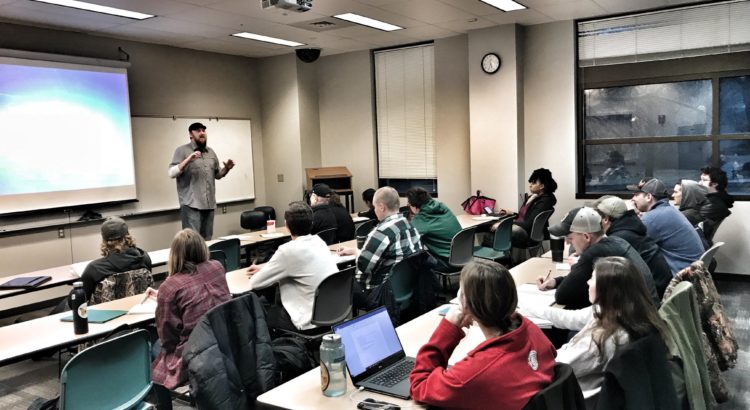
My first semester as an adjunct instructor ended last week. I taught a class I created called Communications in Natural Resources. It was an experience I’ll treasure forever. Over the course of 15 weeks, I came to realize if my students are a reflection of their generation, the future of our natural world is good hands.

I spend a lot of time talking and writing about topics relating to the outdoors, specifically fish and wildlife. Most of the time, I am not an expert on the subject. While I may know a little about a lot of things, it’s people who know a lot about one thing who communicators like me use as sources for stories. Unfortunately, too often, the expert sources are poor communicators. They possess incredible knowledge. Yet struggle to deliver what they know to the general public in a way that makes it relevant to the masses.

As a member of a Natural Resources Advisory Council, I have come to know and respect some of the challenges of higher education leadership. During a meeting last year, I was asked if I saw any opportunity to improve the curriculum. I suggested we do a better job of teaching these brilliant young minds how to tell their stories. I was empowered to create a curriculum and teach it.

To begin with, I examined beliefs I feel justified the need for this class. Number one being; no matter what your job is, communication is important. And the more prepared you are to offer input on the efforts of your work the more likely you are to build support for what it is you do and care about. Also, as far as personal advancement, if you become known as someone who can both complete the work and communicate the outcomes, you are much more valuable to the business, agency or organization you’re part of. Who would remember the revolutionary work of Aldo Leopold had he not written a “Sand County Almanac?”

I broke the course down into lessons about different communication platforms and had guest lecturers discuss their expertise. We covered magazine writing, letters to the editor and opinion pieces in newspapers, television and radio interviews, social media, websites, photography, public speaking and more.

Communication is critical in conservation, and not all citizens gather information in the same ways. Agencies have to communicate across the many different platforms from which the public consumes information. Through out the semester, guest speakers emphasized the importance of communications in all natural resource professions, the students listened and learned.

One great guest lecturer was my buddy Nathan McLeod who hosts a morning radio show. McLeod talked about how much he values natural resources and enjoys sharing messages of conservation with his listeners, but finds guests often struggle with the rapid fire pace of a radio interview. He wants guests on his show to talk conservation, but needs them to be fun and personable, and to talk in a way most people can relate to.

“Leave the rocket science at home,” McLeod said. “Give them the elevator speech. Quickly explain to listeners why this important and why they should care. Tell them how it impacts them personally.”

At the end of the class, students were paired into four groups with the assignment of building and implementing a communications plan around a natural resources topic of concern. The four topics they selected and worked on were: Open New State Parks, Reintroductions of Wildlife Species, Wildflowers in Urban Settings and The Effects of Climate Change on Wildlife. You can see the minds of tomorrow have their priorities.

I hope my students gained a better understanding of how important it is to communicate scientific knowledge in a way most citizens can understand. Our natural world faces incredible challenges requiring the support of the public to address and fix. Once these students are in professional roles, if I did my job, they will try a little harder to share their expertise.

See you down the trail…

*Fuente: https://duboiscountyherald.com/b/column-students-inspire-hope-for-bright-future

Comparte este contenido:

The Future of Higher Education Is Social Impact

How can we transform the university research enterprise to enhance its social impact?

Over the last decade, universities have faced steady criticism for elitist practices such as political bias, hoarding wealthy endowments, and providing insufficient economic returns for students. In light of this, institutions that turn their attention to serving the public good may be best poised to thrive and deliver lasting value. Some universities are embarking on innovations to support social engagement among students, and initiating university-wide efforts to educate students for social impact. These ideas rightly aim to prepare public-minded leaders for the future. But a powerful innovation is also available for the present: reshaping incentives within the university to support faculty research that responds to real-life challenges.

Typically, researchers are insulated from the criticisms of pundits and politicians who question whether universities deserve the status and privileges they enjoy. University faculty operate within a system that rarely asks them to prove their value to a broader public. Rather, academics are rewarded for developing and testing theories, and publishing findings in books and journals in their fields. Their charge is to generate knowledge, and many do so prolifically. But unlike in engineering and medicine, where transferring new knowledge into workable technology is often regarded as the ultimate professional accomplishment, such “tech transfer” is uncommon in the social sciences. Despite innovation in the content of research, research institutions in the social sciences have not been innovative when it comes to ensuring that the outside world uses research. Yet such innovation may be the key to social impact, and thus demonstrating the value of research to those who question its worth.

Some writers argue that social science research fails to break into the mainstream because it is not sufficiently timely, relevant, or accessible—and that is no doubt part of the story. But studies about the use of research paint a more complex picture. More than any quality of the evidence itself, it turns out that the quality of relationships between producers and consumers of evidence, as well as the intermediaries who knit evidence producers and consumers together, is at the heart of increasing research use in policy and practice. Universities do not typically reward faculty for the time and effort needed to build and nurture these relationships, but doing so would be a transformative step in increasing the positive social impact of academic research.

Relationships between producers and consumers of evidence are at the heart of increasing research use in policy and practice. (Photo by Tanya Braganti for the William T. Grant Foundation)

The idea that universities should foster relationships with and respond to their communities is not new. The University of Wisconsin-Madison, where I taught for three decades, has long promoted the notion that “the boundaries of the university are the boundaries of the state,” meaning that the university should produce knowledge that promotes a thriving social, cultural, political, and economic life across the state. While this notion persists, it has lately battled with a competing view among leading members of state government, who believe the primary role of the university is to prepare workers for the state’s labor market. Meanwhile, other large universities are making progress in developing and incentivizing the types of relationship-building that can improve and strengthen communities outside of campus. Rice University, for example, has adopted as one of its main goals to “engage Houston and empower its success,” proclaiming, “We will engage Houston as a focus and partner for research and education, leveraging our broad expertise on critical urban issues to be a driving force in enabling Houston’s success as a 21st-century metropolis.” Among the specific efforts supported by the university is the Houston Education Research Consortium (HERC), a partnership between the university and the Houston Independent School District that conducts research aimed at addressing the challenges of educating Houston’s urban population. Since 2013, HERC has provided 25 research reports to the district on topics such as English learners and school choice, the effectiveness of the district’s pre-kindergarten program, and predictors of high school dropout, and others. The district has used these reports its decisionmaking. Partnerships of this sort help strengthen communities by growing their human and social capital, while also brandishing the value of the university to the state and city: HERC and its parent organization have attracted considerable philanthropic support from civic-minded allies who support the university’s local engagement.

Without support at the institutional level, most university researchers have little professional incentive to participate in such partnerships or address questions more in line with local contexts. It is time for this to change. To spur such action and provide an example for universities across the nation, my colleagues and I at the William T. Grant Foundationrecently launched a grants competition for universities willing to re-think their incentive structures, and reward engaged scholarship and research-practice partnerships. TheInstitutional Challenge Grant program calls on universities to partner with a public agency or nonprofit, develop a joint research agenda, provide research fellows to execute the research, and build the capacity of the agency to use evidence from research in its decisionmaking. In addition, the grant asks that the university propose new ways to support and reward faculty members who participate in this type of work. For example, universities might provide teaching releases or summer salary, or count the influence of research on policy and practice in career advancement decisions.

After receiving bids from 41 institutions, in April we awarded the first grant to Cornell University, which is working in partnership with the Cornell Cooperative Extension of Tompkins County to address the opioid crisis in upstate New York, particularly the increasing rate of child maltreatment that has accompanied rising opioid addiction. Researchers will evaluate two evidence-based interventions based in the judicial and child welfare systems, and help providers develop effective responses to the problems they confront. Even before applying for the grant, Cornell had taken steps to engage its local community through auniversity initiative that fosters research and other activities with community partners. The current work will push the university even further in thinking about how to develop an infrastructure in which faculty are rewarded for participating in partnerships and conducting research that responds to community concerns.

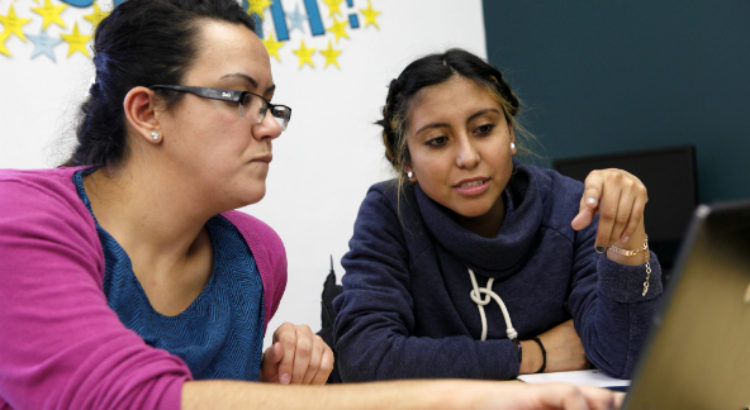
Professors Laura Tach (foreground) and Rachel Dunifon of Cornell University and Anna Steinkraus (background) of Cornell Cooperative Extension of Tompkins County plan their partnership. (Photo courtesy of Cornell University)

Ultimately, pursuing positive social impact by harnessing the talent and knowledge of university faculty can turn around perceptions of the value of higher education. But faculty will need to become more fully engaged in directly responding to real-world problems. As currently structured, universities offer few rewards for researchers who participate in partnerships primarily designed to improve policy and practice. Reorienting incentives in the university—not to diminish theory-driven, internationally renowned studies, but to enhance the value and visibility of work that provides answers for those who confront the daily challenges of today’s world—can go a long way toward making the change possible.

*Fuente: https://ssir.org/articles/entry/the_future_of_higher_education_is_social_impact

Comparte este contenido:
Page 2886 of 6727
1 2.884 2.885 2.886 2.887 2.888 6.727
OtrasVocesenEducacion.org