Page 3013 of 6814
1 3.011 3.012 3.013 3.014 3.015 6.814

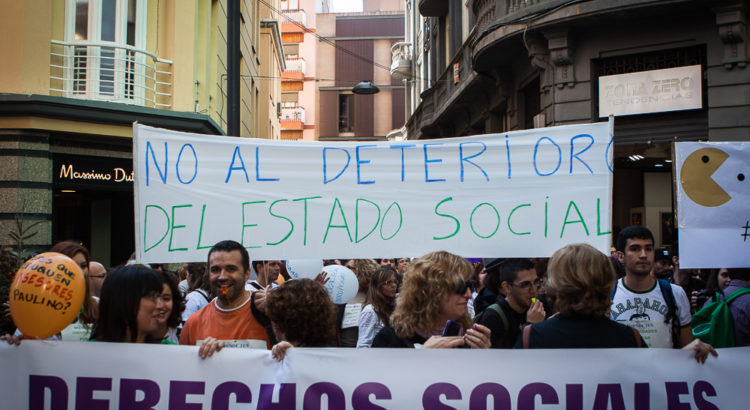
CLADE: Se creó el mecanismo de participación de la sociedad civil en el seguimiento regional de la Agenda 2030 para el Desarrollo Sostenible

CLADE/ 08 de mayo de 2018/Fuente: http://same2017.campanaderechoeducacion.org

La CLADE participó en el II Foro de los Países de América Latina y el Caribe sobre el Desarrollo Sostenible, en el cual se consensuó el mecanismo de participación de la sociedad civil, y seguirá colaborando con la elaboración de directrices para su funcionamiento.

La Campaña Latinoamericana por el Derecho a la Educación (CLADE) estuvo presente en el “II Foro de los Países de América Latina y el Caribe sobre el Desarrollo Sostenible”, que se realizó del 16 al 20 de abril, en Santiago, Chile, convocado por la Comisión Económica para América Latina y el Caribe (CEPAL). Participaron en el encuentro cerca de 300 representantes de sociedad civil de la región, entre ellos Laura Giannecchini, coordinadora de Desarrollo Institucional de CLADE, Marcela Ballara, de la Red de Educación Popular entre Mujeres (REPEM), Patricio Véjar, del Foro por el Derecho a la Educación de Chile, y representantes del Consejo de Educación Popular de América Latina y el Caribe (CEAAL).

La CLADE, con otras 32 organizaciones, entre ellas REPEM y la Mesa de Articulación ETIS, integró la Comisión Transitoria de sociedad civil que durante el año pasado trabajó en el diseño de un borrador de los objetivos, principios y estructura del mecanismo de participación de la sociedad civil en la Agenda de Desarrollo Sostenible mencionado. En el encuentro, se consensuó el mecanismo, que deberá facilitar y coordinar la vinculación y participación significativa y permanente de la sociedad civil con CEPAL y con los Estados Miembros en el Foro de los Países de América Latina y el Caribe sobre Desarrollo Sostenible. Esta vinculación y participación se dará también en todo el proceso del diseño, implementación, monitoreo, reporte y evaluación de la Agenda de Desarrollo Sostenible en la región y las plataformas relacionadas a la misma. Asimismo, el mecanismo tendrá la misión de generar un espacio de rendición de cuentas entre gobiernos y sociedad civil sobre la Agenda de Desarrollo Sostenible en América Latina y el Caribe.

El mecanismo estará integrado por organizaciones, colectivos autónomos, movimientos sociales y redes locales, nacionales y regionales que se postulen para participar y trabajen por la justicia social, económica y ambiental, y en cualquiera de las tres dimensiones del desarrollo sostenible. A la vez, su estructura de gobernanza será formada por 4 sub-regiónes (Centro América, México y Caribe Hispano-hablante; Caribe Anglófono y Francófono; Zona Andina; y Conosur); 13 grupos de personas/colectivos (Niñas, niños, Adolescentes y Jóvenes; Mujeres; Personas adultas mayores; Personas afro-descendientes; Personas agropecuarias de pequeña escala, rurales y costeras; Personas con discapacidad; Personas con VIH y personas afectadas por el VIH; Personas defensoras de derechos humanos y territorios; Personas LGBTI; Personas migrantes y desplazadas por desastres o conflictos; Pueblos indígenas; Redes, colectivos, organizaciones y plataformas de ONG; Sindicatos y personas trabajadoras, trabajadoras del hogar y trabajadoras sexuales); y 3 grupos temáticos (Economías sociales y solidarias; Educación, academia, ciencia y tecnología; Justicia ecológica y ambiental).

Las organizaciones, redes y colectivos pueden inscribirse para participar en uno o más grupos y, como próximo paso, se convocará a la sociedad civil a integrar una nueva Comisión de Trabajo transitoria, que durante 6 meses se hará cargo de definir los términos de referencia de cada grupo y el proceso para elegir a sus representantes en la mesa de vinculación del mecanismo, la cual será encargada de garantizar que la sociedad civil de la región esté en todos los espacios regionales relevantes de seguimiento a la Agenda 2030, a través de la comunicación constante con CEPAL, Estados Miembros y la Presidencia del foro, para asegurar el involucramiento y la participación efectiva del mecanismo en los procesos y negociaciones intergubernamentales relacionadas con la Agenda de Desarrollo Sostenible en la región. También deberá mantener un canal de información permanente y constante para la toma de decisiones y el aviso sobre los acuerdos adquiridos. La CLADE ya manifestó su interés en participar en esta comisión y contribuirá con la consolidación del grupo temático de Educación, Academia, Ciencia y Tecnología [para saber más,acceda aquí al término de referencia sobre el mecanismo].

“Ha sido un proceso muy interesante y exitoso, que se vino construyendo desde el Foro del año pasado en México. Ahora tenemos consensuada nuestra primera experiencia para dialogar sobre la Agenda 2030 con los países a nivel regional. Se trata de un proceso aún en construcción, pero definitivamente, haber logrado un espacio para educación en el mecanismo regional de seguimiento a los ODS es una conquista”, afirmó la coordinadora de Desarrollo Institucional de la CLADE.

Previamente al Foro de CEPAL, se realizó una reunión de la sociedad civil para discutir la construcción del mecanismo formal de participación mencionado y también redactar una declaración de sociedad civil que fue leída en la plenaria del Foro de los Países. El documento “Nos quieren dejar atrás. Y no lo vamos a aceptar” denuncia el hecho de que la sociedad civil no haya sido invitada a participar en la Declaración Intergubernamental presentada al final del Foro de Países y critica su contenido, así como las restricciones democráticas en la región y las múltiples formas de violación de derechos económicos, sociales, culturales y ambientales. Exige además que los gobiernos cumplan los acuerdos internacionales e integren a la sociedad civil en la toma de decisiones.

Respecto a la educación, la declaración denuncia la reducción en el último año de los presupuestos para este derecho, así como para salud y cultura en varios países de la región, y los crecientes procesos de privatización de estas áreas estratégicas para el desarrollo.

“Denunciamos el deterioro de los sistemas de educación públicos y reclamamos la educación pública, universal, gratuita, laica, inclusiva, de calidad, a lo largo de toda la vida. Exigimos la laicidad del Estado y denunciamos la influencia de los fundamentalismos religiosos en los currículos escolares, que impiden la educación integral en sexualidad y la garantía de la igualdad de género”, afirma el documento [lea la declaración completa aquí].

Fuente de la Noticia:

http://same2017.campanaderechoeducacion.org/index.php/americacaribe/177-se-creo-el-mecanismo-de-participacion-de-la-sociedad-civil-en-el-seguimiento-regional-de-la-agenda-2030-para-el-desarrollo-sostenible

Comparte este contenido:

Cuba: Dialoga ministra de Educación con estudiantes de la Enseñanza Media Superior en Las Tunas

Cuba/08 de mayo de 2018/por: Telma Machado Escanio/Fuente: http://www.tiempo21.cu

Comments Offon Dialoga ministra de Educación con estudiantes de la Enseñanza Media Superior en Las Tunas.

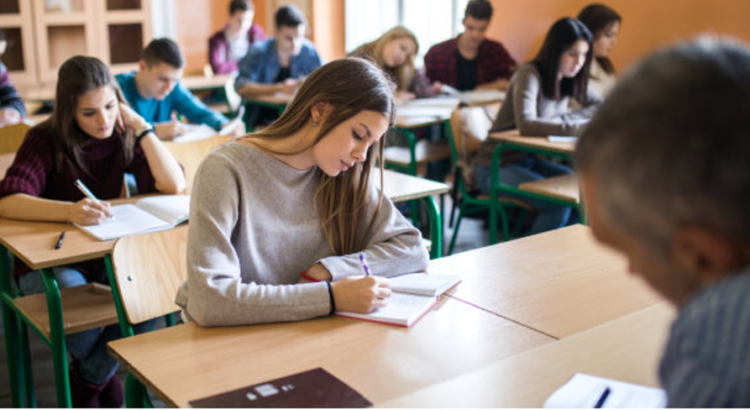
La Ministra de Educación, Ena Elsa Velázquez Cobiella, exhortó a los estudiantes de la provincia de Las Tunas a buscar estrategias para sumar más alumnos a los exámenes de ingreso a la Educación Superior, durante el Consejo resumen post asambleario de la Federación de Estudiantes de la Enseñanza Media (FEEM) con el que culminó el proceso en la región oriental de Cuba.

«Las Tunas es un territorio que el año pasado fue el que mejores resultados obtuvo en las pruebas de ingreso pero se debe hacer mayor hincapié en la cantidad de estudiantes que se comprometen a realizar estos exámenes», precisó Velázquez Cobiella.

«La intención es que los alumnos que transitan satisfactoriamente por el preuniversitario ingresen a la universidad y se preparen política e ideológicamente, pues no se debe olvidar que la juventud está en la mira de la subversión y solo con el conocimiento es posible crear convicción», subrayó la Ministra.

Calificó este tipo de encuentro como importante en el análisis del funcionamiento de la organización pues permite la continuidad del proceso educacional tunero, baluarte a nivel nacional por su reconocimiento como provincia Destacada por quinta vez consecutiva.

Delegados e invitados de los preuniversitarios, de los ocho municipios de la provincia, expusieron las principales tareas que desarrolla la organización para el correcto desarrollo de la escuela como un sistema, además enfatizaron en la importancia de las asambleas de grupo como célula fundamental, y del movimiento de monitores y las sociedades científicas que sientan las bases para un futuro profesional de calidad.

En la cita se habló de la necesidad de trazar estrategias para formar maestros competentes y responsables, sobre todo en las asignaturas de ciencia y técnica, las más deficitarias para los próximos cinco años.

La ocasión fue propicia además para aprobar a los miembros del Consejo Nacional y constituir el Grupo de Trabajo Provincial, en el cual fue elegido el estudiante del preuniversitario Francisco Muñoz Rubalcaba, Alain Daniel Pacheco Álvarez, como presidente de la FEEM en el territorio.

Fuente de la Noticia:

http://www.tiempo21.cu/2018/05/07/ministra-educacion-estudiantes-tunas/

Comparte este contenido:

España: El Ministerio de Educación paga a maestros de Religión que no imparten clase

España/08 de mayo de 2018/Fuente: https://www.huffingtonpost.es

Varios colegios andaluces tienen en plantilla a profesores de Religión que no imparten clases pero sí que cobran. Las escuelas denunciaron ante la administración que se les había asignado un profesor de Religión más, pero en tres años nadie ha corregido este fallo.

Por tanto, el Ministerio de Educación, que contrata a los profesores de Religión en Andalucía, lleva tres años pagando a maestros que no dan clase, aunque siguen acudiendo al centro y cobrando. Lo cuenta este lunes eldiario.es, que afirma que esta situación se lleva dando desde que el Gobierno de Susana Díaz redujo el horario de Religión en Primaria. Esto hizo que ni hiciesen falta tantos profesores, pero el Ministerio sigue renovando sus contratos.

Un desfase entre Gobierno central y gobiernos autonómicos

El Ministerio de Educación es responsable de los maestros de Religión de Infantil y Primaria en Andalucía, Aragón, Cantabria, Canarias, Ceuta y Melilla, pero sus horarios los establecen los gobiernos autonómicos. Por eso, en 2015, Susana Díaz redujo el tiempo de la asignatura de religión de 90 minutos a 45, pero el ministerio sigue haciendo contratos como si fuesen 90.

Fuente de la Noticia:

https://www.huffingtonpost.es/2018/05/07/el-ministerio-de-educacion-paga-a-maestros-de-religion-que-no-imparten-clase_a_23428528/

Comparte este contenido:

India: Primary Problem. Gujarat’s Dismal School Education System

India/May 08, 2018/by RITU SHARMA/ Source: http://indianexpress.com

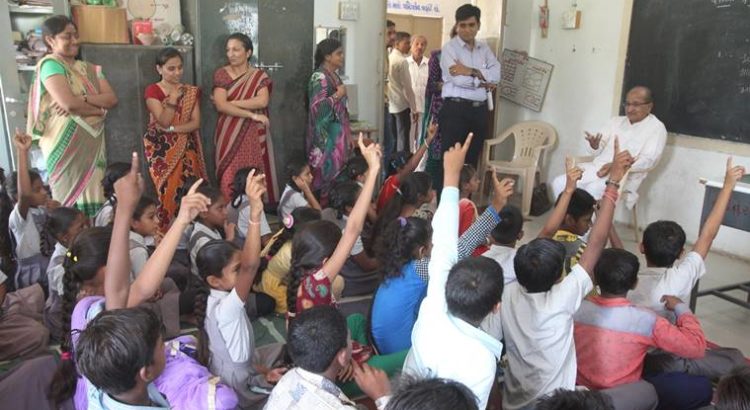
Last month, the Gujarat government wrapped up its eighth edition of evaluation of government primary schools, Guntosav. The findings of the National Achievement Survey, released by the Centre’s HRD Ministry in January, overall paint a dismal state of school education in Gujarat.

Despite the Gujarat government’s claim of improving the quality of education, the situation on the ground is very different. With the state facing criticism for failing to do a lot, the findings of the National Achievement Survey (NAS), released by the Centre’s HRD Ministry in January, shows that the state has a lot of catching up to do.

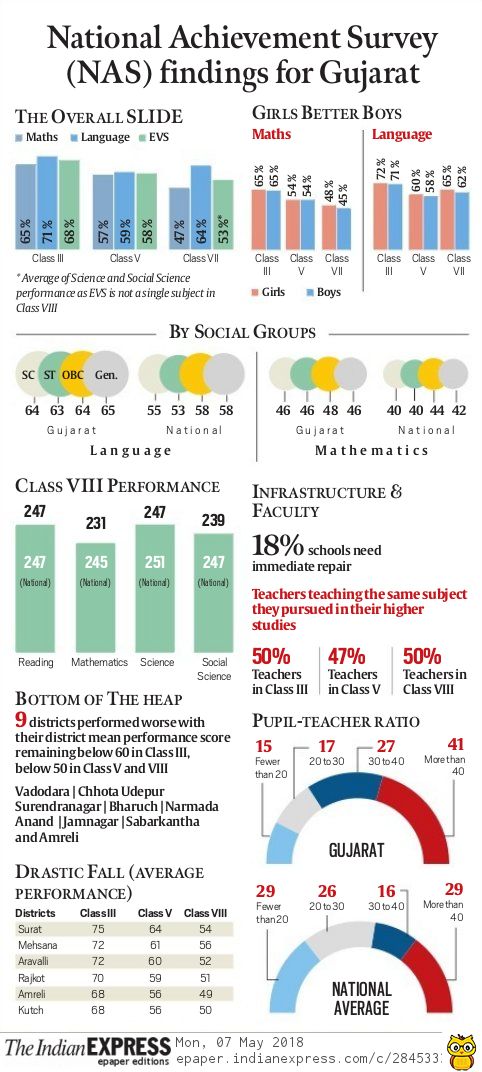
The survey, which was conducted in all the 33 districts of the state interviewing over 1.25 lakh students, shows a consistent decline in the learning levels of students in mathematics, language and science from Class III to Class VIII in the government school system — both government schools and government-aided schools. The drop in the overall learning levels being sharp in all the three subjects.

For instance, the response level of students fell from 65 to 47 per cent in mathematics, 71 per cent to 64 per cent in language and 68 to 52 per cent in science subjects.

The dismal state of the primary education in Gujarat could be gauged from the NAS findings. For example, in Class III, 41 per cent of students could not read and write numbers up to 999. The situation worsens as one interviews students from higher classes. For instance, more than half of the 41,393 Class VIII students (53 per cent) could not solve problems on daily life situations involving addition and subtraction of fractions and decimals and nearly 7 out of 10 students (69 per cent) could not calculate the surface area and volume of a cuboidal and cylindrical object.


While 4 out of 10 students of Class V could not read and write numbers bigger than 1000 being used in their surroundings, 56 per cent of Class VIII students could not interpret division and multiplication of fractions.

Faring even low in social science, only 27 per cent Class VIII students were able to describe the functioning of rural and urban local government bodies and 91 per cent failed to justify judicious use of natural resources. However, when it came to issues related to caste, women, social reforms, 63 per cent students could analyse them. At the same time more than half of the Class VIII students failed to apply knowledge of Fundamental Rights to find about their violation in a given situation.

The good news from the survey was the performance of girls performing marginally better than boys. However, when it comes to gender enrolment ratio — percentage of eligible girl population (in the age group of 18 to 23 years) pursuing higher education — Gujarat is in the bottom heap of eight states with poor GER ratio. [See What after school?]

NAS vis-à-vis Gunotsav

While the state government claims of improving the quality of school education through its own Gunotsav surveys, lakhs of students failed to write simple sentences in their mother tongue, Gujarati. As reported by The Indian Express earlier, the Gunotsav VI results revealed that despite attempts being made to improve performance of the students, the state’s average could reach only 53.4 per cent — same as the last Gunotsav V.

Even as the state government claims that in the last seven years, schools under Grade A category has increased from 5 to 2,100, the NAS findings show a geographically skewed performance of schools.

For Class VIII, four districts scored a mean average of below 50 in the NAS. While Bharuch scored 44, two districts from Saurashtra — Amreli and Jamnagar — scored 29 and 48, respectively. The tribal districts of Sabarkantha and Narmada scored 48 and 46, respectively.

In Bharuch, the district with lowest performance learning outcomes, only 25.41 per cent students could solve problems related to daily life situations involving rational numbers, 26.13 per cent could calculate surface area and volume of a cuboidal and cylindrical object, 27.10 per cent could generalise properties of addition, subtraction, multiplication and division of rational numbers through patterns and 30.48 per cent could solve problems related to conversion of percentage to fraction and decimal and vice versa.

However, if the performance of Class III, V and VIII are taken together, then nine of the total 33 districts make it to the bottom of the heap. They are Vadodara, Chhota Udepur, Surendranagar, Bharuch, Narmada, Anand, Jamnagar, Sabarkantha and Amreli. (See box)

For the government, the solace from the NAS findings is that the government schools have performed marginally better than grant-in-aid schools across the three subjects as well as classes. For instance, in Class III, the learning level of students in government schools in environment science is 68, compared to 63 of grant-in-aid schools, 72 against 69 in language and 65 against 61 in mathematics. In Class V, the performance gap in science was 10 per cent, maths 12 per cent and language 7 per cent with government school students faring better than grant-in aid schools. Similarly, in Class VIII, the highest gap is in social science where 54 per cent students of government schools could perform exercises compared to 46 per cent students of in grant-in-aid schools.

These numbers may be comforting for the government, but the NAS surveys and the government’s own reports point to poor school infrastructure and need for better quality teachers.

According to the government’s own data, a large number of posts of teachers and principals are lying vacant in government schools. In the residential schools in the tribal districts, the figure is staggering — over one-third teachers’ posts are lying vacant.

The state government runs several categories of residential schools — Eklavya Girls Residential schools, Adarsh Nivasi Shala, Model schools and Ashram Shalas in the 14 tribal districts of the state. But poor facilities in such affect the education. For instance, the government has spent over Rs 6.5 lakh to improve English among the students in one tribal district of Dang. But the same district has the highest percentage of vacant posts (47.3 per cent) among the seven tribals districts, according to the government’s reply in the last Assembly session.

The NAS too has found poor pupil-teacher ratio in the state. According to it, 41 per cent of schools in Gujarat has pupil-teacher ratio of above 40. Nationally, the percentage of such schools is only 29 per cent. Similarly, while the healthy pupil-teacher ratio of fewer than 20 is found in 29 per cent of schools annually, it is only 15 per cent in Gujarat.

The survey also found that 47 per cent of the 2,630 teachers taught students of Class V the same subject they pursued during their higher studies. It also found that 18 per cent of school buildings were in need of urgent repair.

Fee regulation quagmire

In all these years, the crumbling school infrastructure and the declining standard of education in government and government-aided schools have led to a boom in the number of private schools in the state. Though the number of government schools stands at 44,000, the state currently has over 16,000 private schools — 9,300 primary, 3,800 secondary and 3,100 higher secondary schools.

The increase in demand of private schools also led to a surge in the fees. With parents finding it difficult to pay high fees, the government last year passed a law to regulate the school fees. The Gujarat Self Financed Schools (Regulation of Fees) Act is aimed at fixing the annual fees at Rs 15,000 for primary eduction, Rs 25,000 for secondary and higher secondary (non-Science). However, the law has not been implemented till now in full due to numerous litigations and political slugfest over it.

“Trying to have some control over private schools in a way is good, but its political misuse made schools and education sector lose its dignity,” Gujarat Self Financed School Management Federation general secretary Bharat Gajipara.

The federation claims that the schools are ready to fix the fee at Rs 15,000 for the primary classes, but the state government should also lay down specific guidelines. “For instance, there needs to be guidelines on how much fans a classroom should have; how many children should be in a class; how many teachers among other things. We are ready not to collect extra fees, the government can keep that but give our teachers salaries and the expenses incurred by the school,” Gajipara says.

Even the parents are not happy with the turn of the events. “We have lost faith on all fronts in the last one year. More than any good, the fee regulation Act has harmed everybody,” says Amit Panchal, one of the parents spearheading the protests for over an year now. “The stricter implementation of the Act could be one measure to safeguard affordable quality education but for a long-term solution, the state government needs to improve its government as well as grant-in-aid schools. To counter the burgeoning fee demand of private schools, there is a necessity to raise an alternate affordable education system, which in this case are government and grant-in-aid schools,” says Sukhdev Patel, founder of Waali Swaraj Manch, a parents’ outfit.

Govt’s defence

The state government, however, blames the “falling standards of primary education” on the landmark Right to Education Act and its no detention policy. The law which was enacted by the previous UPA government at the Centre has been consistently opposed by BJP-led government in the state, demanding the rules to be revoked for the last two years.

“In the NCERT meeting with the Human Resource Development Minister Prakash Javadekar, I had categorically stated that until the Right to Education Act’s provision for no holding back a student till Class VIII is done away with, the quality of primary education will deteriorate,” says Education Minister Bhupendrasinh Chudasama said.

But the government’s own measures to improve quality of education by introducing NCERT books has led to criticism. Some of the government’s policies like making Gujarati compulsory till Class VIII in all boards in a phased manner has led to a resentment among schools as well as parents. “The new lot of vidyasahayaks (primary teachers) is very talented and intelligent. I am sure with the energy and dedication, the government school students will be at par with any good private school,” Chudasama promises.

http://indianexpress.com/article/education/hardlook-state-of-education-in-gujarat-part-ii-5166122/
Comparte este contenido:

Syrian children’s enrollment in secondary education still low: Expert

Syria/ May 08, 2018/ By: Sevil Erkuş – ANKARA/Source: http://www.hurriyetdailynews.com

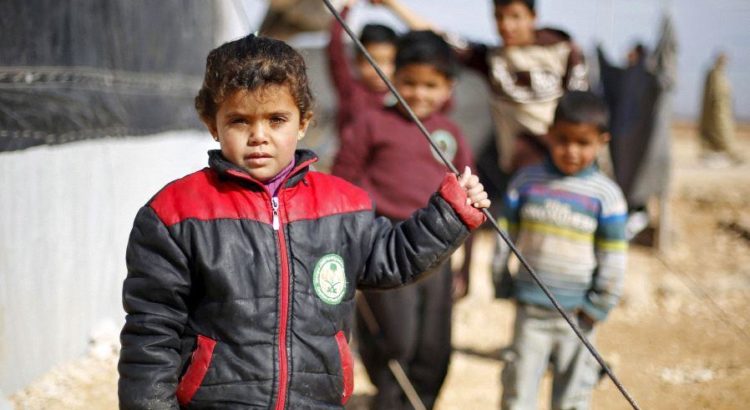
Turkey continues to host the largest number of school-aged refugee children and youth, which increased to 976,200 in 2017 from 833,039 in 2016, with efforts provided increasing enrollment in primary schools, yet access to secondary education is still low, an expert said.

With the National Education Ministry’s progressive inclusion of Syrian children and youth in the national system, there are more school-age Syrian children enrolled in Turkish public schools (373,381) for the first time than in temporary education centers (237,234) in 2017, Research Centre on Asylum and Migration (İGAM) president Metin Çorabatır told Hürriyet Daily News.

Due to great efforts of host countries and the international community, the enrollment rates for refugee children in primary schools are increasing.

However, when it comes to access to education, a vulnerable group is youth and more than 76 percent of Syrian youth outside of Syria live in Lebanon and Turkey, he said.

“Overall, regional enrollment rates in secondary education are low: 24 percent in Jordan, 6 percent in Lebanon and 2 percent in Turkey. The regional average of refugee enrollment in secondary education is 17 percent, lower than the global average of 23 percent,” Çorabatır said.

The Turkish Education Ministry has recruited 5,600 Turkish language teachers to help Syrian students to improve their Turkish language proficiency. In addition, new and age-appropriate language teaching modules are under development.

A comprehensive psychological support program in schools is being developed and 500 school counselors were recruited to provide psychosocial support to Syrian children and youth.

Despite these great efforts by the government, various factors contribute to the low rates of access to secondary education, according to the İGAM president.

“Refugee youth often work, take care of their younger siblings or perform other household duties. This is both a complicating factor in reaching them to participate in education programs and a reason many are currently unable to, as most education programs are scheduled during working hours and require intense participation,” he said.

Çorabatır has been announced last week as a Gulmakai Champion of the Malala Fund. The Malala Fund is the official organization led by Pakistani Malala Yousafzai and is focused on helping girls go to school and raise their voices for the right to education

With this new title, İGAM will focus on Syrian refugee women’s education in Turkey and to assist in efforts for their education.

“The Malala Fund believes—and we as İGAM share that same belief—that every person can make an impact on our world. We are seeking accountability from politicians and finding ways to improve refugee girls’ access to education in Turkey,” he said.

Source:

http://www.hurriyetdailynews.com/syrian-childrens-enrollment-in-secondary-education-still-low-expert-131437

Comparte este contenido:

India: Centre shifts focus to liberalization of higher education

India/May 08, 2018/By: Prashant K. Nanda/Source: https://www.livemint.com

Over the past few months, the Indian higher education sector has been witnessing a gradual transformation.

The long promised new education policy is still in the pipeline, but the Union government seems to have taken up a new task — liberalization of higher education.

Over the past few months, the Indian higher education sector has been witnessing a gradual transformation from a restrictive regime to a liberalized one in all three key aspects: finance, academic and administrative.

“Higher education liberalization is a requirement and the government is taking steps to achieve it. You will see key regulatory bodies like the University Grants Commission and All India Council for Technical Education (AICTE) getting reformed for better management of higher education,” said a top official of the human resource development ministry.

“From legislative measures to executive orders, the ministry is now busy reducing the restrictive regime in the sector. In the next six months, you will see some more initiatives,” he said.

What he was referring to is a series of initiatives the ministry has already initiated over the past few months. It enacted the IIM Act, allowing Indian Institutes of Management (IIMs) to become virtually free of government control. It has brought in a set of guidelines for autonomous colleges allowing them freedom to prescribe courses, become more industry linked and start self-financing courses to become financially sustainable. Besides, it has put in place a non-banking financial corporation to aid infra growth of educational institutions on a borrow and pay concept — a move that will reduce the financial burden on the government and make institutions accountable for their own infra and research growth.

In March, the Union government for the first time provided graded autonomy to 62 universities and colleges both in private and public space to operate with relatively less interference from the education regulators.

HRD minister Prakash Javadekar called this a “liberalized regulatory regime” and said on the sidelines of an event recently that the Indian higher education sector often complains about restrictive rules but now the government is making a conscious effort to liberalize it.

“Of late, there seems to an intention of liberalizing the sector. Autonomy and liberalization are a necessity for the higher education section to thrive. The moment you allow freedom and competition, the best will survive and others will strive to improve quality as it will be a requirement for survival,” said Harivansh Chaturvedi, director of the Birla Institute of Management and Technology in Greater Noida.

Chaturvedi, who is also the alternate president of the Education Promotion Society for India, a confederation of private education providers, said technical education colleges under AICTE should also be granted autonomy based on their rankings and accreditation scores.

While some of the recent moves are important, a new education policy is almost paramount and the government should bring that in to give direction to the education sector, Chaturvedi said. A new education policy is being deliberated for last four years.

Of all the steps the government has taken, the establishment of a higher education financing agency and its expansion in the past couple of months is perhaps the most under-rated but far reaching, said the official cited above. The government has already sanctioned loans worth over Rs2,500 crore to nearly a dozen top schools.

“While individual sub-sectoral moves like autonomy for IIMs, graded autonomy for a group of colleges and universities have their merits, the financing agency will perhaps reduce government spending by Rs10,000 crore per year, and push top higher educational institutions to become more accountable and finically prudent. That’s a bigger change from the way public funded institutions function — you get autonomy, you decide your growth path and you raise money and pay back from your own resources. That’s a bigger liberalization move,” said the official.

Source:

https://www.livemint.com/Politics/mx1YXvM5lCt26WaaHz91HO/Centre-shifts-focus-to-liberalization-of-higher-education.html

Comparte este contenido:

EEUU: Texas Special Education Reform Comes With Mountain Of Mistrust

EEUU/May 08, 2018/

In 2004, the Texas Education Agency arbitrarily decided the state should shrink special education to 8.5 percent of the student population.

After conducting an investigation, the U.S. Department of Education said the effective cap illegally barred tens of thousands of children with disabilities from a free and appropriate education.

The state agency is trying to enact reforms to make up for breaking the law, but parents and advocates say it will take a lot to regain their trust.

“It’s really too little, too late. Especially (for) those children who needed early childhood intervention. You can’t get those years back,” said Jill Goolsby of San Antonio.

Five years ago, school officials told Goolsby her 3-year-old son Walker didn’t qualify for the free public preschool program for children with disabilities.

“I was told he definitely was not autistic because he was able to pretend that blocks were ice cubes. And I was told that a child with autism is not creative and cannot have any imaginative play, which is — that’s not true. But I did not know that at the time,” Goolsby said.

According to the Education Department, school districts across Texas delayed testing tens of thousands of kids like Walker, or shunted them to less intensive forms of support to meet TEA’s 8.5 percent benchmark.

By the time the benchmark was eliminated last year, advocates said a whole generation had aged out of the system.

“As a society, we will pay for them the rest of their lives, if we don’t get them back in the system and educate them,” said Karen Seal, a disability rights attorney in San Antonio. “The ones that are already out, how do we get them back, when there’s no mandate to do that?”

Seal thinks the Education Department should have punished Texas for breaking the law.

“But the problem with punitive is it’s usually monetary, and the last thing the schools need right now when it comes to special education is to lose money,” Seal said.

What the Education Department did, however, is tell TEA to do a better job monitoring school districts, and to make sure the children who were denied services are given the help they’re owed.

The department is currently reviewing TEA’s plan to meet those demands. It has three major parts: compensating families, training teachers and amping up the state’s monitoring team.

Deputy commissioner of academics Penny Schwinn said the first thing TEA will do is use federal dollars to hire 50 people.

“Unlike what Texas has done in the past, we want this monitoring team to be about review and support. So it’s going into districts, working with them as partners, families as partners, students as partners to really look at the compliance components,” Schwinn said.

Next school year, the plan calls for districts to begin finding the kids they missed and provide therapy and other compensatory services if they need it.

Goolsby welcomes the news, but said it won’t make up for her son Walker not getting help when he needed it. While she was able to get him into a private preschool, and had insurance to help cover therapy, she knows other families weren’t, and aren’t, so lucky.

“These kids have had bad years. It’s very hard to send them to an environment where you know they’re struggling and to try to turn around their mental attitude around school and their relationships with their peers,” Goolsby said.

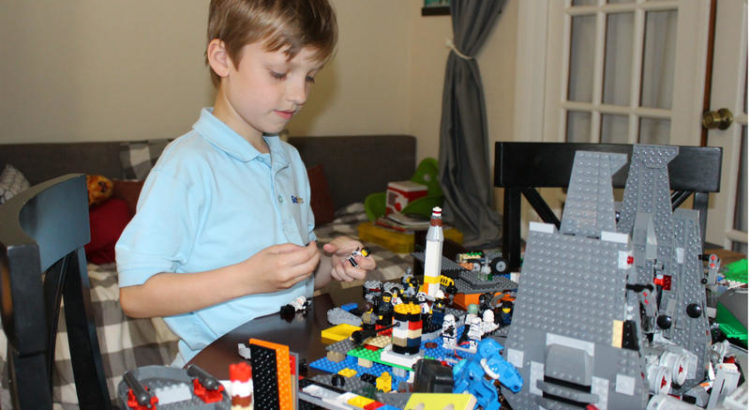
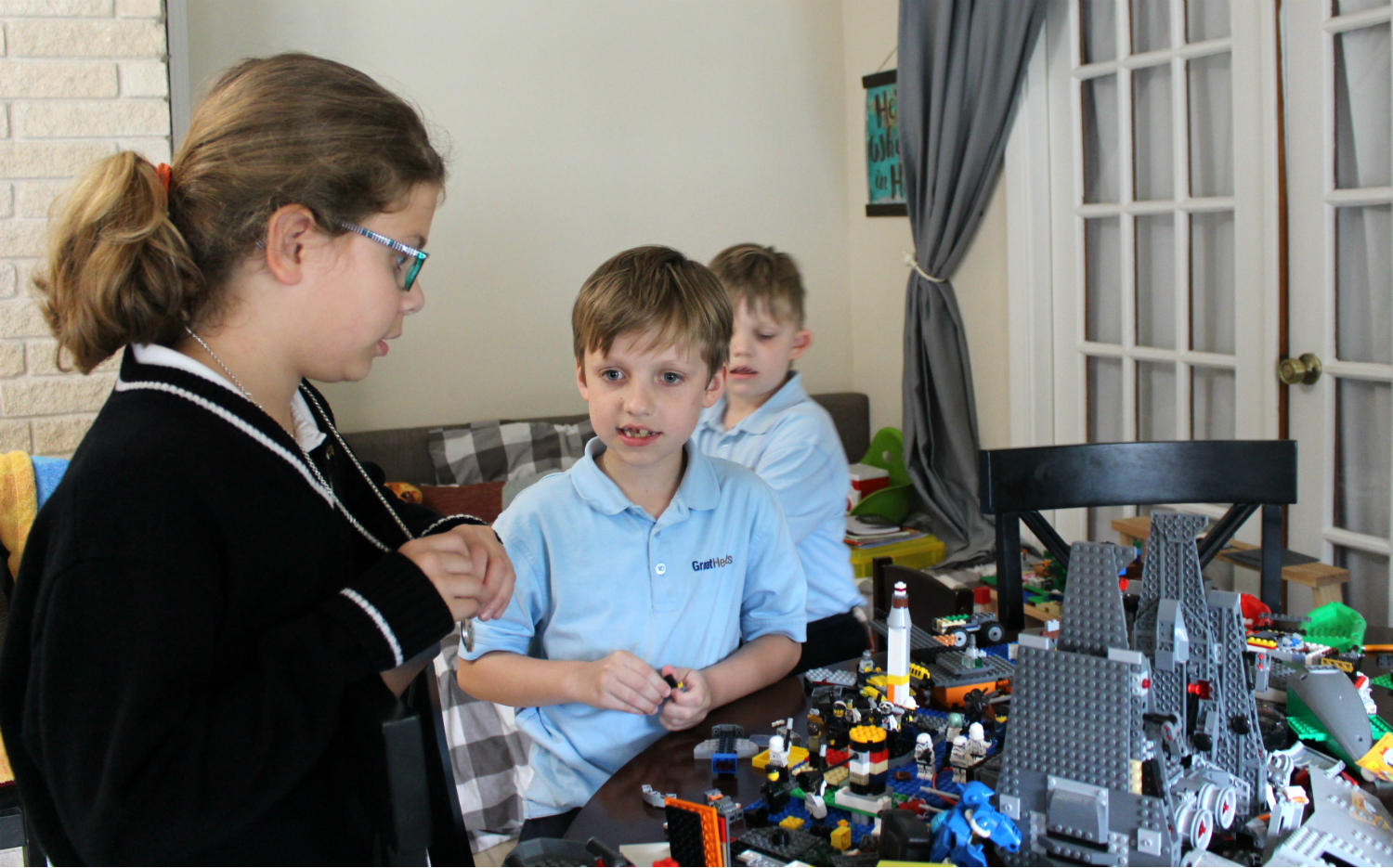
Walker Goolsby, center, plays with Legos after school with his sister Caroline and brother Hayes.
CREDIT CAMILLE PHILLIPS | TEXAS PUBLIC RADIO

Today, Walker is 8 years old and doing well. One of his favorite things to do is build Legos and make up stories about Lego guys.

His mother is grateful, but feels for all the kids who’ve missed out on years on intervention.

I mean you can’t undo that. Those are consequences that are just going to be there,” Goolsby said.

She and her husband moved their four children across town to be close to a charter school that gives Walker and his younger brother Hayes special education services.

With so much to make up for, parents and advocates have mixed reactions to TEA’s special education plan. Their top concern: There won’t be enough money.

Kyle Piccola from the disability rights organization The Arc of Texas said the plan’s a big step in the right direction, but he’s worried TEA doesn’t mention anything about how expensive it will be.

“In my opinion they’d be able to provide an estimated guess, at the least,” Piccola said.

TEA has promised to ask for more money for special education in next year’s state budget, but Piccola said he it will be hard to get lawmakers to agree unless the agency provides an accurate picture of the cost.

“I don’t want you to hear that The Arc of Texas is giving a resounding gold star to TEA. Like I said, we are very cautious about moving forward, and we’re going to be keeping a watchful eye,” Piccola said.

Disability rights attorney Karen Seal is more skeptical, though. She wants a federal monitor.

“TEA, the one that broke the law, they’re saying okay, we know you robbed these kids of this education, now we want you to go in and take care of the problem,” Seal said.

TEA’s Penny Schwinn said the state agency is working to regain the trust of parents and advocates.

“We understand that there are some serious trust issues in the state related tospecial education, and that one of our responsibilities is to begin to right the ship on our end,” Schwinn said.

It’s hard to say how much oversight the Education Department will give TEA as it rolls out special education reform. The department declined multiple requests for an interview.

Camille Phillips can be reached at Camille@tpr.org or on Twitter @cmpcamille

Source:

http://tpr.org/post/texas-special-education-reform-comes-mountain-mistrust


Source:

http://tpr.org/post/texas-special-education-reform-comes-mountain-mistrust

Comparte este contenido:
Page 3013 of 6814
1 3.011 3.012 3.013 3.014 3.015 6.814