Page 3098 of 6815
1 3.096 3.097 3.098 3.099 3.100 6.815

Kenya University Students Protest Against Lecturers’ Strike

Kenya/April 07, 2018/ Allafrica

Resumen: Estudiantes universitarios protestaron el miércoles en Nairobi contra la huelga de profesores que ha paralizado el aprendizaje durante más de un mes. Los estudiantes de varias universidades públicas acusaron al Ministerio de Educación de no abordar la crisis actual.

Students from various public universities have accused the education ministry of failing to address the crisis with striking lecturers, saying it is having a negative impact on their studies and causing them to graduate late.

University students on Wednesday protested in Nairobi against the lecturers’ strike that has paralysed learning for over a month.

The students from various public universities accused the Education ministry of failure to address the ongoing crisis.

Kenyatta University student Peter Evans said many of them were unable to graduate in time due to the strike and demanded that the government address the issue to prevent further agony.

«We are tired of staying in the university without learning. We want to go back to class,» Mr Evans.

GRADUATION

Another student, Mr Dennis Kipsigei, from the University of Nairobi, said they ended up staying in the institutions longer than they should.

«A degree course that is supposed to take only four years is now taking over six years, which is unacceptable. We want the Education ministry to look into the plight of students,» he urged.

Education Cabinet Secretary Amina Mohamed said she had not commented on the matter due to lack of accurate data on the staff of the public universities across the country.

«Now I can say with a measure of comfort that we have received 80 per cent of the data. We are going to assess it in collaboration with an inter-ministerial committee that is looking into the demands being raised and forge the way forward,» she said.

EMPLOYEES

However, Ms Mohamed reminded the lecturers that they were in contempt of court by failing to go back to work.

 The government has said it will use the data to make a counter-offer to the lecturers and other staff estimated to be 27,000.

The staff, who belong to the Universities Academic Staff Union (Uasu), the Kenya Universities Staff Union and the Kenya Union of Domestic, Hotels, Educational Institutions, Hospital and Allied Workers, challenged the Ms Mohamed to explain why the ministry did not have an accurate record of the public universities’ workers.

Uasu Secretary-General Constantine Wasonga said the Ms Mohamed had failed in her mandate if the ministry could not give the exact number of the employees.

«How can she not know the number of employees in the universities? This shows that the ministry has not been doing its work properly,» said Dr Wasonga.

MEETING

As the protests continued, Deputy President William Ruto was holding a meeting with officials from the Education ministry and the Treasury.

Treasury Cabinet Secretary Henry Rotich and Basic Education Principal Secretary Belio Kipsang attended the meeting.

However, Ms Mohamed was at Mary Hill Girls High School in Kiambu County for the prize-giving day.

«Held discussion with officials of the ministries of Education and National Treasury, Nairobi,» Mr Ruto tweeted.

His spokesman, Mr David Mugonyi, later told the Nation the discussions between the DP and the officials were on secondary and tertiary education.

Fuente: http://allafrica.com/stories/201804050182.html

Comparte este contenido:

Controversial education secretary meets with Dallas champions for public schools

United States / April 07, 2018 /Author: Mónica Hernández/Wfaa

Resumen: Desde las armas hasta la elección de raza y escuela, la asediada secretaria de Educación, Betsy DeVos, ha sido noticia por su controvertida postura sobre la educación.

From guns to race to school choice, embattled Education Secretary Betsy DeVos has made headlines for her controversial stance on education.

 From guns to race to school choice, embattled Education Secretary Betsy DeVos has made headlines for her controversial stance on education.

That’s why her visit to Dallas was met with protests. Some parents believe DeVos is failing students.

«She’s dismantling public education with the idea of charter schools, which naturally segregates the population between parents who care and don’t care,» said Dawn Cleaves, who protested with signs outside Urban Specialists Dallas headquarters.

Urban Specialists, a non-profit that mentors at-risk youth in South Dallas, says, even if you disagree, it’s important to start a dialogue.

They reached out to DeVos after the high school shooting in Parkland, Florida, and invited her to come to Dallas and see their strategies for mentoring at-risk youth and curbing urban violence.

«Let’s figure out where can we find synergy, everyone can be armed with an argument, I’m trying to find a witness. I hope that she can be a witness to us and to others and say there is good work going on in urban centers around America and let this be the first example of it,» said Omar Jahwar, Urban Specialists CEO. «If the vast majority of the kids are in public school, my job is to say how do we serve them at our best level, that’s what this is about.»

At Urban Specialists headquarters Thursday afternoon, DeVos heard from a panel of Dallas ISD students, Superintendent Dr. Michael Hinojosa, and Dallas ISD District 9 trustee Bernadette Nutall, Urban Specialists, and other community leaders on gun violence and bolstering public education.

«I think we’re in this for the long game,» said Hinojosa. «I think a lot of times people go with what they’ve heard or read about, not what they’ve actually seen. Hopefully, we’ll add a new perspective to their paradigm and a new understanding of what’s possible.»

That’s why Dallas ISD wanted to give DeVos a tour of Dade Middle School, which drastically skyrocketed in performance when Dallas ISD invested in new teachers and strategies. In one year, the school went from last to third in middle school performance.

 «We don’t have any kind of effort to privatize any kind of school. What we do want is ensure that parents have the opportunity and the power to find the right educational environment for their child,» said DeVos.DeVos briefly visited classrooms and met with the principal, Nutall, and Jahwar.

«If I had had as exciting a teacher in every one of my classes, I probably would have loved school a whole lot more,» said DeVos.

«I am an advocate for public school education, but she is the secretary of education, so she must hear our thoughts, she must hear how we are finding solutions and what we need for our district,» said Nutall.

As teachers strike for better pay in Oklahoma, DeVos said she thinks about the kids.

«I would hope that adults would keep adult disagreements and disputes in a separate place and serve the students that are there to be served,» DeVos said.

DeVos wrapped up her visit at 16 Streets Center in South Dallas, where she heard from a police officer, and young men who work with at-risk youth through Urban Specialists.

Fuente: http://www.wfaa.com/article/news/education/controversial-education-secretary-meets-with-dallas-champions-for-public-schools/287-535783692

Comparte este contenido:

Teaching the teachers: Japan to provide $28M for new institutes

Asia/Japón/

Resumen:  El Gobierno japonés proporcionará una subvención de $ 28 millones para institutos de pedagogía en las provincias de Phnom Penh y Battambang para capacitar a maestros en el Reino. El ministro de Asuntos Exteriores de Camboya, Prak Sokhonn, y el embajador de Japón en Camboya, Hidehisa Horinouchi, se reunieron ayer para firmar un acuerdo sobre el proyecto.Los institutos fortalecerán la capacidad de capacitación de docentes de primaria y secundaria del Ministerio de Educación para ayudar al desarrollo del país, dijo Sokhonn. Actualmente, los docentes estudian durante dos años para convertirse en maestros de escuela primaria, pero a partir de 2020 deberán completar un programa de capacitación de cuatro años. «Reconocemos que la mejora de los recursos humanos es nuestra principal prioridad [mediante] empoderar el conocimiento de los maestros», dijo. Horinouchi dijo que ambos países también compartirán asistencia técnica y desarrollo de currículos para los institutos. «Espero que los estudiantes que reciben educación de esos [futuros] docentes contribuyan al desarrollo de Camboya», agregó. Uno de los objetivos del Ministerio de Educación ha sido mejorar la calidad de la enseñanza en el país, con el Ministerio de Educación comprometiendo las reformas docentes. El vocero del ministerio Ros Salin no respondió a una solicitud de comentarios.


The Japanese government will provide a $28 million grant for pedagogy institutes in Phnom Penh and Battambang provinces to train teachers in the Kingdom. Cambodia’s Minister of Foreign Affairs Prak Sokhonn and Japanese Ambassador to Cambodia Hidehisa Horinouchi met yesterday to ink an agreement on the project.

The institutes will strengthen the Ministry of Education’s primary and secondary teachers’ training capacity to assist with the country’s development, Sokhonn said. Currently, teachers study for two years to become primary school teachers, but beginning in 2020 they will need to complete a four-year training program.

‘We recognise that improving human resources is our top priority [by] empowering the knowledge of teachers,’ he said. Horinouchi said both countries will also share technical assistance and curriculum development for the institutes.

‘I hope that students who receive education from those [future] teachers will contribute to the development of Cambodia,’ he added. One of the Education Ministry’s goals has been to improve the quality of teaching in the country, with the Ministry of Education pledging teacher reforms. Ministry spokesman Ros Salin didn’t respond to a request for comment.

Fuente: https://www.phnompenhpost.com/national/teaching-teachers-japan-provide-28m-new-institutes

Comparte este contenido:

Desde Argentina Ciencia abierta: el movimiento para que todos sean científicos

Proponen “democratizar la construcción del conocimiento”, poniendo a disposición de cualquiera la información para instrumental científico.

Terminar con la dependencia del instrumental científico costoso y que sólo puede conseguirse en el exterior, para pasar a disponer de diseños que permitan elaborarlo localmente y así hacer más accesible la ciencia a cualquier persona.

En resumidas cuentas, esa es la idea del movimiento mundial que aboga por promover el hardware científico abierto que tiene referentes en Mendoza y que hoy tendrá su primer encuentro formal en nuestra provincia.

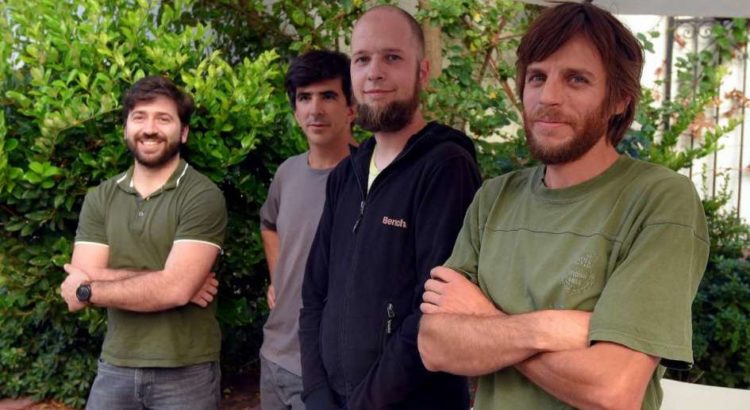
Fernando Castro, docente responsable del Laboratorio de Fabricación Digital (LabFD) de la UTN Mendoza, es uno de los miembros de GOSH (Gathering for Open Science Hardware),como se conoce a esta iniciativa que se ha extendido por todo el planeta. Él es uno de los referentes que disertará en el evento.

“La idea es poder empezar a juntar gente acá para que vea en el hardware abierto una oportunidad”, comenzó a explicar Castro. Para él se trata de una necesidad, sobre todo en el contexto local: “Porque nosotros estamos siempre dependiendo de instrumental, que hay que comprar afuera y es caro”.

Para el ingeniero, el hardware abierto viene a resolver esta dependencia material y habilita la construcción de conocimiento para cualquiera que esté interesado.

“Saca del ámbito de los expertos a la ciencia, cada uno puede investigar lo que quiere. En definitiva, democratizar la construcción del conocimiento”, remarcó Castro y aseguró que este movimiento tiene una pata ética y una política: “No escinde la ciencia de lo político, lo reconoce y toma posición”.

Concretamente, lo que estimula este movimiento es a la creación de repositorios digitales en los que las personas comparten sus diseños, listas de materiales e instrucciones para armar determinados instrumentos científicos.

Así, cualquiera puede replicarlos, modificarlos e incluso hacerles aportes. “Son licencias y se reconoce quién lo ha hecho, pero yo estoy librado para remixarlos, adaptarlos a mis necesidades concretas y a mis posibilidades de investigación”, precisó el experto.

La iniciativa se contrapone al modelo actual de venta de instrumental científico a altos costos. “Esto es así porque se trata de desarrollos cerrados que se basan en patentes. Lo que en definitiva cobran es el cercamiento del conocimiento”, explicó Castro, asegurando que se trata de un monopolio que de alguna manera detiene la generación de la innovación.

A través del hardware libre pueden crearse microscopios, espectrómetros, colorímetros, instrumental de monitoreo de plantas, agua, aire y suelo, entre otros elementos, a un 10% del costo de mercado, tal como precisó el ingeniero.

Lo que en un futuro cercano -y con necesario apoyo- podría dar vida a un “laboratorio ciudadano” que fomente la investigación fuera del ámbito de la academia. “Es un movimiento incipiente en la provincia que requiere de política pública que lo quiera favorecer”, reconoció.

Movida mundial 

El movimiento GOSH, que reúne a más de 100 representantes del ámbito científico, educativo y de organizaciones sociales, además de artistas y profesionales independientes de 30 países, tuvo su primer encuentro en 2016 en la Organización Europea para la Investigación Nuclear (CERN), en Suiza (donde está el famoso colisionador de hadrones conocido como “máquina de Dios”), y se volvió a reunir el año pasado en la Universidad Católica de Chile.

Castro tuvo la oportunidad de participar de este segundo evento, aunque ya desde 2013 venía investigando al respecto.“Estuve haciendo mi doctorado en la UTN y me encontré con ese problema: no encontraba el equipo que necesitaba”, recordó.

En ese entonces, junto a Pablo Cremades de la Facultad de Ciencias Exactas de la UN Cuyo, empezaron a desarrollar un monitor abierto de calidad de aire con sensores de bajo costo.

“Ahí comencé a entrar a ese mundo y me di cuenta que es muy amplio y que hay mucho que se puede tomar para aplicar a necesidades locales”, señaló.

Actualmente ambos construyen instrumentos para laboratorios de física bajo este mismo concepto.

Jornada en Ciencias Agrarias

Hoy se desarrollará en la Facultad de Ciencias Agrarias de la UNCuyo un encuentro con referentes del movimiento por el libre acceso a herramientas científicas.

Estarán presentes Benjamin Paffhausen y André Chagas, de Alemania, y los mendocinos Fernán Federici y Fernando Castro, integrantes del movimiento GOSH (Gathering for Open Science Hardware).

A las 9 en el Aula Magna se realizará una charla para el público en general y a partir de las 10 comenzará un taller con inscripción previa.

“Hay seleccionadas 18 personas de distintas unidades académicas que se van a instalar a desarrollar medidores de nitrato y microscopios ópticos”, precisó Silvia Van Den Bosh, secretaria de Extensión de Ciencias Agrarias.

Y adelantó que los instrumentos que se desarrollen quedarán funcionando en la facultad, otros se le entregarán a la UTN y los restantes a organizaciones que les den uso cotidiano.

“En el ambiente rural nuestros egresados tienen un tope tecnológico porque los instrumentos son muy caros, por lo que queremos quede funcionando en la facultad un grupo que cree herramientas de medición de acuerdo a las necesidades”, explicó.

Y reconoció que este movimiento viene a “patear ciertas estructuras” y poner la ciencia al servicio ciudadano.

Disertantes 

André Chagas. De la Universidad de Tübingen (Alemania), TReND in Africa y Prometheus Science.

Benjamin Paffhausen. Del departamento de Biología de la Universidad de Berlín (Alemania).

Fernán Federici. De la Universidad de Cambridge, profesor asistente de la Universidad Católica de Chile e investigador en el International Research Fellow at OpenPlant Centre.

Fernando Castro. Responsable del Laboratorio de Fabricación Digital (LabFD) de la UTN Mendoza.

Fuente: https://losandes.com.ar/article/view?slug=ciencia-abierta-el-movimiento-para-que-todos-sean-cientificos

Comparte este contenido:

México: Educación y trabajo, de difícil acceso para afrodescendientes

América del Norte/México/Lajornada

A pesar de que la educación y el trabajo son consideradas las vías más poderosas de inclusión social y reducción de la pobreza, la población afrodescendiente en América Latina, de los que se estima en México suman más de un millón de personas, enfrenta persistentes desventajas tanto para acceder a las aulas como al mercado laboral.

En el estudioSituación de las personas afrodescendientes en América Latina y desafíos de políticas para la garantía de sus derechos, elaborado por la Comisión Económica para América Latina y el Caribe (Cepal), destaca que la inserción de este sector de la población en el mundo laboral se ve limitada por mecanismos dediscriminación y segregación que han estado presentes desde hace siglos.

En el campo de la educación, apunta que los niños, adolescentes y jóvenes afrodescendientes suelen tener menores tasas de asistencia escolar que sus coetáneos no afrodescendientes, lo cual se profundiza conforme avanzan los niveles educativos.

Lo anterior se refleja en que pese a que las mujeres afrodescendientes son quienes logran mejores niveles educativos, reciben los ingresos salariales más bajos y presentan las mayores tasas de desocupación, por lo que se insertan en mayor medida en el trabajo doméstico, sea remunerado o no.

Como parte de las acciones del Decenio Internacional para los Afrodescendientes, establecido por la Organización de las Naciones Unidas 2015-2024, el informe destaca que la diáspora africana permaneció en América en una posición de desventaja, incluso si eran personas libres, no sólo esclavas.

La pobreza, el desamparo, las enfermedades, la falta de acceso a la educación, la carencia de seguridad social y la ausencia de oportunidades se han constituido en los pilares del racismo estructural, a lo que se suma, advierte el documento, el agravante de la invisibilidad y la negación de la existencia de afrodescendientes en los países de la región, por lo que también se desconoce el aporte de estos grupos al desarrollo social y cultural de nuestras naciones.

Entre los países con mayor población afrodescendiente se encuentra Brasil con al menos la mitad de sus habitantes, le sigue Cuba con casi 40 por ciento, y se reduce de 7 a 10 por ciento en Ecuador, Colombia, Costa Rica y Panamá. Alcanza 4.6 por ciento de la población en Uruguay, mientras que en México, supera el millón, y en Perú se estima que suma más de medio millón.

La Cepal destaca que la desigualdad estructural que aún afrontan los afrodescendientes en la región restringe su condición ciudadana y el ejercicio de sus derechos humanos, por lo que destaca que el reconocimiento pleno de su ciudadanía y derechos está en construcción en las naciones latinoamericanas, así como el reconocimiento a sus comunidades y pueblos.

Fuente: http://www.mexicanosprimero.org/index.php/educacion-en-mexico/enterate/noticias-de-hoy/6872-educacion-y-trabajo-de-dificil-acceso-para-afrodescendientes

Imagen tomada de: http://www.eltiempo.com/contenido///colombia/medellin/IMAGEN/IMAGEN-15498136-2.png
Comparte este contenido:

Branding the humanities in Asia

Asia/Singapour/ http://qswownews.com/Pieter Stek/Mandy Mok

Resumen:

Las humanidades son «lujos que los estudiantes con mentalidad de empleo no pueden permitirse» (The New York Times, 19 de junio de 2016). Este es un sentimiento que no solo tienen muchos en Occidente, sino también muchos estudiantes y sus padres en Asia. A menudo se prefieren los campos de la ciencia y profesionales como la ingeniería, la medicina y el derecho, dado que las humanidades son ampliamente percibidas como las que tienen entradas menos competitivas y sus graduados como «segunda clase».  Se ha recogido en Asia. En Singapur, Hong Kong y Corea del Sur, por nombrar algunos ejemplos, un fuerte llamados a aumentar las humanidades y las ciencias sociales en el currículum universitario, para recaudar fondos de investigación para las humanidades y, de hecho, se están creando nuevas universidades centradas en las artes liberales. , con el NUS-Yale College en Singapur, que se inauguró en 2013, siendo el ejemplo más destacado.


The humanities in Asia

The humanities are “luxuries that employment-minded students can ill afford” (The New York Times, 19 June 2016). This is a sentiment not just held by many in the West, but also by many students and their parents in Asia. Science and professional fields such as engineering, medicine and law, are often preferred. The humanities are widely perceived as having less competitive admissions and their graduates as “second rate”. Furthermore, in many countries around the world the humanities attract significantly more female than male students.

Yet the humanities are an important field, especially because science and technology have such a powerful impact on society. The humanities, if taught well, teach uncertainty, doubt, scepticism and can challenge authority, whether it is religious, social, cultural, political or scientific. The humanities remind us that science cannot explain all there is to know about life and that humans, especially when acting collectively, have a great capacity for deluding themselves.

Look no further than the Brexit referendum or the 2016 United States Presidential Elections if more evidence is needed: they are votes for a “rational solution” to problems that are vastly less simple than they are being portrayed and perceived.

As the Humanities Commission put it in 2015 in their final report to the United States Congress:

“As we strive to create a more civil public discourse, a more adaptable and creative workforce, and a more secure nation, the humanities and social sciences are the heart of the matter, the keeper of the republic—a source of national memory and civic vigor, cultural understanding and communication, individual fulfilment and the ideals we hold in common. They are critical to a democratic society and they require our support.”
(The Heart of the Matter, Report to U.S. Congress, 2015)

In particular the part about a “creative workforce” has been picked up in Asia. In Singapore, Hong Kong and South Korea, just to name a few examples, there are strong calls to increase humanities and social sciences in the university curriculum, to raise research funding for the humanities and in fact new liberal arts-focused universities are being created, with the NUS-Yale College in Singapore, which opened in 2013, being the most prominent example.

In the case of Singapore, investment in the humanities is seen as part of a push to enhance human capital formation which nurtures personal confidence, self-directed learning, social engagement, critical thinking, creative practice, reasoned argument and teamwork, which in turn leads to a workforce capable of innovation.

These developments are all positive for the humanities in Asia, but they also risk re-positioning the humanities as the perpetual “elective” subject, which help to create “well-rounded individuals” (whatever that means), but which fail to provoke the deep, intense and passionate questioning that a true humanities education is all about.

What is truth? What is the meaning of life? What is happiness?

How do we raise the humanities from being the “elective” subject, to become the core subject for more students in Asia?

To answer that question, we may need some expert advice.

The Asian consumer

A German, Berndt Schmitt, professor at the Columbia Business School and Nanyang Technological University, is often regarded as “Mr Asian Consumer” because of his tireless research in trying to understand what Asian consumers want.

While every generalisation in the social sciences is flawed, especially in a continent as large, diverse and dynamic as Asia, Schmitt highlights a number of paradoxes that define the contemporary Asian consumer.

The collectivist individualist – Asians are often thought to be collectivist and their actions are part of their family and other social networks. Yet many young Asians are growing up in small families, or in the case of China, one-child families, and these “little emperors” are likely to be highly individualistic, although perhaps like Japan and South Korea, highly sensitive to popular culture.

The functional hedonist – Asians are increasingly seeking an experience, although they are also looking for value. An example where these values unite may be studying abroad: go on a “holiday” and earn a degree!

Value shopaholics – Asians love brands, but they also love lucky draws, rebates, discounts, memberships etc, and are very price conscious. They will try to get the best deal on their Louis Vuitton, Gucci or Chanel at all cost.

Traditional futurists – Asians often emphasise traditional values, food, festivals etc but if one visits any major Asian metropolis, its filled with the newest buildings and latest technology. English is widely spoken and “international style” is the dress code. Do not expect a kimono in Tokyo, cheongsam in Shanghai, or sarongs in a Jakarta business meetings.

The Millennial and Generation Z

Millennials and Generation Z are slightly fuzzy concepts, but in general millennials are the generation born between 1980 to 2000. Research suggests that there are more than a few things that set millennials apart from previous generations. Having grown up during a growing economy filled with new technologies they are a different type of student.

Immune to advertising – Millennials have a high tendency to “tune out” when advertising is displayed and immediately distrust the messages they receive. This means that the conventional approach of flashy brochures with smiling students may be highly ineffective in persuading their study decisions.

Compare prices – Just like the “value shopaholics”, millennials tend to compare prices and may therefore be more willing so study further away if the numbers add up, and be more keenly focused on employability. They may also be keen to “hack” their education to maximise credit transfers, time spent abroad and accelerated learning pathways.

Use social media – While they are immune to advertising, millennials are very strong on social media. Besides wanting to interact with a prospective university through those channels, they will also learn about the institution through social media that may not be controlled by the institution.

Will co-create – Millennials are more willing to co-create a product or service rather than consumer it passively. This explains the popularity of the “flipped classroom”, internships, projects and other more interactive learning formats.

Value authenticity – A dislike for advertising translates into valuing authenticity. An institution that is willing to give transparency about its good and bad sides, which is genuinely trying to contribute to local and global society, is likely to find itself in good stead among millennials. Institutions that are hypocritical, which lie or whose communication is superficial can be expected to be ignored, or called on it.

The millennials’ wave is soon ending and the post-2000 generation (generation Z) will soon be knocking at the university gates. This generation is expected to be even more in tune with technology and has spent their defining years in a world defined by economic crises and terrorism. Yet this generation appears to be highly idealistic, with Malala (Nobel peace prize winner) as their poster-child, and they are focused on their passions and pragmatic in how they want to achieve them.

With this knowledge in hand, how can we brand the humanities in Asia to win favour with Asian students and their parents?

Branding the humanities in Asia

How do we tell the humanities story to collectivist individualists who are also functional hedonists, value shopaholics and traditional futurists? How do we communicate with a price-comparing, social media-using and apparently quite judgemental young audience?

What follows is a very humble attempt at answering this question.

To convince the collectivist individualist, the humanities must get out more into popular culture. Young people often struggle with “big humanities questions” such as the meaning of life, truth, happiness, finding their identity etc and will seek answers in religion, social media, books, popular music, television dramas, and sometimes drugs, sex and other less socially desirable avenues. The humanities as an academic community need to be there to guide these intellectual journeys, and not just stay inside the halls of academia. Bring Shakespeare and Socrates to social media. That’s where they’re most needed right now.

To gain favour with the functional hedonist, the humanities must emphasise the personal experience and the enriching intellectual journey their students go through, as well as the skillset they give their graduates. Critical and creative thinking are highly valuable skills that are also critical in a field like marketing, communications or policy making, but which many degrees in marketing, communications or law, lack. The intellectual journey must appeal to the hedonistic side of students: it is okay to be intellectually self-indulgent. If your parents can buy you a luxury car or an apartment, why can’t they buy you intellectual self-fulfilment through a top-notch humanities degree?

To persuade the value shopaholic, remember that brands matter because they communicate a particular set of values. Humanities scholars should intuitively understand brands, because they are symbols, and symbols are a big part of the humanities! So collaborate with brand-name universities, brand-name public figures and invest to build your brand. Advance the argument that an Asian humanities education is as good if not better than any in the West, and that it can be had at a very competitive price. Be sure to recruit some Western students to your Asian campus to prove the point.

To attract the traditional futurist, perhaps first do some localisation. Too often the humanities in Asia are a Western import, lock stock and barrel. In many an Asian university the Western philosophy department would never think of talking to the Asian philosophy department. As a fun social experiment, why not merge them? Maybe Locke and Mencius or Shakespeare and Valmiki do have a lot to talk about after all. And from a branding point of view, it cannot hurt to emphasise “traditional Asian values” as a cornerstone of your programme. It works for premium massage parlours and airlines, so why not for the humanities? At the same time the humanities should be leading the pack in learning reforms and embrace self-directed learning, the flipped classroom, flexibility, online access etc. The humanities in Asia should also be cutting edge in terms of its product and service delivery.

Above all these messages should be delivered in a genuine way, as millennials are very quick to spot fakes and hypocrisy.

All of the above is perhaps a lot of corporate-style marketing-speak that a true humanities scholar may quickly wish to discard. The above answers may not be the right way to brand your department in your country, and you may not like Schmitt’s oversimplification of complex Asian societies, or the gross generalisations that underlie the millennials concept. But Asian societies are changing and with the beginning of a swing of societal interest towards the humanities in Asia and globally, this may be the right time to make bold changes and set the field on a new trajectory towards a promising future.

Fuente: http://qswownews.com/branding-the-humanities-in-asia-2/

Comparte este contenido:

EEUU: La primera universidad blockchain promete ser Uber para estudiantes y AirBnb para los profesores

América del Norte/EEUU/ Observatorio ITESM

Un grupo de académicos de la Universidad de Oxford acaban de lanzar Universidad Woolf, la primera institución de educación superior que funcionará en la blockchain, la tecnología digital detrás de Bitcoin y otras criptomonedas. La documentación técnica del proyecto establece que “para los estudiantes, será el Uber de las titulaciones; para los profesores, que será el Airbnb, por supuesto, de alojamiento, pero por ambas partes el uso de la tecnología blockchain proporcionará la estabilidad contractual necesaria para completar un ciclo completo de estudios.”

woolf-crest-blockchain.png

La Universidad Woolf no tendrá aulas o instalaciones educativas. Los estudiantes y profesores se contactarán a través de una app para organizar sesiones de tutoreo uno-a-uno o uno-a-dos. Los créditos cursados serán registrados a través de contratos inteligentes en el blockchain, y luego acreditados por las instituciones tradicionales.

Los creadores del proyecto esperan que este nuevo modelo de educación superior reduzca la colegiatura (la universidad tiene como objetivo cobrar $57,600 USD por sus primeros grados) y permita a los académicos tener más control de su empleo; en primer lugar, al permitir que la universidad reduzca costos generales y administrativo; en segundo lugar, al permitir la organización autónoma y descentralizada entre profesores y estudiantes.

Mike Sharples, profesor emérito de tecnología educativa en la Universidad Abierta, dijo que garantizar de calidad de la educación sería un desafío clave para la nueva institución. Aunque pueden asegurar que los estudiantes y profesores se reúnan, no puede garantizar la calidad. Sin embargo, él ve esta nueva propuesta fundamentalmente en una luz positiva: “Están probando un nuevo enfoque para la educación superior, y al igual que otros sectores como la música se han transformado, ya es hora de que la educación superior se transforme de una manera positiva”.

Fuente: https://observatorio.itesm.mx/edu-news/la-primera-universidad-blockchain-promete-ser-uber-para-estudiantes-y-airbnb-para-profesores
Comparte este contenido:
Page 3098 of 6815
1 3.096 3.097 3.098 3.099 3.100 6.815