Page 3102 of 6757
1 3.100 3.101 3.102 3.103 3.104 6.757

¿Deberes sí o deberes no? Dos expertas enfrentan dos posturas

Por: larazon.es/14-03-2018

Eva Millet y Eva Bailén sí coinciden en que hay que aplicar el sentido común

Volvemos a tener sobre el tapete la discusión ¿deberes sí o deberes no? La CEAPA lanza de nuevo la campaña #stopdeberes y, de nuevo, la polémica y es que la secundan el 48% de los padres frente al otro 52%. Hemos hablado con dos figuras relevantes sobre este tema. Por un lado con Eva Bailén, defensora de una racionalización de los deberes y con Eva Millet, que aboga por deberes sí. Ambas, sin embargo, coinciden en dos puntos: racionalización y sentido común.

Eva Bailén es ingeniera de telecomunicaciones y la creadora de la campaña en change.org. por la racionalización (que no supresión) de los deberes. Dejó su carrera profesional anterior para centrarse a lo que para ella es ahora mismo su pasión: la educación (y también las nuevas tecnologías y la escritura).

Eva Bailén lo deja claro en una entrevista telefónica: “No digo: deberes no, de manera rotunda, digo que deberes sí depende de las edades y los niños, es decir, abogo por una personalización porque no todos los niños son iguales. No es lo mismo un niño de primaria que uno de secundaria ni uno de primero que uno de sexto pero, si tiene que haber, entonces que no sean repetitivos. Sobre todo estoy en contra de esto último, repetitivos y mecánicos, iguales para toda la clase, como por ejemplo copiar listas de vocabulario. Me parecen alienantes”

¿Y qué opina de la memorización en primaria? “Depende de qué se tenga que memorizar, por ejemplo un poema a la semana me parece bien, lo que sí me parece mal es que memoricen solo para vomitar en un examen y que luego lo olvidas. Ese tipo de memorización no tiene sentido. Pero la memoria forma parte del aprendizaje, claro”

Ante el ejemplo de las tablas de multiplicar, Bailén dice: “Sí hay que memorizarlas pero se puede hacer de otra manera, trabajándolas. Las tablas si las explicas de una manera manipulativa o con juegos como regletas, materiales Montessori…o con garbanzos como se hacía antes, es mejor, hay otras estrategias.

Muchos defensores de los deberes, sin embargo, dicen que la culpa es de tantas actividades extraescolares, que quizás reduciendo esas jornadas tan largas, no habría tanto problema. Bailén opina que “Muchos deberes los piden los padres para tenerlos más entretenidos pero creo que es responsabilidad del adulto la de no sobrecargar a los niños aunque, precisa, también lo es del docente saber el tiempo que necesitan los estudiantes para hacer lo que les has propuesto”. También recuerda que hay muchos padres que sí que quieren deberes “porque creen que así irán mejor preparados o para tenerlos entretenidos. El error más grande que se está cometiendo es la homogenización”.

Sobre las ventajas que tienen los deberes para fomentar hábitos, Bailén considera que “son demasiado pequeños. De hecho hay estudios que demuestran que no repercute en el éxito. Con seis años ya tiene bastante con ir al colegio. Hasta 5 de primaria no me parecen adecuados salvo excepciones como, por ejemplo si en el aula se desarrolla un proyecto y los implicas para que sigan en casa sí es positivo. Si lo conviertes en rutina es contraproducente, sobre todo con los niños de altas capacidades. Una manera de poner deberes que no me disgusta es con margen de tiempo; por ejemplo, con una semana para entregarlos y así no repercute tanto en la vida familiar (por ejemplo si hay que ir al dentista, a un cumpleaños…) y, además, les enseña a organizarse.

¿Deberes sí o deberes no? Dos expertas enfrentan dos posturas

Eva Millet

Eva Millet, autora de Hiperpaternidad e Hiperniños: ¿hijos perfectos o hiponiños? (ed. Plataforma) Y del blog www.educa2.info, se muestra partidaria de que sí existan los deberes.

“Creo que exigir una educación sin deberes es un síntoma de hiperpaternidad. Los deberes, puestos con mesura y de acuerdo a las edades —no es lo mismo un alumno de segundo de primaria que uno de sexto—, consolidan los conocimientos y ayudan a crear hábitos de estudio, fundamentales en la vida escolar y universitaria. Y también, ¿por qué no?, pueden contribuir a la autoestima del niño, que ha completado bien una tarea y la ha entregado a tiempo.

Pero hoy se ven como un drama: una injerencia en la vida familiar y una sobrecarga al alumno. Yo, personalmente, veo una injerencia el que los padres les digan a las escuelas si han de poner deberes o no: se cruzan las líneas rojas entre colaboración e intromisión, que no benefician a nadie. Quizás, para evitar problemas, los colegios deberían tener una política clara de deberes e informar de ella. Eso sería fundamental.

Que los niños pequeños hoy van sobrecargados no es ningún secreto: pero, ojo, no solo de «deberes». Hay una sobrecarga de actividades extraescolares, puestas precozmente y facilitadas por los propios padres. Mientras los parques cada vez están más vacíos, los hiperniños con agendas de ministro van y vienen, en un frenesí que está convirtiendo las infancias en campos de entrenamiento. Y entonces se llega a casa tarde y agotado y sin tiempo para hacer los deberes, claro.

Dos posturas que parecen a priori diferentes pero que, el fondo, están bastante cercanas en lo esencial. Sin embargo el debate sigue abierto.

Leer más:  ¿Deberes sí o deberes no? Dos expertas enfrentan dos posturas  https://www.larazon.es/familia/deberes-si-o-deberes-no-dos-expertas-enfrentan-dos-posturas-BP17902650?sky=Sky-Marzo-2018#Ttt1EZ5UUhAuja1a
Convierte a tus clientes en tus mejores vendedores: http://www.referion.com 

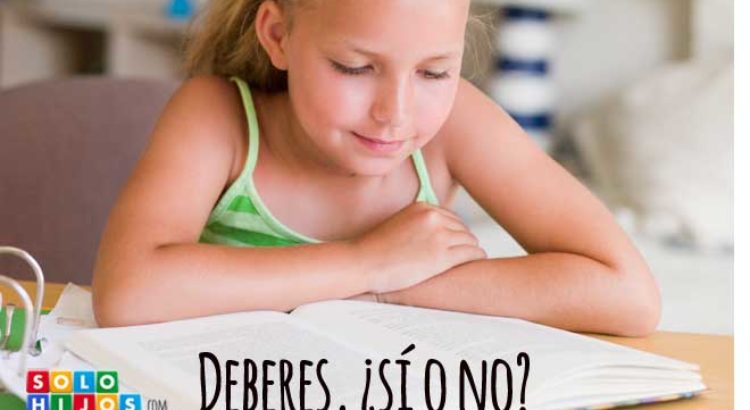
*Fuente de la imagen: http://www.solohijos.com/web/deberes-si-o-no/

Comparte este contenido:

Argentina: Gremios docentes bonaerenses reclaman a Vidal una “urgente convocatoria” a paritarias

Por: elcomercioonline.com.ar/14-03-2018

El Frente de Unidad Docente Bonaerense reclamó hoy al Gobierno de María Eugenia Vidal la “urgente convocatoria” a una nueva ronda de paritarias, y denunció el “cierre de cursos y escuelas”, aunque no lanzó medidas de fuerza.

Dirigentes de los gremios FEB, SADOP, SUTEBA y UDOCBA brindaron este martes una conferencia de prensa, en esta capital, en la que volvieron a reclamar a la administración de María Eugenia Vidal por un incremento salarial superior a la meta oficial de inflación.

La secretaria general adjunta de SUTEBA, María Laura Torre, expresó: “denunciamos, como se está haciendo en cada distrito de la Provincia, el cierre de los bachilleratos de adultos: miles de ellos se quedan sin estudiar y cientos de docentes sin trabajo”.

“Paralelamente, más de 80.000 niños del nivel inicial no tuvieron la posibilidad de iniciar sus clases: no tienen acceso a la Educación Inicial y la única respuesta frente a esta grave situación es amontonar a niños de 2, 3 y 4 años en una misma aula”, enfatizó.

Según Torre, “el cierre de cursos y escuelas muestra que para las autoridades los estudiantes y trabajadores sólo somos un número más. Basta ver la situación de escuelas de islas y de escuelas rurales. Como dijo la gobernadora (Vidal) lo importante es que los chicos aprendan. Y para esto tienen que haber aulas, condiciones dignas, escuelas terminadas, sillas y bancos”.

“La Gobernadora debe cambiar la lógica de la discusión.Exigimos que suspendan el cierre de los bachilleratos, que abran todas las escuelas que se necesitan, que nombren a todos los docentes necesarios para poder garantizar en serio una educación de calidad. Y que nos convoquen para discutir nuestro salario. Le pedimos a Vidal que reconozca y valore nuestro trabajo. Somos parte de la solución de cualquier problema que haya en la educación”, enfatizó.

Torre recordó que este martes, “se realizan en varios distritos de la Provincia distintas actividades para denunciar esta situación, como: radios abiertas, marcha de antorchas, volanteadas, charlas con la comunidad educativa, permanencia en las Jefaturas Distritales, entre otras”.

*Fuente: http://www.elcomercioonline.com.ar/articulos/50084520-Gremios-docentes-bonaerenses-reclaman-a-Vidal-una-urgente-convocatoria-a-paritarias.html

Comparte este contenido:

Canada: Education Reform Act headed for final vote following changes

Por: cbc.ca/14-03-2018

The McNeil government’s Education Reform Act is a step closer to becoming law — a step that followed several amendments resulting from all-party co-operation.

Bill 72 moves to third and final reading with amendments that include language guaranteeing students the option of an inclusive education at their neighbourhood school with kids their own age, as well as adding a seat to the provincial advisory committee on education for a first-voice representative of people with disabilities.

NDP education critic Claudia Chender, who proposed the latter amendment, said she feels the changes address the key concerns disability advocates expressed during law amendments on Monday.

«I do think after some fits and starts, the government seems to have gotten it right,» she said Tuesday night at Province House.

Claudia Chender

NDP education critic Claudia Chender says amendments to the Education Reform Act successfully address concerns disability advocates raised about the bill. (CBC)

The amendment about language came from the Liberals, and added the word «shall» to the bill in reference to the requirement to provide inclusive education.

Chender repeatedly proposed amendments throughout Tuesday’s committee of the whole, including multiple calls to change the term «manager» as it relates to principals and vice-principals to «administrator.»

Education Minister Zach Churchill said the government didn’t support the change because it wasn’t reflective enough of the duties principals, in particular, play within schools.

«Management is a key component of our administrators and I think it’s important to have that reflected in the legislation,» he said.

While principals and vice-principals might be «teachers first,» Churchill said «there needs to be clarity on those roles and responsibilities.»

Nova Scotia Municipal Affairs minister Zach Churchill

Education Minister Zach Churchill says the amendments Tuesday show the government’s willingness to listen to concerns raised about Bill 72. (CBC)

Likewise, an amendment to ensure that meetings of the new advisory committee on education are open to the public and its minutes are publicly available was defeated by the Grits.

Chender said she’s concerned about the shift happening with the loss of public school board meetings, and drew a comparison to the closed meetings of the Nova Scotia Health Authority’s board.

Churchill disagreed with the suggestion that blocking the amendment means the system will be less transparent. He said the new approach would enhance local voices.

«I think that we’re going to further involve our school communities at the local level and ensure that they have the capacity regionally to provide open advice to our regional offices as well as connecting that network provincially.»

Another of Chender’s amendments was also accepted, which changed the word «demoted» to «reassigned» as it relates to an administrator returning to the classroom.

‘People’s voices can be heard’

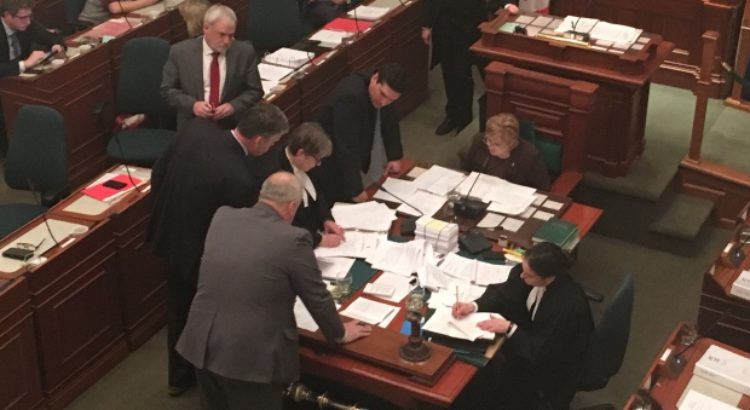
Co-operation hasn’t exactly been a hallmark of the Liberals since they came to power in 2013, so it was an unusual scene Tuesday as Premier Stephen McNeil, government House Leader Geoff MacLellan and NDP House Leader Dave Wilson huddled around the clerk’s table in the middle of the legislative chamber discussing Chender’s amendments before versions of them were ultimately passed with unanimous support of all three parties.

Churchill said all of the amendments the House passed Tuesday show the government’s responsiveness to «questions and concerns that have been raised.»

«I think that’s demonstrating that this legislative process works and that people’s voices can be heard as we build laws that impact people in this province.»

The bill moves to third reading where it will be debated for a final time, likely on Thursday.

 *Fuente: http://www.cbc.ca/news/canada/nova-scotia/education-reform-act-legislation-bill-72-churchill-chender-1.4565262
Comparte este contenido:

México: Concentran 25 municipios 30% de analfabetas del estado.

Por: Ana Lilia Velázquez. Sin Muros. 14/03/2018

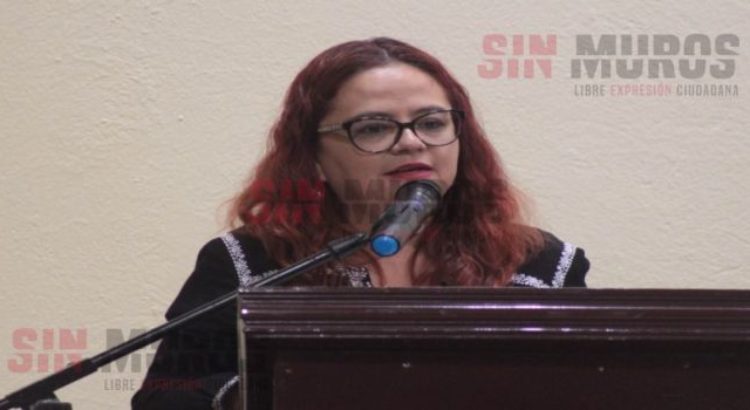
En 25 municipios se concentran más del 30 por ciento de los analfabetas y Xalapa es uno de ellos, informó la diputada local de MORENA, Daniela Griego Ceballos.

Para abatir este rezago, principalmente en las mujeres indígenas “reportan muchas dificultades, sobre todo ya mayores, pero eso implica que no puedan acceder a la educación en la adultez”.

En entrevista, la legisladora de MORENA lamentó que no haya presupuesto etiquetado para ese sector de la población “hay para educación básica, no encontramos a nivel estatal ni federal”.

En ese sentido, aclaró que el Instituto Veracruzano de Educación para Adultos (IVEA), ejerce recursos del Instituto Nacional para los Adultos (INEA), pero el presupuesto es limitado.

*Fuente: http://sinmuros.com.mx/movil/resumen.php?id=14057#&panel1-1

Comparte este contenido:

Australia: In the fourth industrial revolution, we need an education overhaul

Por: theaustralian.com.au/ Helen Zimmerman/14-03-2018

We have entered the fourth industrial revolution, a world of automation, machine learning and networked cognition where technologies link the physical, digital and biological spheres.

Progress with artificial intelligence is contributing to a social transformation happening 10 times faster and at 300 times the scale of the first industrial revolution.

Manual, routine and rule-based jobs that can be done better and faster with networked cognition are being automated. Seventy-five per cent of future jobs will involve science, technology, engineering and mathematics, using skills in data science, coding, software architecture, data analytics, cybersecurity and bioinformatics, among others.

We also know workers will require transferable enterprise skills in future workplaces. These are not role or industry-specific but enduring capabilities such as problem solving, multidisciplinary teamwork, cross-cultural competency, user-centred system design, communication skills, creativity, and social, emotional and digital intelligences. These are the human skills that augment artificial intelligence and cannot be automated.

The human cost of moving to the new industries and workplaces will be profound. Changes will affect workers in all industries and at all levels but particularly those with low levels of educational attainment and those working in industries and jobs that will no longer exist.

Globally, we are talking about upwards of 100 million people requiring skilling, reskilling and upskilling in a short time.

To meet this challenge we will need new ways of learning, new skills and new mindsets that are continually refreshed across our lifetimes.

The delivery of higher-order technical skills and expert knowledge, as well as transferable enterprise skills, cannot be satisfied solely by our present tertiary systems, which were designed for a different era.

These are not skills or mindsets embedded in our traditional systems or in the capability sets of many of our teachers, trainers and academics.

Our education systems are interdependent, powerful forces developed in response to the second industrial revolution which required mass standardised instruction and assessment. In their present form they no longer are fit for purpose. Moving to the future world of work requires on-demand learning that is able to be personalised and differentiated in a meaningful, consistent and scalable way.

We know there is much innovation and change occurring within many vocational and higher education institutions. Universities are at the frontiers of new knowledge, undertaking research that seeks to address many of the world’s “wicked problems”. Higher education and vocational institutions also are working with industry to deliver applied, industry relevant training.

However, we need to recognise that traditional models of education and training do not allow us to respond at the speed and scale demanded of us by learners and industry. We need fast, collaborative, “joined-up” action. We do not have the luxury of incremental innovation and development.

In late 2016 Navitas Ventures, in collaboration with Quid, began researching digital educational innovation, mapping 15,000 education technology companies across 50 countries. The research identified 26 organic clusters of educational innovation, measuring scale, investment, traction and disruptive potential. Navitas Ventures then grouped these clusters into a next-generation learning life cycle that explains the learning journey of the future.

Traditional higher education institutions are most active in engaging in the earlier phases of this cycle; for example, using digital technologies for courseware, student and teacher management systems, and enrolment and admissions systems, all of which enhance the student experience.

Learners increasingly are focused on ways of financing education, career planning and new ways of learning, such as boot camps, that develop the skills and capabilities employers need. The research also showed that ed-tech innovators are moving ahead of traditional educational institutions in providing solutions that put learners in control, connecting them directly to learning that meets their needs.

The increasing importance of aligning with career skills and employability has been a message from learners across several years.

In 2013, iGraduate presented survey results of 161,800 international students from 13 countries, including Australia. Consistently, learners were least satisfied with their study institutions in the areas of work experience, career advice and employability.

Business is key in the identifying where the skills shortages are now and where they will be into the future.

In 2016, the Business Council of Australia put out a guide to what employers want. Increasingly, multinational companies are not recruiting on an applicant’s undergraduate degree but on their portfolio of experience, skill sets and demonstrated capabilities. Companies such as IBM, Cisco and PricewaterhouseCoopers have integrated reskilling and continuous learning into their workplaces.

To match this trend, we are seeing the rise of credentialling systems that recognise formal and informal sources of knowledge; that are open, flexible, portable and personalised. If our vocational and higher education systems are not able to meet the needs of industry, these large businesses will do it themselves or use the products and services of the ed-tech innovators. Small to medium businesses, which employ about 68 per cent of Australians, rely on our vocational and higher education systems for skilled workers. If our systems cannot meet their future needs they will turn increasingly to low-cost “just in time” digital solutions.

Australia’s future productivity and prosperity hinges largely on our ability to harness education and training to deliver the knowledge, skills and new mindsets required by industries and workplaces of the future. This is a national imperative; a call to arms.

The scale and urgency of transforming our industries, work­forces and education and training systems require collaborative action now. We need to put aside partisan politics, ideological-based policy design and systems that allow only incremental rather than transformational responses.

If our vocational and higher education systems fail to deliver learning and skills for future workforces, there is a world of others who will do so. Learners and industry will not wait.

Helen Zimmerman is an adviser at Navitas.

*Fuente: https://www.theaustralian.com.au/higher-education/opinion/in-the-fourth-industrial-revolution-we-need-an-education-overhaul/news-story/6a7705967731f3413d6bb52c0872e8fa
Comparte este contenido:

Unicef: For too many children around the world, violence has a familiar face

Por: Unicef

The commonality of violence in children’s lives worldwide is staggering. According to A Familiar Face, a report by UNICEF on violence against children and adolescents, violence often starts as early as infancy and affects children in every stage of childhood. Though it causes serious hindrances to a child’s well-being, violence is often perpetrated by people children know and trust – family members, caregivers, teachers, friends and intimate partners.


© UNICEF/UN014910/Estey


Violent discipline is pervasive and often deemed necessary by caregivers.


Worldwide, many caregivers believe physical punishment is necessary in child rearing, and an astonishing proportion (75 per cent) of children between 2 and 4 years of age experience violent physical or verbal punishment.


Lack of knowledge about developmental norms – such as infants’ and toddlers’ abilities to understand complex instructions – often leads to ineffective and harmful disciplinary practices with children as young as 12 months old. This is particularly damaging, as young children are at greater risk for physical injury and are not yet able to cope with their distress.


© UNICEF/UN014961/Estey

For many children, school is an unsafe or harmful place.


The very environment where children should be able to safely learn and grow is often the backdrop of day-to-day violence. Bullying on- and off-line is a significant issue for school-aged children worldwide, and in many countries teachers engage in violent punishment and abusive behaviour towards their students. Children who must risk violence to attend school have lower attendance rates, decreased performance and higher drop-out rates.

In situations of conflict, school-aged children are particularly vulnerable. In 2016, nearly 500 attacks or threats of attacks on schools were documented or verified in 18  countries or areas around the world. Yet during times of peace, schools continue to be susceptible to gun violence and shootings – three-fourths of documented school shootings that took place in the past 25 years occurred in the United States.


As children grow, they become increasingly vulnerable to violent deaths.


As children enter the second decade of their lives, the rate of violent deaths more than doubles what it had been during their first 10 years of life. Older adolescents aged 15-19 are three times more likely to die violently than younger adolescents aged 10-14. Homicide remains the largest source of violent adolescent deaths around the world, accounting for two-thirds, the highest rates of which are concentrated in Latin America and the Caribbean. Notably, the risk of homicide has both a gender and racial component: Almost half (47 per cent) of female homicide victims are killed by family members or intimate partners, compared to about 6 per cent of males. While homicides are disproportionately high for both Black adolescent boys and girls, non-Hispanic Black adolescent boys are 19 times more likely than non-Hispanic White adolescent boys to die from homicide in the United States. Similarly in Brazil, adolescent boys of African descent or multiracial origins are at greater risk of homicide than boys who are White.

In the Middle East and North Africa, adolescents are disproportionately at risk of death from war, civil insurrection and law enforcement. Though the region is home to only 6 per cent of the world’s adolescents, it accounts for more than 70 per cent of adolescent deaths from these causes.


Adolescent girls are often targets of sexual violence by close friends and family.


Though both adolescent boys and girls are at risk of sexual violence, adolescent girls are especially vulnerable. In countries with available data, the vast majority of adolescent girls who experienced forced sex said this happened for the first time after age 10. The same proportion were assaulted for the first time by someone close or known to them. Survivors of child sexual abuse rarely report their assailants or seek help due to a variety of factors including social norms, fear, shame and confusion.


© UNICEF/UN018674/Zehbrauskas


The data are clear: children are at risk of violence due to a variety of factors, but are most often harmed at the hands of people they know and trust. UNICEF’s work with governments, families, schools and other national and local partners has helped change laws, child disciplinary practices and attitudes in many countries. Still, only 60 countries have fully prohibited the use of corporal punishment in the home, leaving more than 600 million children under 5 years of age at risk of violence.  And 732 million school-age children live in countries where corporal punishment at school has not been fully prohibited.

With continued investigation and analysis of the data, the urgent need for change can be communicated, governments can be held accountable, programmes can be evaluated and policies can be changed. Ending violence against children is everyone’s responsibility.


© UNICEF/UN066591/Ohanesian

*Fuente: https://blogs.unicef.org/evidence-for-action/many-children-around-world-violence-familiar-face/

Comparte este contenido:

Juegos y videos para aprender y poder enseñar a los niños a reciclar

Las actividades lúdicas y educativas pueden ser claves para que los menores reciclen

Por: Ecoportal/ Alex Fernández Muerza/14-03-2018

Los niños no son los recicladores del mañana, porque ya pueden serlo hoy. Para ello, una estrategia eficaz consiste en enfocar el reciclaje como una actividad lúdica, y no como algo aburrido o una obligación. Este artículo presenta algunos videos y juegos de todo tipo para conseguirlo, entre ellos originales entretenimientos, manualidades, aplicaciones para móviles y tabletas o dibujos animados.

1. Si nosotros reciclamos, ellos también

Los niños aprenden por imitación y por eso su entorno cercano es muy importante. Si ven en casa cubos de separación de residuos, y luego la familia los recicla en los contenedores urbanos correspondientes, las posibilidades de que interioricen el hábito del reciclaje aumentarán. Enfocarlo no como una aburrida obligación, sino como un juego divertido como una competición para ver quién recicla más o darles un premio por reciclar de forma habitual son estrategias que no fallan.

2. Preguntas y respuestas

Enfocar el reciclaje como un juego divertido no falla entre los niños

Conviene estar atentos para todas las preguntas que hagan: la curiosidad de los pequeños no tiene fronteras. Por ello, hay que tener preparadas respuestas sobre, por ejemplo, qué ventajas tiene reciclar o en qué contenedor va cada residuo. Incluso se puede convertir en un juego de preguntas y respuestas a ver quién acierta más.

3. Actividades educativas para clase

Los centros educativos son otro pilar en el que se tiene que sustentar el reciclaje. Además de contar con lugares donde se pueda reciclar, los docentes pueden tener a su disposición recursos pedagógicos para enseñar y concienciar a sus alumnos. Ecoembes, la entidad que gestiona el reciclaje de los residuos del contenedor amarillo y azul, ofrece en EducaEnEco materiales divididos por ciclos educativos, así como otros recursos multimedia.

4. Juegos de acción

A los niños les encanta hacer cosas, moverse y, de esa manera, aprender. Los juegos de acción son, por tanto, otro recurso más para enseñarles a reciclar. La web Sapos y Princesas propone varios juegos de este tipo para aprender a separar los residuos, como “Encesta por el medio ambiente” o el “Camión de selección de residuos”.

5. Manualidades con objetos reciclados

Las manualidades estimulan la creatividad de los pequeños y sus destrezas psicomotrices, además de ser un buen entretenimiento. En el caso del reciclaje, puede ser un doble estímulo, ya que el aprovechamiento de materiales reciclados para crear toda clase de objetos es un aprendizaje en sí de los beneficios del reciclaje. Para ello se pueden encontrar muchos recursos, como el de la ONG Oxfam Intermón en su libro ‘Manualidades para niños y niñas‘, pensado para trabajar los valores del cuidado del medio ambiente y del reciclaje.

6. Juegos interactivos en Internet

Internet es una gigantesca ludoteca con todo tipo de juegos interactivos, incluidos algunos centrados en el reciclaje. La web Educapeques ofrece diversos juegos para aprender a reciclar, así como fichas para repasar los residuos que van a cada contenedor.

7. Recicla como Juan y Tolola y Peppa Pig

Otra forma de convencer a los menores de que reciclen es con dibujos animados de personajes afines a ellos. De esta manera lo verán como un juego divertido que imitar.

La serie ‘Juan y Tolola‘, basada en los libros para niños ‘Charlie y Lola’ de la autora inglesa Lauren Child, es muy recomendable por su transmisión de valores como la amistad, el optimismo o la bondad. En uno de sus capítulos, ‘Cuida de tu planeta’, los dos hermanos tocan también el reciclaje:

Peppa Pig, que colaboró este año en La Hora del Planeta de WWF, también se convierte en una recicladora en uno de los capítulos de esta serie infantil británica. Tanto este vídeo como el de Juan y Tolola superan cada uno los cinco millones de visualizaciones en YouTube.

8. El juego del reciclaje de Pocoyó

Otro personaje también muy conocido entre los más pequeños es Pocoyó. Junto al resto de personajes de esta serie de animación hispano-británica, protagoniza un juego para aprender a reciclar en su propia página webPocoyo.com.

9. Juegos didácticos

De entre la gran variedad de juegos didácticos del mercado, se pueden encontrar algunos centrados en el reciclaje. La web La casa de los juguetes ofrece una selección, con los que se puede aprender de forma divertida y sencilla el proceso del reciclaje o hacer huchas y hasta un cohete con materiales reciclados.

10. App Pispas: aprender jugando a reciclar

Los móviles inteligentes y las tabletas abren aún más el abanico de posibilidades de enseñar de manera lúdica el reciclaje. Un ejemplo es Pispas, que brinda para los sistemas operativos iOS y Android una aplicación con diversos contenidos multimedia para aprender jugando a reciclar, como este vídeo:

Fuente: https://www.ecoportal.net/temas-especiales/ensenar-a-los-ninos-reciclar/

Comparte este contenido:
Page 3102 of 6757
1 3.100 3.101 3.102 3.103 3.104 6.757