Page 4037 of 6824
1 4.035 4.036 4.037 4.038 4.039 6.824

UNICEF: Global Coalition Fights Education Under Attack In Conflict Zones

UNICEF/August 8, 2017/By Riley Bunch/ Source: http://reliefweb.int

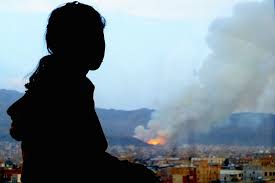
According to UNICEF, conflict zones around the world are preventing 25 million young students from getting access to education. Schools being targets for attacks, military use and occupation by armed forces has caused global concern surrounding protection of education under attack in conflict zones.

In 2010, The United Nations alongside multiple non-governmental organizations recognized the need for immediate action. As a solution to this problem, they created the Global Coalition to Protect Education from Attack (GCPEA). The agencies coming together acknowledged the need for implementation of policies and programs to protect students and teachers from deliberate attacks.

The multidisciplinary coalition, in hand with humanitarian law agencies, education in emergency groups, and child protection agencies, now focuses on advocacy among ministries and government bodies in conflict affected countries on how to reduce war crimes on schools and increase safety for future generations.

Diya Nijhowne, director of the GCPEA, addresses the phenomenon as a major global crisis—one that is only growing.

“Sadly, the problems of schools and universities being bombed and burned and students being raped, killed, executed, abducted from their schools is continuing,” Nijhowne said. “Generally, we have not seen it go down. And in some places, such as the middle east it is getting worse.”

Within a report titled Education Under Attack (based on data gathering for the period 2009-2013), over the past five years armed nonstate groups, state military, security forces and criminal groups have attacked thousands of primary students, university students, teachers, academic instituions and education establishments in at least 70 countries worldwide.

In coordination with the United Nations, the GCPEA has developed the Safe Schools Declaration. Within it are outlined steps, and procedures nations must implement to combat the issue of education under attack in conflict zones. Countries who have already endorsed the document get given training and programs to abide by the terms of the declaration.

These terms include monitoring education under attack in conflict zones and collecting accurate data to respond to the issue, creating contingency planning for emergency situations and creating “conflict sensitive” learning environments that can continue education under warring times.

Currently, 76 or one-third of the members of The United Nations states have signed onto the Safe Schools Declaration and agree that this issue is of high importance. Endangerment to education within conflict zones is not only physically impacting communities, but taking a severe psychological toll on students and staff.

“If you are worried your school is going to be bombed or this phenomenon of military use of schools as well,” Nijhowne said. “Forces might be in the classroom next to the kids or on the play field, just having that sort of militarized atmosphere is very stressful.”

One commitment countries must make when signing the Safe School Declaration is to assist victims. Support can range from making sure perpetrators are punished all the way to psycho-social support for the people impacted.

“Schools are traditionally there to provide routine, they provide safety, they have a protection function, not only within society but within a war zone,” Nijhowne said. “If that place that is supposed to be a sanctuary becomes somewhere that might be attacked that diminishes what would have been a protective function that the school is offering.”

Anecdotal evidence taken from reports done by the GCPEA shows that women and girls are disproportionately affected by education under attack in conflict zones. If military forces are present on school grounds, parents are more likely to be protective of their daughters and refrain from sending them to school. Also, if there is limited opportunity for children to attend school, parents often choose their sons to go to school rather than their daughters.

Under international law, there is no prohibition against using schools for military purposes. However, with the growing number of schools and universities getting targeted by the military, ministries and other government agencies around the world have become increasingly willing to work on alternative approaches to avoid using schools as bases.

GCPEA continues to work on addressing war crimes against education under attack in conflict zones and furthering their advocacy in countries who have yet to sign the Safe Schools Declaration.

Source:

http://reliefweb.int/report/world/global-coalition-fights-education-under-attack-conflict-zones
Comparte este contenido:

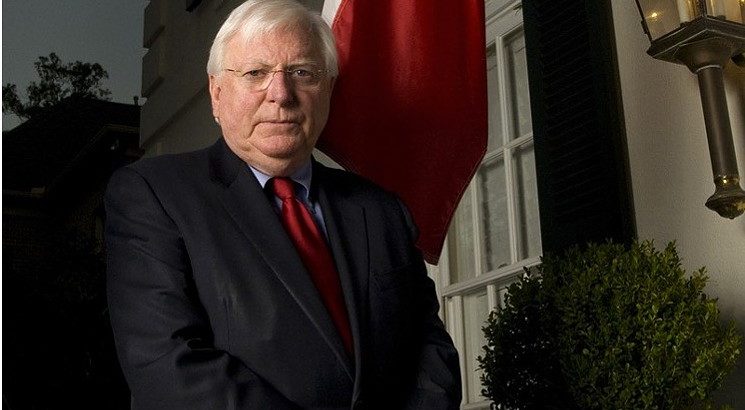
EEUU: Texas Governor Mark White, Houstonian and Public Education Reformer, Dies at 77

EEUU/ August 8, 2017/

Mark White, who fought to reform the public education system in Texas as the state’s 43rd governor, died of a heart attack Saturday at his Houston home. He was 77.

White, a Democrat who served a single term from 1983 to 1987, was the most recent Texas governor from Houston. His brief tenure is remembered for the strides made to improve the educations of Texas public schoolchildren. Among other successes, White pushed the Legislature to adopt a 22-to-1 student-teacher ratio, to prevent overcrowded classrooms. Under his watch, Texas also introduced its first standardized testing standards.

More controversially, White pushed for a «no-pass, no-play» policy for student-athletes — meaning in football-crazed Texas, football players who were flunking a course had to ride the bench. The Houston Chronicle noted that White said in a 2009 interview that the policy was bad politics, but good for the kids who learned how an education is a more applicable life skill than throwing a spiral or catching a pass.

White continued to care about education long after he left office. In 2010, he was the subject of a Houston Press column on his fight to keep the Legislature from undoing many of his education reforms — including his hard-fought student-teacher ratio cap. In 2014, Houston ISD named an elementary school after White.

Born in Henderson, White was educated in Houston public schools before earning a bachelor’s degree and later a law degree from Baylor University. He worked in private practice in Houston, and served as the attorney general and secretary of state before he was elected governor.

Curiously, White is survived by just two former governors — George W. Bush, who served two terms as president of the United States; and Rick Perry, the current Secretary of Energy.

Governor Greg Abbott on Sunday ordered flags to be flown at half-staff, and in a statement praised his predecessor for his devotion to educating children.

“Mark’s impact on Texas will not soon be forgotten, and his legacy will live on through all that he achieved as Governor,» Abbott said. «Cecilia and I extend our deepest condolences to Linda Gale White and family during this difficult time, and I ask that all Texans join us in praying for the White family as they mourn the passing of a devoted husband, father and public servant.»

Source:

http://www.houstonpress.com/news/former-texas-governor-mark-white-dead-at-77-9676440

Comparte este contenido:

South African students not prepared for tertiary education, says study

South African/August 8, 2017/By: Suthentira Govender / Source: https://www.businesslive.co.za

Not being happy with your study choice and failing schools standards are some of the reasons South African students have given for feeling unprepared for tertiary education, according to a new study

This revelation is contained in the latest PPS Student Confidence Index survey conducted among nearly 2‚500 students in fourth year and above‚ pursuing qualifications in engineering‚ medicine‚ law or accounting.

According to the survey‚ less than half those surveyed felt prepared for the transition from school to higher education institutions. This represents an 8% decline from 2016‚ and marks the first time in three years — since the survey was started — that the percentage has dropped below 50%.

Motshabi Nomvete‚ PPS spokeperson, believes the implications «of this lack of preparedness is no doubt contributing to the fact that 47.9% of university students do not complete their degrees as determined in the latest [2015] report by the Department of Higher Education».

She said there needs to be more engagement by the corporate sector and professional bodies with government on school curriculums to ensure the divide between secondary and tertiary education levels is reduced.

Prof Labby Ramrathan‚ based at the University of KwaZulu-Natal’s school of education‚ said the school-to-university transition «is a complex phenomenon that has many facets». «The emotional facet of being prepared or not for this transition cannot be used as any substantive argument for the high rate of dropout from universities.»

Ramrathan said the drop in percentage of students being ready for tertiary education «is related to the confidence in being able to access their study programme of choice and this is, I believe‚ what may have resulted in their lower levels of confidence in transition from school to university».

«There are a number of studies that have pointed to‚ among other [things]‚ being admitted to programmes that were not the student’s first choice as a reason for high levels of student dropout. Students have the potential to succeed‚ but there are several factors, including institutional‚ personal and academic‚ that contribute to the high rate of student dropout‚» added Ramrathan.

Another education expert‚ Prof Wayne Hugo‚ said: «At the heart of it lies the following problem: school standards are struggling to keep up to scratch for university level study.»

«Universities accept students who they know are not university-ready because they know the school system is struggling and so they put in all sorts of foundation and assistance programmes that help the student,» he said. «By the time it comes to actually graduate‚ the openness and support has come to an end and the student must display full university standards. By then‚ some of our students have caught up … but those who have not experience a rude awakening.»

Hugo added that the Fees Must Fall campaign had «a terrible physical and psychological toll on students and lecturers alike‚ resulting in an increased divide and less energy and commitment».

Source:

https://www.businesslive.co.za/bd/national/education/2017-08-07-sa-students-not-prepared-for-tertiary-education-says-study/

Comparte este contenido:

Britain: Brexit caused by low levels of education, study finds

Britain/August 8, 2017/By: Jon Stone/Source: http://www.independent.co.uk

A slight increase in higher education could have kept Britain in the EU.

Britain would have likely voted to remain in the European Union were its population educated to a slightly higher level, a new study has found.

Researchers at the University of Leicester say that had just 3 per cent more of the population gone to university, the UK would probably not be leaving the EU.

The researchers looked at reasons why people voted Leave and found that whether someone had been to university or accessed other higher education was the “predominant factor” in how they voted.

The paper, published in the peer-reviewed journal World Development, applied a multivariate regression analysis and logit model to areas of the country to identify why people voted the way they did.

The level of higher education in an area was far more important than age, gender, the number of immigrants, or income in predicting the way an area voted, the researchers found.

Age and gender were both significant but not as important as education level, the researchers found. Income and number of immigrants in an area were not found to be a significant factor in how people voted.

The researchers also found that a lower rate of turnout – by just 7 per cent – would also likely have changed the result to Remain.

The last Labour government set a target of half of young people accessing higher education and there has been a large expansion in numbers in recent decades. Universities UK says it expected the number of people in employment with higher education qualifications to have risen from 28.7 per cent in 2002 to 51.3 per cent in 2022

Dr Aihua Zhang, from the University of Leicester’s Department of Mathematics, said: “The EU referendum raised significant debate and speculation of the intention of the electorate and its motivations in voting. Much of this debate was informed by simple data analysis examining individual factors, in isolation, and using opinion polling data.

“This, in the case of the EU referendum where multiple factors influence the decision simultaneously, failed to predict the eventual outcome. On June 23rd 2016, Britain’s vote to leave the EU came as a surprise to most observers, with a bigger voter turnout – 72.2 per cent – than that of any UK general election in the past decade.”

British voters voted by 52 per cent to 48 per cent to leave the EU in a referendum held in June 2016.

Source:

http://www.independent.co.uk/news/uk/politics/brexit-education-higher-university-study-university-leave-eu-remain-voters-educated-a7881441.html


Comparte este contenido:

República Dominicana: Realizaran primer Simposio Internacional de Educación para Personas Sordas

República Dominicana/07 agosto 2017/Fuente: El Caribe

El mismo se llevará a cabo por los esfuerzos de colaboración del Ministerio de Educación,  el Instituto de Ayuda al Sordo Santa Rosa; La Iglesia de Jesucristo de los Santos de los Últimos Días, y la Universidad Pedro Henríquez Ureña -UNPHU-.

También, el Consejo Nacional de Discapacidad –CONADIS-; la Asociación Nacional de Ayuda al Sordo y el Club Rotario Internacional Santo Domingo-Mirador.

Según explicó la doctora Ruth Claros, organizadora del evento, el objetivo de este encuentro académico es proveer las herramientas necesarias para avanzar en los logros educacionales de las personas sordas en el país y contribuir en la mejora de la calidad de la educación que reciben.

La actividad contará con 5 especialistas de EEUU, y 5 de Latinoamérica.

Entre los disertantes en el evento estarán Nathan Van De Graaff, padre, quien es sordo y con maestría en educación; Nathan Van De Graaff, hijo, experto en Lenguaje de Señas Americana –ASL-; Katie Pletcher, con una maestría en educación de personas sordas; y Ruth Claros- Kartchner, doctora en bilingüismo y experta en lectoescritura, tanto para personas sordas como para oyentes.

En el marco del simposio, se entregará a los participantes el libro “La desmitificación de la educación de sordos: hacia una pedagogía de éxito”, una edición especial para República Dominicana de la autoría de la doctora Claros-Kartchner, con  el auspicio de La Iglesia de Jesucristo de los Santos de los Últimos Días.

Fuente: http://www.elcaribe.com.do/2017/08/04/realizaran-primer-simposio-internacional-educacion-personas-sordas/

Comparte este contenido:

UNICEF asegura que «nada puede justificar los terribles abusos» contra mujeres y niños en Kasai, República del Congo

República del Congo/07 agosto 2017/Fuente: Eco Diario

El director ejecutivo adjunto del Fondo de Naciones Unidas para la Infancia (UNICEF), Justin Forsyth, ha subrayado este lunes que «nada puede justificar los terribles abusos contra mujeres y niños» que se han registrado en la región de Kasai, en República Democrática del Congo, al tiempo que ha reclamado a las partes en conflicto que protejan a los niños y las instituciones educativas.

«El mundo no puede cerrar los ojos ante la situación que están viviendo los niños y las familias en la región del Gran Kasai», ha asegurado el responsable de UNICEF, en un comunicado. Forsyth ha asegurado que, en los últimos doce meses, más de 1,4 millones de personas –incluidos 850.000 niños– se han visto «obligadas a abandonar sus hogares y sus vidas, marcadas por actos generalizados de violencia extrema».

«Los niños y las mujeres nos hablan de terribles abusos. Muchos niños han sido reclutados por las Fuerzas Armadas, drogados y atrapados en la violencia. Nada puede justificar estas acciones», ha afirmado el director ejecutivo adjunto de UNICEF.

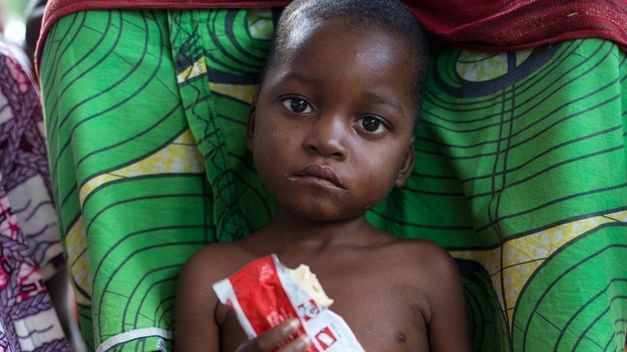
Tras denunciar que la situación de los niños sigue empeorando y las familias desplazadas por el conflicto «no pueden acceder a los servicios más básicos», la agencia de Naciones Unidas ha señalado que «más de 200 centros de salud han sido destruidos y uno de cada cuatro centros sanitarios no funciona con normalidad». «Se estima que cerca de 400.000 niños están en riesgo de sufrir desnutrición aguda grave», ha alertado.

Forsyth ha explicado que los niños en Kasai han perdido un año de educación porque hay «cientos de escuelas» que han sido objetivo de «ataques y saqueos». «Los maestros han sido asesinados o se han visto forzados a huir por razones de seguridad. El miedo a la violencia se traduce en que el personal docente no puede ir a trabajar y los padres temen enviar a sus hijos a la escuela», ha señalado.

El director ejecutivo adjunto de UNICEF ha dejado claro que todas las partes enfrentadas deben proteger a la infancia. «Todas las partes en conflicto deben proteger a los niños, poner fin a estas graves violaciones contra la infancia y preservar las escuelas y los servicios de salud. Los actores humanitarios deben tener acceso ilimitado a las poblaciones afectadas para que podamos llegar a todos aquellos que lo necesitan», ha asegurado.

Por último, ha indicado que UNICEF y una extensa red de aliados locales están respondiendo a las «crecientes necesidades humanitarias, «llegando a más de 150.000 personas afectadas por la crisis con nutrición, salud, educación, agua y saneamiento, donaciones directas en efectivo e intervenciones de protección infantil». «Pero a menos que esta violencia se detenga, nuestro trabajo nunca será suficiente. Las vidas de muchos miles de niños están en riesgo», ha concluido.

Fuente noticia: http://ecodiario.eleconomista.es/internacional/noticias/8540777/08/17/UNICEF-asegura-que-nada-puede-justificar-los-terribles-abusos-contra-mujeres-y-ninos-en-Kasai-RD-Congo.html

: http://images.teinteresa.es/mundo/UNICEF-asegura-justificar-terribles-Kasai_TINIMA20170807_0036_5.jpg

Comparte este contenido:

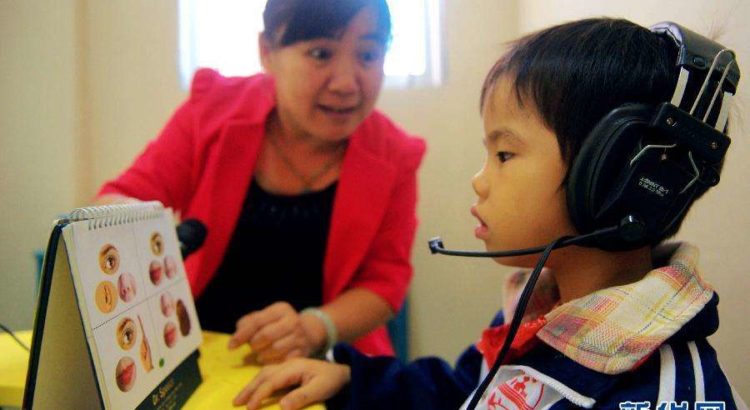
Para el 2020, más del 95% de los menores chinos con discapacidad recibirán educación obligatoria

China/07 agosto 2017/Fuente: Spanish People

 El Ministerio de Educación y la Comisión Nacional de Desarrollo y Reforma de China han publicado recientemente el «Plan de Mejoramiento de la Educación Especial Fase II (2017-2020)» para mejorar aún más el sistema de educación especial del país y asegurar que más del 95% de los escolares chinos tengan acceso a nueve años de educación obligatoria.

«China cuenta actualmente con 492.000 estudiantes discapacitados, de los cuales 270.000 se matriculan en escuelas que no tienen enseñanza especial, lo que representa el 55% del total», afirmó Lu Yugang, director del Departamento de Educación Básica del Ministerio de Educación de China.

Desde la implementación de la fase I del «Plan de Mejoramiento de la Educación Especial (2014-2016)», la tasa nacional de matrícula escolar de menores con discapacidad visual, auditiva o intelectual alcanzó el 90 por ciento a finales del 2016. Además, el número de escuelas de educación especial en todo el país llegó a las 2.080, un 7,6 por ciento más que en el año 2013.

Cada estudiante discapacitado que cursa educación obligatoria recibe una subvención del gobierno de 6.000 renmimbi (unos 892 dólares).

Li Dongmei, subdirector del Departamento de Educación y Empleo de la Federación de Personas con Discapacidad de China, detalló que el 81% de los menores discapacitados que reciben educación obligatoria son de áreas rurales. Hay tres cuartas partes de ellos que sufren discapacidades graves que les impiden ir a una escuela normal.

Para abordar el tema, el «Esquema de la Fase II» promueve «el envío de educación a las familias, comunidades y centros de bienestar».

Los menores discapacitados que reciben educación puerta a puerta también serán registrados en el sistema nacional obligatorio de educación.

Fuente: http://spanish.peopledaily.com.cn/n3/2017/0804/c31614-9251262.html

Comparte este contenido:
Page 4037 of 6824
1 4.035 4.036 4.037 4.038 4.039 6.824