Page 5772 of 6821
1 5.770 5.771 5.772 5.773 5.774 6.821

Malta: Reforming the education sector

Malta / 24 de agosto de 2016 / Fuente: http://www.maltatoday.com.mt/

The discussion on the Maltese educational system reform provides an excellent opportunity to finally address a number of outstanding issues in this sector

The ongoing discussion on reforming the educational system in Malta provides an excellent opportunity to finally address a number of outstanding issues in this sector.

Six years after the previous ‘streaming’ model was replaced by mixed-ability classrooms, the jury is still out on whether the new system constitutes an improvement or not. It is not an easy question to answer. By definition, progress in education can only be quantified after the lapse of generations. Elsewhere, one must perforce balance existing education statistics with the standards of education offered.

There is ample evidence that the results are slowly improving. In 2014, 23% of the population aged 23-54 had opted for a tertiary education, compared to 8.6% of those aged 55-74, indicating more interest in education by younger generations.

But this only represents half the equation. For if the national statistics concerning education improve on paper, but only because the standards of education received were inadvertently lowered… it would hardly constitute a success.

Sadly, that is the impression many people do have when assessing the quality of education in Malta. It may be a misplaced conviction, but doubts have arisen regarding the adoption of a mixed-ability model.

Parents often complain that inclusivity in state colleges has failed students who, years before the college system, would have been streamed into a lyceum. Teachers have likewise complained that a multi-ability environment hampers their ability to provide focused, individually-tailored education.

The counter-argument is equally compelling. Streaming may result in better education meted out to those in the higher echelons of the system… but is it fair to dump less gifted students into a stratum where expectations are automatically lower?

Ultimately, it boils down to the question of what Malta really wants its education system to achieve. As Prof. Sandro Caruana, dean of the Faculty of Education at the University of Malta, puts it in an article today (pages 16-17): “Educators cannot foster a system which favours the strongest, often because of their family background, and deprives the weakest of their learning, which is an intellectual birthright.”

Moreover, there are indications that negative academic performance is closely associated with socio-economic background. In the same article, Prof. Gaetano Borg observes that “Gaps in performance remain largely correlated with socio-economic status, in two of the most strategic subjects – mathematics and literacy – and the chances of furthering one’s education to the tertiary level are also strongly correlated with the educational background of parents.”

Ominously, he warns that unless the educational system moves from its one-size-fits-all strain, “those who had been failed by the educational system could not be expected to encourage their children to value it.”

Caruana concurs, though he concedes that the new system poses challenges: “Addressing a heterogeneous group may not be as easy as addressing a homogenous one: but when one streams, one groups students by ability and this generally allows very little movement between such groups. So low-achievers may be placed in a stream which they are unable to get out of, and this often affects their self-esteem negatively. A mixed-ability class, by its own nature, can limit this danger.”

One other consideration concerns the resources made available to the system to ensure its success. Mixed ability classrooms in themselves cannot guarantee higher standards of education, unless the number of teachers per student is drastically lowered from its present ratio. Smaller classrooms serviced by more educators – be they teachers or learning support assistants (LSAs) – is the direction necessitated by this model. And it involves more investment in schools, better working conditions for teachers, and more logistical and resource-based support on a continual basis.

One cannot talk of reforming the educational system without also increasing national expenditure on education. To do this would be to condemn the policy to certain failure.

The proposed educational reform is however not limited only to the question of streaming as opposed to mixed-ability classes. Questions have arisen concerning Malta’s infrastructural ability to cope with the increasing demands for education, regardless of the system in place. Education Minister Evarist Bartolo appeared to hint at a shortage of educational facilities, when he kick-started a discussion of ‘home-schooling’.

As with the streaming issues, there are compelling arguments both for and against. Home schooling may indeed be a useful addition to the overall education arsenal, and there are many circumstances in which individual students would benefit. Without entering the merits of this argument, however, it is also fair to say that the school environment is about more than just academic achievement.

Schools are indispensable to the social upbringing of our children, and contact with other children is every bit as valuable as the lessons learnt in class. There is also the danger that some parents may abuse the concept in order to keep their children away from school for other reasons: disagreements with the national curriculum for reasons of faith, for example, or to force a child to work in the family business.

All the same, it is clear that a reform of the system is indeed necessary. One is inclined to agree with Prof. Gaetano Borg, when he remarks that the focus should be “Malta’s inability to confront the root causes of our educational malaise”.

Fuente noticia: http://www.maltatoday.com.mt/comment/editorial/67374/reforming_the_education_sector#.V7xjMdR96MA

Comparte este contenido:

Honduras: Reubicación de docentes genera grandes beneficios, señala secretaria de educación

Honduras / 24 de agosto de 2016 / Fuente: http://www.abriendobrecha.tv/

De acuerdo a un informe presentado por la Secretaría de Educación, la reubicación de docentes ha beneficiado a unos 700 mil escolares en todo el país.

Explicaron que consiste en movilizar de los centros educativos con personal supernumerario maestros a instituciones donde hay escasez de docentes.

Asimismo, se han trasladado maestros a lugares donde se requiere la apertura de nuevos centros básicos.

A través de esto se estaría logrando la optimización en el aprovechamiento del recurso humano docente y la secretaría ha rescatado mil 45 millones 787 mil 843 lempiras hasta 2015.

Fuente noticia: http://www.abriendobrecha.tv/reubicacion-de-docentes-genera-grandes-beneficios-senala-secretaria-de-educacion/

Comparte este contenido:

Kenia: Universities accused of introducing unnecessary courses to make money

Kenia / 24 de agosto de 2016 / Por: OUMA WANZALA / Fuente: http://www.nation.co.ke/

Cabinet Secretary Matiang’i intervenes to contain expansion by institutions of higher learning.

Universities have been accused of introducing unnecessary courses to make money.

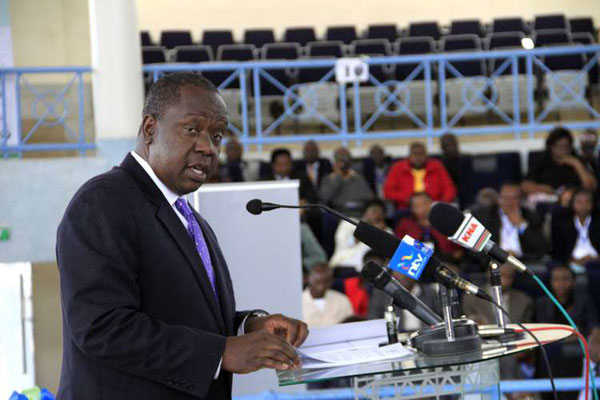
On Monday, the Cabinet Secretary for the Ministry of Education, Science and Technology, Fred Matiang’i, reiterated the ban on opening of satellite campuses as he moved in to contain unnecessary expansion among universities.

A report by university education regulator indicated that the institutions had adopted a new way to make money by mounting courses that are not market-driven.

“This calls for continuous review of the programmes offered to ensure alignment to the current and future market demands,” said the report.

It revealed that public and private universities had prioritised programmes in business administration, humanities and arts.

“…too much concentration in arts at the expense of science-oriented programmes is likely to disadvantage some key national development sectors which require more practical skills,” added the report.

Dr Matiang’i also cautioned politicians against pushing for re-opening of satellite campuses that were closed down by the Commission for University Education (CUE) early this year saying they must abide by the regulations.

INCREASING CONCERNS

Speaking on Monday during the first biennial conference on the state of higher education in Kenya at Kenyatta University, Dr Matiang’i said there were increasing concerns by employers and the private sector on the mismatch between the quality of education being provided by the institutions and the needs of the increasingly dynamic labour market.

“The capacity of CUE will be enhanced and a review of its legislation will not only give it more regulatory power but enhance its institutional ability to do capacity building to strengthen university management and leadership, through a much more robust university leaders and managers programme,” said Dr Matiang’i.

He directed the commission to launch a more vigorous review and regulation of institutions of higher learning, including conducting regular enrolment and programme audits.

“It is expected that through its regulatory ranking of Kenyan institutions of higher learning, CUE, in conjunction with the NCIC (National Cohesion and Integration Commission), will develop an index to check the disturbing ethnicisation of institutions of higher learning,” he said.

He called on university leadership to end unnecessary conflicts saying the ministry was receiving very many complaints daily.

“We have cases where vice chancellors, their deputies and university council chairmen are working towards each other’s downfall,” said Dr Matiang’i.

He disclosed that he was in talks with Health Cabinet Secretary Cleopa Mailu in order to resolve a row between the Kenya Medical Training College and Kenya Universities and Colleges Central Placement Service on admission of students.

A Bill for the establishment of the National Open University of Kenya has been approved by Cabinet, he said. “Upon enactment by Parliament, this legislation will enhance increased participation in higher education at an affordable rate for many Kenyans who otherwise may not afford the time and cost of higher education in the regular, traditionally institutionalised form,” he said.

Fuente noticia: http://www.nation.co.ke/news/education/universities-accused-of-introducing-courses-to-make-money/2643604-3354388-tjaikyz/index.html

Comparte este contenido:

Lógicas no clásicas, educación ambiental e inteligencia emocional, nuevos cursos de verano de las universidades

España / lainformacion.com / 24 de Agosto de 2016

Los tres se impartirán entre los días 22 y 26 de agosto, organizados por la UPNA, la Universidad de Navarra y el Gobierno de Navarra

‘Introducción a las Lógicas No-Clásicas’, ‘Educación ambiental’ e ‘Inteligencia emocional y gestión del estrés’ son los tres cursos de verano de las Universidades navarras que se van a desarrollar entre los días 22 y 26 de agosto, organizados los dos primeros por la Universidad de Navarra y el último por la UPNA y el Gobierno de Navarra.

El curso ‘Introducción a las Lógicas No-Clásicas’, dirigido por Pablo Cobreros y orientado a personas con interés por la filosofía, el razonamiento y la lógica, ofrece un acceso ameno a las lógicas alternativas a la lógica de Frege y Russell-Whitehead que surgieron como un intento de profundizar en el significado de las paradojas, la naturaleza del pensamiento y del lenguaje natural.

En él se abordarán temas como la lógica o en qué consiste la validez de un argumento, la lógica proposicional clásica, las paradojas, o el sistema básico de la lógica modal, entre otros. El precio es de 15 euros y ofrece la posibilidad de otorgar créditos en el nivel elemental (15 horas) y avanzado (25 horas). Se celebrará en Civivox Condestable, en horario de 17 a 18.30 y de 19 a 20.30 horas.

Dentro del curso ‘Educación ambiental’, también de la Universidad de Navarra, se tratarán temas como para qué sirve la educación ambiental, sus principales características, o la complejidad del medio ambiente, entre otros. Asimismo, se celebrarán diversas charlas y talleres. Los ponentes de este curso son Fernando Echarri, de la Facultad de Ciencias de la Universidad de Navarra; Mikel Lasarte, director de Medio Ambiente de la Fundación Ilundáin, y el biólogo y ornitólogo Xabier Esparza.

Los destinatarios son alumnos de Universidad, profesorado, educadores y educadoras medioambientales y población en general. El precio es de 15 euros. Con una duración de 25 horas, el curso se celebrará en el aula 10 de la Biblioteca de Ciencias de la Universidad de Navarra, en horario de 15.30 a 20.30 horas.

Organizado por la Universidad Pública de Navarra y el Departamento de Educación del Gobierno de Navarra, el curso ‘Inteligencia emocional y gestión del estrés’ está dirigido por Inés Gabari, profesora del Departamento de Psicología y Pedagogía de la Universidad Pública de Navarra.

El objetivo general del curso es la adquisición de una mayor conciencia personal acerca de las emociones, pensamientos y conductas que acompañan los procesos emocionales, así como el aprendizaje de técnicas y recursos que puedan ayudar a gestionar la vida emocional de modo más adecuado, según ha informado el Gobierno foral en una nota.

La programación diaria del curso, que se celebrará en el Palacio del Condestable de Pamplona, será de cuatro horas, de 9.30 a 13.30 horas, con un descanso de 20 minutos. La matrícula es de 30 euros.

Para los dos primeros cursos está abierta la inscripción. No quedan plazas en el curso de la UPNA ‘Inteligencia emocional y gestión del estrés’.

Fuente: http://noticias.lainformacion.com/educacion/universidad/Logicas-ambiental-inteligencia-emocional-universidades_0_945206653.html

Comparte este contenido:

Un monólogo para reflexionar sobre la vida afroecuatoriana

Ecuados / eltelegrafo.com.ec / 24 de Agosto de 2016

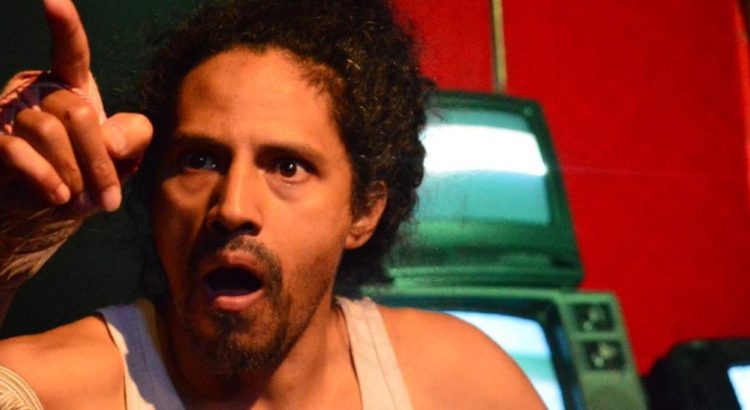
En Ecuador, según estadísticas del INEC, la población que más padece de pobreza es la afrodescendiente. La falta de educación, salud, servicios básicos, agua potable, empleo calificado y otros derechos básicos han impedido que ese sector de la sociedad mejore en su calidad de vida. En Cajón de Tomates, monólogo de Pablo Manuel Anangonó (foto) bajo la dirección de Mauricio Gallegos, se narra la historia de Clotario, quien aspira a convertirse en el propietario de una fábrica de tomates y, así, salir de la pobreza. El box, el fútbol y hasta un trabajo emergente son algunas de las estrategias que este personaje probará para cumplir su cometido. Cajón de Tomates es parte de las propuestas de Cimarrón Teatro, agrupación que nace el 4 de junio de 2015 y cuyo compromiso es presentar un teatro de carácter político, con temáticas afrodescendientes. Toman a la interculturalidad como herramienta para difundir la memoria, identidad, historia y cultura del pueblo afroecuatoriano. La obra aborda la cultura televisiva como un referente para hallar soluciones, y también expone los procesos migratorios de las mujeres y hombres afros. Esta pieza escénica tiene un lenguaje sencillo, con un trabajo corporal que coquetea con el clown, el mimo y el baile. La pieza escénica se presentará hasta el próximo 10 de septiembre, los viernes y sábados, a partir de las 20:00, en el Teatro en Casa (Benalcázar N8-27 entre Esmeraldas y Manabí).

Fuente : www.eltelegrafo.com.ec

Comparte este contenido:

La formación de lagos azules en la Antártida alarma a los científicos

www.ecoportal.net/24-08-2016/

La sureña Antártida es desde hace años el refugio de los negacionistas del cambio climático. La cantidad de hielo que rodea el continente aumenta, al contrario que el norteño Ártico, en el otro polo, que se derrite. Hay más hielo que nunca rodeando la Antártida, repiten una y otra vez los negacionistas. Sin embargo, es una verdad a medias. La Antártida en su conjunto pierde hielo. Y el hielo marino que rodea la Antártida crece, sí, pero por la topografía del continente y la forma del fondo marino, factores que influyen en los vientos y las corrientes alimentando un peculiar microcosmos, según la NASA, en un contexto de indiscutible calentamiento global. El año 2015 fue el más cálido desde que empezaron los registros en 1880.

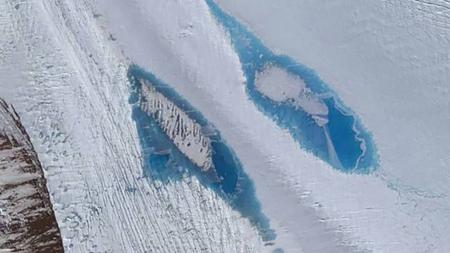
Un nuevo estudio en el glaciar Langhovde, en la Antártida Oriental, ofrece más munición contra los negacionistas. Un equipo liderado por el glaciólogo británicoStewart Jamieson ha observado allí la formación de casi 8.000 lagos a partir de hielo derretido durante los veranos del periodo 2000-2013. Las imágenes de satélite muestran esa porción del continente blanco salpicada de hermosas manchas azules. “Se sabe que los lagos supraglaciales influyen en el derretimiento de la capa de hielo de Groenlandia y potencialmente causan la desintegración de la plataforma de hielo de la península Antártica [en la Antártida Occidental]”, advierten los autores en su estudio, publicado en la revista especializada Geophysical Research Letters.

Jamieson, de la Universidad de Durham (Reino Unido), y sus colegas subrayan que, aparentemente, el agua de los nuevos lagos desaparece en el interior del glaciar, debilitándolo y facilitando su ruptura. En 2002, un fenómeno similar provocó

Comparte este contenido:

GE’s New Africa Innovation Centre will Help Develop African Solutions for African Challenges

South Africa / allafrica.com / 24 de Agosto de 2016

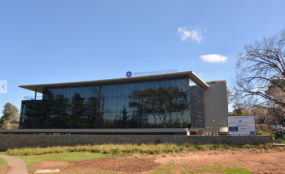
Innovation is the business buzzword of the moment, but supporting innovation is sometimes easier said  than done. However, GE is putting its money where its mouth is and developing the continent’s first Innovation Centre in Johannesburg, South Africa. The centre, opening in June, will leverage local talent, skills and knowledge to address Africa’s toughest challenges.

In 2014, GE made a $50-million commitment to South Africa to develop innovation and skills, particularly in light of the opportunities for sustainable development in the region. The result is the Africa Innovation Centre, which will provide the tools and space for GE to collaborate with local customers to design uniquely African solutions to business challenges. These pilot solutions will be commercialised by local business teams.

“The GE Africa Innovation Centre will work with our customers and partners, leveraging our global expertise – our people and processes – to find and apply solutions that work,” says Jeff Summers, of GE. “Our  team is committed to finding local and global solutions to African  opportunities, leveraging the best of GE and global methodologies, technologies and tools.”

Thomas Konditi, President & CEO Africa for GE Transportation, stressed that innovation was vital for  African growth. “Africa has a unique environment to deal with,” he said. “As part of the developing world, technology doesn’t always fit with our needs. We have a lot of entrepreneurs here that are poised to help us connect the  dots and come up with new solutions.”

The GE Africa Innovation Centre includes an exhibition space celebrating the best of African and GE innovation, ideation spaces for effective collaboration, an agile work space, and a learning and development space. It will also include a physical and virtual showcase of GE Healthcare’s product and services technology with a virtual connection to be maintained to the GE Healthcare Institute in Nairobi, which is currently in development.

The centre will also serve as the headquarters for the Londvolota Enterprise Development company which launched in 2015 with a commitment of accelerating supplier development in South Africa and equipping Small Medium Enterprises (SME) to participate in the GE value  chain.

As befits an innovation centre, best in class technology will be used. The 2,700m²2 facility will be the first green and LEED (Leadership in Energy and Environmental Design) certified building in Sub-Saharan Africa. The project was 90% built, designed, and executed by local enterprises.

GE’s commitment to innovation extends beyond the Innovation Centre. Some examples include the anaerobic membrane bioreactor technology (AnMBR) piloted with South African customer  Sasol, as well as its partnership with USAID on the Power Africa Off-Grid Energy Challenge promoting energy solutions for communities who fall outside existing power grids.

Fuente: http://allafrica.com/stories/201608191266.html

Comparte este contenido:
Page 5772 of 6821
1 5.770 5.771 5.772 5.773 5.774 6.821