Page 5989 of 6793
1 5.987 5.988 5.989 5.990 5.991 6.793

Situación y desafíos de la educación en Argentina

Argentina/12 de julio de 2016/ Fuentes: el liberal

Los chicos que hoy están cursando primer grado terminarán la escuela en año 2027, se jubilarán alrededor del año 2080 y muchos de ellos estarán con vida en el año 2116. La posibilidad de celebrar el Tricentenario en una Argentina desarrollada social, cultural y económicamente depende de las acciones que realicemos hoy. Fundamentalmente, de aquellas que llevemos adelante en el seno de la escuela.

Ante un mundo que cambia permanentemente y de manera vertiginosa, no sabemos cómo será la realidad de las próximas décadas. En este contexto, debemos preguntarnos cómo tiene que ser la escuela que prepare a nuestros chicos de la mejor manera para afrontar ese futuro cargado de incertidumbre y enormes desafíos. Y está claro que no hay posibilidad de ser libre e independiente si no se accede a una educación de calidad.

Lamentablemente, en nuestro país la situación educativa es alarmante y se agrava en los sectores sociales de mayor vulnerabilidad social. A pesar de que por la Ley Nacional de Financiamiento Educativo N° 26.075 la inversión en educación alcanzó el 6,5% en el 2011 (Cippec), los resultados de desempeño siguen siendo preocupantes.

El 44% de los niños y jóvenes en el país no terminan el secundario. Y de los que terminan, la mitad no comprende correctamente textos. Prueba de ello es que llegamos al punto el año pasado de que la Universidad de Buenos Aires abrió talleres de comprensión lectora para sus alumnos.

Además, según el Operativo Nacional de Evaluación (ONE) de 2013, uno de cada cuatro alumnos desfavorecidos se ubica en los niveles más bajos de la prueba nacional. En las pruebas Pisa de 2012, Argentina quedó en el puesto 59 de 65 naciones evaluadas, dejando en evidencia que las brechas por nivel socio-económico son de las más altas del mundo. Más aún, cuando observamos las cifras de graduados universitarios, nos encontramos con que la Argentina tiene una tasa de graduados cada 10.000 habitantes muy baja: 431 ingresan y sólo 28 se gradúan. Por eso la situación empeora en sectores de mayor vulnerabilidad social, en un país donde el 34,5% de la gente vive bajo la línea de pobreza, según la última medición del Observatorio de la Deuda Social Argentina de la UCA.

Ante este duro y complejo diagnóstico, se nos plantean cinco grandes desafíos desde la educación, en los siguientes ejes:

Innovación. Debemos construir una escuela que nos lleve al futuro. Para ello, desde el Ministerio de Educación y Deportes de la Nación hemos lanzado una Red Federal de Mejora de los Aprendizajes. En ese sentido, tenemos que apasionarnos con la siguiente consigna: Todos los chicos pueden y deben aprender. Independientemente de dónde se nazca, todos los niños tienen derecho a acceder a una educación de calidad.

El rol del docente. Hay que realzar la figura del docente. Resulta imperioso reconocer que el rol del docente como líder de los procesos de enseñanza y de aprendizaje, para poder gestar una escuela del Siglo XXI, precursora del Siglo XXII. Por ello, es ante todo imprescindible pensar consecuentemente los institutos de formación docente, fortaleciendo la formación continua y en servicio, además de seguir mejorando las condiciones salariales y de trabajo.

Evaluación. En línea con el compromiso con la verdad asumido por el Presidente Mauricio Macri, hemos creado una Secretaría de Evaluación de la Calidad Educativa. En octubre se llevará a cabo un Operativo Nacional de Evaluación, llamado Argentina Aprende. Eso nos permitirá darle muchísima más claridad a los datos que disponemos y generar otros nuevos. Vamos a publicar un resultado censal educativo por municipio, tanto para la educación de gestión pública como privada. Conocer la realidad nos permitirá tomar las mejores decisiones para transformarla.

Primera Infancia. Necesitamos articular las políticas de Primera Infancia para generar condiciones de educabilidad. Acompañar a la mujer embarazada y al niño desde el nacimiento en materia de nutrición, salud y hábitat. A su vez, debemos abrir centros de desarrollo infantil para la estimulación temprana de nuestros niños y construir 3.000 jardines de infantes a lo largo y ancho de nuestro país.

Relación con el mundo del trabajo. Es central establecer un diálogo entre el sistema educativo y el mundo y la cultura del trabajo, para de esa forma lograr que la escuela hable con la realidad socioproductiva del lugar. Es nuestro deber comprometernos con la educación como único camino para resolver las desigualdades e inequidades sociales estructurales de nuestro país.

Fuente: http://www.elliberal.com.ar/noticia/272022/situacion-desafios-educacion-argentina

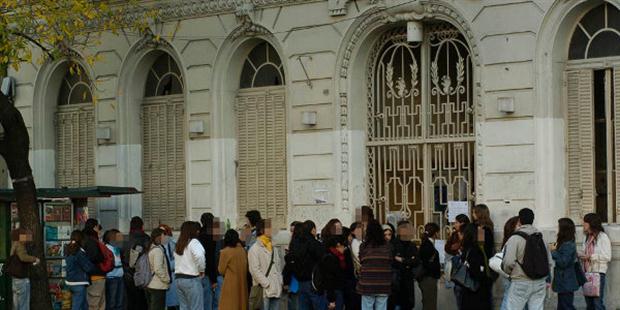
Imagen: http://elperiodico.s3.amazonaws.com/wp-content/uploads/2016/02/422.jpg

Comparte este contenido:

Tras medio siglo, Gambia declara ilegal el matrimonio entre niños

Africa/Gambia/10 de Julio de 2016/Fuente: Clarin

El presidente de Gambia, Yahya Jammeh, anunció la prohibición inmediata del matrimonio forzoso y con menores. “A partir de hoy, el matrimonio infantil por debajo de los 18 años es ilegal», afirmó el mandatario el jueves pasado durante un banquete con motivo del final del mes sagrado musulmán del Ramadán. Los casamientos entre niños estuvieron permitidos en el país africano desde su independencia en 1965.

Jammeh advirtió, además, que los infractores afrontarán duras multas y hasta 20 años de prisión por cualquier matrimonio infantil que se registre, y sostuvo que «si no lo denuncian y nosotros lo descubrimos, nos ocuparemos de ustedes». Y agregó, mientras pedía que se divulgue la noticia a toda la población: «El imán (sacerdote) y todos aquellos que dirijan la ceremonia de matrimonio irán también a la cárcel».

También se penalizará a los padres de las menores de 18 años que consientan el matrimonio, mientras que las personas que estén al corriente y no lo denuncien ante las autoridades podrán pasar hasta 10 años en la cárcel.

Esta nueva ley será aprobada antes del 22 de julio por la Asamblea Nacional, explicó el presidente.

El matrimonio infantil es una práctica corriente en África Subsahariana pese a que está prohibida por leyes adoptadas en varios países de la zona. En 2010, Unicef dio a conocer que un tercio de las mujeres de 20 a 24 años de edad en el mundo, se casaron cuando aún eran niñas.

Jammeh, que proclamó recientemente Gambia como «un Estado Islámico», también prohibió en noviembre la mutilación genital femenina, después de llegar a la conclusión de que se trata de una práctica tradicional y no dictada por la religión musulmana.

El presidente dirige con mano de hierro el país desde que tomara el poder con un golpe de Estado en 1994 y su régimen ha sido acusado de graves violaciones de los derechos humanos. Jammeh se ha caracterizado también por su beligerancia hacia los homosexuales, a quienes ha llegado a calificar de «alimañas» y relacionado con enfermedades como la lepra, la tuberculosis o la gonorrea.

Fuente: http://www.clarin.com/mundo/Gambia-declara-ilegal-matrimonio-ninos_0_1610838928.html

Comparte este contenido:

España: El Instituto Universitario de Estudios de las Mujeres de la Ull Celebra en Julio su Seminario de Investigación

Europa/España/Julio de 2016/Fuente: El Periódico de Canarias

Consta de tres actividades, la primera de las cuales es un simposio sobre conceptos como las fronteras y la migración bajo la perspectiva de género

El Instituto Universitario de Estudios de las Mujeres de la Universidad de La Laguna (IUEM) celebrará en julio su seminario de investigación. Este programa formativo está subdividido en tres eventos que se desarrollarán a lo largo de todo el mes: los días 7 y 8 de julio tendrá lugar el II Simposio Internacional “Las fronteras del Sur. Vulnerabilidad, género y enfoques interseccionales”; el 18 de julio, el seminario “La incorporación de la perspectiva de género al conocimiento y la investigación”; y el 21 de julio, el 2º Seminario de investigación en Estudios Interdisciplinares de Género”.

Todos los encuentros se celebrarán en el Salón de Grados de la Sección de Filosofía de la Facultad de Humanidades, en el Campus de Guajara. El programa general con los tres encuentros está disponible en el banner ubicado en la portada de la web institucional (www.ull.es), mientras que el programa específico del II Simposio Internacional que comenzará el jueves 7 de julio está disponible en la web: http://eventos.ull.es/5588/detail/ii-simposio-internacional_-las-fronteras-del-sur.-vulnerabilidad-genero-y-enfoques-interseccionales.html.

Simposio Internacional

El II Simposio Internacional “Las fronteras del Sur. Vulnerabilidad, género y enfoques interseccionales”. En él se plantean nuevas tareas de investigación-acción en el contexto de la crisis migratoria y de refugiados que se están produciendo en las Fronteras del Sur. El interés se centra en hacer efectivos los análisis desde la perspectiva de género y los enfoques interseccionales en los actuales contextos sociales y políticos de las fronteras.

Como explica la organización del encuentro, las fronteras son espacios geográficos, pero también imaginarios y simbólicos, modulados por políticas e intervenciones que generan exclusiones, desplazamientos y violaciones de los derechos humanos. El género, la clase o la raza-etnicidad, entre otros, son variables relevantes para analizar y comprender las dinámicas crecientes de militarización de las fronteras y de proliferación de prácticas y actuaciones que no son compatibles con los principios del derecho internacional.

El simposio se articula en tres ejes temáticos: Exclusiones, desplazamientos y crisis de refugiados y refugiadas; las fronteras del Sur (género, intersección de opresiones y vulnerabilidad migratoria); y exclusiones, brechas y desplazamientos: narrativas de la precariedad y respuestas desde el activismo.

Se abordarán tanto a través de varias sesiones de comunicaciones a las que se han presentado 37 trabajos procedentes de universidades españolas, italianas y mexicanas, y ponencias plenarias a cargo de especialistas nacionales e internacionales en diversas áreas.

Otras actividades

La segunda actividad incluida en este seminario de investigación es la sesión “La incorporación de la perspectiva de género al conocimiento y la investigación”, que se celebrará el 18 de julio. Las ponentes serán Anne Pepin, investigadora del Centro Nacional de Investigaciones Científicas de Francia (CNRS), y Ana Puy Rodríguez, directora de la Unidad de Mujeres y Ciencia del Ministerio de Economía y Competitividad.

Finalmente, el 21 de julio se celebrará el 2º Seminario de investigación en Estudios interdisciplinares de Género. Durante el mismo se presentará el programa general de doctorado y estudios de posgrados de la ULL, y se hará una sesión especial centrada en el programa de doctorado interuniversitario en Estudios Interdisciplinares de Género. A continuación, habrá dos sesiones de presentaciones: una sobre el plan de investigación de proyectos sobre género, y otra de presentación de avances de investigaciones en curso.

Fuente: http://www.elperiodicodecanarias.es/el-instituto-universitario-de-estudios-de-las-mujeres-de-la-ull-celebra-en-julio-su-seminario-de-investigacion/


Comparte este contenido:

Fears of backlash by Indian education agents

Asia/India/10 de Julio de 2016/Autor:John Gerritsen/Fuente: RadioNZ

RESUMEN: Inmigración de Nueva Zelanda está rechazando casi la mitad de los estudiantes aspirantes a-soliciten ingreso para estudiar en Nueva Zelanda de la India, y dice que ha encontrado el fraude en las solicitudes de visado de estudio de muchos agentes educativos de la India, algunos de los cuales están actuando con los gerentes de bancos corruptos. Sin embargo, un correo electrónico de un agente de la India envió a RNZ indicó que algunos agentes se sienten traicionados. Se dijo que los agentes habían promovido Nueva Zelanda y ha ayudado a desarrollar como un destino de la educación «, pero ahora inmigración [NZ] es la educación de un gran interrogante hacia nuestra credibilidad de ser fraudulenta y engañosa, que no es cierto». El correo electrónico dijo que los estudiantes indios tenían una mejor Inglés que los de muchos otros países que envían estudiantes a Nueva Zelanda, pero esos países fueron tratados mejor que la India. Se dijo que una lista de agentes cuyas solicitudes de visado de estudio de los clientes incluidos los documentos fraudulentos estaba siendo utilizado para dañar su imagen.

El director ejecutivo de Queens Grupo Académico Clare Bradley dijo que la situación podría provocar una reacción de los agentes de la India. Dijo que si las cosas no mejoraron los agentes comenzarían a tomar su negocio a otra parte.

They say the education agents who send the vast majority of Indian students to this country are feeling angry and betrayed and could start sending students to other countries.

More on fraud, fees and student visas

Immigration New Zealand is turning down nearly half the would-be-students applying to study in New Zealand from India, and says it has found fraud in study visa applications from many Indian education agents, some of whom are acting with corrupt bank managers.

But an email from an Indian agent sent to RNZ indicated some agents are feeling betrayed.

It said agents had promoted New Zealand and helped it develop as an education destination «but now Immigration [NZ] is bringing up a big question towards our credibility of being fraudulent and misleading, which is untrue».

The email said Indian students had better English than those from many other countries that sent students to New Zealand, but those countries were treated better than India.

It said a list of agents whose clients’ study visa applications included fraudulent documents was being used to tarnish their image.

Queens Academic Group chief executive Clare Bradley said the situation could prompt a backlash from India’s agents.

She said if things did not improve the agents would start taking their business elsewhere.

«Because of the way in which agents are feeling offended and upset by this in India, we’re simply not getting the applications going in. Because they’ll go to other places where the requirements are either more clearly understood or where the restrictions are not so stringent, like Australia, like Canada.»

Ms Bradley said tertiary institutions, the government and Indian education agents had all invested heavily in attracting Indian students to New Zealand.

But she said that investment was in danger.

Auckland International Education Group spokesperson Paul Chalmers said informal communication with agents in India indicated there could be problems.

«They’re very unhappy that a number of them have been characterised as a fraudsters and that the reaction by Immigration New Zealand will significantly affect the business of good agents.»

Mr Chalmers said tertiary institutions were now being told the rates of visa refusal for each of their agents and they should be given six months to work through that with their agents.

‘Shoddy agents’ – still in business?

But a spokesman for licensed immigration advisors from India, Munish Sekhri, said there were a large number of dodgy agents in India, many of whom entered the market after English-language rules were relaxed in 2013.

The rules were tightened again for India at the end of 2015, but Mr Sekhri said the bad agents were still in business and more controls were needed.

«When easy funding was available and no English was required a lot of shoddy agents had come out in the market. It was just like mushrooming after a rainfall. So just to bring some accountability, we propose that at least a limited licence should be introduced for student visa advisors.»

Education New Zealand chief executive Grant McPherson said there were fewer visa applications at the start of this year than at the same time last year, but that was due to changes to English language requirements for India.

He said Education New Zealand had not detected any downturn in enrolments due to the fraud issues but it was watching the situation carefully.

«We’re working closely with agencies and the New Zealand High Commission to make sure we are understanding the impact in that impact. But we actually need to monitor it very closely and make sure our actions aren’t going to let one small group who are acting in an inappropriate way affect an entire industry.»

Fuente: http://www.radionz.co.nz/news/national/308389/fears-of-backlash-by-indian-education-agents


Comparte este contenido:

Canada: Indigenous Calgarians struggle to find their cultural identity

América del Norte/Canada/10 de Julio de 2016/Autor: James Wilt/Fuente: CBS News

RESUMEN: La presencia indígena, al igual que con cualquier otra forma de pertenencia, es muy fluida y específica según el contexto, lo que significa que hay un sinnúmero de ejemplos de lo que dichas pluralidades culturales puedan parecerse. La Población indígena de la ciudad de Calgarians,  aumento en un asombroso 75 por ciento entre 1996 y 2006, y continuará expandiéndose rápidamente en los próximos años. Y con un número igualmente creciente en el poder político, lo que tendrá un impacto significativo en la identidad y la dirección de la ciudad. Steve Kootenay-Jobin, coordinador de viviendas de los aborígenes en la Universidad de Mount Royal, señala que muchos estudiantes indígenas que se trasladan a la ciudad para la educación, recibe un choque cultural . De acuerdo con un informe de 2012 del Instituto Environics, el 51 por ciento de las personas indígenas urbanos en Calgary estan de acuerdo con la afirmación «Estoy preocupado por la pérdida de mi identidad cultural», en comparación con sólo el 34 por ciento de la población urbana no aborígenes.

Sandra Sutter and a friend were meeting for breakfast at Laurier Lounge in southwest Calgary in October when they noticed an Indigenous woman wandering around in a nearby parking lot.

A day or two prior, a man had been robbed and murdered in the same downtown parking lot.

Sutter and her friend watched to ensure the woman was safe.

«But she was also doing something,» said Sutter, co-chair of the Métis Women’s Economic Security Council and former president of the Aboriginal Friendship Centre of Calgary.

«And I know that when you look at a person like that, you’re immediately judging that person is doing drugs or something they shouldn’t be doing. But what she was doing was smudging the area and praying and laying tobacco down,» she said.

Smoke from the burning sage, a sacred plant, is used to purify. (Peggy Lam)

It may sound like a small act — a simple display of mourning and respect for the dead.

But in Calgary –  825 sq. km of concrete that covers land once predominantly occupied by buffalo, sacred medicines and 500 generations of people who hunted, fished, trapped and harvested for sustenance  — such an instance represents something much more significant.

Namely, an expression of Indigenous identity within a culture that once tried very hard to erase it (and is still struggling with what reconciliation actually means.)

And thus, actively negotiating with the hotly contested idea of what it means to be an Indigenous person living in an urban environment.

In Calgary, a city contained in the traditional Treaty 7 territory of the Niitsitapi (Blackfoot Confederacy: Siksika, Kainai and Piikani), Stoney-Nakoda, and Tsuut’ina Nations.

There are no easy answers.

Indigenous population growing 

The Indigenous experience, like with any form of belonging, is highly fluid and context-specific, meaning there are countless examples of what such cultural pluralities can look like.

One thing’s for sure.

The city’s Indigenous population, which jumped by a staggering 75 per cent between 1996 and 2006, will continue to rapidly expand in coming years. And with increasing numbers and political power, Indigenous people will have a significant impact on the identity and direction of the city.

As a white settler who was born in New Zealand and has lived in every quadrant of Calgary at some time or another, I asked a few Indigenous people living in Calgary what that negotiation looks like. Each have their own experiences and complex takes.

No conclusions were reached in the process. In fact, that might be the most important lesson learned.

There are no conclusions about what it means to be Indigenous in Calgary.

A member of the Stoney First Nation wears a headdress during the Stampede parade. (Jeff McIntosh/Canadian Press)

Belonging and identity

Calgary’s Aboriginal population grew from 62 to 26,575 people between 1951 and 2006.

In 2006 – the last year that census data is available  —  Aboriginal people made up 2.5 per cent of Calgary’s total population. Some 56 per cent of those identified as Métis, while another 41 per cent as First Nations.

Some moved to the city for jobs, others for family and even more to gain new skills and education before returning to their home territories.

Steve Kootenay-Jobin, Aboriginal housing coordinator at Mount Royal University, notes that many Indigenous students who move to the city for education, encounter culture shock.

Cynthis Bird is a Calgary based consultant, originally from Manitoba’s Peguis First Nation. (Cynthia Bird)

Cynthia Bird, who moved from Winnipeg in 2004, says it was initially difficult to find where Indigenous people gather:

«[There] you can walk anywhere or go into any business and you see our people. That wasn’t the case here. We found we had to look hard.»

Kootenay-Jobin says the cultural integration experience can be exacerbated by challenges such as racism and housing. It’s tough to start wrestling with complexities like belonging and identity when you don’t have a home.

Figuring out what culture and spirituality looks like in the context of a large city like Calgary is a matter of overlaying identities. Of identity formation.

According to a 2012 report from the Environics Institute, 51 per cent of urban Aboriginal people in Calgary agree with the statement «I am concerned about losing my cultural identity,» compared to only 34 per cent of urban non-Aboriginal people.

«Understanding the dynamics of a large urban centre if you’ve never lived in one can be overwhelming,» said Christy Morgan, the former executive director of the recently closed Calgary Urban Aboriginal Initiative.

Creating connections

The day-to-day practice of culture and spirituality looks different for every person.

Some choose to buy medicines like sage, sweetgrass, fungus and cedar from Inglewood’s Moonstone Creations to use in ceremony, or attend events such as round dances, seasonal feasts and drum-making groups.

Angela Gladue is a member of the Fly Girlz dance crew and an instructor at Pulse Studios. (Candice Ward)

Angela Gladue – a hip-hop dancer, member of the Fly Girlz dance crew and instructor at Pulse Studios – has a Cree dictionary and some language apps on her phone.

She also dances fancy shawl: «It’s pretty much the only way, even to this day, that I connect with being First Nations,» also noting she’s interested in participating in a sweat lodge in the future.

Some parents smudge and pray with their kids. Some attend the annual Tiny Tots Powwow organized by the Parent Link Centre and send their children to Piitoayis Family School (a K-6 CBE school that incorporates ancestral teachings and Indigenous language education).

Other people dry wild game like elk and deer meat in their kitchen, or meet with elders for wisdom and advice.

Returning to the land can be part of the experience.

Camille Russell, a Blackfoot elder and traditional wellness counsellor at Alberta Health Services, says he’s found that he has to return to the Blood Reserve to visit sundance grounds, sweat lodges and his father’s piece of land.

«We tend to have to go out of the city, into the nature, to get some energy,» he says. «I think a lot of the elders do have some place outside of town that they go to to do ceremonies or re-energize.»

Vanessa Stiffarm, 25, will serve as the Indian Princess for the 2016 Calgary Stampede. (Calgary Stampede)

Complex identities

But there is a multiplicity of visions even within Indigenous communities of what it means to be Indigenous in the city.

Communities such as reserves and Métis settlements allows governments to easily delineate who’s «in» and «out.» In cities, however, it becomes more difficult to draw such lines given the obvious geographic size, with Indigenous people living in every part of the city and working in every sector.

Identity can be thought of as self generated, or bestowed. Something we use to create a sense of self, or something that other’s tag us with. The reality is usually a mix of these ideas.

‘Culture and connection: these are not things you buy at a local Costco’
Cowboy Smithx

Some people argue their identity is defined by their genealogical heritage: that having ancestors who are Cree, Blackfoot, Dene, Anishinaabe, Métis or Nakota is what makes one inherently Indigenous. This as opposed to certain actions or cultural practices.

«We may have forgotten a lot, or it’s been taken away, but it doesn’t mean you’re not an Indigenous person,» says Christy Morgan, former executive director of Calgary Urban Aboriginal Initiative (CUAI).

«That’s a birthright regardless of how you look and whether or not you do traditional activities.»

Gladue notes she’s occasionally received flak from elders for her involvement in hip-hop.

«Nobody can take that away, including non-Indigenous people who say ‘Oh, you’re so Westernized or whatever.’ The fact that I’m alive is enough,» she said.

Others contend that ancestry isn’t what makes one Indigenous. For such people, it’s one’s active participation — time, energy, a commitment to traditional forms of leadership and governance — that allows one to «earn rights» to the identity.

Cowboy Smithx, film maker and creator of REDx Talks. (Arnell Tailfeathers)

«Culture and connection: these are not things you buy at a local Costco,» quips Cowboy Smithx, filmmaker and creator of REDx Talks. «There should be no sense of entitlement to any of these things. Individuals must earn these rights. They must earn this access that they seek.»

In a similar vein, Daniel Heath Justice, chair of the University of British Columbia’s First Nations and Indigenous Studies department, recently tweeted: «Indigenous belonging is more than right to ‘ethnic’ heritage — it’s relationships of obligation, citizenship, acknowledgment, reciprocity.»

Of course it’s not nearly as black-and-white as such a short summary suggests. People maintain multiple perspectives at once, weaving together a form of identity that reflects both ancestry and cultural practices.

Geography and belonging

Such tensions have been debated and written about for decades.

They are constantly revisited, recently popping up during the «marry out, get out» controversy among the Kahnawake Mohawks, or the Supreme Court ruling on the federal government’s constitutional responsibility for Métis and non-status Indians.

‘Living in town, can partially sever identity links’
James Wilt

There’s the additional nuance that for some people, where they grew up and where their home nation is are two completely different things.

Gladue, who lives in Calgary, says that when she’s asked where she’s from she says Frog Lake First Nation even though she’s never lived there. In fact, she grew up three hours west, in Edmonton. This because, as she says, «you rep your reserve.»

These sorts of complexities and nuances, these self identifications, need not be problematic. They are part of an ongoing process for Indigenous peoples.

Land is an integral part

But one thing uniting almost all perspectives is a profound connection and relationship with land. It’s a concept that commentators pushing for the «relocation» of remote communities like Attawapiskat misunderstand or ignore.

For many Indigenous people, land is the subject of a deeply reciprocal relationship that frames their entire world view, spirituality and approach to treaties and other commitments. Cultural practices, medicines, ceremonies and gatherings all revolve around it.

Hence, living «in town», can partially sever identity links.

«Our responsibility to the land and to the water and to the creatures is part of our way of looking at the world,» Sutter said. «I think ‘urban Aboriginals’ is a term in my mind that kind of means that people are cut adrift.»

Some say they have found ways to bridge that sense of dislocation.

As an elder, Camille Russell says it can be mitigated by returning home to practice ceremony and commune with the land, family and elders.

Kootenay-Jobin, who’s a member of Stoney Nation and grew up in the city’s northeast, notes he’s «very fortunate» to live away only an hour away from Morley reserve.

Still, some Indigenous people arrive in Calgary from remote communities that don’t allow for easy returns. Cynthia Bird, originally from Manitoba’s Peguis First Nation, notes that «our identity has shifted so many times from the original place» (in 1907, the Canadian government illegally annexed the original land of the Peguis people, forcing them to relocate).

NDP leader Tom Mulcair makes a campaign stop at the Sik-Ooh-Kotok Friendship Centre in Lethbridge, Alberta on Tuesday, September 15, 2015. (The Canadian Press)

That’s where the Native Friendship Centre and organizations like the Calgary Urban Aboriginal Initiative (CUAI) have historically stepped in.

Yale Belanger, associate professor of political science at University of Lethbridge and expert on the political history of First Nations people, describes such entities as an «informal network» that have worked extremely hard over the decades to promote community, language and ceremony.

Morgan dubs CUAI as a «311 for most of the Aboriginal community,» linking Indigenous people new to Calgary with resources such as housing and employment.

But CUAI closed at the end of 2015 as a result of unpredictable federal funding.

It’s a common trend

Sutter notes the provincial allotment for each of the 20 friendship centres in Alberta — $26,000 per year — hasn’t increased in over 20 years. She says that many nonprofits such as friendship centres will start a program and then the funding discontinues, requiring the dismantling of the program.

In May, the Comox Valley Record reported that 25 friendship centres in B.C. will need to shut down critical programs, with some having to close entirely.

Belanger suggests this results in people competing for limited pools of resources.

«That leads to not in-fighting per se between reserve people and urban Aboriginal people, but there’s definitely tensions and identities specific to regions start to evolve with very unique characteristics,» he adds.

And this goes back to the various Indigenous identities.

Some traditional demarcations are losing their significance.

Towards a collective identity

Russell says he meets with other elders once a month to have a pipe ceremony, debrief and share medicines. One month it will be a led by a Cree elder, the next an Ojibwe elder, the next a Blackfoot elder.

«The days of ‘I’m Blackfoot’ or ‘I’m Cree’ are kind of diminished,» he observes. «It’s to the point where we need to help each other to maintain whatever we have left.»

Kootenay-Jobin dubs email lists and social media the «moccasin telegraph,» a phrase that Sioux writer Vine Deloria, Jr. popularized. It’s a process through which news and event notifications are passed from community member to community member.

Dancers at Calgary’s inaugural Artsdance in June 2016. (Calgary Arts Development)

Such dialogues culminate in the creation of events like the Making of Treaty 7 theatre production and the inaugural Artsdance.

The latter was an elder-led gathering hosted at Mount Royal University on June 23 that included the raising of four tipis (representing the four quadrants of the city), dinner and conversations about what a full-scale Artsdance will look like next June.

Smithx — director of the Iiniistsi Treaty Arts Society, which is coordinating Artsdance — suggests such events serve as beacons to other Indigenous people to let them know that they’re not alone, and that many people in Calgary still have connections to community and culture in spite of generations of trauma, displacement and racist policies.

«Our generation does these things so the next generation can still have access to them,» he concludes.

If such efforts are any indication, the next generation will indeed have access to such practices.

There will be accountants, bluegrass singers, salespeople, contemporary dancers, steel workers and nurses contained in that mix.

Each will develop their own understanding of what it means to be Indigenous while living in the sprawling metropolis of Calgary via ceremonies, interactions with elders, the fostering of community and the speaking of Indigenous languages.

For a great resurgence is happening. It will stumble over roadblocks like racist landlords, underfunded services and geographic separation from ancestral home territories. But it will grow, adapt and innovate, just like Indigenous people always have.

And it will help define the future of Calgary.

Fuente: http://www.cbc.ca/news/canada/calgary/indigenous-first-nation-culture-1.3651039


Comparte este contenido:

Venezuela: ONA orienta a la población estudiantil

América del Sur/Venezuela/10 de Julio de 2016/Autora: Karla Marval Esteves/Fuente: Sol de Margarita

Desde la Oficina Nacional Antidrogas (ONA) en el estado, desarrollaron en junio, de la mano con las comunidades, actividades de prevención integral en materia de consumo de tabaco, alcohol y otras drogas.

La comisionada estadal de la ONA, Yasmely Parra, informó que las actividades estuvieron a cargo de los preventores de la instituciones, quienes trabajaron tanto en las comunidades como en los centros educativos.

De acuerdo a Parra, en junio atendieron a una población de 3.425 estudiantes en instituciones ubicadas en los municipios Mariño, Maneiro, Arismendi, Marcano, Gómez, Villalba, Antolín del Campo y Península de Macanao.

La tarea en las escuelas es diferente a la que se hace en las comunidades. Parra señaló que el propósito es impulsar entre el alumnado la siembra de valores para la vida y fortalecer con herramientas didácticas los factores de protección, para evitar que estén en contacto con estas sustancias perjudiciales.

Mientras que en las comunidades visitadas de los 11 municipios, el personal de la ONA se enfocó en presentar tácticas y herramientas básicas sobre cómo realizar comités de prevención integral dentro de sus localidades, para fomentar la lucha contra las drogas.

Atención

La ONA también cumplió en este tiempo con su cuota de responsabilidad social, en el marco del Plan Nacional Antidrogas, donde capacitaron a 125 personas de diferentes instituciones gubernamentales y privadas para que conocieran las políticas públicas que deben desarrollar dentro de sus áreas, con el objetivo deprevenir el consumo de tabaco, alcohol y otras drogas dentro y fuera de sus entornos.

Fona

Desde la ONA, mediante el Fondo Nacional Antidrogas (FONA), beneficiaron a 350 residentes del municipio Díaz con el financiamiento para el desarrollo de dos proyectos de prevención integral social, los cuales permitirán desarrollar habilidades para la vida en los lugareños, con actividades culturales, deportivas y afines.

Fuente: http://www.elsoldemargarita.com.ve/posts/post/id:171863/ONA-orienta-a-la-poblaci%C3%B3n-estudiantil–


Comparte este contenido:

India: Prakash Javadekar must ensure ideology does not take precedence over reform

Asia/India/11 de Julio de 2016/Autora: Sarah Farooqui/Fuente: The Indian Express

RESUMEN: El nombramiento de Prakash Javadekar como el nuevo ministro de Desarrollo de Recursos Humanos se encuentra en el punto medio del período de su gobierno.  Sus tareas incluyen la limpieza de elementos pendientes del ministro anterior y la búsqueda de sus propios amarres en este ministerio. A nivel de políticas, hay resultados que se esperan del ministro, los más significativos se definen, según informes,  resolver el estancamiento entre el PMO y el Ministerio de Desarrollo de Recursos Humanos sobre la autonomía de las universidades propuestas en las «universidades de clase mundial». La segunda sería finalizar la Política Nacional de Educación, que iba a ser lanzado por Irani antes de la reproducción aleatoria. La tercera sería la de completar la creación del Depósito Académico Nacional, para mantener las bases de datos a nivel nacional de todas las calificaciones académicas. Otros temas pendientes incluyen el establecimiento de una Junta de Educación Védica por pathshalas y Gurukuls ved, iniciando una revisión de los programas escolares, junto con la elaboración de una política lingüística.

Over the last two years, education in India was often in the limelight for the wrong reasons. Whether it was the debates around the HRD minister’s educational qualifications, the suicide of Rohith Vermula and subsequent events at Hyderabad University, the fracas at JNU and absolute disregard for student agitation, the sacking of two university vice chancellors, and evolving saffronisation, education across the country found itself appropriated by one absurdist controversy after another.

Instead of using her assertive personality to bring tangible shifts in a sector that could change India’s growth trajectory, Smriti Irani was often seen oscillating between social media spats, or on the defensive or the offensive over one banal controversy or the other. Her personality often preceded her department’s policies, and its detrimental consequences were heard resonating across university campuses including the IITs and IIMs.

Prakash Javadekar’s appointment as the new HRD minister is at the midpoint of the Modi government’s term. His tasks include cleaning up the previous minister’s pending items and finding his own moorings in this ministry. He will need to work at three levels which include policy, politics and ideology. At the policy level, there are defined outcomes expected of the minister, the most significant, according to reports, being resolving the logjam between the PMO and the HRD ministry over the autonomy the proposed universities under the “world-class universities” project should have. The second would be to finalise the National Education Policy, which was to be released by Irani prior to the shuffle. The third would be to complete the establishment of the National Academic Depository, to maintain national-level databases of all academic qualifications. Other pending items include establishment of a Vedic Education Board for ved pathshalas and gurukuls, initiating a review of the school curriculums along with drafting a language policy.

So far the most significant HRD ministry decisions have been with respect to higher education. Attention to some of the micro-issues with respect to school education within and outside of the mandates of the Sarva Shiksha Abhiyan is necessary. As the Annual Status of Education Report (ASER) has found, even after the annual government spending per child increased, learning outcomes did not improve. There needs to be more focus with respect to teacher training, infrastructure development and improving syllabus across schools. Reading levels across schools remain low, and math levels have declined in almost every state. Teacher shortage in government schools — there are over seven lakh vacancies — also needs urgent attention of the minister.

A government that has built a reputation for being “anti-intellectual”, will find it in its own interests to consider the opinions and criticisms from academics and intellectuals across the ideological spectrum, especially in designing new policy initiatives and curriculum.

At the political level, the new minister will need to manage and work with state governments where policy implementation will have to precede politics. The minister’s office should take precedence over his personal identity and political affiliation. Irani’s lack of tact in handling controversies clouded her significant achievements, such as the completion of the Swachh Vidyalaya target, of having over four lakh toilets in government schools. Managing criticism without resorting to pettiness, working in collaboration with the state governments, and allocating work across bureaucratic verticals are aspects of the job.

Most significantly, the new minister needs to ensure that ideology does not percolate and hijack the reformist agenda. Poor policies can be redesigned or rolled back. Ideological indoctrination, however, can have grave consequences. Tampering with academic syllabus, distorting historical facts, deleting historical figures who don’t align with contemporary political agendas, and an unreasonable promotion of tradition over scientific reasoning are reducing education to a single perspective and a farce. The purpose of education is to open minds and new vistas; not to force students to live in an imagined golden past or within the wastelands of the known.

Escalating majoritarianism, the uncontested goal of saffronisation, dilutes democracy and promotes bigotry. The new education minister must steer clear of this path and try to reassure detractors that this government is serious about its growth and development agenda outside the ambit of ideological authoritarianism.

Tradition and cultural values no doubt are important, but the primary purpose of a modern education is to boost intellectual, social and economic growth and spur innovation and employment. In the long run, a country cemented on false ideals of nationalistic pride and ideology will become like Pakistan, which is fast disintegrating because of the influence its indoctrinated madrassas and agenda-driven and state-approved curriculum wields on education. A modern and holistic education cannot be framed if it is confined to local or even national culture or a single set of disciplines. It will need to encompass aspects of scientific reasoning, liberal values, analysis and progressive ideologies.

The new minister has asserted that his priority is to “raise the quality of education and ensure that it encouraged innovation”. This is an encouraging sign. One hopes the rhetoric is matched by protracted action. It will require him to balance policy design and implementation, political management and ideological pigeonholes.

Fuente: http://indianexpress.com/article/opinion/columns/prakash-javedkar-hrd-ministry-education-minister-modi-cabinet-reshuffle-smriti-irani-2905599/


Comparte este contenido:
Page 5989 of 6793
1 5.987 5.988 5.989 5.990 5.991 6.793