Page 6385 of 6792
1 6.383 6.384 6.385 6.386 6.387 6.792

Un profesor de Coslada y otro de Alcalá entre los finalistas para ser el profesor más innovador de España

España/07 de Mayo de 2016/miracorredortv

Para la selección del ganador, el jurado valorará el perfil profesional de los candidatos a partir de las metodologías utilizadas en sus clases.

El Certamen D+I Docente Innovador, una iniciativa de la plataforma educativa Proyecta impulsada por la Fundación Amancio Ortega y la Fundación Santiago Rey Fernández-Latorre, ha seleccionado a los diez finalistas de los que saldrá elegido el profesor más innovador de España, cuyo nombre se hará público el próximo 20 de mayo.

Un jurado formado por cinco expertos en Educación e Innovación (José Antonio Marina, María Acaso, Fernando Trujillo, Alejandro Tiana y Carmen Delia García-Fuentes) evaluará el trabajo de los diez finalistas y elegirá al ganador, que recibirá un premio de 10.000 euros, según detallan sus impulsores.

En esta primera edición, el Certamen D+I ha registrado 213 candidaturas de docentes de todas las etapas escolares preuniversitarias y alrededor de 1.000 nominaciones realizadas por la comunidad educativa (alumnos, padres, educadores) a profesores de toda España considerados innovadores animándoles a convertirse en candidatos.

Entre los finalistas se encuentran Guadalupe Castellano Pérez, profesora de Secundaria en el IES Manuel de Guzmán de Navahermosa (Toledo), quien ha creado un sistema para la enseñanza de Matemáticas en el que cada estudiante avanza a su propio ritmo, controla sus resultados y comprueba la aplicación práctica de la asignatura a través de videotutoriales y ejercicios online.

También figuran Juan De Vicente Abad, orientador y profesor de Educación para la Ciudadanía y Psicología en el IES Miguel Catalán de Coslada (Madrid), donde impulsa proyectos interdepartamentales dirigidos a mejorar la convivencia en el centro y a promover la cooperación entre los estudiantes y las instituciones locales; y Laura Adela Fernández Blanco, tutora de Primaria en el CPI Atios de Narón (A Coruña), en el que ha implantado un sistema de aprendizaje basado en proyectos de investigación a partir de grupos de trabajo, experimentos reales y herramientas TIC (Tecnologías para la Información y la Comunicación).

Por su parte, Marcos García González es profesor de Filosofía en el IES Padre Isla de León, y ha gamificado por completo su asignatura a través de un juego de rol, experiencia que, además, ha recogido en su tesis universitaria; mientras que Rosa Liarte Alcaine es especialista en el uso educativo de aplicaciones móviles y compagina sus clases de Geografía e Historia en el IES Cartima de Estación de Cártama (Málaga) con la formación que imparte para otros profesores.

Otra de las finalistas es María Consuelo Marazuela Zapata, profesora de Secundaria en el IES Isidra de Guzmán de Alcalá de Henares (Madrid), en el que trabaja desde la asignatura de Religión para aumentar la implicación de los alumnos en proyectos de voluntariado y posibilitar su contacto con estudiantes de centros extranjeros.

Asimismo, María Jesús Rubio Berenguer es maestra de Lengua en el Colegio Santo Domingo Savio de Petrer (Alicante) y ha sustituido los libros por juegos que implican la utilización de elementos lingüísticos y ha puesto en marcha actividades extraescolares en las que participan los estudiantes y sus familias.

En el caso de Esther Sánchez Martínez es docente de Informática, Dibujo Técnico y Plástica en el Colegio Mirasur de Madrid, donde sus alumnos programan sus propios videojuegos a partir del contenido de varias asignaturas y desarrollan proyectos audiovisuales en colaboración con una residencia de mayores.

Además, Fernando Trujillo Aparicio es profesor de Matemáticas y Tecnologías en el Colegio Jesús, María y José de Conil de la Frontera (Cádiz). En sus clases, imparte cada bloque de contenidos a través de videojuegos con retos cuya resolución implica tanto el uso de los nuevos conocimientos como la aplicación de los ya aprendidos.

Por último, Juan José Vergara Ramírez, docente de Formación Profesional (concretamente, de Educación Infantil) del IES Barrio de Bilbao de Madrid, está trabajando en la puesta en marcha de metodologías que requieren un papel activo de sus alumnos, a la vez que facilita el contacto de estos con estudiantes de otros niveles educativos y de otros centros de enseñanza (nacionales y extranjeros).

La inscripción en el Certamen D+I requirió la aportación de documentación que acreditara el trabajo del profesor candidato y la elaboración de un breve vídeo de presentación.

Fuente: http://www.miracorredor.tv/httpwww-miracorredor-tvdos-profesores-uno-de-coslada-y-otro-de-alcala-entre-los-finalistas-para-ser-el-profesor-mas-innovador-de-espana/

Comparte este contenido:

Joven boricua representará a Puerto Rico en competencia nacional

Caribe Insular/Puerto Rico/Mayo 2016/Autor: Editor/ Fuente: elnuevodia.com

Ricardo André Morell, estudiante de 8vo grado de Guamaní Private School, va a representar a la Isla en la competencia nacional “You Be The Chemist Challenge 2016” (YBTC), a celebrarse en junio, en Filadelfia. En esta competencia nacional van a participar unos 4,000 estudiantes de Estados Unidos y Puerto Rico.

A mediados de abril, Ricardo resultó el ganador de “Puerto Rico YBTC”, obteniendo así el pase a la competencia nacional, con gastos pagos. El joven superó a otros 20 compañeros, estudiantes de 5to a 8vo grado, de escuelas de Salinas y Guayama.

Puerto Rico YBTC -desarrollada por la Chemical Educational Foundation (CEF) y organizada y auspiciada en Puerto Rico por Dow AgroSciences-, es una competencia en la modalidad de preguntas y respuestas, para motivar a los estudiantes a perfeccionar sus conocimientos en la materia de química y su aplicación a situaciones de la vida cotidiana.

Los estudiantes compiten por premios a nivel local, para ganar el premio final del viaje a la nacional, donde los participantes competirán por becas de estudios universitarios.

Los grandes ganadores. El Puerto Rico YBTC se llevó a cabo en la Escuela de Bellas Artes de Guayama. Luego de contestar una gran cantidad de preguntas sobre química y ciencias en general, a través de múltiples rondas de la competencia, Ricardo fue declarado el campeón.

De igual manera, Kristian Karlos Pagán, de 8vo grado de la Escuela Genaro Cautiño; Adiel Vázquez, de 6to grado de la Escuela Guamaní Private School, y Jeremy Vázquez, de 8vo grado de la Escuela Coquí, culminaron primer, segundo, y tercer finalista, respectivamente. Cada uno de los primeros lugares recibieron tarjetas de regalo de Discovery Channel.

“En Dow AgroSciences estamos comprometidos apoyando a las comunidades a las que pertenecemos, trabajando a través de tres pilares estratégicos: la Educación STEM (Science, Technology, Engineering, and Mathematics); la Agricultura Sustentable y el Éxito de la Comunidad. De esta manera, y por 2do año consecutivo, hemos sido testigos de cómo YBTC sí funciona como agente catalizador para que los estudiantes se interesen por la química y las ciencias en general, de manera sencilla: aplicándolas a la vida real”, indicó Luis Colón Rivera, gerente de Relaciones con la Comunidad de Dow AgroSciences Puerto Rico.

Por su parte, John Rice, director ejecutivo de la CEF manifestó que YBTC inspira a los estudiantes a explorar las ciencias y la química presente en sus vidas diarias. “Esto introduce a los estudiantes a una amplia gama de posibilidad de carreras profesionales en este campo”, expresó.

Fuente de la noticia: http://www.elnuevodia.com/noticias/ende/nota/jovenboricuarepresentara%C2%A0apuertoricoencompetencianacional-2194177/

Fuente de la imagen: http://rec-end.gfrcdn.net/images/tn/0/31/1200/628/900/447/2016/05/02/youbethechemist_08.jpg

Comparte este contenido:

Canada, Universal Service Fund donate computers to Mustard Seed communities

Caribe Insular/Jamaica/Mayo 2016/Autor: Editor/ Fuente: jamaicaobserver.com

ResumenLa Alta Comisión de Canadá en Jamaica, en colaboración con el Fondo de Servicio Universal (USF), recientemente donó computadoras y otros equipos para las Mustard Seed Communities en Spanish Town. La donación, valorada en aproximadamente $ 400,000, incluye impresoras, monitores y Computadores.

The High Commission of Canada in Jamaica, in collaboration with the Universal Service Fund (USF), recently donated computers and other equipment to the Mustard Seed Communities in Spanish Town.

The donation, valued at approximately $400,000, included printers, monitors and desktops.

Clovelle Folkes, administrator of the Mustard Seed Communities in Spanish Town, welcomed the donation. She said that 64 of the 67 children who live at the home attend primary and high schools.

“The computers will assist the children with their school projects,” Folkes declared.

Canada’s High Commissioner to Jamaica Sylvain Fabi, who participated in the handing over ceremony, said that the high commission was “more than happy to play a small part in helping the Mustard Seed Communities to improve the lives of those whom they serve”.

He also congratulated the USF for the work that that it is doing in bridging the information gap, and especially for its donation to the Mustard Seed Communities to assist with educational research.

Hugh Cross, chief executive officer of the fund, said they were delighted to help the children.

“When we [Universal Service Fund] heard there was a need, there was no hesitation in granting the funding,” he said.

An agency of the Ministry of Energy, Science and Technology, the USF facilitates the accessibility of the information super highway throughout, in strategic locations such as schools, public libraries, post offices and other institutions.

The aim is to create an environment that is interactive and conducive to learning, hence improving the quality of education and life for residents in all fourteen parishes.

The Mustard Seed Communities was established in 1978 as a home for a handful of abandoned and disabled children. Today, they serve close to 411 children, young adults and families who belong to the most vulnerable groups in Jamaican society. There are 13 homes across Jamaica.

Fuente de la noticia: http://www.jamaicaobserver.com/news/Canada–Universal-Service-Fund-donate-computers-to-Mustard-Seed-communities_60006

Fuente de la imagen: http://www.jamaicaobserver.com/assets/12944608/201953.jpg

Comparte este contenido:

Argentina: Macri intenta solucionar la crisis universitaria en Argentina

Argentina/07 de Mayo de 2016/El Ciudadano Argentino

Tras el encuentro con las autoridades de las universidades, el presidente Macri brindó una rueda de prensa en Casa de Gobierno. En ella  les pidió a las casas de estudios a sumarse “en el compromiso de trabajar en una Argentina con pobreza cero” y “unirse al rico debate que se abrió en Argentina”.

En un primer momento Macri no anunció ninguna medida concreta para remediar la crisis presupuestaria y reiteró que en estos meses debió “sincerar” la economía y que el gobierno piensa “acompañar a la universidad en este esfuerzo”.

Luego, ante una consulta periodística, dijo que habrá una “ampliación del presupuesto para funcionamiento” de las universidades en más de 500 millones de pesos y sostuvo que la responsabilidad por la paritaria docente universitaria es del ministro de Educación, Esteban Bullrich, informa el diario Página/12.

Cabe recordar que a los docentes universitarios se les ofreció un 15% de aumento para este año, muy por debajo del índice de inflación proyectado hasta por el propio gobierno de Macri.

Además, en medio de los planteos por los aumentos de luz de hasta un 700%  que afectan a las casas de altos estudios, dijo que quiere que éstas “acompañen” los esfuerzos contra el cambio climático con una “reducción del consumo de energía”.

Por último, cabe recordar que, por ejemplo, el recorte en la UBA se aprobó un presupuesto con 0% de aumento nominal en medio de una inflación interanual de entre 35 y 40%. En ese sentido, los docentes llevaron a cabo un plan de lucha la semana pasada con paros durante los cinco días en reclamo de mejoras salariales y mayor presupuesto.

Fuente: http://www.elciudadano.cl/2016/05/03/282481/macri-intenta-solucionar-la-crisis-universitaria-en-argentina/

Comparte este contenido:

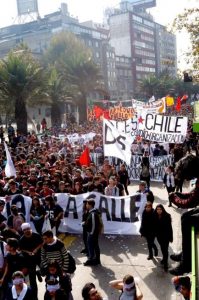
Brasil. Estudiantes en la Lucha. El gobierno de San Pablo amenaza con más represión a estudiantes en lucha

Brasil/7 de mayo de 2016/ Autora: Ana Paula/ Fuente: La Izquierda Diario

Este jueves mientras el vicegobernador de San Pablo comparaba las ocupaciones estudiantiles con tácticas nazistas, la justicia legitimaba el uso de armas contra las ocupaciones.

Márcio França (PSB), vicegobernador del Estado de San Pablo, en un seminario realizado en la ciudad de Guarujá, declaró que la ocupación del Centro Paula Souza por los estudiantes que defienden una educación de calidad y la merienda escolar para poder seguir estudiando, se asemeja a la táctica utilizada por el nazismo durante el fin de la 2ª Guerra Mundial y estaría ligada al impeachment de Dilma y no a la nefasta política del gobierno del estado que el año pasado enfrentó las ocupaciones estudiantiles contra el cierre de las escuelas transformándose en un ejemplo para todo el país.

Poco tiempo después de estas declaraciones absurdas del vicegobernador, la justicia, que todos los días deja en claro de qué lado está, concedió una cautelar al Estado de San Pablo y a la Policía Militar por la que permite el uso de armas para la represión contra los estudiantes secundarios que ocupan el predio del Centro Paula Souza en San Pablo.

Con esta decisión, la orden expedida por el juez Luis Manual Fonseca Pires, que prohibía el uso de armas contra los adolescentes, quedó superada y el gobernador Geraldo Alckmin, responsable del escándalo de robo de las meriendas escolares, muestra una vez más que está dispuesto a utilizar la policía, bombas, balas y la represión para defender sus privilegios de corrupto. Después tenemos que oír declaraciones según las cuales los estudiantes usarían tácticas fascistas….

Son más de 14 ETECs (escuelas técnicas) y dos sedes de enseñanza ocupadas con el mismo objetivo: reivindicar la merienda escolar para las ETECs que nunca las recibieron y para las escuelas en las que está siendo reducida, una vez que los presupuestos destinados a este fin fueron desviados. El escándalo de las meriendas fue respondido con innumerables protestas de estudiantes secundarios desde el inicio de este año que cuentan con el apoyo de amplios sectores populares que se indignan frente la falta de este alimento para millones de alumnos que concurren a la escuela pública y esa merienda, muchas veces, es el único alimento del día.

No es para sorprenderse que tal declaración haya sido pronunciada por un representante del gobierno que, por orden judicial, puede intentar reintegrar el Centro Paula Souza usando la violencia policial que ya es cotidiana y conocida por los jóvenes de las periferias todos los días. Es el mismo gobierno que cuenta con un Secretario de Educación (Nalini) que declaró recientemente que la educación no puede ser responsabilidad del Estado y que hoy no envía a las escuelas públicas materiales básicos como papel higiénico e impresoras, además de la precaria condición laboral de los profesores que ganan salarios miserables e intentan ejercer su función docente con aulas superpobladas.

Tales declaraciones y acción combinada de la justicia y la policía a favor del Estado sirven para moldear a la opinión pública frente al impacto positivo que las ocupaciones de los secundarios tiene en este momento en el país, pues marcan el camino correcto de lucha y la resistencia, para poner de rodillas a los gobiernos y a la patronal. Por lo tanto, no nos dejemos engañar con tales mentiras, la táctica nazista es la de la policía que quiere reprimir con balas y bombas a los estudiantes en lucha.

Hay que fortalecer su lucha, con el apoyo activo a los secundarios combativos que una vez más son ejemplo de resistencia en el país, que enfrentan a las burocracias estudiantiles que se vienen negado a articular cualquier lucha seria contra los reaccionarios parlamentarios del impeachment y aun menos contra los ataques de los gobiernos. Está planteado unificar las luchas en curso y preparar una huelga general de toda la comunidad educativa en defensa de la educación.

Fuente de la Noticia:

www.laizquierdadiario.com/El-gobierno-de-San-Pablo-amenaza-con-mas-represion-a-estudiantes-en-lucha

Comparte este contenido:

How educational exchanges adjust to the crisis in US-Russia relations

Europa/Rusia/Mayo 2016/Autor: Pavel Koshkin, Caroline Zhang/ Fuente: russia-direct.org

Resumen: Mientras que los intercambios educativos entre los EE.UU. y Rusia han sufrido el deterioro de las relaciones bilaterales, todavía hay algunos programas exitosos que están encontrando formas innovadoras para promover la colaboración.

Perhaps not surprisingly, continued confrontation between Russia and the U.S. as a result of the Ukrainian crisis has led to deteriorating prospects for educational exchanges between the countries.

In just the past two years, a number of prominent programs have closed, including the U.S.-Russia Innovation Corridor (USRIC-EURECA) and the Stanford-in-Moscow program, a joint project of the Russian Presidential Academy of National Economy and Public Administration (RANEPA) and Stanford University.

These programs were either suspended because of the lack of funding or closed after the start of the Ukraine crisis. Another blow to bilateral educational exchanges came with the closures of the Future Leaders Exchange (FLEX) program and the American Center in Moscow by the Russian authorities.

Despite the decline in educational exchange opportunities, there are still some programs that could help alleviate U.S.-Russia confrontation, including the Fulbright program and the Alfa Fellowship. In addition, there are grassroots initiatives like the Stanford U.S.-Russia Forum (SURF), which took place in mid-April in Palo Alto at Stanford University’s campus.

Another positive sign that educational exchange between the two nations is still alive came from the annual World Russia Forum that took place at George Washington University in Washington, D.C. in early April. It addressed the problems of how to innovate exchanges and make them more flexible.

SURF: Fostering U.S.-Russia dialogue in turbulent times

The SURF program brings together Russian and American students and offers them an opportunity to reach mutual understanding on a wide range of issues.

Annually held in Russia and the U.S., the forum brings together students from some of the world’s top universities —Yale, Stanford, Harvard, University of Pennsylvania, University of California-Los Angeles (UCLA), University of California-Berkeley (UC-Berkeley), Moscow State University (MGU), Higher School of Economics (HSE), Moscow State Institute of International Relations (MGIMO) University, and others.

Usually, the first part of the conference takes place in the fall in Moscow, bringing together 20 Russian and 20 American students who work on collaborative research projects over the next four months. The project typically involves around 50 people, including student advisers and mentors. In April, students travel to Stanford University to present their findings and meet with high-profile experts, academics and politicians.

The major goal of the first part of SURF is to put students in contact with prominent Russian and American experts on U.S.-Russian relations, geopolitics and other topics related to the student research papers.

The program recruits ten groups of two Russian and two American students from universities across both countries. These groups then use selected topics to come up with specific projects that involve different fields, according to Stanford’s Kenneth Martinez, a Fulbright alumnus who is also an officer at the SURF program.

Among the topics are international relations, global healthcare technologies, cybersecurity, startups, innovation and information technology, energy, entrepreneurship, civil aviation and public health. Regions covered include Europe, Asia, the Middle East and the Arctic.

Since 2008, SURF has brought together high-profile experts, entrepreneurs, economists and politicians. The list of prominent names includes former U.S. Secretary of State Condoleezza Rice, former Russian President Dmitry Medvedev, former Russian presidential adviser Arkady Dvorkovich, former U.S. Ambassador Michael McFaul, ABBYY founder David Yang, former U.S. Ambassador to the Soviet Union (1987–1991) Jack Matlock, Freeman Spogli Institute for International Studies fellow Francis Fukuyama, and many others.

The SURF program was founded in 2008, when students from leading U.S. and Russian universities came together in a Moscow cafe to discuss a significant geopolitical issue: U.S.-Russia relations. This was right after the Russian-Georgian war, after the deterioration of Russian-American bilateral relations and shortly before the official launch of the so-called “reset.”

“SURF allows you to approach Russia in a way that no other program does,” Martinez explains. “Of course, the academic focus of the program brings perspective, which is especially helpful for the many participants who have never studied Russia. However, the unique and arguably most valuable part of the program is the relationships it builds.”

“Working with Russian students, one must attempt to understand a different way of thinking and reach agreement on sometimes contentious issues in a process I would almost compare to a negotiation,” Martinez added.

In the framework of the SURF conference, its participants come together at California’s historic Fort Ross, an early Russian settlement. They met with prominent environmentalists, scientists and local Kashia tribal leaders. Since the start of the SURF program, it has become an annual tradition.

“We are happy to enable young and bright minds from both countries to learn firsthand about our common historic and cultural ties here at Fort Ross,» said Olga Miller, CEO of Renova’s U.S. representative office and director of the Renova Fort Ross Foundation.

How international exchange can reinvigorate U.S.-Russia ties

Meanwhile, the annual World Russia Forum, which took place at George Washington University in Washington, D.C. on Apr. 9, attempted to come up with new ways of how to innovate educational exchanges through distance learning programs. By doing so, it might be possible to allay the Cold War-type atmosphere that currently exists between the two countries.

James Carden, editor of the American Committee for East-West Accord’s website, underlined the positive role of academic exchanges during a time of crisis in US-Russia relations. Despite political disagreement, government support for educational programs would be a mechanism to mitigate the political tensions between two countries, establish friendship, and benefit the younger generation with global educational experiences, Carden argues.

At the same time, Mikhail Strikhanov, the rector of the National Research Nuclear University (MEPhi), gave a different take. In particular, he shared his experience and explained the strategies and methods used to promote the internationalization of his university.

Established in 1942, during the height of World War II, the three missions of MEPhi are to diversify human capital, expand Russia’s global academic reputation, and increase research opportunities. According to Strikhanov, MEPhi has increased its percentage of international faculty from 1.5 percent in 2014 to 13.7 percent in 2015. The university hopes to reach a level of 20 percent by 2020. Additionally, MEPhi has initiated 37 joint programs with collaborative institutes and 26 double degree programs with renowned global universities such as MIT in the U.S. and University of Florence in Italy.

The forms of the international programs are also diverse because of recent innovations in traditional face-to-face programs and distance learning. According to Sergei Myasoedov, RANEPA’s vice-rector, his students participate in conferences, faculty exchanges, summer camps, social responsibility activities, and distance learning with more than 200 foreign universities.

In order to achieve the goal of internationalization, the RANEPA summer camp engages students from 26 Russian regions with foreign students from 8 countries.

Meanwhile, Sam Potolicchio, director of Global Education at Georgetown University, said the core value of 21st century education was through creating cultural exchange programs to train students in leadership and self-awareness.

Potolicchio explained that the ideal of today’s education should be defined with its Latin meaning as “lead out of yourself” but not “train” or “mold.” Potolicchio’s Preparing Global Leaders Foundation selects highly educated young professionals, such as Rhodes scholars, to participate in weekly programs in Jordan, Moscow, and Skopje (Macedonia) to learn about leadership and communications.

With peers from more than 30 countries, students have established a life-long Global Leader community of alumni from 46 countries, enabling them to learn from cultural differences. Potolicchio also believes that in the age of digital disruption, it is more important to educate people to think rather than follow. Students need to evaluate their core competences and absorb world cultures and knowledge, not only follow a career-driven path to learn corporate rules.

On this topic, Irina Mukhina of the Innovative Educational Center of Arts and Sciences noted that machines could replace 47 percent of current highly-skilled jobs. In order for students to be competitive in the era of technology and global competition, we need to train students to realize their “ikigai,” an ancient concept from Japan meaning focusing on one’s educational growth on “passion, mission, profession, and vocation,” not just on certain skills for specific occupations.

The Forum also highlighted the role non-profits play in promoting international education programs. The Russian-American Science Association (RASA-USA), founded in 2008 and based in Boston, intends to “preserve, strengthen, and advance a common intellectual and cultural space of Russian-speaking scientific community.”

RASA-USA has an annual conference that invites leading scientists from the U.S. and Russia. It has also established RASA centers in Russia, which sponsor educational seminars and cultural events that encourage the public to learn about two countries’ cooperative endeavors in science and education.

As a result, the 2016 US-Russia Forum showed that, despite political tensions, collaboration is still possible between American and Russian educators and organizations that seek to improve relations through innovative educational missions and programs. Hopefully, programs such as these will lead to a much-needed thaw in the new Cold War.

Fuente de la noticia: http://www.russia-direct.org/analysis/how-educational-exchanges-adjust-crisis-us-russia-relations

Fuente de la imagen: http://www.russia-direct.org/sites/default/files/field/image/GettyImages-525469555-us-russia-educational-exchange-625.jpg.pagespeed.ce.c9WvejyE99.jpg

Comparte este contenido:

Forty thousand public sector workers strike against Costa Rican government

Asia/India/Mayo 2016/Autor: Andrea Lobo / Fuente: wsws.org/

Resumen: Se estima que unos 40.000 trabajadores del Estado de Costa Rica y los estudiantes llevaron a cabo una huelga de dos días, el 26 de abril y 27 para oponerse a las políticas del gobierno del presidente Luis Guillermo Solís Solís, que está atacando a los ingresos de los trabajadores, la educación pública, la atención de la salud, y el derecho de agua. El gobierno central estima que el 50 por ciento de toda la salud pública y el 70 por ciento de los trabajadores de la educación pública participaron en la huelga. Los sindicatos dijeron que la huelga afectó a 80 por ciento de los servicios de salud y el 95 por ciento de las instituciones educativas del país.

An estimated 40,000 Costa Rican state workers and students staged a two-day strike on April 26 and 27 to oppose policies of the government of President Luis Guillermo Solís Solis, which is attacking workers’ incomes, public education, health care, and the right to water. The central government estimated that 50 percent of all public health and 70 percent of public education workers participated in the strike. The unions said the strike affected 80 percent of the health services and 95 percent of the country’s educational institutions.

Union officials had threatened to extend the strike indefinitely, but sent the workers back to work once the ministers of health and labor agreed to meet last Thursday for negotiations. On Thursday, the different unions were split over their demands and the talks came to a halt. Meetings continued on Friday.

The public sector union association BUSSCO and the teachers’ union ANDE convoked the strikes primarily to oppose plans to reduce public workers’ incomes, including the single salary or Public Employment Law, which is directed at drastically reducing workers’ wages.

On the eve of the walkout, President Solís stated that there was “no justification” for the strikes since “not a single point in their demands is not already present, or could be incorporated, into current negotiations.”

Workers who participated in a mass demonstration Tuesday, however, expressed their concerns and anger over the government’s counter-reforms and voiced their willingness to fight back against the government and the business elite.

“The single salary [proposal], more than anything else, is what worries us. It would take away approximately 40 to 50 percent of our net income,” said Gabriel, a math high-school teacher.

He added, “I have two small children who depend on me. If this law gets through, I would have to quit and do something else. I don’t know what.”

Asked whether he perceived any results from previous strikes, Gabriel answered: “Other times we haven’t felt any, but we hope this time will be different. … We want a permanent strike until the government gets rid of these proposed bills!”

The strikers were also protesting against public hospital “death lists,” with an estimated 500,000 patients waiting for surgery and thousands more waiting for examinations.

The government is seeking to dismantle and privatize the public health sector, a process demonstrated by the state’s poor clinical infrastructure, expired drugs, salary bonuses to high functionaries, a massive debt built on poor investments, the shortage of medical specialists and the absence of efforts to reduce waiting lists.

Under International Monetary Fund (IMF) orders, the government is threatening to revoke collective bargaining agreements and slash retirement benefits, while raising the minimum age. Among other reactionary measures, it intends to limit unemployment benefits to eight years, reduce medical and family leaves, slash yearly raises from 5.5 percent to 2.54 percent and add tougher performance evaluations to approve them.

The unions also oppose the new tax bill, which would turn the current 13 percent sales tax into a 15 percent regressive value-added tax, covering a wider scope of services.

Public health workers were under direct orders from their unions not to speak to interviewers and to direct all questions to union leaders. However, a nurse, who decided not to give her name, said that she has three sons and “would not be able to afford taking care of them if the reforms pass.”

Miguel, a “retiree from ANEP, another one of the traitor unions in this country,” as he put it, also hoped that, “if the government doesn’t heed it, this demonstration today will be extended indefinitely.”

With the support of the pseudo-left Frente Amplio, the unions betrayed the workers by decentralizing the protest, calling the strike a “rehearsal,” and falsely promising bigger actions in the future. The unions, along with Frente Amplio and the ruling PAC party, did exactly the same thing in 2005 and 2006 with the anti-CAFTA protests, including calling them “rehearsals.”

These demoralizing tactics by the unions and the pseudo-left parties have become essential tools for the political and business elite to continue imposing austerity measures and privatizations.

Miguel said that he was mainly protesting against a recent water law. In 2009, he was part of the efforts to collect 150,000 signatures to propose a law declaring water a human right. “But the parliament manipulated the bill so much that it became an commodity,” he concluded, “it got privatized.”

In another significant betrayal, Frente Amplio and Patria Justa supported the approval of the Labor Process Reform, which limits public sector strikes and gives private sector employers the final decision on whether a planned strike “fulfills the requirements” to make it legal.

Perhaps more importantly, it “prohibits a union in a specific trade supporting or demonstrating in favor of other sectors that are not of their concern.”

Franklin, a sociologist and member of the Workers Association of the Labor Ministry, said: “Our focus today is on tax evasion and pay cuts against public employees. It’s on our backs that the government is placing the tax deficit, knowing that tax evasion is 8.2 percent of GDP.” In comparison, Costa Rica spends 7 percent of its GDP on education each year.

He criticized the government for attacking workers’ rights to negotiate and protest in order to cut salaries and employment and concluded, “the solution is to make the rich pay like rich, and the poor pay like poor.”

Income inequality within the government is comparable and in some cases greater than that in the private sector. The Ministry of Planning calculated that the highest state salary is 55 times the lowest. For an average employee, 15 annuities amount to $1,440 in yearly wages, compared to $24,400 for a state manager, about 17 times greater.

Oxfam reported in 2015 that there are about 100 Costa Ricans who individually own more than $30 million in assets and collectively own as much as four times what is spent on education yearly.

When asked whether there are any parties that represent working class interests, Franklin answered. “We might have some sympathies and compatibility with Frente Amplio, but we don’t coincide in other things. We believe that, with these proposed bills, our ally will be Frente Amplio.”

A school principal and member of ANDE, protesting with a group of colleagues. spoke to the WSWS. She is particularly concerned about the changes in the education system, but said that, “We have a long list of measures that we could take to exert pressure on the government. For instance, we could simply stop taking yearly census data, for which they pay us as unskilled cheap labor.”

The dual education reform plans to institutionalize the existing gap in school completion rates and education quality that exists between technical and academic high schools. It plans to oblige students in technical schools to virtually become free labor for companies in order to get certified.

The structural schooling disparity, which would get consolidated with dual education, leaves an entire sector of the population with little or no opportunity to complete or advance their education. Within low-education households, only 15 percent of those between the ages of 18 to 24 continue to study, compared to 79 percent of those in households with an average of post-secondary education.

The school principal added, “We can’t be afraid, just like previous generations, we are defending our rights.”

The government is also planning to collect the retirement savings of all 1.4 million public workers in order to more easily invest them within the government and in speculative markets. It will gradually make the workers themselves pay more for the fund’s sustainability by imposing regressive taxes and reducing pension benefits.

According to Oxfam, partial and complete social security privatizations in Latin America have led to more unequal coverage. In Costa Rica, there already is a 44 percent gap in access to health care and 28 percent gap in pension enrollment between the top and poorest quintiles.

Fuente de la noticia: https://www.wsws.org/en/articles/2016/05/03/rica-m03.html

Fuente de la imagen: https://www.wsws.org/asset/47794f41-06c1-4098-b73d-2d4f8f128f4O/costa-march.jpg?rendition=image480

Comparte este contenido:
Page 6385 of 6792
1 6.383 6.384 6.385 6.386 6.387 6.792