Page 12 of 102
1 10 11 12 13 14 102

En video-Estudiantes australianos universitarios se manifiestan contra acuerdos de educación con China

Australia/02 Agosto 2019/News

Docenas de activistas se manifestaron en la Universidad de Queensland en Brisbane el miércoles contra los acuerdos informados entre las universidades australianas y China. Se dice que los acuerdos apoyan la autoridad de Beijing sobre la enseñanza en centros educativos financiados por el gobierno chino.

Los organizadores dicen que la Universidad de Queensland no reveló los detalles de los contratos para su Instituto Confucio. También dicen que es probable que dichos centros se conviertan en puntos vocales de la «propaganda» pro Beijing.

Las imágenes muestran a activistas que exigen transparencia sobre los acuerdos y cantan ‘Free Hong Kong’ en solidaridad con los «manifestantes» allí. También muestra a la policía que estuvo presente en la manifestación después de que grupos rivales de estudiantes pro-Hong Kong y Beijing pelearan fuera de la universidad la semana pasada.

Fuente: https://es.news-front.info/2019/08/01/en-video-estudiantes-australianos-universitarios-se-manifiestan-contra-acuerdos-de-educacion-con-china/

Comparte este contenido:

David Cohen: The fall of ‘higher’ education?

By: David Cohen.

 We live in memorable academic times. Higher education in New Zealand is on a definite downward roll

Ministry of Education figures just released show the number of domestic students has taken a significant dip, with just 8.6 percent of adult New Zealanders enrolled in tertiary education last year compared with 12.5 percent 10 years ago and around 11 percent at the turn of the century.

The biggest demographic decline has been among men, whose numbers in tertiary education have gone down from 11.3 percent in 2009 to 7 percent last year.

It wasn’t supposed to pan out like this. For the better part of 20 years now successive governments have aggressively promoted higher education as a way of improving the country’s intellectual capital and seizing the international momentum for discovering and applying new technologies.

‘It’s the knowledge economy, stupid’ or so one academic leader quipped at the time of the much-ballyhooed Knowledge Wave conference in 2001.

The trend was also not seen as being exclusively about students. Institutions of higher learning in New Zealand – especially the eight universities – have long struggled to keep their best scholars from decamping to loftier campuses in Australia, Britain and the United States. The new policy emphasis would put paid to that, too.

No caption

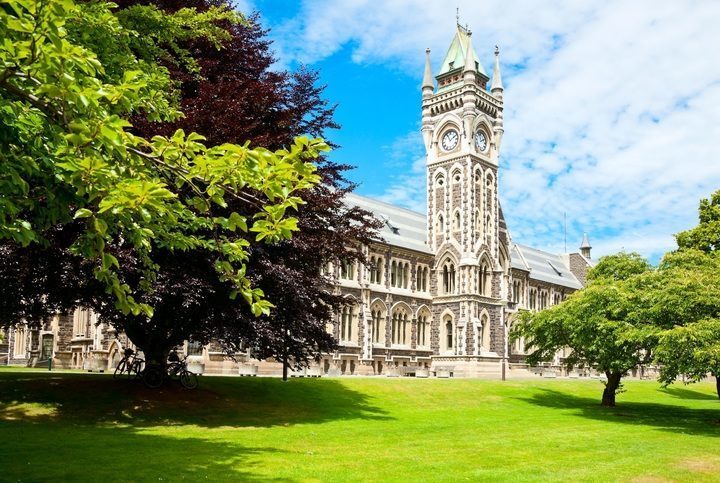
University of Otago Photo: 123rf

Alas, the signs that all has not quite proceeded to plan have been in evidence for some time. Much of the new activity of recent years was about hauling in more and more new, foreign, fee-paying students rather than young locals who in any event would appear to have more of an eye these days for pursuing a trade than a degree.

And why not? A report commissioned last year by the Industry Training Federation showed apprentices earn more, buy houses and contribute to KiwiSaver earlier than their peers with bachelor’s degrees.

What’s more, according to the research from Business and Economic Research Limited, or BERL, those who enter the trades are, on average, in a better financial position for most of their lives.

Another survey conducted seven years ago suggested New Zealand degrees were among the most valueless in the OECD – a reckoning that would particularly apply, one assumes, to qualifications in many of the social sciences and media-related courses.

Embarrassing international comparisons may only be part of the story behind the latest figures. Higher education itself isn’t all it once was for employers, either.

In the United States an increasing number of companies – including IBM, Apple and Google – are now offering well-paying jobs to those with non-traditional education, which is to say, people without degrees.

Partly the move has to do with skyrocketing tuition fees but organisations are also making a point about the need for having different voices and minds rather than just those who have a conventionally dependable educational experience.

«When you look at people who don’t go to school and make their way in the world, those are exceptional human beings,» Google’s former SVP of People Operations, Laszlo Bock, told The New York Times a few years ago.

«And we should do everything we can to find those people.»

In Britain, one of the country’s biggest graduate recruiters, accountancy firm Ernst and Young, has entirely eliminated a degree classification from its hiring programmes. The firm says it has found «no evidence» of a correlation between university success and acing it as an accountant.

Will New Zealand employers follow suit? And how will academic institutions respond to the broader trend? Where will the intellectual culture be in another few years?

It sounds like something somebody should be doing a thesis on.

Source of the article: https://www.rnz.co.nz/news/on-the-inside/394522/david-cohen-the-fall-of-higher-education

Comparte este contenido:

Reap: delivering more than rural education

Oceania/ New Zealand/ 29.07.2019/ Source: www.odt.co.nz.


Education is needed to create a sustainable world, write Roger Browne and Mary Ann Baxter.

In 2015, the United Nations General Assembly accepted a set of 17 goals to be achieved globally by 2030.

These are referred to as the Sustainable Development Goals (SDGs) and encompass the physical and social world we inhabit.

The full details are available at sustainabledevelopment.un.org.

Among these goals are many which will be familiar to New Zealanders.

Goal number 12, responsible consumption and production, envisages a world where repurposing and recycling will replace our «throw-away» habits. Avoiding food waste will not just avoid food going to landfills but, through appropriate adjustments to production and distribution, will assist in alleviating hunger.

Energy-efficient appliances will, on a global scale, assist in limiting carbon emissions. Planting trees will support the restoration of native habitats and biodiversity.

Avoiding plastic bags will help protect life in the oceans.

Goal number 13, climate action, states: «Educate young people in climate change to put them in a sustainable path early on.»

What will drive the achievement of the SDGs at the local level?

One key element is education. In rural New Zealand one of the most effective vehicles to deliver that education is the Reap (Rural Education Activities Programme).

There are 13 Reaps in New Zealand, including one in Central Otago. Our local Reap, based in Alexandra, services an area stretching from Makarora in the west to the outskirts of Dunedin, and up into the Maniototo. The Central Otago Reap was formed 40 years ago.

So much has changed in that time. The world population has grown by 75% and the global inflation-adjusted GDP has grown by a factor of almost three. With economic growth comes the growth of waste and the production of carbon emissions.

Globally, waste production is forecast to triple by the end of the century in the absence of any measures to counter this trend.

The United Nations’ SDGs seek to ensure economic growth is channelled towards wellbeing and away from waste.

Achieving this will require buy-in from all sectors of society.

If economic activities continue to be linked to the production of waste then society faces a bleak future.

Understanding the need for change involves education on a broad scale.

Some of this can be driven by central government (for instance, through changes in school curricula) and by local government (for instance, through supporting community-based recycling facilities).

Alongside this, partnerships with education providers at the local level have proven very effective.

Such partnerships have enabled and supported the Central Otago Reap’s well-established track record in initiating and embedding educational programmes on sustainable living across our local community.

The 17 SDGs are central to the way in which the Reap delivers all of its programmes.

Activities such as Plastic Free July are indicative of how Reap’s skilled communicators can be seen to have endorsed and implemented the SDGs ever since our partnership was initiated in 2006.

Skilled communicators in subjects supporting the sustainable development goals are to be valued.

Their message is vital to our future wellbeing.

We live in a part of the country where our regional identity is «A World of Difference».

Our belief that we can and are making a difference together at the local level is vital to our future wellbeing.

Source of the notice: https://www.odt.co.nz/opinion/reap-delivering-more-rural-education

Comparte este contenido:

Australia: Call for national mobile phone ban in public schools to face resistance

Oceania/ Australia/ 26.07.2019/ Source: www.theguardian.com.


The federal education minister, Dan Tehan, is expected to face resistance when he asks some state counterparts to consider a ban on students using mobile phones during school hours, at a meeting in Melbourne on Friday.

The meeting comes just days after Victoria’s decision to ban mobile phonesat public schools from next year, in an effort to tackle cyberbullying and distraction in the classroom. The NSW government announced a ban on phones in public primary schools late last year.

Tehan is asking his counterparts in states without a ban to consider a similar move in their states and territories, which would stop all Australian public school students using phones during school hours.

But Queensland, the Northern Territory and the ACT have no plans to implement a similar rule.

The ACT education minister, Yvette Berry, says banning phones in school may not be the best way to support the development of children and young people.

“Helping students understand what appropriate behaviour is both on and offline should be part of the learning journey,” she said.

“It’s important that children and young people are taught how to live alongside devices appropriately because this is a big part of our life now.”

The NT education minister, Selena Uibo, believes technology can be used in a positive way in classrooms and schools, while the Queensland education minister, Grace Grace, says the decision to implement such a ban is up to principals.

Mobile phones are banned in French schools and Canadian provinces are considering the policy.

Experts from both countries will visit Australia in coming months to discuss the issue.

Tehan says phones are a distraction in the classroom and make teaching difficult.

The ministers will also dissect exactly what went wrong with the online Naplan tests this year, with NSW calling for a complete overhaul of the national assessments.

When the testing took place across the country in mid-May, some students lost connectivity and others were unable to log in at all.

Those affected were able to resit the tests, managed by the Australian Curriculum, Assessment and Reporting Authority.

Tehan remains hopeful Naplan testing can go online from next year but admits more work is needed to resolve technical issues.

But the NSW education minister, Sarah Mitchell, will use the meeting to call for a review of the national assessment, which could consider alternative options to the Naplan test.

She says it’s time to design a new test that is “genuinely useful”, the Sydney Morning Herald reports.

Source of the notice: https://www.theguardian.com/australia-news/2019/jun/28/call-for-national-mobile-phone-ban-in-public-schools-to-face-resistance

Comparte este contenido:

Australia: Online programs changing literacy education

Oceania/ Australia/ 22.07.2019/ Source: au.educationhq.com.

Technology is playing a significant role in teaching literacy, with online education programs gaining increasing recognition and presence in schools

LiteracyPlanet, a comprehensive program which works alongside traditional teaching methods, is seeing encouraging results from school users. Students are seen to build confidence in their literacy skills after using the program, particularly when they’ve started below their grade standard.

The Queensland-based company will demonstrate the program within The Education Show at the National Education Summit, from Friday 30 August and Saturday 31 August 2019.

Educators will have a chance to try Word Mania at the Melbourne event, based on one of LiteracyPlanet’s most popular exercises.

Education events are welcome opportunities for Literacy Planet to meet with educators in the field and discuss ways they can further support the development of English literacy in Australia. LiteracyPlanet CEO Adam McArthur says they are looking forward to sharing some of the program’s latest updates which highlight the benefits of using technology in education at the National Education Summit.

“Technology can play a significant role in teaching literacy. The ability to save time and differentiate between students of different abilities easily is a huge benefit of using programs such as ours. LiteracyPlanet gives teachers the power to create elegant lesson plans and intervention programs, so they can spend less time planning and more time teaching,” LiteracyPlanet CEO Adam McArthur said.

Through their work with schools around Australia, LiteracyPlanet has seen firsthand the emerging challenges in teaching spelling and literacy.

“Many schools are facing challenges in teaching students who have a diverse range of literacy skills, which can be a difficult, time-consuming task for teachers when using traditional methods.

“At LiteracyPlanet, we’re seeing results from our schools that are very encouraging. Our program gives teachers the ability to easily differentiate between students, see their results and put in place remediation or intervention programs. This approach greatly benefits the student and saves teachers a lot of time,” McArthur said.

LiteracyPlanet will participate within The Education Show, a free expo and key event at the National Education Summit, an innovative professional development event for principals, school leaders and educators from K-12.

Held at the Melbourne Convention and Exhibition Centre, the Show features 100+ exhibitors showcasing the latest cutting-edge learning and teaching resources along with programs, support services and technology to educators from across Australia. Visitors can also attend the Free Education Program, as well as the Free Spotlight Stage where exhibitors will provide in depth information about their service, program or resource.

To register for the free expo at The Education Show, visittheeducationshow.com.au

The Education Show

When: Friday 30 August – Saturday 31 August 2019

Where: Melbourne Convention and Exhibition Centre

More Info: http://www.theeducationshow.com.au

Facebook: http://www.facebook.com/theeducationshowau

Source of the article: https://au.educationhq.com/news/61666/online-programs-changing-literacy-education/

Comparte este contenido:

New Zealand: Education Minister Chris Hipkins refuses ‘crisis’ meeting with ECE groups

Oceania/ New Zealand/ 09.07.2019/ Source: www.rnz.co.nz.

Four groups representing early childhood centres and kindergartens are seeking an urgent meeting with Education Minister Chris Hipkins.

The Early Childhood Council, Te Rito Maioha, New Zealand Kindergartens and Montessori Aotearoa New Zealand said services were struggling to survive because of chronic underfunding and a shortage of qualified teachers.

The chief executive of the Early Childhood Council, Peter Reynolds, said early childhood centres were in a financial crisis and the 1.8 percent increase to subsidies included in the most recent government Budget was nowhere near enough.

«We’ve had over a decade of cuts, 1.8 percent just really doesn’t do it though we’re grateful for anything we can get, but you’ve got services going to the wall,» Mr Reynolds said.

«I’ve got centres where the owner-operator of the business hasn’t taken any drawings out of their business for the last several years at least. I’ve got centres where one person’s telling me as the centre manager that she’s earning less than the maintenance person.»

Mr Reynolds said his organisation and three others, Te Rito Maioha, New Zealand Kindergartens and the Montessori Association had asked the Education Minister, Chris Hipkins, for an urgent meeting without Ministry of Education staff present.

«We want to talk to the minister directly, we want to have an off-the-record conversation and we want to get a very clear idea about what the minister has proposed to do and by when.»

Mr Reynolds said early childhood services needed to see a light at the end of the tunnel and it needed to be realistic.

Services could not simply make more money by increasing their fees because many parents could not afford to pay more for early childhood education, he said.

Mr Reynolds said the minister had turned down the request for a meeting and asked for further information, which was highly disappointing.

Mr Hipkins said he had asked for a detailed breakdown of key issues «as a means of facilitating further talks».

He said the government had increased early childhood subsidies by 1.6 percent this year and 1.8 percent next year, which was significantly more than the sector had received since 2009.

Mr Hipkins said the ministry did not hold figures on the early learning workforce but there was «a clear tightening of teacher supply».

But the chief executive of Te Rito Maioha, which represents several hundred services, Kathy Wolfe, said government had not done enough to deliver on pre-election promises such as raising the minimum number of teachers required to work with children under the age of two, and re-introducing a higher rate of funding for services where all teachers were qualified, registered teachers.

Ms Wolfe said early childhood services felt the government had put them in a holding pattern and many were struggling while they waited for things to improve.

«We have had members closing their centres over the last few years due to the financial crisis,» she said.

Ms Wolfe said many centres had used their financial reserves and the government needed to significantly improve subsidies for the sector.

«Just to meet the shortfall of funding from the last seven years we need the government to inject 7 percent into the sector just to catch up, that’s about $130 million.»

The owner of six early childhood centres, Maria Johnson, said the entire sector was struggling and one of the biggest problems was a shortage of qualified teachers.

«We are really struggling at the moment with a number of things, particularly the massive, massive shortage of teachers in the sector, not just the qualified teachers but teachers with a real understanding of our early childhood curriculum,» she said.

«Our staff just aren’t paid what they should be getting paid.»

Ms Johnson said the sector was badly under-funded and some centres had been forced to close while her own centres had increased their fees.

The government needed to increase subsidies in a way that ensured the money went to teachers’ pay and to improving the quality of education, she said.

Many people in early childhood had hoped a Labour-led government would make significant changes but that had not happened yet, she said.

Education Ministry figures showed 83 early childhood services closed last year and 82 closed in 2017, an increase in the roughly 50 a year that closed in most of the preceding years.

Meanwhile, the number of new services last year reached its lowest point since 2007 at 146.

Source of the notice: https://www.rnz.co.nz/news/national/393873/education-minister-chris-hipkins-refuses-crisis-meeting-with-ece-groups


Comparte este contenido:

Victoria to ban mobile phones in all state primary and secondary schools

Oceania/ Australia/ 08.07.2019/ Source: www.theguardian.co.


Education minister James Merlino announces move aimed at reducing classroom distraction and cyberbullying

Students at Victorian public schools will be banned from using their phones from next year.

In an effort to reduce distractions and cyber bullying, and hopefully improve education outcomes, students will have to switch off their phones and store them in lockers during school hours until the final bell, the education minister, James Merlino, has announced.

In case of an emergency, parents or guardians can reach their child by calling the school.

The only exceptions to the ban will be where students use phones to monitor health conditions, or where teachers instruct students to bring their phone for a particular classroom activity.

“This will remove a major distraction from our classrooms, so that teachers can teach, and students can learn in a more focused, positive and supported environment,” Merlino said.

“Half of all young people have experienced cyberbullying. By banning mobiles we can stop it at the school gate.”

The ban will start from term one in 2020.

Some Victorian schools had already banned mobile phones, but the new laws impose a statewide ban for the first time.

McKinnon Secondary College, a high performing public school in Melbourne’s south-east, was among those that banned phones from its grounds.

The principal, Pitsa Binnion, said the school had “observed improved social connections, relationships and interactions” at lunchtime and that students were “more focused”.

It also comes amid a push from the federal education minister, Dan Tehan, for states to adopt the move.

The Victorian policy goes further than the ban imposed in NSW at the end of last year, which was was limited to all state primary schools.

Teachers unions in New South Wales expressed scepticism at the ban, which they said would be ineffective and would limit the ability of students to learn how use their phones safely and responsibly. The Catholic education office had also opposed the ban when it was floated in NSW.

But principals have also acknowledged that managing smartphones had been a big challenge for schools.

The child psychologist Michael Carr-Gregg welcomed the Victorian policy. “All schools have a legal obligation to provide a safe environment in which to learn,” he said.

“This significant policy initiative is designed to ensure the wellbeing of young people while at school, free of distraction and potentially cyberbullying.”

The Victorian premier, Daniel Andrews, had dismissed a ban when asked about McKinnon Secondary College’s new policy last year.

“This is school-by-school issue and they have made their choice,’’ he said at the time.

“Individual schools will make these choices. On a matter like this, and indeed many other matters, it is not for us to be directing schools.”

Victoria’s Liberal opposition had first proposed a phone ban in February last year.

The opposition’s education spokesman, Tim Smith, suggested Labor was “endorsing” the Liberals policy.

“Let’s see what the [Australian Education Union] says,” he said in a tweet.

The party’s former leader, Matthew Guy, said in a tweet on Tuesday night that “policy imitation is the greatest form of flattery”.

Source of the notice: https://www.theguardian.com/australia-news/2019/jun/25/victoria-to-ban-mobile-phones-in-all-state-primary-and-secondary-schools

Comparte este contenido:
Page 12 of 102
1 10 11 12 13 14 102