Saltar al contenido principal
Page 13 of 102
1 11 12 13 14 15 102

La escuela de Nueva Zelanda que apostó al concepto de comunidad y logró revertir malos resultados

Oceania/NuevaZelanda/

En diez años la institución pasó de no llegar a niveles básicos de comprensión a estar en los mejores lugares académicos del país.

Te Ākau ki Pāpāmoa es la escuela que dirige desde hace 12 años Bruce Jepsen en Nueva Zelanda, al norte de la isla. El docente tiene ascendencia maorí, una etnia polinesia que representa gran parte de la población de la isla pero que sufre mucha discriminación en la sociedad. Cuando Jepsen llegó a la escuela, 90% de los niños (maoríes y no) tenían niveles insuficientes de lectura, escritura y matemática; sin embargo, hoy los estudiantes se sitúan primeros en los rankings nacionales y los docentes exponen en conferencias internacionales. Cuenta, orgulloso, que la integración en su escuela es excelente, que todos los niños maoríes comparten su cultura sin sentirse extranjeros en su propio país, y que tanto los niños como los docentes aprenden varios idiomas, entre ellos su lengua nativa.

Jepsen llegó a Uruguay acompañado por Lynley Skiffington, la encargada de aprendizaje de alfabetización y pedagogía de la escuela neozelandesa. Además, es la directora de Estudiantes Internacionales, por lo que lidera el Programa de Segunda Lengua en Inglés, algo fundamental en una escuela que recibe una importante cantidad de estudiantes migrantes.

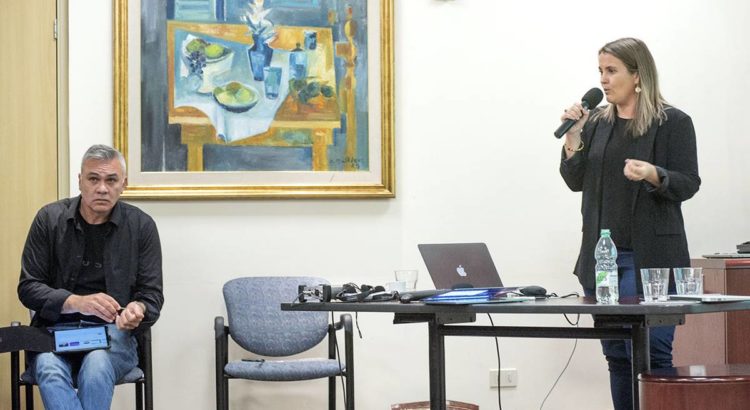
Los especialistas estuvieron en Montevideo invitados por la organización E.dúcate, que celebró sus diez años con la serie de charlas De.Practice: voces de una escuela efectiva, de la que los neozelandeses fueron los expositores principales. En diálogo con la diaria, los especialistas comentaron los secretos de su éxito educativo: entender la escuela como una familia en la comunidad, actualizar la currícula mediante la tecnología, y la paciencia para aceptar que los cambios en educación son lentos.

Su escuela en Nueva Zelanda tiene dos lemas: “guiándome a guiar mi aprendizaje” y “conóceme antes de enseñarme”. Comencemos por el primero, ¿qué significa esto para estudiantes y docentes?

BJ: El significado es la independencia para los jóvenes, a medida que maduran van adquiriendo la habilidad de aprender. Es una visión que busca generar capacidad a medida que avanza la currícula. Los individuos tienen su propia identidad, su propia cultura y su propio lenguaje; la guía del individuo significa generar autonomía para que, al final de estos seis años, el estudiante pueda generar su propio camino y volar hacia donde él quiera. Se relaciona con nuestro otro lema, “conóceme antes de enseñarme”: la idea es conocer realmente a cada persona con la que trabajo en profundidad; en mi caso son cientos de personas.

Eso parece ser mucho trabajo.

LS: No lo es. Es natural, porque el trabajo más importante del docente en nuestra escuela es construir relaciones con los niños. Sabemos que si como docentes logramos construir relaciones fuertes, tendremos buenos resultados y no habrá mal comportamiento en nuestras clases, porque el niño se siente a salvo y valorado. Ellos saben que nos importan, se lo mostramos y celebramos su aprendizaje.

BJ: Las malas relaciones con los estudiantes resultan en una mala enseñanza. Yo busco ese tipo de docente, que genere una buena relación, con una comunicación fluida y consistente. Cuando no está esa relación, los resultados empiezan a empeorar, comienza a haber frustración de los profesores, los estudiantes y las familias. El sistema que nosotros creamos es para todos.

¿En qué tipo de actividades se refleja este acompañamiento?

LS: Todo funciona de forma bastante orgánica, naturalmente pasa todos los días. Pero tenemos nuestras actividades particulares: cada dos semanas hacemos celebraciones escolares que son muy importantes, es un evento en el que juntamos a toda la escuela y celebramos los aprendizajes que se fueron dando en esas dos semanas. Funciona como una vitrina, una presentación de lo que está pasando en el momento, y los padres pueden participar. Es muy divertido y emocionante, y así la escuela se convierte en un centro de actividades de la comunidad. Para nosotros eso es fundamental: la escuela es comunidad y buscamos hacer nuestra mayor contribución.

¿Qué tipo de actividades se llevan a cabo en la rutina diaria?

LS: Si Bruce entra a mi clase y estoy parada delante del pizarrón y 30 niños me están mirando, se enojará. Esa situación es todo lo opuesto a lo que buscamos en la escuela, porque sabemos que ninguno de esos 30 niños está aprendiendo algo de mí ahí parada; necesitamos que los niños estén haciendo cosas, así funciona el aprendizaje.

BJ: Dejamos que los niños sean niños, pero sabemos lo que esperamos de ellos y los ayudamos a hacerlo. Para eso necesitamos a los mejores profesores, que sepan cómo liderar ese aprendizaje; no podemos poner delante un títere que repita como un grabador, eso no ayuda al niño a conocerse a sí mismo.

¿Cuál es el rol de la familia en la escuela?

LS: Tenemos una enorme relación con los padres. Nuestra escuela es como una gran familia, todos estamos conectados y vamos en el mismo camino. El aprendizaje no se detiene en el momento en que el niño sale de las puertas de la escuela, sino que continúa en sus casas. Tenemos una herramienta digital que se llama Seashore [un software privado, de Apple], y a través de ella todos los padres están conectados al perfil individual de su hijo, y el maestro puede comunicarse directamente con el padre, quien puede responder, y todos pueden escribir mensajes en la comunidad del grupo o de la escuela. Y todos lo hacen, se conectan y participan en el aprendizaje del niño a diario.

BJ: Aprovechamos cualquier oportunidad de comunicarnos con los padres que tengamos. Puede ser accidental; cuando dejan al niño en la puerta los agarramos un minuto para conversar, pero no tiene por qué haber algo para decir, sólo conversar para construir una relación que tenga en el centro el aprendizaje del niño más allá de la escuela. Siempre tratamos de ofrecerles a los padres el consejo y la guía necesaria para que ellos nos ayuden a nosotros en las tareas de educación. A su vez, los padres y los docentes también están involucrados con lo extracurricular. Todos mis docentes y algunos padres están involucrados en las actividades extracurriculares de los niños: algunos están asociados a talleres de música, otros son entrenadores de básquetbol o rugby; están relacionados con todo lo que hace a la comunidad.

Hace una década, la escuela tenía pésimos resultados, los niños no pasaban las pruebas de escritura y lectura, mientras que ahora están en lo más alto de los rankings nacionales. ¿Cómo fue ese proceso?

BJ:Tiene que ver con las altas expectativas. Me enfoqué en enseñar una pedagogía significativa y en darle sentido al aprendizaje. Es importante que los docentes y estudiantes tengan un propósito, por eso soy muy sincero sobre lo que espero que hagan los docentes. Los primeros años fueron muy difíciles: tuvimos que evaluar cómo estaba el nivel de la escuela, al mismo tiempo que iba eligiendo los docentes más comprometidos con el cambio, porque necesitaba profesores que confiaran en mi visión para empezar a trabajar. Fuimos construyendo toda esta cultura de trabajo y fue muy difícil porque el progreso es muy lento, por eso creo que es importante celebrar los pequeños pasos que vamos logrando. Cuando alguien siente que está haciendo las cosas bien, quiere seguir. Ese es el cambio, creer en los niños, asumir que esos malos resultados no son los normales y trabajar para mejorarlos. Hay que saber que lleva mucho mucho trabajo: yo tenía cabello negro y ahora sólo tengo canas, imaginate el tiempo y el esfuerzo que llevaron estos cambios.

¿Cuáles fueron los primeros pasos?

BJ: Fue generar una base de datos, ver exactamente dónde estábamos y proyectarnos los seis años en todas las áreas del currículum. Evaluamos y vimos que no éramos buenos en ninguna área; sin sorpresa los datos que vimos eran muy malos. Elegimos profundizar en las habilidades de lectura, profundizamos en que los profesores supieran más al respecto. Lo hicimos porque muchas de las cosas de la currícula requieren saber leer y comprender, y nuestros estudiantes no estaban alcanzando ese nivel básico. Entonces fueron dos años enfocados exclusivamente en la lectura; también avanzamos en otras áreas, claro, pero estábamos concentrados en la lectura comprensiva. En estos primeros años también aparté a los docentes que no estaban comprometidos, los probamos y si no estaban en la escuela por la misma razón que estábamos los demás se tenían que ir, porque no eran parte de la familia. Yo valoro a los docentes que siguieron con nosotros durante todo el camino difícil.

¿Cómo se llevan estos cambios con el sistema educativo neozelandés?

BJ: Parte de mi visión fue pensar cómo salimos del sistema. Llegamos a lo máximo de sus expectativas en lectura, escritura y matemática, pero no usamos la construcción tradicional del conocimiento. Lo que hicimos fue tomar la currícula neozelandesa y digitalizarla; hacemos actividades tradicionales pero con una lavada de cara digital, las llevamos al tiempo real en el que vivimos. El gobierno no nos ayudó para nada en nuestra conversión; lo hicimos nosotros, nuestra comunidad trabajando muy duro. Empujamos los límites y creamos cosas que apenas podíamos imaginar: tenemos a niños grabando canciones en estudios de grabación profesionales, tenemos docentes dando conferencias a audiencias mundiales y que son líderes en sus áreas. Lo creamos creyendo en nosotros y en los niños.

La cultura maorí es parte muy importante de la escuela. ¿Qué rol juega?

BJ: Tiene un rol masivo, muy importante. Yo soy indígena y mi acercamiento al liderazgo incluye siempre la cultura maorí, está en mi forma de ser. Nosotros vemos al planeta como parte de nosotros, somos la naturaleza y manejamos eso, hay un término, whakahanongatanga, que significa “conectividad” y “sentido de la comunidad”; eso es fundamental en nuestra comunidad indígena y es lo que yo transmito en mi escuela, requiere generar soporte y cariño en la comunidad y es lo que yo quiero que mis docentes transmitan a los niños.

¿Hay muchos estudiantes maoríes en la escuela?

BJ: Cerca de 35%, unos 300 estudiantes más o menos. Vienen desde 37 diferentes lugares, algunos incluso se han mudado desde otras regiones sólo para ir a nuestra escuela, porque los indígenas solemos ser muy desplazados en nuestra sociedad, nos dejan de lado en muchos lugares, y en esta escuela nunca será así. En otras escuelas los niños maoríes tienen malos resultados, pero en mi escuela tienen los mejores del país y esto es porque confiamos en ellos, porque no los subestimamos.


Nueva Zelanda desde Uruguay

Cecilia de la Paz es la directora general de E.dúcate y comentó algunos de los motivos para invitar a estos exponentes desde Nueva Zelanda. “En su escuela ellos tienen un proceso mucho más dinámico que el nuestro. Es posible que haya muchos docentes trabajando con el mismo grupo: cada niño se relaciona con varios docentes y tiene varios espacios de aprendizaje durante el día. Cada uno es específico, pero a su vez están intercomunicados, no hay una división estricta entre un momento y el otro. El docente crea un ecosistema de aprendizaje durante el día y el niño lo cruza. En el trasfondo hay docentes diseñando todo, pero para el niño es sólo pasear por distintos lugares, es mucho más holístico de lo que parece. Ves niños que van y vienen, y parece que ellos están caminando por ahí, pero todos están haciendo lo que tienen que hacer, sin que haya un mandato”.
Fuente: https://educacion.ladiaria.com.uy/articulo/2019/7/la-escuela-de-nueva-zelanda-que-aposto-al-concepto-de-comunidad-y-logro-revertir-malos-resultados/
Comparte este contenido:

New Zealand: Polytechnic reforms damage international students

Oceania/ New Zealand/ 01.07.2019/ Source: www.scoop.co.nz.

The Government’s proposed tertiary reforms have gone much further than first thought, and could damage New Zealand’s international students, National’s Tertiary Education spokesperson Dr Shane Reti says.

“The international student market, worth $500 million, is at risk under the polytechnic reforms.

“A perfect storm is brewing around our international polytechnic market, including domestic uncertainty, branding uncertainty and delayed visa processing in Mumbai.

“International students are vital to polytechnics and the New Zealand economy. But in the Cabinet document outlining the reforms, which was leaked to National, barely three sentences were given to international students.

“The sector is very concerned that key parts of the international student journey, including local recruitment may be taken by the new mega polytechnic head office.

“Even Education Minister Chris Hipkins was concerned when his officials urgently asked how the reforms were being received in the Chinese market.

“The sector and the market urgently needs clarity and stability, way beyond three sentences. The Minister needs to bite the bullet and lay out detailed plans.”

Source of the notice: http://www.scoop.co.nz/stories/PA1906/S00275/polytechnic-reforms-damage-international-students.htm

Comparte este contenido:

Schools close as teachers walk off the job in South Australia

Oceania/ Australia/ 02.07.2019/ Source: www.9news.com.au,
Members of the Australian Education Union today rallied outside Parliament House in Adelaide with similar protests held at Whyalla, Port Lincoln and Mt Gambier.
The union says the action has not been taken lightly as it fights for a better education system for its members and for children.
It recently rejected an offer of a 2.35 per cent annual pay rise from the government along with other changes to working conditions.
So far 258 schools have indicated they will close because of the industrial action but Treasurer Rob Lucas says that means 676 of the state’s 934 primary, secondary and pre-schools will stay open, some with modified programs.
«While we recognise the fact that there will still be significant disruption and inconvenience to parents, grandparents and students, it’s clear the union bosses have not attracted the level of support that they were seeking from school communities.
“And while we respect their right to industrial action, we have made it quite clear that no amount of chanting, waving placards and singing is going to make more money magically appear in the budget.
teacher's strike
The union claims the action is necessary to ensure better conditions for staff and students. (9News)
“The government’s offer provides millions in additional funding for schools with higher levels of complexity, for highly-accomplished and lead teachers and also country incentives.»
Despite those concerns, the State Treasurer has said the pay offer is above inflation – and South Australia cannot afford any more.
«No amount of protest action is going to give me, as the Treasurer, any more money to be able to afford an anymore generous increase of salary,» Rob Lucas said.
The union said working conditions for teachers continued to have an impact on the learning environment for students.
“We think that is too important to compromise,» it said.
Source of the notice: https://www.9news.com.au/national/schools-closed-teachers-strike-250-walk-off-job-over-pay-dispute-south-australia-news/69fd8b0f-7376-4622-83dc-530ccb4a1093
Comparte este contenido:

Australia urged to act on girls’ education in Solomons as 93 per cent dropout rate revealed

Oceania/ Australia/ 10.06.2019/ Source: www.sbs.com.au.

Omar Dabbagh reports from Visale, Solomon Islands

Prime Minister Scott Morrison is being urged to prioritise education equality during his visit to the Solomon Islands, after a new report found a shockingly low number of girls finish high school in the Pacific nation.

Aid agency Plan International, which compiled the ‘Our Education, Our Future’ report with the help of 60 girls in the Solomons, found the female graduation rate there is only seven per cent.

Expensive school fees, disturbingly high rates of child marriage and teen pregnancies, dangers facing girls walking to and from school, as well as cultural perceptions towards gender are being blamed for mass female dropouts.

«I would say it’s discrimination but it’s also about opportunity. People think that girls are associated to home,» Ella Kauhue, Program Manager for Plan International Solomon Islands, told SBS News ahead of the report’s release next week.

«They do a lot of work at home, they save the family, they look after the children, so they have – in terms of family – they have responsibility more than the boys.

SBS News understands Mr Morrison will visit schools in the Solomon Islands on Monday and read to a class.

Solomon Islands girls

Australia is being urged to prioritise the education of girls in the Solomon Islands.
SBS News/Omar Dabbagh

‘Left behind’

«When it comes to the decision-making of parents on who to go to school when there is limited funds, then the boys have a chance to go, the girls are left behind,” said Franklin Kakate, a school principal in the village of Visale.

It is a domestic responsibility that many girls say they do not want.

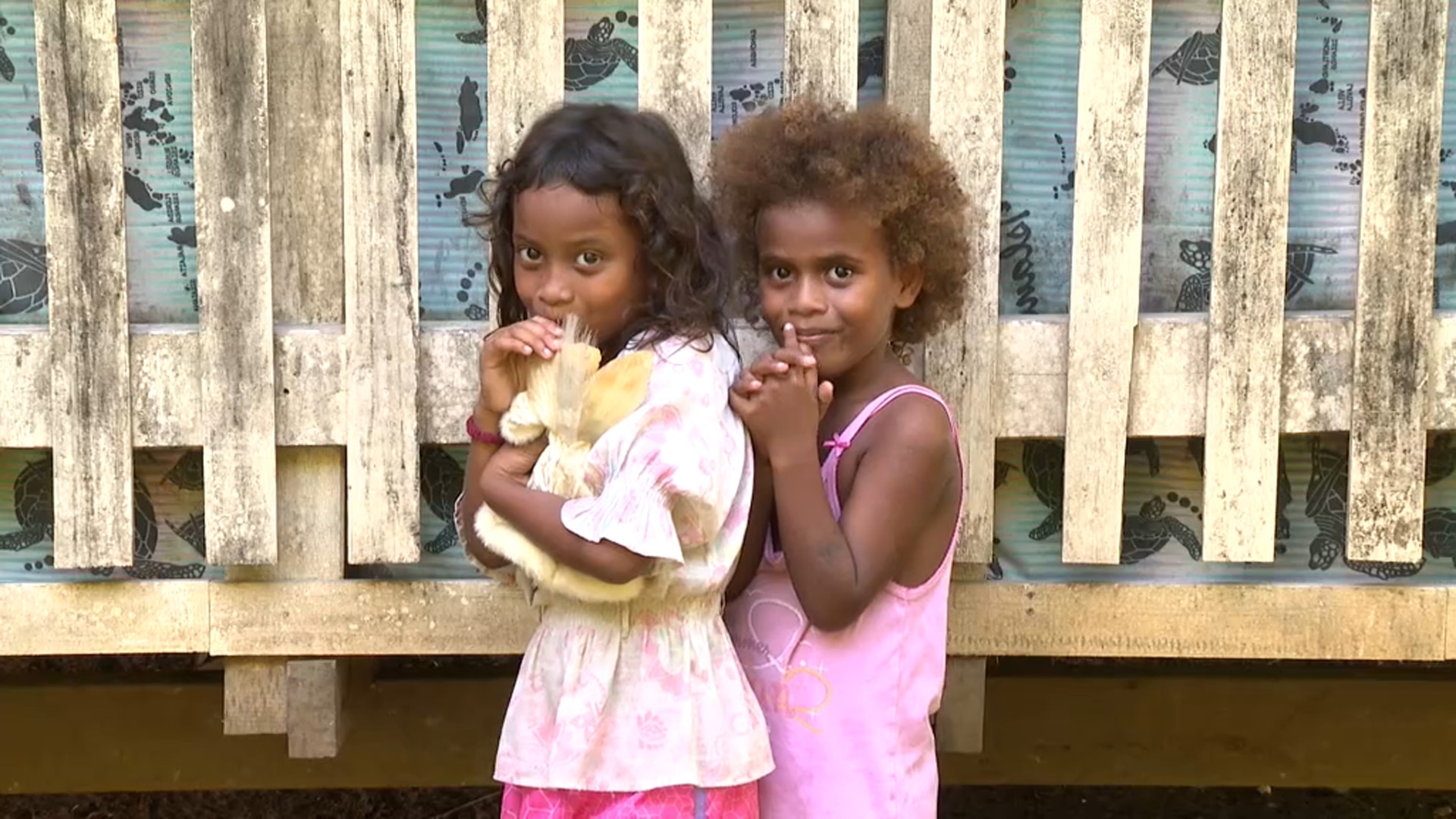
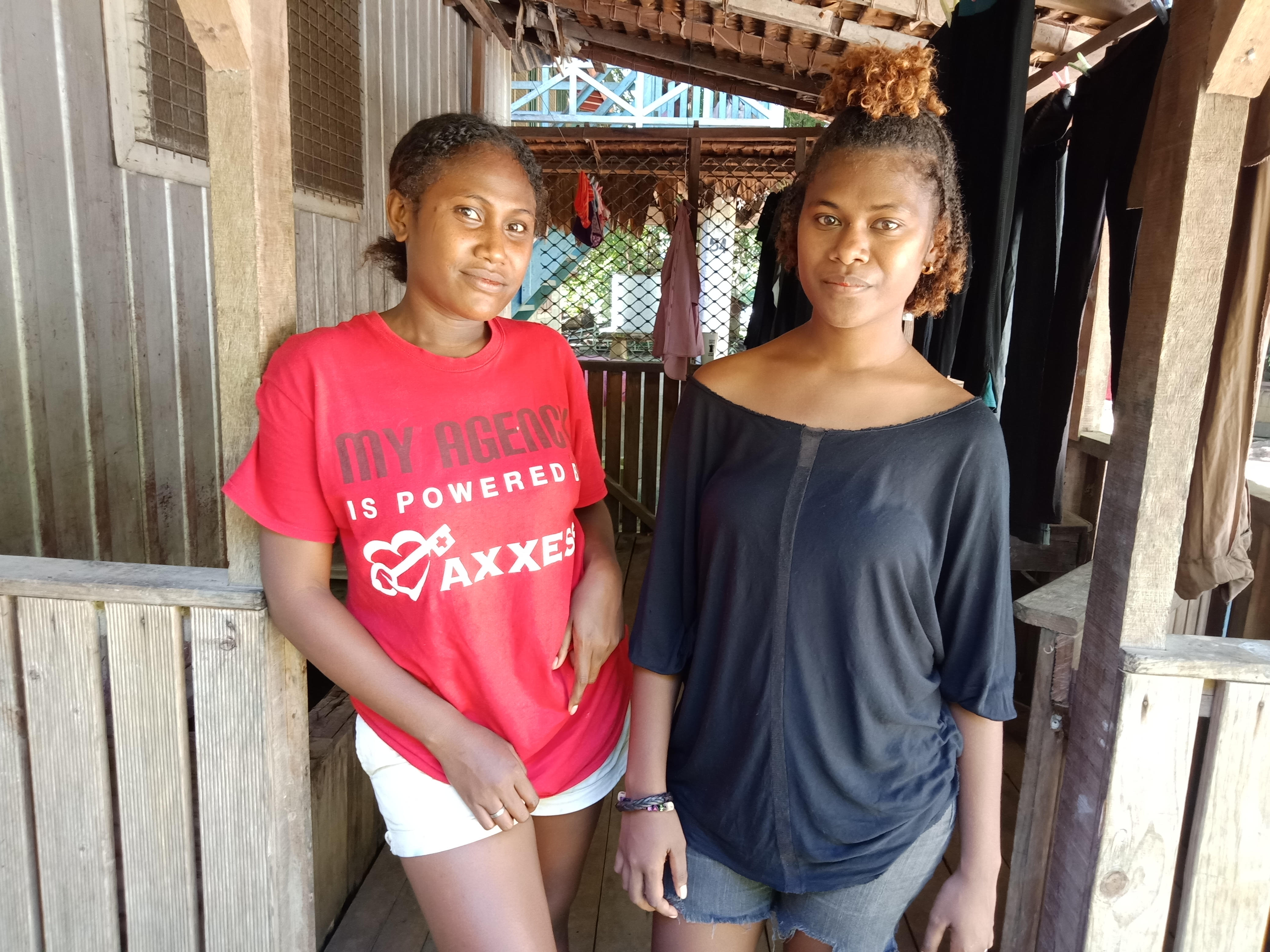
Best friends, Betty and Betty, aged 18 and 19, dropped out of high school in recent years due to financial stress and peer pressure. And both say they are desperate to complete their education.

«I want to tell other girls that when they receive a good education, they will not be like us – you know, walking around (doing nothing). Boring. They will have a good life,» the girls said.

«I see value in education, so I want to see the girls value that because if they’re educated then they can see things.»

EXCLUSIVE: Australia urged to prioritise women's education in the Solomon Islands

Friends Betty and Betty were both forced to drop out of high school, and say they are desperate to one day graduate.
SBS News/Omar Dabbagh

Schoolgirls from Visale, north of the capital Honiara, have told SBS News they hope to one day break the mould in the Solomons.

«I feel excited because I have the opportunity to attend school while other girls stay at home and do housework,” says 18-year-old Melisa, who is in her last year of school.

«I want be in engineering because I want to be part of the male’s job, because in Solomon Island there’s not much female involved in men’s job.»

«(I want to be a) lawyer so I can solve all the problems in the country,» adds 17-year-old Clodina.

«I want to make our country a better country in the future.»

‘Gender imbalance’

In a bid to prioritise education in recent years, the Solomons government made primary school free. But Plan International claims that policy has not been implemented in many parts of the country. School attendance, both in primary and high school, is also not compulsory.

Seventy-two per cent of girls finish primary school, but as fees increase every of secondary school so too do dropout numbers, whereas one-third of boys are able to complete high school.

Plan International found that two out of five girls are forced to drop out of school due to teen pregnancy or child marriage, with the former seeing many girls expelled as they are often blamed for betraying customary practices.

Simple things like walking home, particularly in remote provinces, can deter girls from attending where there is a high rate of sexual assault.

Eighteen-year-old Judy says she used to walk six kilometres a day to and from her previous school and feared every day she would be attacked.

«I feel scared and maybe we don’t know what is going to happen when you follow the road, that there is no house and someone to help you,» she explained.

«And sometimes if you go to school by yourself and you meet someone who tried to kill you, you don’t have anyone to help you.»

ls for Australia to step up education focus

Australia is by far the biggest contributor of aid to the Solomon Islands, set to donate almost $200 million this year alone.

It bankrolls five per cent of the Solomons’ education budget, of which almost two-thirds funds scholarships and programs to improve school facilities, such as bathrooms and access to clean water.

But coordinator for International Programs at the Solomon Islands Ministry for Education, Christina Bakolo, told SBS News only a sliver goes towards secondary education, let alone the education of girls.

«There needs to be collaborative work if Australia would like to assist the Solomon Islands. For me, personally, there needs to be resourcing. This is one of the gaps here,» Ms Bakolo said.

«It would be very great to see Australia focusing on the marginalised ones in the Solomon Islands, and that includes girls.»

Plan International hopes Mr Morrison uses his overseas trip to take a stand to support young women.

«Gender equality in this country is very imbalanced,» Ms Kauhue said.

«I think the country, the government, will have to see that investing in girls is important and not for today but for the future of this country.»

Source of the notice: https://www.sbs.com.au/news/australia-urged-to-act-on-girls-education-in-solomons-as-93-per-cent-dropout-rate-revealed

Comparte este contenido:

NZ’s education sector must move fast to support edtech

Oceania/ New Zealand/ 10.06.2019/ Fuente: itbrief.co.nz.

New Zealand’s education sector needs to face up to automation and the way it will affect people’s jobs in years to come – and it needs to move quickly to do so, according to industry body EdTechNZ.

In a submission to the New Zealand Productivity Commission on the topic of how technology will impact the future of work in New Zealand, EdTechNZ says that New Zealand’s education sector needs a serious shake up.

According to EdTechNZ chair Shane Kerr, New Zealand’s education and skills system does not have a shared view of current or desirable outcomes for New Zealand’s digitally dependent society.

“Consideration should be given to how the skill needs of the tech industry can be better understood by the education sector, perhaps through an industry body forum,” says Kerr.

“Future workers will need advanced technical skills to operate in an increasingly digital working environment but also skills for the roles that cannot be easily automated.”

EdTechNZ says it has witnessed the impact that automation technologies are having on people’s jobs.

“Workers now and in the future will need an education system that can keep up with the pace of global technical change,” says Kerr.

“We’re already seeing firms and companies question the validity of traditional courses of study as their industries undergo rapid transformation.

“It is imperative that the 20% of adults described in the commission’s report with low levels of literacy and/or numeracy are provided with effective access to tools and training that can lift their capability.”

He says the Commission should consider the World Economic Forum’s 21st century skills concept, which includes collaboration, critical thinking, digital literacy, and problem solving.

“There are a number of edtech products and pedagogies that can be further deployed in this area, and the edtech sector could be more effectively incentivised to address this priority.”

He adds that the education sector is struggling to keep up with workplace change. The education sector is often held back by difficulty innovating and scaling new initiatives quickly enough.

“In addition, due to the relatively large numbers of small to medium companies, employers are less likely to plan for or invest in future skills at the expense of the immediate needs and daily pressures of their business,” Kerr says.

The mismatches between capability and expectation will only grow, Kerr adds.

“Not all firms do or will have the same understanding of the skill challenges or make the same level of investment in training beyond their immediate needs.

“Government has a role to raise awareness and urgency of the issue and also encourage the development of training for future skills needs which may not be readily apparent to the employer such as digital literacy. Government investment is required in every scenario.”

Source of the news: https://itbrief.co.nz/story/nz-s-education-sector-must-move-fast-to-support-edtech

Comparte este contenido:

Unos 50 mil profesores de Nueva Zelanda exigen mejores salarios

Nueva Zelanda/30 Mayo 2019/Fuente: Prensa Latina

Cerca de 50 mil profesores de Nueva Zelanda se manifestaron hoy en las calles del país para exigir salarios más altos y mejores condiciones de trabajo.
La falta de financiación crónica de la educación en la última década ha dejado a los maestros con malos salarios y con exceso de trabajo, lo que significa que más profesores abandonan la profesión, señalan en un comunicado los organizadores de la protesta.

Unas dos mil 400 escuelas estatales estuvieron cerradas durante la jornada de este miércoles mientras los docentes protestaban para exigir mejoras al gobierno, reporta la emisora Radio Nueva Zelanda.

Los profesores han rechazado hasta ahora ofertas de aumento salarial del gobierno del 3 por ciento, y aspiran a un 15 por ciento o más de incremento para continuar su trabajo.

El ministro de Educación, Chris Hipkins, indicó hoy que el ejecutivo está haciendo mucho para mejorar las escuelas, pero no puede hacerlo todo a la vez.

Esta es la tercera vez que los educadores de primaria salen a las calles, aunque para los de secundaria es la primera huelga.

Khali Oliveira, una de las manifestantes, explicó a la prensa local que los maestros están abrumados y sin tiempo para enseñar, hay una gran crisis porque ante esa situación muchos emigran al sector privado.

El gobierno de la coalición laborista, encabezado por la primera ministra Jacinta Ardern, reclutó pedagogos del Reino Unido y Australia para contener el déficit, aunque aún es insuficiente.

Fuente: https://www.prensa-latina.cu/index.php?o=rn&id=280050&SEO=unos-50-mil-profesores-de-nueva-zelanda-exigen-mejores-salarios
Comparte este contenido:

School choice increases social segregation and inequity in education

Oceania/ Australia/ 28.05.2019/ Source: au.educationhq.com.

A new OECD report, Balancing School Choice and Equity, shows that school choice policies have increased social and academic segregation between schools which, in turn, reduced equity in education

Australia is a prime example of the impact of choice on social segregation in schools. School choice has been at the centre of education policy for the last 20 or more years. Australia now has one of the most socially and academically segregated school systems in the OECD and has highly inequitable education outcomes.

The OECD report looks at changes in school enrolments in countries that participated in the Programme for International Student Assessment (PISA) and examines the extent to which schoolchoice policies impacted on the social and academic segregation of students and on equity in education outcomes.

It concludes that school choice can benefit some students but, overall, it increases social segregation of students as choice is mostly used by middle-class and wealthy families:

Empirical results in this volume suggest that weakening the link between place of residence and school allocation is related to a higher level of school segregation by social status. Some resilient disadvantaged students may have access to schools that would otherwise be inaccessible if a strict residence-based policy were applied. But that, in itself, does not offset the social-sorting effects that result when it is mostly middle- or upper-class families that take advantage of school-choice policies. [pp. 11-12]

This social segregation is associated with increased inequity in education outcomes for disadvantaged students:

Panel estimates in this report show that an increase in the isolation of high achievers from other students is associated with lower scores in PISA amongst socio-economically disadvantaged students, without any significant impact on advantaged students. [p. 12]

Extent of school choice

The report considers school choice in terms of changes in the proportion of students in private schools and the extent to which students are allocated to schools according to residence. It also considers the degree of local school competition as perceived by school principals and the extent to which parents are actually able to exercise some form of school choice in systems where schools select students based on socio-economic status or academic ability.

According to PISA data, an average of 18 per cent of 15-year-old students across OECD countries were enrolled in a private school in 2015. This compares with 44 per cent in Australia. Australia has one of the highest proportions in the OECD and is only exceeded in Chile, Netherlands, Ireland and the UK. The report found little change in the proportion in most OECD countries between PISA 2000 and PISA 2015. However, the proportion in Australia increased by three percentage points between 2009 and 2015 which was one of the largest increases in OECD countries, exceeded only in Chile, the Czech Republic and the UK.

In almost all school systems, students are assigned to schools based, at least partly, on their home address. In Australia, 48 per cent of students are enrolled in schools where residence is considered for admission. This is larger than the average of 40 per cent across OECD countries but far lower than in many countries such as Canada (69 per cent), Finland (67 per cent), Norway (70 per cent) and the United States (66 per cent). In the majority of OECD countries that participated in PISA 2000 and PISA 2015, the proportion of students attending schools that consider residence for admissions fell, but there was no statistically significant change in Australia.

Despite a relatively high proportion of Australian students enrolled in schools where residence is a factor in admissions, there is also a very high degree of competition between schools. The report shows that Australia has the highest percentage of students in schools that compete with at least one other local school of all OECD countries except Belgium. Some 94 per cent of students in Australia are enrolled in such schools compared to the OECD average of 77 per cent and 35 per cent in Norway.

However, local competition does not always translate into more choice for parents. Choice may be restricted by several factors such as tuition fees as in private schools, access to transport and using prior student achievement as part of admission criteria. As the report notes:

Because of local competition, schools may be tempted to skim off the most affluent or highest-achieving students. Restricting enrolment to the most able students makes it easier for a school to rank high in public evaluations, thus maintaining its attractiveness to parents…. Low-achieving students may have little opportunity to choose schools if schools base their admissions on prior academic performance. [p. 34]

In Australia in 2015, 34 per cent of students were enrolled in secondary schools in which academic performance is always considered for admission. This was slightly lower than the average for the OECD of 39 per cent. In Denmark, Finland, Greece, Norway, Spain and Sweden less than 10 per cent of students were enrolled in selective schools. The rates are similar for public and private schools in Australia – 34 per cent and 35 per cent respectively – whereas it is much more common in private schools in most OECD countries. In 2015, selection of students on academic criteria was used more by private schools (56 per cent) than public schools (39 per cent) on average in OECD countries.

There was a large increase in the proportion of secondary schools in Australia using academic performance in admissions since 2009 when the percentage was 24 per cent In the case of lower secondary schools, the proportion doubled in Australia from 16 per cent to 33 per cent. The report notes that selectivity in admissions increased in many OECD countries over this period.

Thus, choice and competition between schools in Australia appears to have increased over the PISA cycles, certainly since 2009. A higher proportion of students are enrolled in private schools and a very high proportion are enrolled in schools facing competition from other schools in the local area. Concurrently, selectivity in enrolments by all schools, public and private, has increased significantly.

Choice and segregation

A major issue about increased school choice is the impact on the segregation of students by ability or socio-economic status. The evidence presented in the OECD report suggests that choice increases segregation because it is mostly middle- or upper-class families that take advantage of school-choice policies.

Empirical evidence from systems with country- or state-wide school-choice policies, such as Chile, New Zealand, Sweden and the United States, suggests that providing more opportunities may increase school stratification based on students’ ability, socio-economic status and ethnicity. [p. 20]

In addition, choice means a greater likelihood that the schools most in demand will screen (“cream skim”) for the most promising students – resulting in greater sorting of students by academic results. Evidence shows that selective admissions are a source of greater inequality and stratification within a school system.

The international evidence suggests that schools that are selective in their admissions tend to attract students with greater ability and higher socio-economic status, regardless of the quality of the education they provide. Given that high-ability students can be less costly to educate and their presence can make a school more attractive to parents, schools that can control their intake wind up with a competitive advantage. Allowing private schools to select their students thus gives these schools an incentive to compete on the basis of exclusiveness rather than on their intrinsic quality. [p. 82]

The OECD report uses a dissimilarity index to measure the extent of academic and social segregation between schools. This index ranges from 0 (no segregation) to 1 (full segregation). A high dissimilarity index means that the distribution of disadvantaged students across schools is different from that of students who are not considered to be disadvantaged.

Social segregation of disadvantaged students in Australia is extremely high compared to most other OECD countries. Australia has the 4th highest degree of social segregation amongst 35 OECD countries. Only Mexico, Chile and Hungary have greater social segregation of disadvantaged students than Australia.

The report also uses two other measures of social segregation between schools – the isolation index and the no-diversity index. Australia has a high degree of social segregation on both measures. It has the 5th highest degree of social segregation as measured by the isolation index for disadvantaged students and equal 4th highest as measured by the no-diversity index.

The no-diversity index allows for decomposition of sources of segregation. It shows that social segregation between public and private schools and social segregation between private schools is high compared to most other OECD countries while social segregation between public schools is less than the OECD average.

Segregation and equity in education

The report notes that there is widespread evidence that the social composition of a school impacts on the academic performance of its students. It says that a clear consensus has emerged from research studies on the detrimental impact of attending schools with many low achievers and the benefits of having high-achieving schoolmates.

….this evidence suggests that sorting students into schools by ability or social status may adversely affect both the efficiency and equity of the school system…. social and academic segregation in schools may create additional barriers to success for disadvantaged children and reduce equity in education. [p. 20]

Moreover:

School stratification may also have long-term negative consequences for social mobility. Disadvantaged students may develop biased education and career aspirations because of the absence of inspiring role models that are usually found in schools with a greater social mix. More generally, social stratification amongst schools may threaten social cohesion, as children are not accustomed to social or ethnic diversity. [p.21]

The report found added evidence of these effects from PISA 2015. It found that countries where schools were more socially segregated also had less-equitable education systems. Increasing social segregation amongst schools tends to widen the achievement gap between disadvantaged and advantaged students.

In 2015, countries where schools were less socially diverse also had less-equitable education Systems. [p. 67] Empirical evidence suggests that social segregation across schools is negatively correlated with equity in education…[p. 68]

Australia is one of those countries. It has high levels of choice, high competition between schools, high social segregation between schools and high inequity in education.

Balancing choice and equity

Choice of school is highly desired by many families. There can be no going back to totally residencebased admissions to schools. It would also mark a return to segregation in schools based on housing segregation. The issue is how to reduce social segregation and inequity in the presence of choice.

The report considers how school systems can combine sufficient flexibility to fulfil the aspirations of many parents to choose a school for their children and provide enough incentives for schools to improve the performance of all students without reducing equity in education. It says that governments should provide checks and balances to prevent choice from leading to more segregation of students.

One option is to design school catchment areas to ensure the equitable distribution of students between schools. This can be done by combining districts with different socio-demographic characteristics within a single catchment area.

Another option is to introduce specific criteria for the allocation of students across local schools. The criteria used by oversubscribed schools to select their incoming students should be monitored and regulated to prevent “cream skimming”.

Different forms of “controlled choice” have been used to reduce high levels of student segregation, for example, by reserving a given number or share of places in oversubscribed schools to students from different socio-demographic backgrounds to maintain a balanced distribution of students. The use of lottery systems to assign places in oversubscribed schools or formulae aimed to maintain a diverse student composition can also be considered.

Incentives can also be provided to schools to select disadvantaged students, such as weighted student-funding schemes that fund schools according to the socio-economic profile of their student populations. Many governments around the world have adopted such schemes. The Gonski funding model in Australia is one.

The report also suggests that in order to avoid unfair competition between public and private schools, all publicly funded schools should face the same regulations regarding tuition and admissions policies.

The conditions under which private schools are eligible for public subsidies influence the ways in which school-choice programmes affect the accessibility, quality and equity of the school system. Risk to equity can be mitigated if all publicly funded providers are required to adhere to the same regulations regarding tuition and admissions policies, and compliance with these regulations is monitored. Adequate accountability and transparency requirements are also important to ensure that subsidised private schools serve the public interest in providing high-quality education, and to provide parents with the information they need to evaluate different schools’ processes and outcomes. [p. 84]

Governments in Australia should consider how to minimise/reduce the impact of choice on social segregation and equity in education. Some key changes to consider are:

  • Tighten registration requirements for private schools;
  • Eliminate over-funding of private schools;
  • Increase funding loadings for disadvantaged students;
  • Investigate controlled choice models for public schools;
  • Review admission policies for high demand public schools;
  • Contain the growth of selective public schools;
  • Use urban planning and housing policy to develop more socially integrated neighbourhoods

Save Our Schools

Source of the notice: https://au.educationhq.com/news/59848/school-choice-increases-social-segregation-and-inequity-in-education/

Comparte este contenido:
Page 13 of 102
1 11 12 13 14 15 102
OtrasVocesenEducacion.org